Italy and England











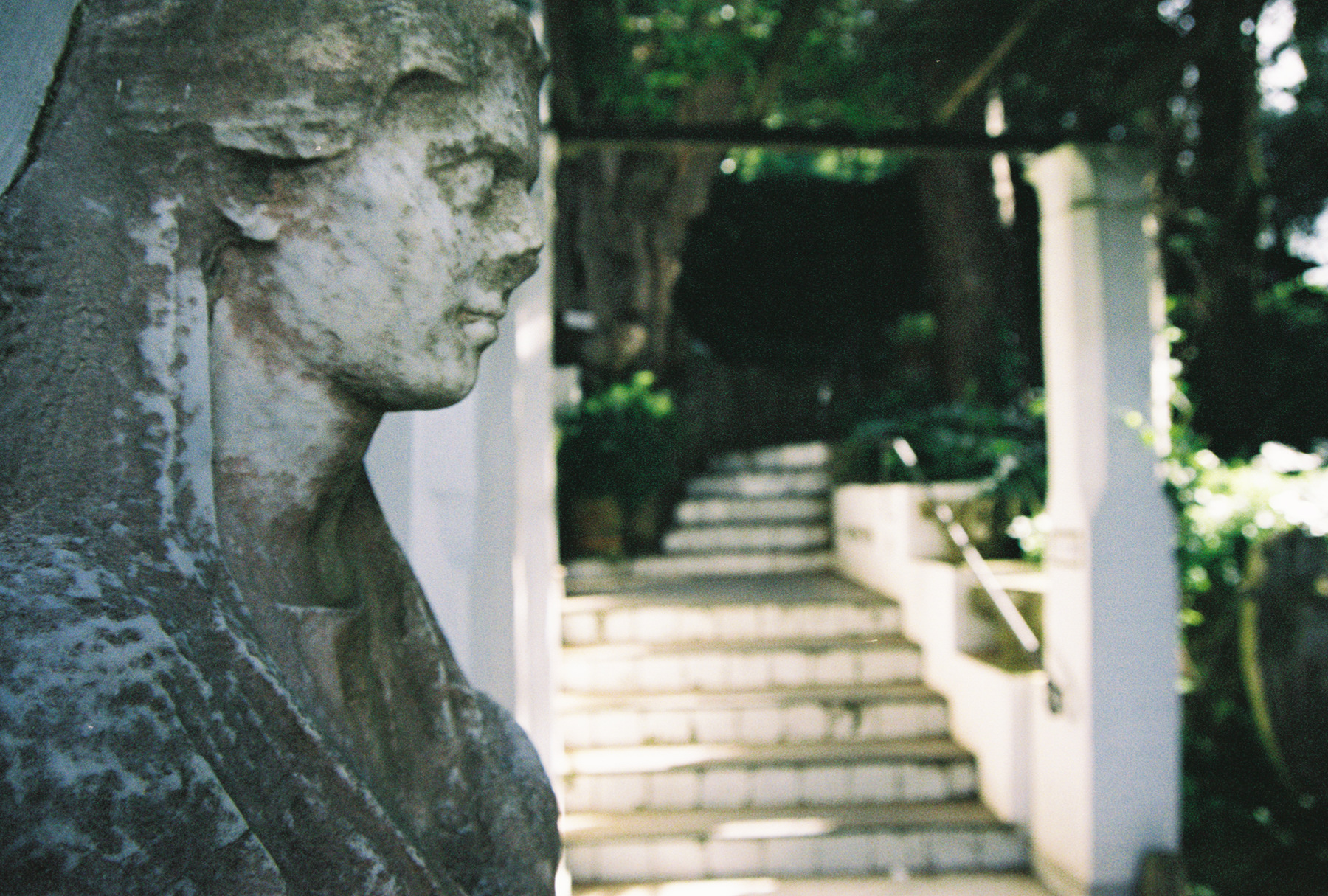
A Greco Roman bust outside the chapel in the Italiani Giardini. The white tile stairs lead up to the former bird conservatory.
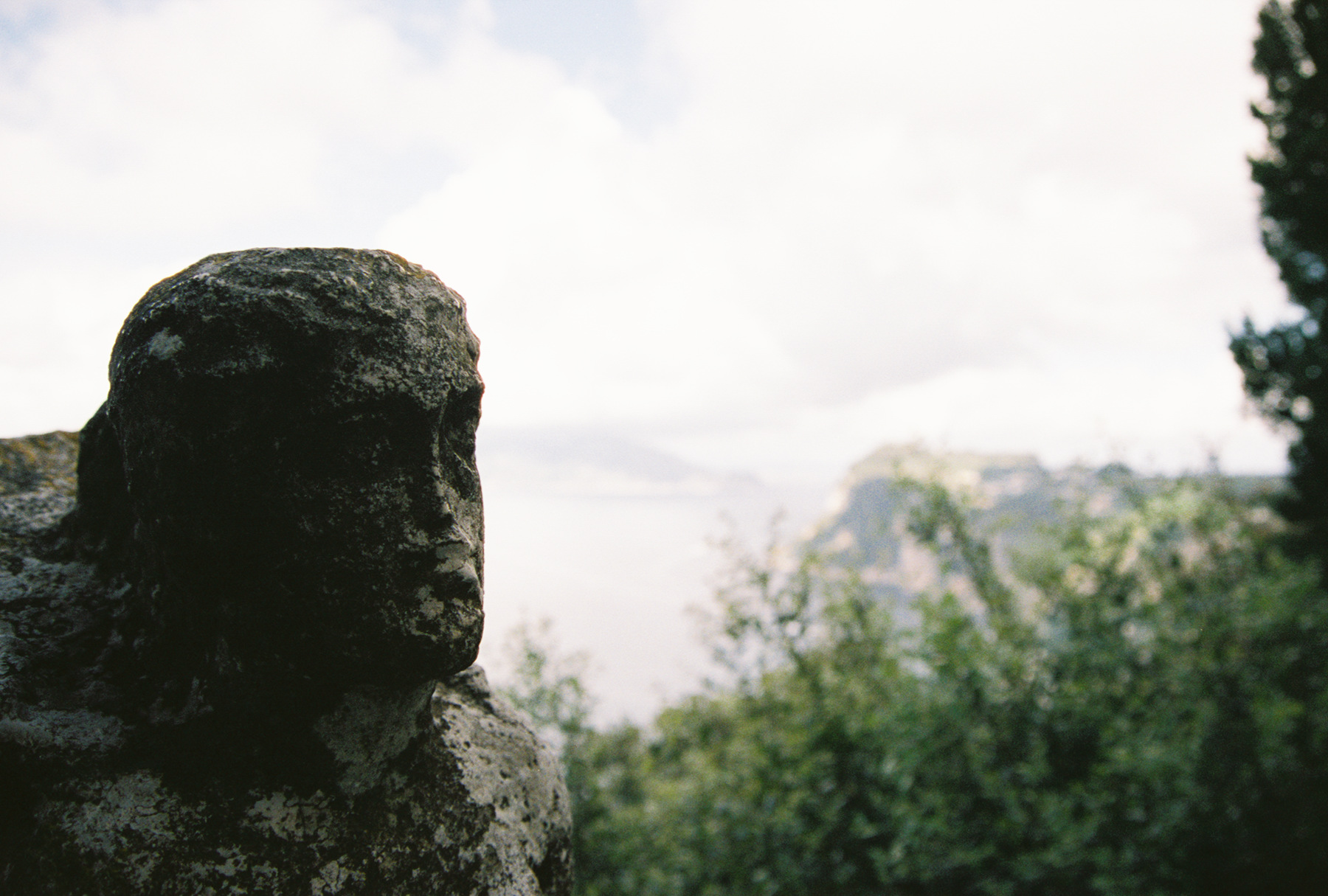
The winged Egyptian bust overlooking the Marina Grande with Ischia faintly shimmering in the background through the low clouds.
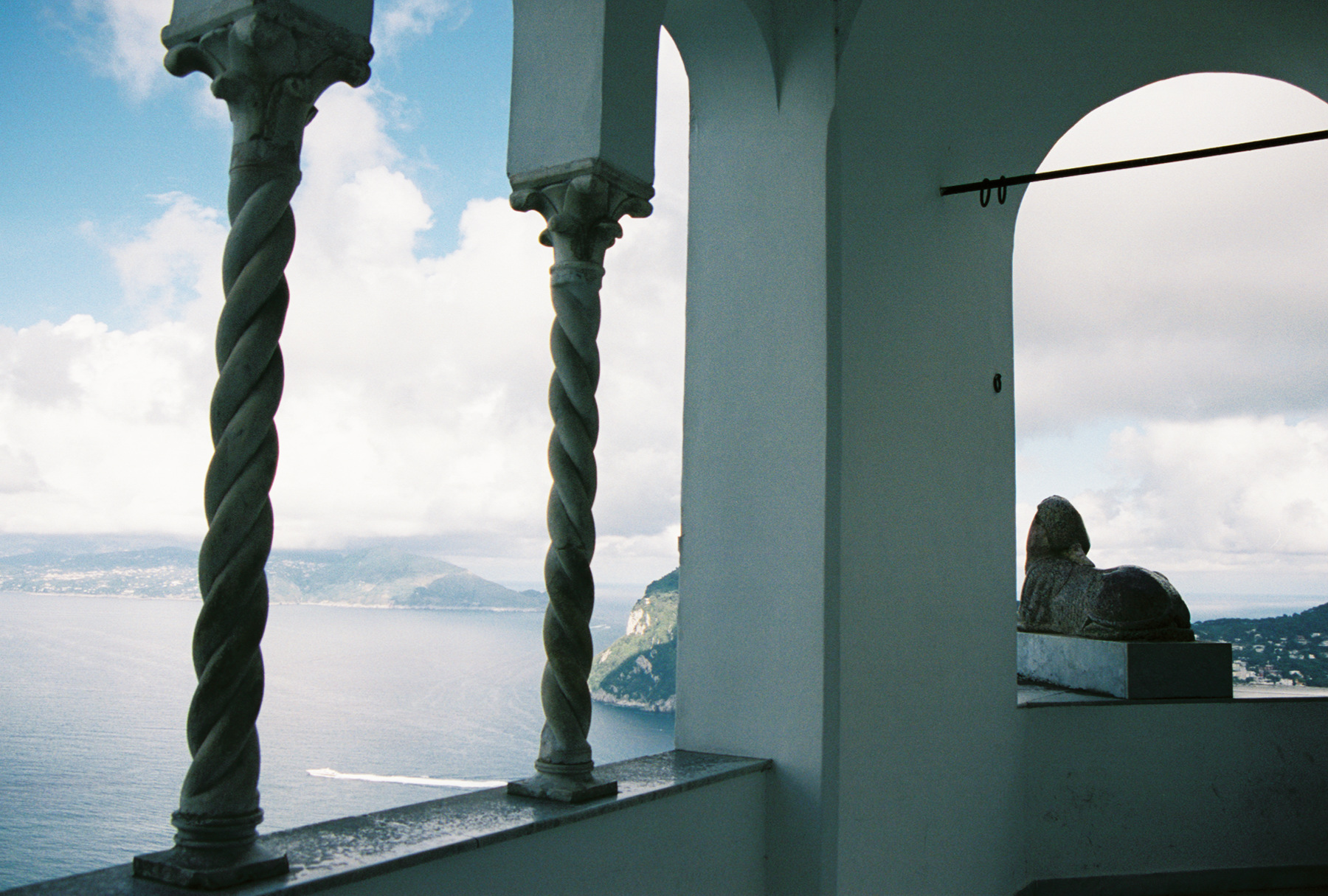
The sphinx watching over the sea, an ancient siren calling wanderlust to travelers.
The bird’s eye view.
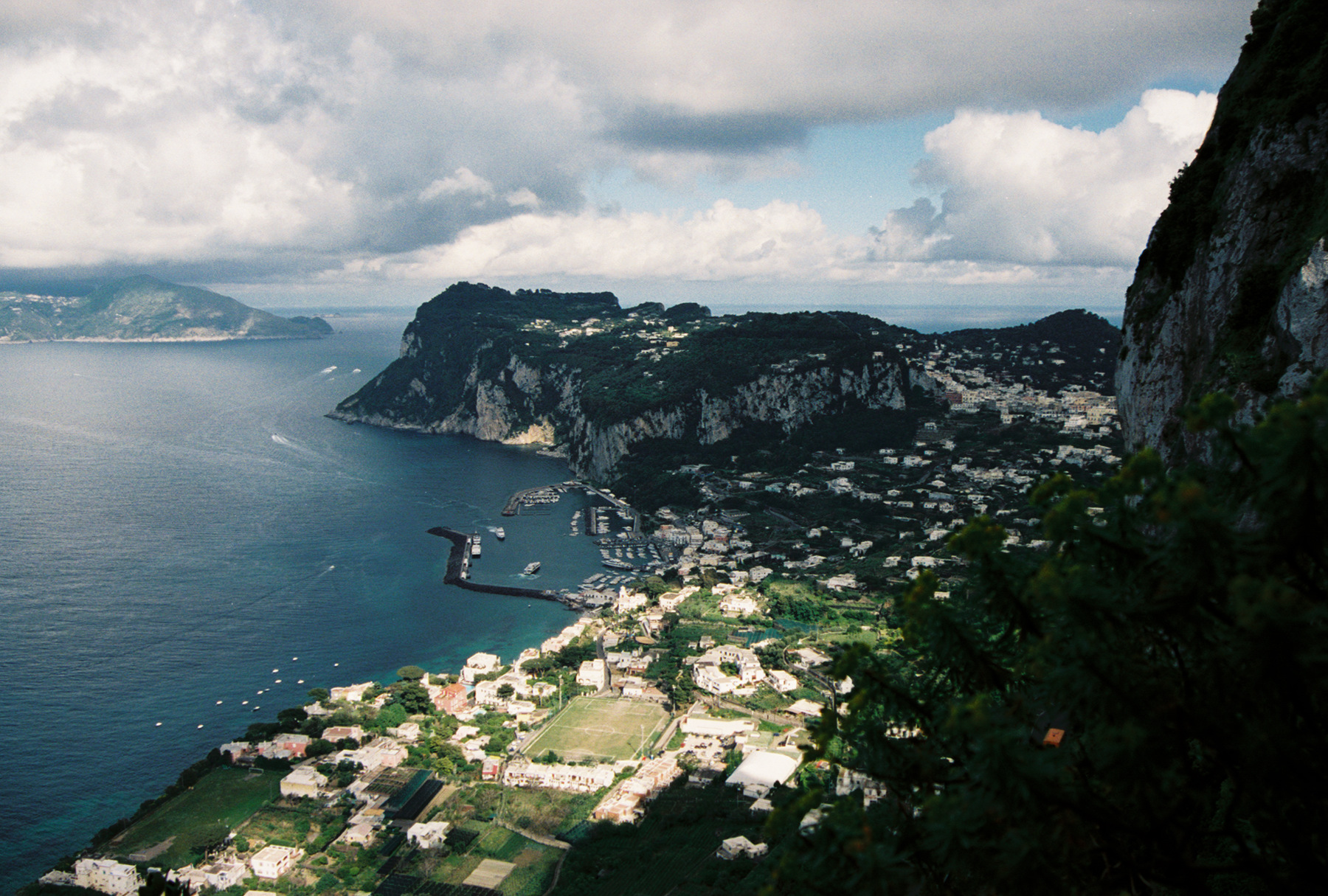
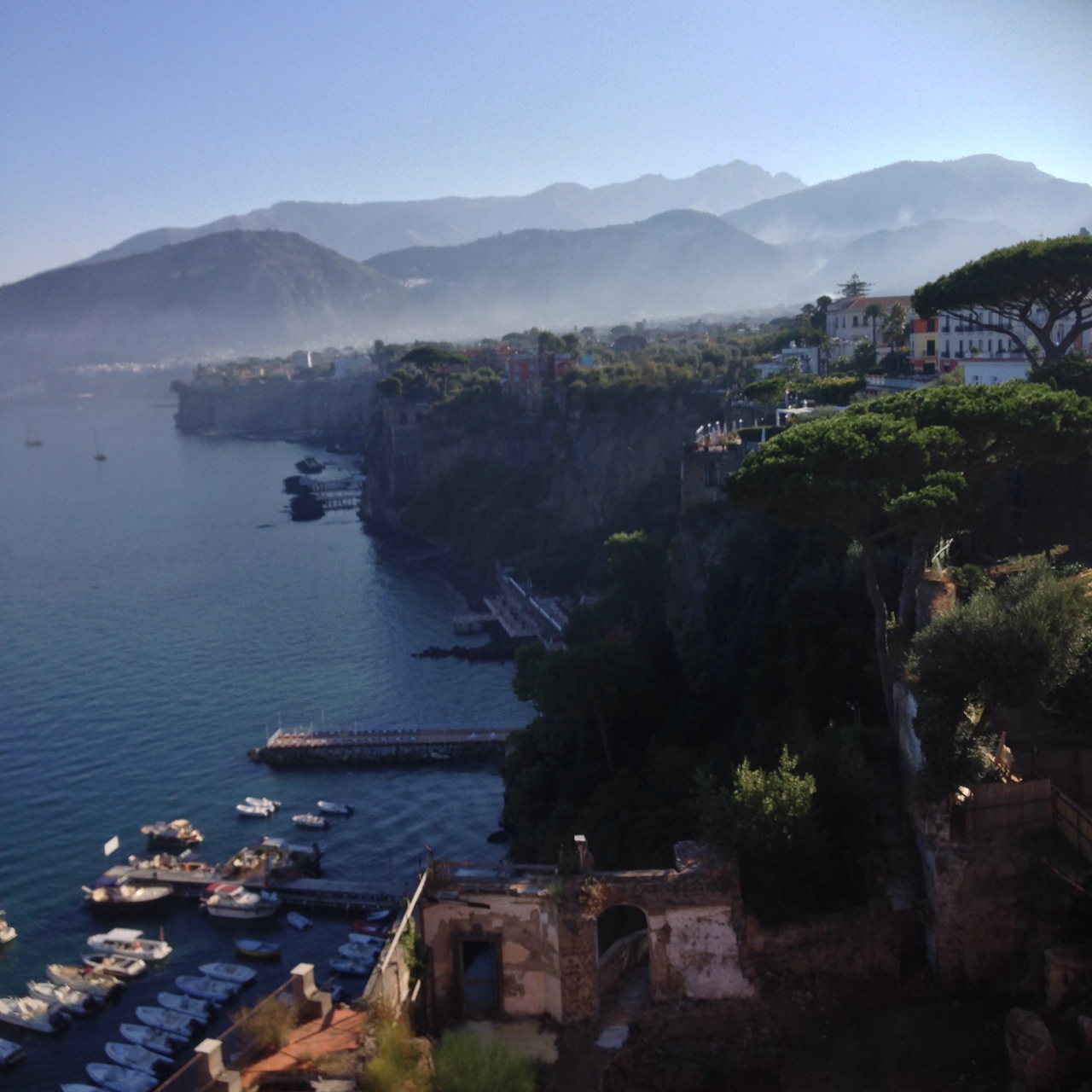
The beautiful sweeping coastline of Capri.
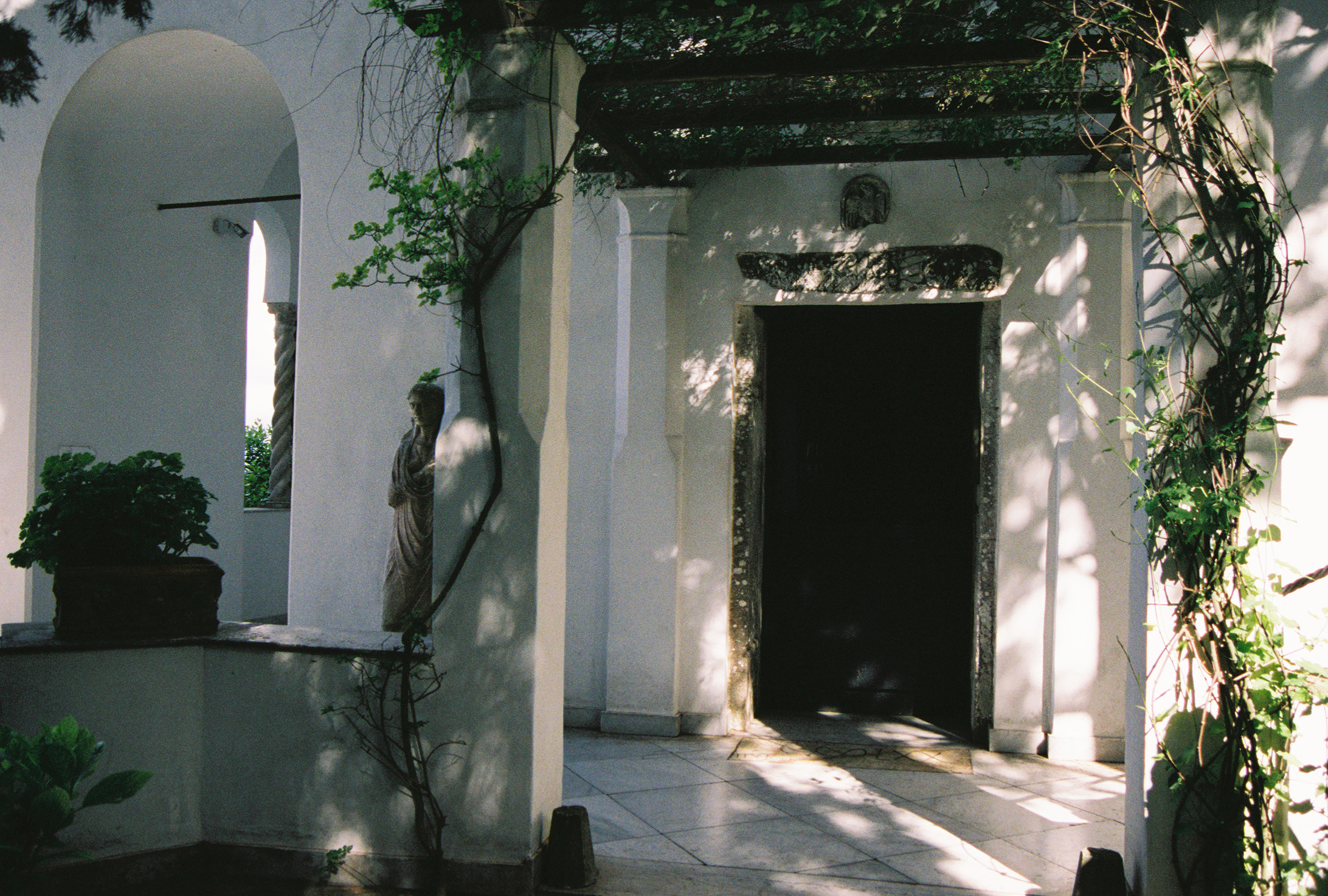
The tiny chapel in the garden.
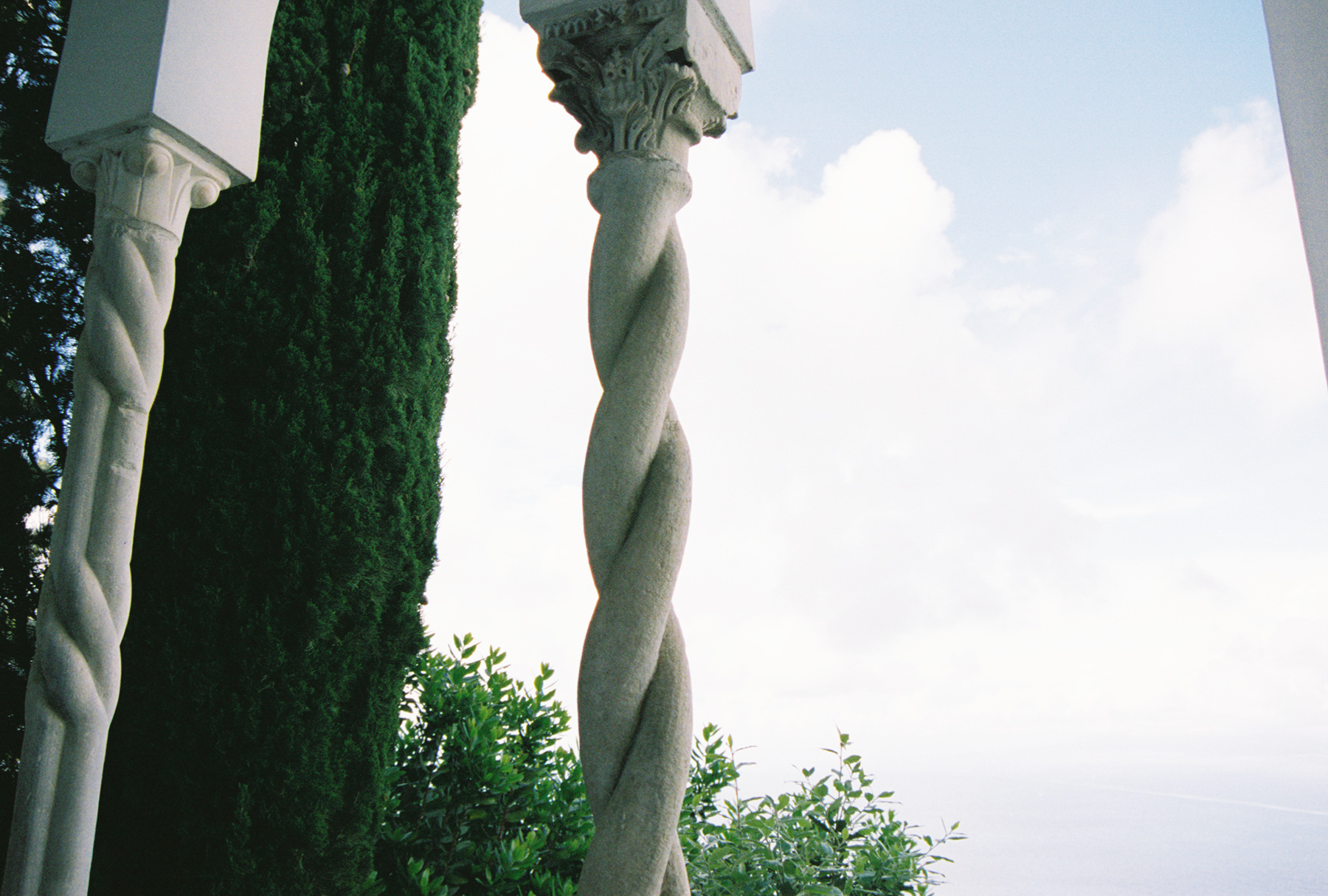
Cypress trees and gorgeous pillars on the terrace overlooking the sea.
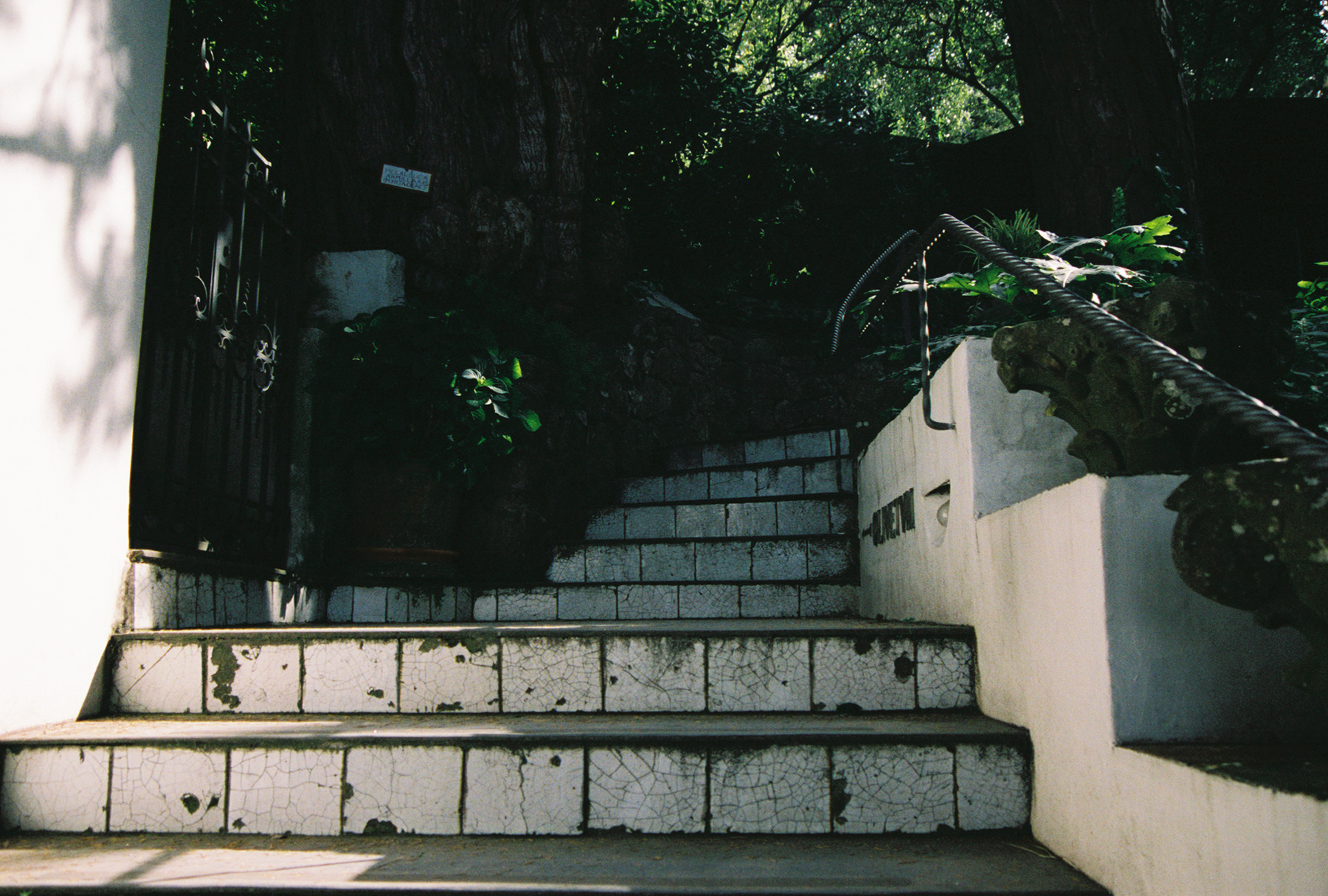
There are a series of stairs leading to sumptuous turns of the garden and pathways further up the hill.
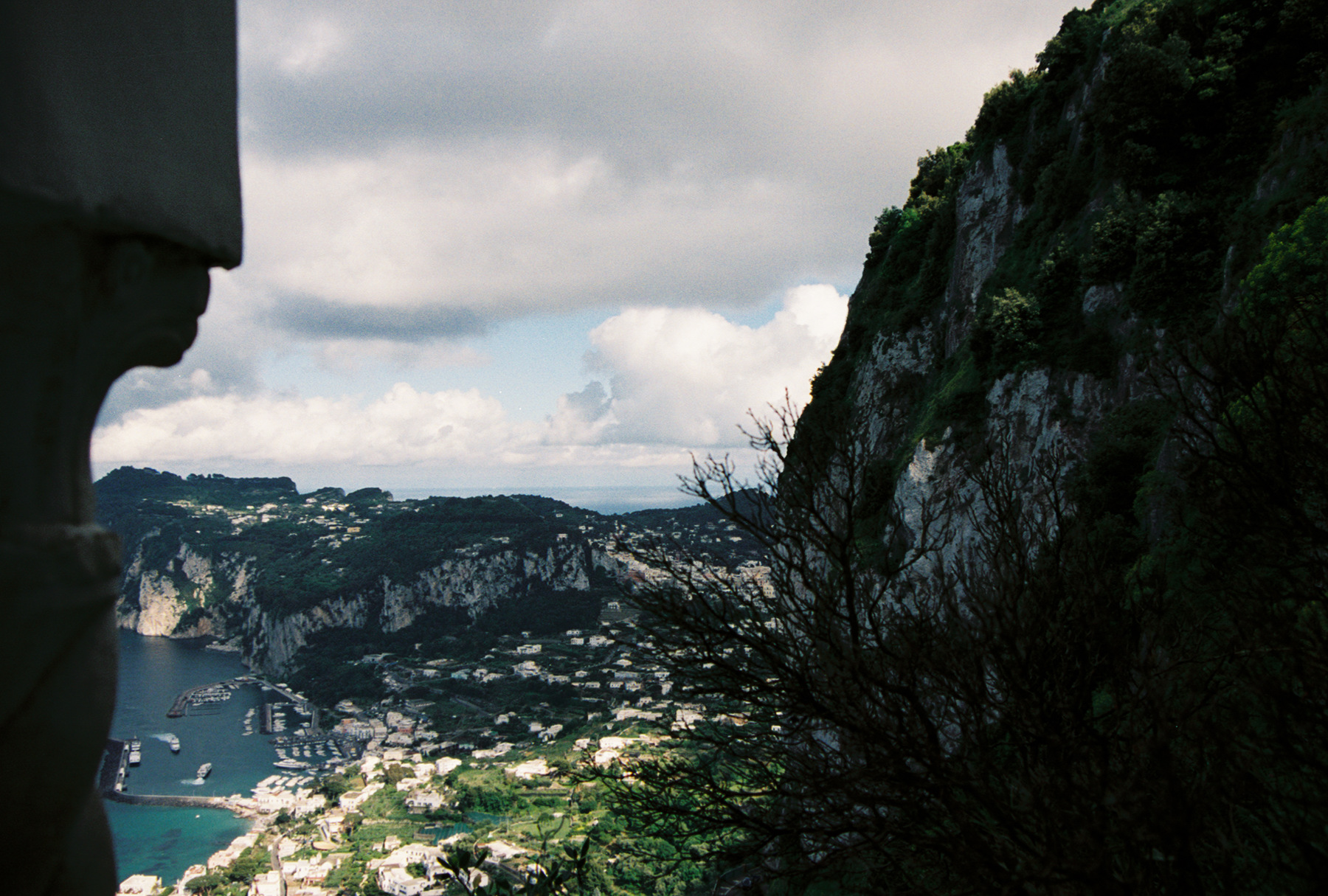
Although the villa is high up on Anacapri, there are soaring rocky cliffs surrounding the grounds. One rock was the the fort overtaken by the pirate Redbeard, which was later owned by Axel Munthe and donated back to the island (but owned by) his Swedish foundation.
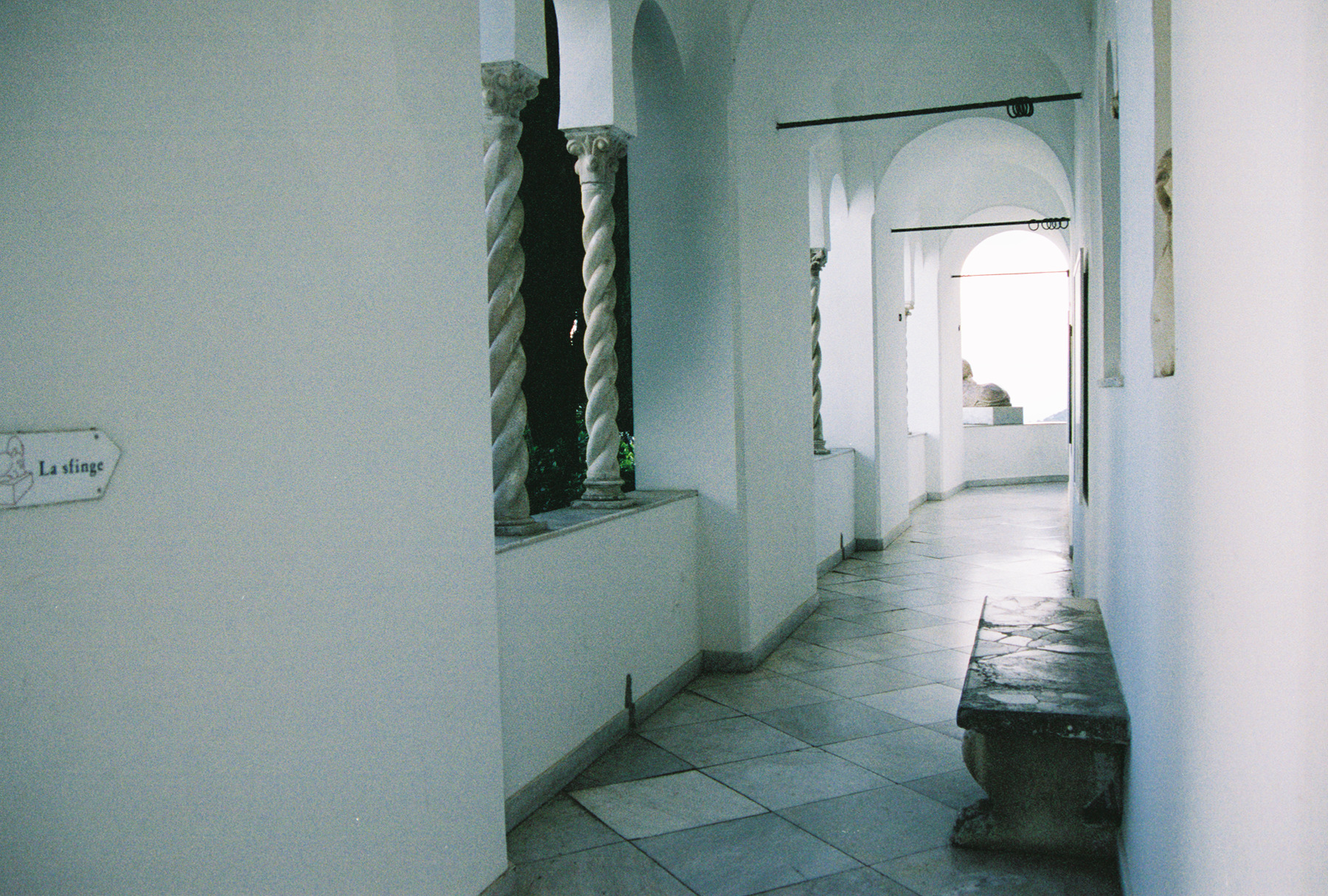
The veranda, home to the sphinx, is inviting in white tile and stone, with benches to rest on and views everywhere you look.
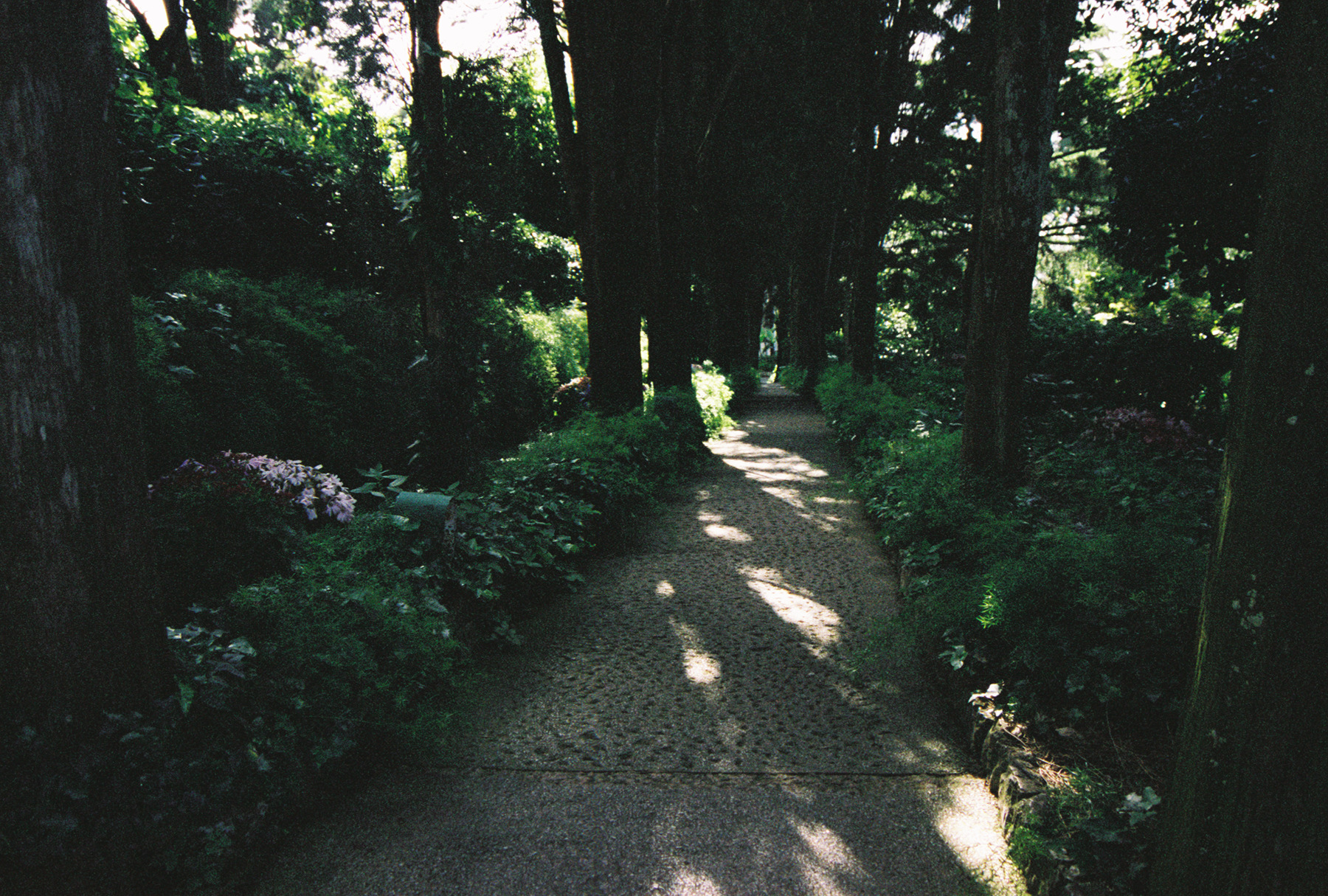
The charming path way walks are lined with greenery, flowers and fountains.
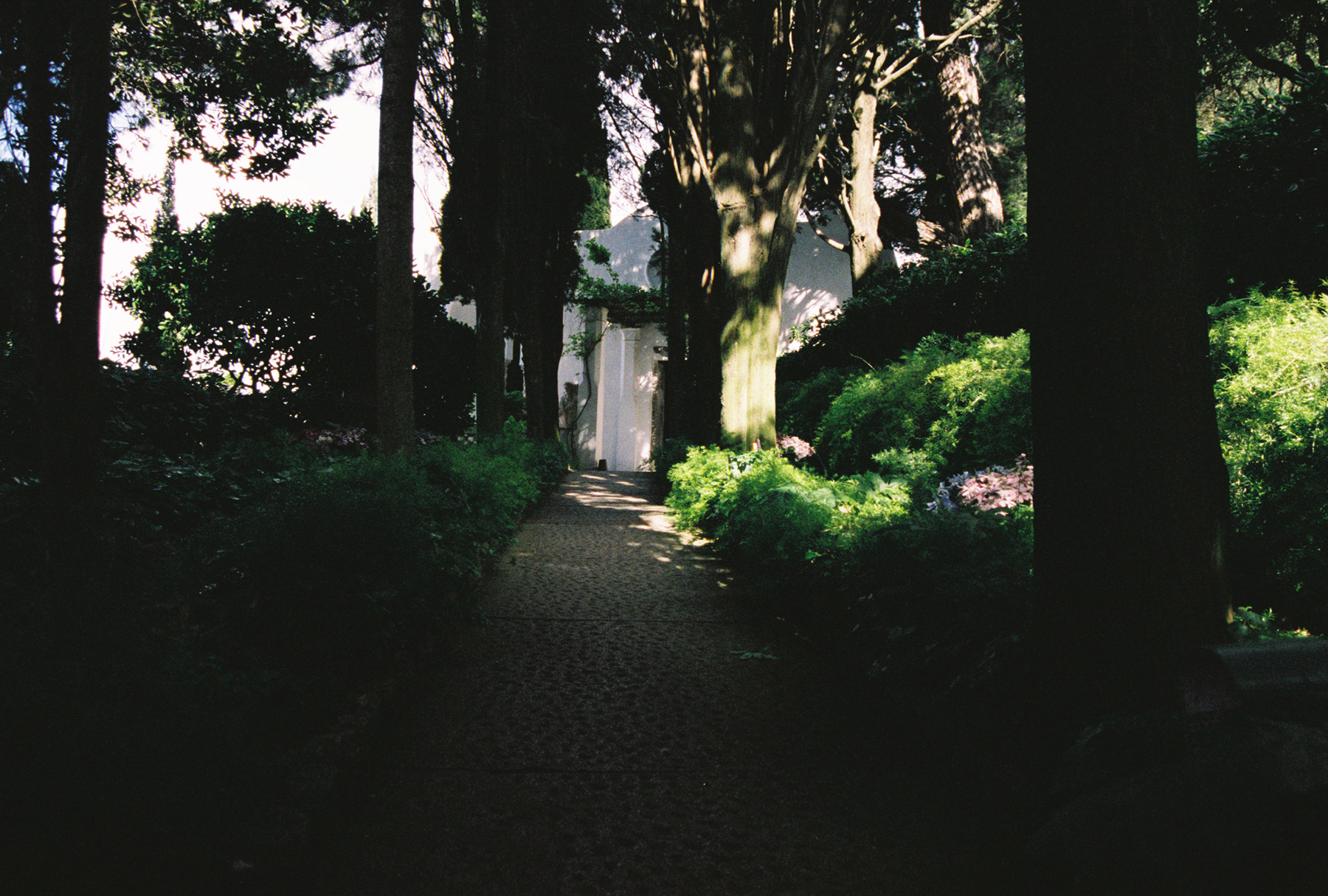
Every turn on the grounds is more and more enchanting. I cannot recommend enough an hour’s visit to the Villa for it’s peacefulness and beauty. On hot days it’s a cool and shady refuge.

Olive jars, more cypresses and Roman Umbrella pines!
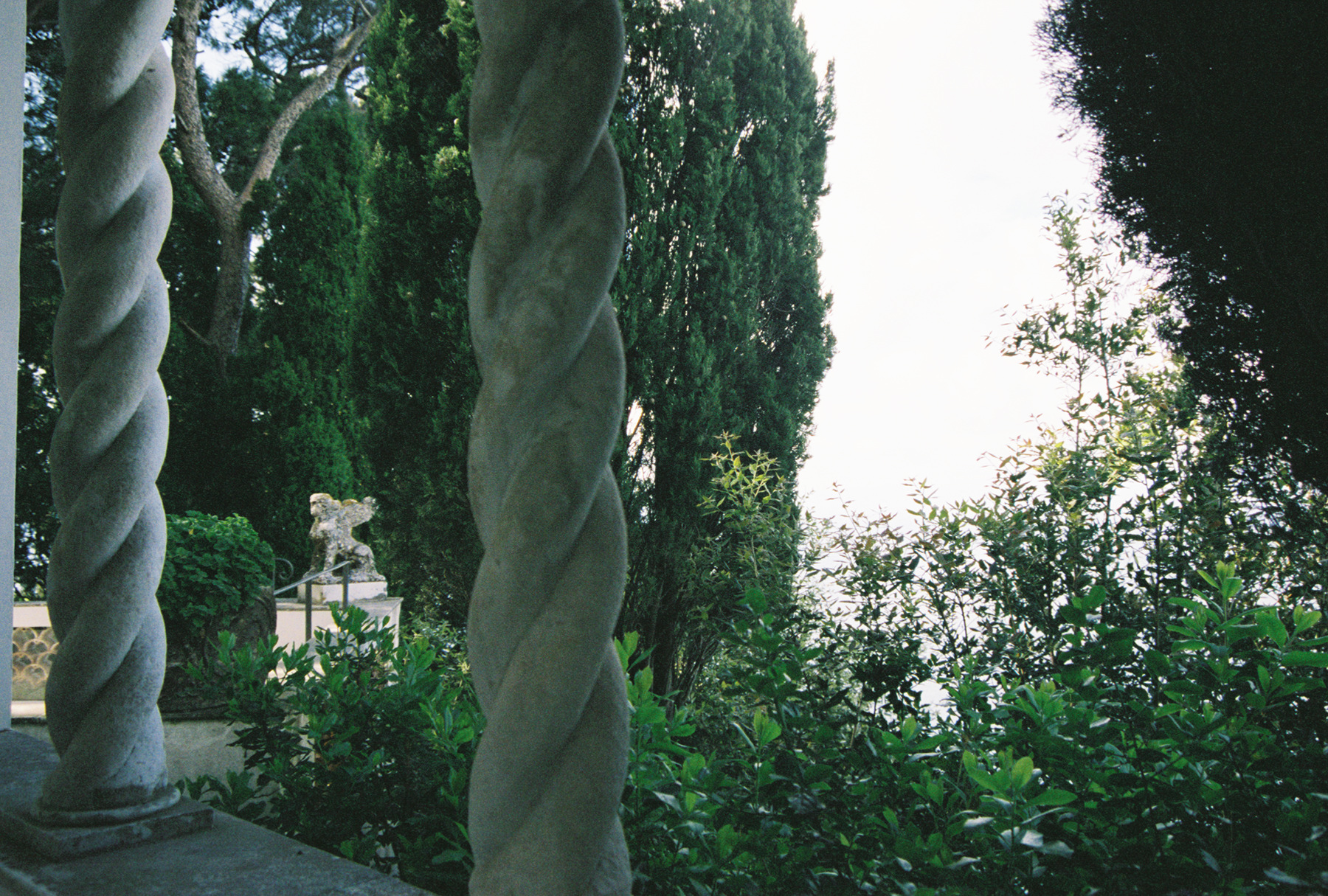
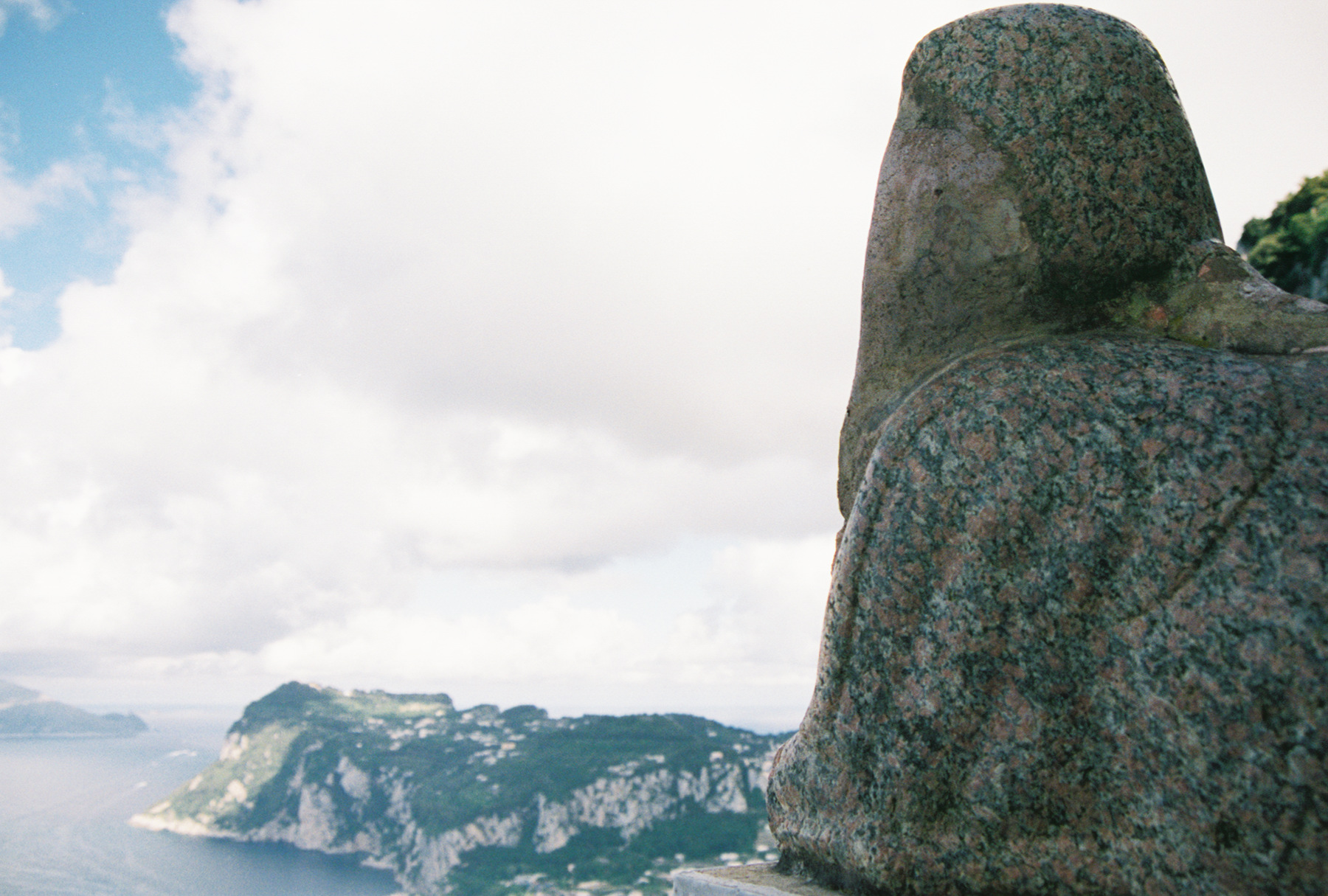
A side view of the Egyptian winged pegasus-like female sphinx.
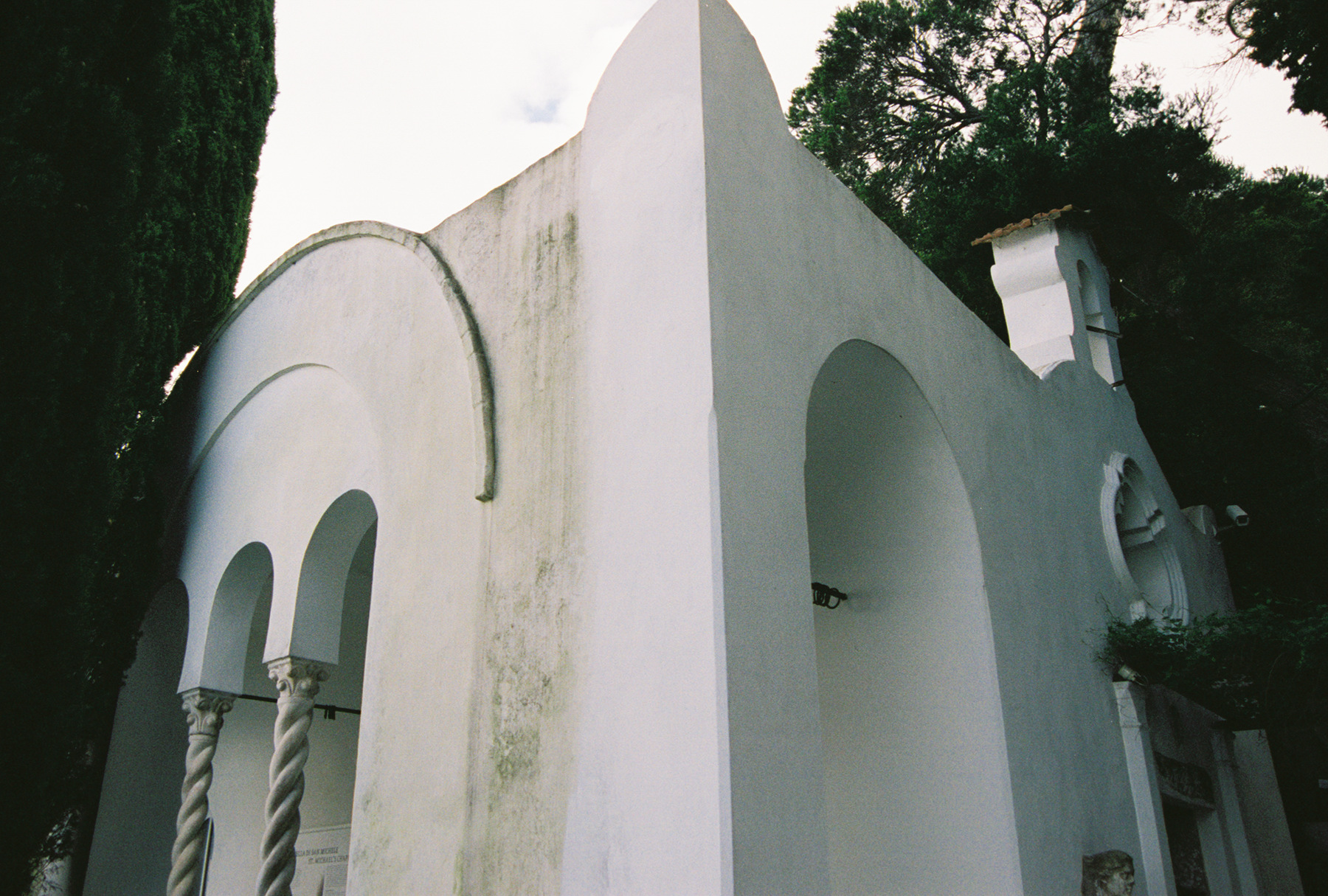
The exterior of Axel Munthe’s chapel.
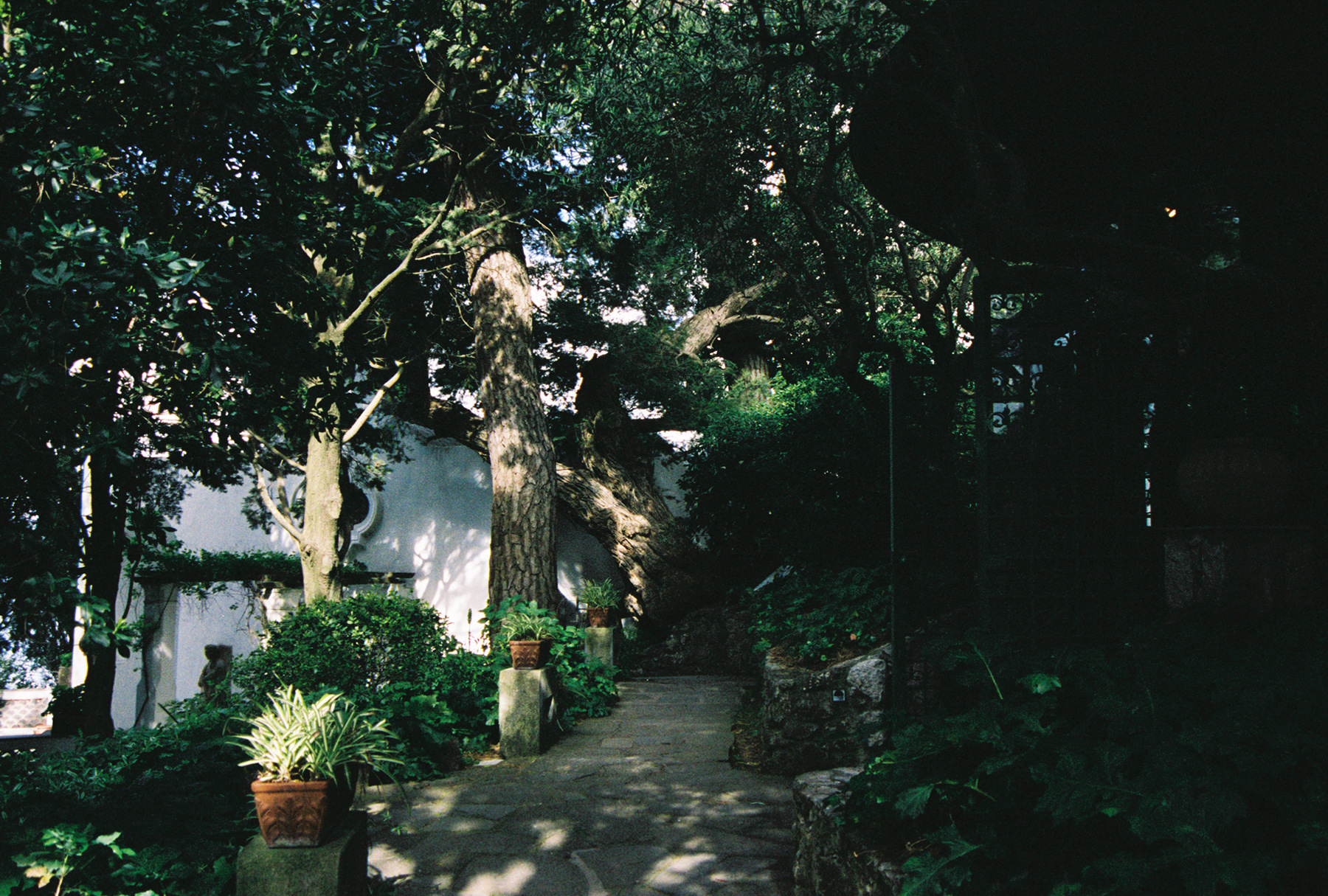
Potted urns along the walk.
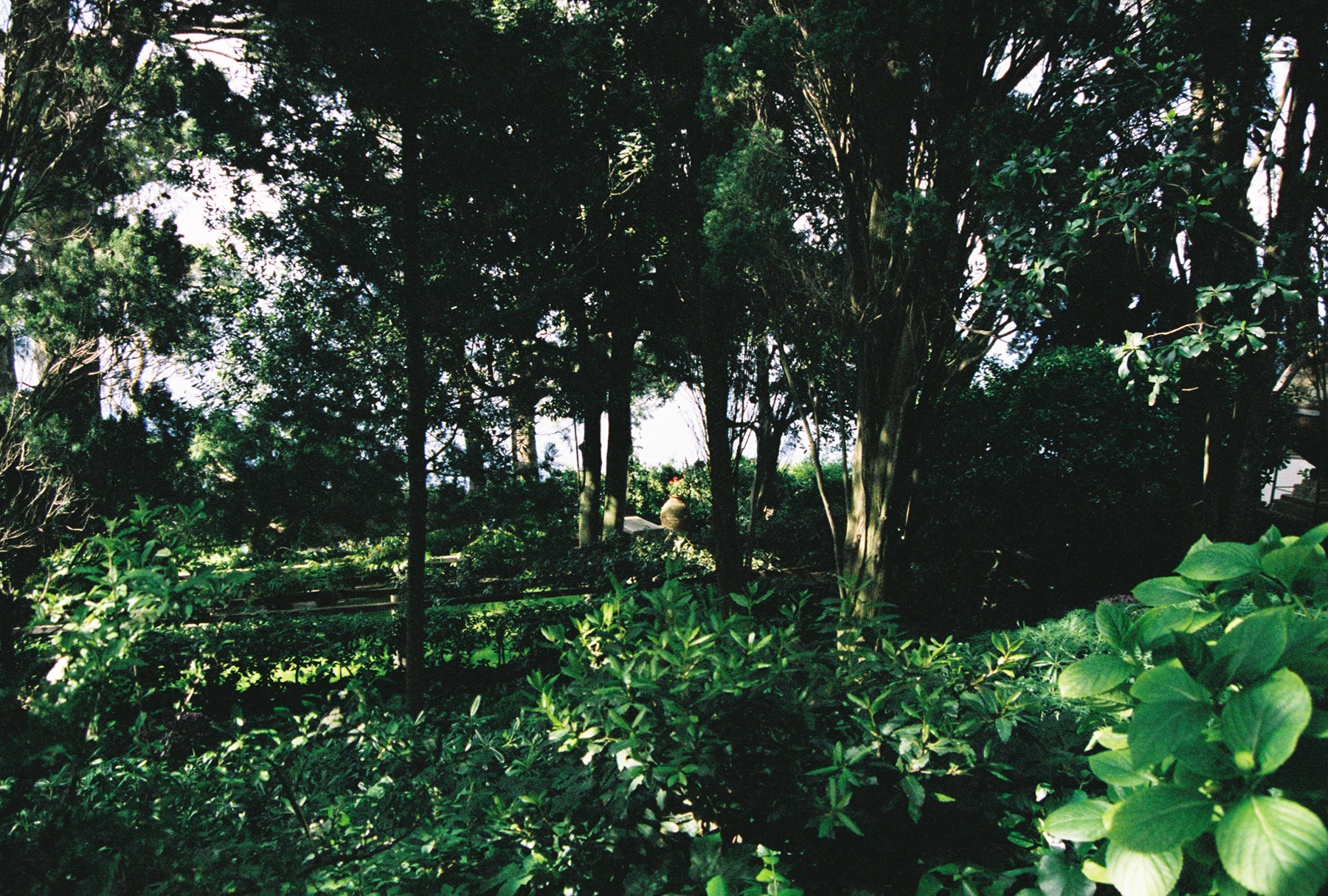
Herbal garden, leaves and trees.
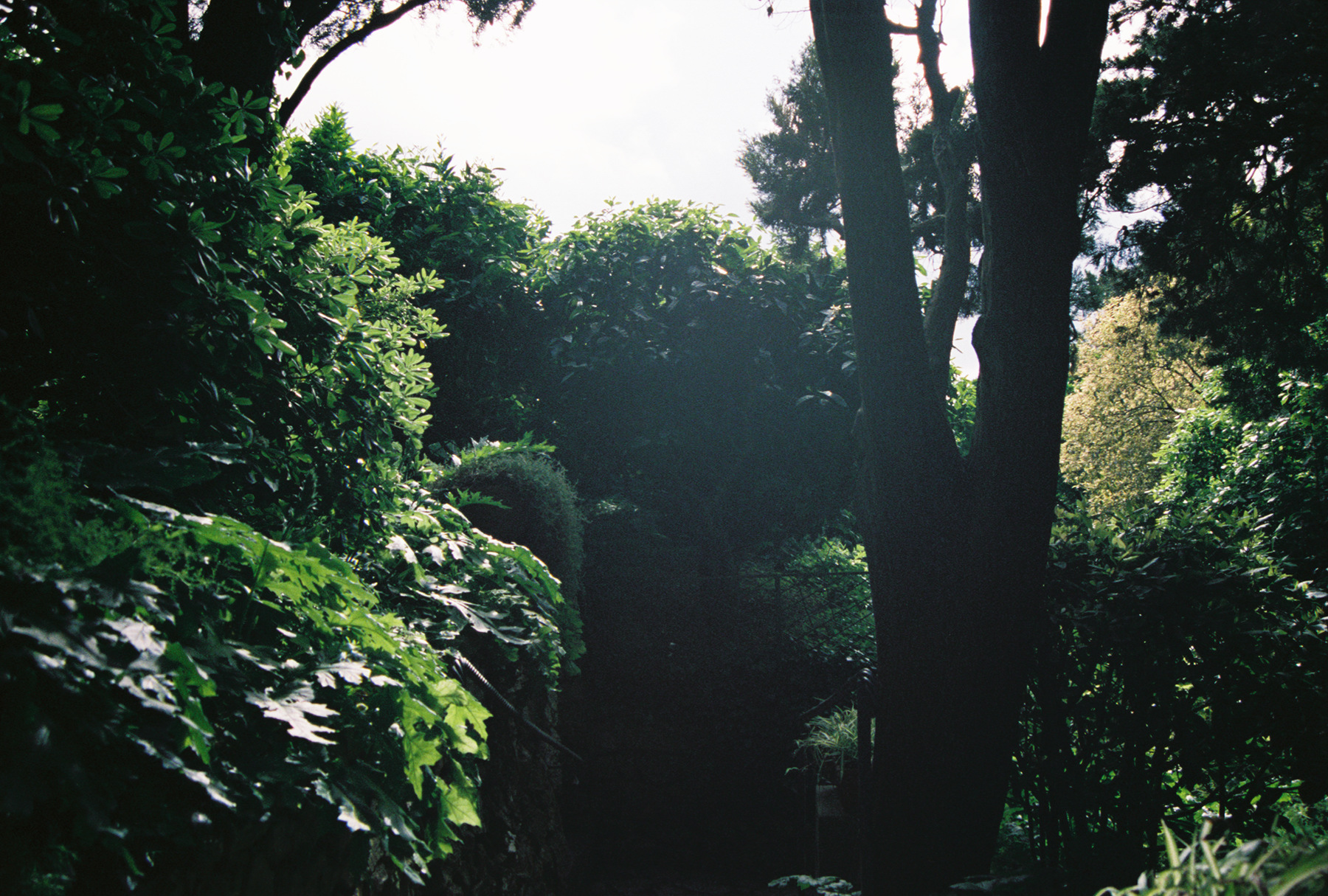
Hedges and shrubbery grown over decades forming fences.
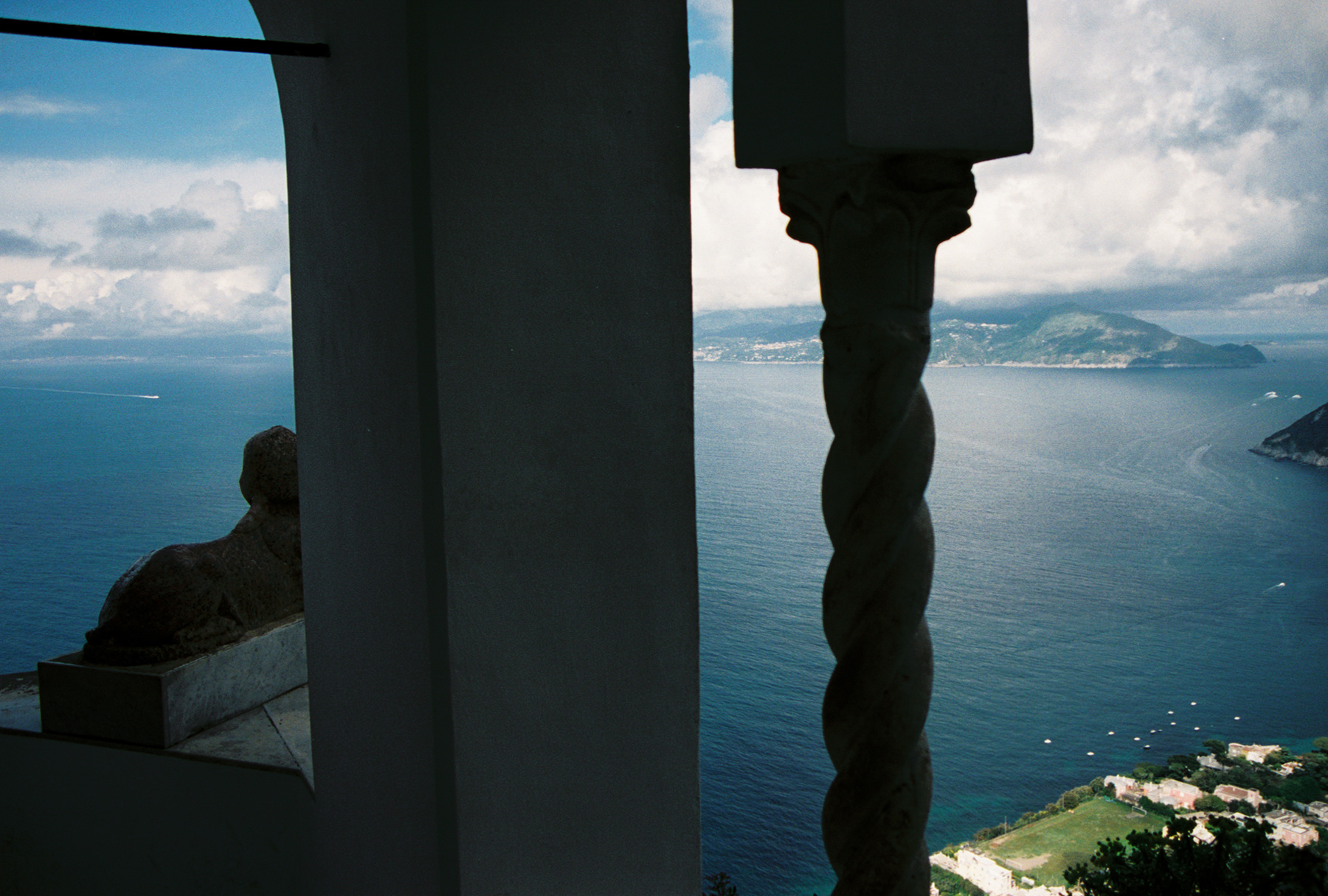
Another angle of the sphinx’s view.
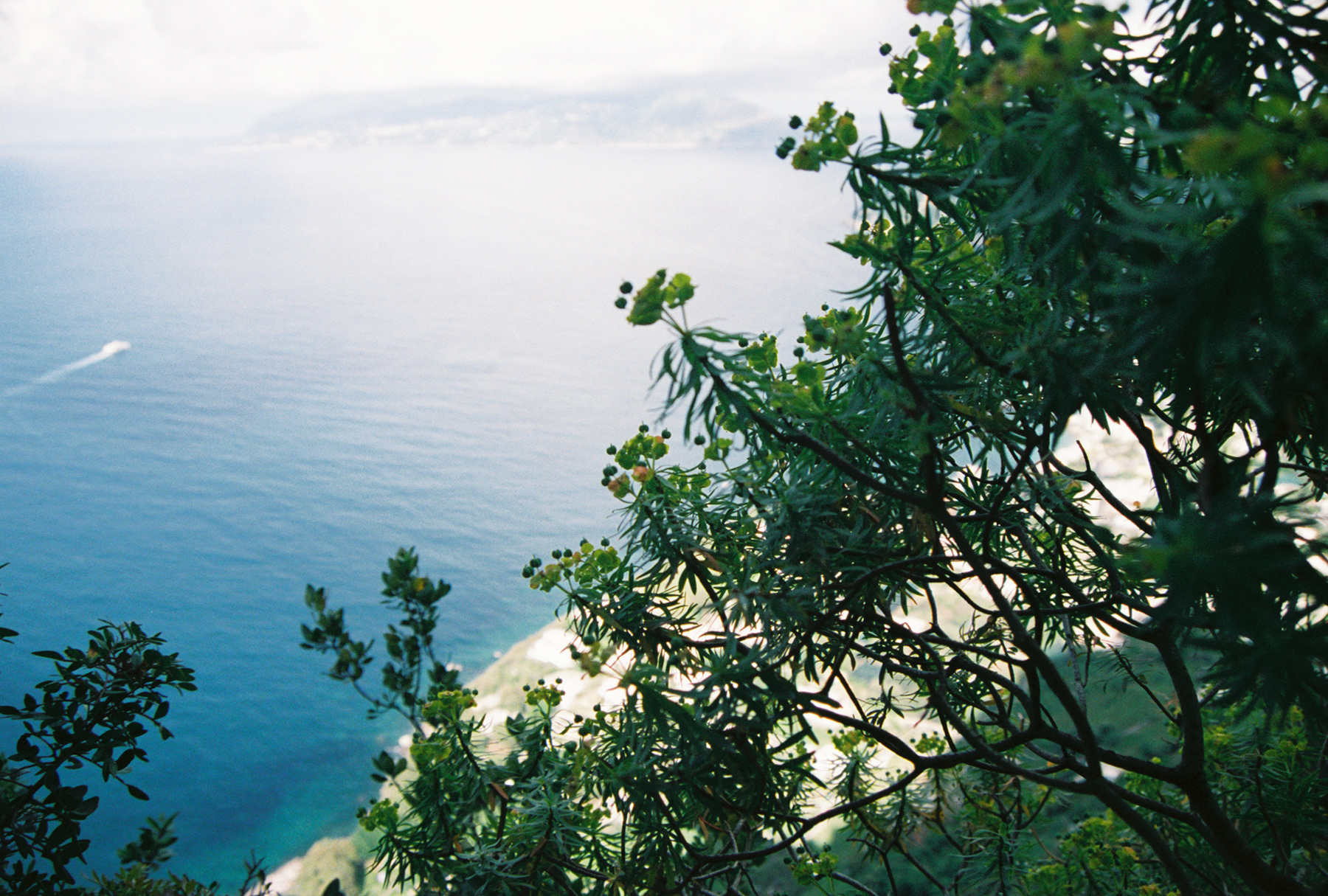
A tiny boat leaving the shore.
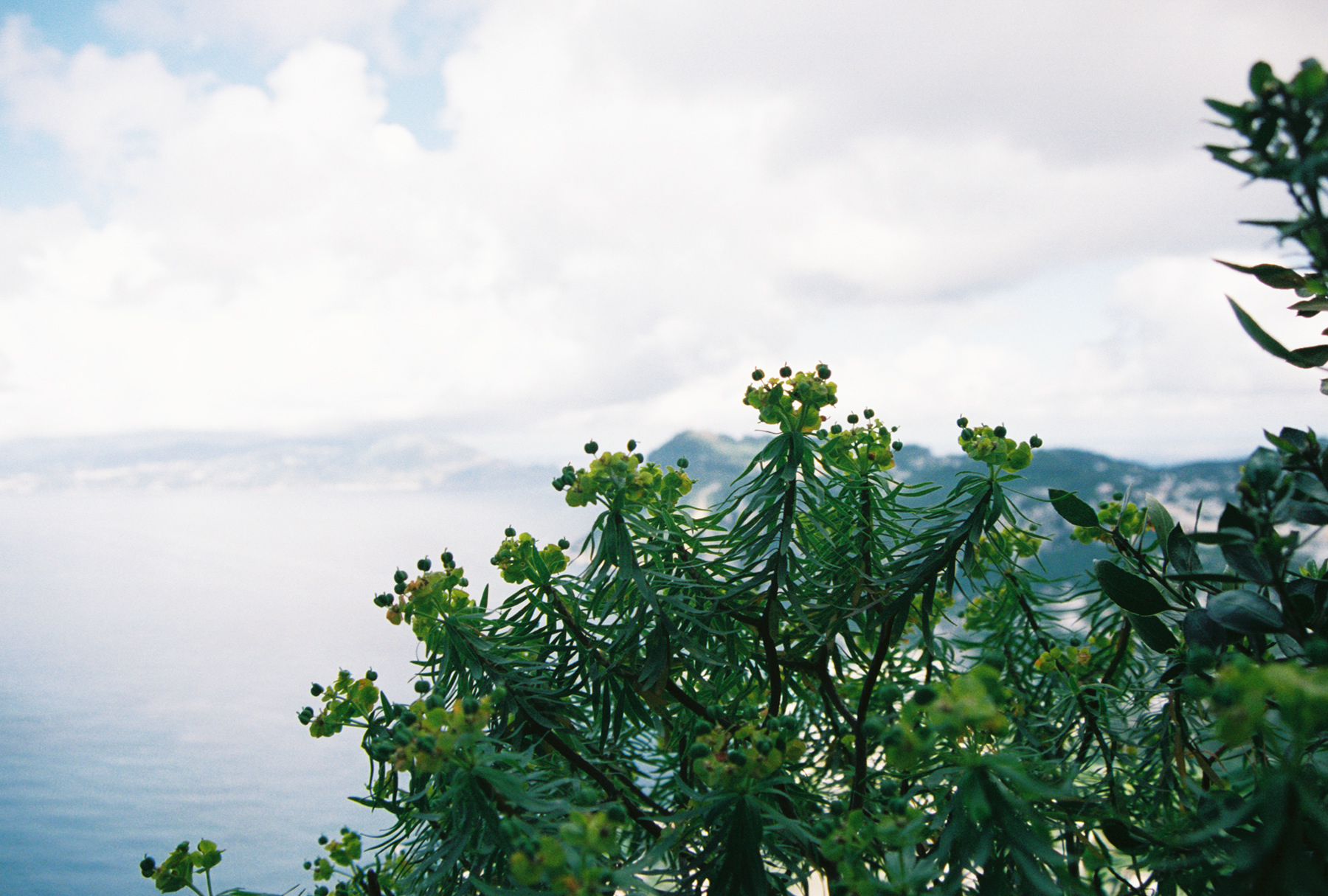
The clouds and mist find each other.
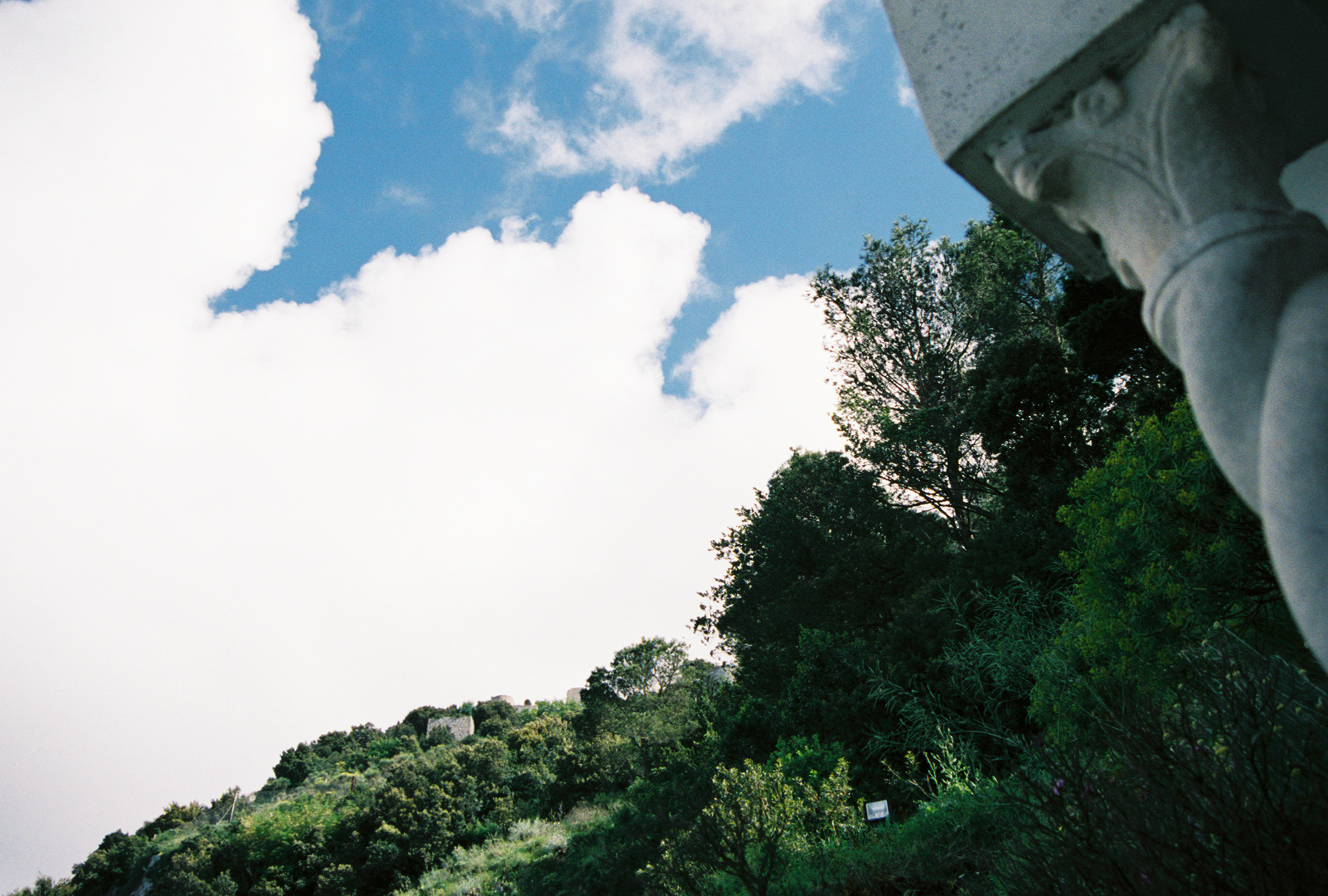
Because of Axel Munthe’s tireless advocation for the exotic array of birds who migrate to the island each year, Capri is now one giant bird sanctuary. Bird hunting is outlawed. The beautiful song of many different birds can be heard from morning to night, when the nightingales come out. It is then when I can feel Keats poem, Ode To A Nightingale, alive in the air.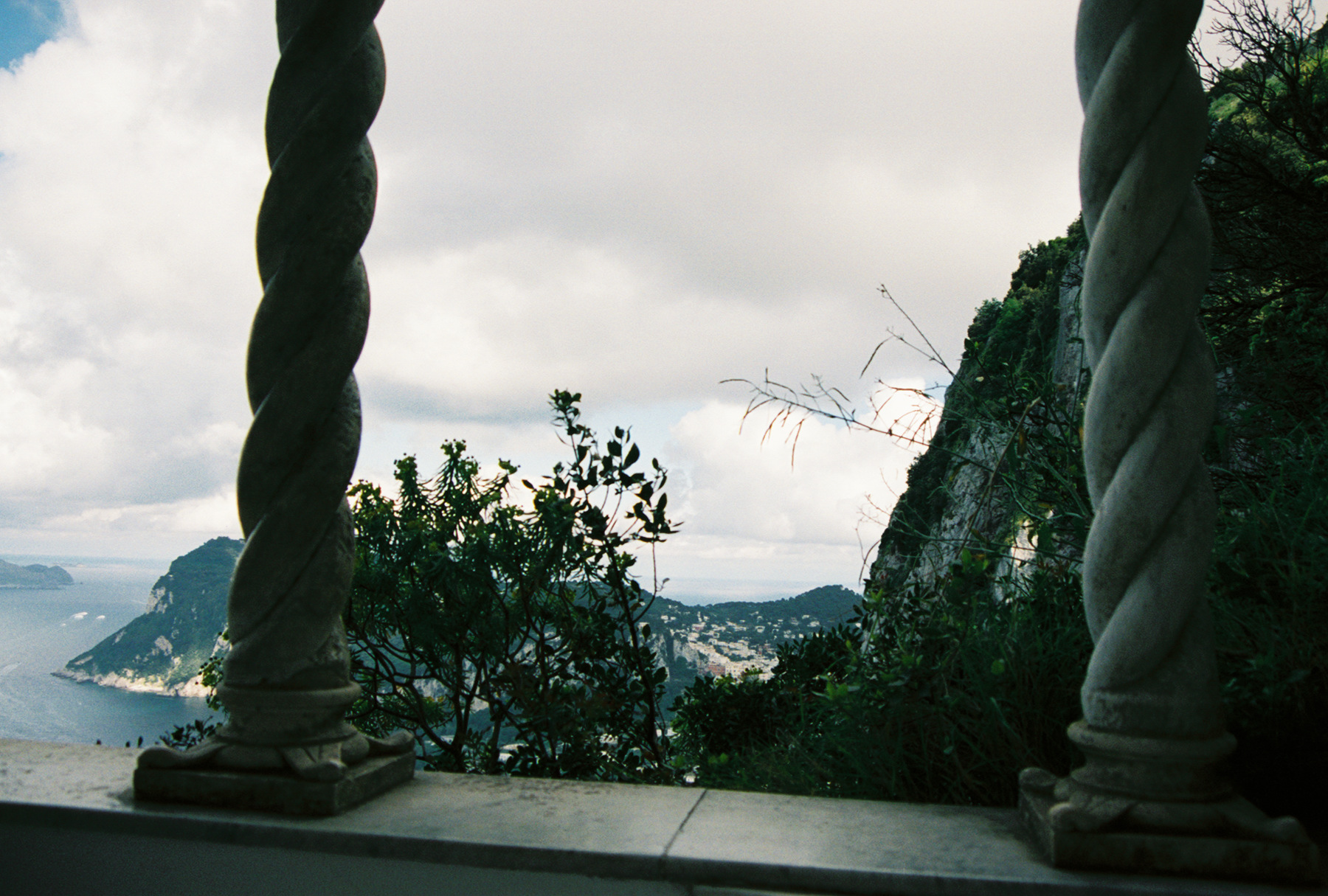
I worry some of the pictures are a bit repetitious but they were all beautiful reminders of being there. Even a subtle angle change is reminiscent of walking through the grounds and seeing the beauty unfold a step at a time. And believe it or not I am actually restraining myself.
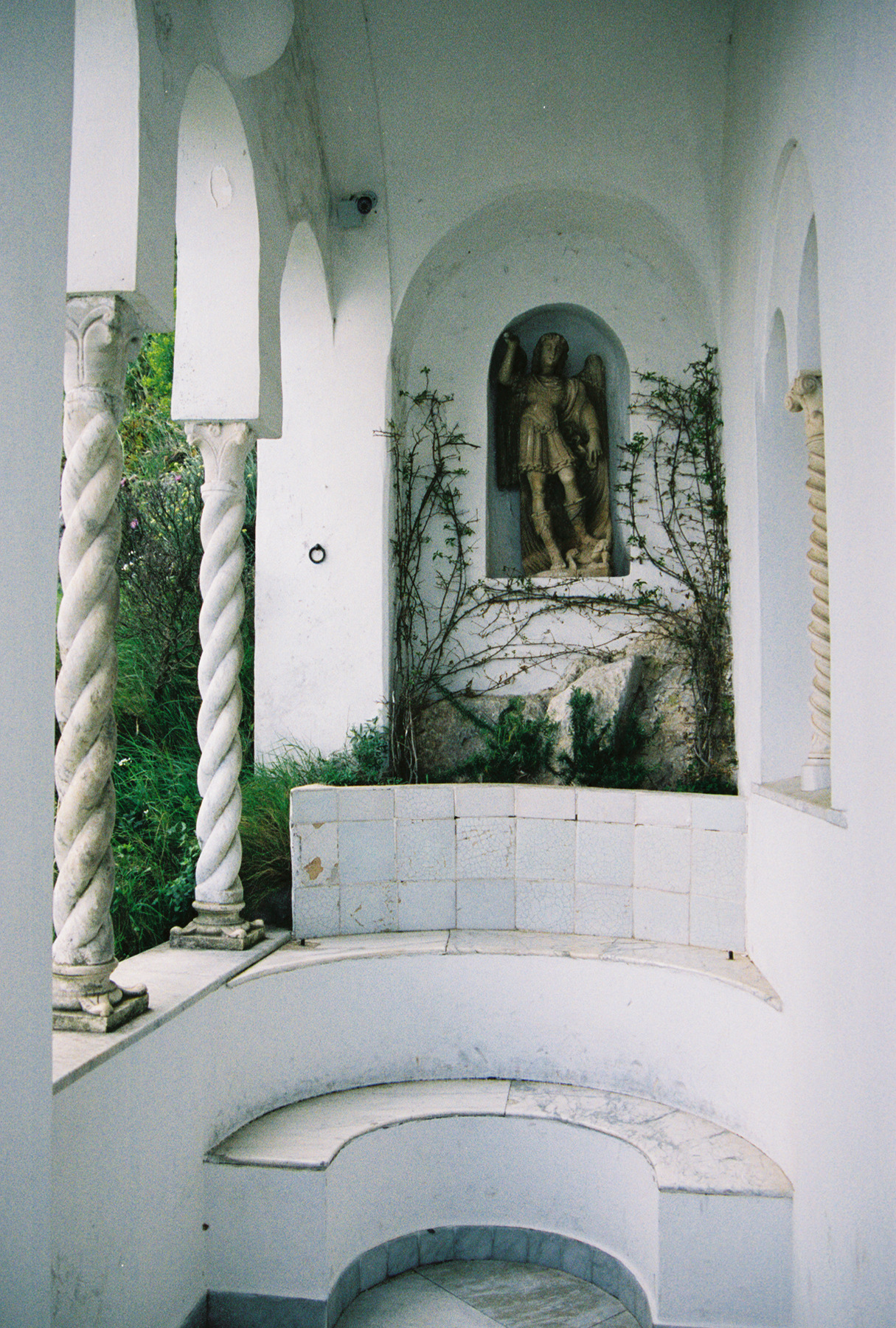
A semi hidden niche at the end of Villa San Michele’s labyrinthine gardens and loggias.
This was part one of the Villa San Michele series shot on portra 35mm film, velvia film slides and vintage kodak. The history of San Michele, more garden rambles, the cafe and interior of the villa, the flora and fauna of the grounds and excerpts from Axel Munthe’s book on his Villa to come in following posts. For visitor information visit: villasanmichele.eu . If you find yourself on Capri, even for a day, you must take a convertible taxi or the bus up to Anacapri (because it’s less crowded, lovely and full of hand painted tile, jewelry and sandal artisans) and it is the home of the Villa San Michele! You won’t regret it!
More to follow! These photographs and travel essays are copyright Rebecca Price Butler, alovelettertorome.com
That thou, light-winged Dryad of the trees
In some melodious plot
Of beechen green, and shadows numberless,
Singest of summer in full-throated ease.
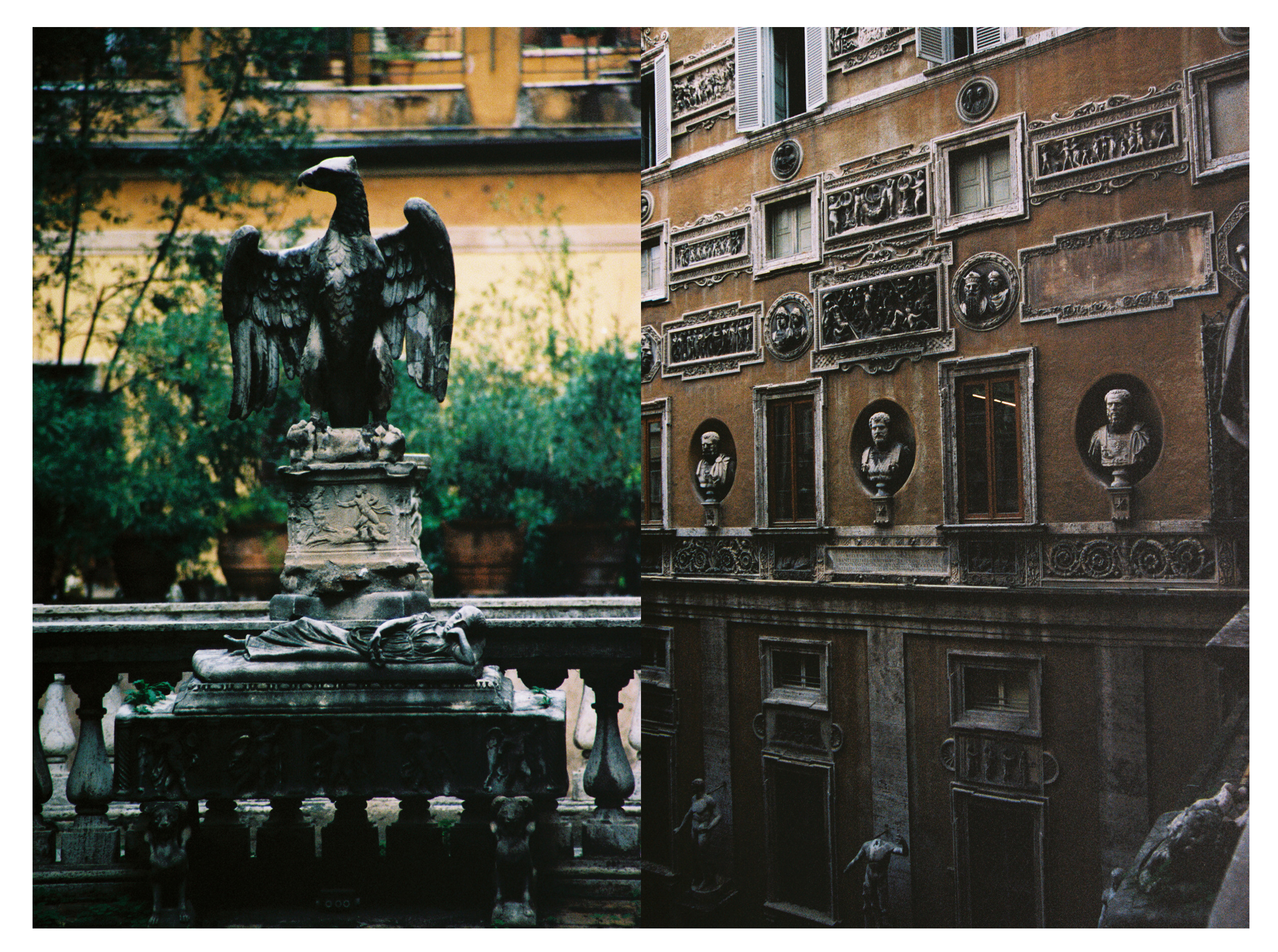
The Palazzo Mattei di Giove ,Via Michelangelo Caetani 32, other entrance in Via dei Funari, Ghetto, Rome, 00186
Last year I decided on our two visits to Rome I wanted my husband and I to spend some time hunting for off the beaten path spots we’ve not yet visited. I picked up some new books on the subject, City Secrets of Rome by Robert Kahn and Quiet Corners of Rome by David Downie. Upon seeing photographs of this amazing place I had to see it for myself. We started out having a splendid lunch at the Campo di Fiori after picking up gifts and alla’arrabbiata and carciofi alla romana spices at the charming outdoor market. We stopped, as is our custom, under the Bruno statue to pay respect and read the inscription,
A BRUNO – IL SECOLO DA LUI DIVINATO – QUI DOVE IL ROGO ARSE
(English: To Bruno – the century predicted by him – here where the fire burned).
We walked to the Jewish Ghetto section of Rome (an ancient and fascinating section of the city with a complicated history). We had to ask directions several times and still walked by the spot a few times. But, we found the Palazzo Mattei di Giove and it was worth the effort.
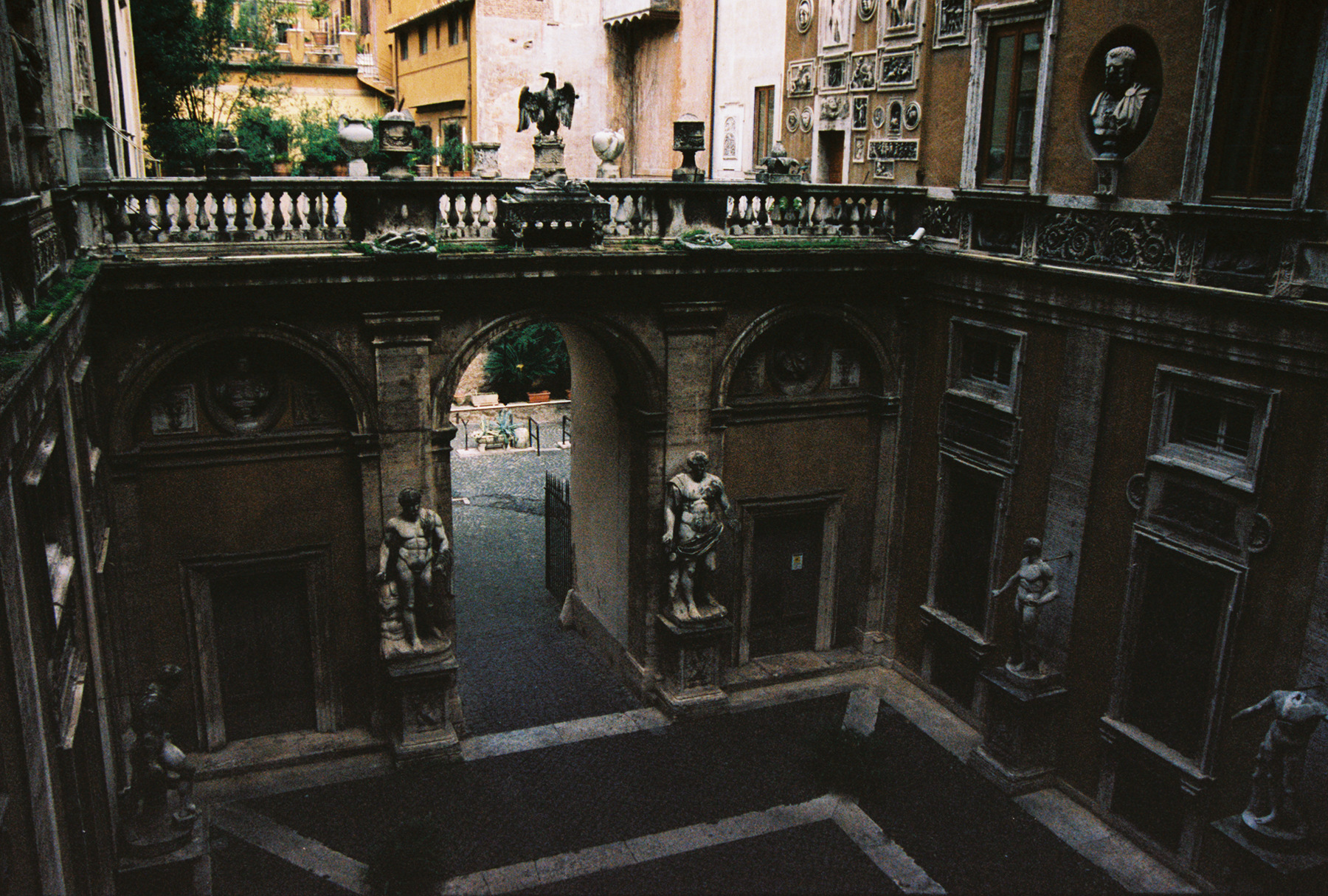
Mattei di Giove, designed by noted baroque architect Carlo Maderno—who also designed the facade of St. Peter’s Basilica—teems with busts, bas-reliefs, and sarcophagi collected by the palazzo’s namesake owner, Marchese Asdrubale Mattei. (Info source: National Geographic Traveler)
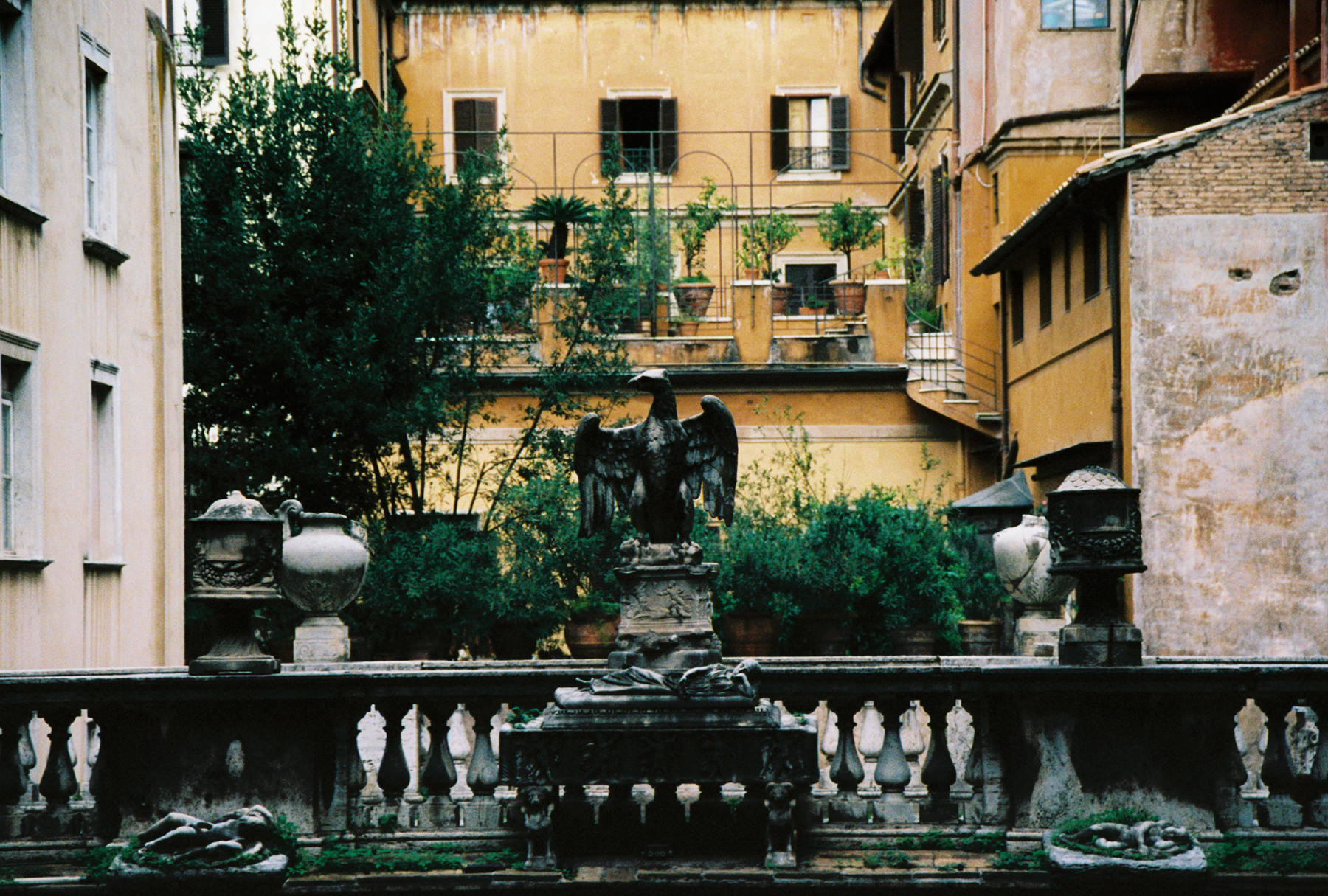
The House of Mattei was one of the most powerful noble families of Rome during the Middle Ages and early modern era, holding high positions in the papal curia and government office.
The Palazzo Mattei di Giove is the most prominent among a group of Mattei houses that forms the insula Mattei in Rome, Italy, a block of buildings of many epochs.
To distinguish this section from the others it carries the name of a Mattei fief, Giove. The Mattei owned a number of other palazzi that carried the family name including Palazzo Mattei di Trastevere across the Tiber as well as properties in Umbria, the Palazzo Mattei Paganica.
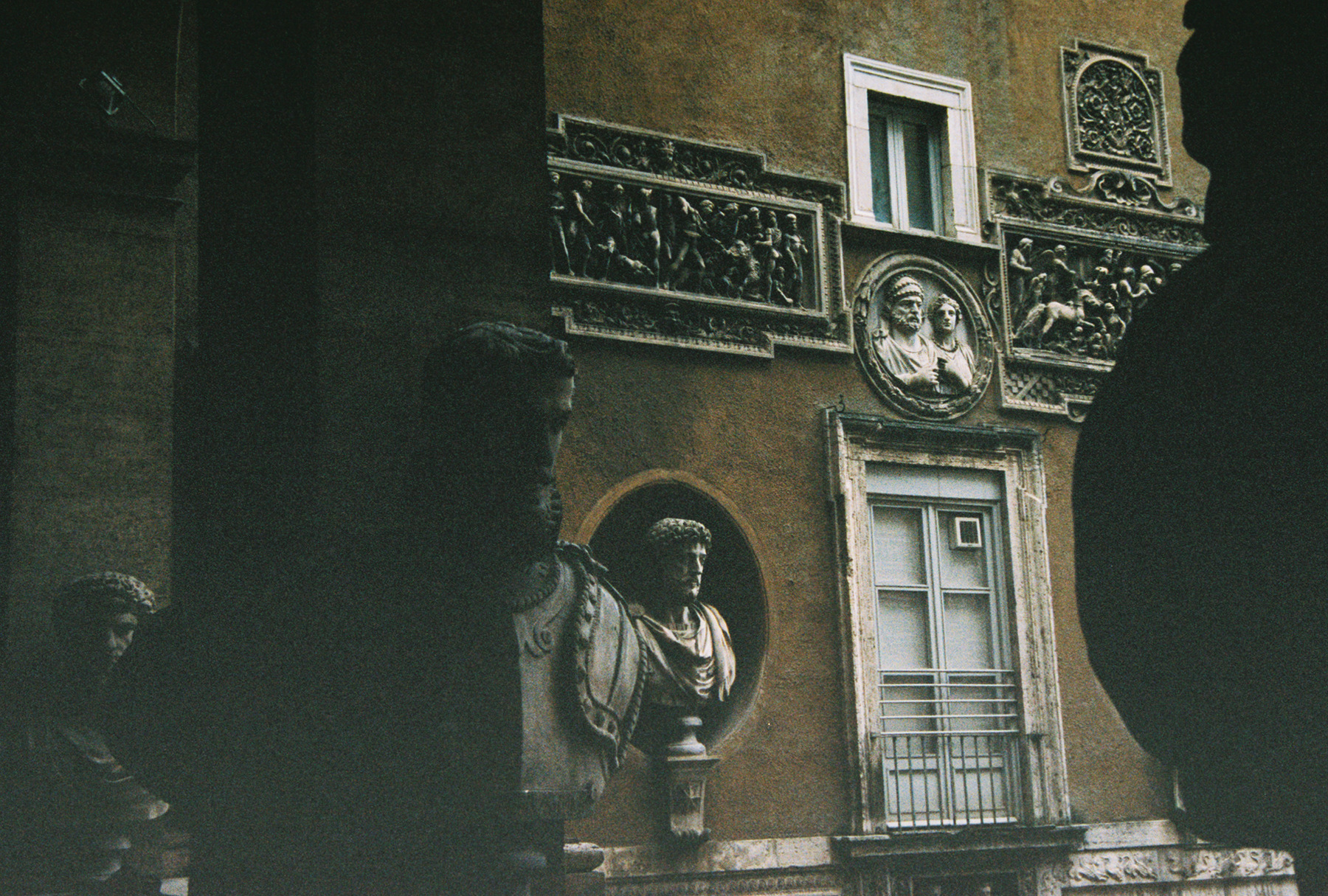
Carlo Maderno designed the palace at the beginning of the 17th century for Asdrubale Mattei, Marquis di Giove and father of Girolamo Mattei and Luigi Mattei. He was also the brother of Ciriaco Mattei and Cardinal Girolamo Mattei. It was Maderno who was responsible for the extravagantly enriched cornice on the otherwise rather plain stuccoed public façade, the piano nobile loggia in the courtyard and the rooftop loggia or altana.
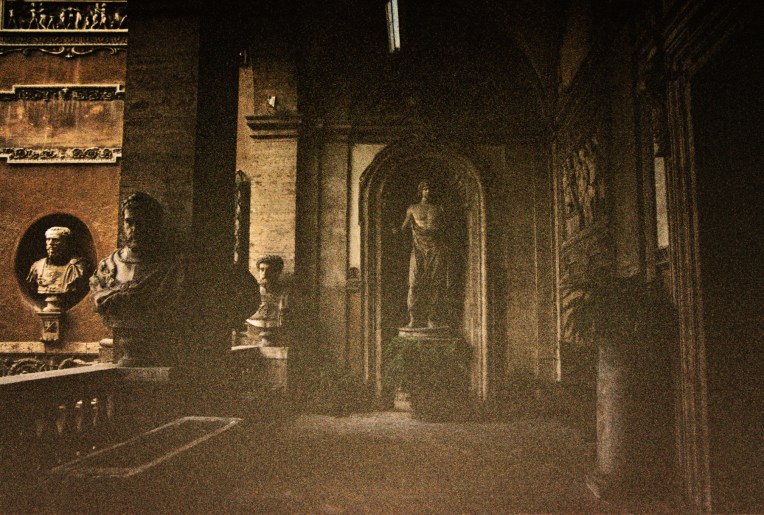 For the interior of the palazzo, Pietro da Cortona was commissioned to execute the pair of compositions on the ceiling of the gallery, dating before 1626. In the early 19th century, a group of paintings from the collection at the palazzo was purchased by William Hamilton Nisbet and removed to Scotland.
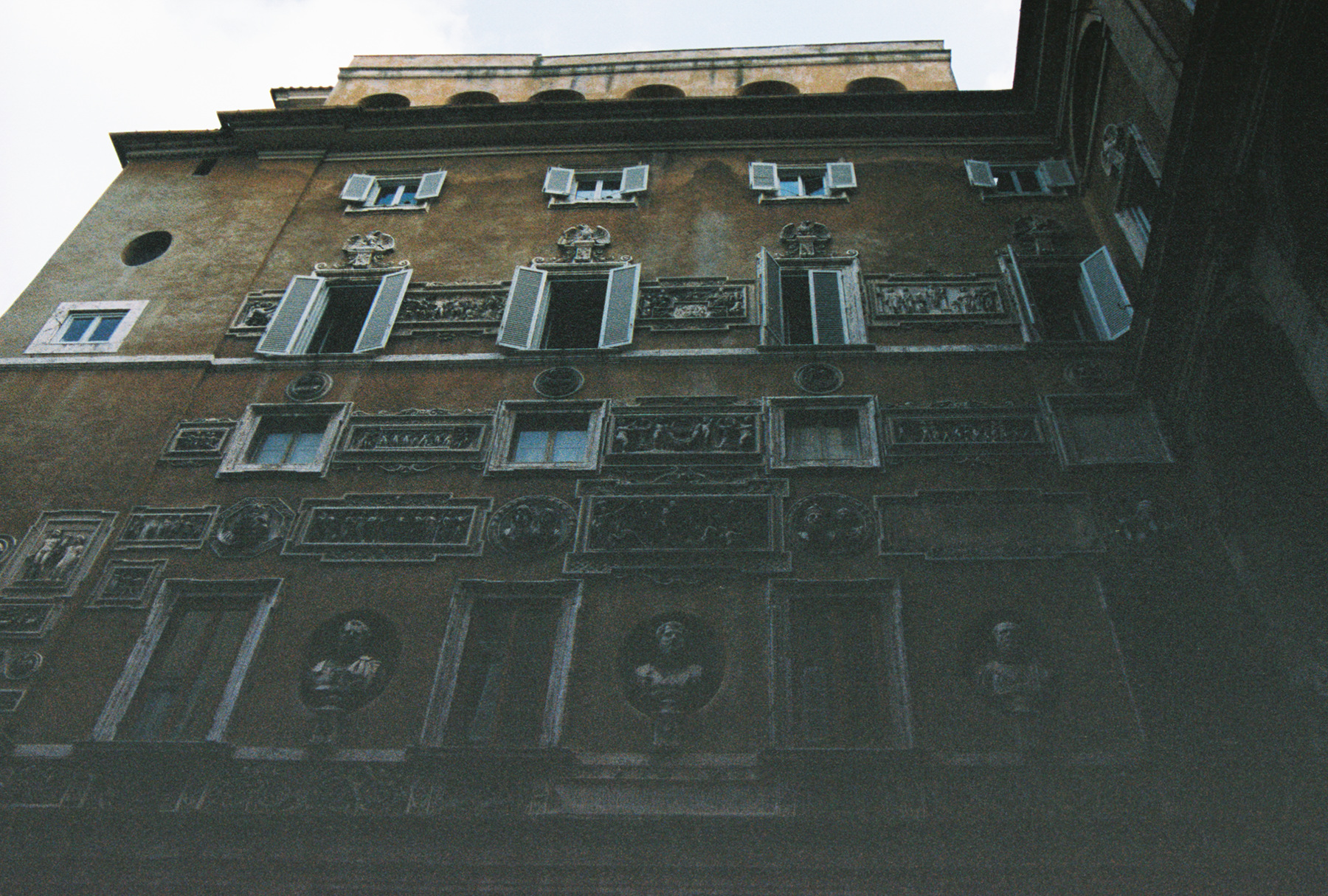
Like others of the Mattei family, Asdrubale Mattei was an enthusiastic patron of the arts. Michelangelo Merisi da Caravaggio (better known simply as Caravaggio) is recorded as living at the palazzo in 1601. (source: Wikipedia)
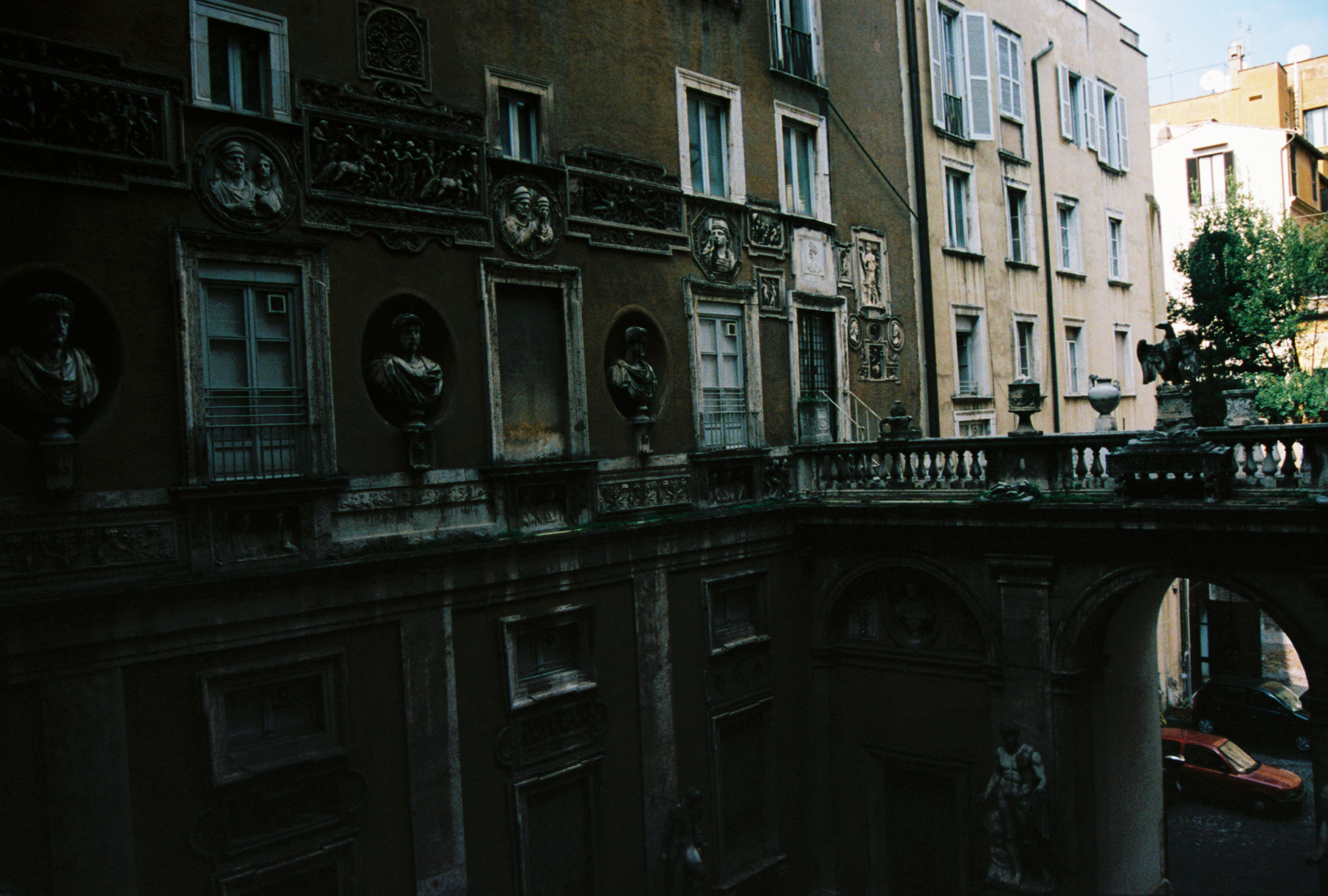
The loggia and architectural details are exquisite. This is the kind of place you see in sweeping vintage films set in Rome, the kind of place you read about in the Grand Old Tour by classically educated travelers from the 18th and 19th century. The students who spend time here are so lucky.
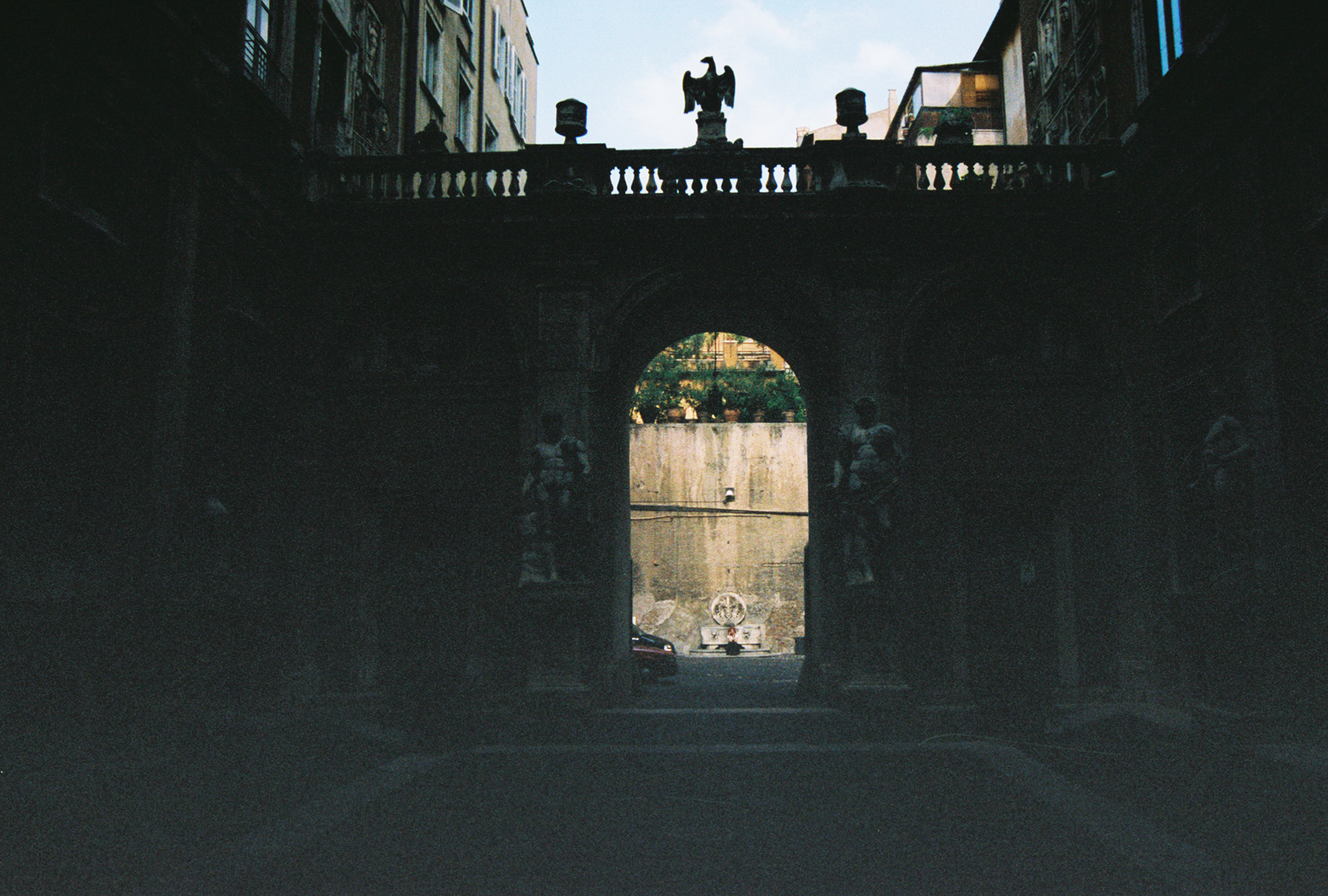
There’s not a corner or ledge that is not interesting. If you visit make sure to view the whole courtyard and go upstairs to the top terrace.

Go through the arched “doorway” in between the large statues, underneath the carved lamp.
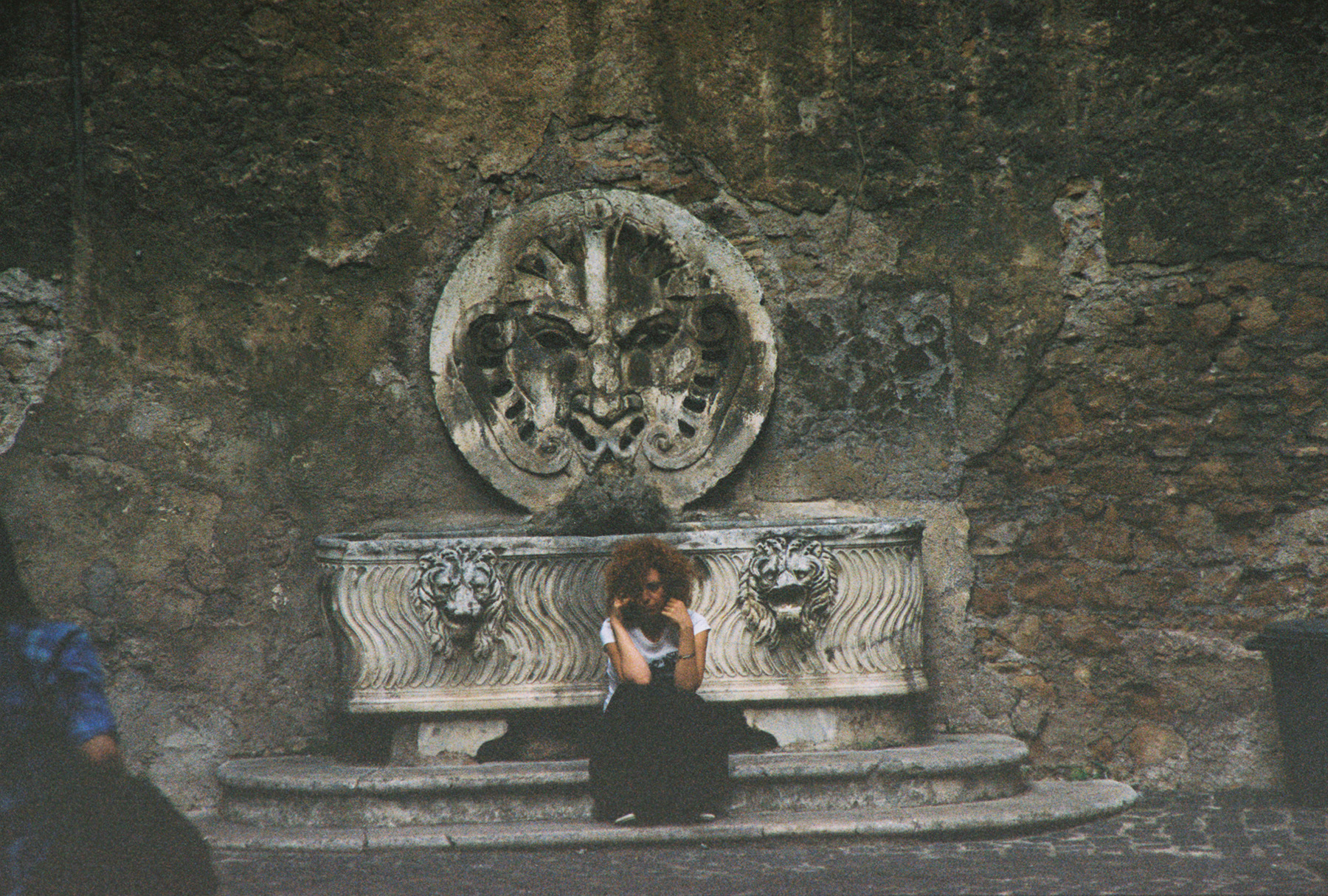
Across the small cobblestone road is an ancient fountain and face sun dial with beautifully carved in stone.
//photographs copyright rebecca price butler …
find my work on tumblr & pinterest … please link & credit me.

The Villa Farnesina is an early 16th century Renaissance suburban villa in the Via della Lungara, in the district of Trastevere in Rome, central Italy. It has incredible frescoes by Raphäel, Sebastiano del Piombo, Giulio Romano, and Il Sodoma. The villa was built for Agostino Chigi, a rich Sienese banker and the treasurer of Pope Julius II. It was later purchased by Cardinale Farnese (future pope and brother to the Borgia mistress, Giulia Farnese).
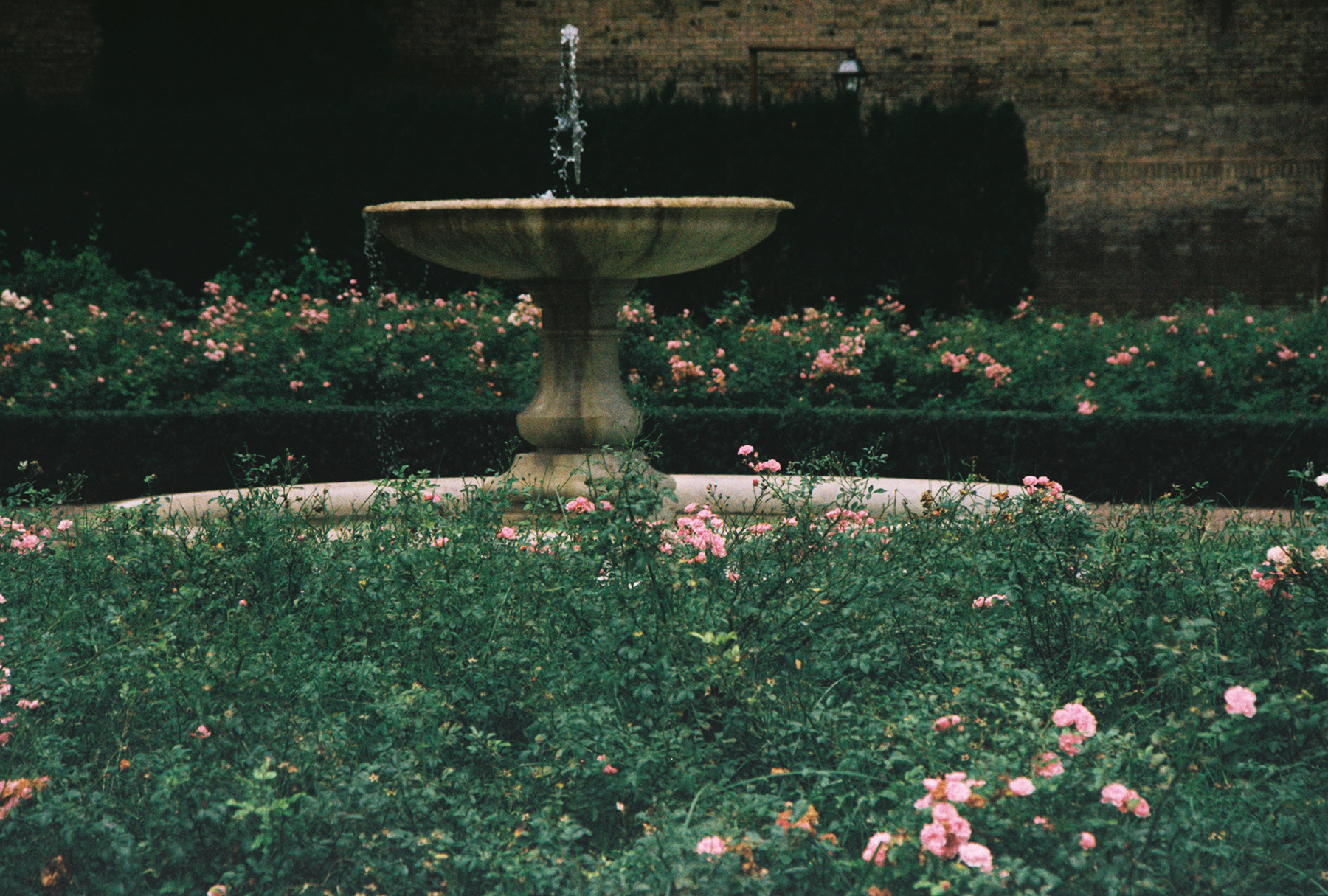
I had always missed visiting the lovely Villa Farnesina on earlier trips to Rome so I was delighted to finally see it in person in October 2012. The villa has a pretty little garden in the courtyard and larger gardens (fenced off) on one side. There is an understated elegance to the grounds and exterior architecture for a Renaissance palazzo. There are pink roses and pomegranate trees in clay pots.
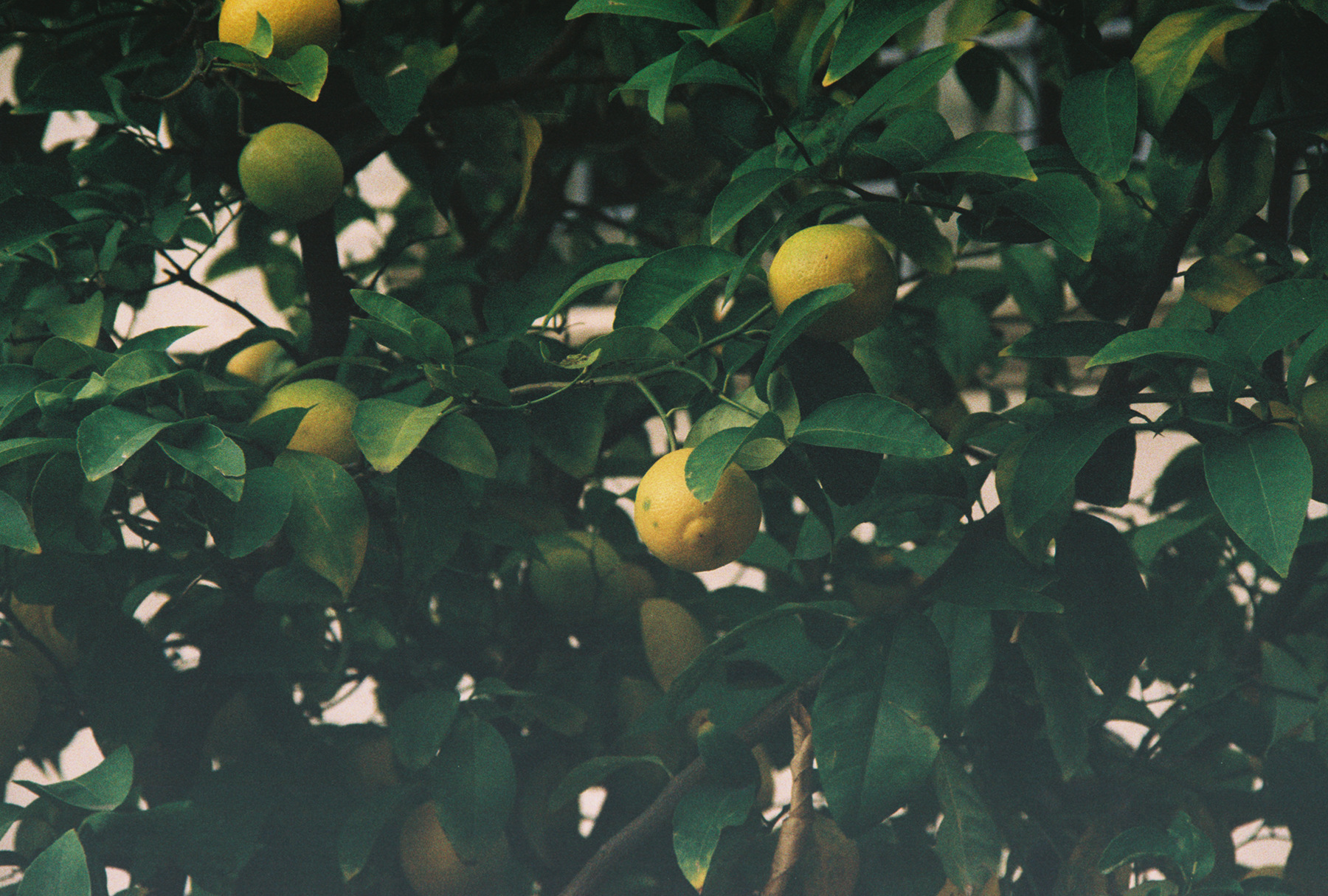
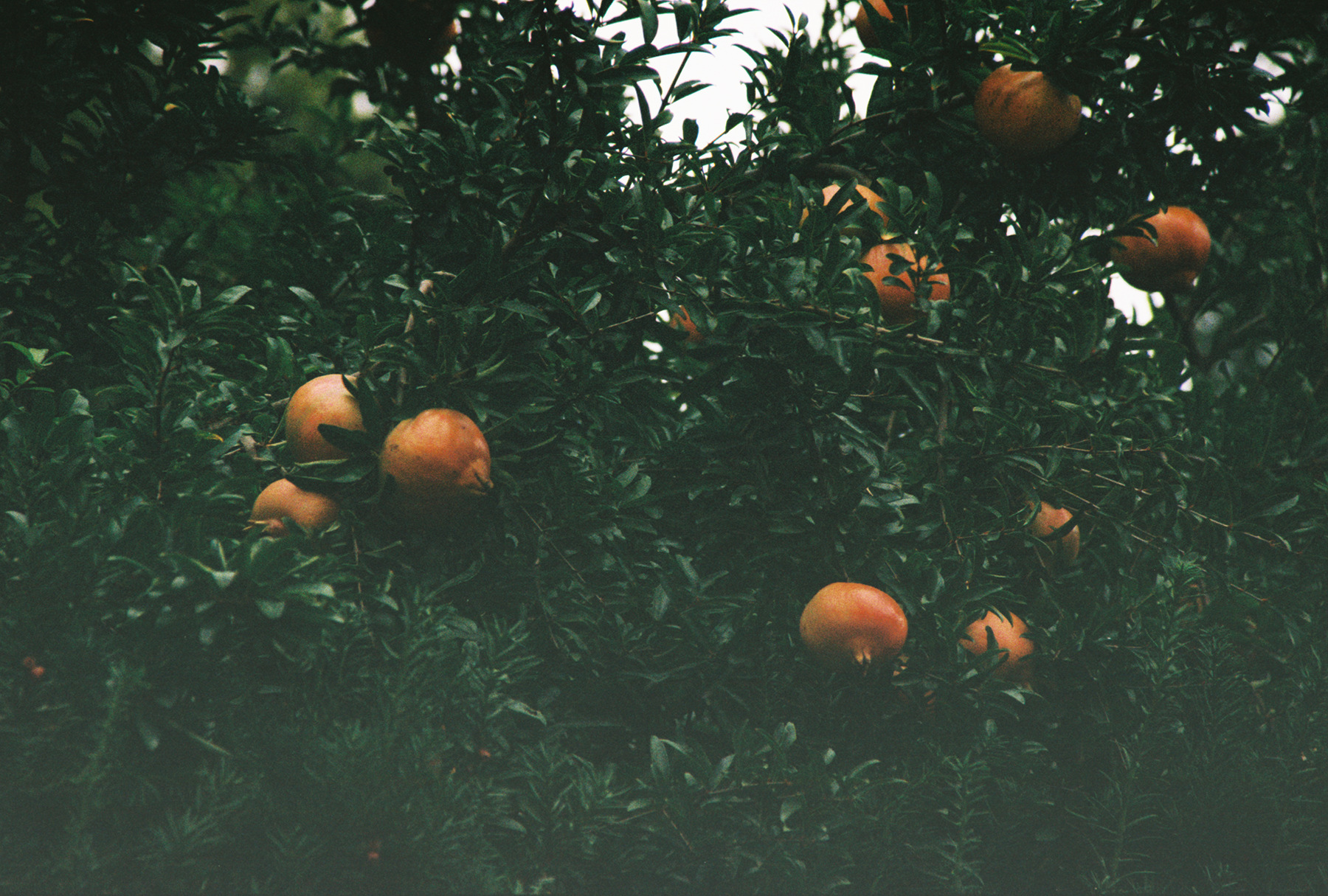 And little lemon trees and stone lined pathways. Trastevere is a great neighborhood to visit when in Rome and this villa is even more off the beaten path if you are looking for an alternative to the usual Roman Holiday Tour.
After the initial two or three visits to Rome I’ve tried to visit more of the quiet corners of the city and get to know my favorite spots better. It’s a “slow food” approach to travel and it’s worked pretty well for us. 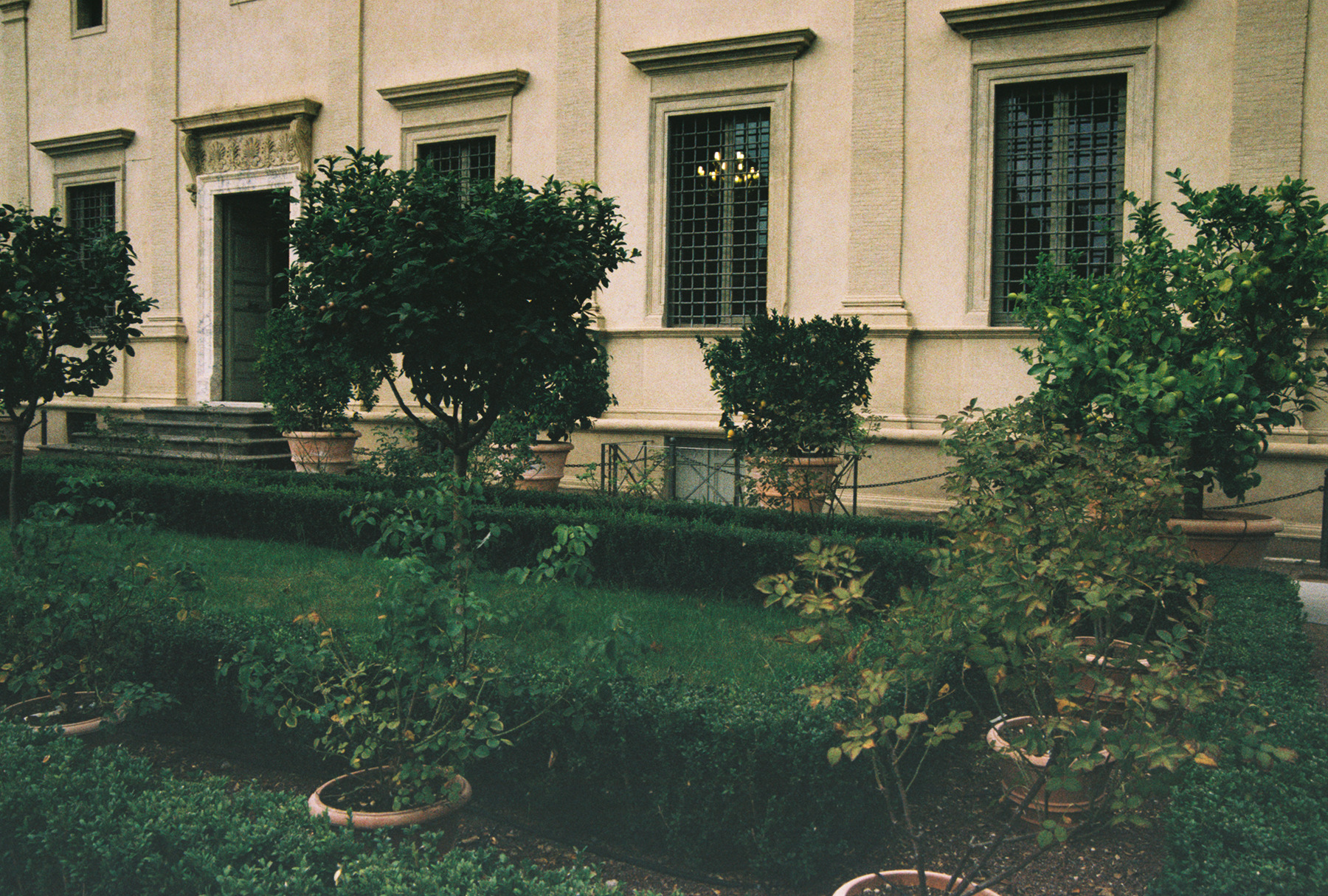 The large grande dame museums of Rome are wonderful to visit, especially if you have limited time in the city. But if you have an extra day or the off the beaten path vacation is more your speed, I suggest visiting one, two or three small villa or palazzo art museums. Farnesina, Doria Pamphlij, Spada, Borghese (the Queen) and a few others.
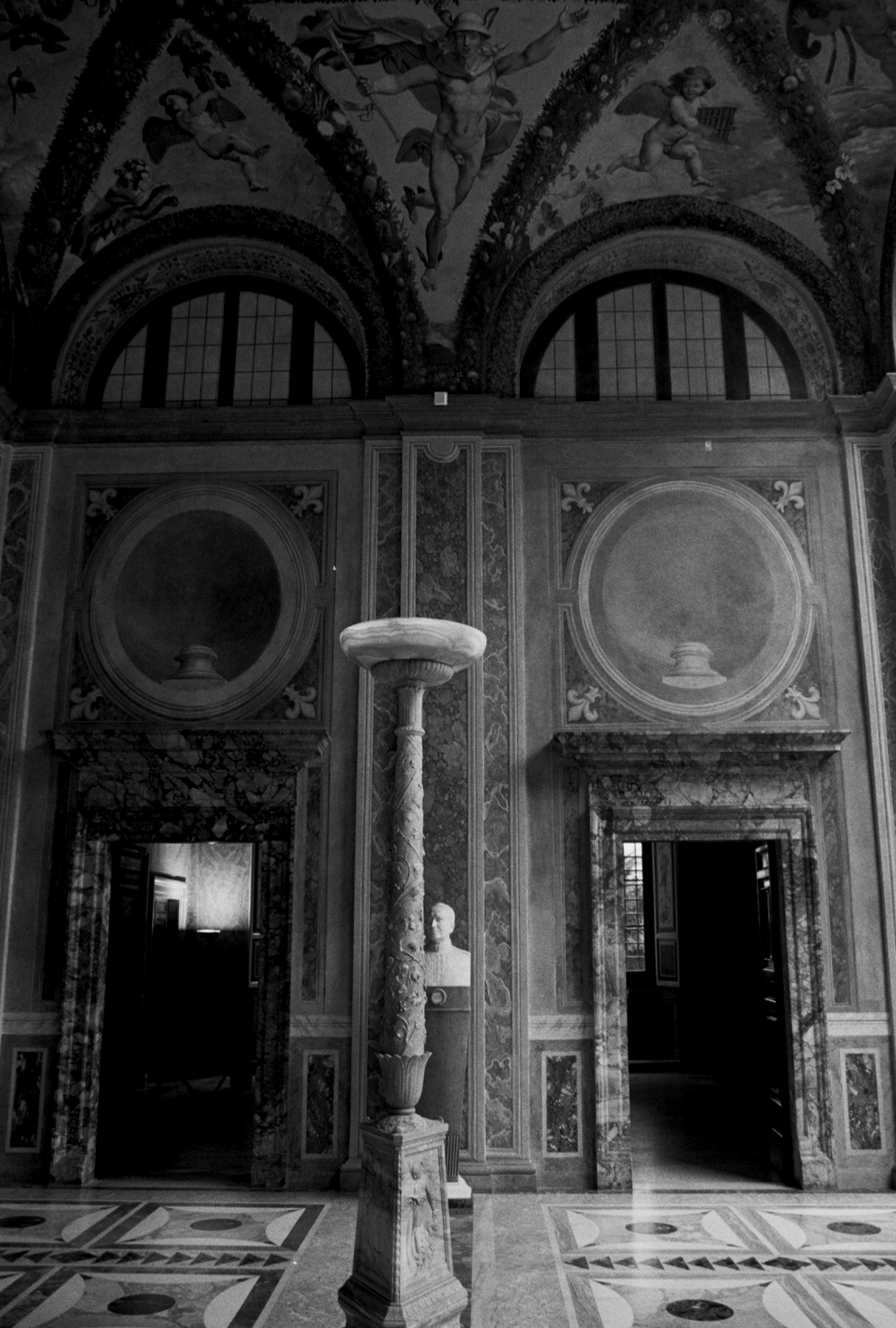
The Loggia of Psyche by Raphaël and his workshop
It’s difficult to convey how astounding it is just standing on the marble floors, looking up at all the beautiful frescoes. Walking the same halls so many infamous and interesting figures had crossed centuries before.
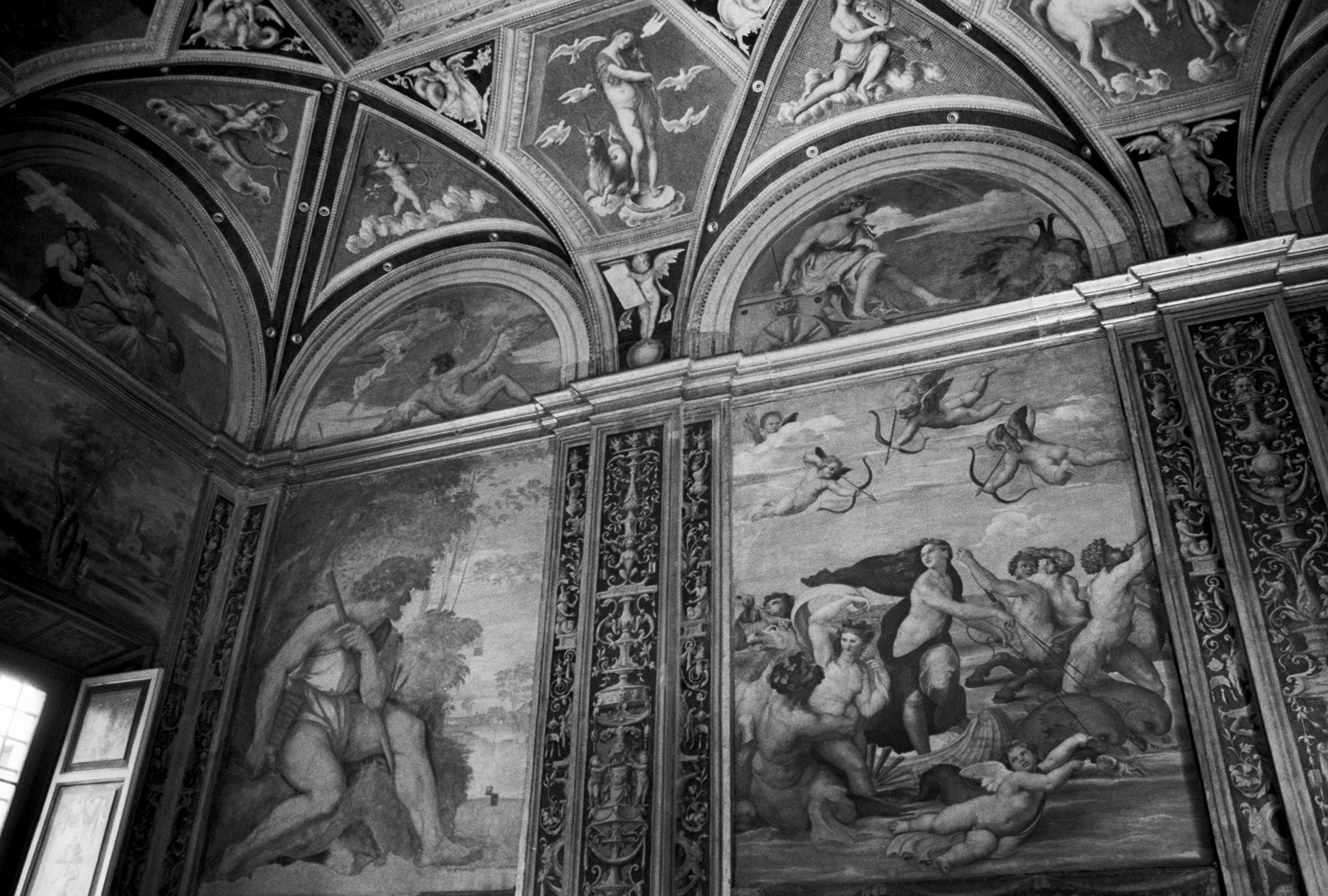
The museum was quiet and there were a few small groups moving in and out of the rooms. I had time to view the work in complete silence and solitude which rarely happens in a larger, more popular museum.
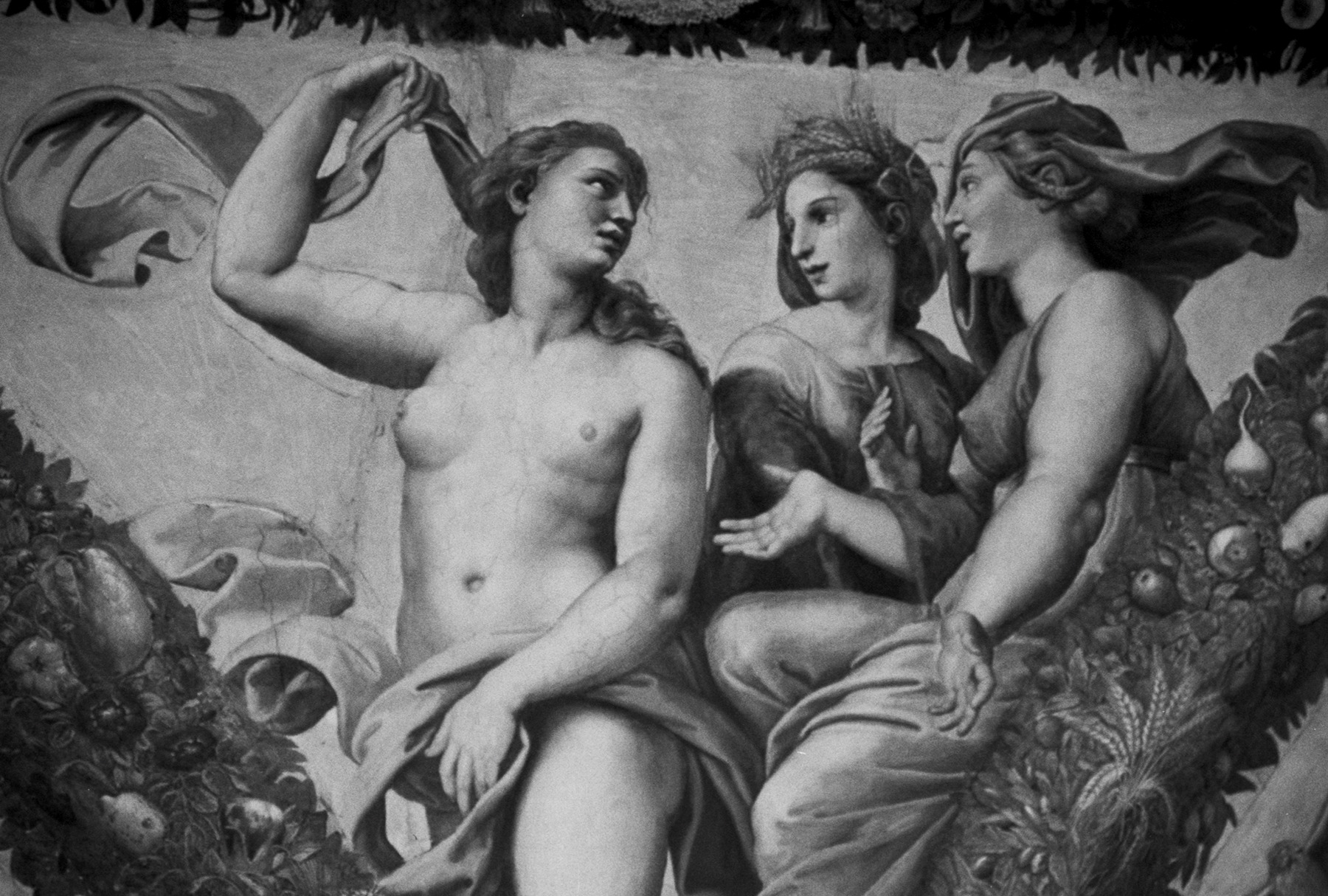
Venus, Ceres and Juno
I had run out of color film so I shot these magnificent frescoes in black and white. I think they at least capture the richness of the dark colors and the creaminess of the “skin”. The color in person was vibrant for such old masterpieces.
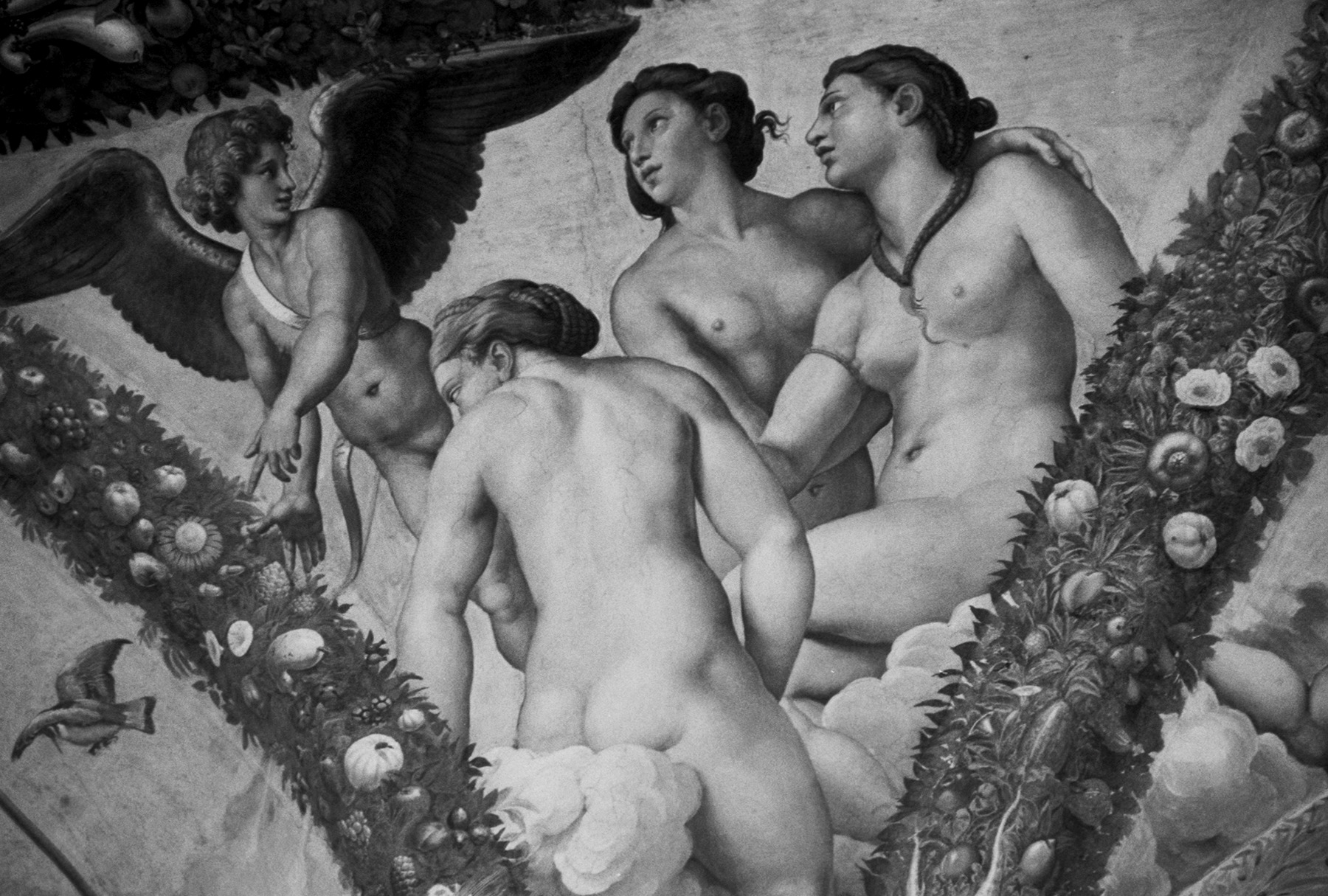
Cupid and The Three Graces, 1517-1518
A part of the great appeal Renaissance art has for me is it’s allusions to classical literature and mythology. In order to understand the works beyond my emotional response to them or my aesthetic pleasure in them, the allegorical works force me to learn the meaning behind them and catch a glimpse of the artist’s intention behind the work. What does the piece mean philosophically? Politically? What does it say about love? Man? And God? About life? And death? What historical event are they re-imagining? Beyond the beauty I am hungry for the history.
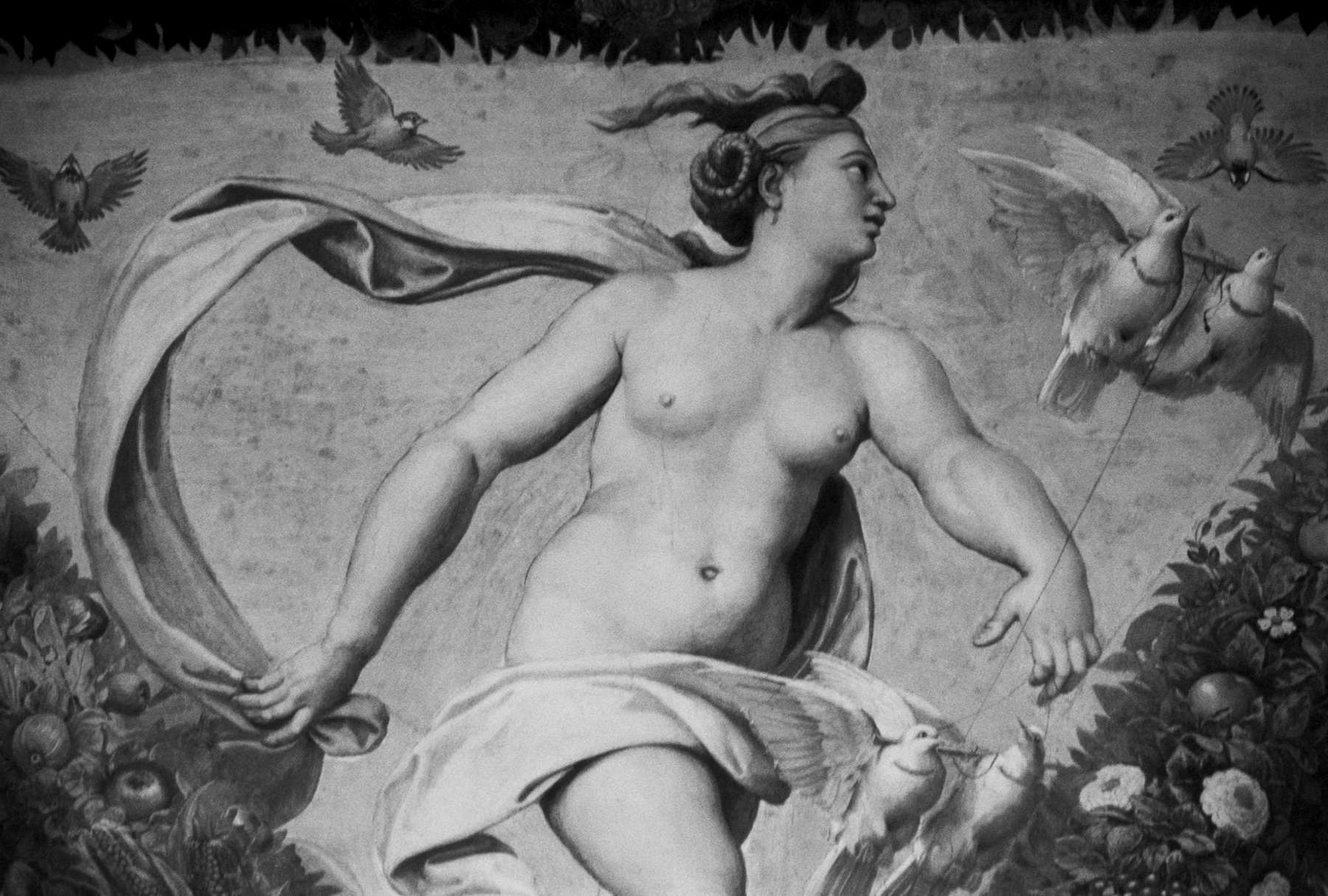
Venus on the Chariot Pulled by Doves, 1517-1518

The Council of the Gods, 1517-1518
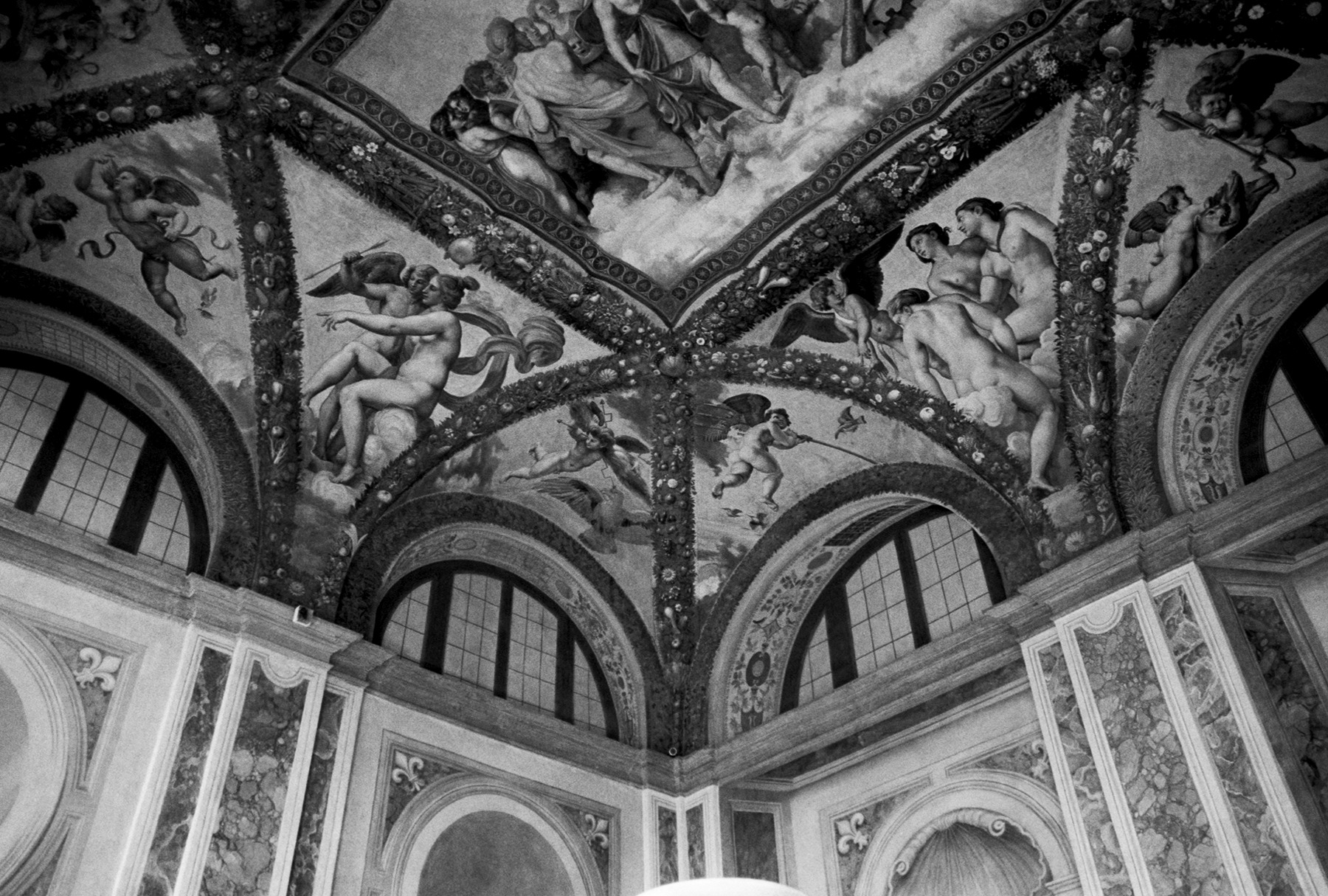 Venus and Cupid, 1517-1518
When I was there I was amused to find graffiti carved into one of the walls in German! Well, normally I’d be less amused but it’s from a later Barbarian Invasion of Rome in the 16th century! At the time I couldn’t find anyone to translate it for me.
During recent restorations, an ancient “graffiti”, in German gothic, came to light between the columns. It marks the passage of the Lansquenets and states: “1528 – why shouldn’t I laugh: the Lansquenets have put the Pope to flight.”
From the windows on the first floor there is a beautiful view of the gardens. A pleasant stroll under the laurel bower leads to a marble plaque which bears the inscription:
Quisquis huc accedis: quod tibi horridum videtur mihi amoenum est; si placet, maneas, si taedet abeas, utrumque gratum.
[Trad.: Whoever enters here: what seems horrid to you is pleasant to me. If you like it, stay, if it bores you, go away; both are equally pleasing to me. ] – Academia Nazionale die Lincei
The Villa Farnesina in Rome, Italy is open from
Monday to Saturday from 9 a.m. to 2 p.m.,
Closed on Sundays and holidays
Guided tours on Monday, Friday and Saturday at 12.30
//photographs copyright rebecca price butler …
find my work on tumblr & pinterest … please link & credit me.
 a love letter to rome