Italy and England











When you go to Naples, go to the top of a beautiful hill and enter the serene parco Capidimonte and stroll through large hedgerow pathways. You’ll find a glorious fountain covered in thick hanging moss and mariner figures. There is a lovely view of the hills of Naples nearby. The fountain is decaying, partly buried under the thick growth of moss and greenery. I couldn’t possibly love it more. After you wander around and linger on the grounds, go into the museum. See wonderful pantings and sculpture. Go to the second floor for the three Artemisia Gentileschis currently available for public viewing. Dream of returning before you’ve even left. Fall in love with beauty all over again.
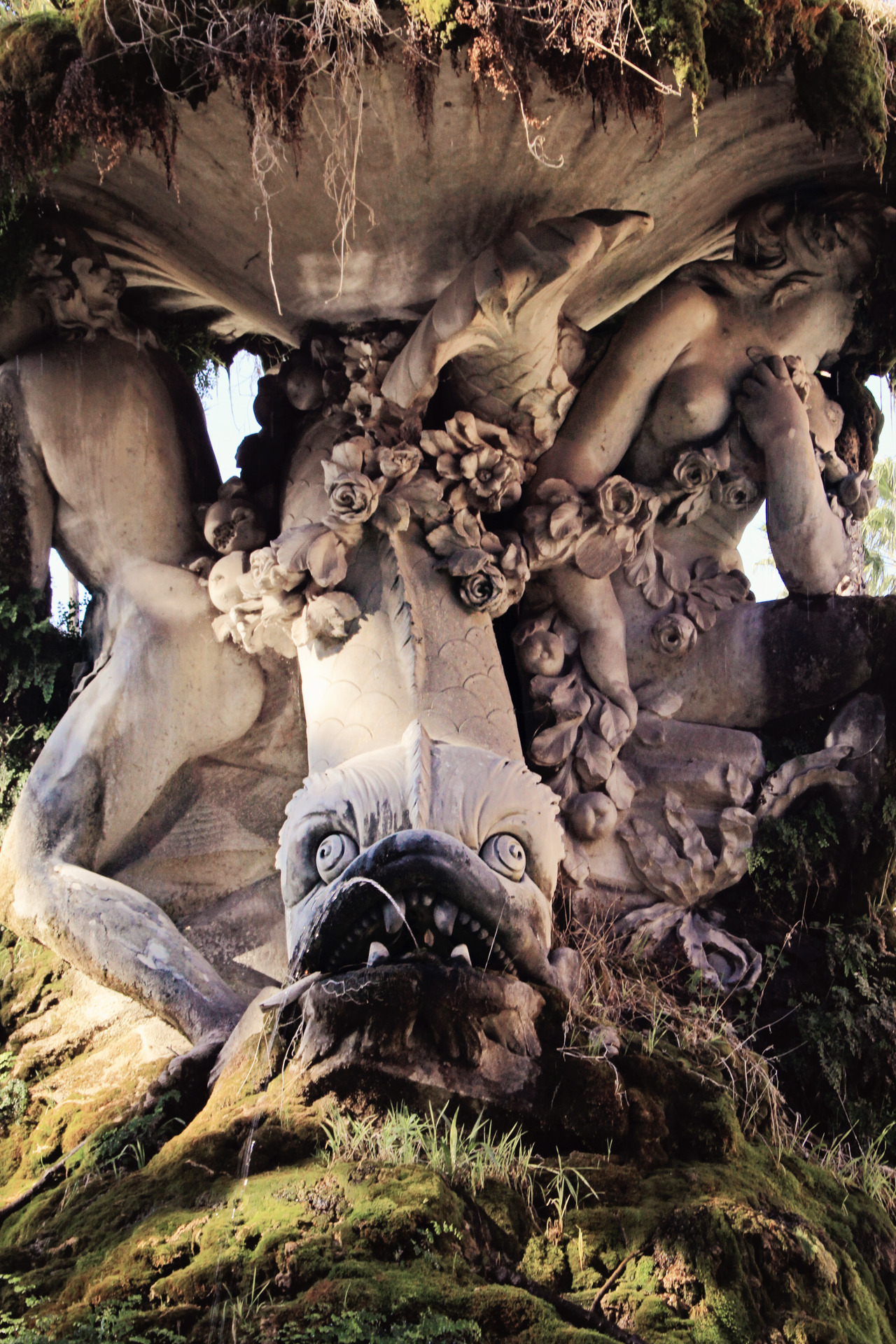
Charles III of Bourbon era fountain detail, Capidimonte Park, Napoli, Italy, autumn 2012 (digital)
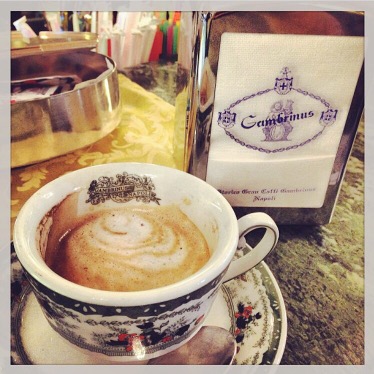
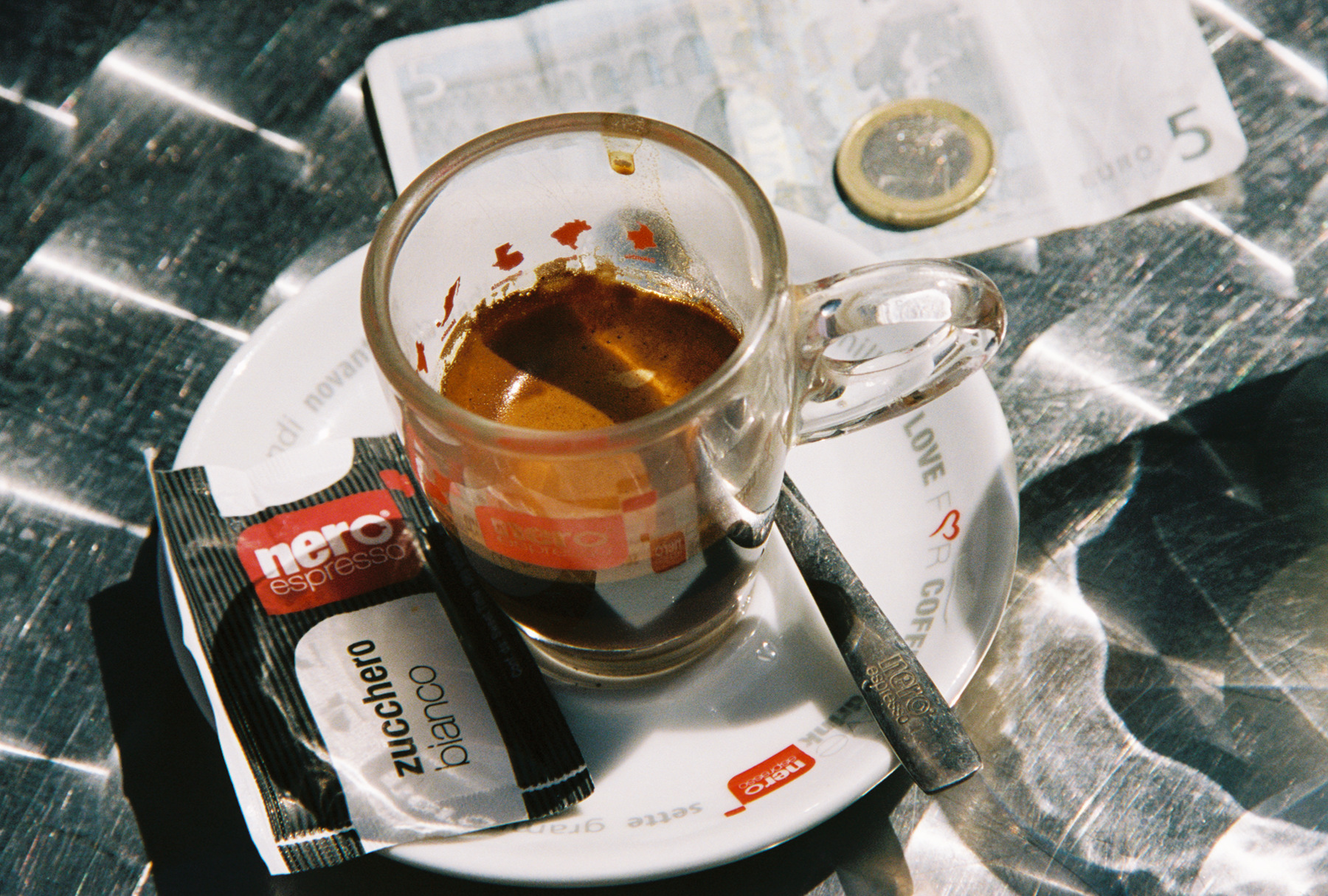
Espresso served hot, rich, never bitter and with a creamy head, like a caffeinated, non-alcoholic guinness. No-one will ever convince me that coffee is better anywhere other than Napoli, Italia. They have their own sweet and savory versions of coffee drinks, their quality roasts are never acidic or dull, they would never dream of serving up a cappuccino Roma-style – lukewarm with 20 minute old foam – but are hot, foamy and always fresh. They have this divine beverage: nocciola, espresso with ground roasted hazelnuts and a little sugar made into a hazelnut cream.
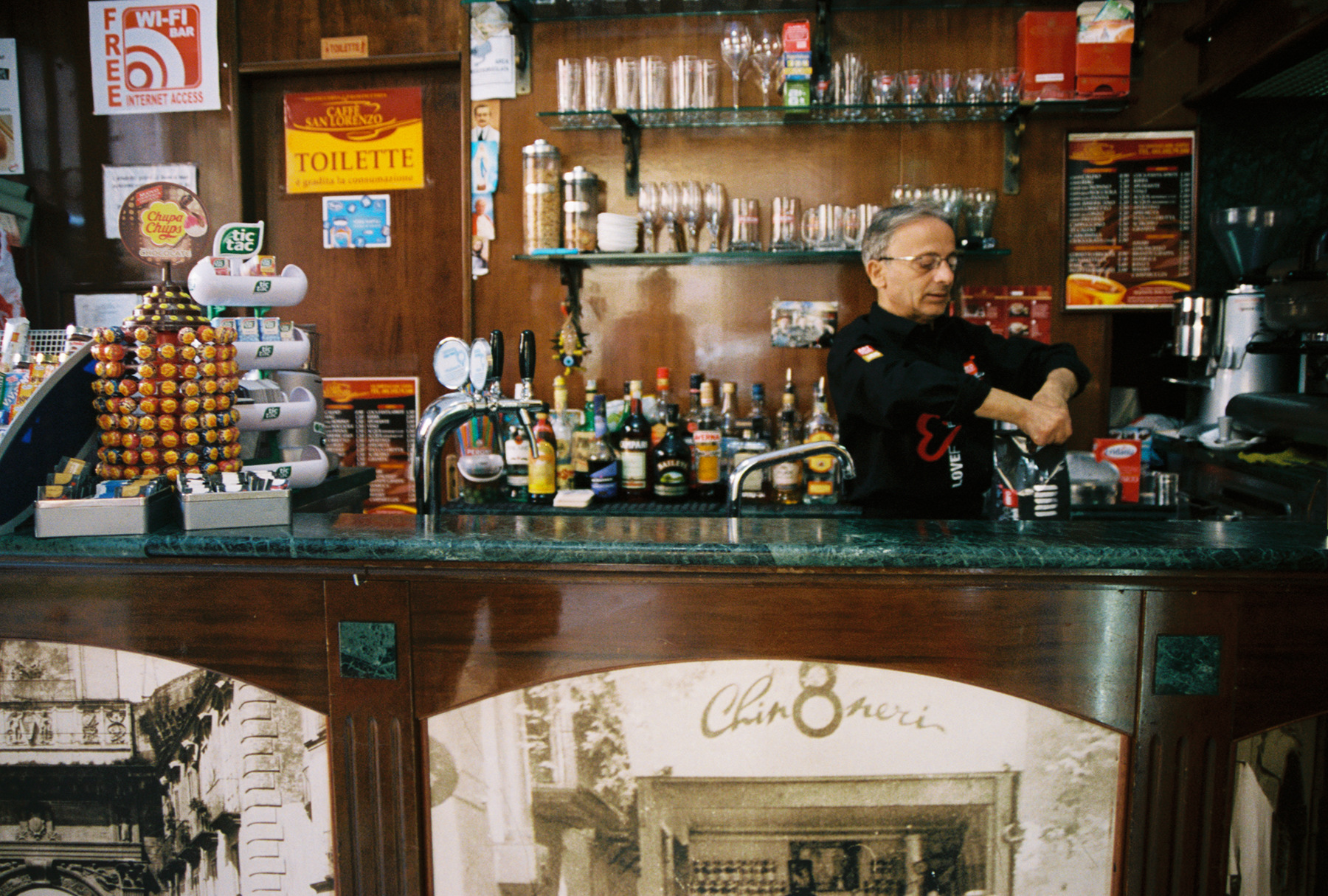
I have to restrain myself in Naples cafés otherwise I would stalk the café barkeeps and photograph and video their coffee making and ask them a hundred questions on their process in really bad Italian.
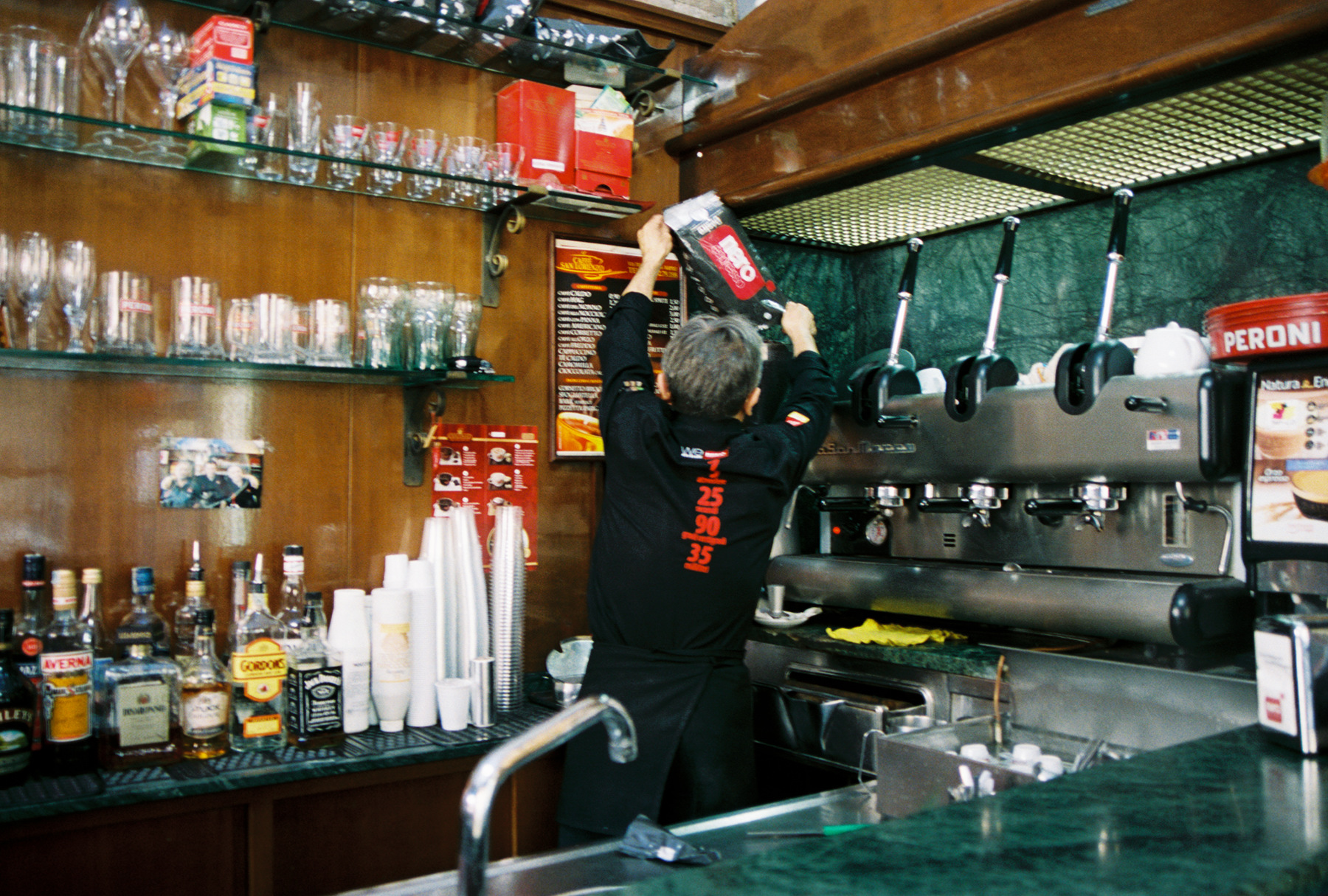
A wonderful thing about Naples cafés are their wonderfully low key, around the corner neighborhood places to imbibe espresso and the most luxurious, art nouveau paradise, extra fancy grand caffes to choose from. REMEMBER IF YOU WANT THE CAFE SOCIETY EXPERIENCE AND YOU WANT TO SIT AROUND AND LUXURIATE YOU WILL PAY FOR THE PRIVILEGE. IT IS WORTH IT DAMN IT – AFTER A LONG HOT DAY OF WALKING EVERYWHERE OR IF YOU ARE FEELING LIKE A SPENDTHRIFT OR HAVING A ROMANTIC ASSIGNATION OR HOPING TO HAVE ONE OR MEETING FRIENDS. OTHERWISE, AND READ THIS CLOSELY, STAND… STAND… STAND… S T A N D… AT THE BAR AND PAY HALF – H A L F – THE PRICE (WHICH MEANS YOU CAN DRINK TWICE AS MUCH). ALSO: NAPLES IS WAY WAY WAY WAY CHEAPER THAN MOST OTHER PLACES IN ITALY BUT THE FOOD IS INSANELY AMAZING.
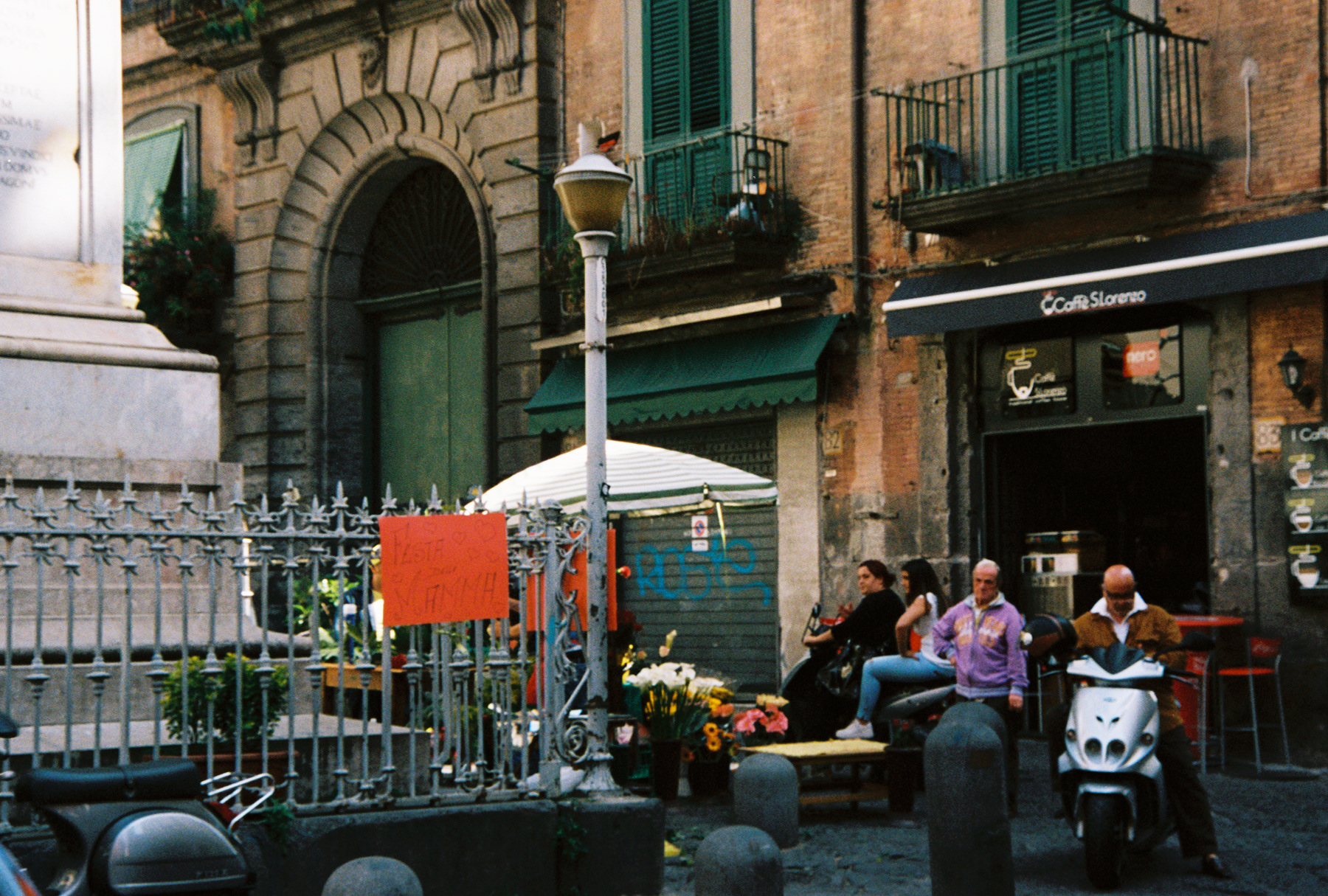
DON’T BE SO AFRAID OF NAPLES PEOPLE! I AM JUST SOME AMERICAN BROAD WHO USUALLY DOESN’T PASS FOR ITALIAN AND I AM NOT SCARED.
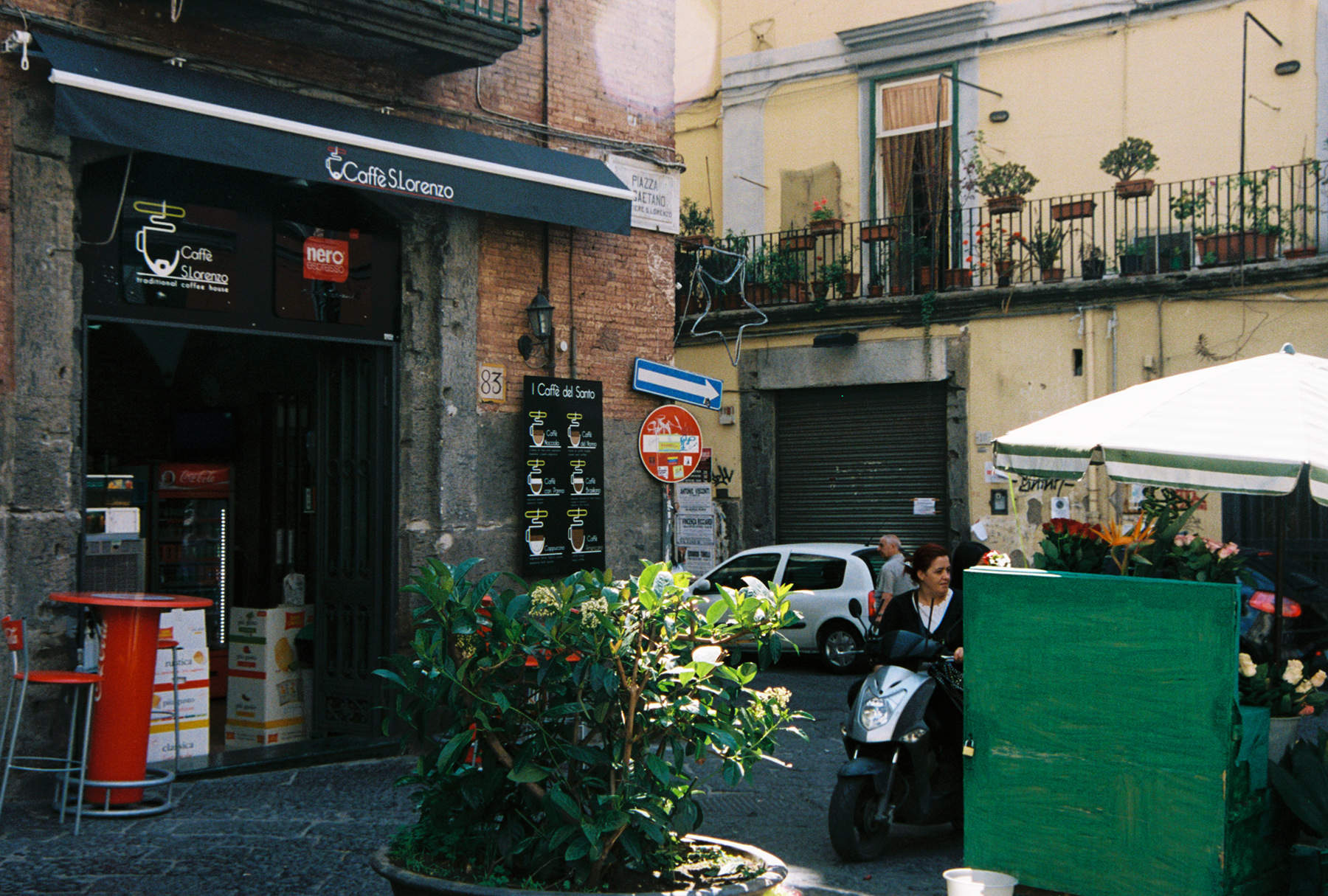
Granted the city has it’s grotty grubby moments like any ancient city or city with an employment and crime issue but if you have your wits about you, stick in touristy areas at night, stay out of ghettos, see the old Greek neighborhood Spaccanapoli, hang at Piazza Plebiscito day or night, hit Caffe Gambrinus, get chocolates at Gay Odin on (noisy, dusty, busy but family filled Via Toledo) and see some goddamned art and sculptures at Archeologico and Capidimonte. By the way, all this is only the tip of the iceberg.

There are so many funny, hilarious, crazy, cool moments in Naples, just go already. And drink the coffee for god sakes. Do I have to keep convincing you?
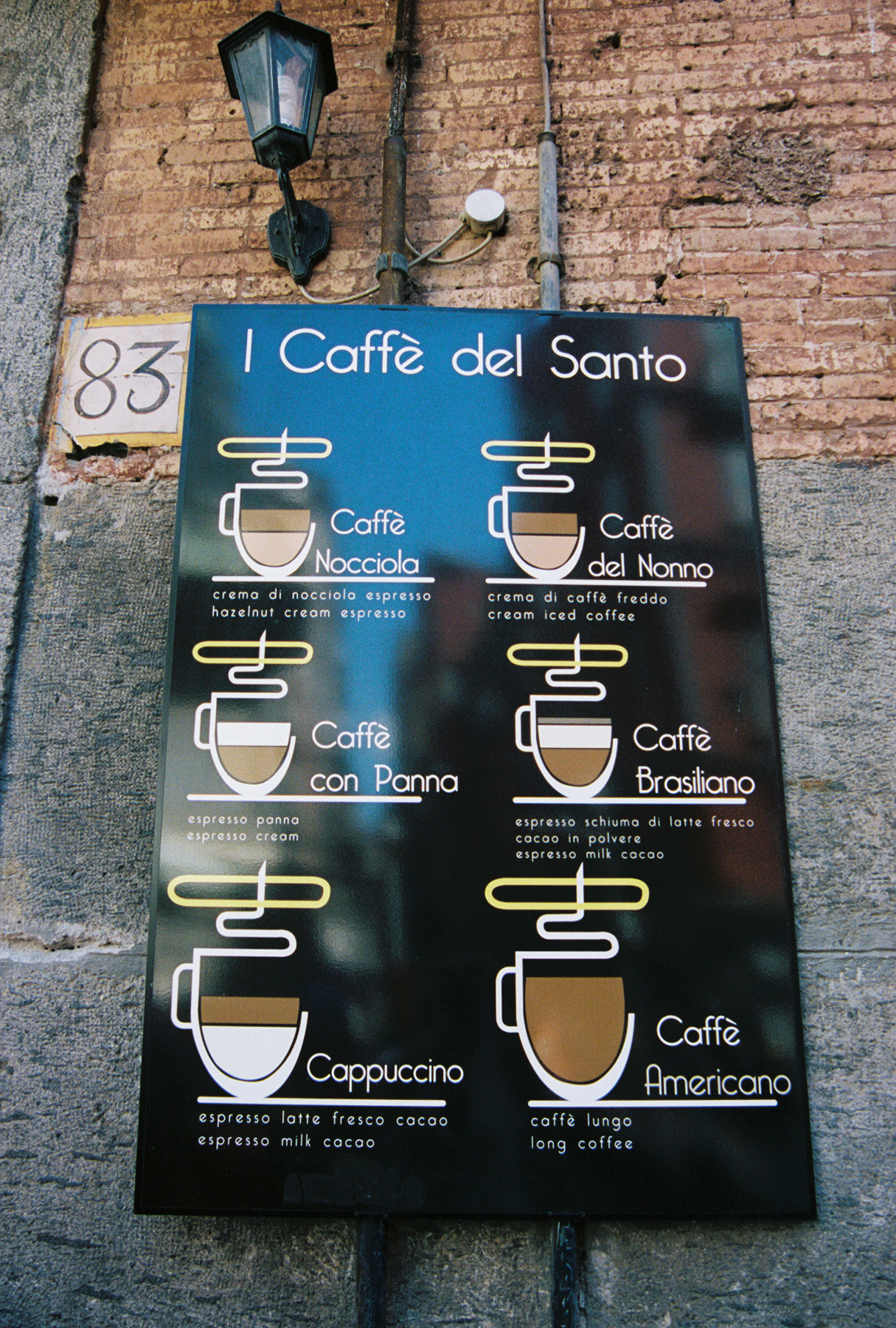
Seriously, all of these drinks are so good all other coffee should bow down to the coffee in Naples.
At the edge of the garden at the Villa San Michele on Anacapri there are beautiful architectural details and greco roman fragments displayed among the trees and flowers.
“My house must be open to the sun, to the wind, and the voice of the sea, just like a Greek temple, and light, light, light everywhere!” – Axel Munthe
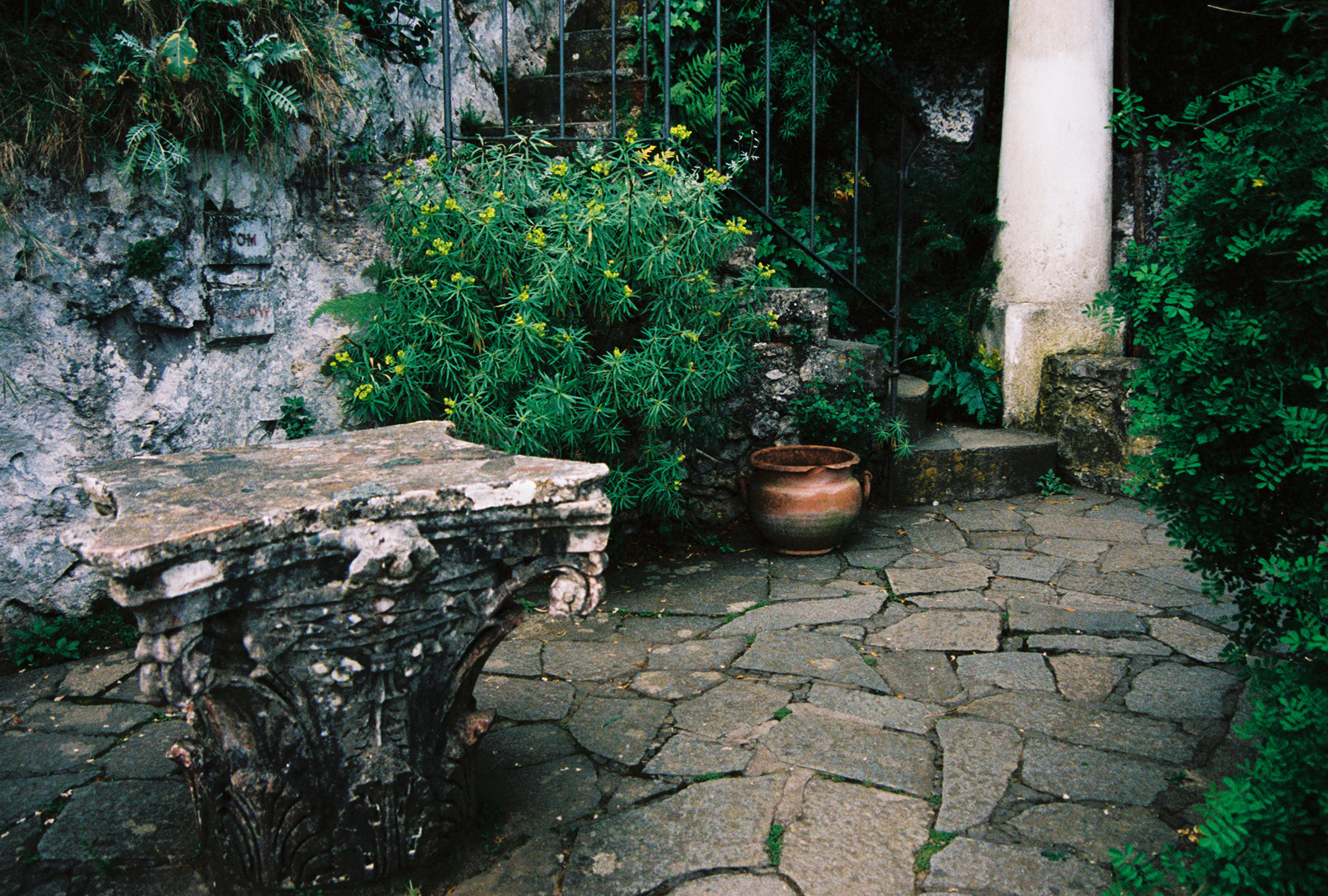
I find the ramble through the gardens of Anacapri (especially the Villa San Michele one) to be a bit fairytale-like, a bit dreamy. The dark, lush, green paths over stone and fragments of ancient Roman columns and statues; the intoxicating scent of flowers and herbs; the layered calls of forty different species of birds – all hold one’s attention. When the garden is not crowded one can find themselves utterly alone, with the run of the place. There’s a sense of timelessness walking the stone paths and climbing stairs which boast unreal views of rugged coastline and layers of rocky, verdant cliffs.
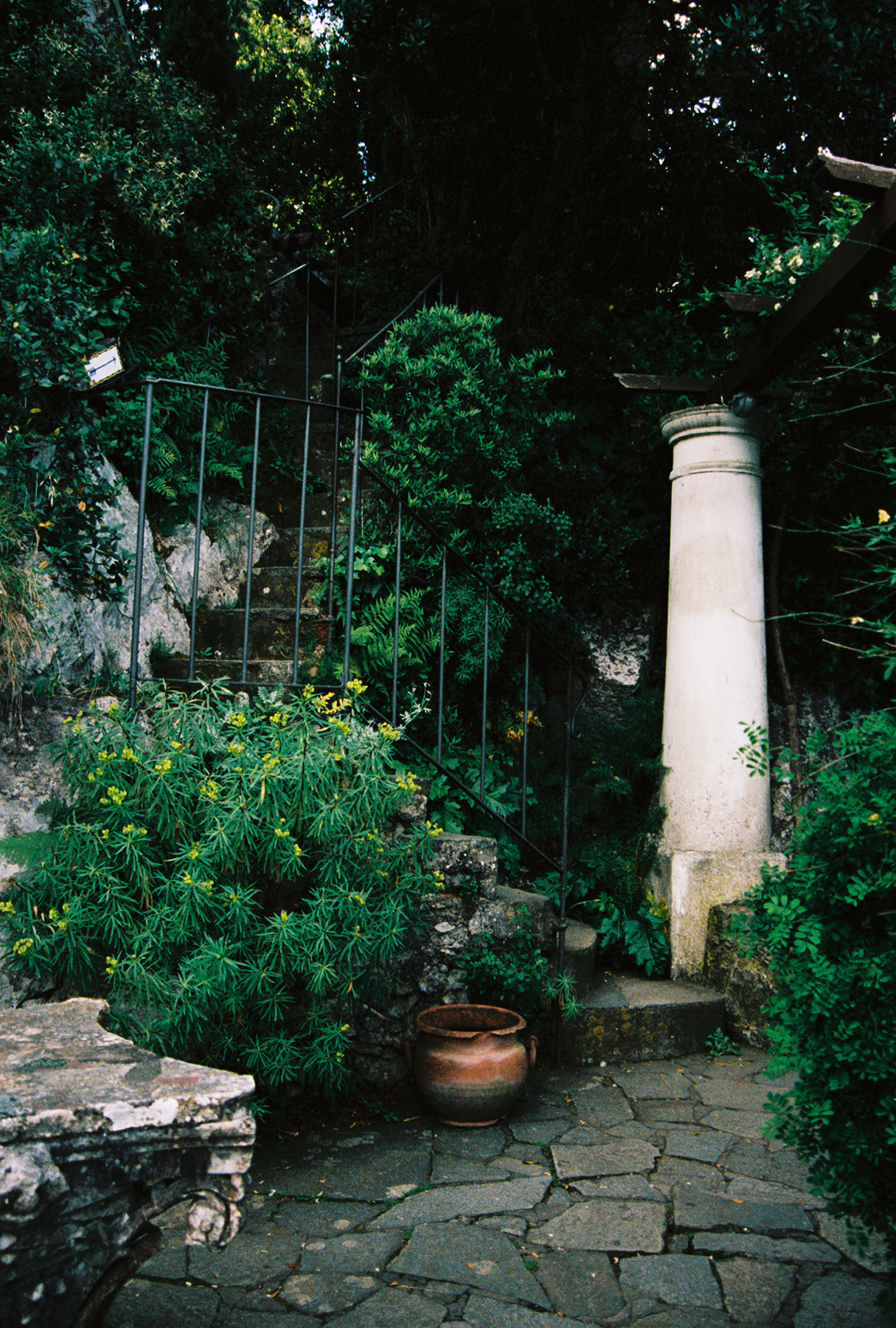
A nonchalant rustic garden with the aesthetics of a museum, an olive jar, shadows between the sunlight and a verdant spread accompanying a stroll. The stairs beckon and frighten a little when alone.
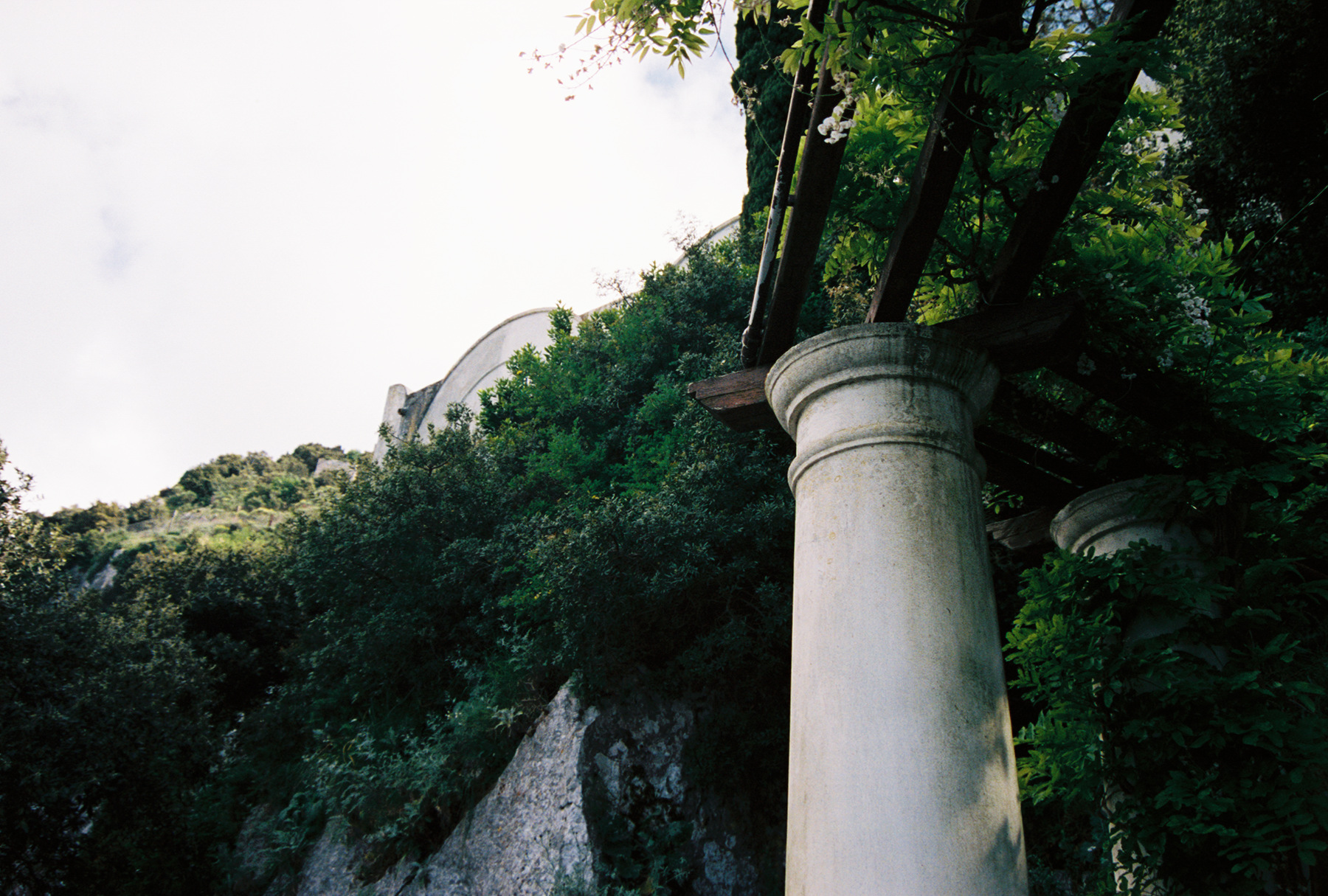
The gorgeous cloak of wisteria entwining the columns and topiaries. Mighty cypresses soaring like some needly skyscrapers. The hint of other villas and other stories are tucked neatly into the mountain.
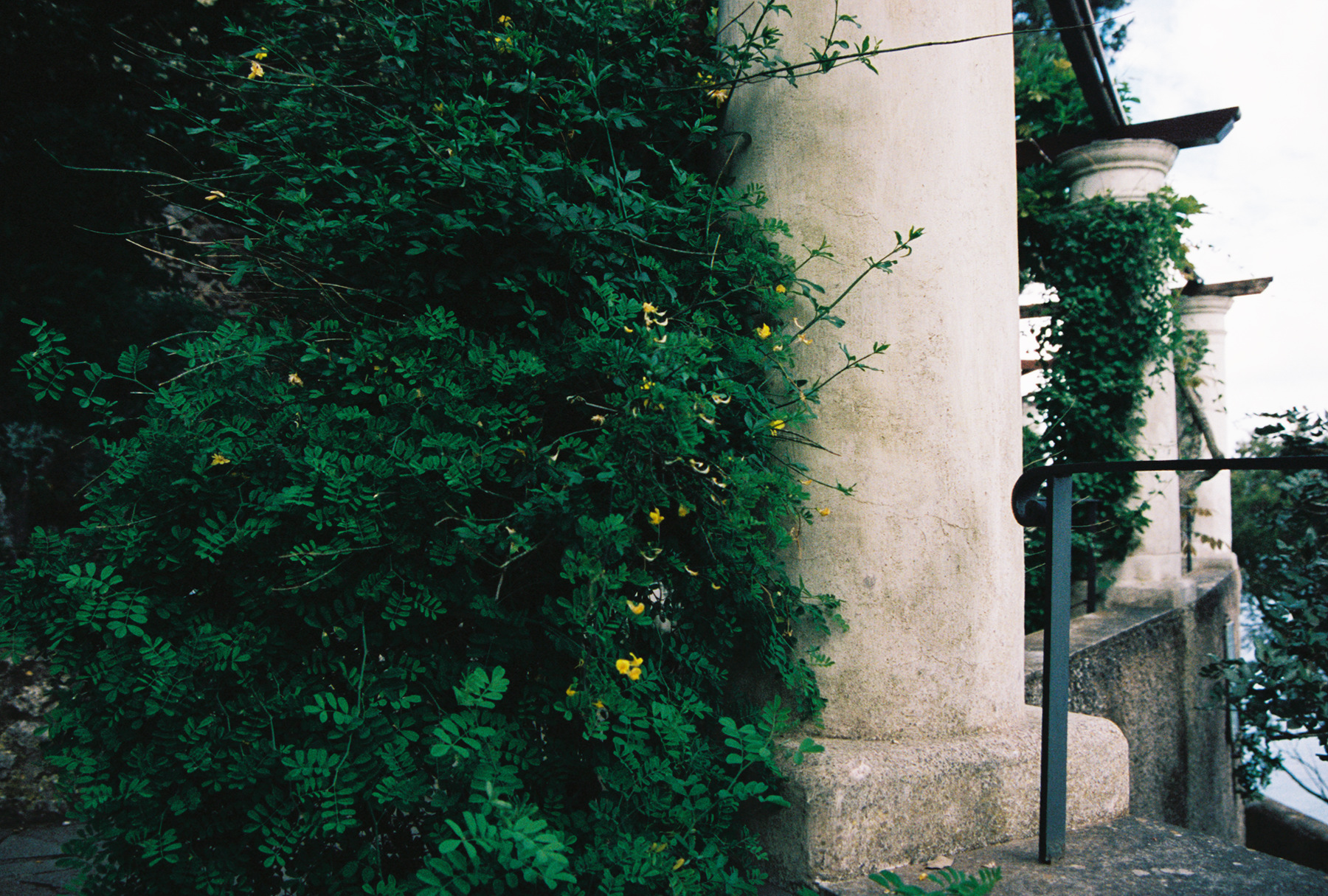
Bright yellow flowers grow in impossible places, their faces outstretched toward the sun.
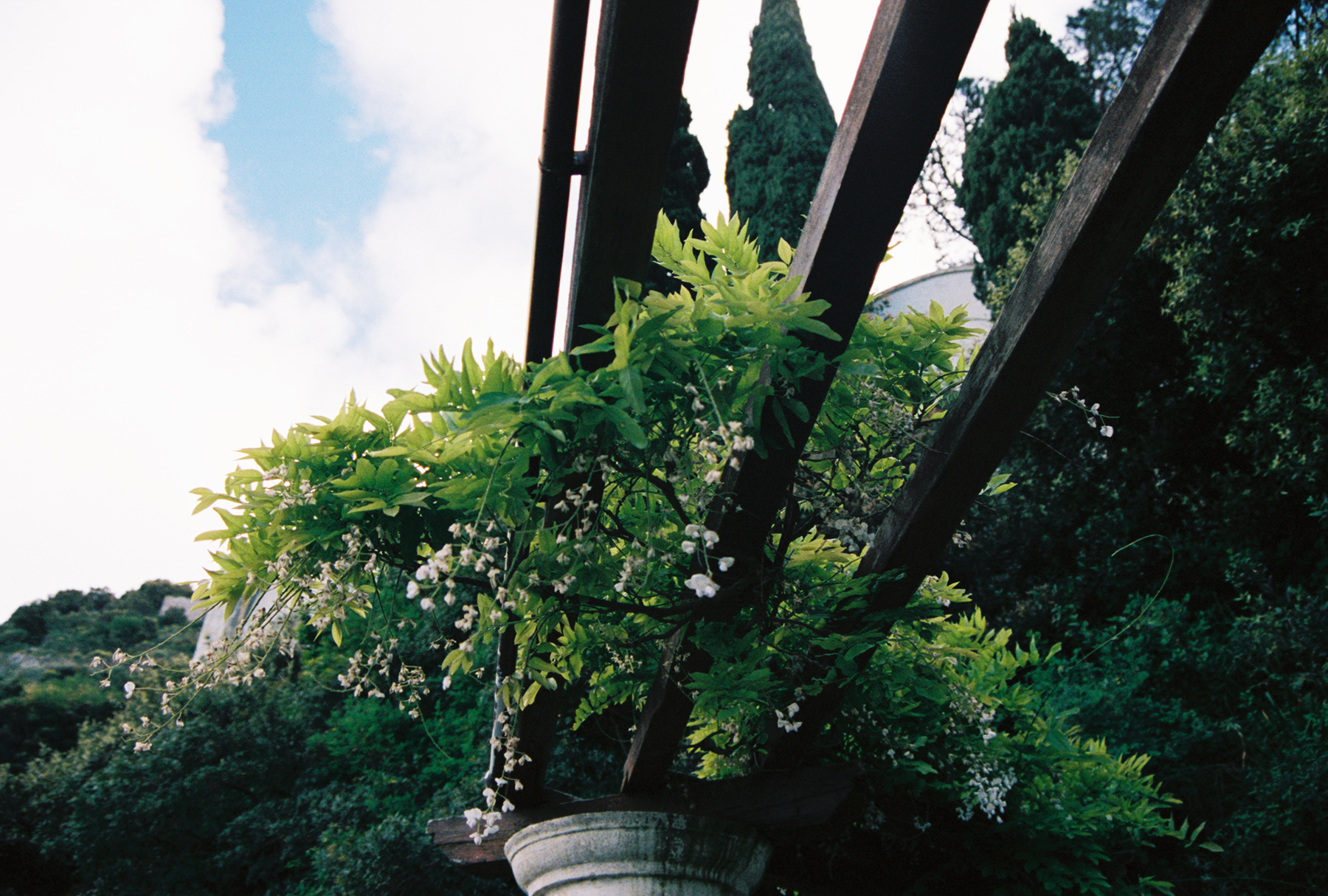
The heady flowering of spring, clean white blossoms breaking up the velvet thick gloss of leaves and tangled old branches, is in every turn.
“The sacred mountain above San Michele is full of birds on their way home to mate and rear their young. What a joy to me that they can rest there in peace! Yesterday I picked up a poor little skylark, so exhausted from his long journey across the sea that he didn’t even at- tempt to fly away, he sat quite still in the palm of my hand as if he understood it was the hand of a friend, perhaps a compatriot I asked him if he wouldn’t sing me a song before he went off again, there was no bird-song I liked better than his; but he said he had no time to spare, he had to hurry home to Sweden to sing the summer in. For more than a week the flute-like notes of a golden oriole have been sounding in my garden. The other day I caught sight of his bride hiding in a laurel bush. To-day I have seen their nest, a marvel of bird-architecture. There is also much fluttering of wings and a soft murmur of bird-voices in the thicket of rosemary by the chapel.” The Story of San Michele by Axel Munthe
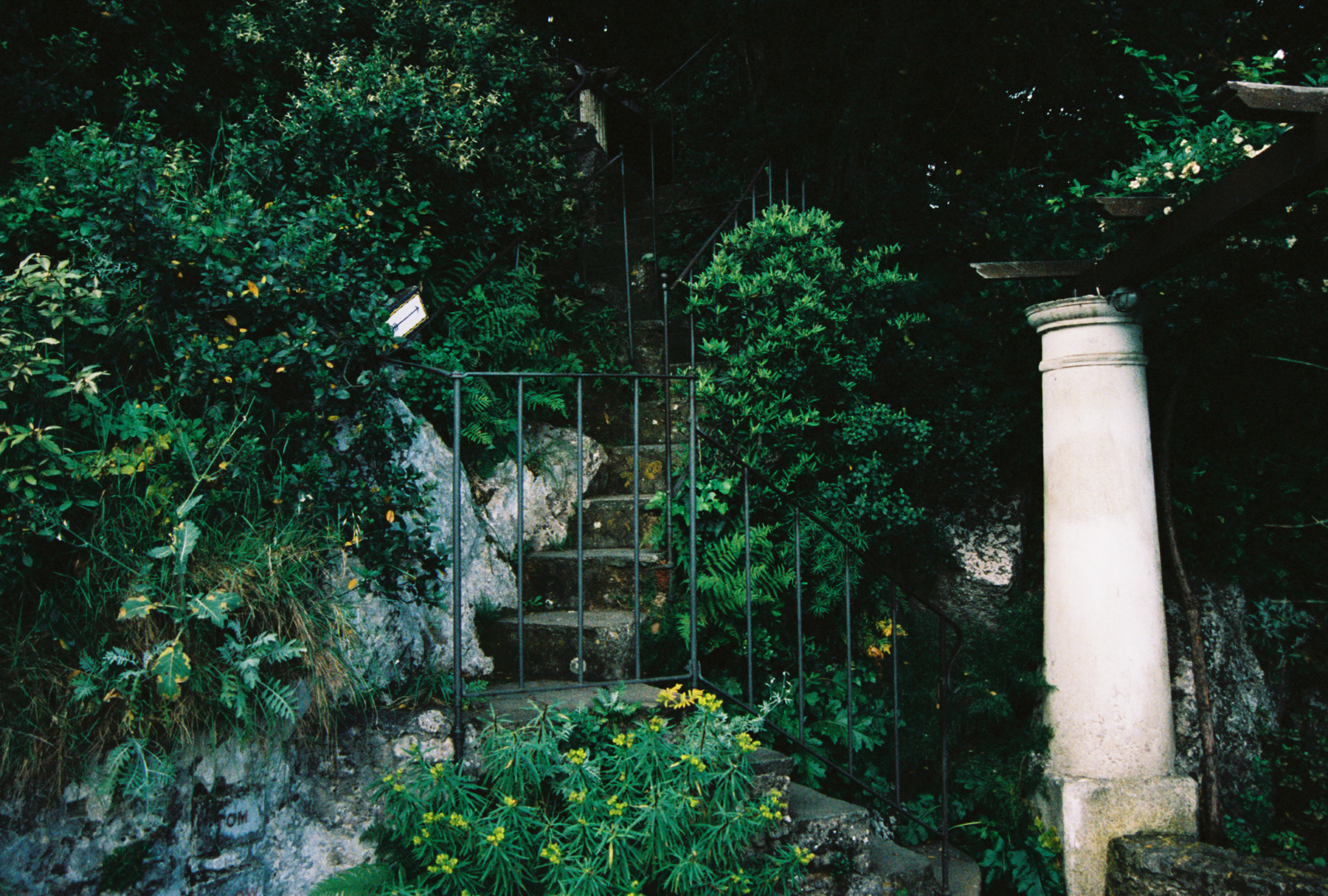
On the old stairs a soft moss lies on the stone, suggesting an endless year of spring and life growing in the garden.
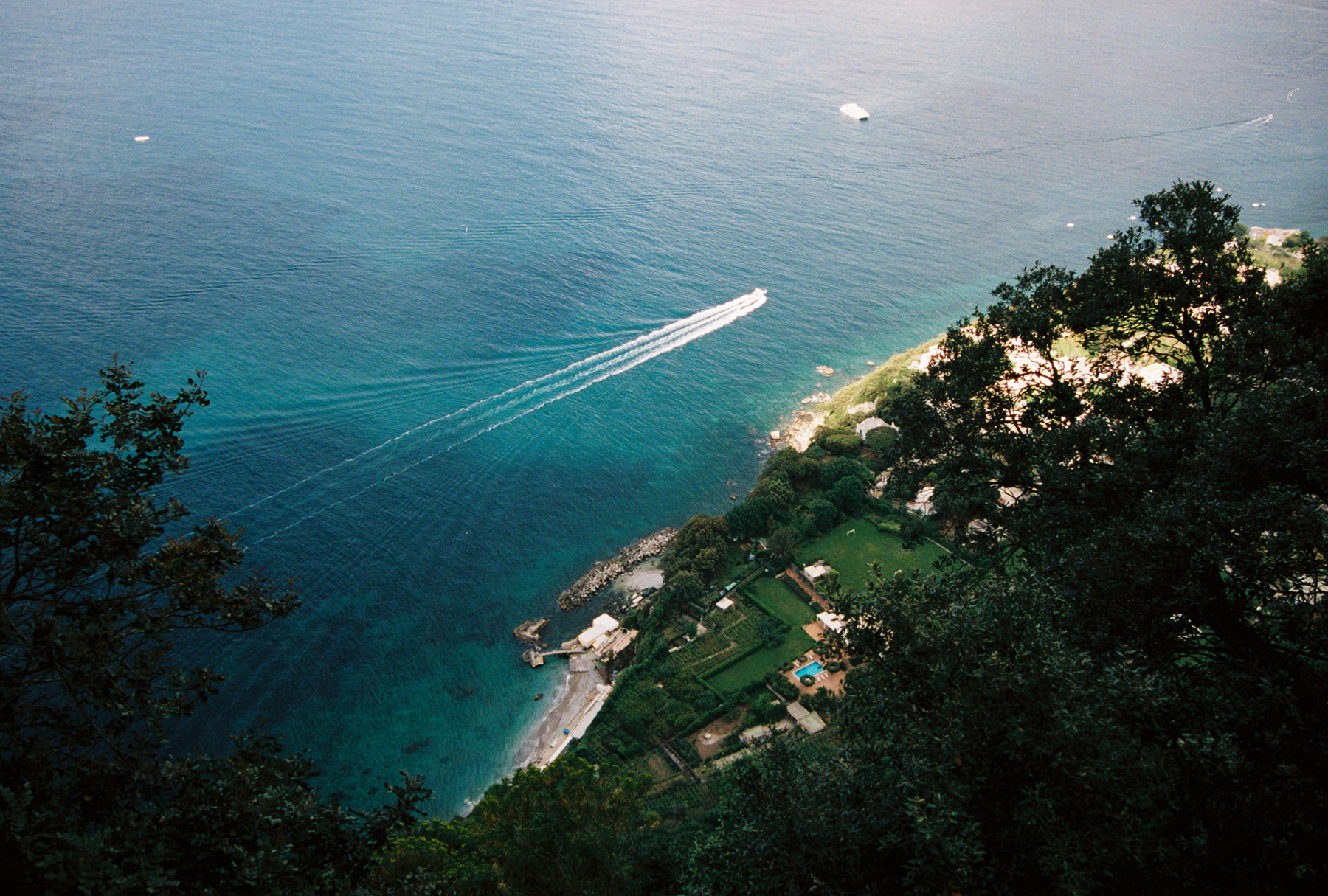
Far below a tiny shock of blue sits in between the fields and the bay of Naples; while all those lives play out from an Emperor’s ancient vantage point.
“The whole bay of Naples lies shining like a mirror below my feet, the columns on the pergola, the loggias and the chapel are all ablaze with light…” The Story of San Michele by Axel Munthe
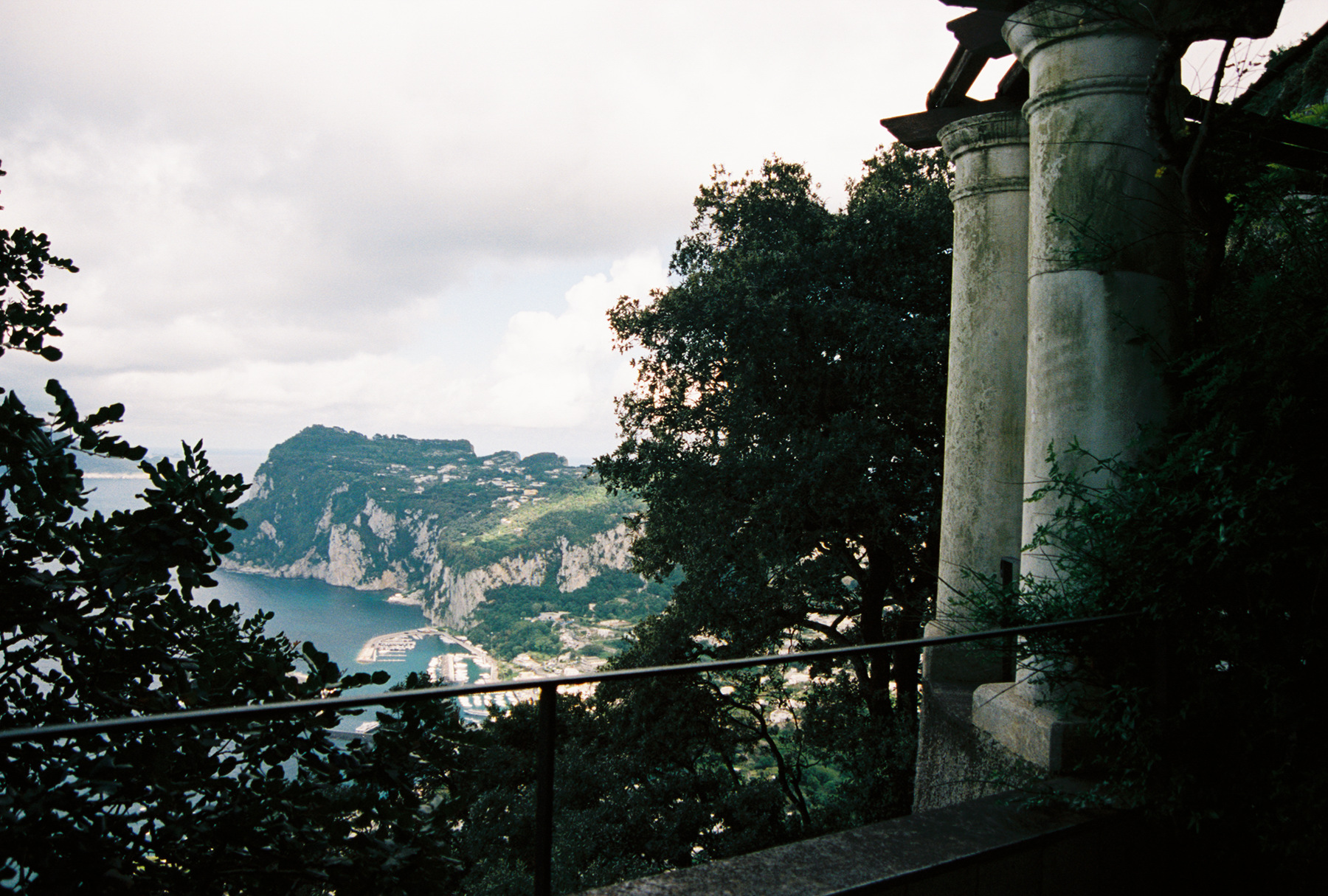
The best view is a private spot of solace, a corner to stop in your tracks and allow the view to overtake your senses. A sip of the island’s limoncello, the scent of flowers and the sea, the sound of the birds and the south wind, the feel of the stone along your hands and under your feet – all senses are occupied with Capri from here.
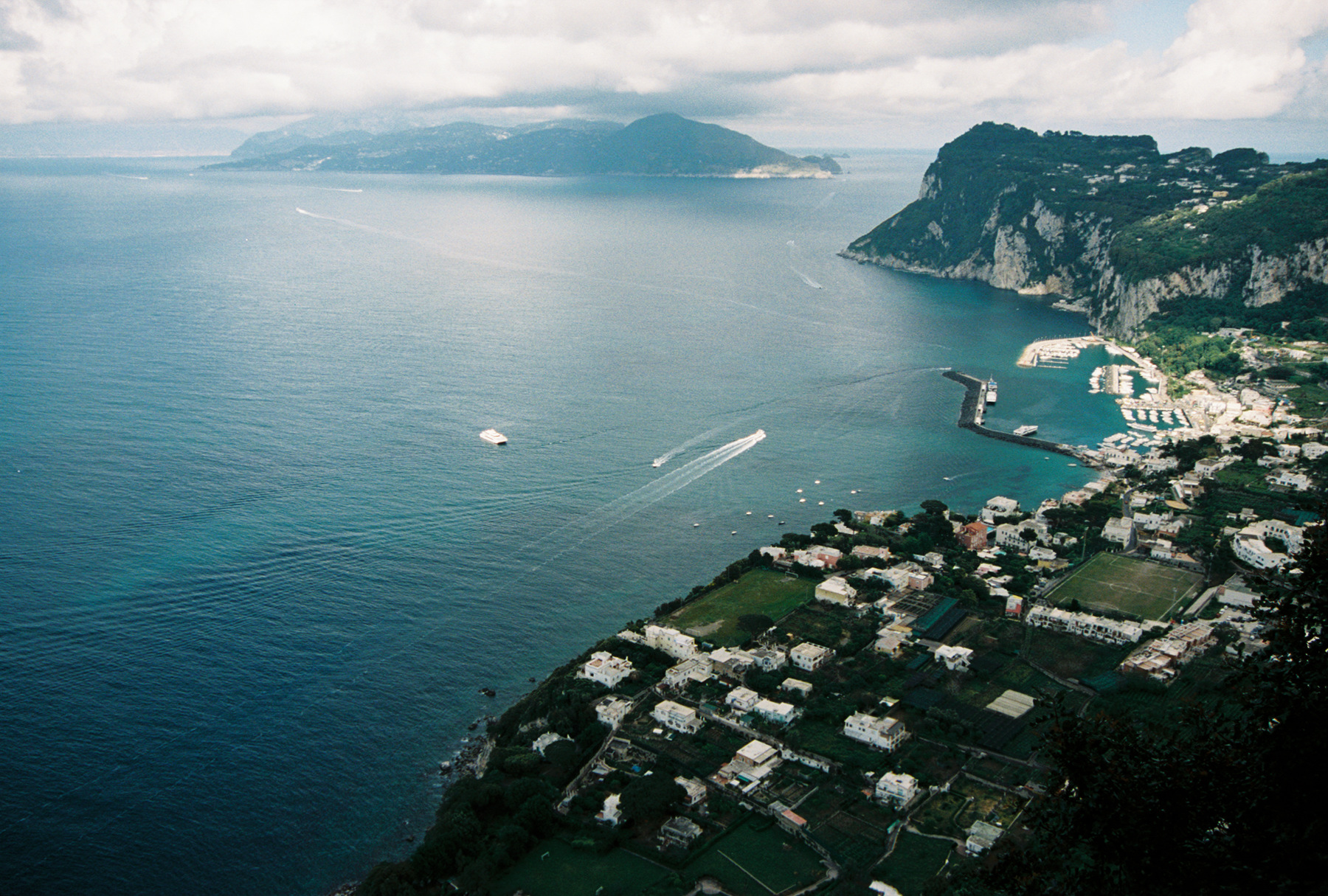
On certain days when the weather is perfect it feels as if one could see the whole world from here.

Some of the paths are winding, some are hidden until you come upon then suddenly, some form straight lines with edges and niches laid out for yards.
“The pergola was already covered with young vines; roses, honeysuckle and Epomea were clustering round the long row of white columns. Among the cypresses in the little cloister court stood the Dancing Faun on his column of cipollino, in the centre of the big loggia sat the bronze Hermes from Herculaneum.” – The Story of San Michele by Axel Munthe
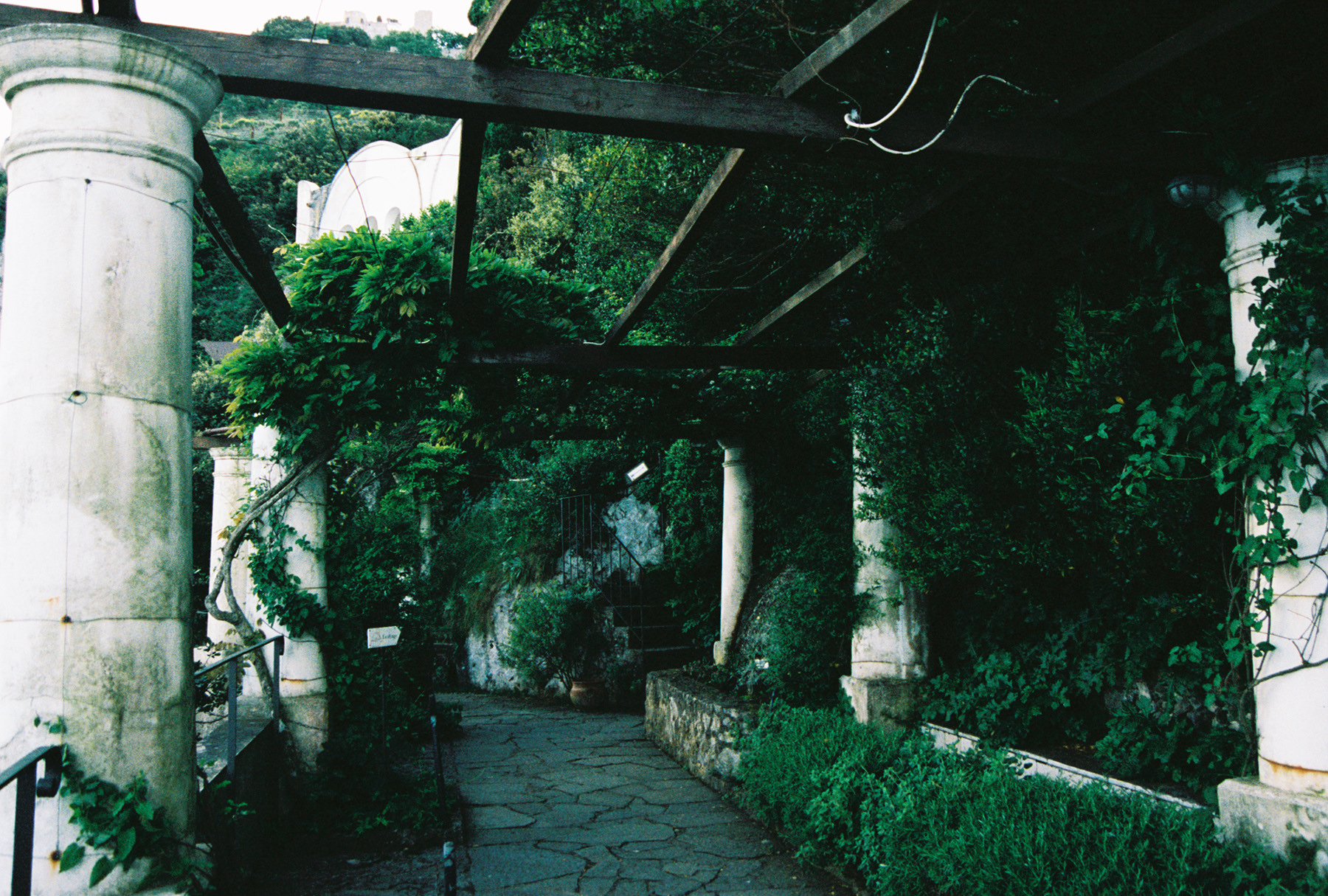
Follow the ivy climbing over the columns and stone walls as you explore the garden, every corner is a delight.
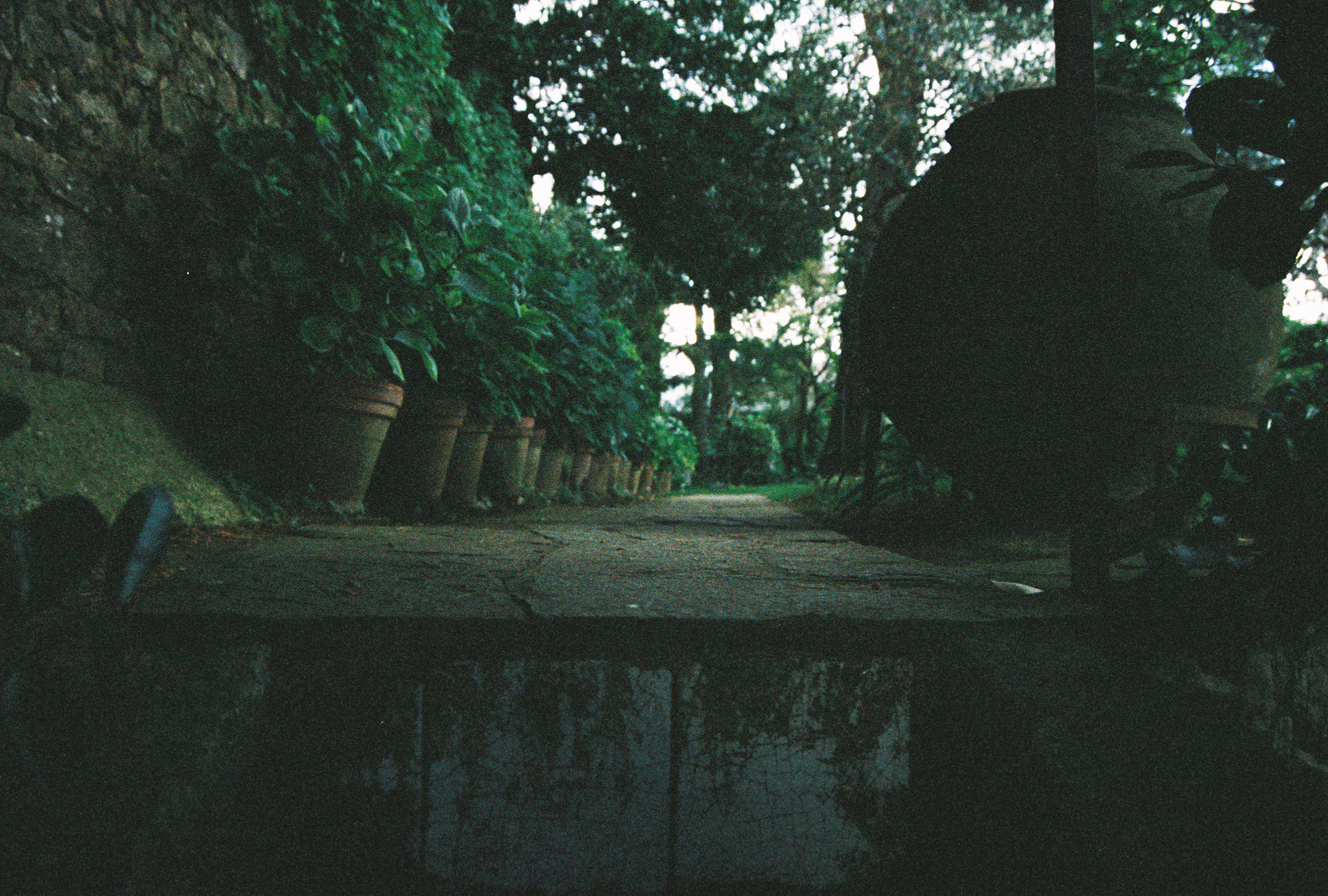
At the top of the steps are uniformed pots of green plants and spring buds, standing at attention for your wander about.
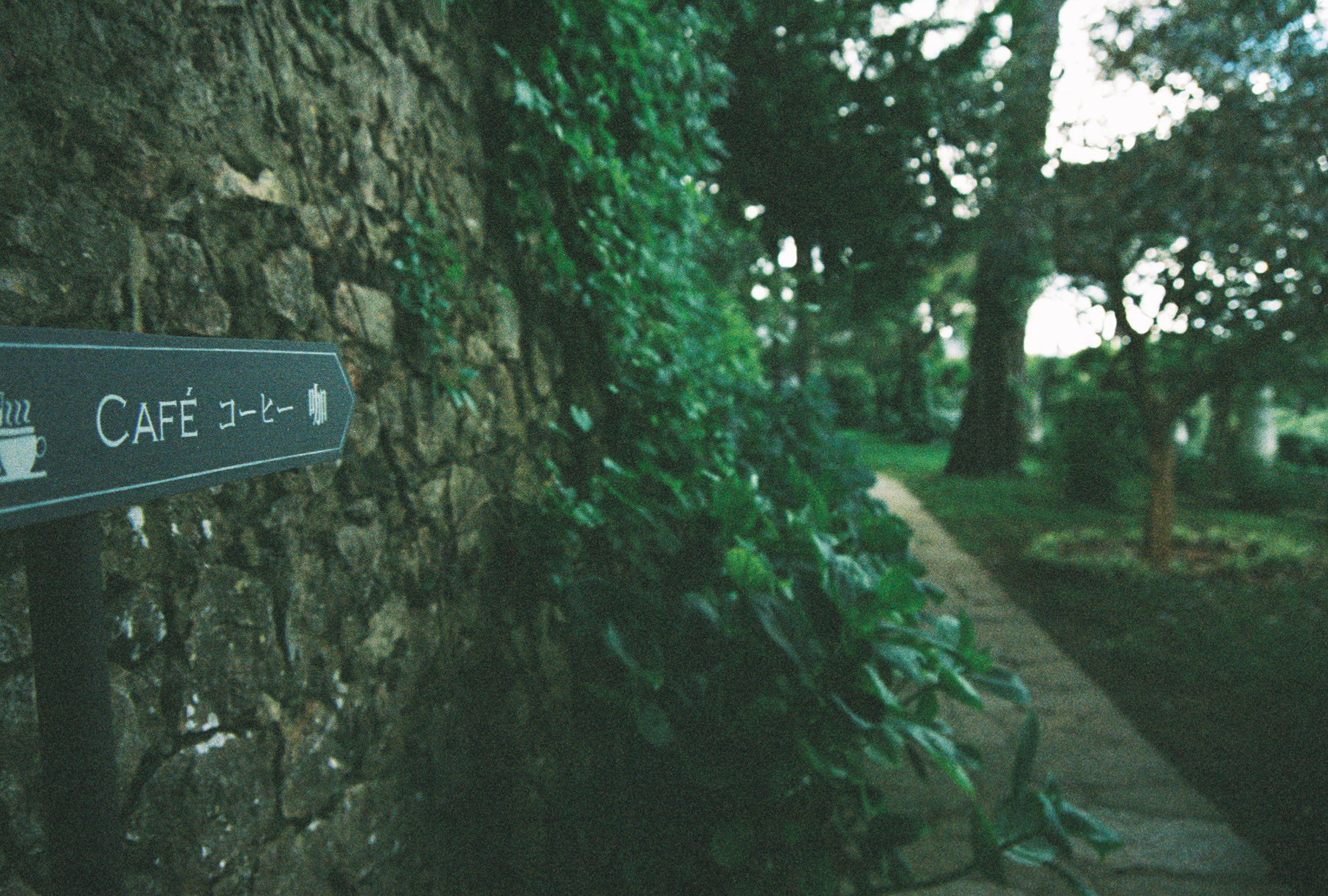
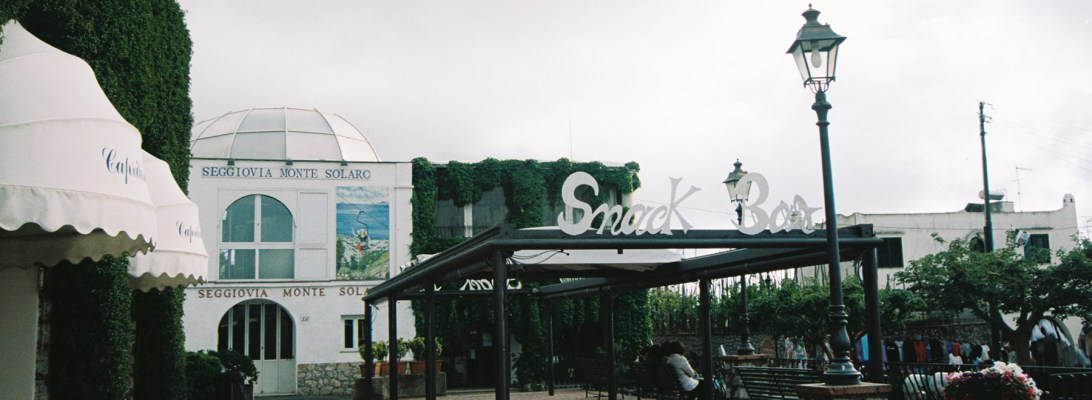
On one path a sign leads to the café, a welcome distraction after all that beauty. Doesn’t everyone at a museum always love a café? This one is a rooftop one in the garden.
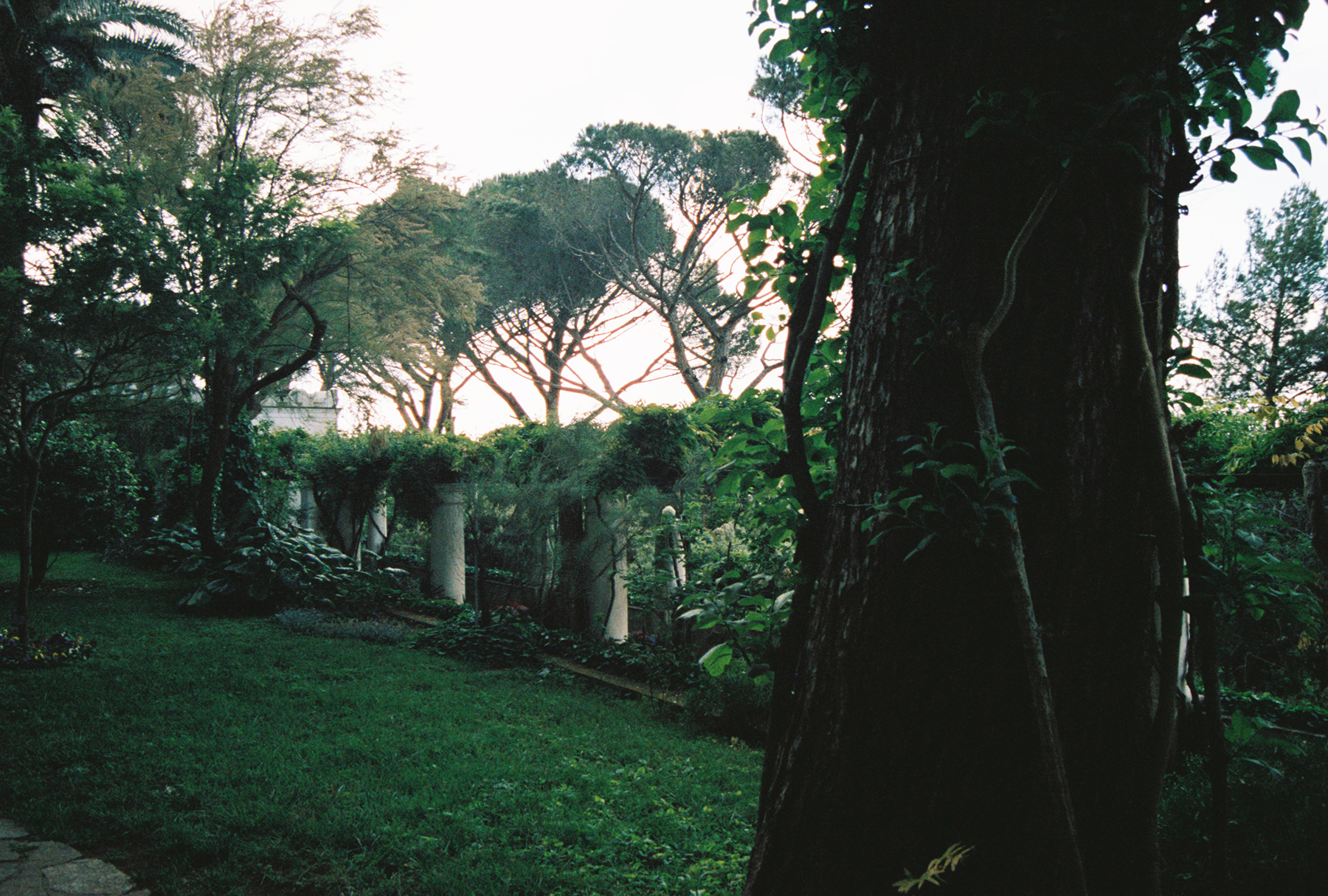
Gnarled vines from long dead plants wind themselves around majestic trees along a columned loggia.
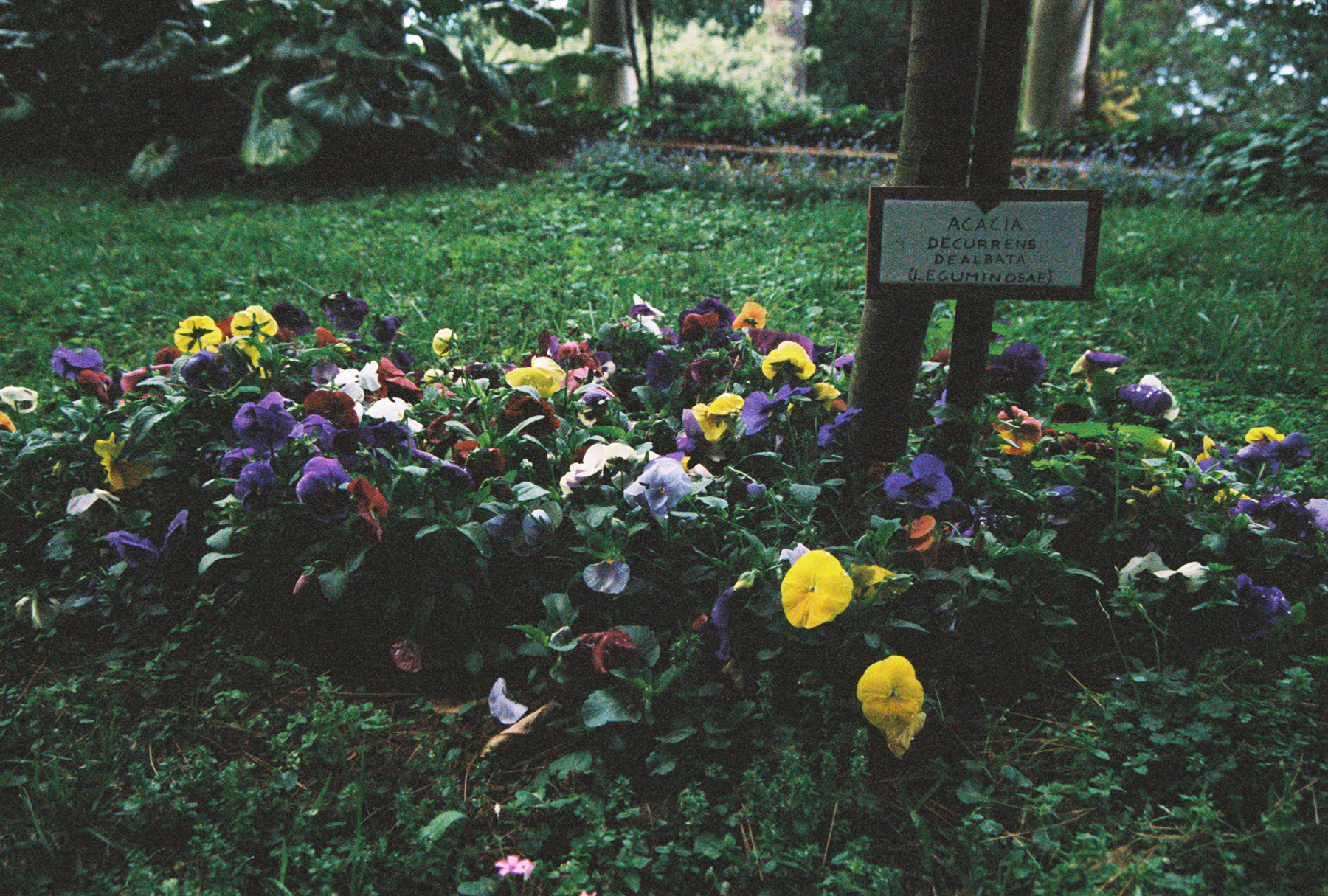
The exotic and native flowers in every hue are marked and greet thousands of visitors each year.
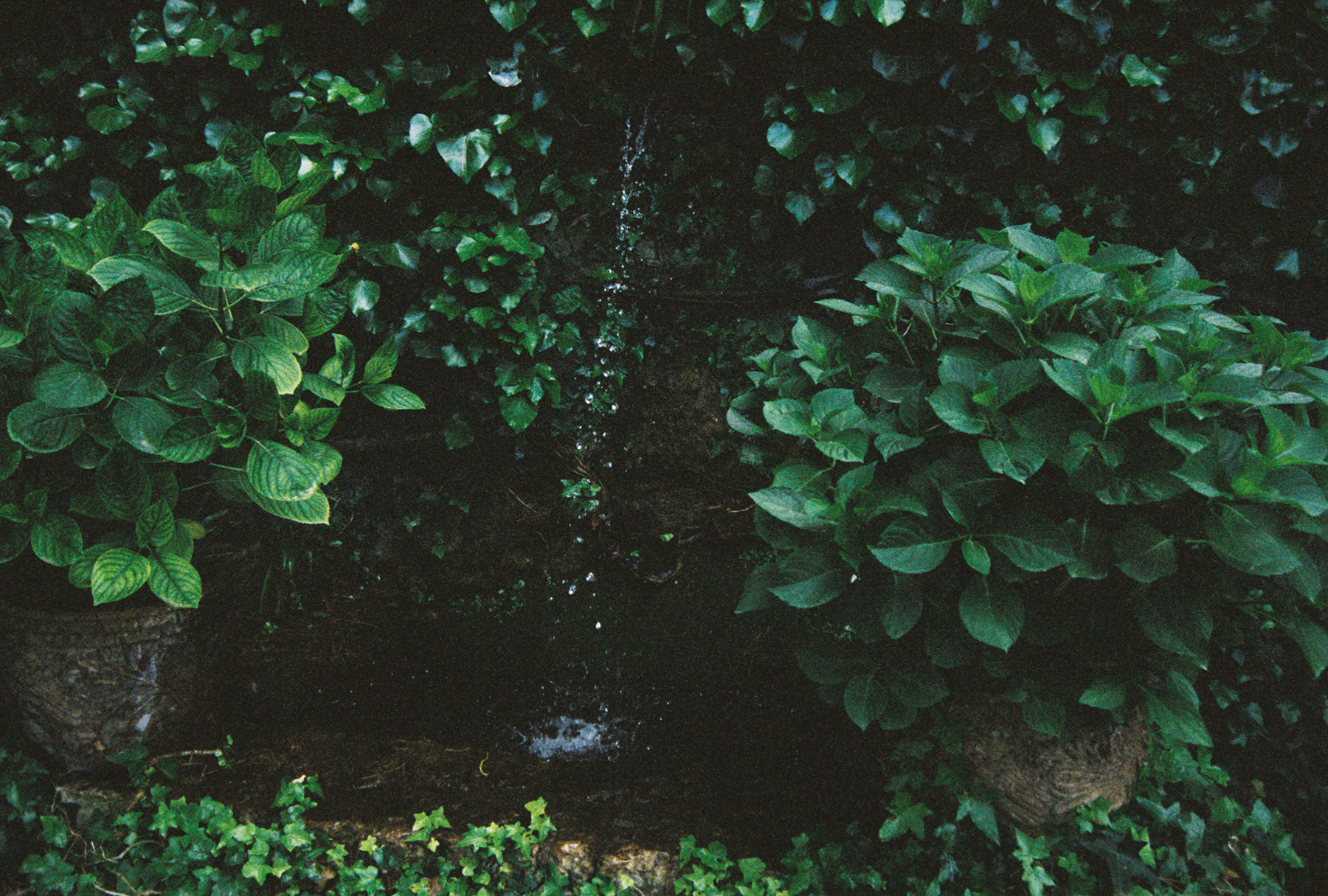
A stone water fountain which looks completely natural bubbles forth in between ivy, basil and shiny leaves. There’s mint and rosemary and too many herbs to count.
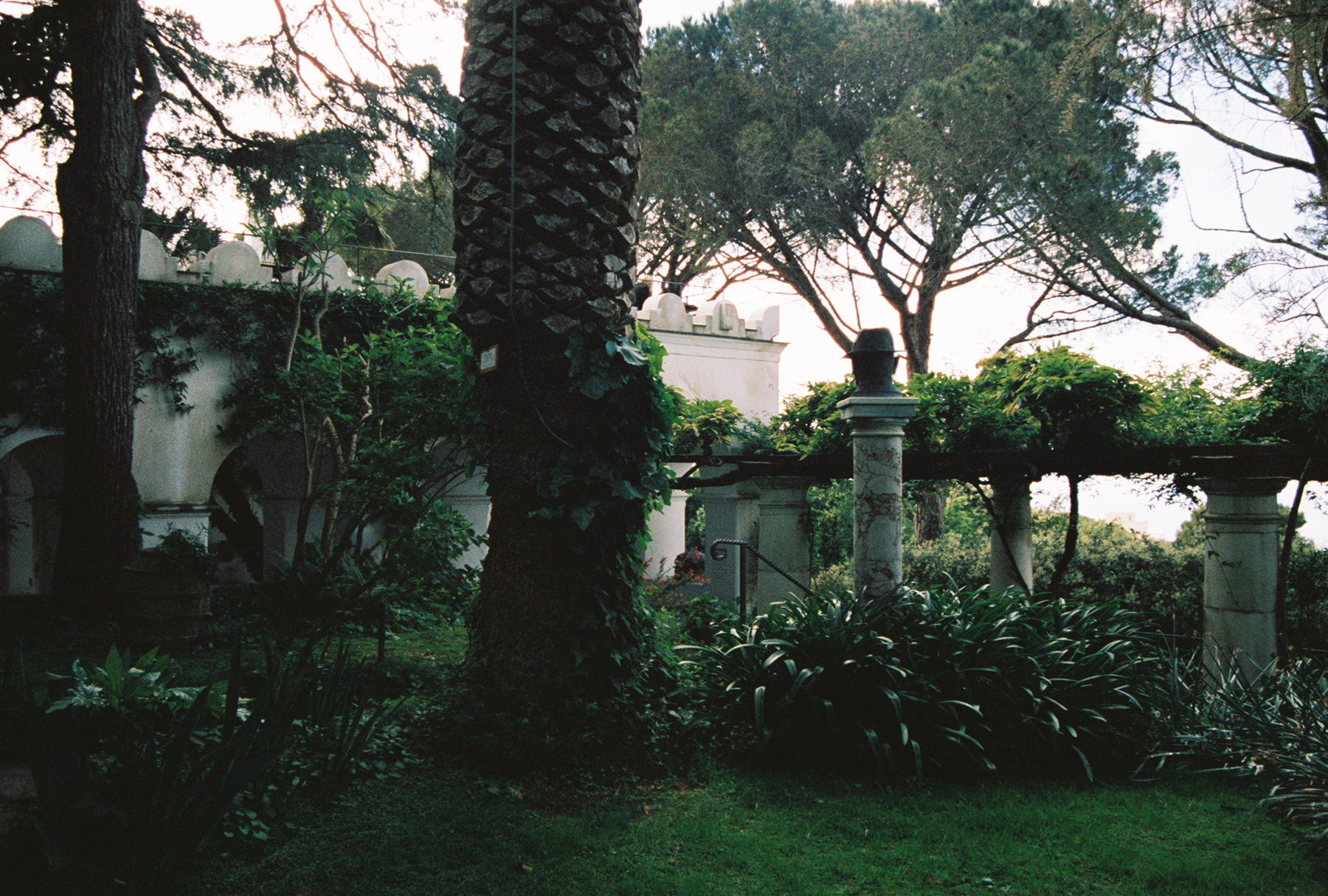
A few Egyptian looking palm trees and several umbrella pines recall Capri’s ancient Roman days when the island played host to emperors and sirens.
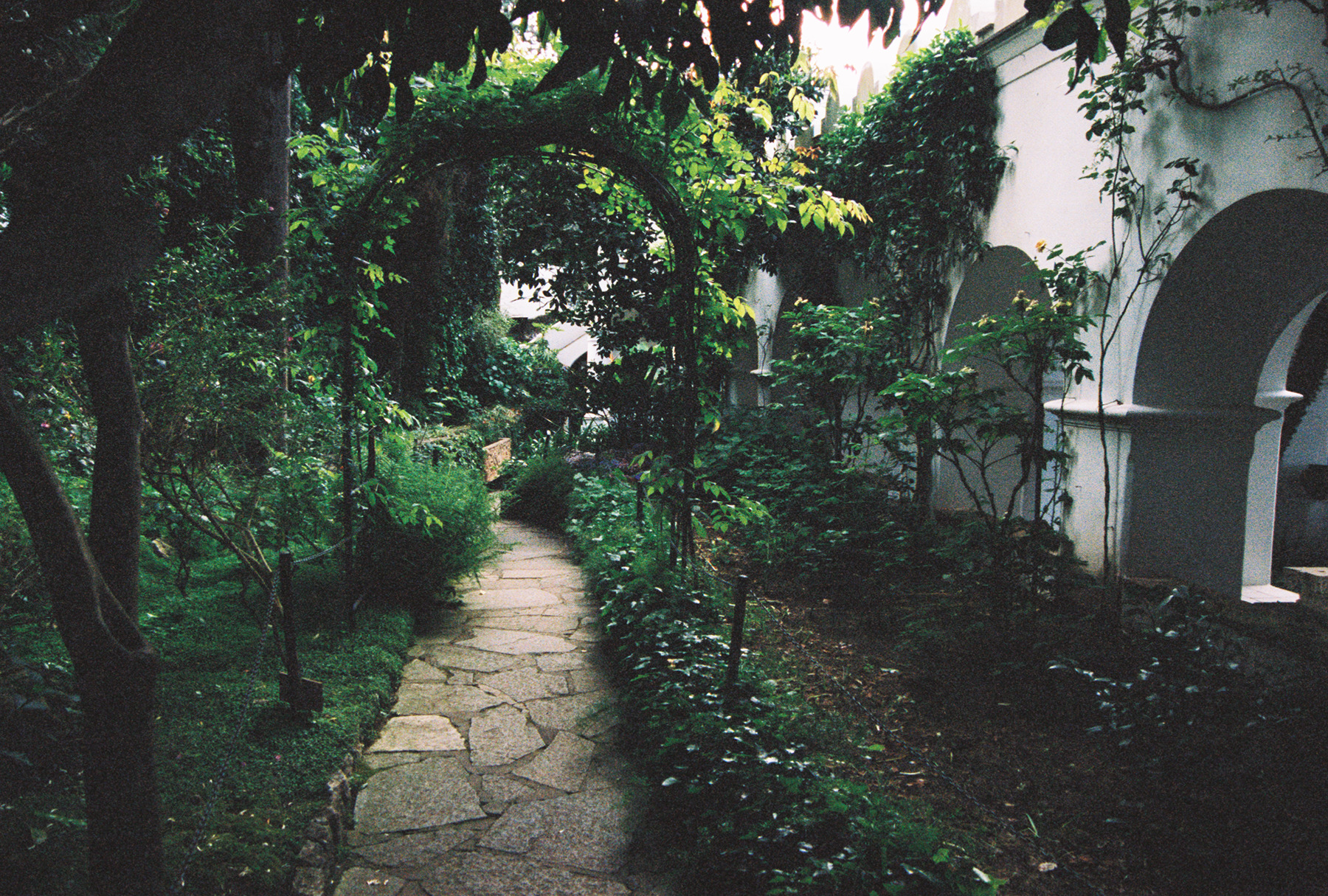
This is one of my favorite spots…I feel a sense of happiness and pleasure whenever I pass under the leafy canopy and approach the café. This is my dream garden.
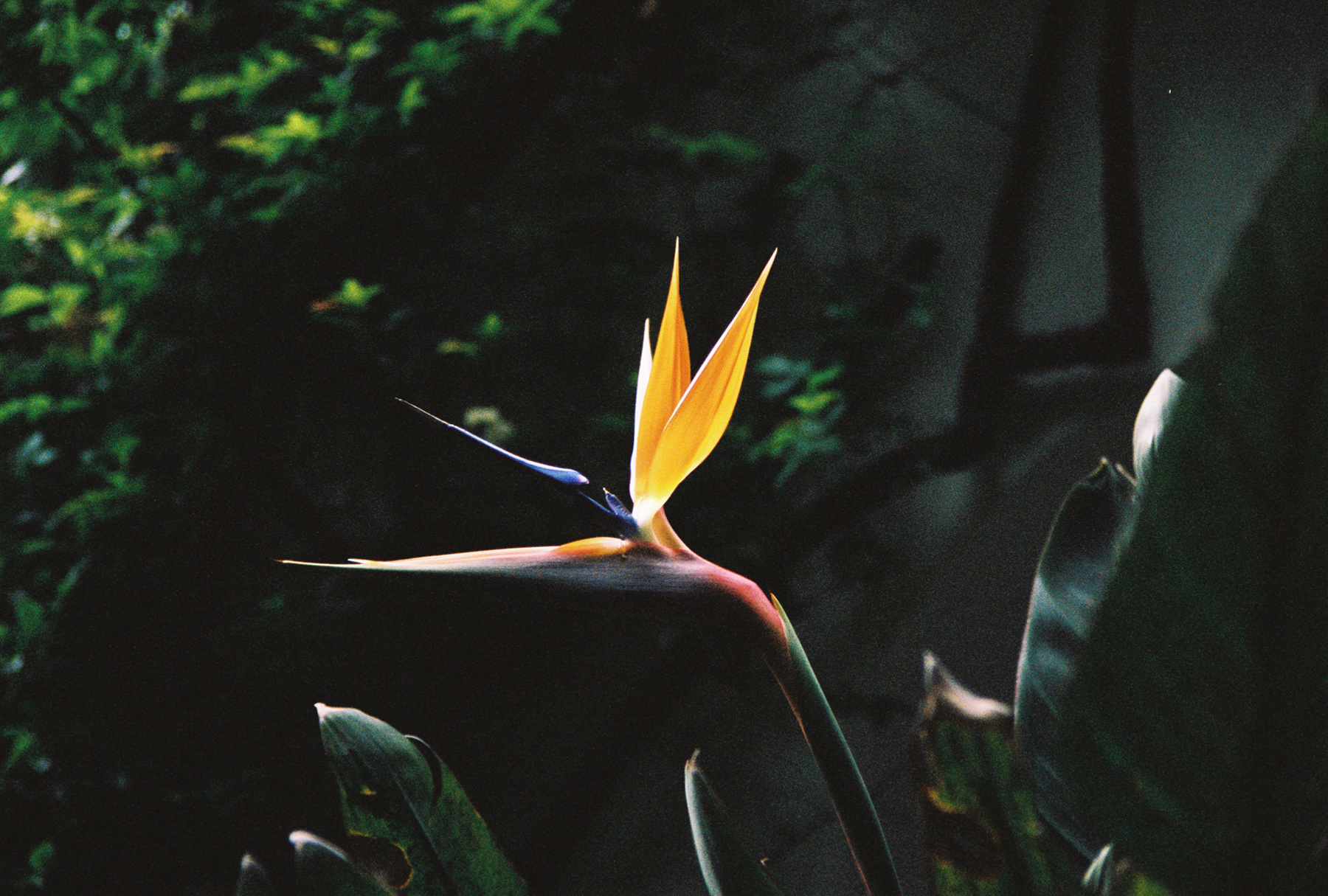
Whenever I see a Bird of Paradise I think warmly of my mother and her love for them. This was the most perfect one I’ve ever noticed.

The Loggia has many windows to the sea and other curves of the garden. They are filled with manicured folder pots and Greco Roman statues. Roses climb the walls in every soft color.
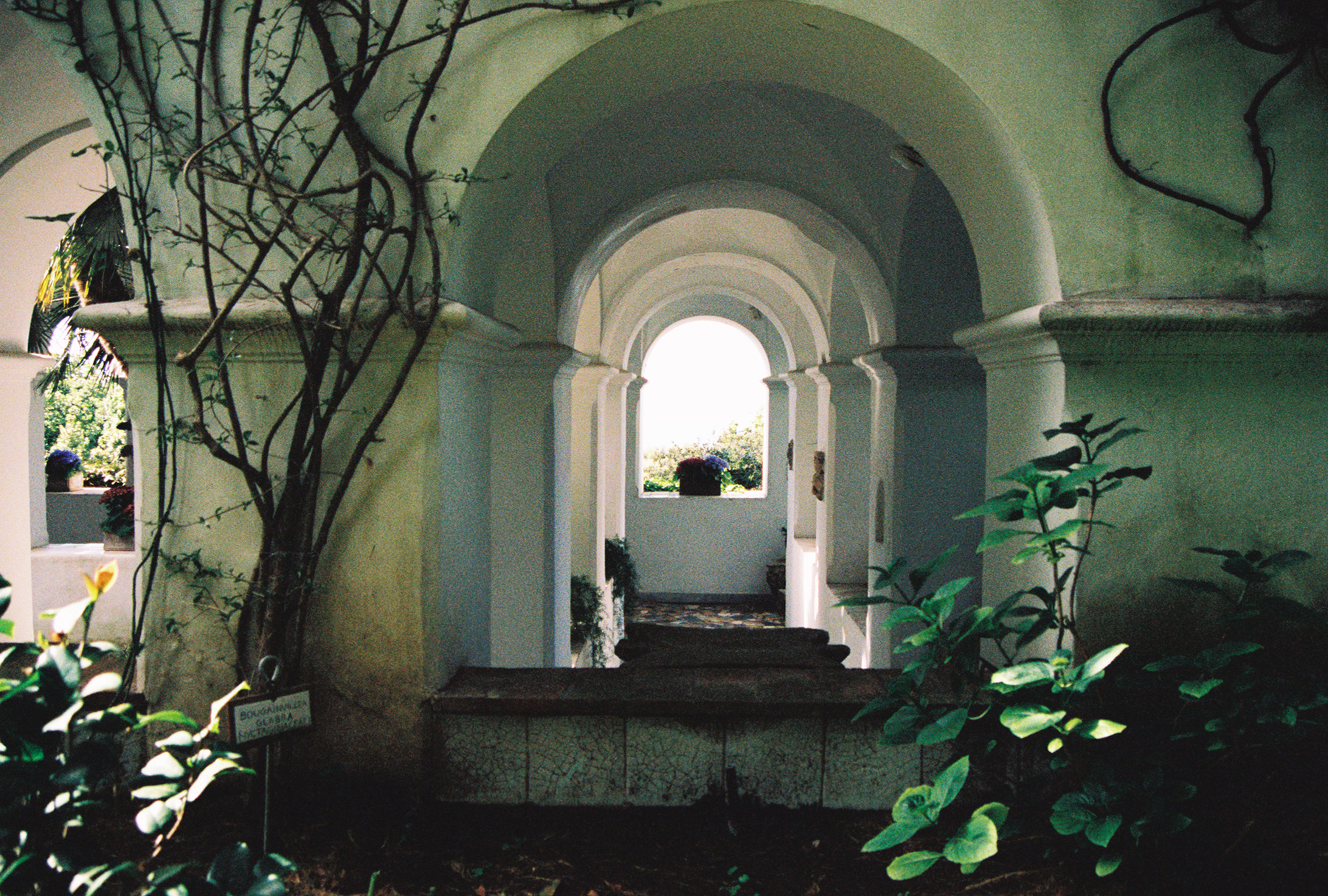
Some of the architecture reminds me of a Spanish style church, some is a bit Occidental, some a little Roman and the rest an eclectic mix of early 20th century and Capri-style.
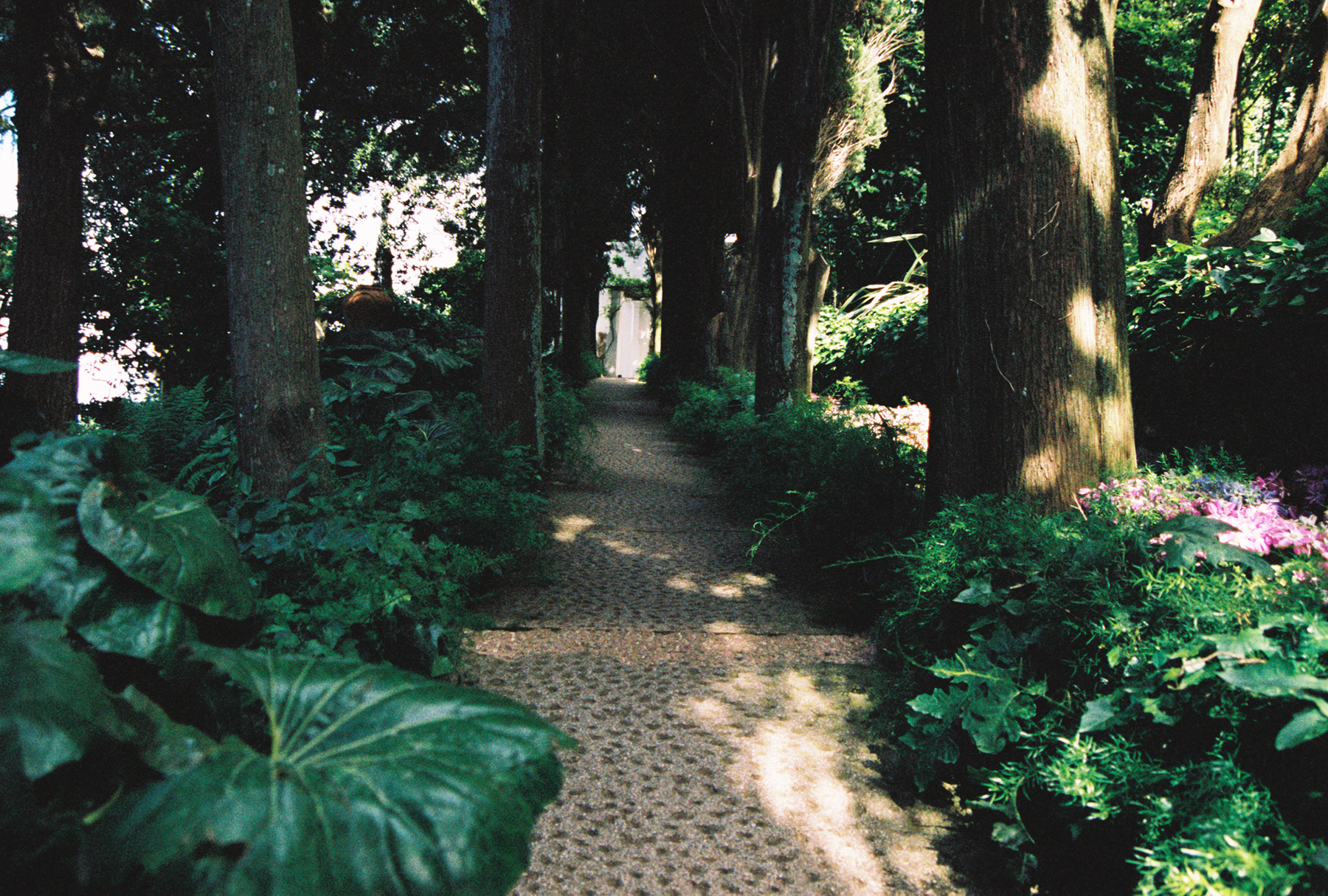
Each path ends with a different corner of the grounds, each turn is so inviting it’s difficult to choose one lane over another for the promise of their beauty.

Where ever you end up in the next step, it’s easy (and enjoyable) to get lost. You always wind up at the heart of the garden and of Capri herself. If you remain quiet and strain your ear just a little bit and listen past the songs of birds, you may still hear the faint call of the sirens on the rocks below you.
“Like children in the trackless forest we grope our way through our lives in blissful ignorance of what is going to happen to us from one day to another, what hardships we may have to face, what more or less thrilling adventures we may encounter before the great adventure, the most thrilling of all, the Adventure of Death. Now and then in our perplexity we venture to put a timid question to our destiny, but we get no answer for the stars are too far away. The sooner we realize that our fate lies in ourselves and not in the stars, so much the better for us. Happiness we can only find in ourselves, it is a waste of time to seek for it from others, few have any to spare.” The Story of San Michele by Axel Munthe
Interesting perusal in relation to Anacapri and Capri:
The Story of San Michele by Axel Munthe (Full text)
Elsyium Press, Capri publications, Rare photographs and lithographs, Norman Douglas.
This is part three in a series of photo essays on the Island of Capri’s museum The Villa San Michele. All photographs copyright Rebecca Price Butler at alovelettertorome.com
 a love letter to rome