Italy and England
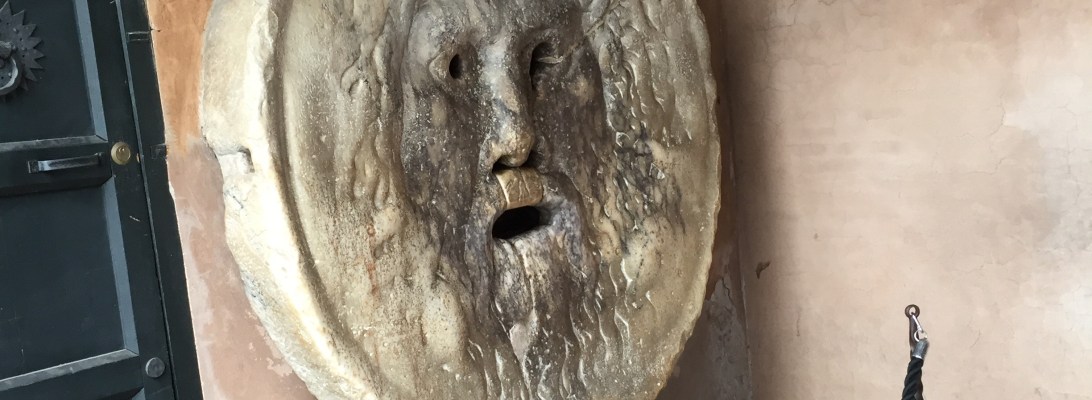
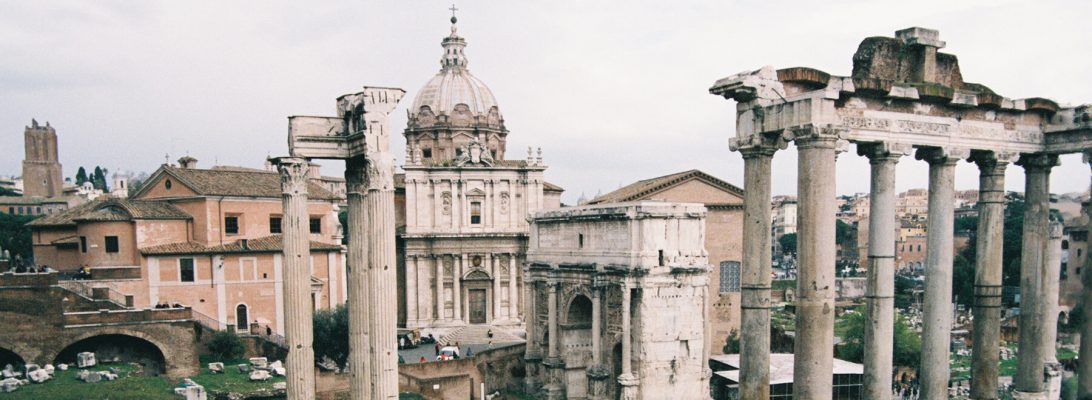






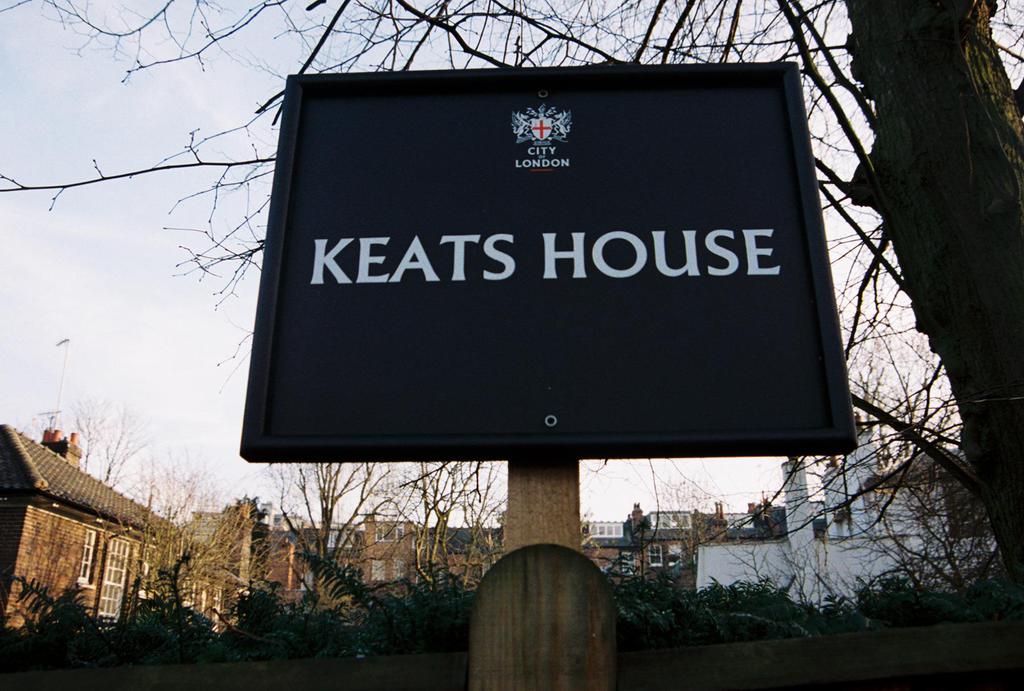

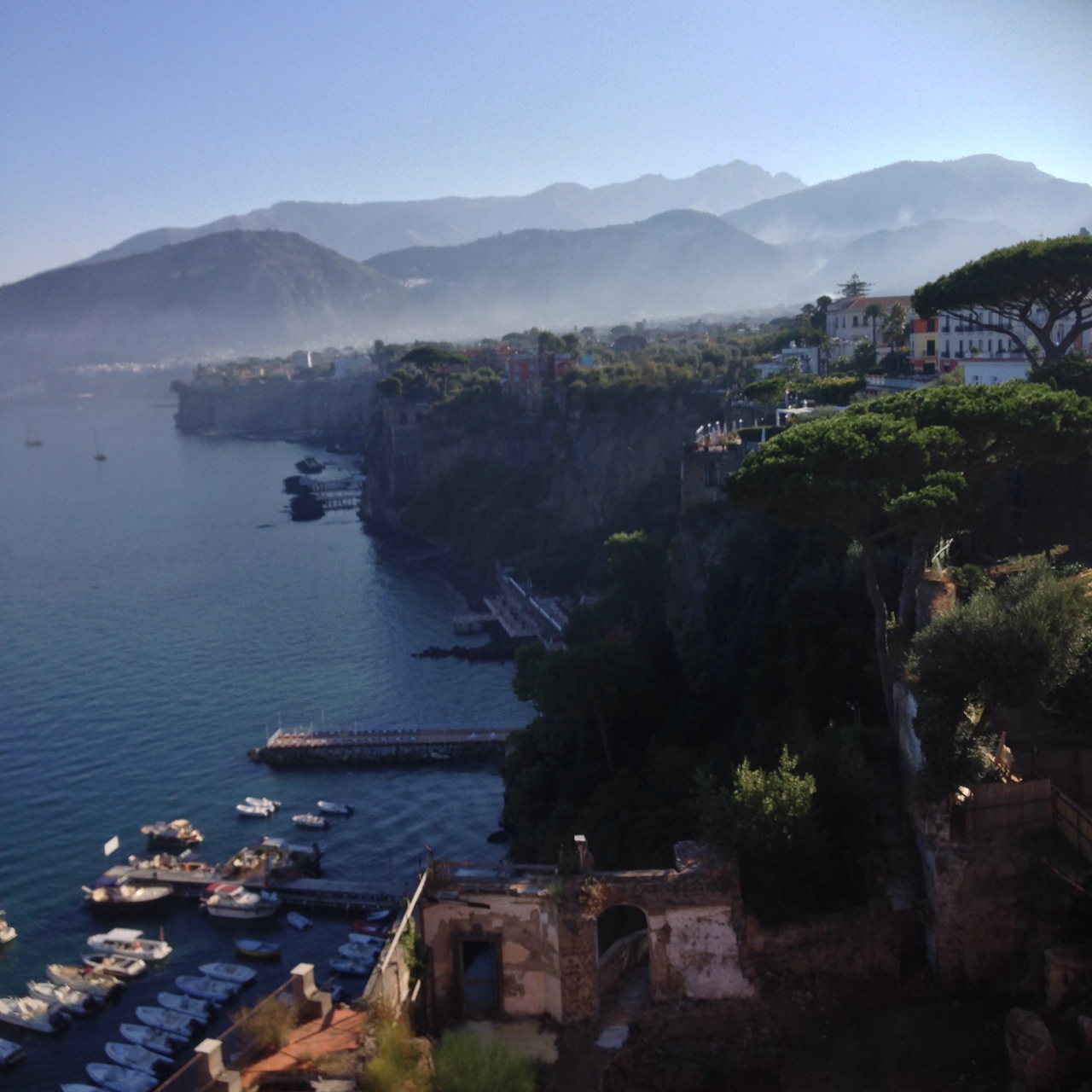
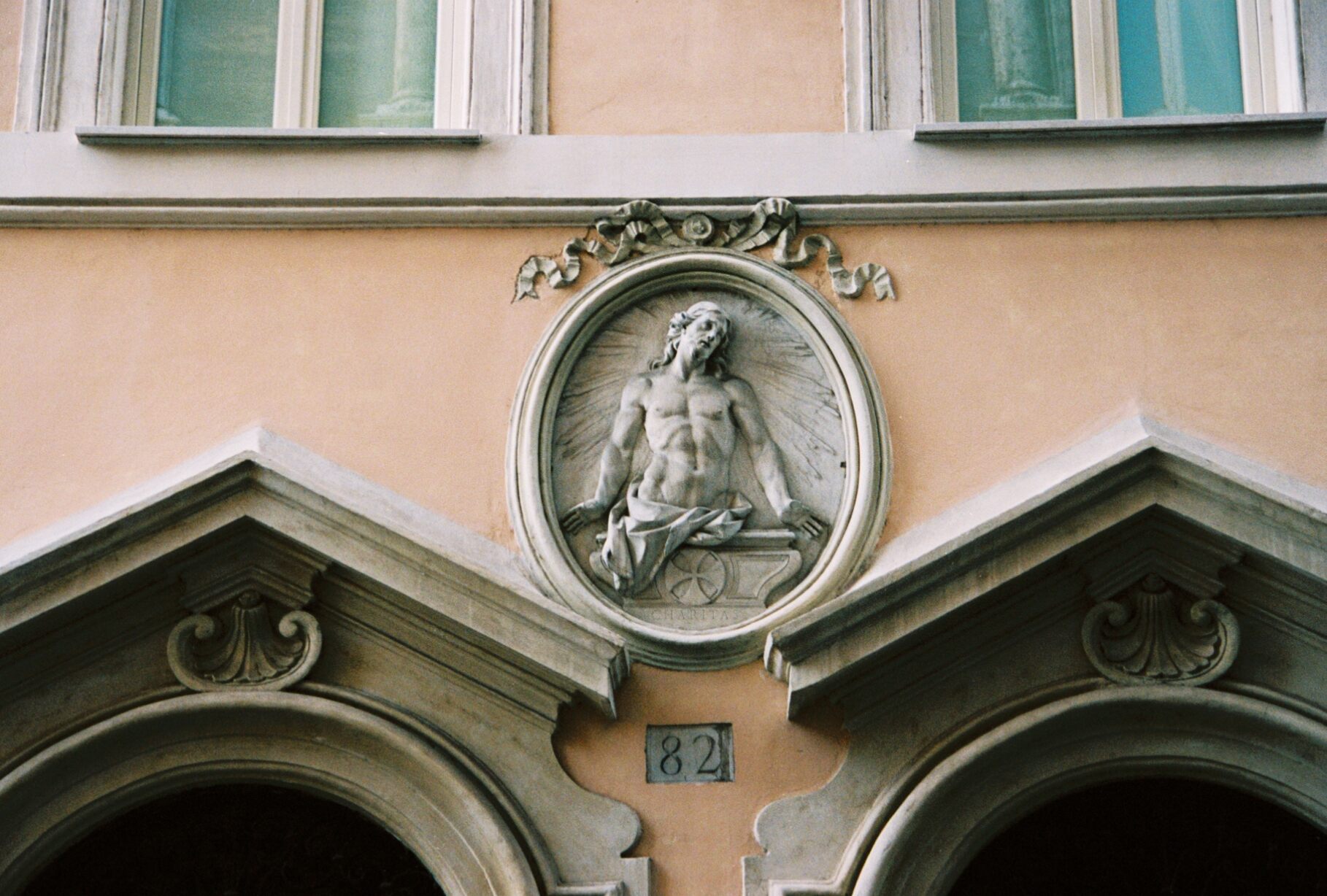
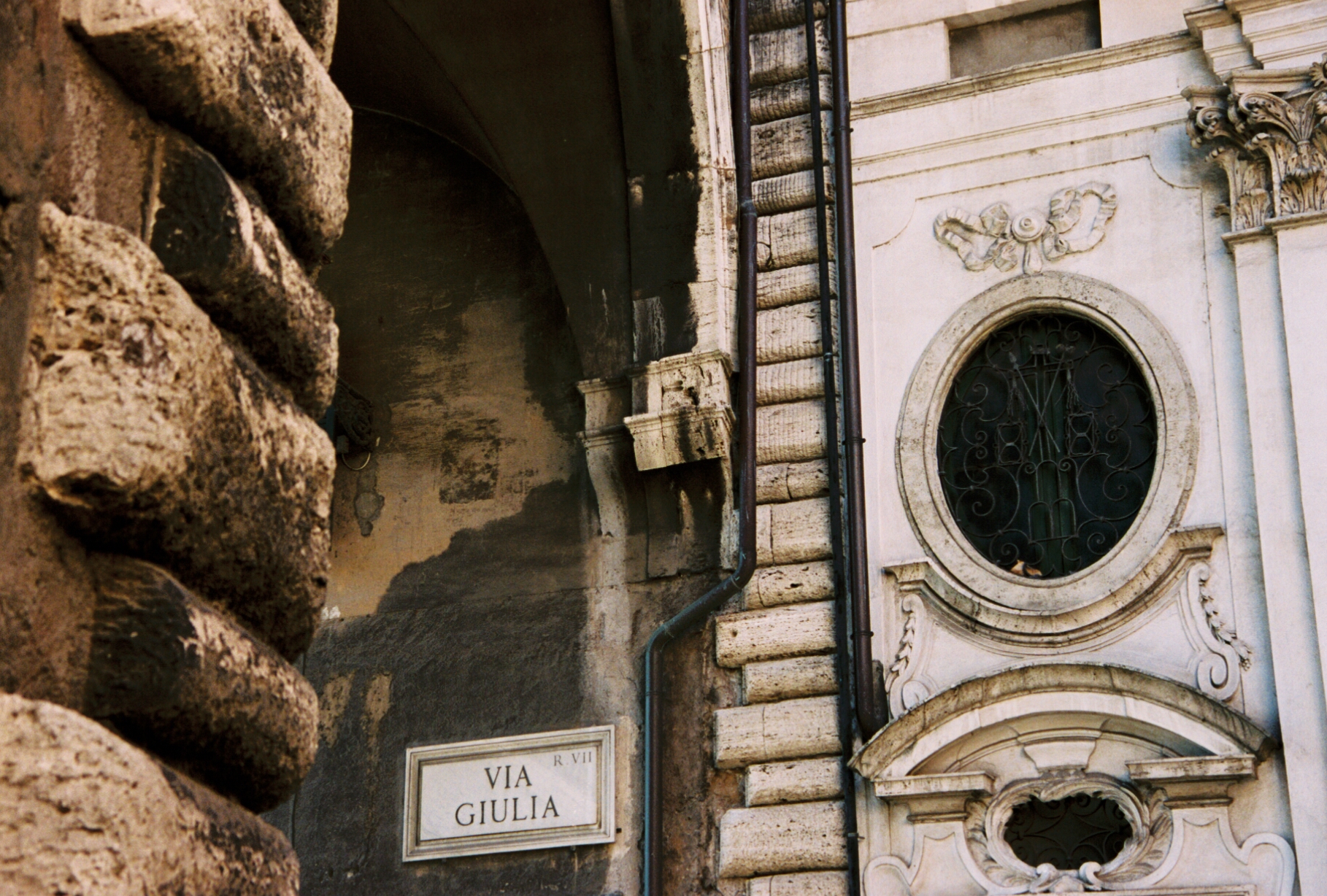
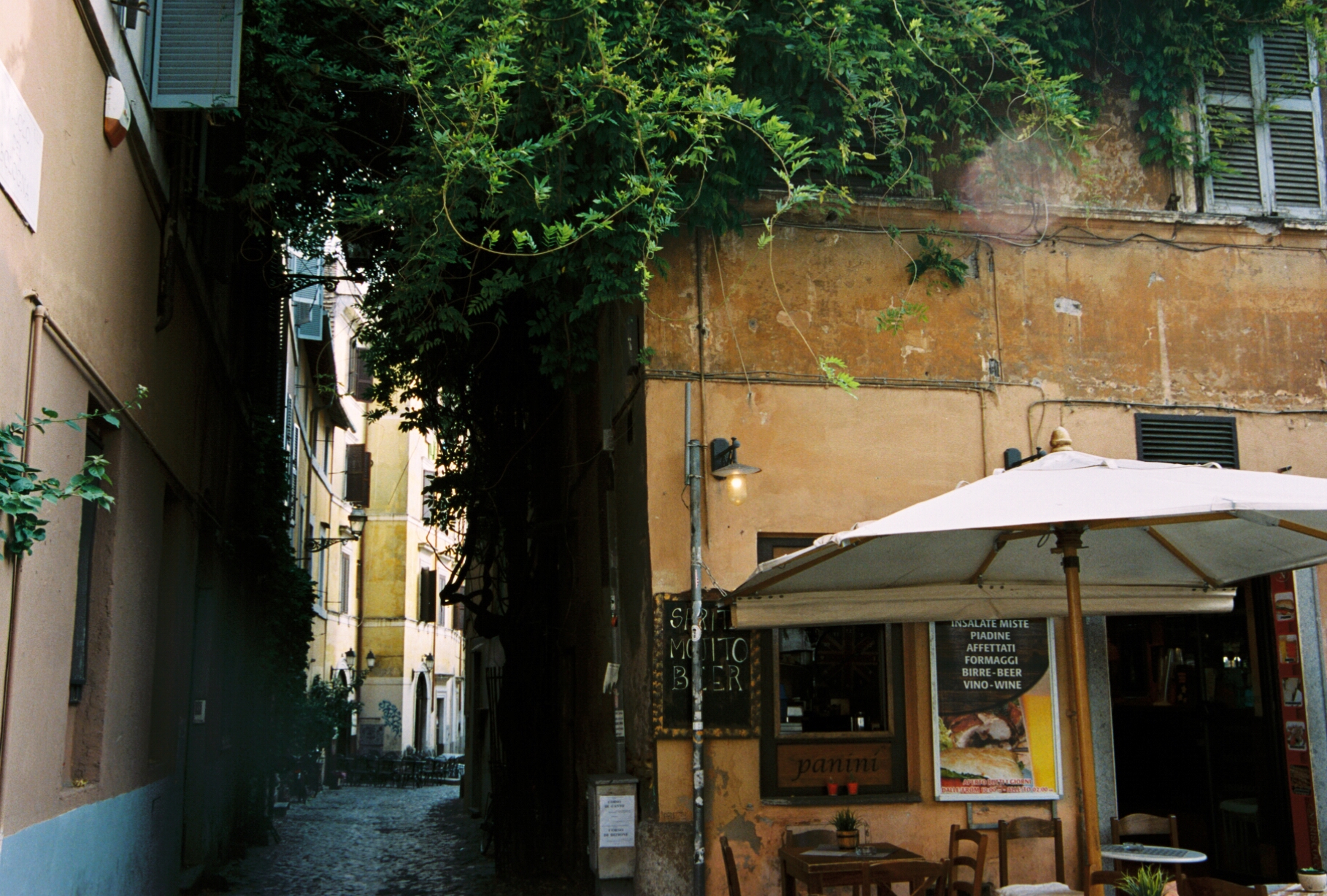
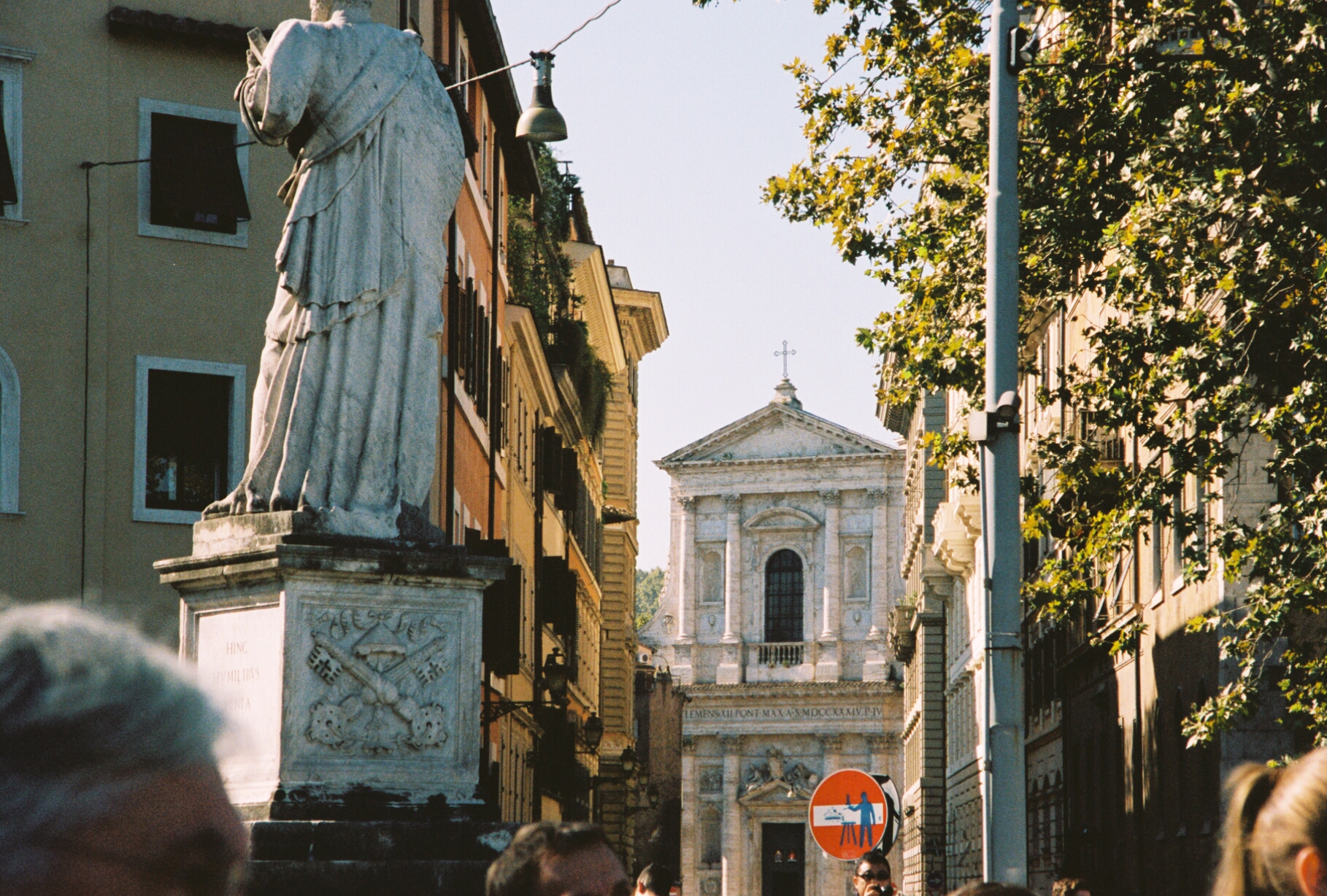

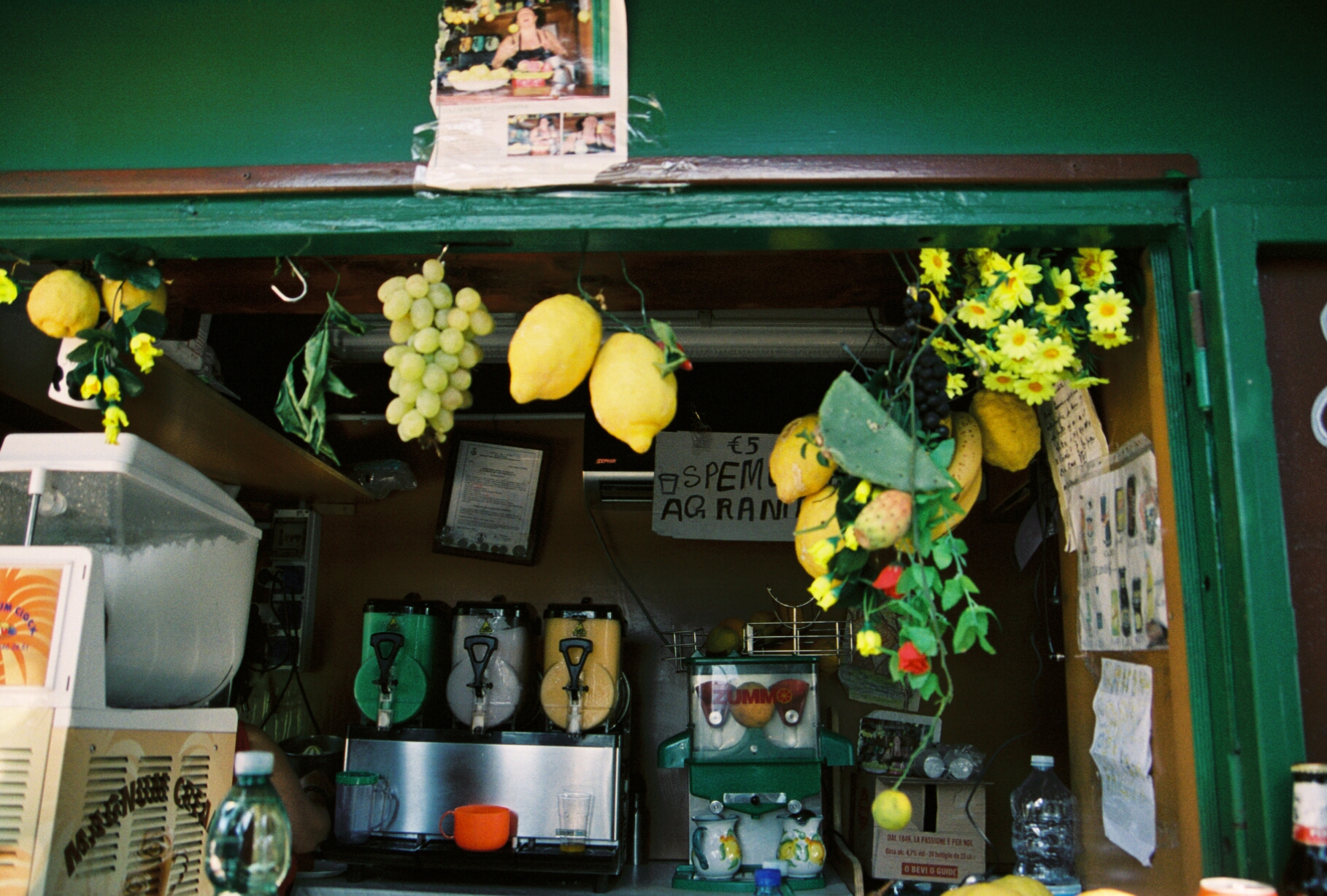
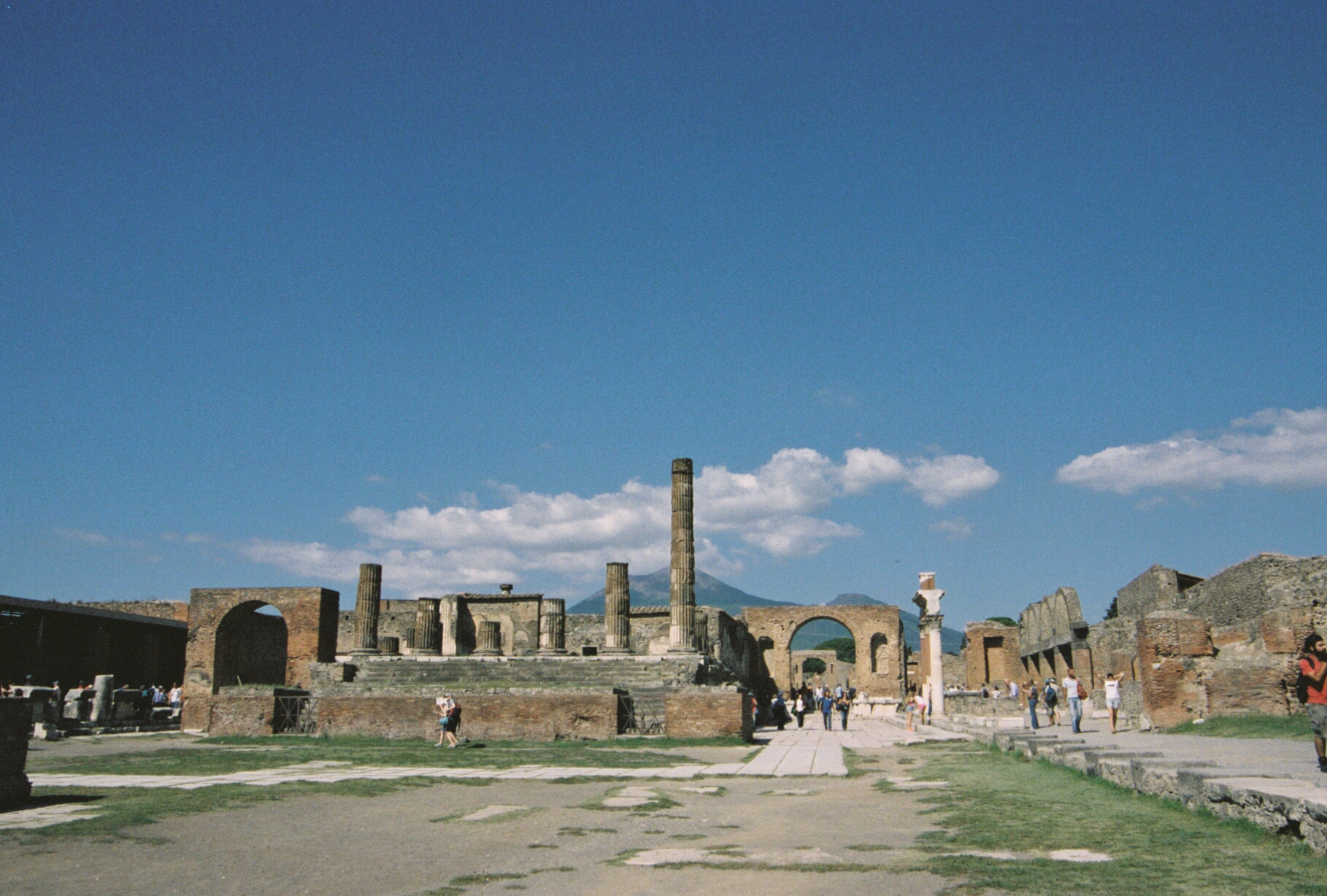
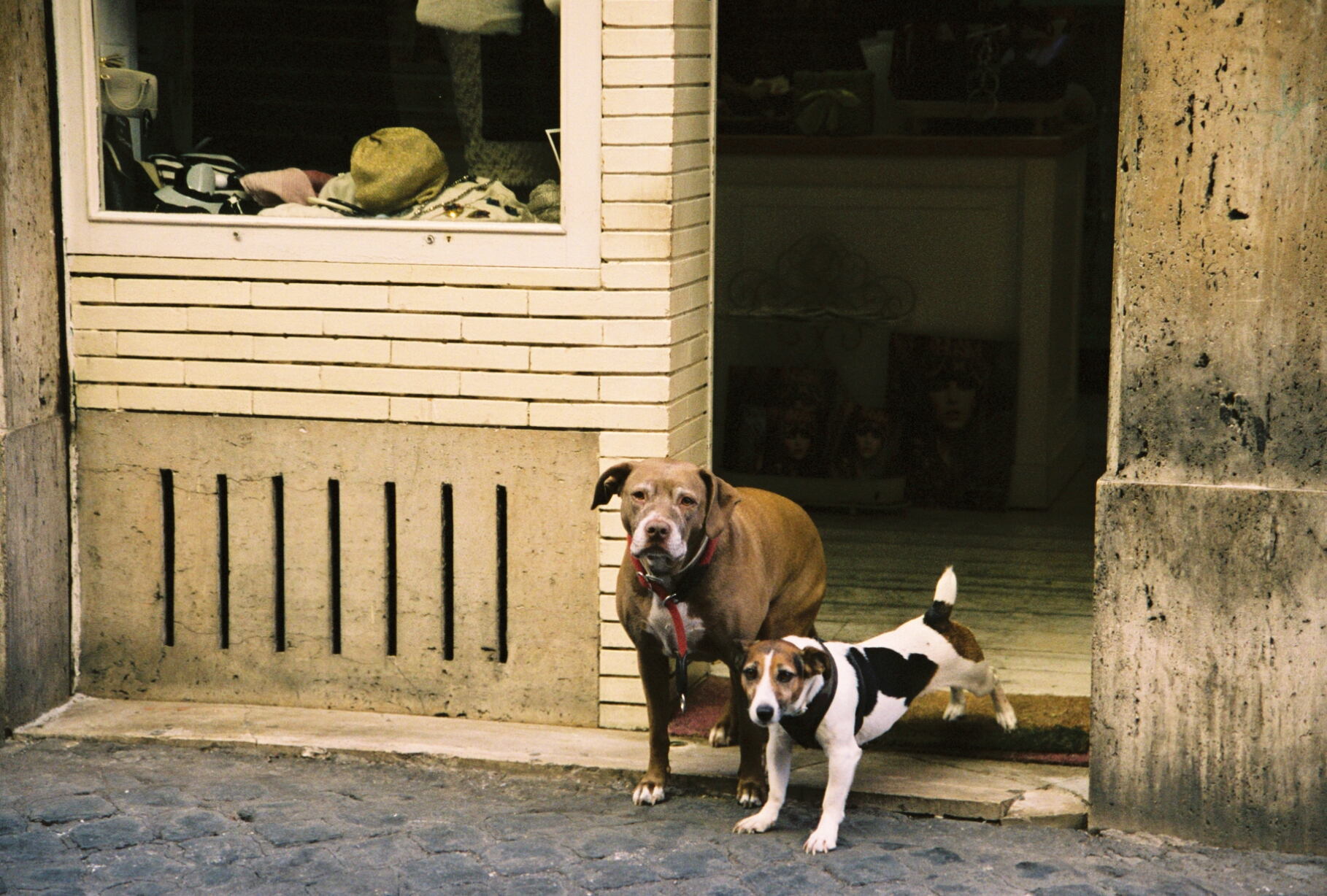
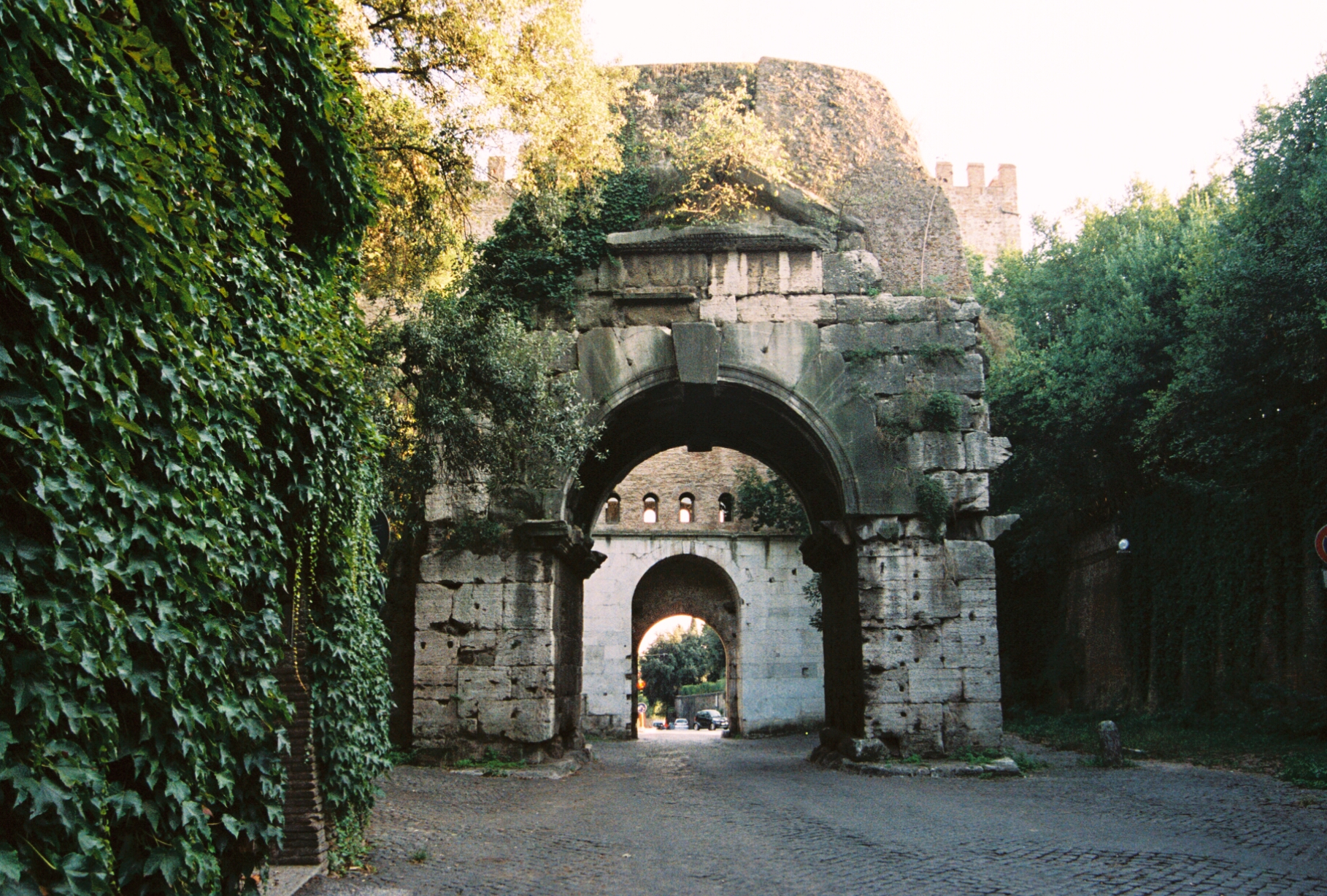
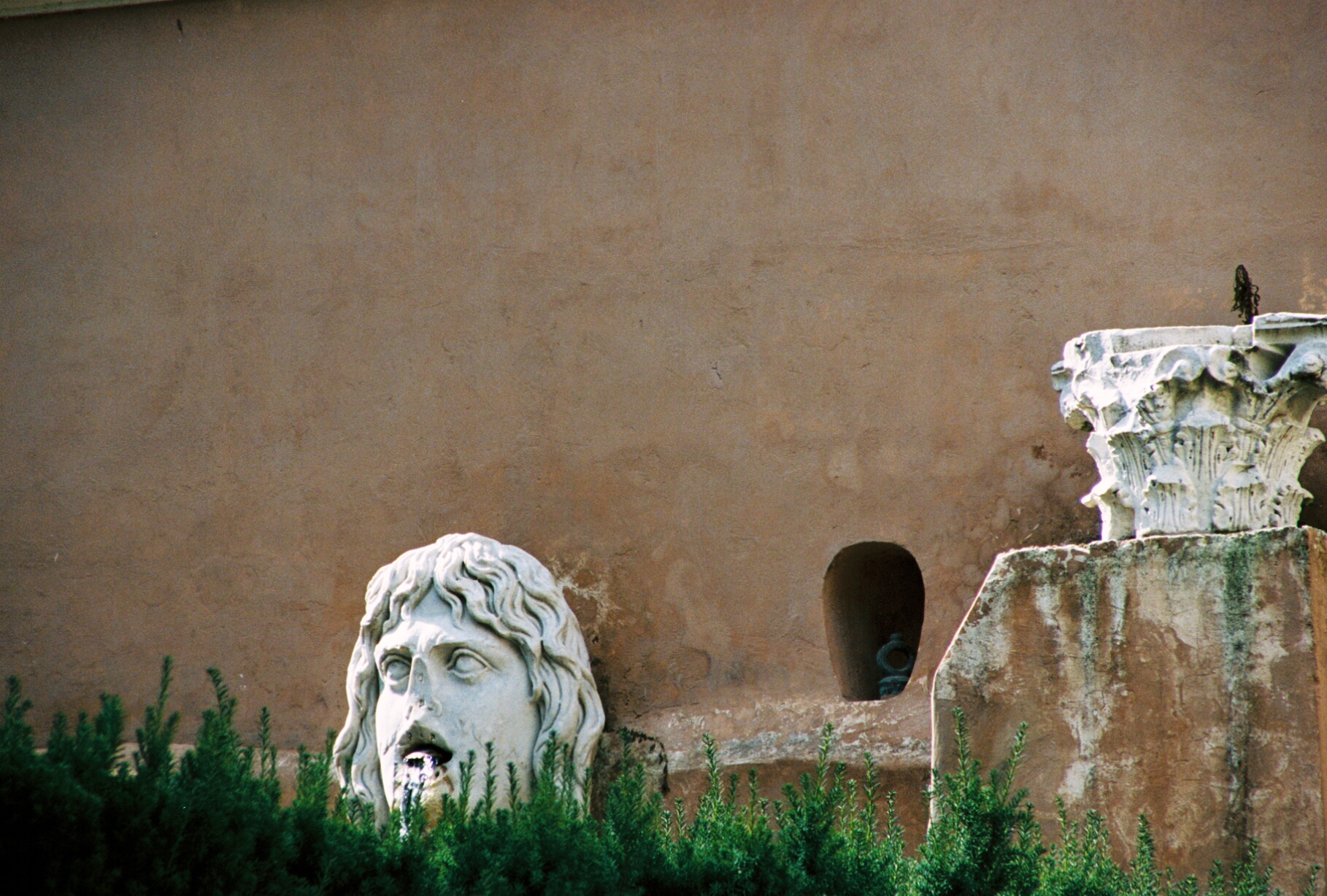
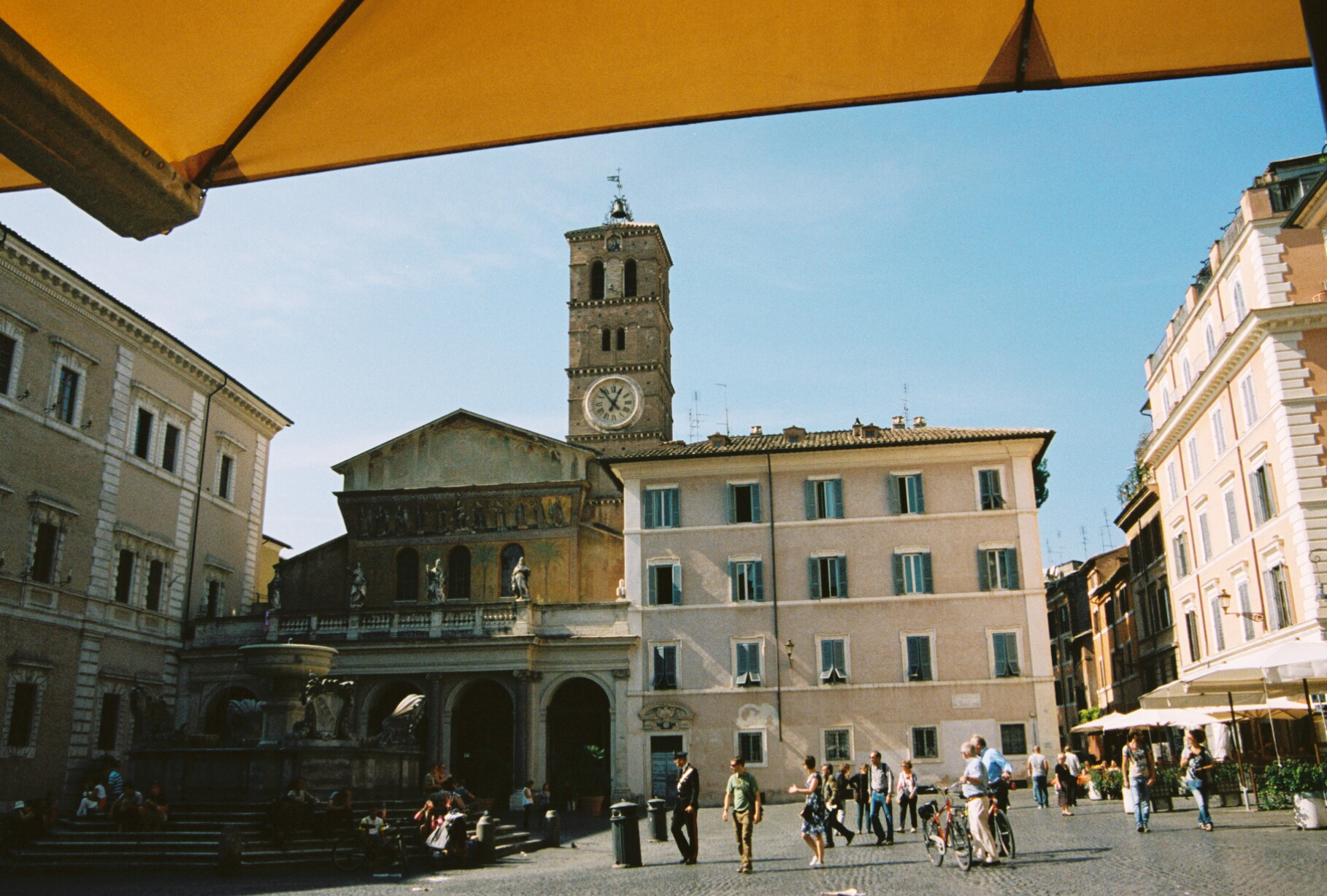
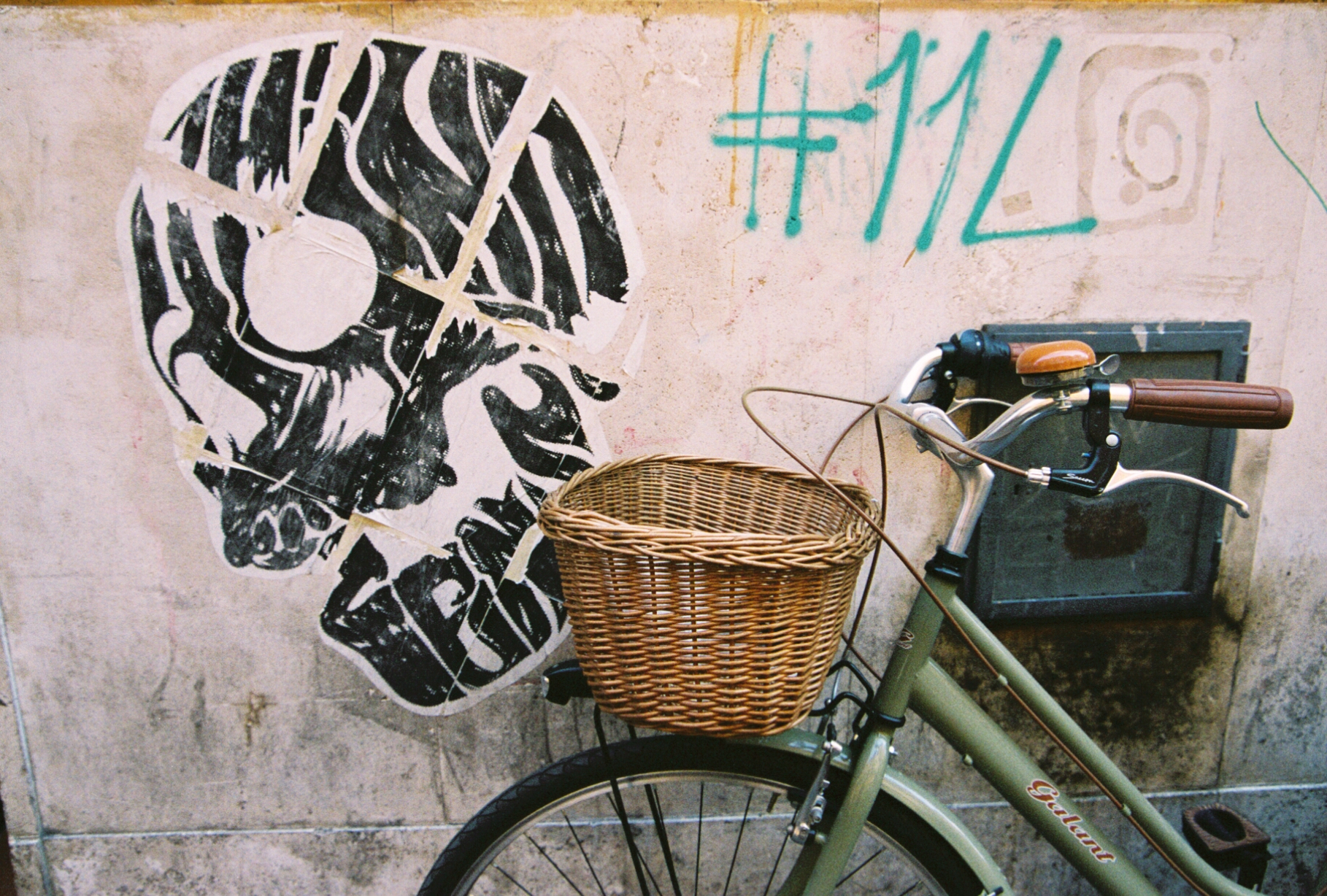
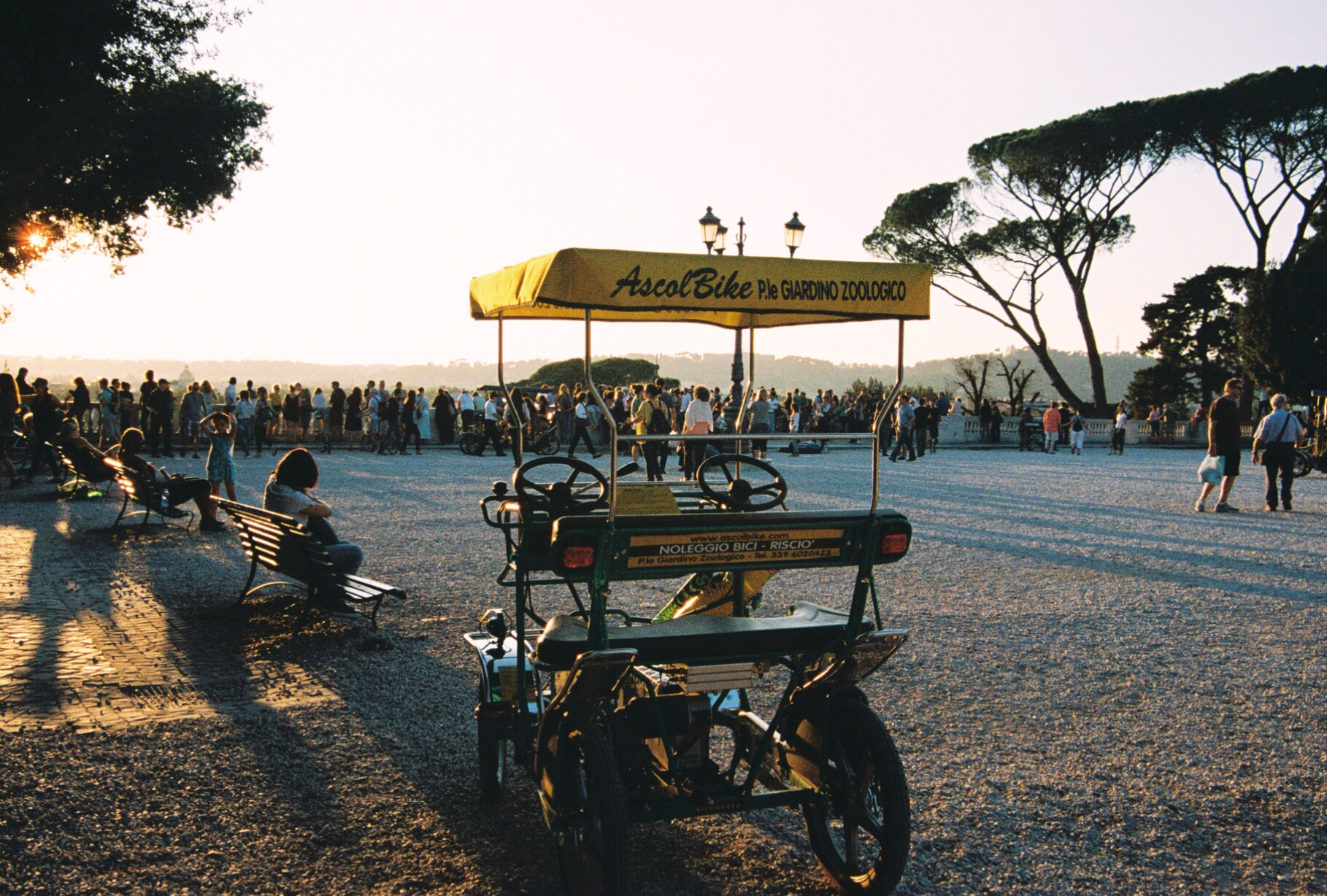
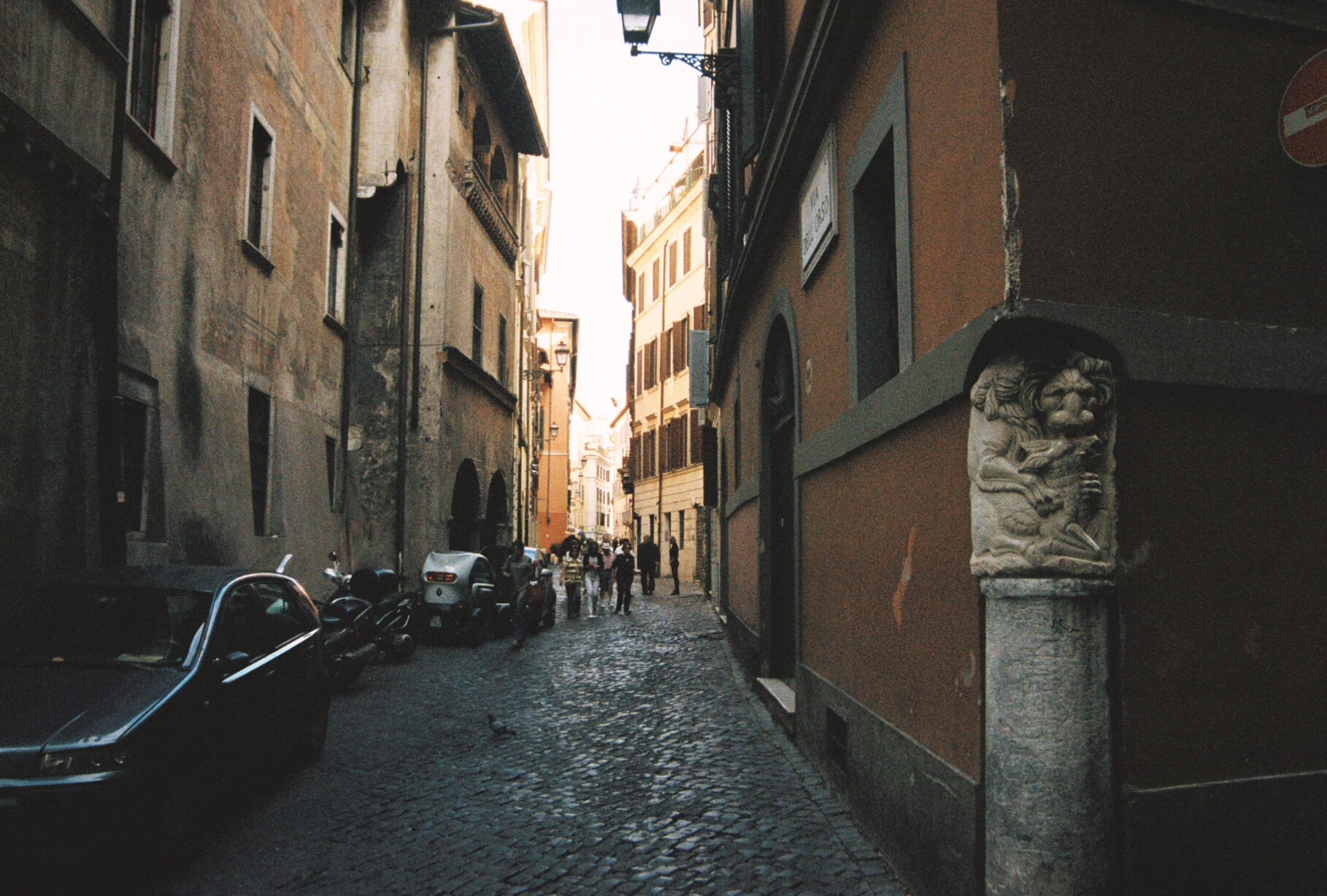
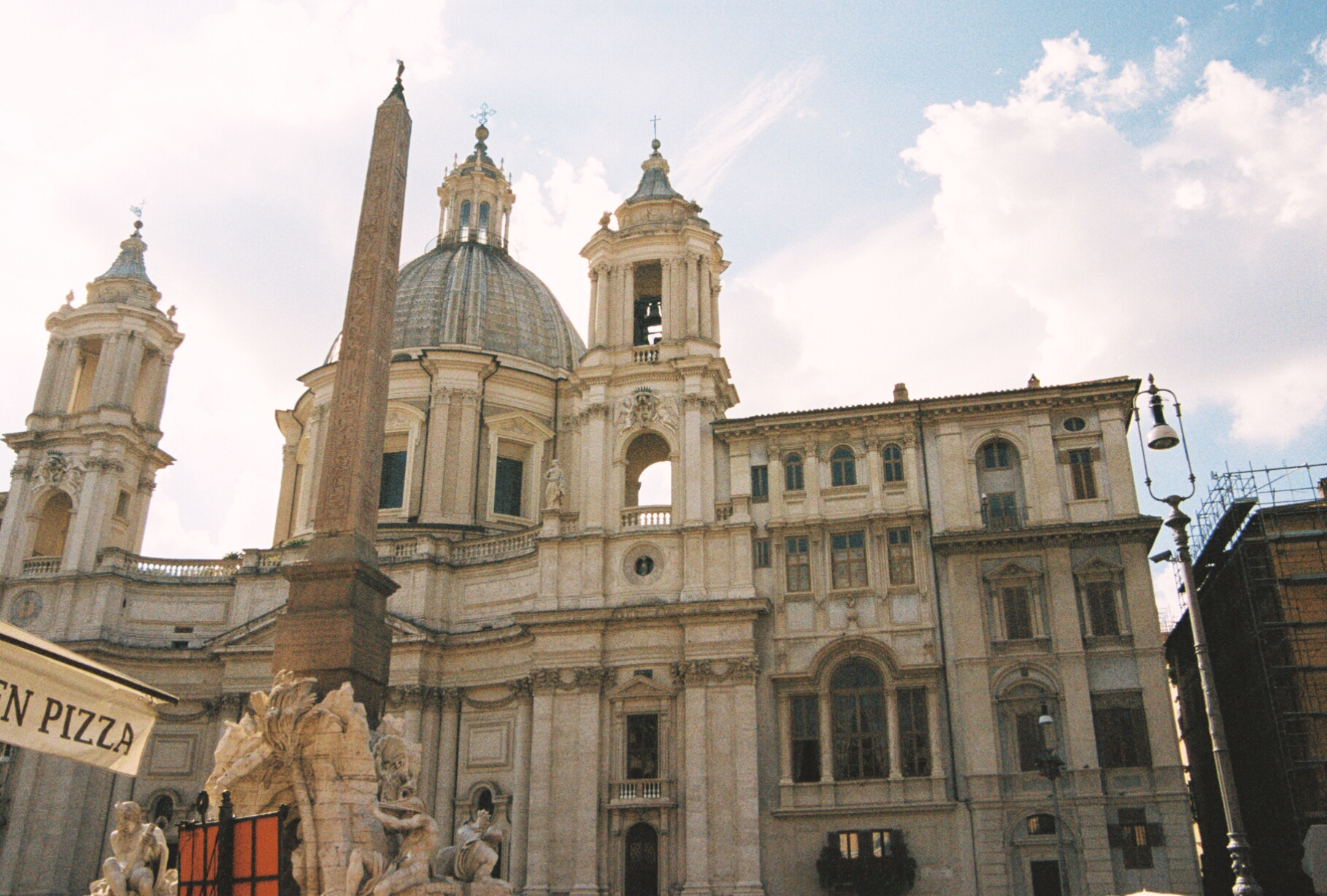
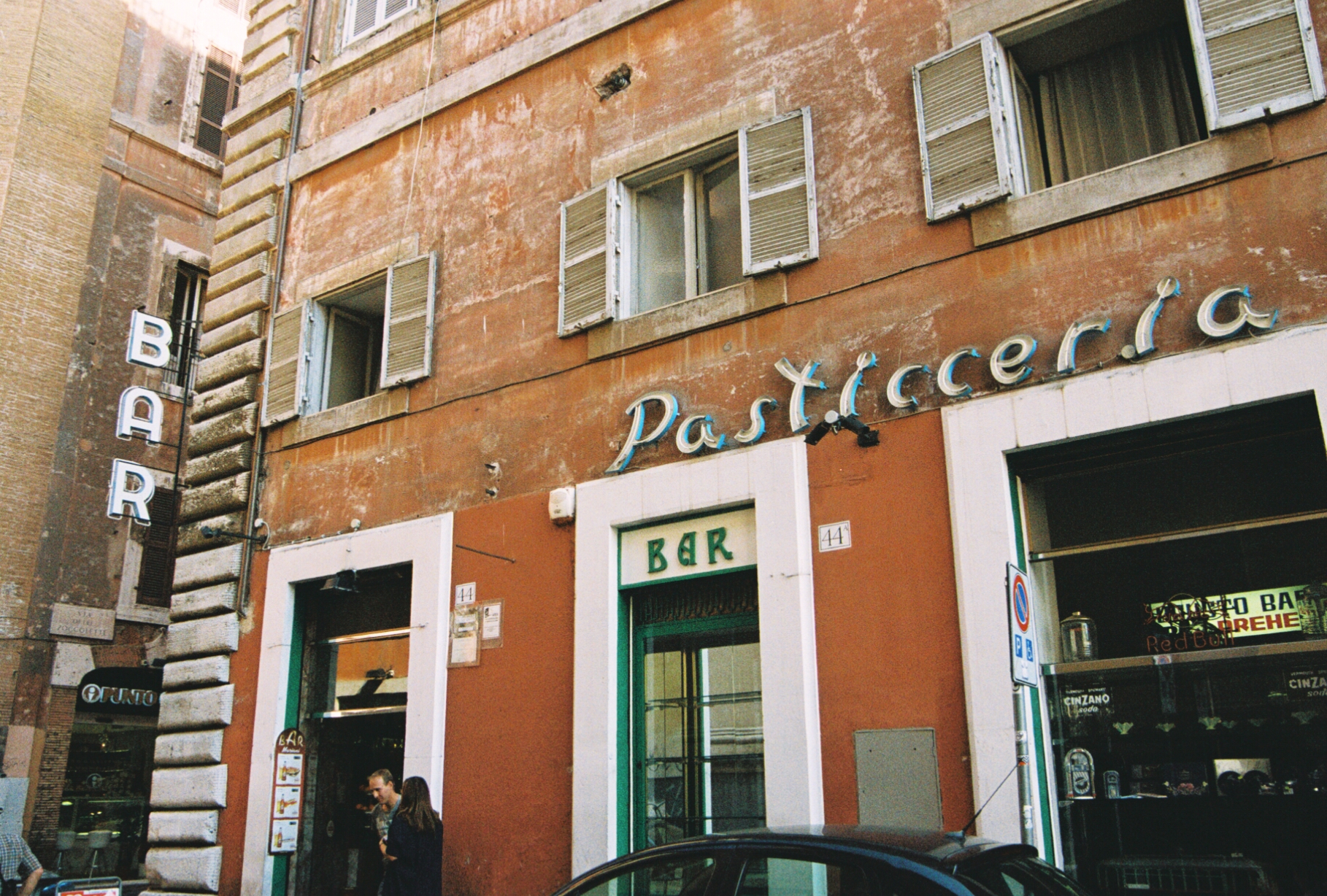
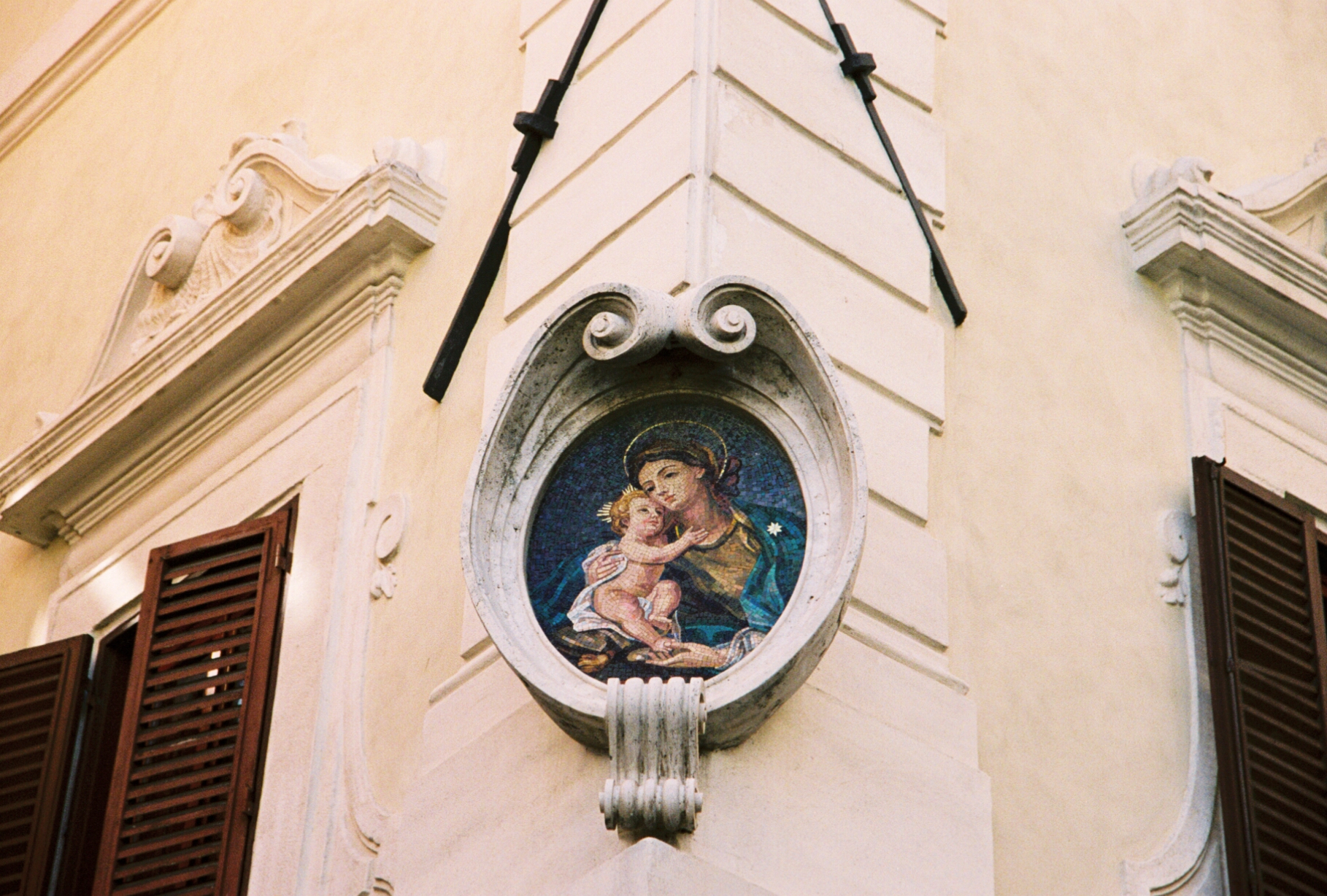
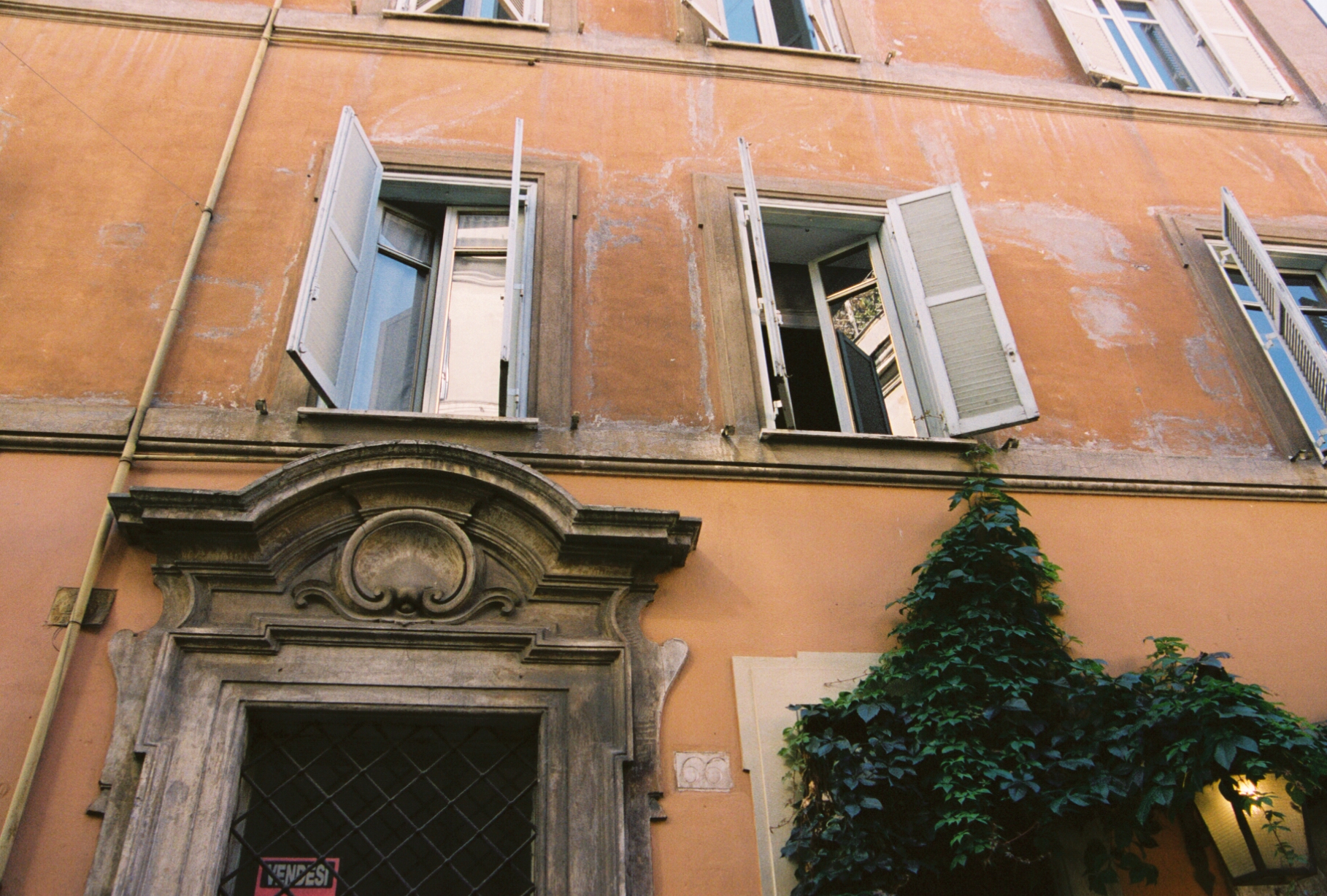
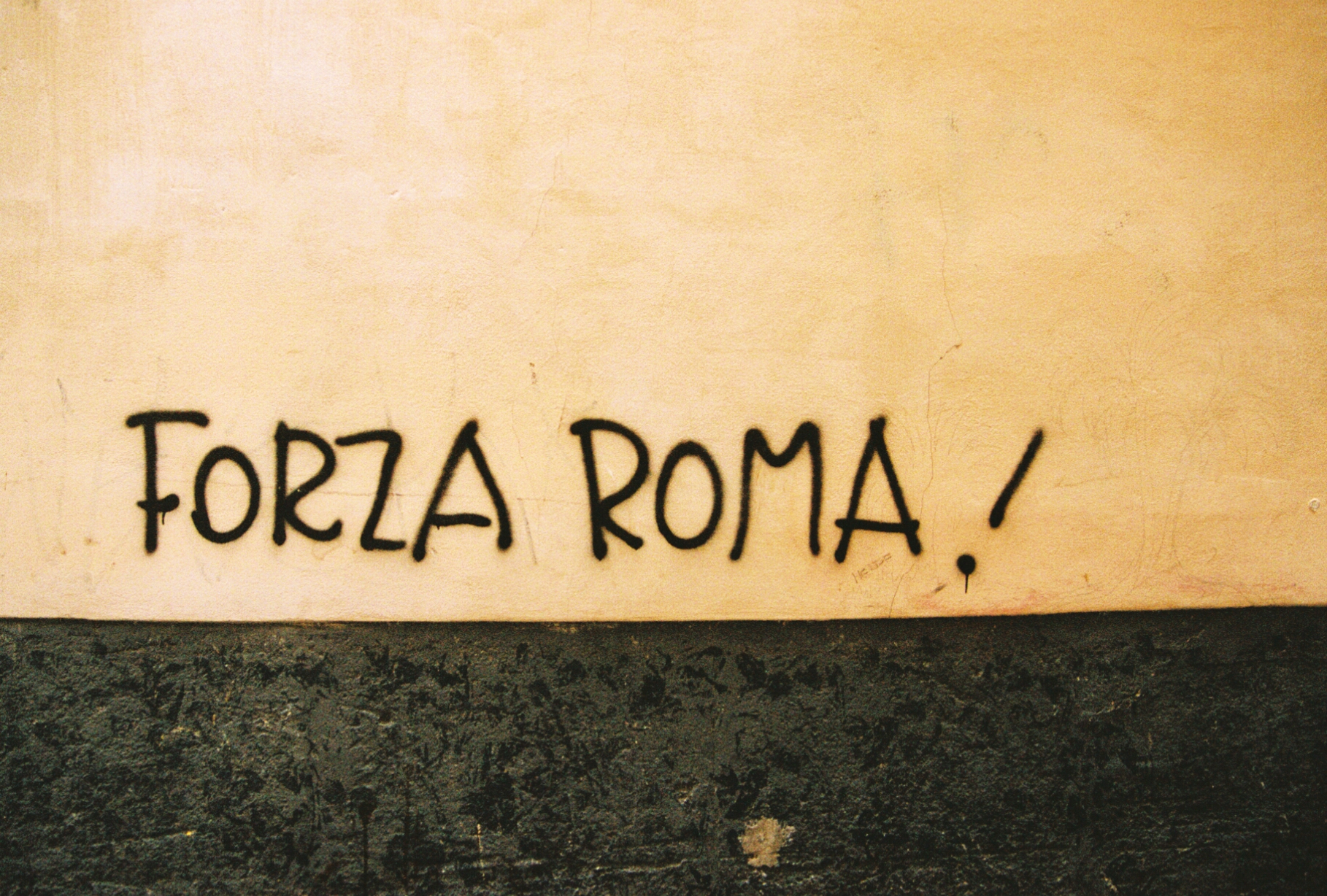
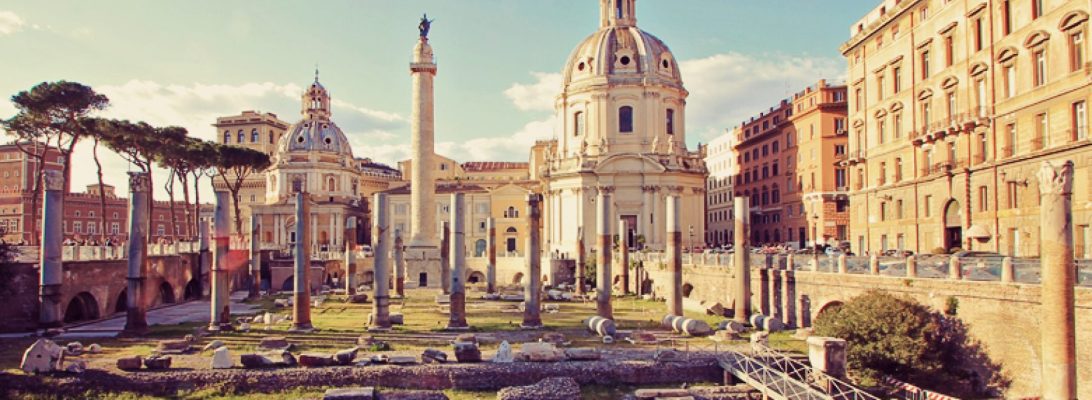
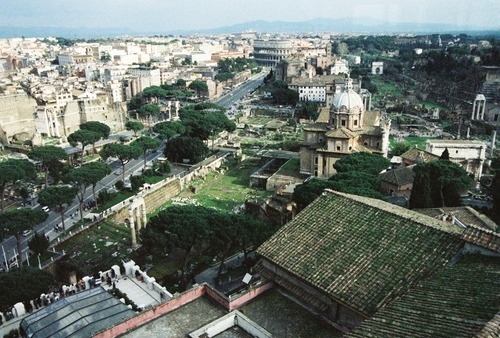
Throw your guidebooks to the side (after you’ve seen the major sights) and get a little lost for an afternoon in Rome.
Side step vespas and taxis and pilgrims and other tourists behind maps, and get lost for a while.
Do as the Romans do.
Bow in and out of the slants of sunlight and vespas, use sounds of water fountains and laughter as your navigation.
An off the beaten path is not merely a passage but a rite and a full circle.
When walking in Rome you are witness to the many passions of people in a cacophony of color and sound and motion.
Roma begins to makes sense to you as you feel follow its rhythm; it is foreign and antique and familiar all at once.
Rome is history in the bones of the city stirring the blood.
Roma changes you.
What could I suggest to you but to drink in the sublime here?
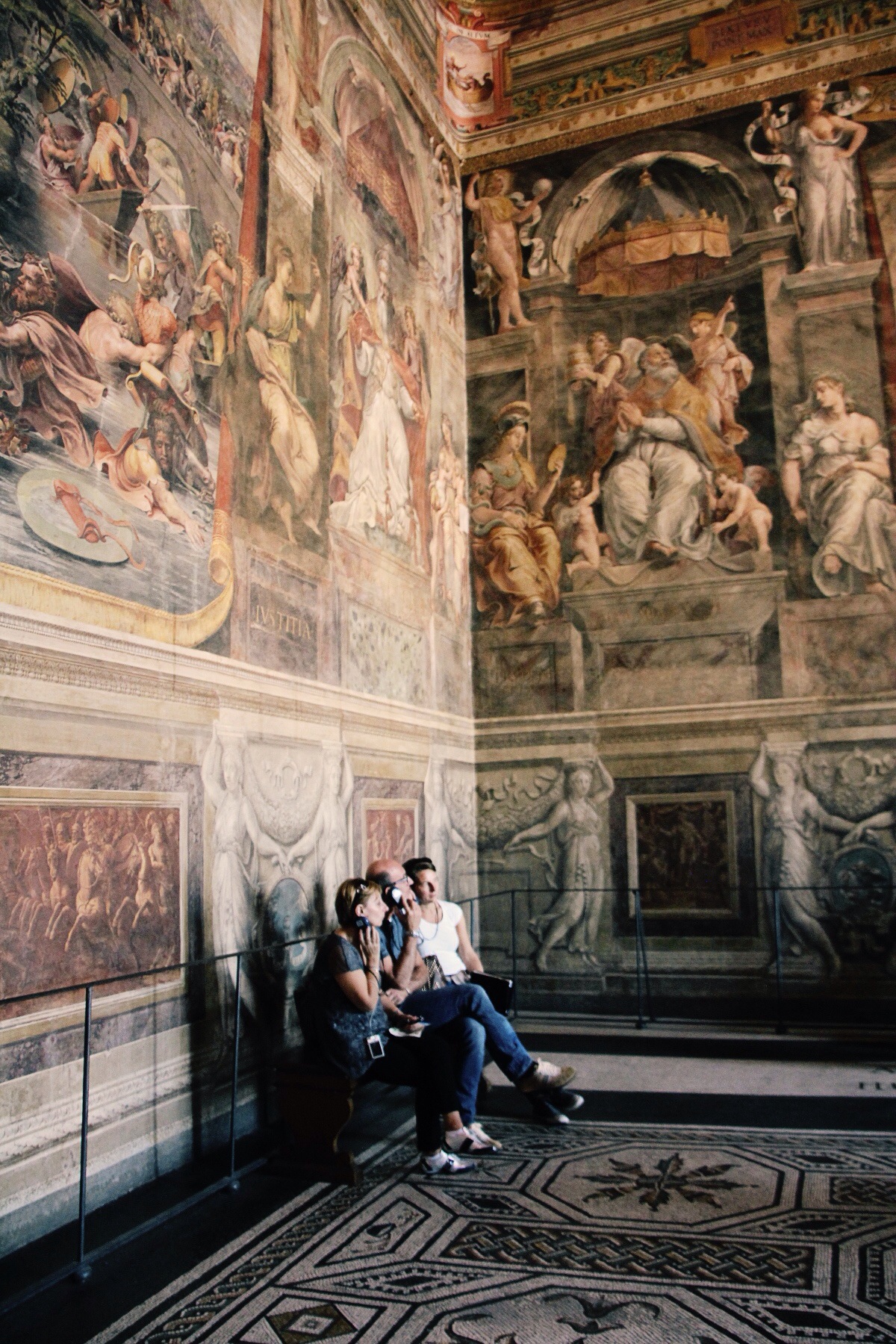
See the city for the thousands of layers rather than one wild jumble.
Beauty is on display, oh yes, —but so is reflection of the human and the divine in every corner.
The celebration of the individual is found even in the smallest of details in Rome.
Art is a living thing.
The story of mankind is in a treasured relic, and in a sip of espresso, and in a stolen kiss.
Life is found in another language where the words are less important than the feelings they conjur in us all in the moment.
Rome is the tug of a heartbeat in a pulse before the veil falls over you.
Rome is a reminder of death that is very much a reminder to live! To live now!!
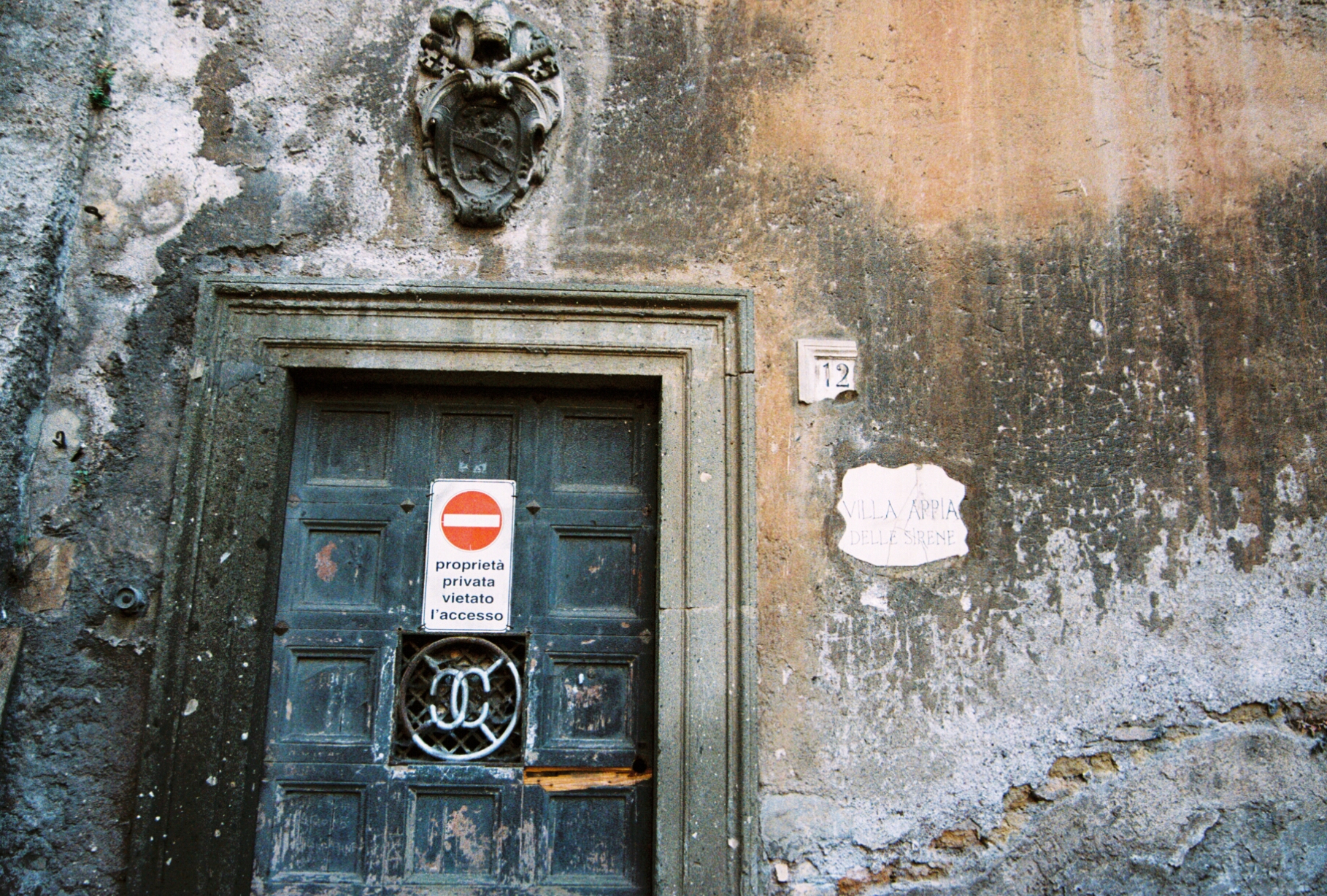
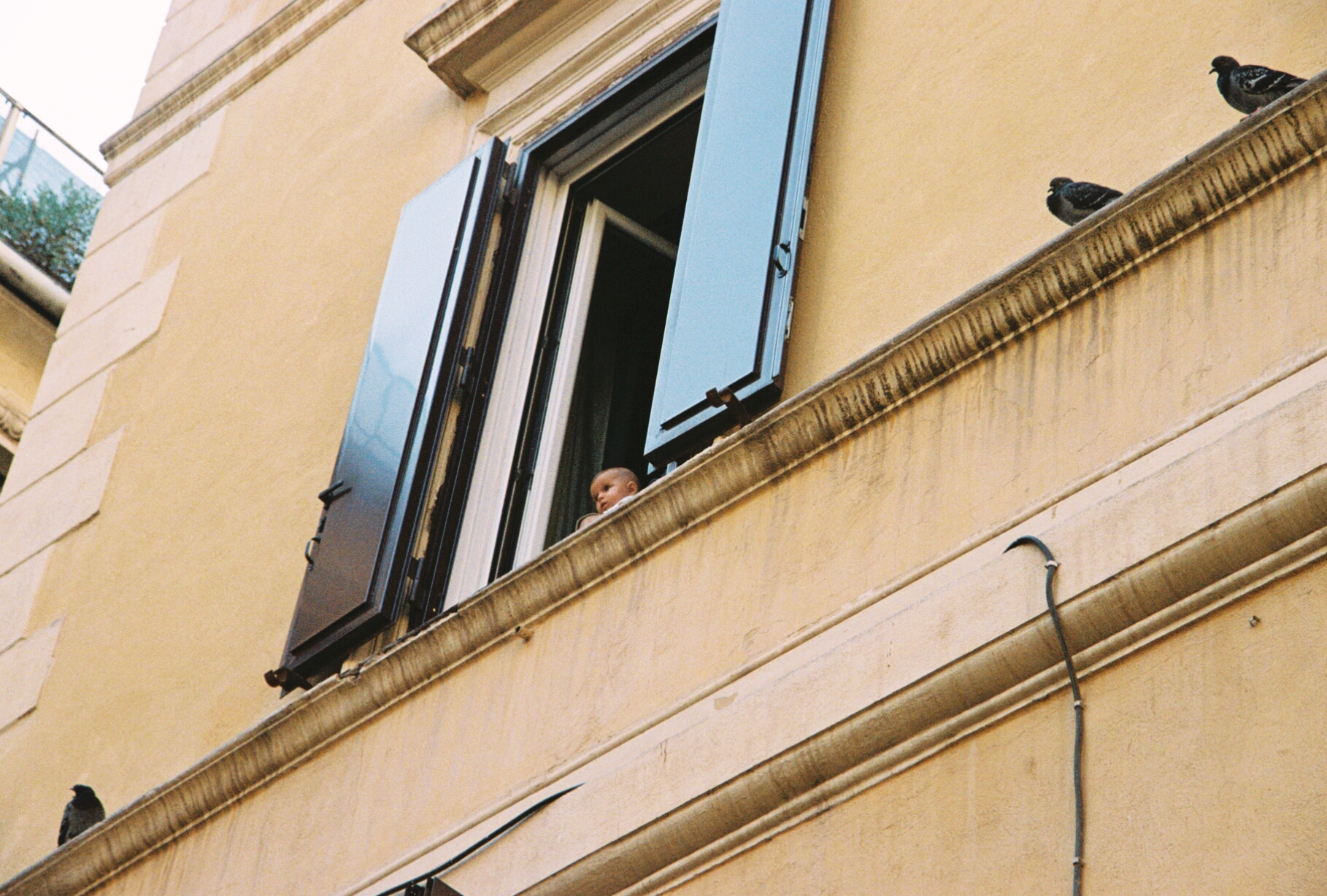
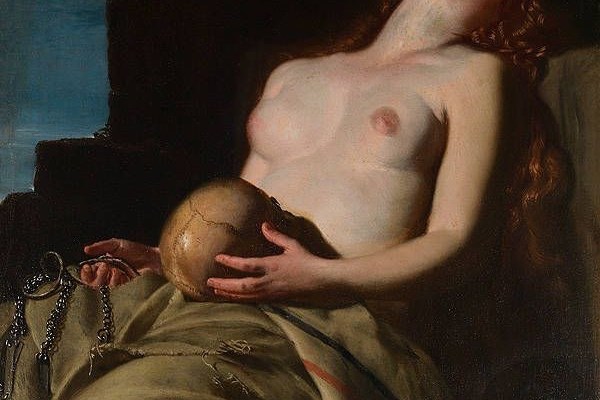
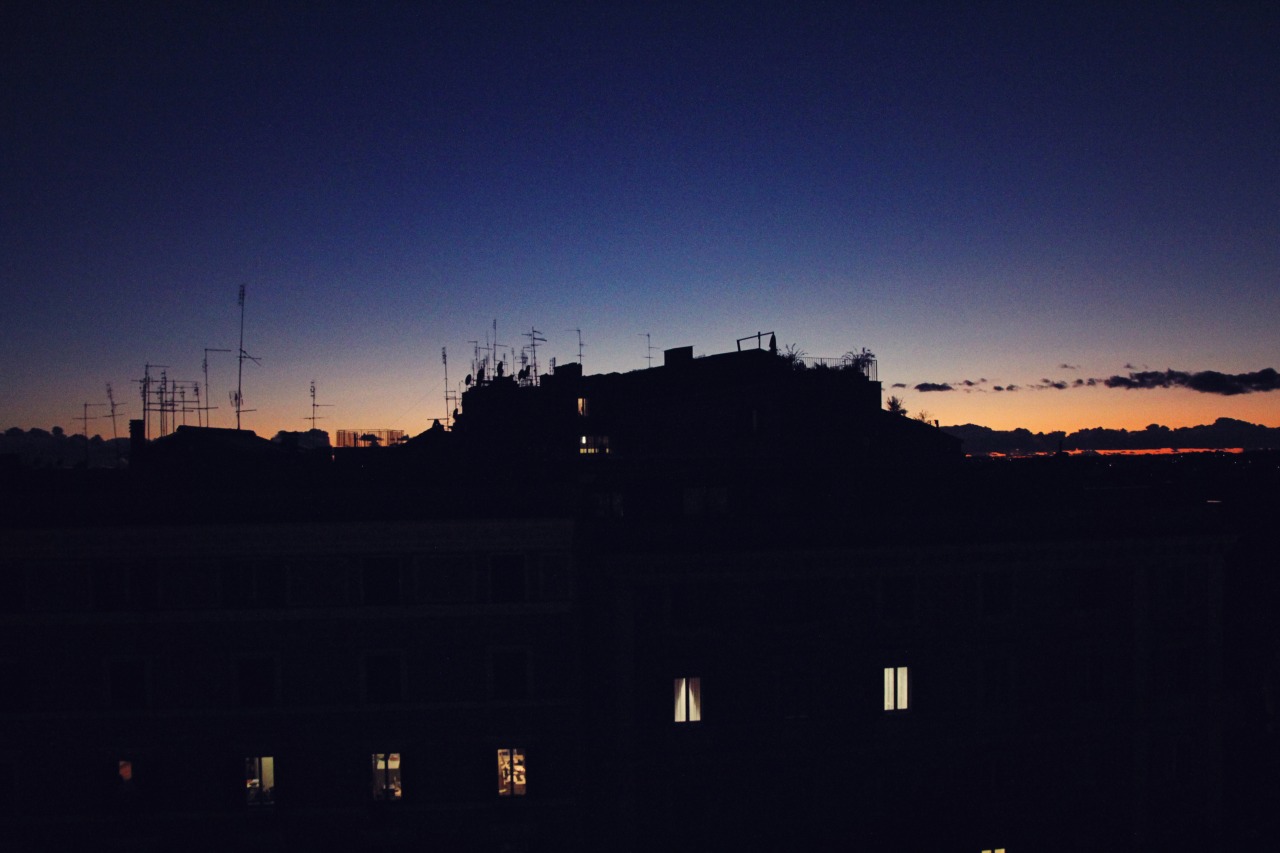
Spend some time in the eternal city and you will feel death like a whisper on the back of your neck.
Go there young, when you still feel invincible, and watch the tombs and monuments to a crumbled past deathmask-smile at you.
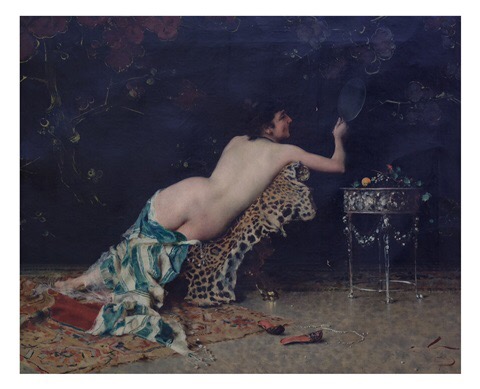
Return after you’ve loved and lost a little, when you’ve begun to collect possessions interchangeably with memories, hold hands past paupers and ruffians and the modern courtesan; the tourist liaisons hovering by menus, beckoning, offering, waving.

Return again after you’ve lost more than you’ve loved but you still have a bit of youth on your side, and you can take in the big picture.
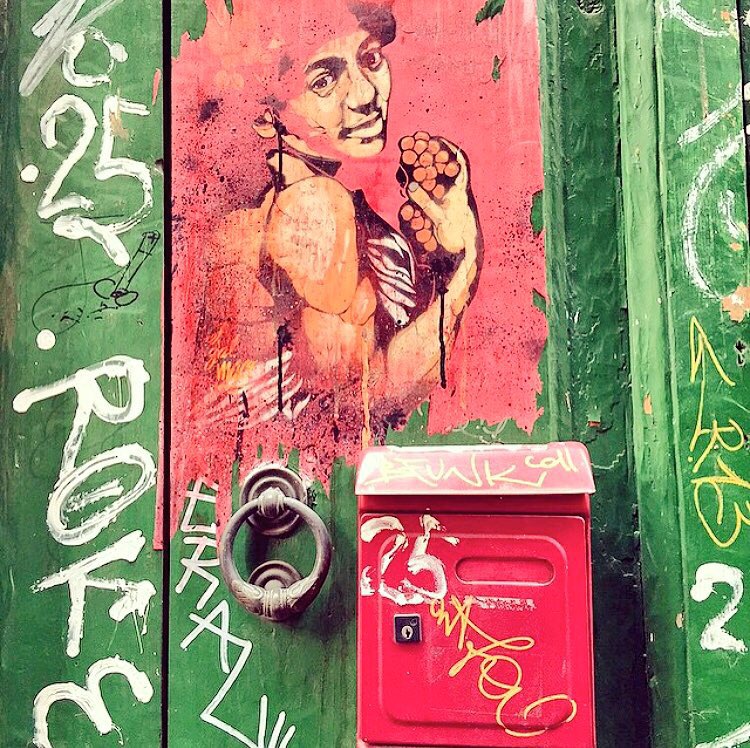
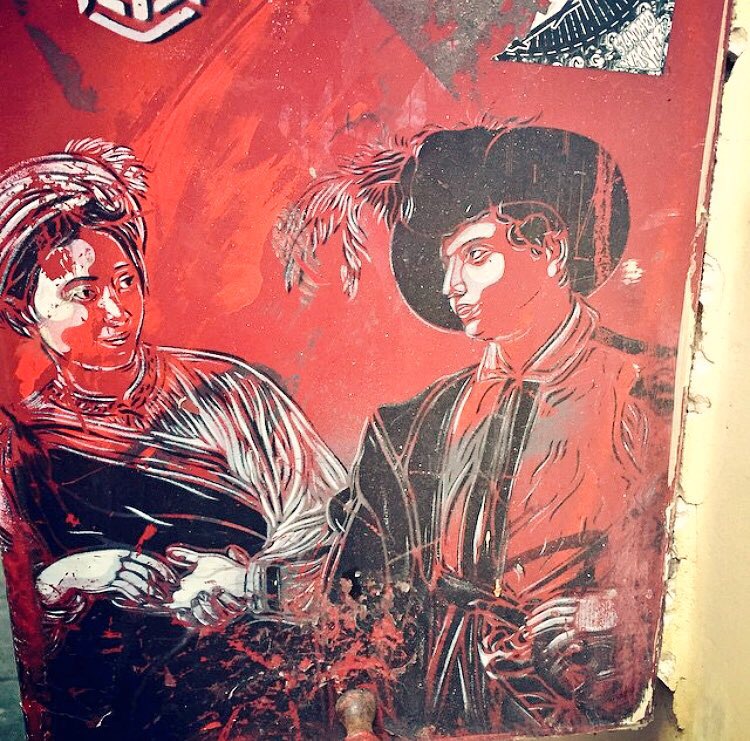
Return next when you’ve hit your peak and now the edges are fraying a little. When fountains and paintings once trumpeting romance and pleasure are grimier and more worn than you remember. When the seducers and the money takers suggest more pallid languor than sex, where every turned corner is a missed opportunity or a new experience, depending on how beaten down or defiant you’ve become since that earlier youth on your first visit. You have a decision to make… Strength for strength or a quick decline.
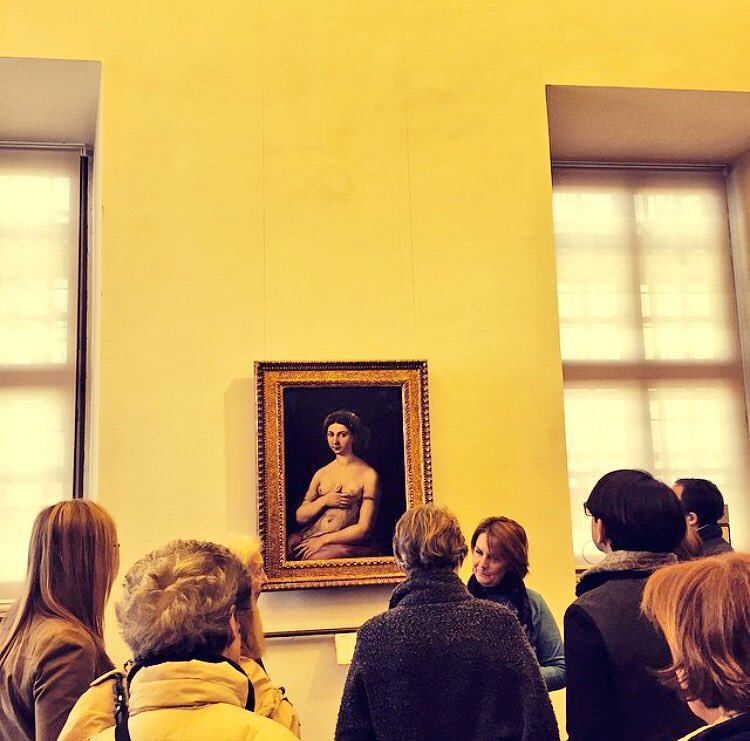

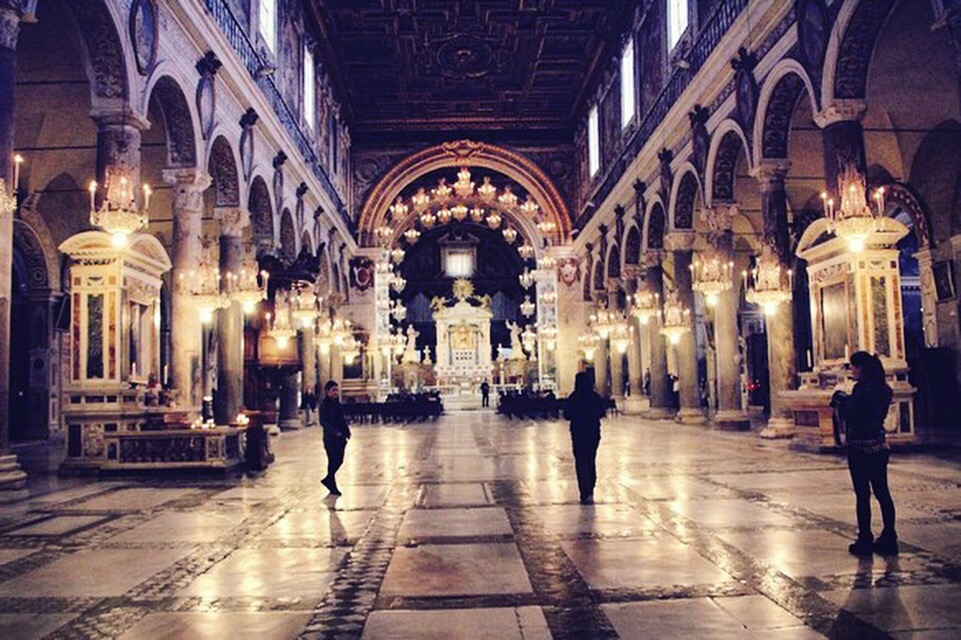
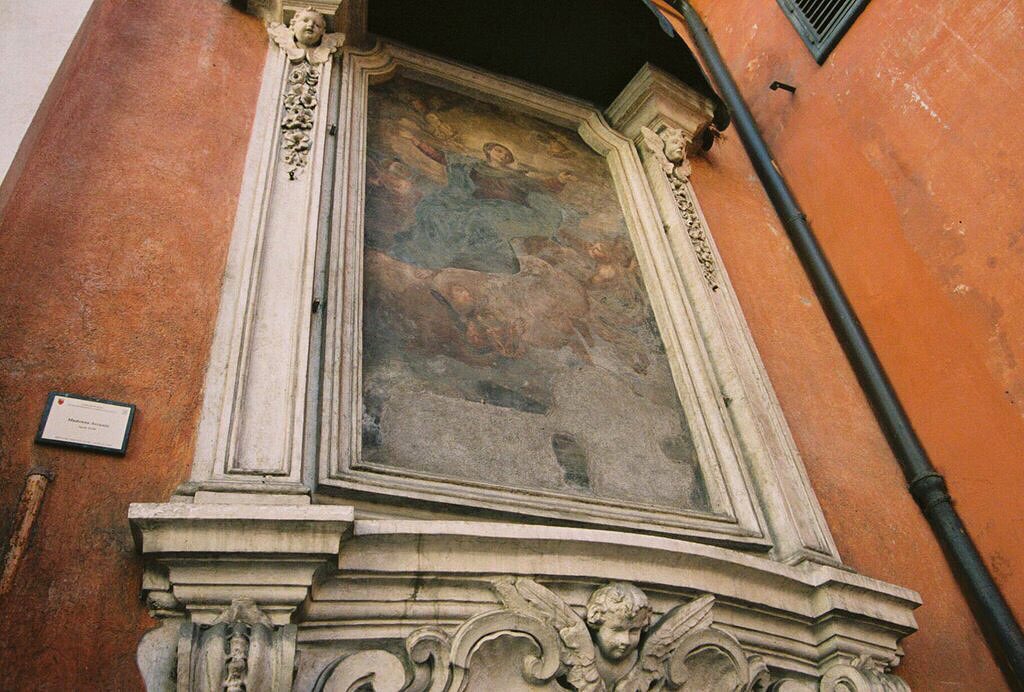
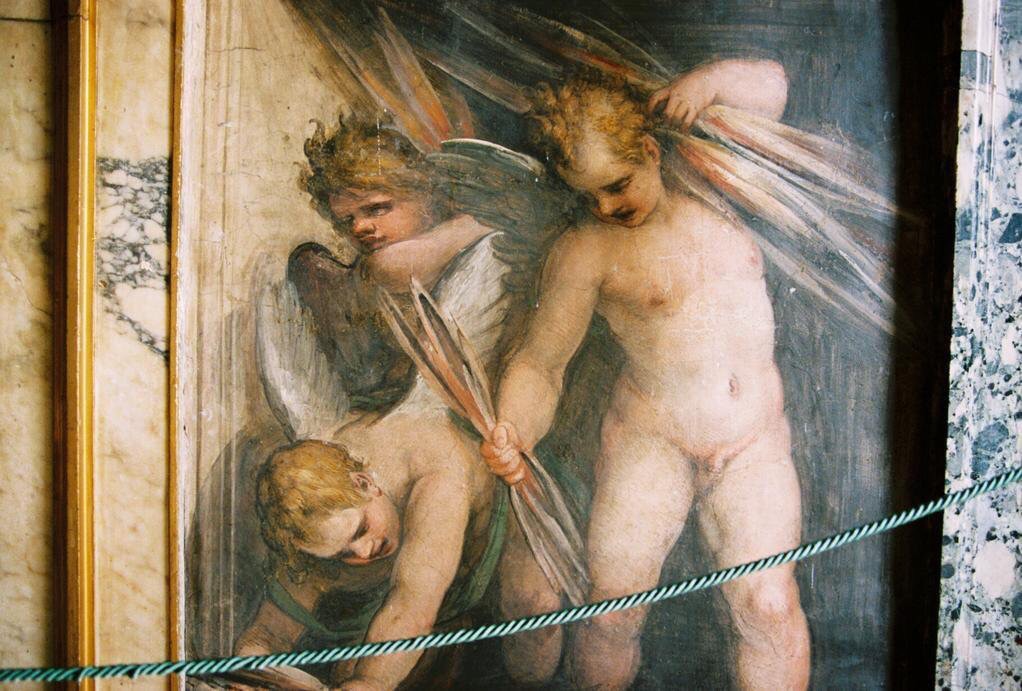
Return a final time, as cherubs and seraphim throw off shrugs and hands in the air when the whisper of death becomes an aria crowding out the ears. Stare at the details or miss them, memorizing the picture of life doesn’t matter so much in the short term. The marks on your soul have already been decided for you. This is the golden amnesia hour, where every thing thought and felt is only for the rushing moment, water slipping through fingers, spilling out of the mouth, tasted, cooled but most of it landing on your face, your shirt, your shoes, the uneven cobblestones. Keep drinking it in.

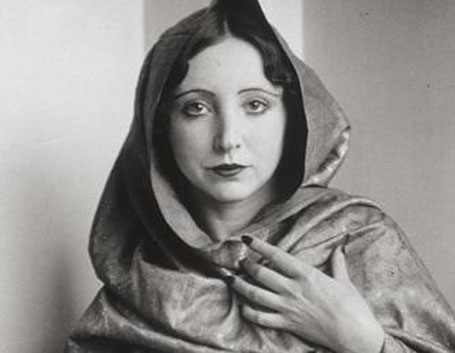
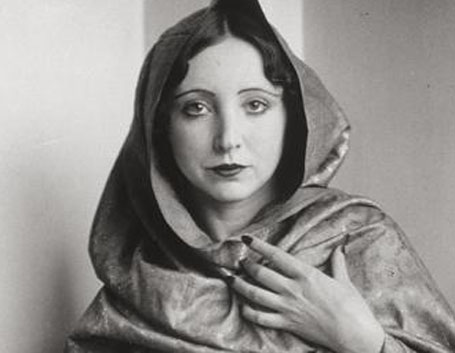
Today, February 21, 2014 is Anaïs Nin’s 111th anniversary of her birth. She died in 1977.
She was the artist and writer who inspired me to read more books (she detailed and listed classics of literature in her literary diaries and helped in no small way to introduce me to much of the more interesting side of the western canon.
I found her through Henry Miller, who was recommended to me at 17 by a smug faced twenty something dishwasher at the restaurant I was a cashier girl and bartender for, the famed Harvard haunt Bartley’s in Cambridge, Massachusetts.
I found Anaïs searching for another Miller book to read after Crazy Cock and Tropic of Cancer, and ironically, (I would find out later), I found Anaïs and forgot about Henry for awhile , until I got to Henry & June, in which he featured.
I spent a lot of time as an English major and bookish girl trawling the college library shelves and the second hand bookshops of Boston and Cambridge. Nin’s childhood diary Linotte literally jumped from the shelf when I was looking for Henry and landed in front of my feet. How could I refuse a book hurling itself at me? It was a sign from the fates.
I picked up her beautifully written, rather innocent, girlhood journal which began as a letter to her absent father at aged 11 as she sailed across the sea to New York and the new world with her European mother and brothers. I couldn’t put the book down and when it was finished I eagerly sought out the continued series of Diaries which detail her whole life from ages 11 to seventy something. I also read her fiction, novellas, poetry and my personal favorite, her astounding literary criticism and advice on writing. D. H. Lawrence: An Unprofessional Study and In Favour of the Sensitive Man are two stand outs.
As I sit here and sip champagne and blood orange juice and re-read her timeless quotes, I am reminded of how radical her thinking and living was to a teenage girl who loved the lost generation and the 1920s. Anaïs not only encouraged me to travel, she encouraged me to read what I wanted and to write, to paint, to sketch, to meet people, to look for adventure, to see the magic in every day life, to risk things. To question authority and identity and ask myself the questions: is there really only one self or multiple selves? Can dreams ever be actualized? Can a woman really live more than one life? Can life be fantastic some times? What role do I want to play in the world?
Although, like Anaïs, I grew up with an absent father and an artist mother who had to work very hard just to feed, shelter and clothe her and her children, and who was poor growing up, I followed her lead in dreaming big and making plans to see the world and pursue art and culture because that is what mattered to me. I refused to see them as out of reach. And today I have been able to realize those dreams, step by step, of traveling and becoming intimately acquainted with Italy and other places I love. I have pursued my love of photography and writing.
It is not always easy to feel talented or confident about your work but I do try to search for the marvelous in every day life and seek out the fantastic and what moves me.
I try to engage with people who are also questioning life and their assigned roles, other artists and thinkers. I pursue passions and pleasures and try to find a balance…
I can be too much of an extremist, hedonist or dreamer some times in an absent minded professor way, which isn’t always great for paying the bills and attending to mundane responsibilities!
But I have had the attitude that we are here now, we live now, and I don’t want to wait until I am retired to see and experience the world. I also look for art and culture where I live and in creative friendships and partnerships which enrichen and enliven, as Anaïs did with some of the most creative and eclectic minds of the 20th century.
Nin’s dragged up relationship dramas aside, I focus on the brilliant, courageous, rebellious, mischievous, fascinating, multi-layered, artistic, open writer Anaïs Nin was and in her gorgeous, atmospheric, insightful writing, I find that constant source of clarity and inspiration I need to live fully in my dreams and in the day to day.
I owe such a tremendous debt to Anaïs Nin and her work.
You can also find me on twitter quoting her work:

I had always believed in Andre Breton’s freedom, to write as one thinks, in the order and disorder in which one feels and thinks, to follow sensations and absurd correlations of events and images, to trust to the new realms they lead one into.
“The cult of the marvelous.” Also the cult of the unconscious leadership, the cult of mystery, the evasion of false logic. The cult of the unconscious as proclaimed by Rimbaud. It is not madness. It is an effort to transcend the rigidities and the patterns made by the rational mind.
Winter, 1931-1932 The Diary of Anaïs Nin , Volume One 1931-1934
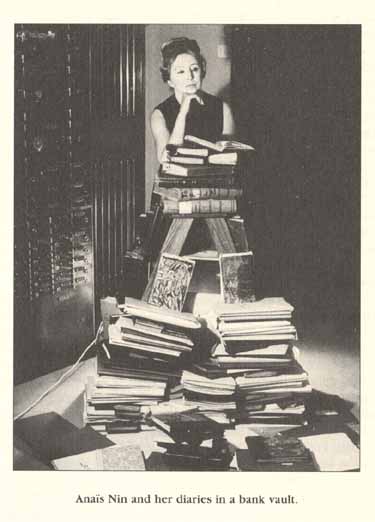
You live like this, sheltered, in a delicate world, and you believe you are living. Then you read a book (Lady Chatterley, for instance), or you take a trip, or you talk with Richard, and you discover that you are not living, that you are hibernating. The symptoms of hibernating are easily detectable: first, restlessness. The second symptom (when hibernating becomes dangerous and might degenerate into death): absence of pleasure. That is all. It appears like an innocuous illness. Monotony, boredom, death. Millions live like this (or die like this) without knowing it. They work in offices. They drive a car. They picnic with their families. They raise children. And then some shock treatment takes place, a person, a book, a song, and it awakens them and saves them from death.
The Diary of Anaïs Nin , Volume One 1931-1934
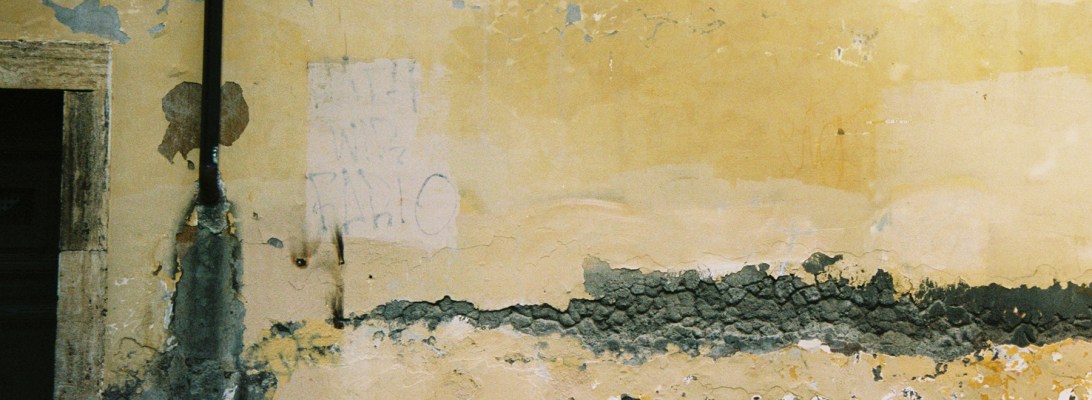
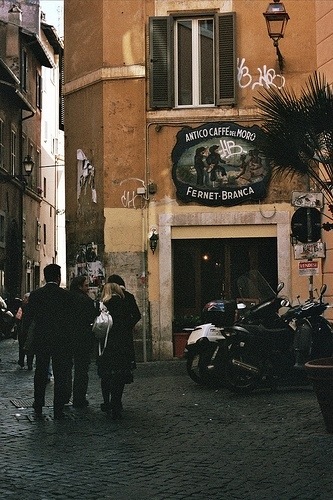
I feel, in Rome, as if I am fully entered into the ancient-ness of the place.
I feel the history in my blood.
I feel almost Italian (with a mix of invading barbarian).
But I tread lightly in Italy.
I try to penetrate the history, the stories, but I tread lightly.
I don’t leave any trace.
I only steal moments.
I steal away people’s feelings in a one second snapshot.
I take more lingering pictures with my eyes.
I really don’t want to be the center of attention, I would rather fade into the background, and let people live around me.
I am greedy for their life spilling out.
Still as much a thief as I was as a child, after all.
This is why I love Naples.
I dread it a little, too.
I want to slap it around occasionally.
I want to remind it of its grit (as if it needs my reminder).
I want to shake it awake to its beauty and history and art.
I want it to not lose its charm, ever.
I don’t even care about the trash that much.
I love the darkest alleys.
I love that life is lived on the streets.
I love that the windows are always open.
I love listening to the strains of a language I cannot decipher because it always sounds like music to me that way.
That’s how I linger in churches so long…
I can’t understand the sermons so I can spend time looking at the art and thinking about pagans all day as if in a dream.
In Italy I am living in the dream and I don’t wake up again until I’m back home in the cold north.
I return to Italy like a lover who cannot stand the separation a moment longer. I want to feel the curves of familiar streets. I want to taste the crushed fruit of summer wine and feel that sun so different from mine. I want to see the stars again against the faint glow of the ruins.
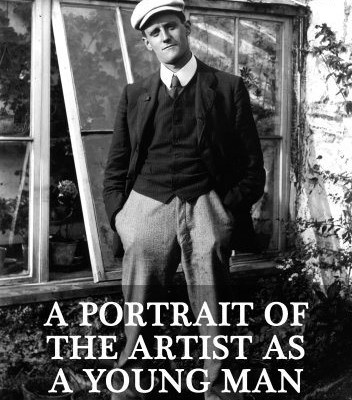
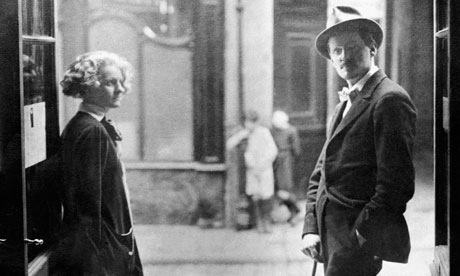
I find the only way to really understand Joyce in a significant way beyond the beauty of his prose is to read up on the political and religious background of Joyce’s Dublin.
There’s a terrific Annotated Joyce book which fills in the many blanks of The Dubliners and A Portrait of an Artist as a Young Man. It is an academic imperative to understand some of the history behind Irish politics of the 19th century, Parnell in particular and the events surrounding the Potato Blight and English estate agents for absentee landlords and early 20th century and some of the Catholic references when reading Joyce if you want more than an impressionistic or superficial reading of these novels.
http://www.themodernword.com/joyce/joyce_works_dubliners.html
When tackling a mammoth full of beauty, whim and occasional gobbledygook such as Ulysses or Finnegan’s Wake, I suggest reading an annotated companion to the books! It’s worth the effort. There is also a fabulously entertaining and interesting free podcast by Irish writer Frank Delaney called Re:Joyce in which he dissects a page of Ulysses for each five minute show. It is often humorous and the anecdotes and history lend rich details to Joyce’s difficult book.
http://blog.frankdelaney.com/re-joyce/
A decent background skim of the Greco-Roman classics and the literary canon or the “Western Canon” is very useful as well. I like Harold Bloom’s collection of Canons from various ages and eras.
http://sonic.net/~rteeter/grtbloom.html
Obviously that is an immense amount of reading and disseminating. Therefore, I suggest reading a summary of the canon with highlights of the Hellenistic period, etcetera to follow the references and allusions to the myths and the gods in Joyce’s work.
Spark notes and cliff notes and the Cambridge Reader to Joyce are also exceedingly helpful shortcuts to peering a little closer into his work.
At the end of the day reading and learning is a gradual process which enriches our lives slowly over a whole lifetime.
I am currently embarking on a re-read of A Portrait of An Artist as a Young Man after reading it years ago as a teenager. I know I will have a different experience having read and lived much in the years between falling into the pages. And I’m going to have my study guides and annotations at hand for a heavier, more in the know experience. The prose and the spiritual approach to art and history and human psychology affected me deeply in my extreme youth and I expect some of that will still be there within me along side the more powerful notions of understanding the social, cultural, historical and religious contexts of the world of Joyce’s books.
Happy reading!
See also:
Nationalism in James Joyce’s work; http://mural.uv.es/romoma/nationalism.htm
Irish Mythology (very important to Joyce’s writing)
http://www.luminarium.org/mythology/ireland/index.html
The Myths of Stephen Dedalus http://m.voices.yahoo.com/the-myths-stephen-dedalus-james-joyces-portrait-2666810.html
Celtic and Irish Mythology and Folklore in the fiction of James Joyce http://digitalcommons.mcmaster.ca/cgi/viewcontent.cgi?article=4667&context=opendissertations
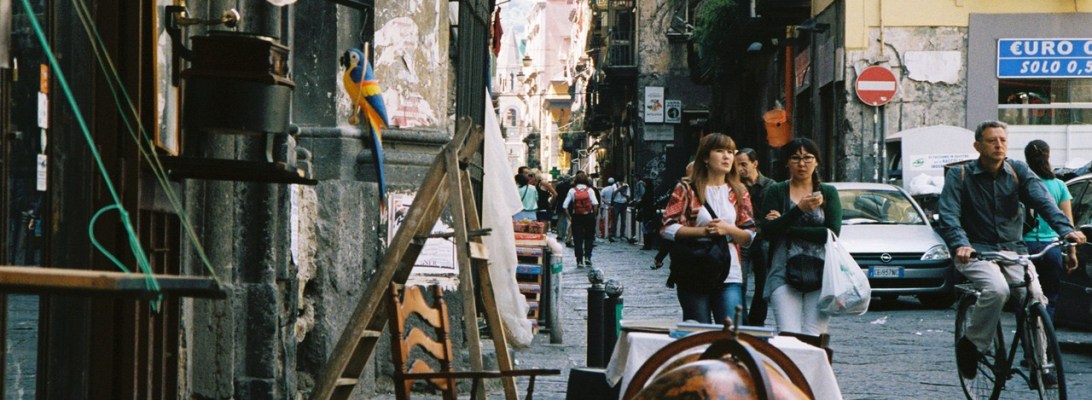
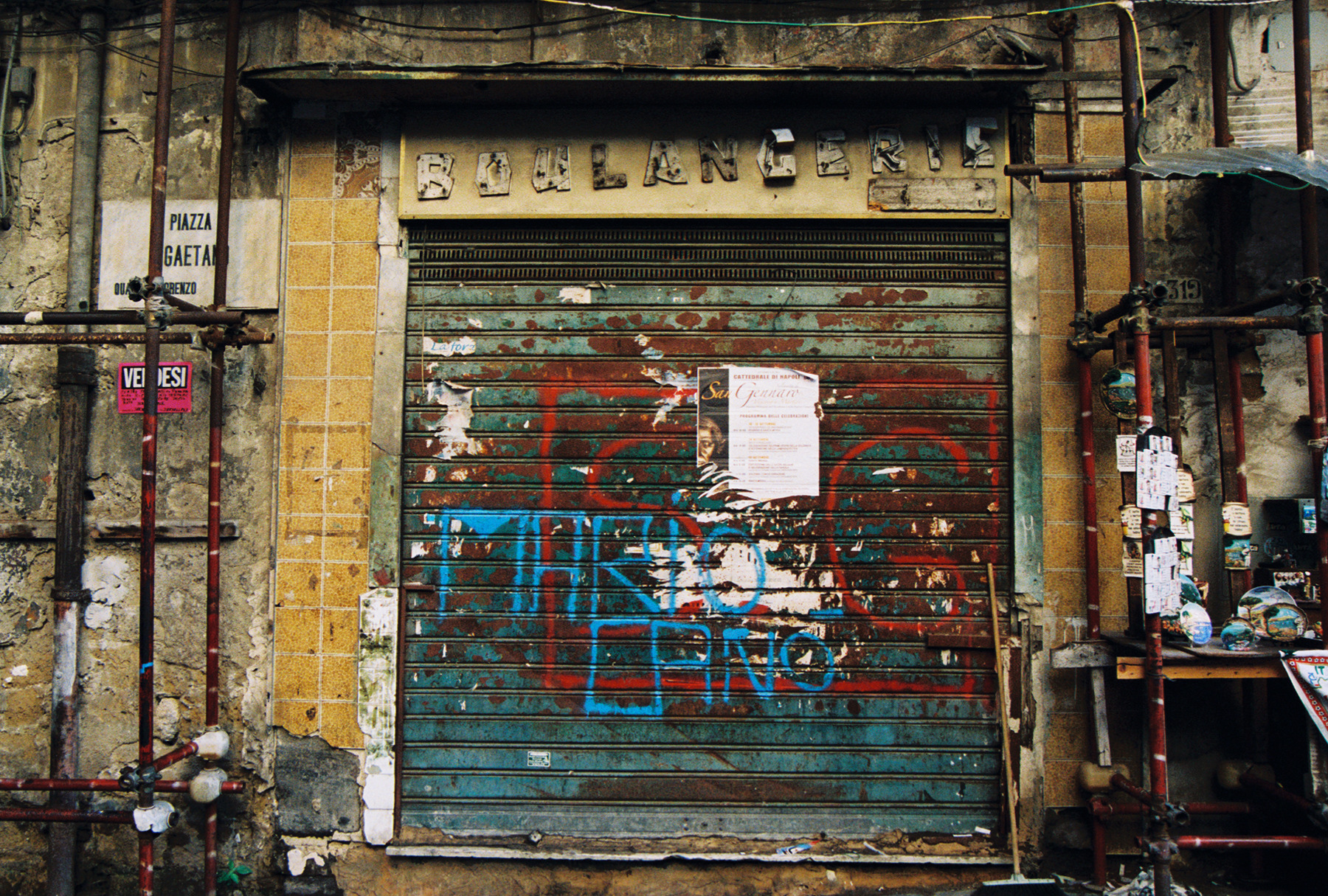
The old Greek section of Napoli, Italy is a recurring fascination of mine.
A closed boulangerie with a broom leaning against the store front. Painted pastoral scenes on plates. Rusted piping and peeling posters. Grafitti in bright colors.
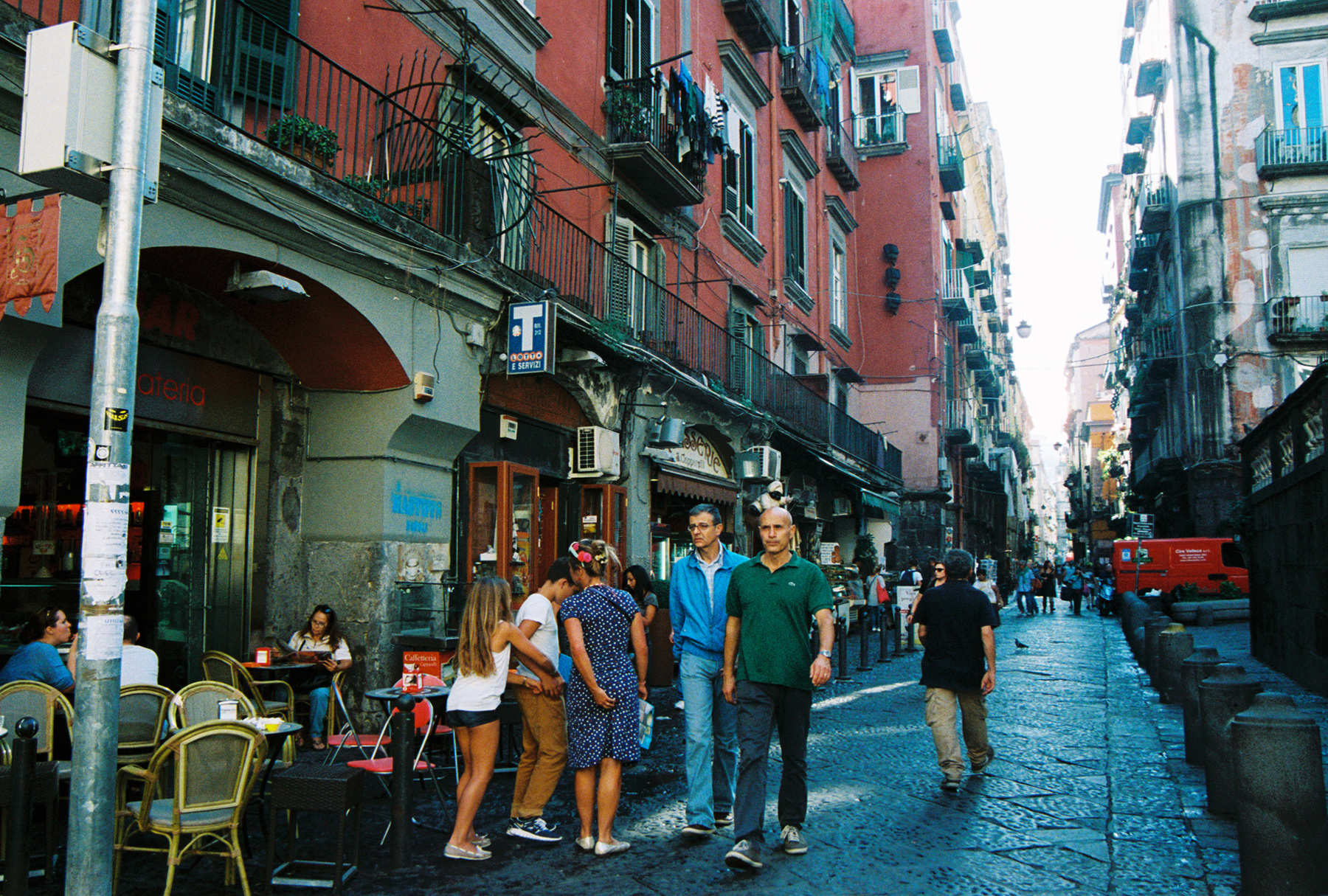
Caffe chairs sprinkled throughout the back streets of Spaccanapoli.
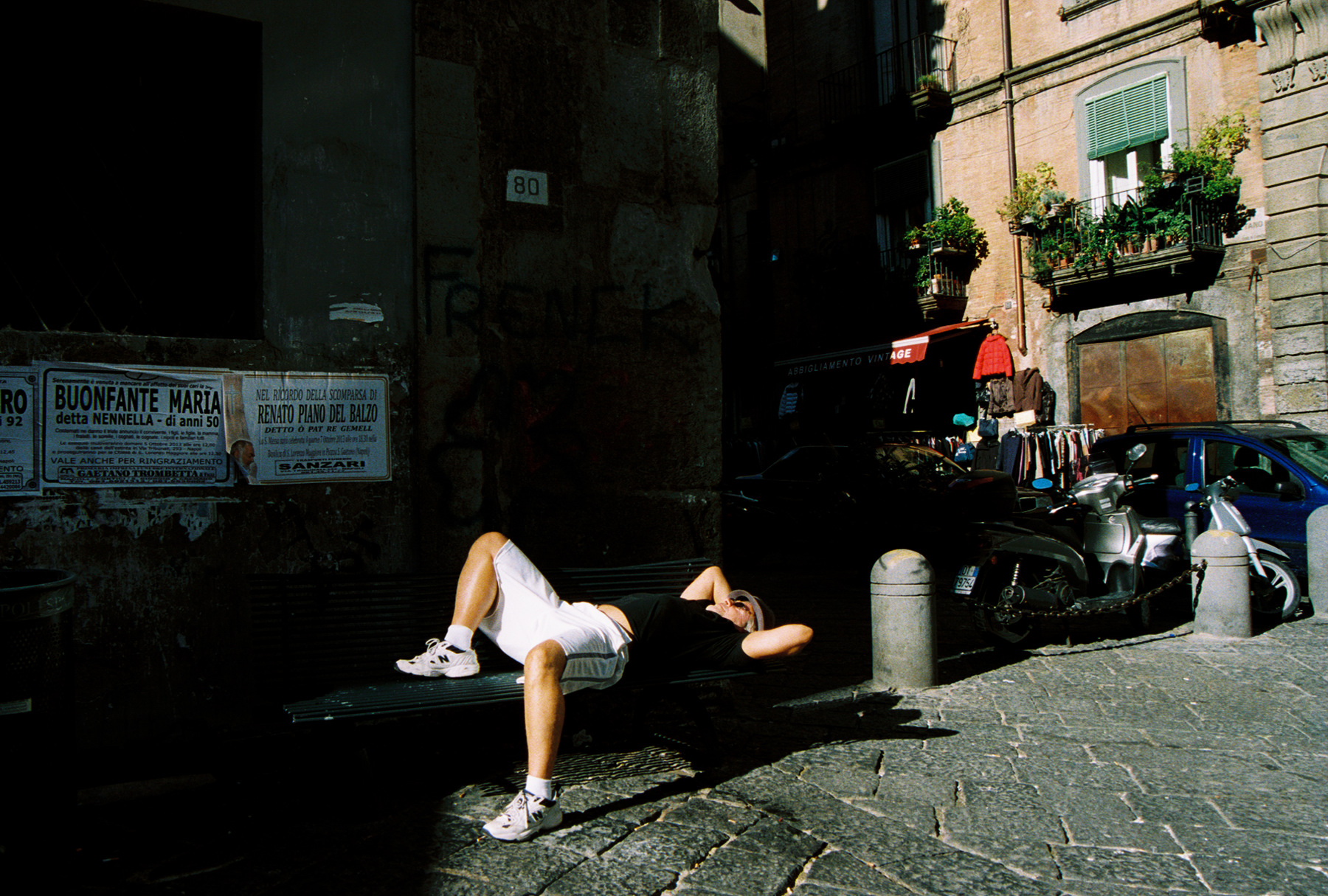
The sun finds it way though the velvet black shadows. Posters advertise operas I won’t get to see. Padre Pio forever in the background, his face found in taxi cabs, on walls, in churches, in caffes.
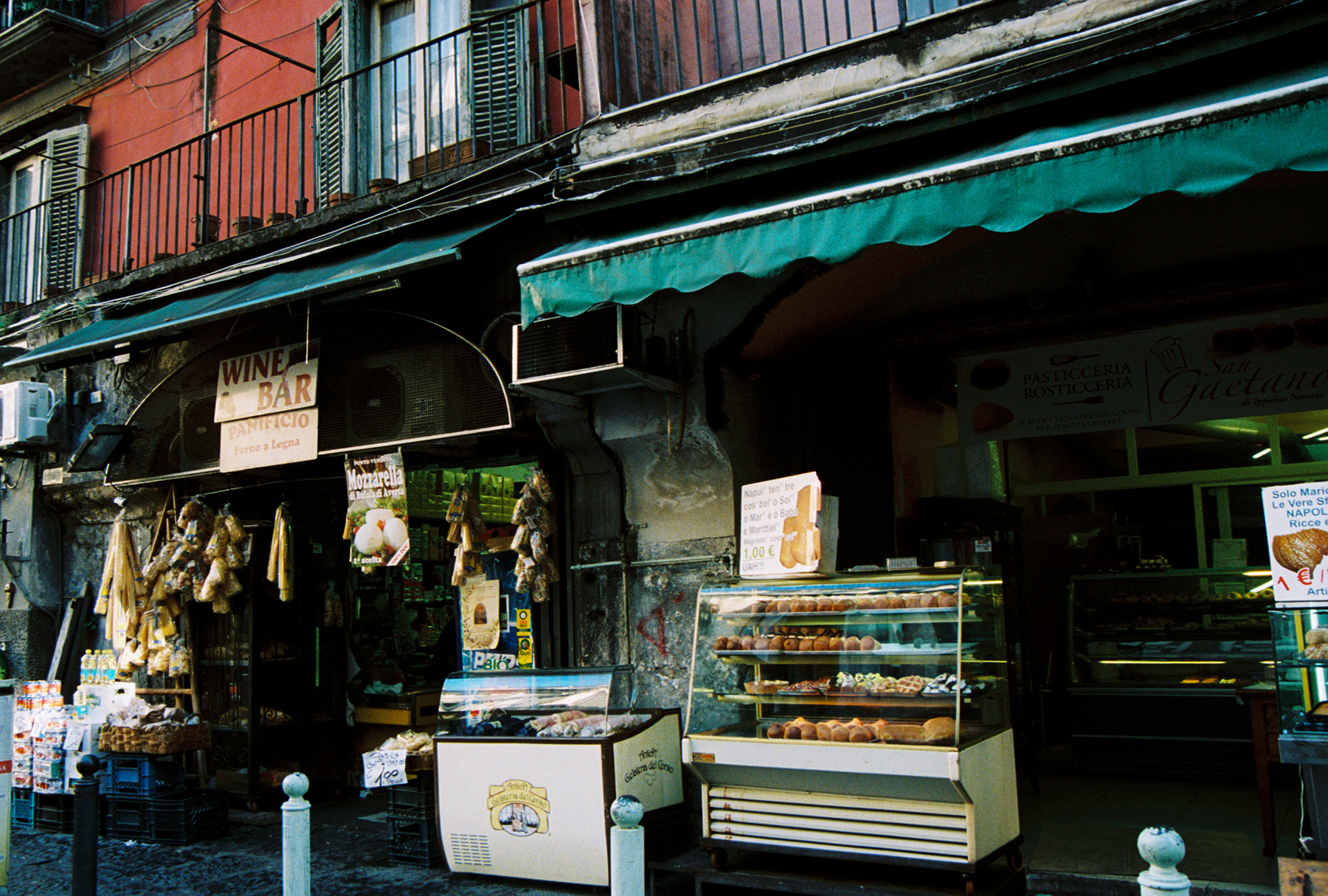
Hanging bronze dyed pasta, bufalo mozzarella from campania, rows of inviting rum-soaked baba cakes filled with rummy yellow cream, tiny wild strawberries, Sfogliatelle.
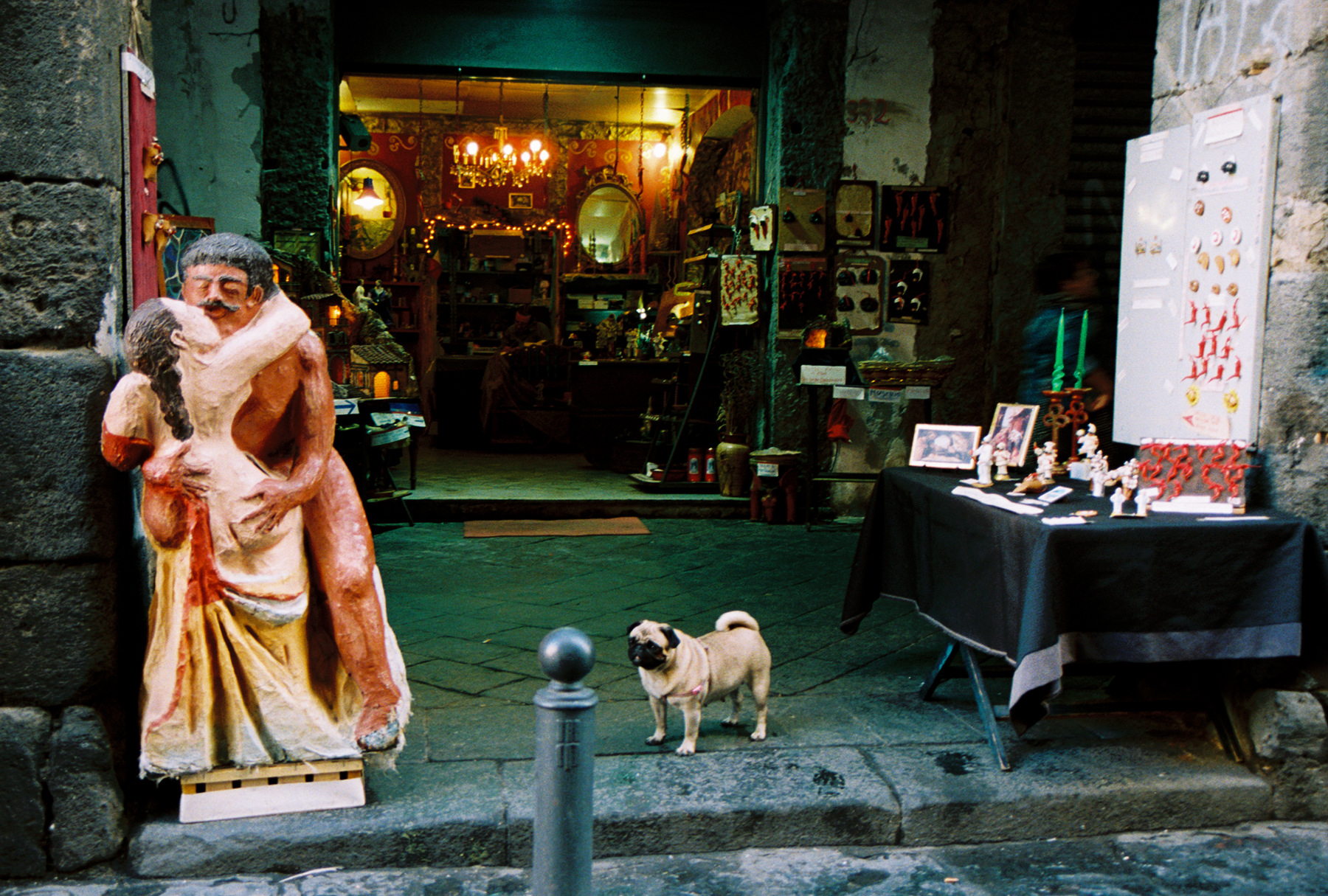
Two “lovers” embracing in front of an iconic “second hand shop” full of Neapolitan treasures overseen by a curious little dog.
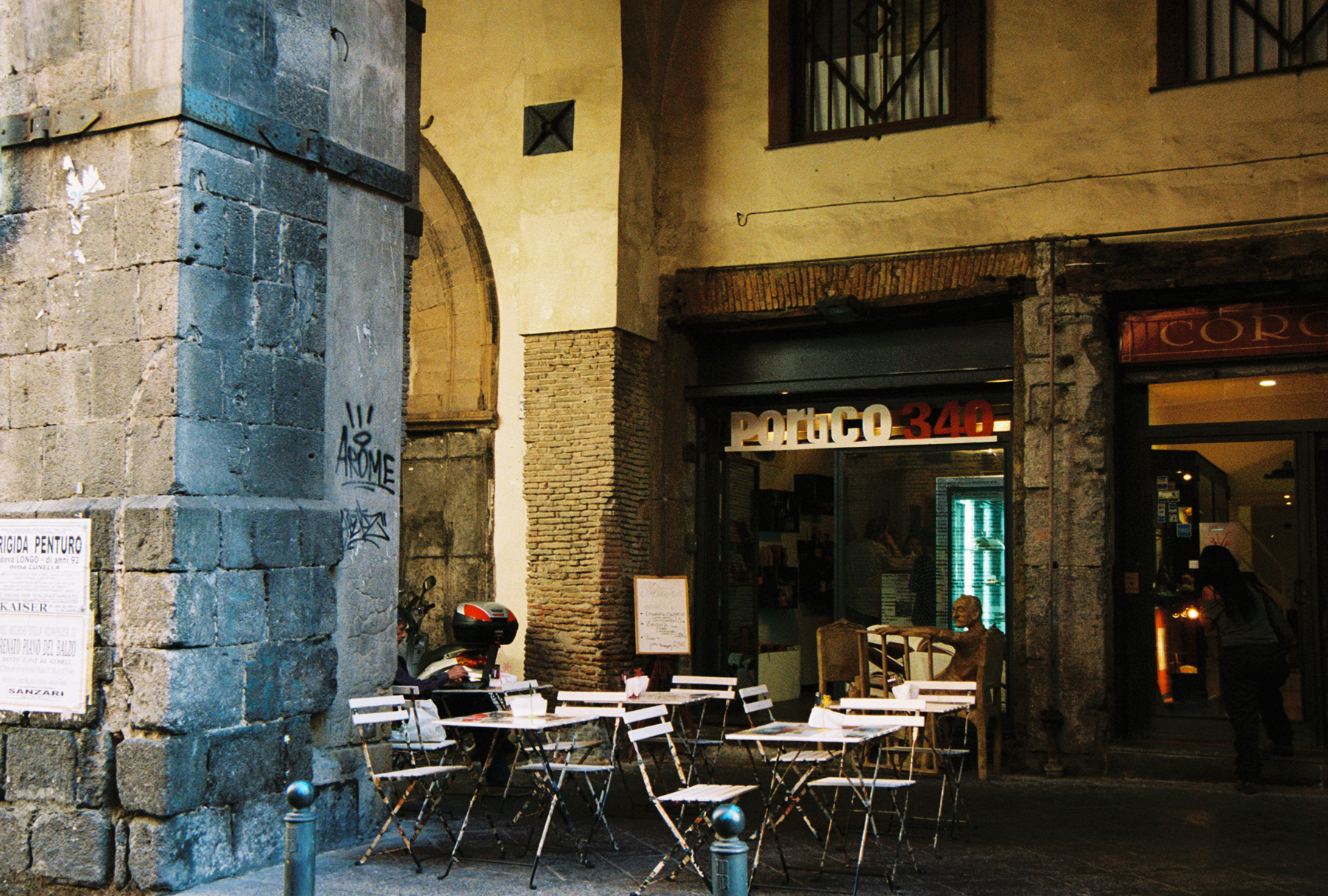
The simple cafe tables and chairs in front of artisan shops and caffes with a sculpture of an old man in the background.
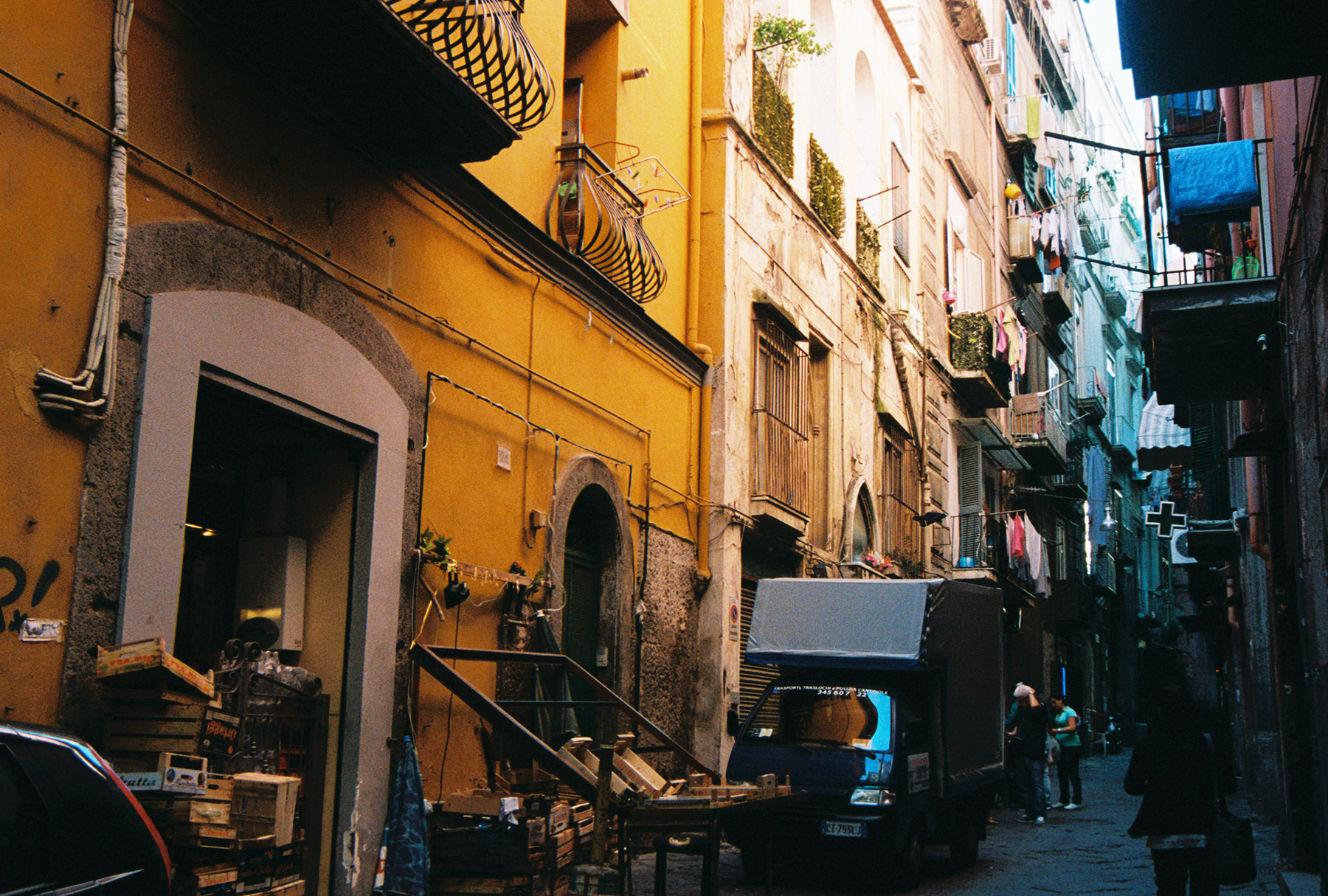
Every day life in an alleyway; people, a truck delivering goods, empty vegetable and fruit crates, the golden mustard apartments and hanging laundry.
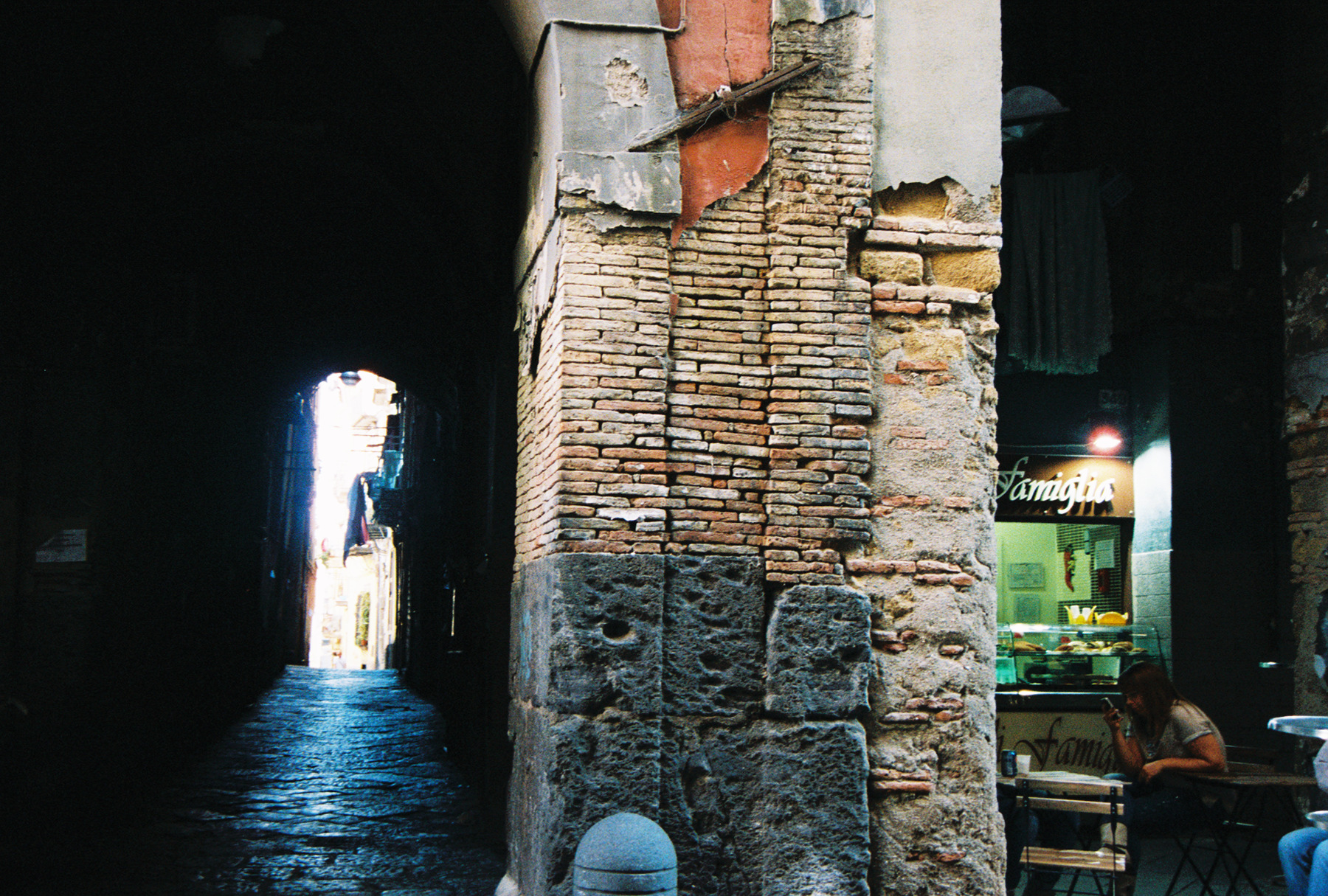
A baroque awning, layers of brick from different centuries, buildings and façades built on top of each other, a neapolitan girl on her mobile, another caffe beckoning the passersby.
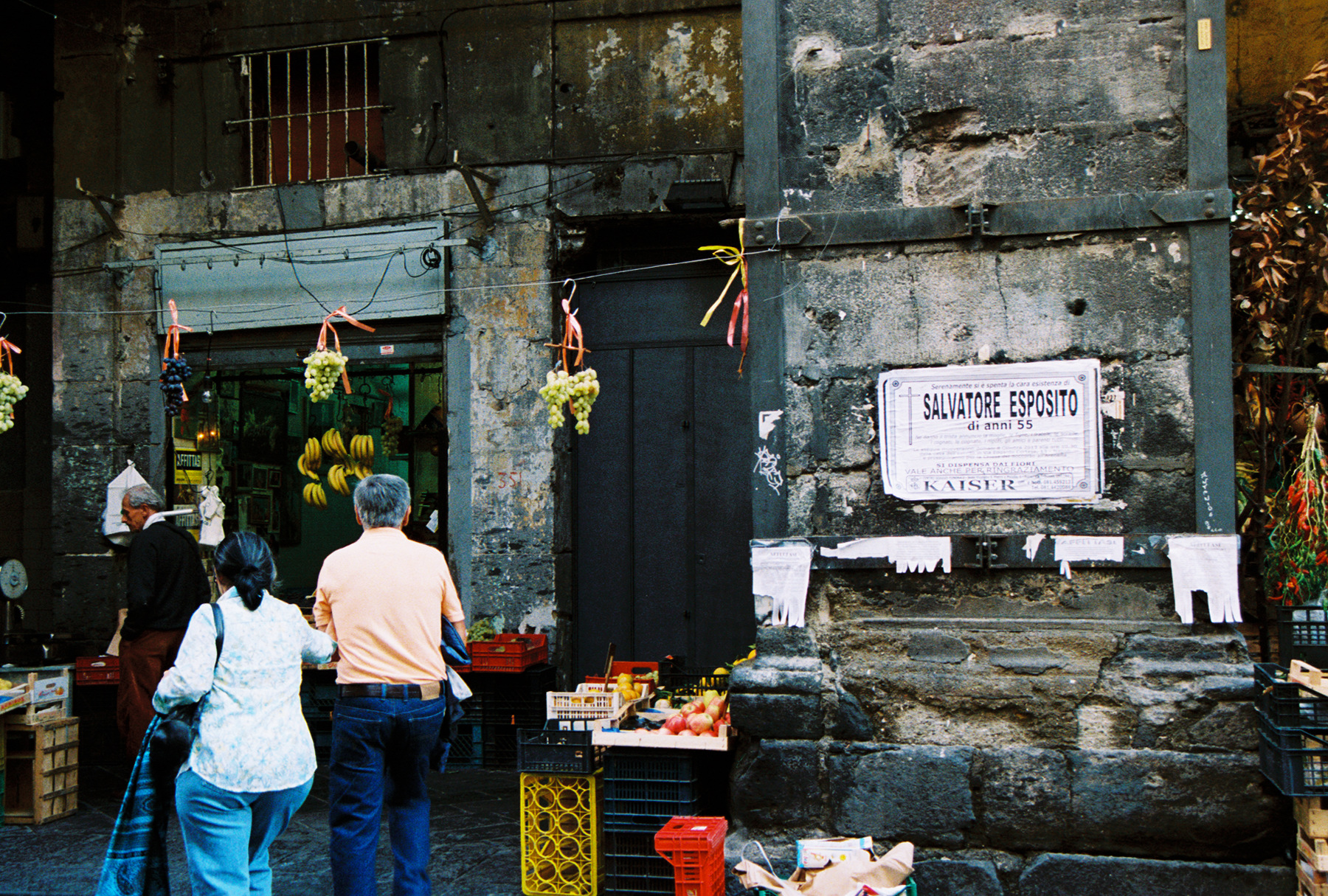
Hanging fruit and ripe red campania tomatoes and an early pasieggetta.
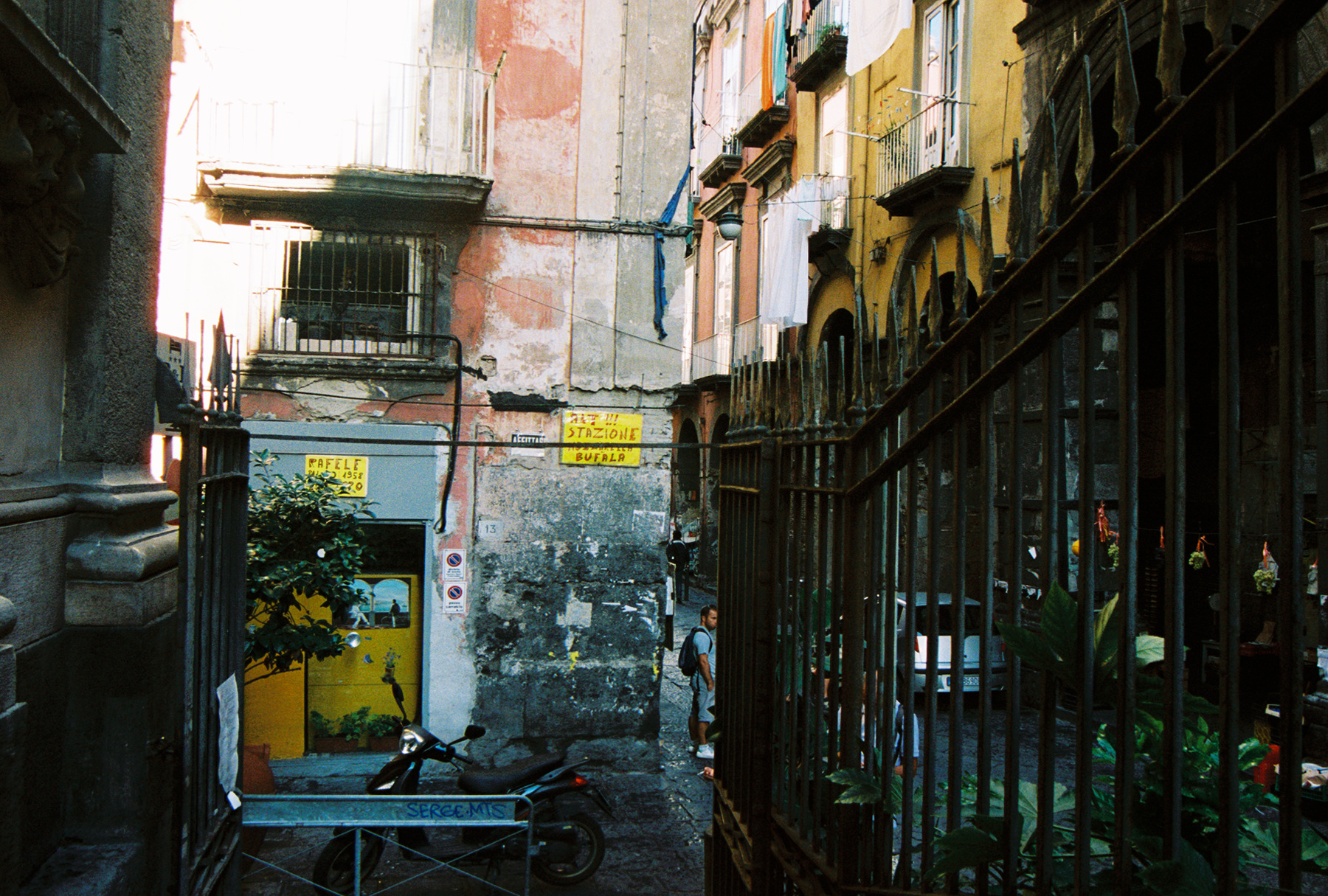
I love the corners and crevices and surprising bursts of yellow in between the rust.

Ancient pillars in residential neighborhoods, forming millennia old foundations.
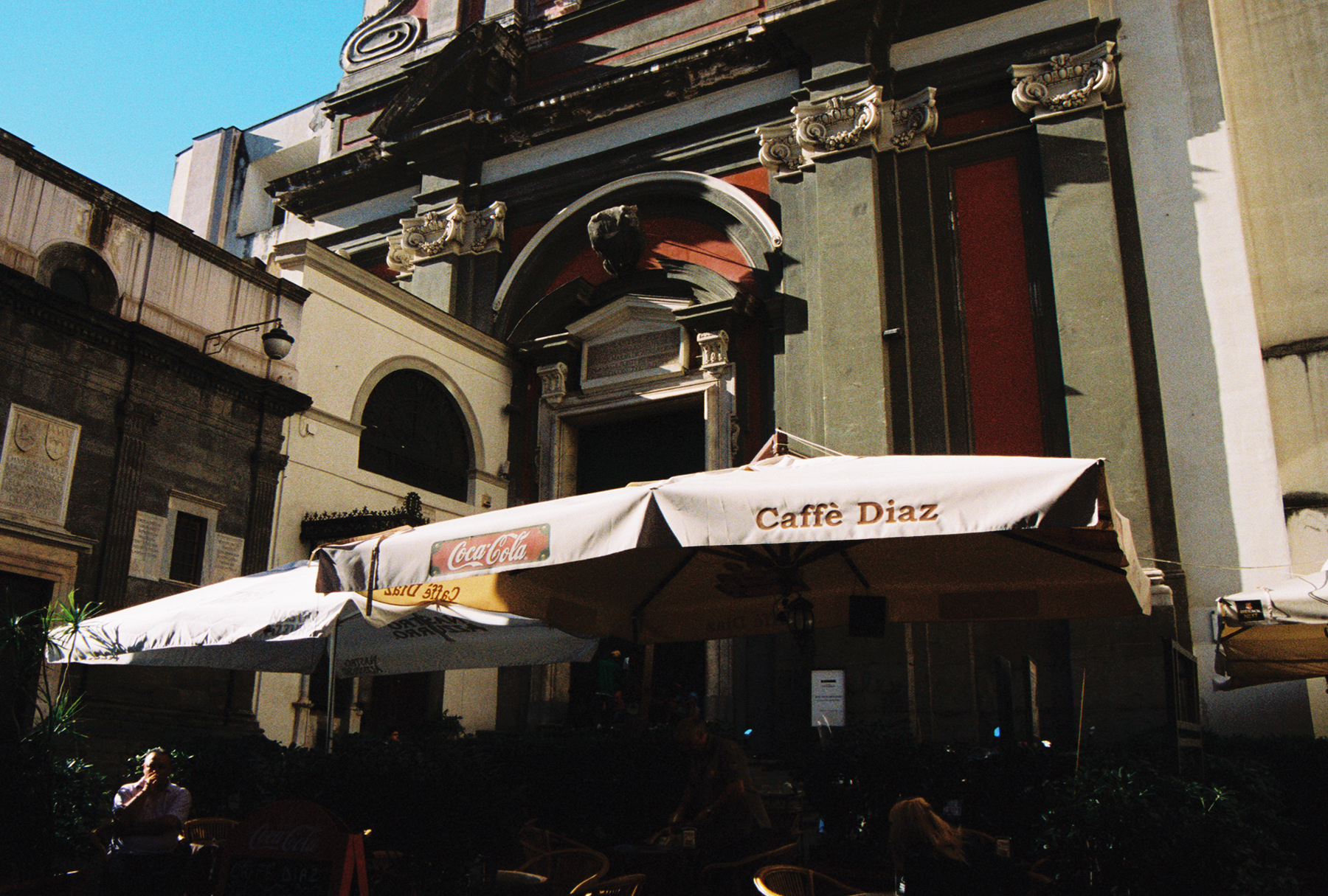
Another beautiful church front and a charming caffe.
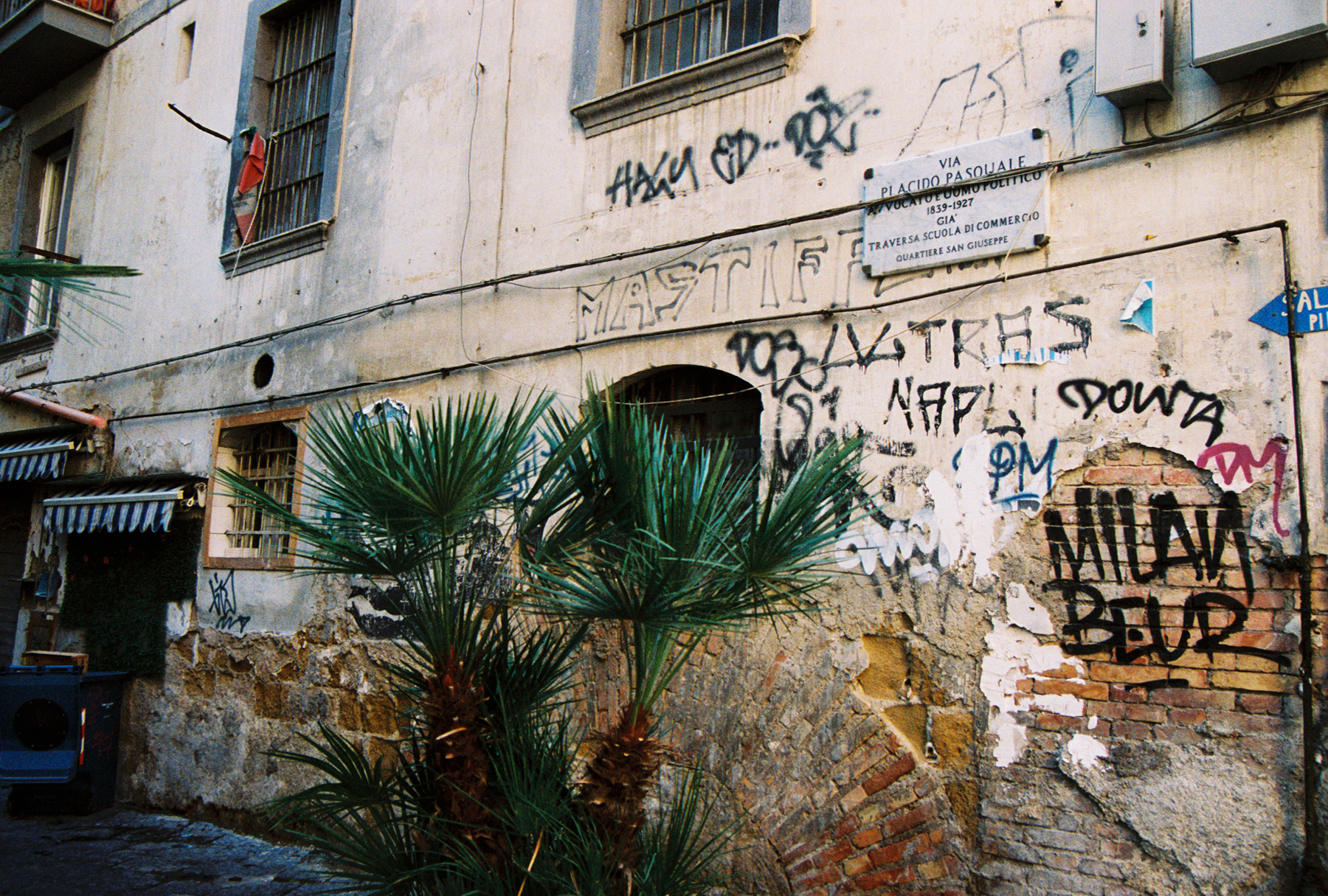
The quintessential graffiti of Naples, as ancient as the tags and scribblings on Pompeiian walls.
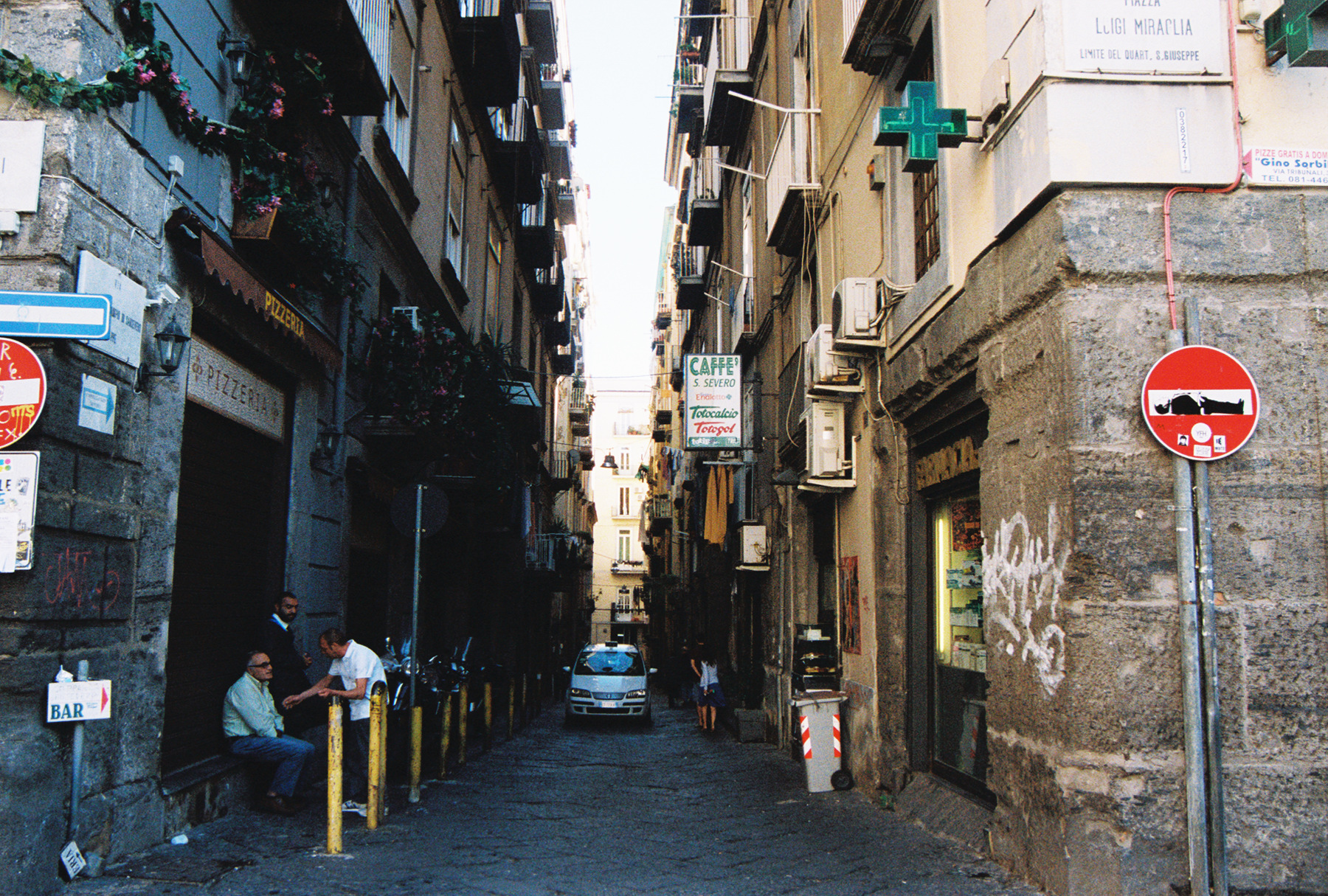
The old guard and the ‘new art’.
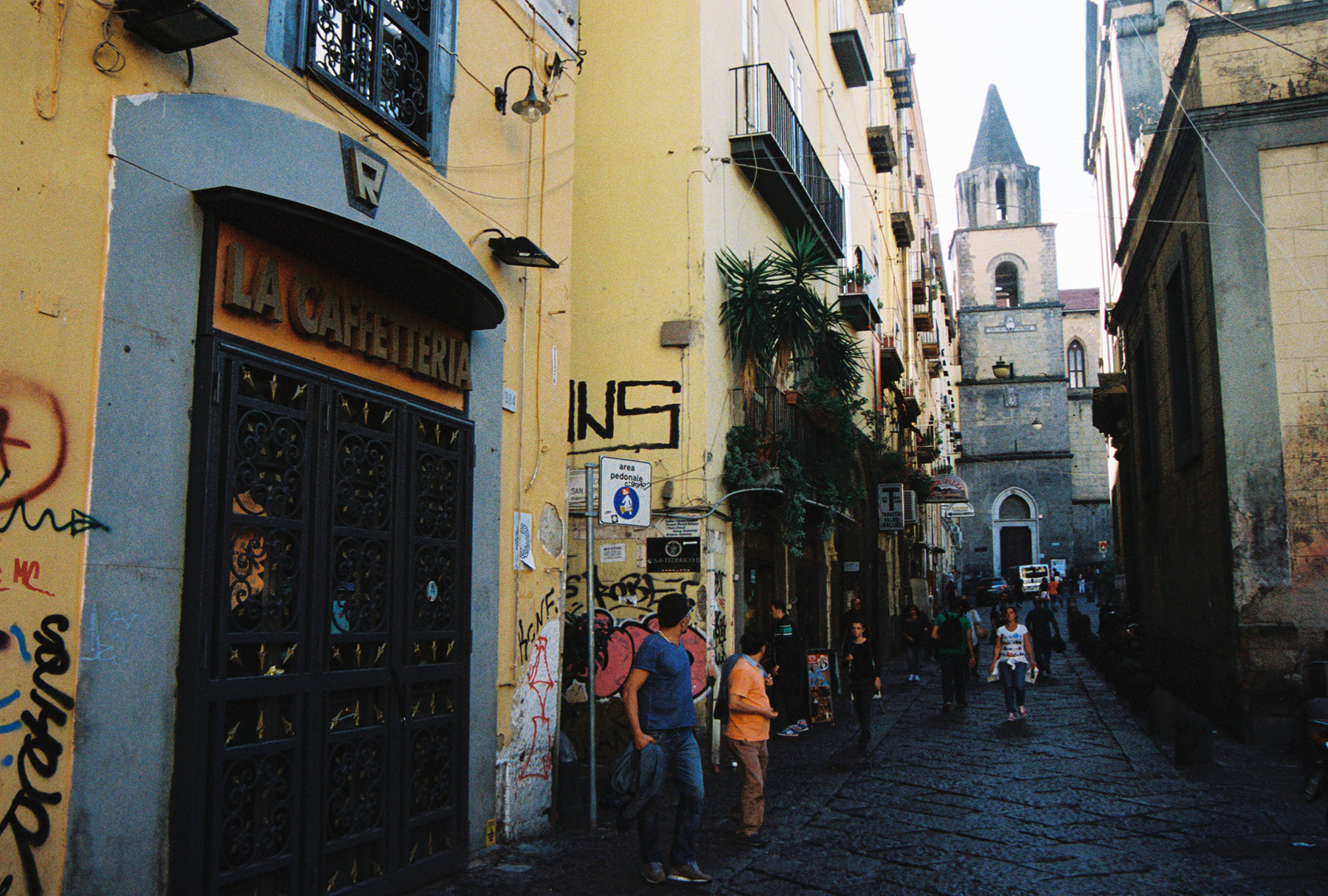
Bursts of color and brightness and the scent of glorious coffee floating in the air at every turn.
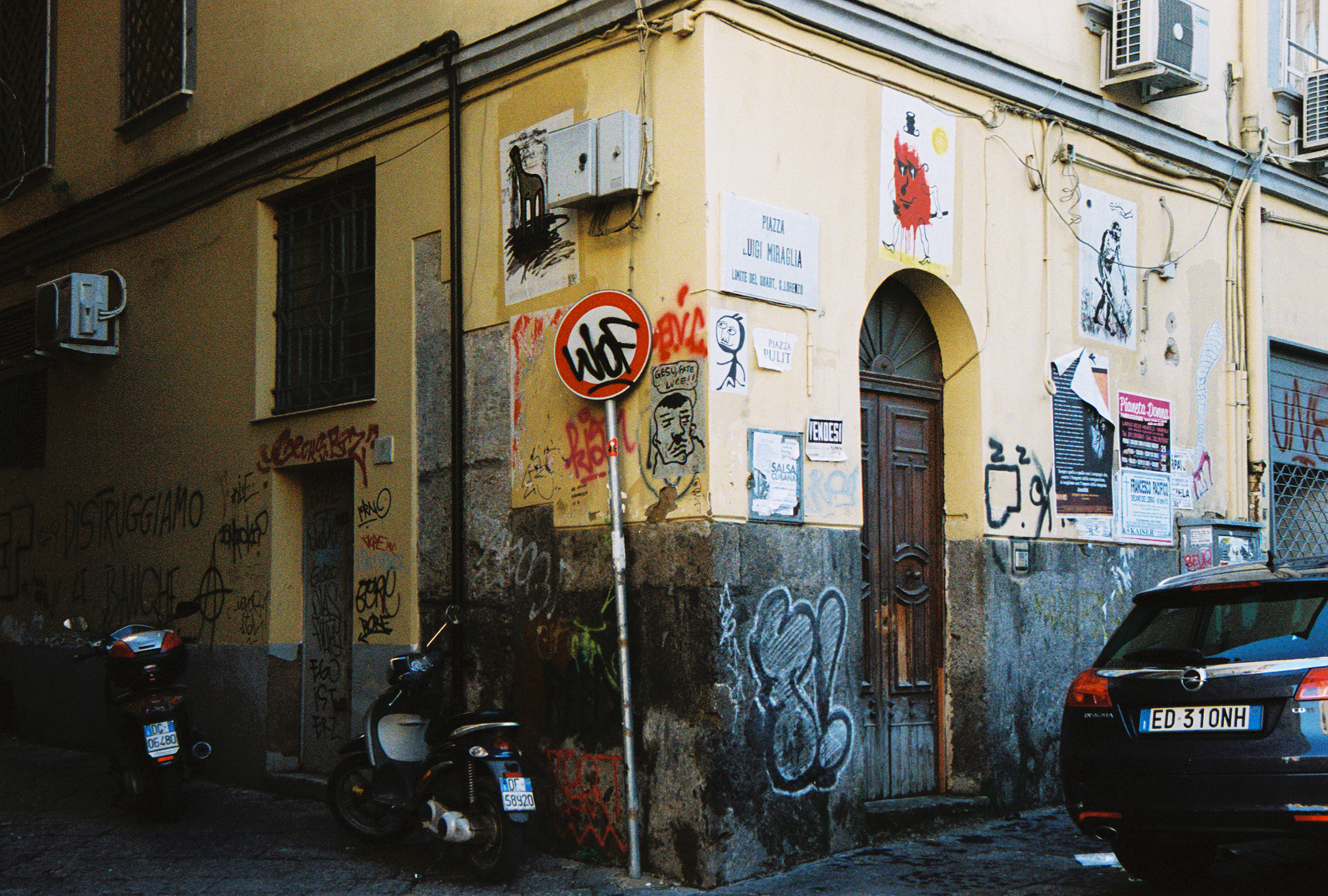
More graffiti, and the vespas and cars and Neapolitans seem all the more nonchalant about it.
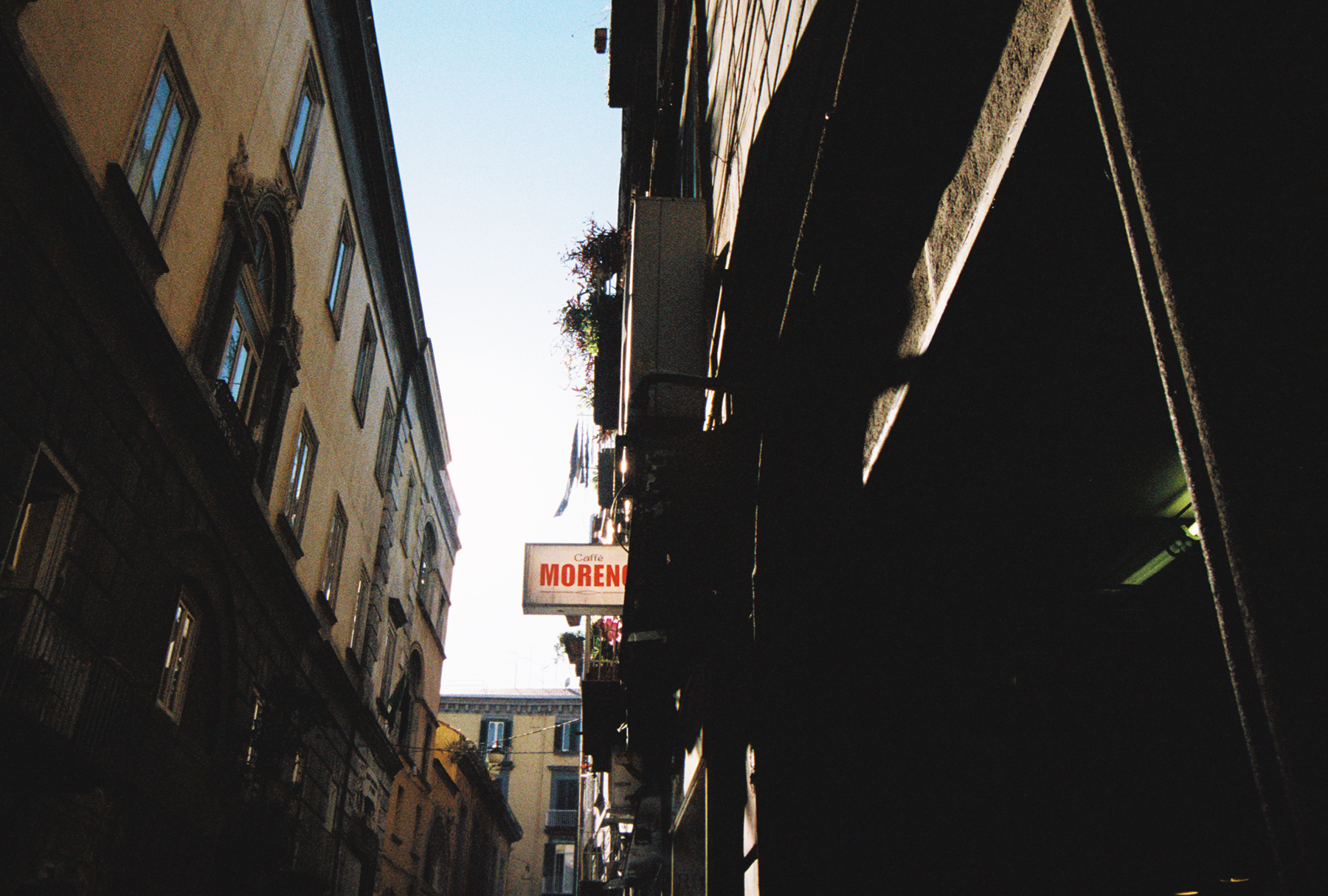
I always seem to find the caffes… I always feel like I’m on some unspoken mission to drink the best coffee.
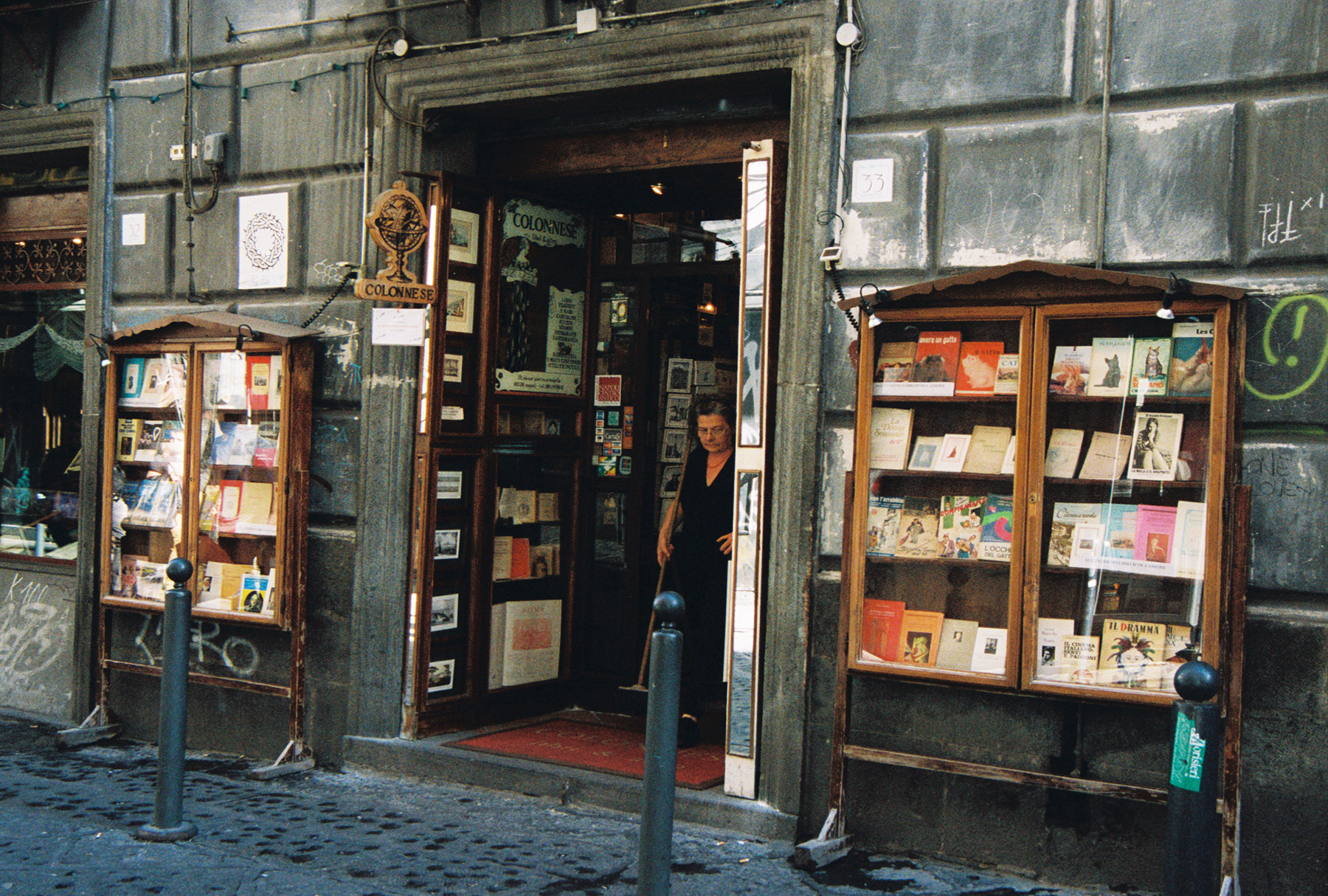
A whole street filled with beautiful second hand and rare book shops and musical instruments and conservatories. I never wanted to leave.
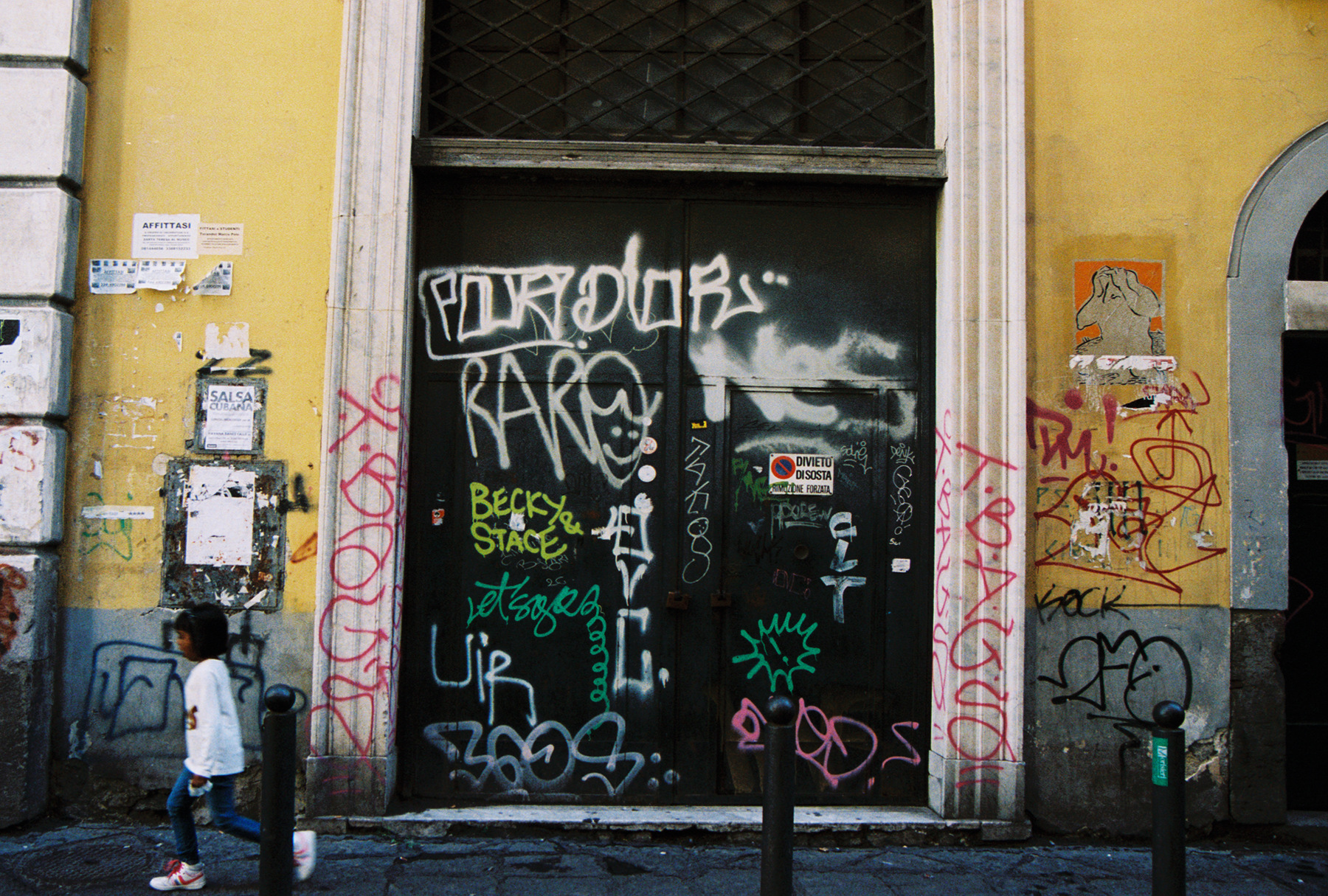
When the little girl walked by I knew I had to capture her in that moment of contrasts and colors.
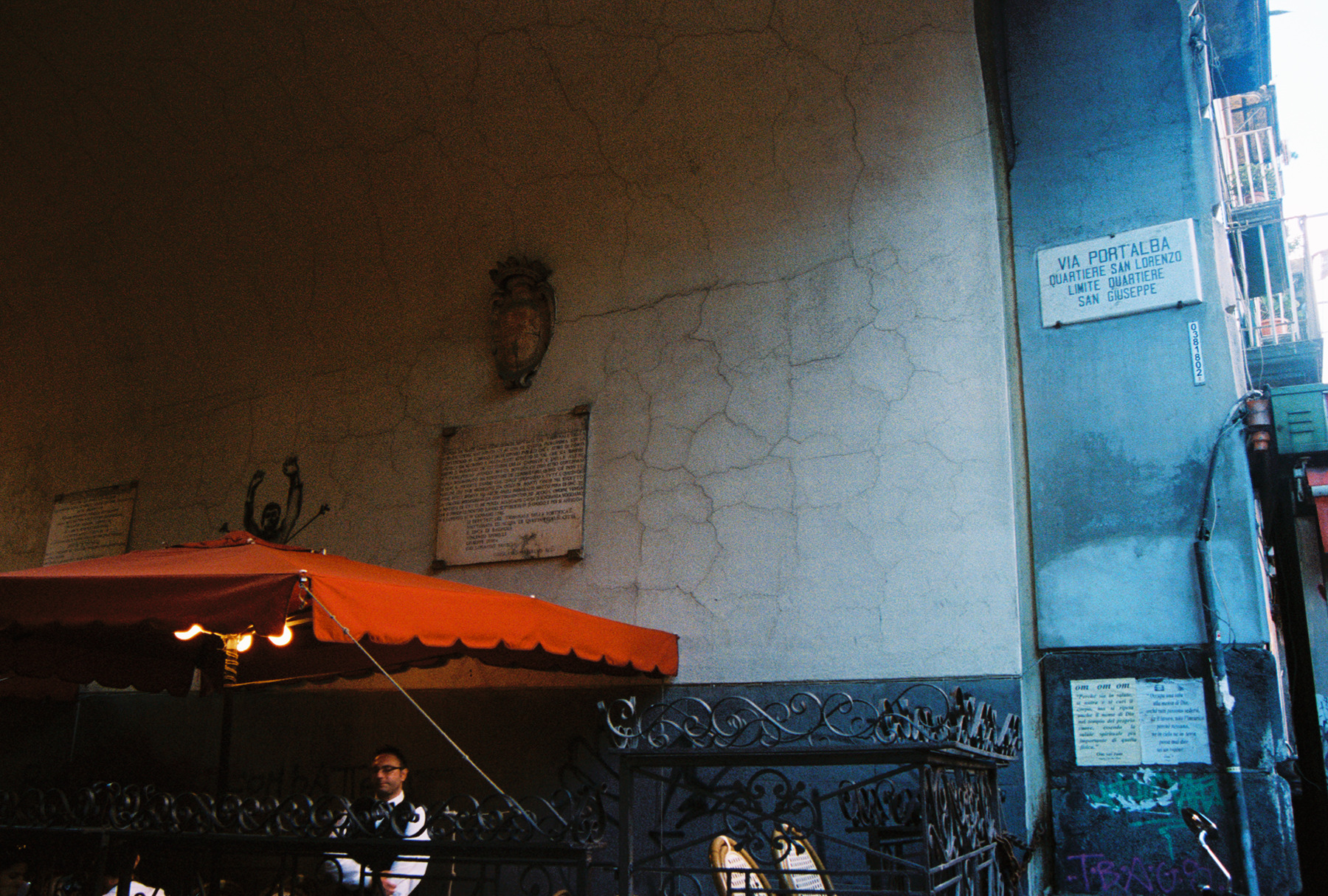
A gorgeously appointed restaurant, intimate, and romantic in a baroque neapolitan way. I could have lingered for hours with a glass of nero d’avola and flirted but I had less than a day to shoot Naples because of all the rain prior to this day.
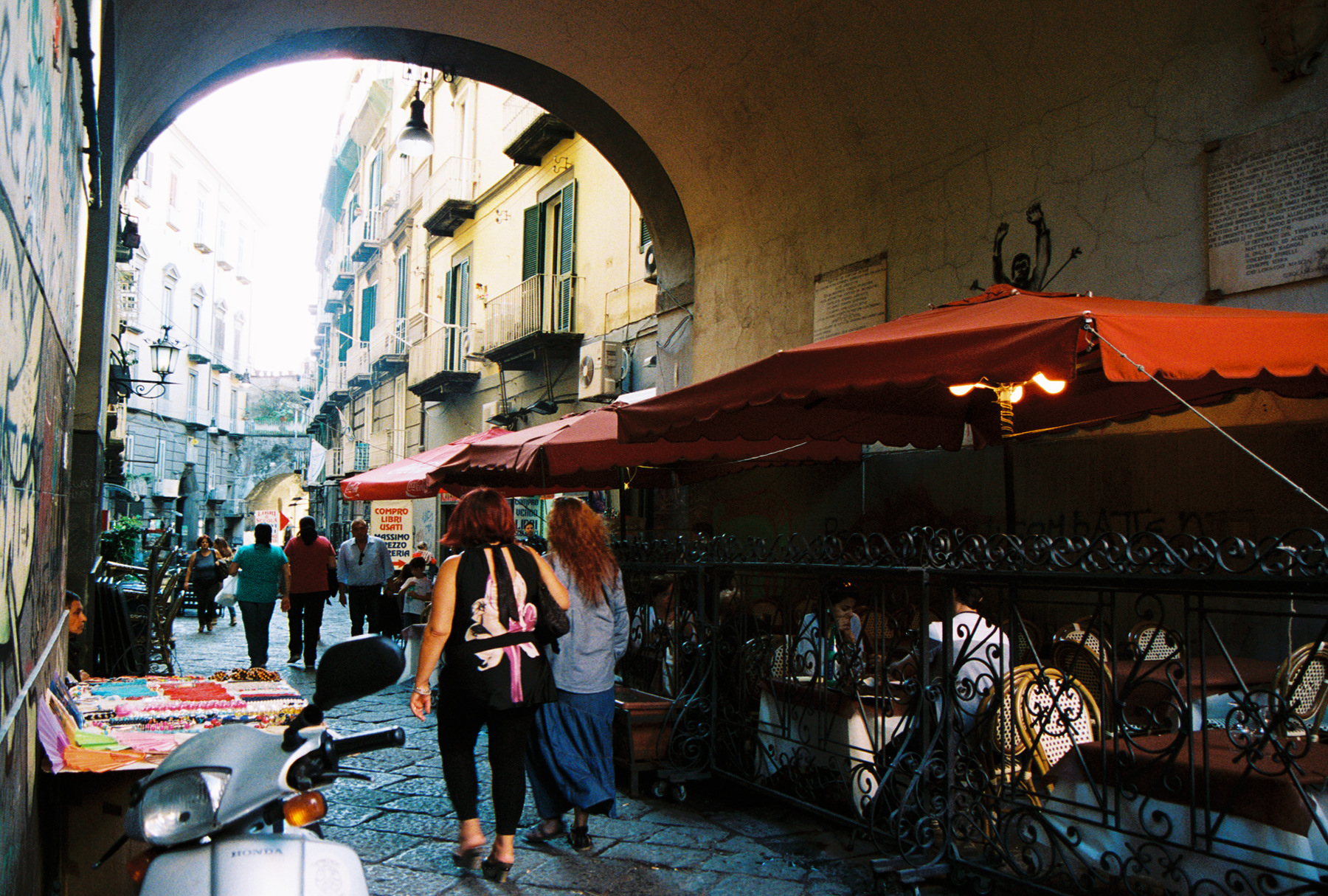
This is a wider shot of the restaurant. It looks like an opening to another, older world. I told you it was beautiful.
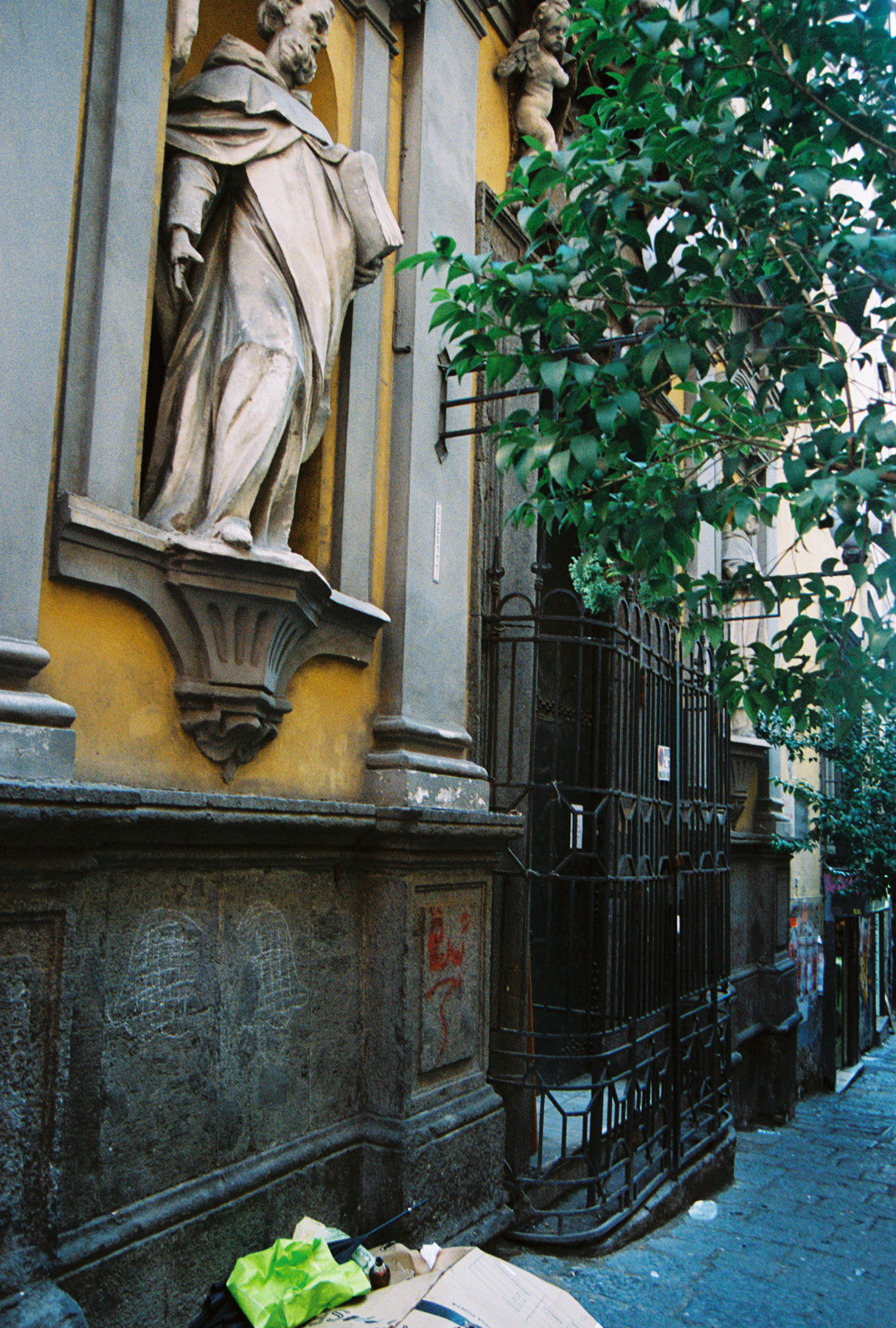
Stunning churches, colorful architecture, dark and ancient looking alleyways filled with street theatre and trash on the street… the extremes of modern Napoli.
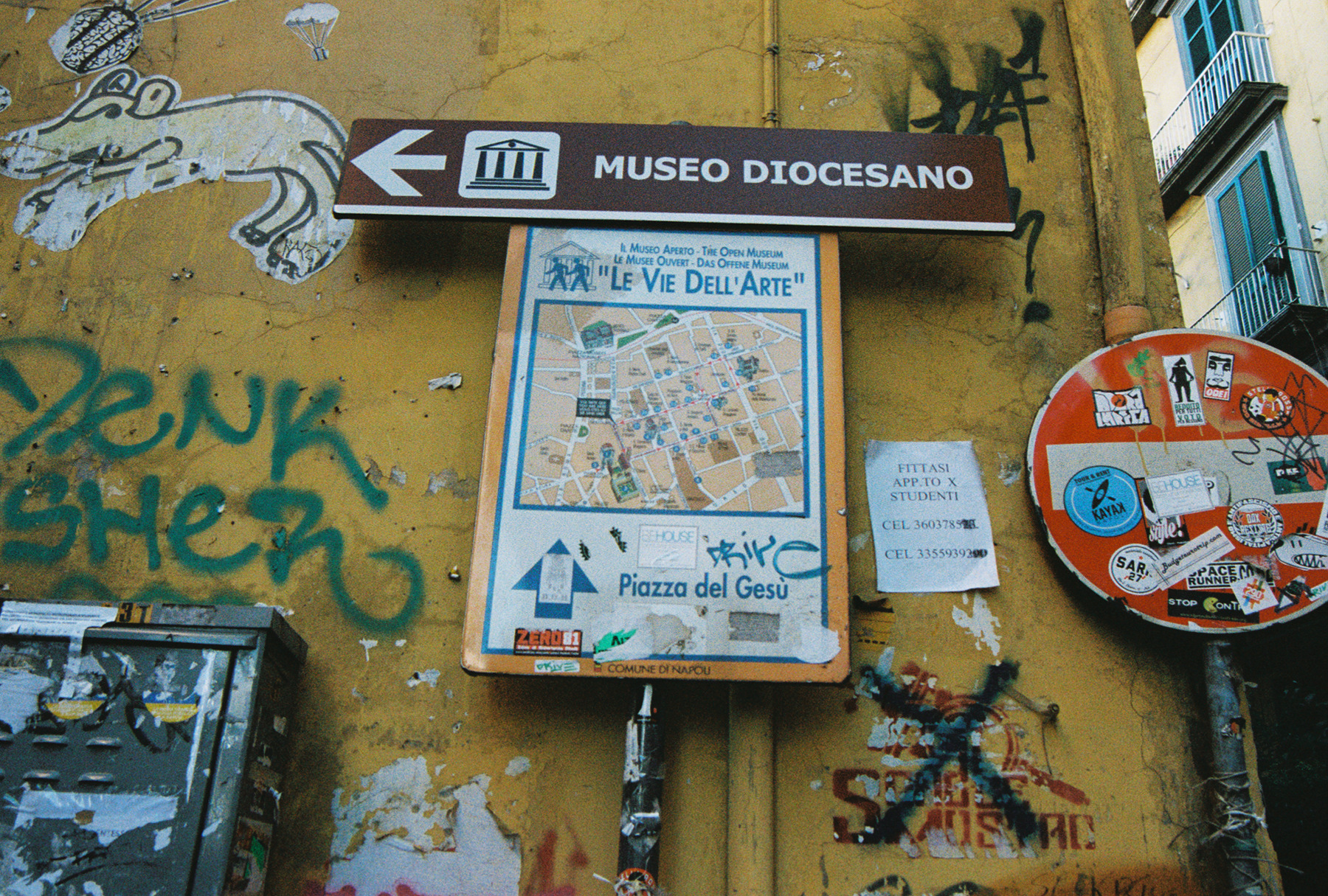
There is so much to see, just to read on the walls.
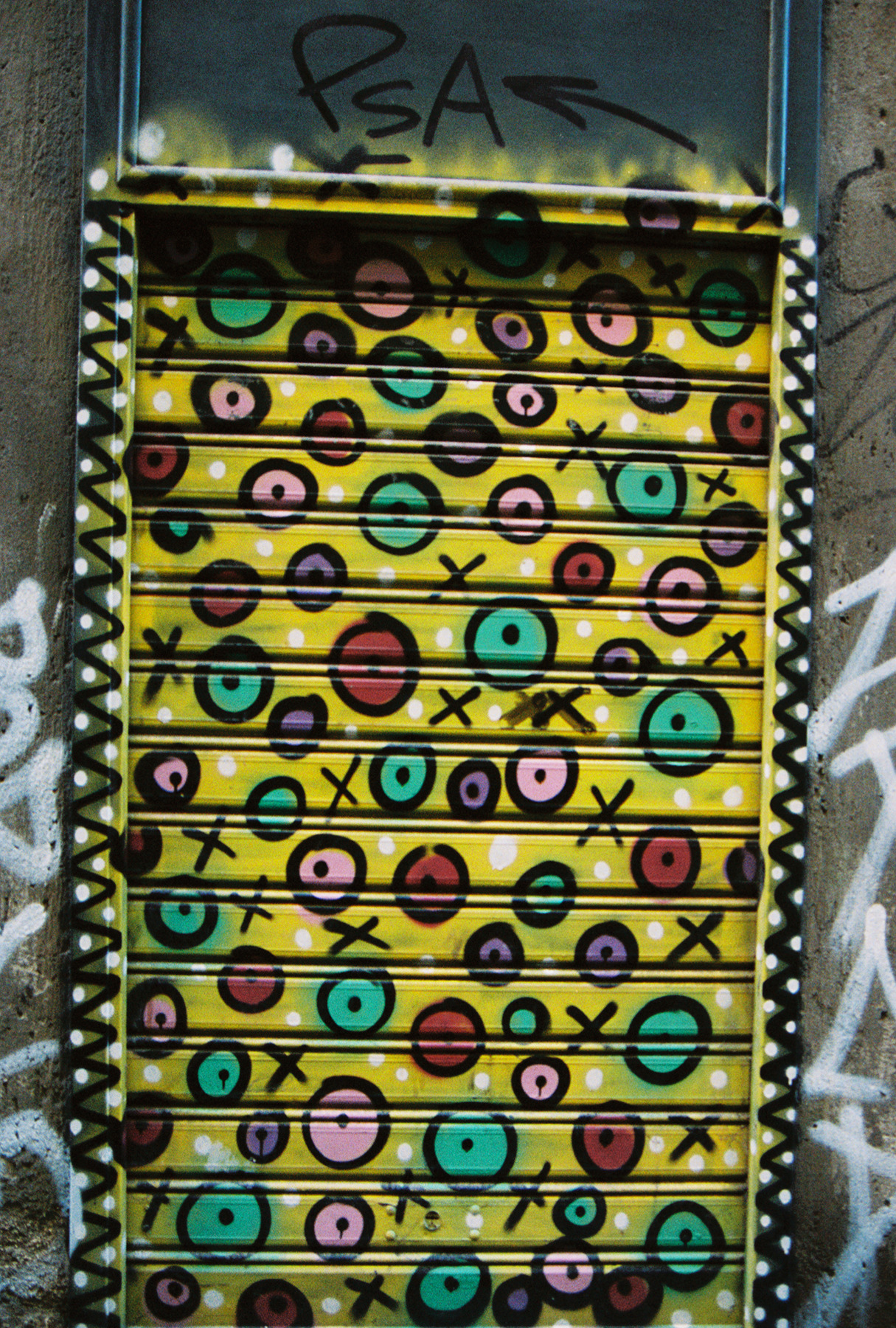
I like when the grafitti becomes art.
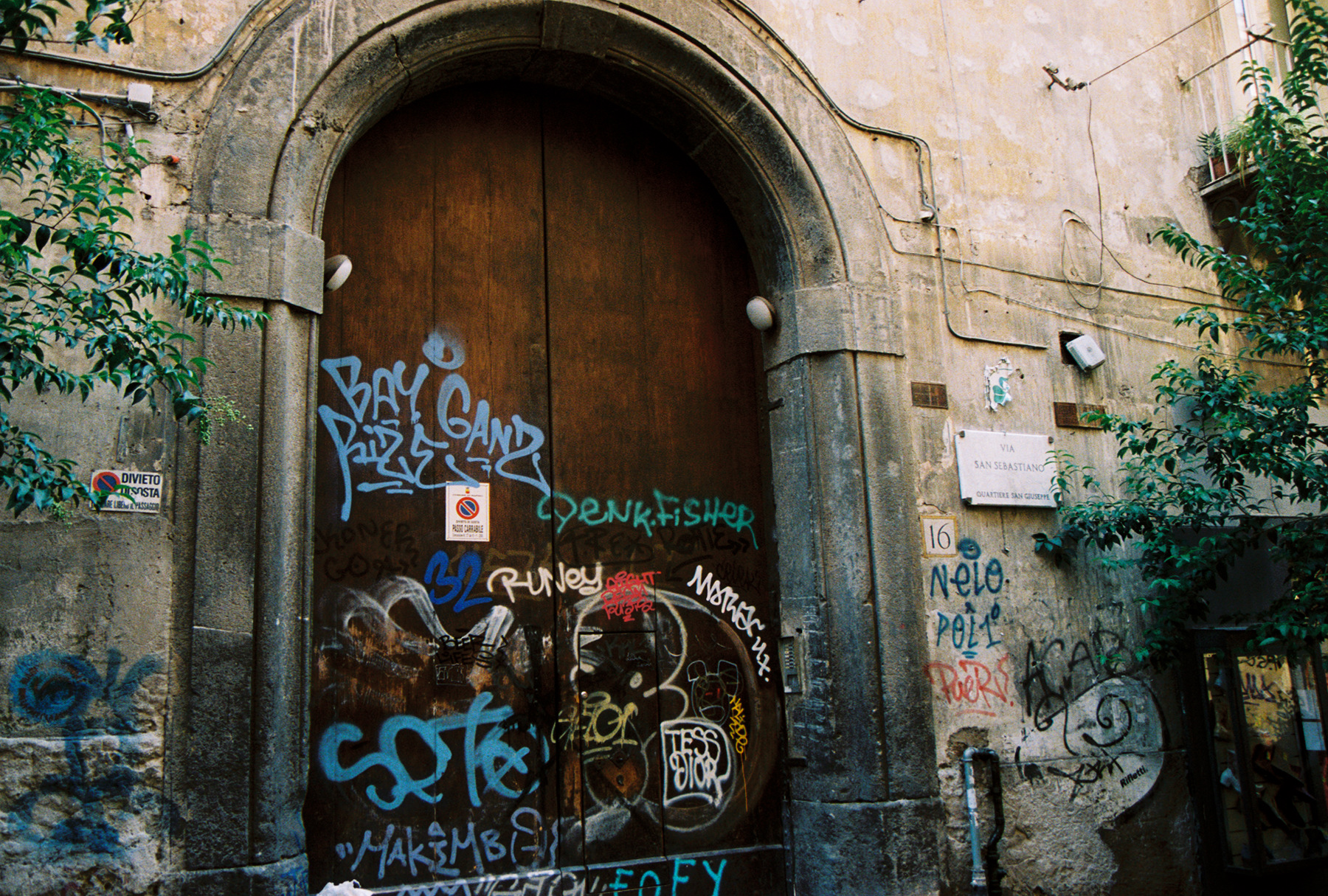
Even the scribbles are a crying out and bleed every color onto wood and stone and brick.

Back to this fellow. I remember his likeness on other walls on other visits to Naples.
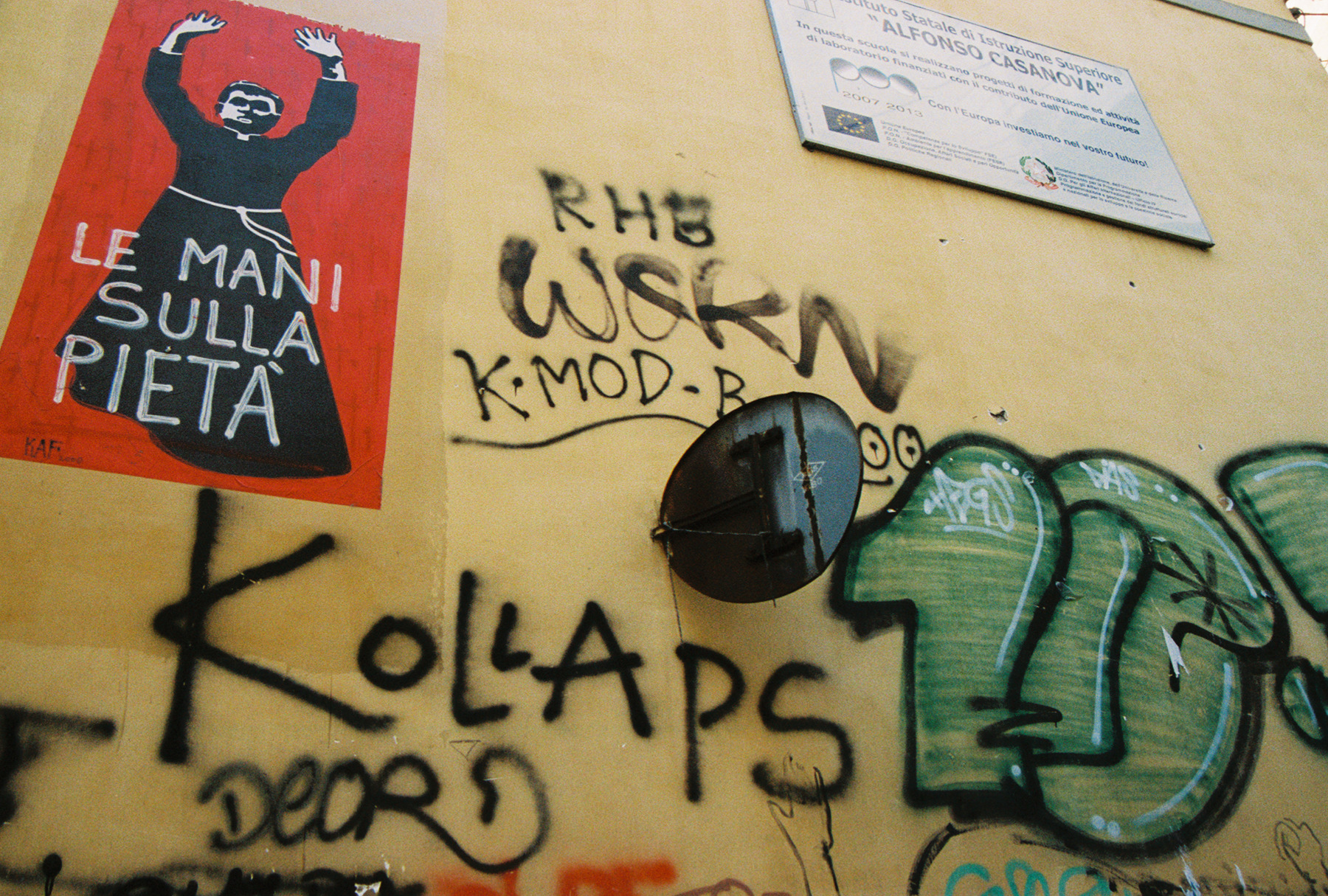
The priest or monk, grafitti iconography and protest.
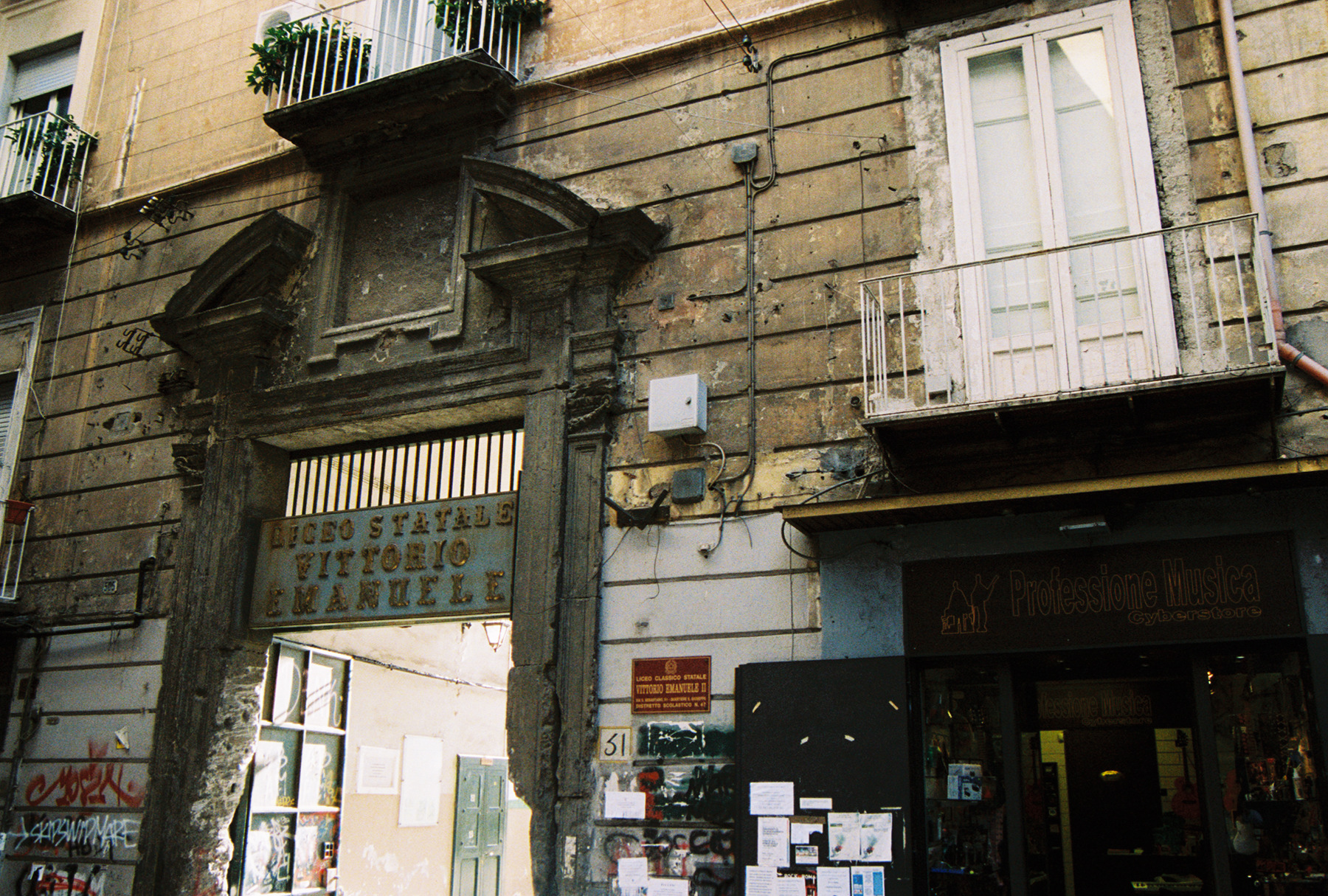
I found this hollowed out frame and the lettering (name of the one time King) very delicate and beautiful looking.
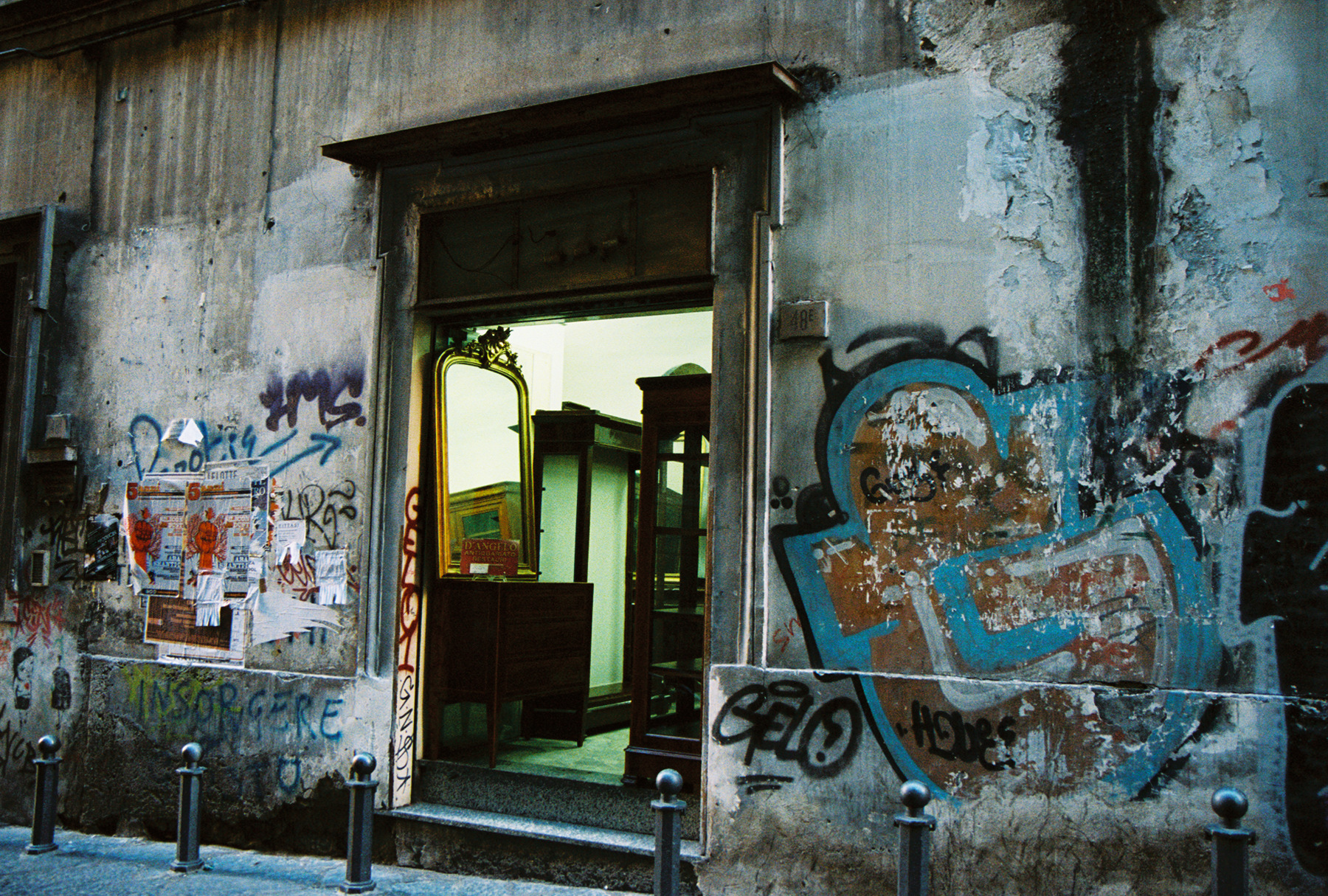
Mirrors and antiques and the scrawlings every where.
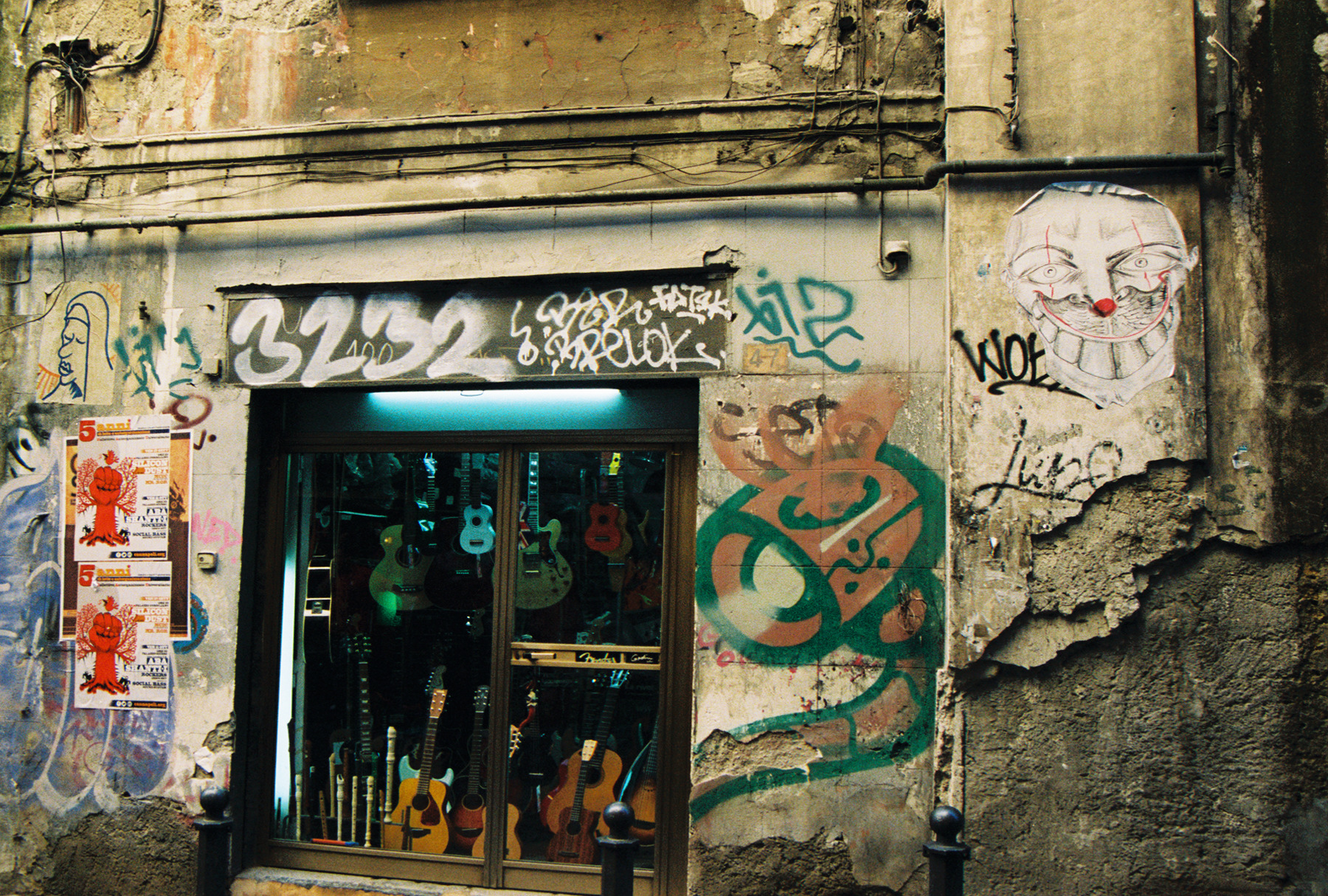
A delightful music shop.
I know Napoli isn’t for everyone. I know street grafitti on historical buildings can be a bit of a shock. But once you visit Naples a few times and fall into the rhythm of the city and of its people, the fright wears off and you begin to see the color is all the more bright in contrast to the shadows. If you are like me and find beauty in decaying things and centuries of history piled up on top of each other, you may just find yourself falling in love with the heart stealer of baroque Napoli.
All photographs shot on portra 400 and 800 – 35mm film.
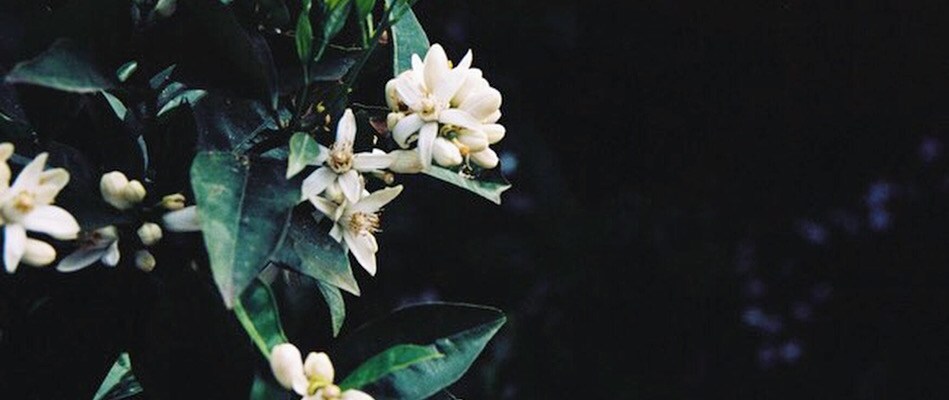
Notes on a little about my photographic process. I’ve been asked about this and it’s mostly the use of fine art films and my analog camera, but it’s also my digital camera and my iPhone too, that I shoot images with.
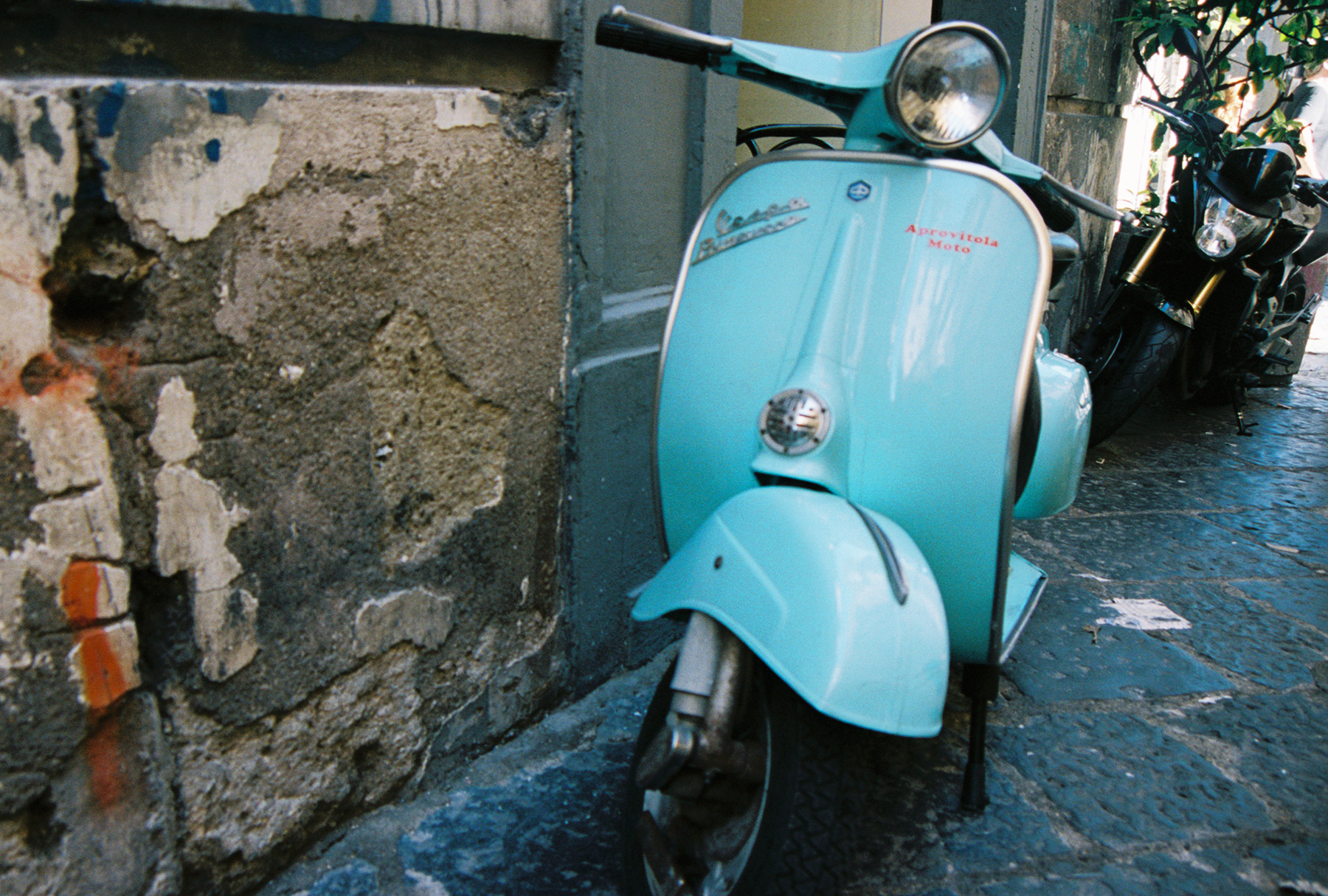
vintage sky blue vespa in napoli, italy, portra 800, october 2013
Yesterday I picked up my 35mm film photographs of Capri, Ana Capri, Sorrento and Napoli – shot in portra 160, 400 and 800, kodak pro h, and a few spare vintage-style rolls of color film, the names of which escape me at the moment. I shot some velvia slide film, which was developed into individual slides and I poured through each slide on a light table with a magnifying glass and chose the best ones (and the lab will scan them onto cd so I can post them here and in some articles and guides on Italy for other publications – AND which cost me $5 per slide)!!!
A roll of art film can be $15-$75 just for 35 mm film… 120 film (medium format/ large format) can be even more. Some times one can luck out with a five pack for $55, depending on the film. The film slide film is usally $25+ per roll and there is some incredibly beautiful discontinued slide film is now $75-$125 per roll with an expiration date! My fridge doors are not packed with cheese or juice or butter but with endless rolls of film, the cheap stuff, the mid range and the criminally expensive. It’s vitally important to buy your film from credible sources. That’s why I tend to buy the film in person, from a few credible photography shops in the Boston area, who properly store their unexpired film in a film fridge.
So for this trip, the 11th to Italy (ahh, makes me think of Doctor Who!) – I spent a couple hundred dollars on the film, a couple hundred to develop the rolls and a few hundred more once they scan the velvia film slides onto CD.
I shot about a hundred pictures on digital but focused mainly on analog because I prefer the dreamlike, tonal quality and the color and beauty of these special films. It’s sad how incredibly costly it is to shoot with fine art film; it’s truly a dying art form. But there is still the drugstore deals on fujifilm and kodak (buy one 5 pack, get one free, etc) I collect in bulk because that film is great for every day shots and practice. But for Italy and for shoots where I’m looking to tell a story, I still rely on those rare gems: portra, velvia, etc.
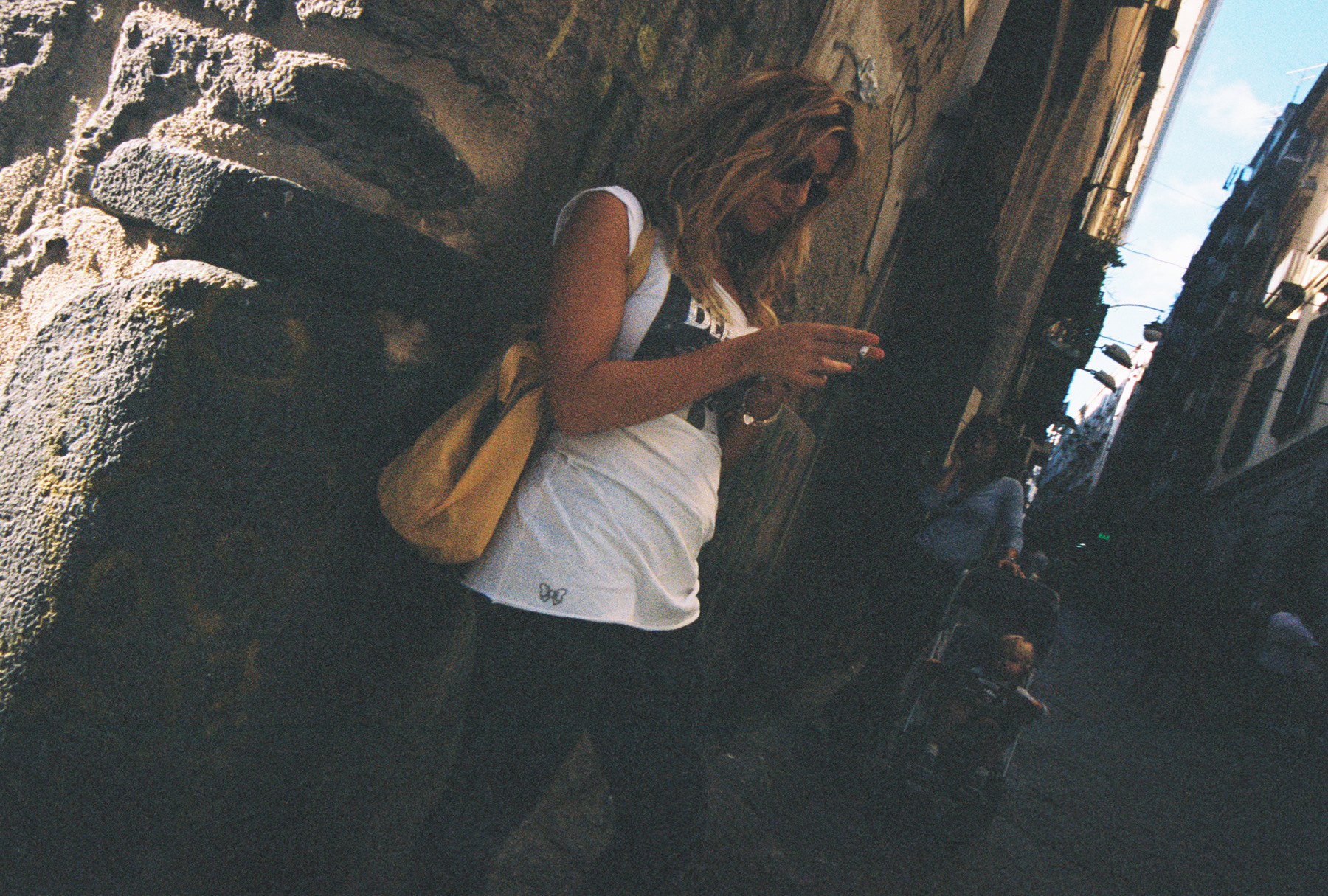
neapolitans in spaccanapoli, portra 800, october 2013
As I return to writing and shooting and editing I’m thinking of arranging this into a book or extended project of my version of Off The Beaten Path Italy so I’m thinking of the tremendous cost as an investment. We’ll see.
I have a busy weekend but I’m going to get some pieces together soon and post some of the photographs here. I do post some of the stand alone shots on tumblr here.
 a love letter to rome