Italy and England
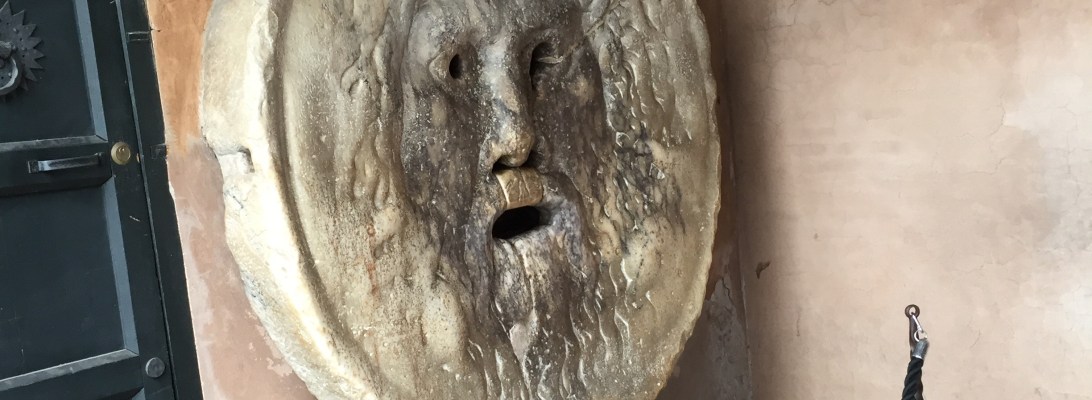
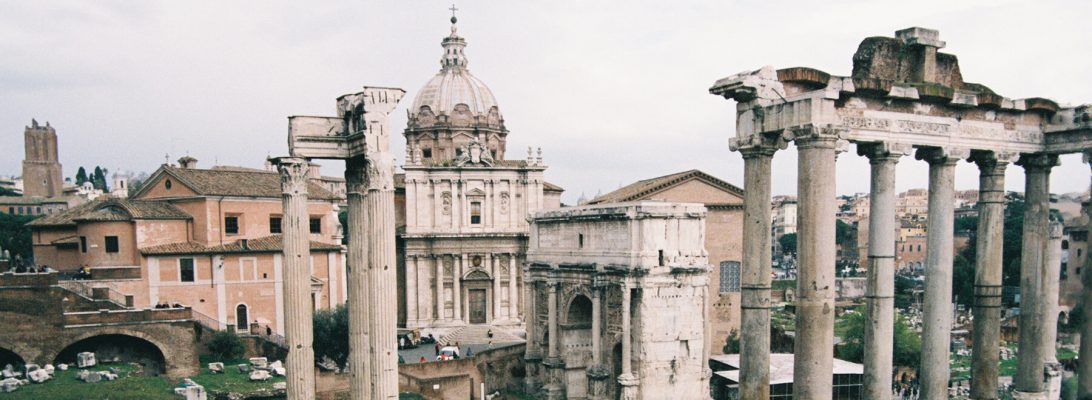
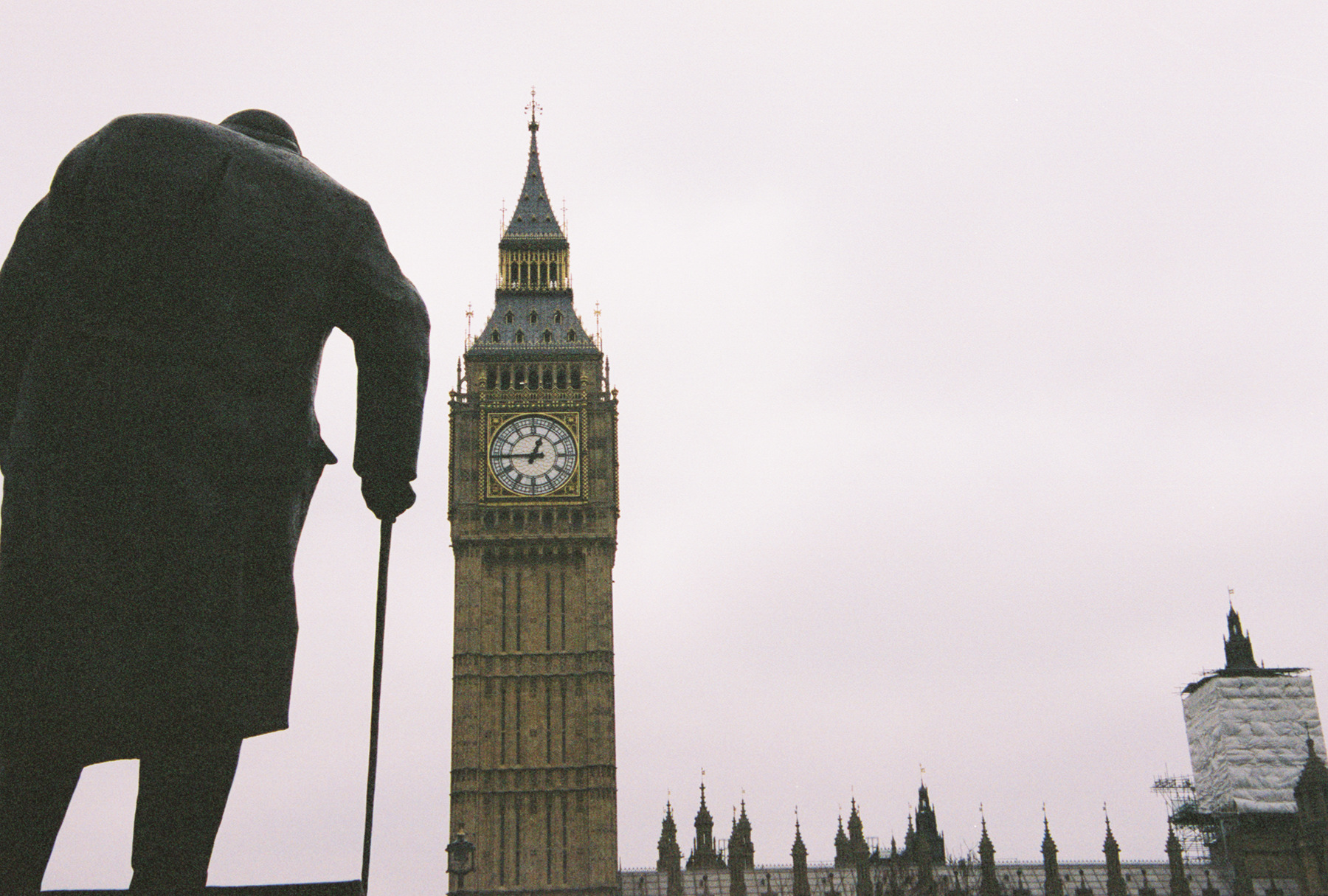
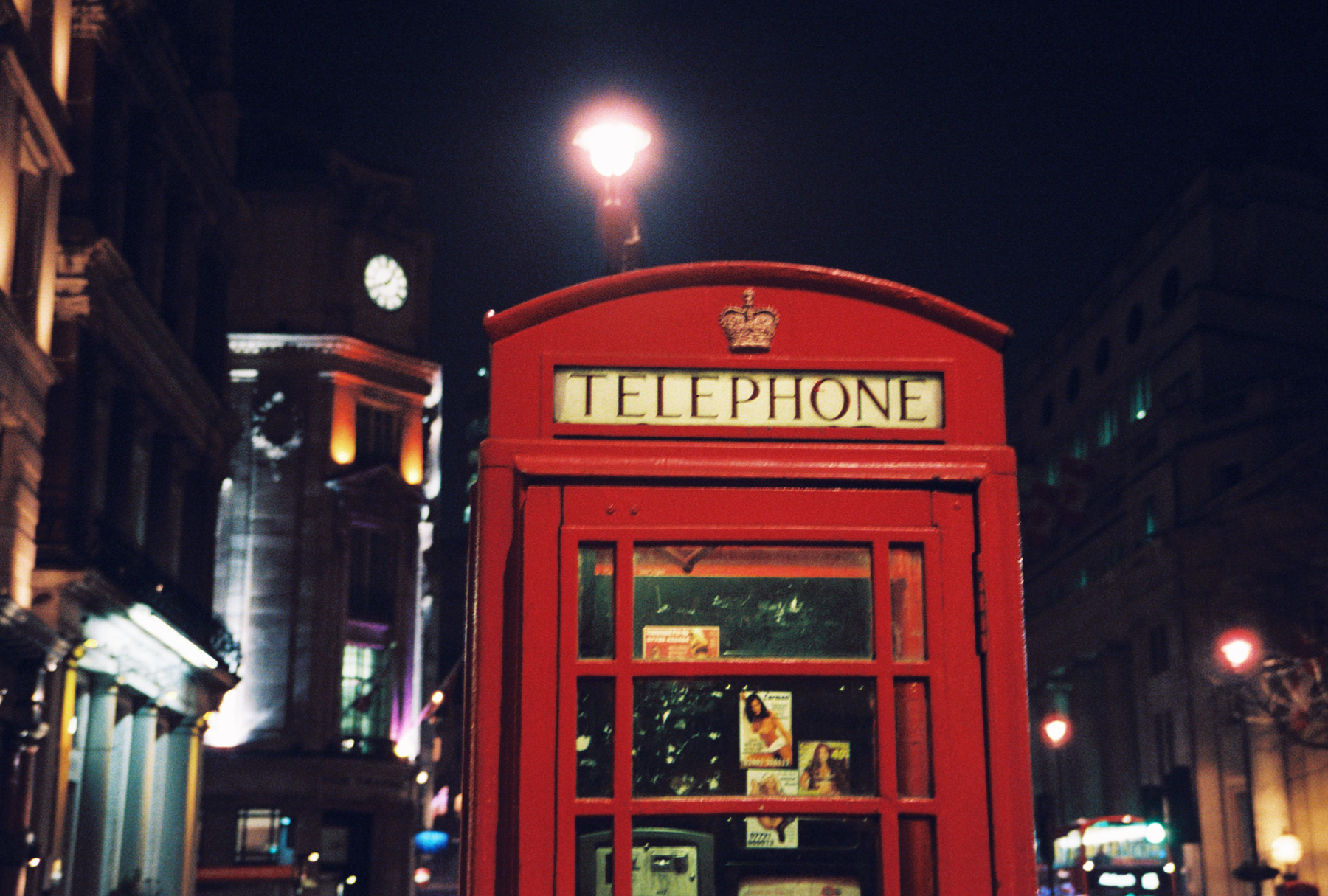







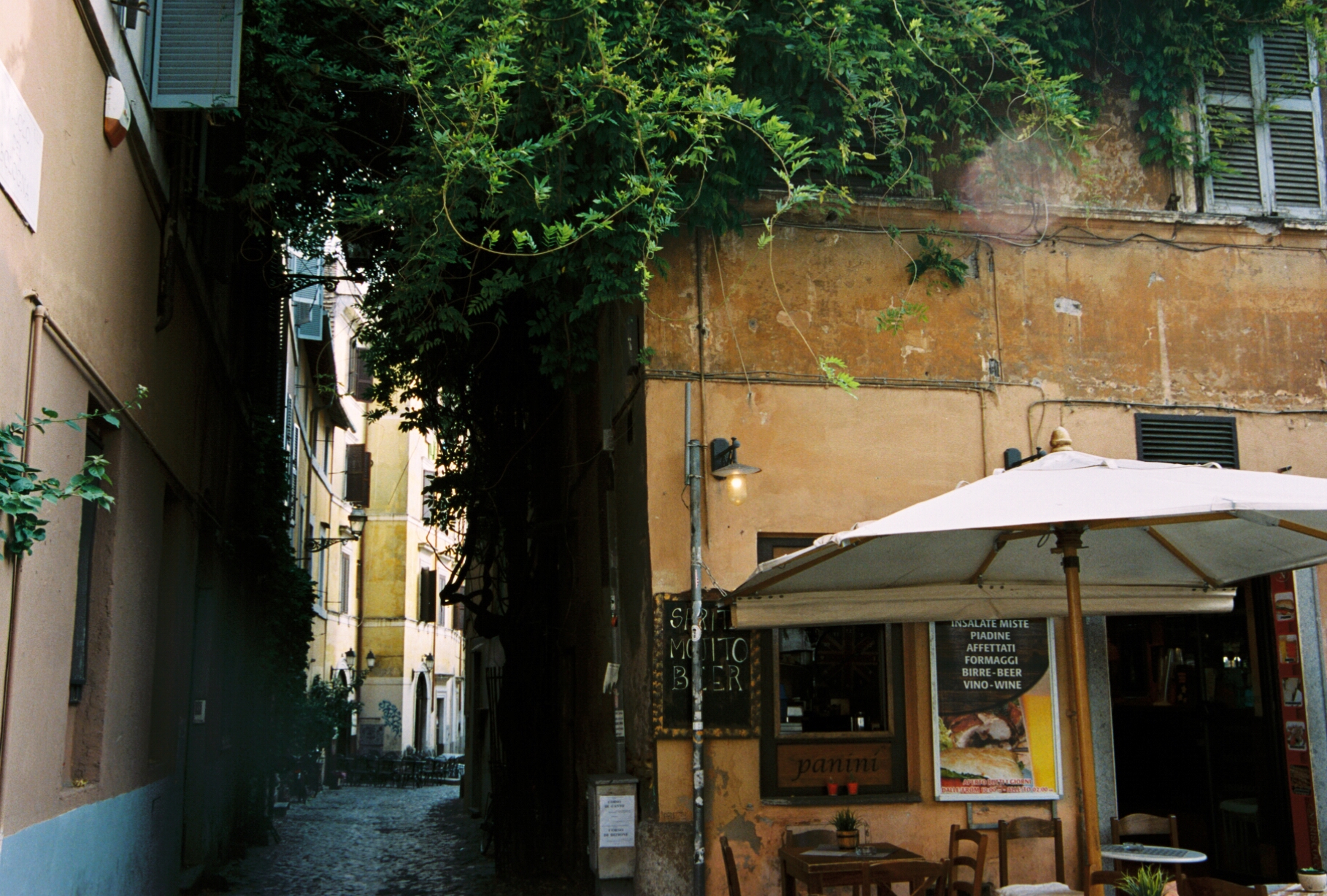
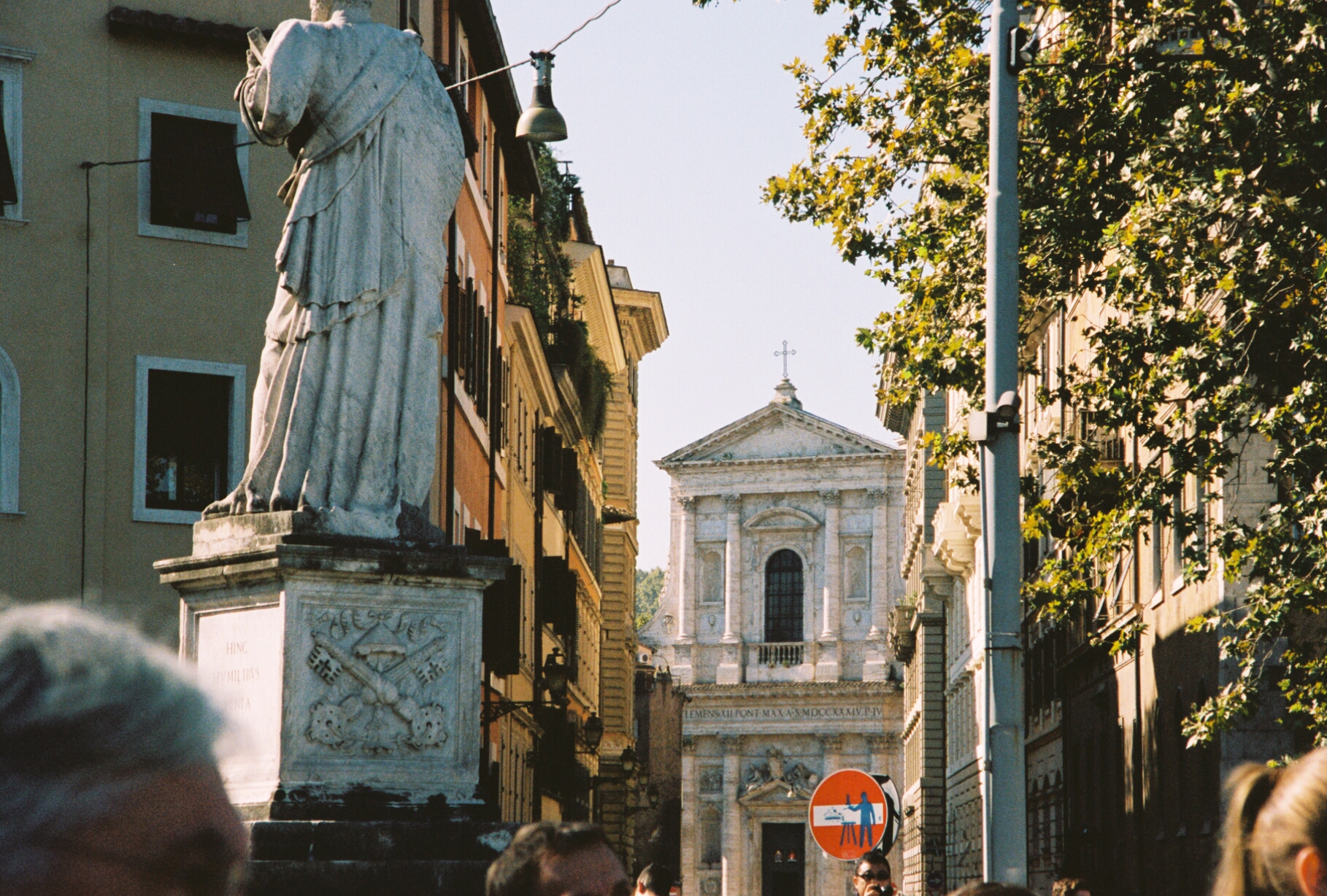

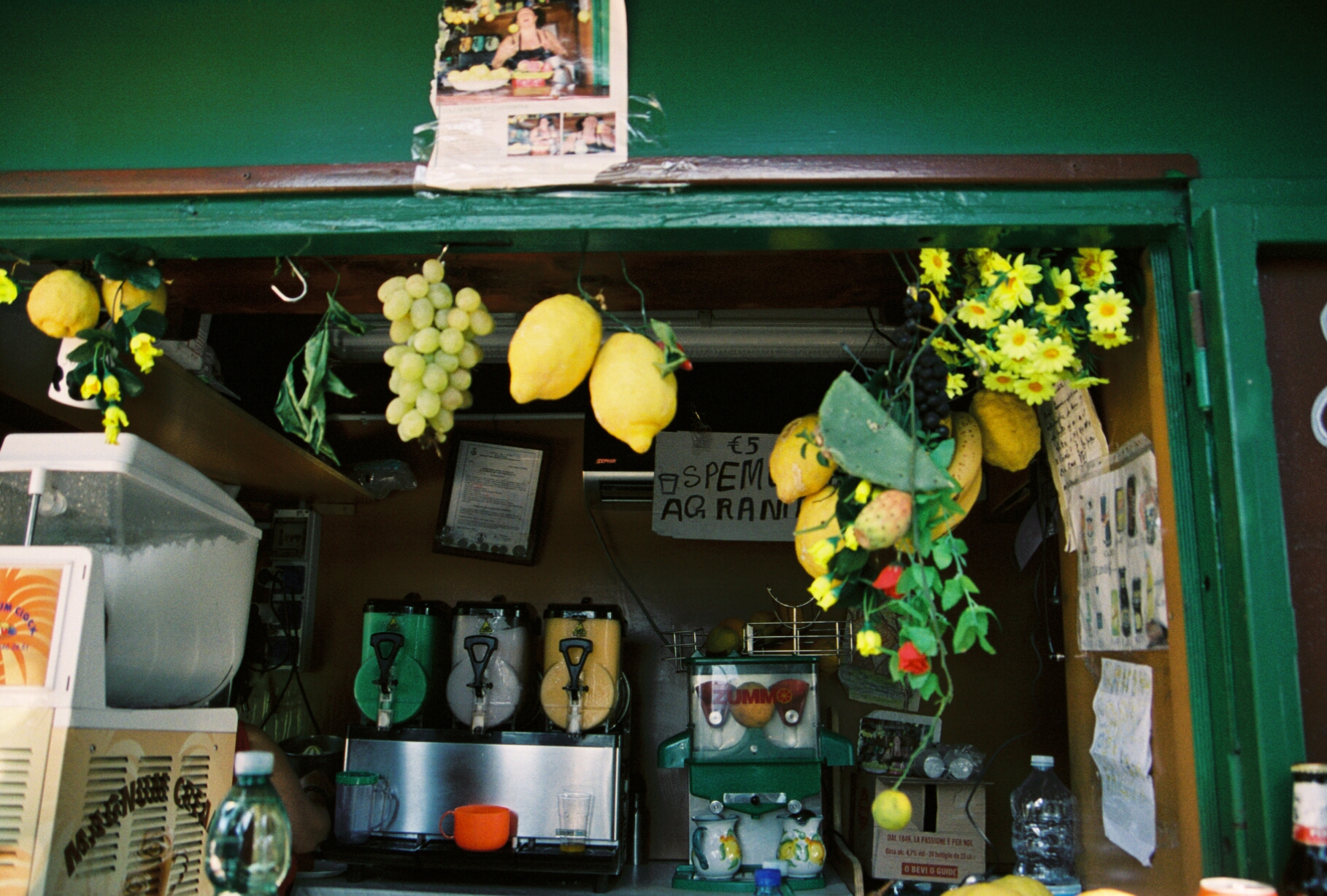
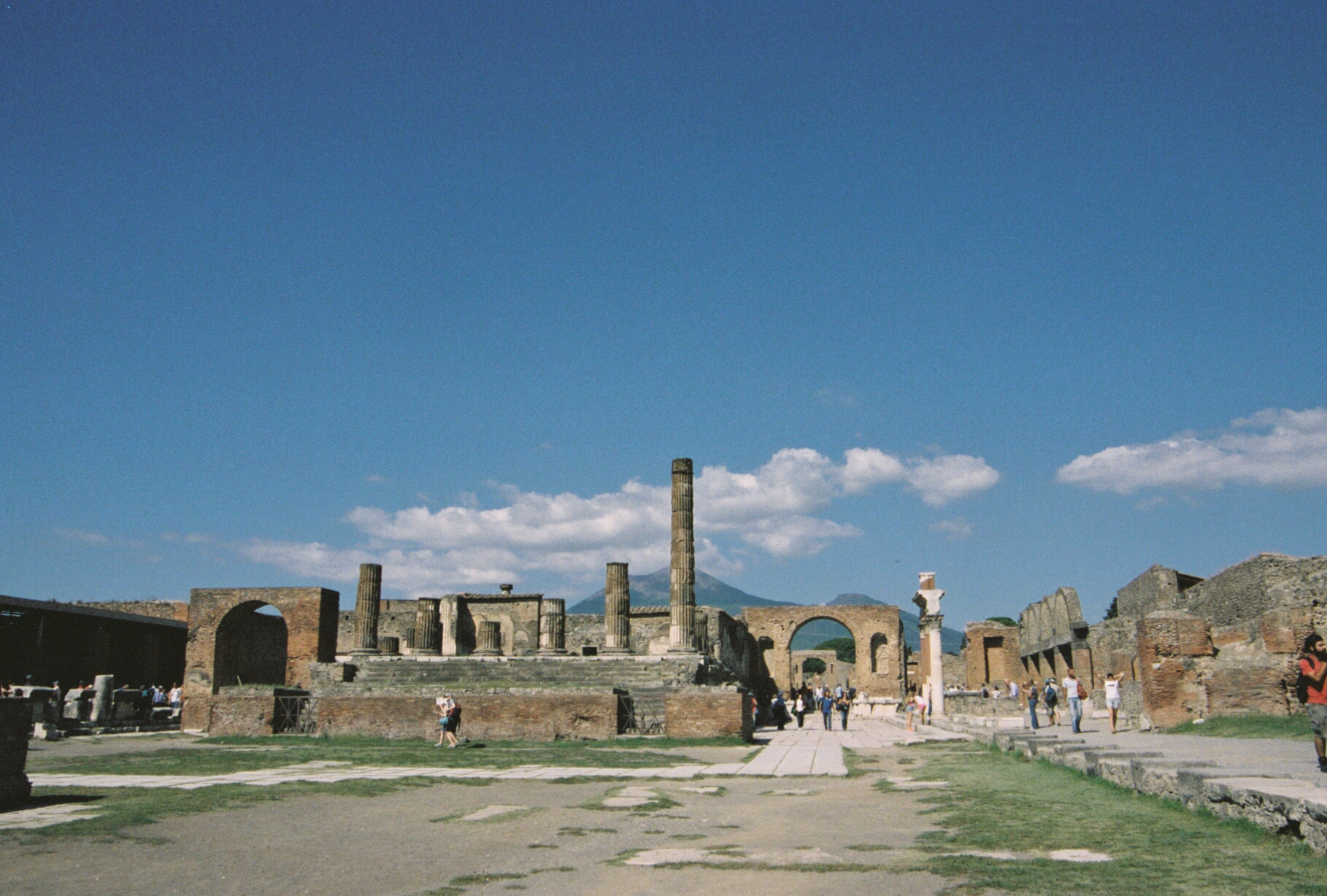
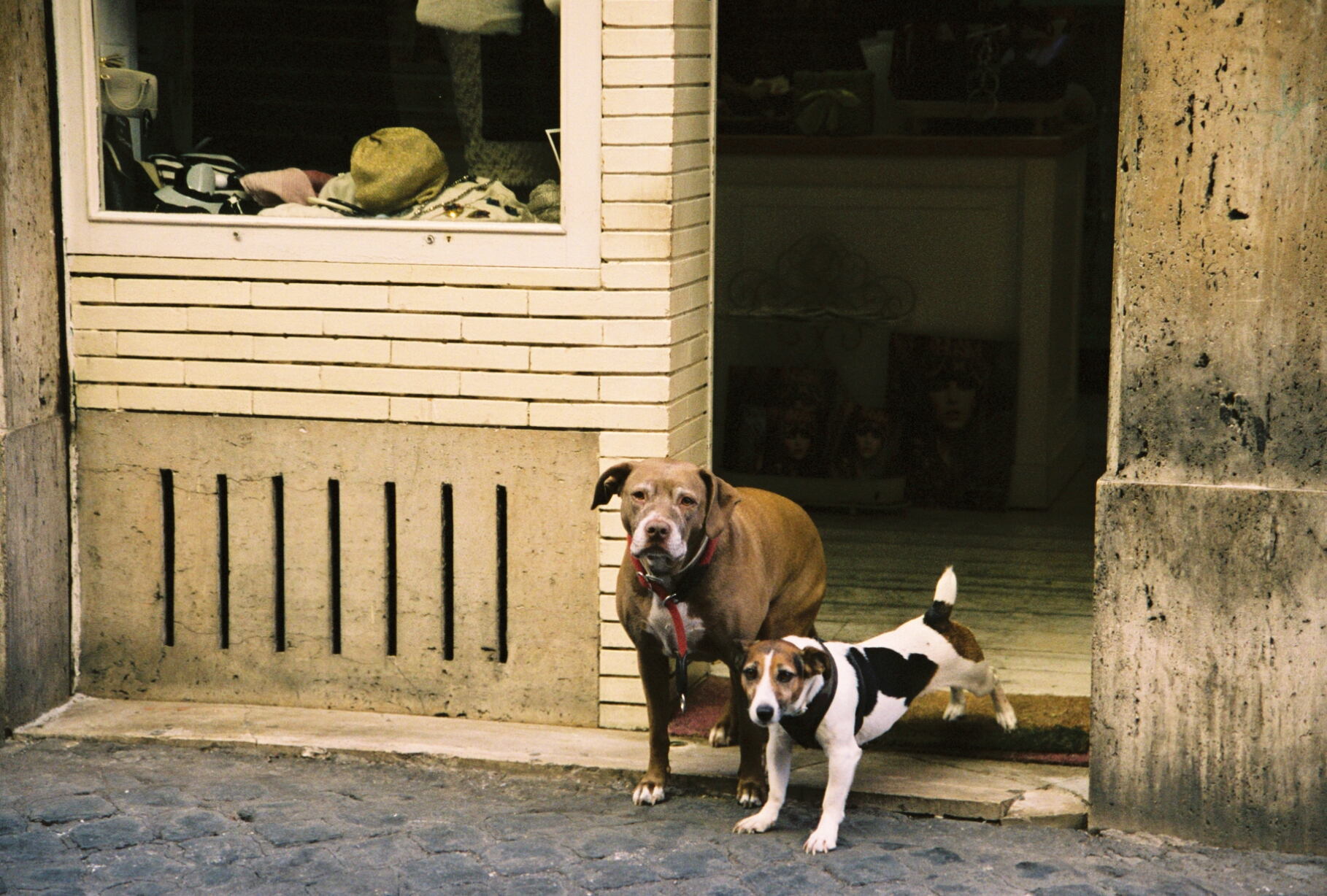
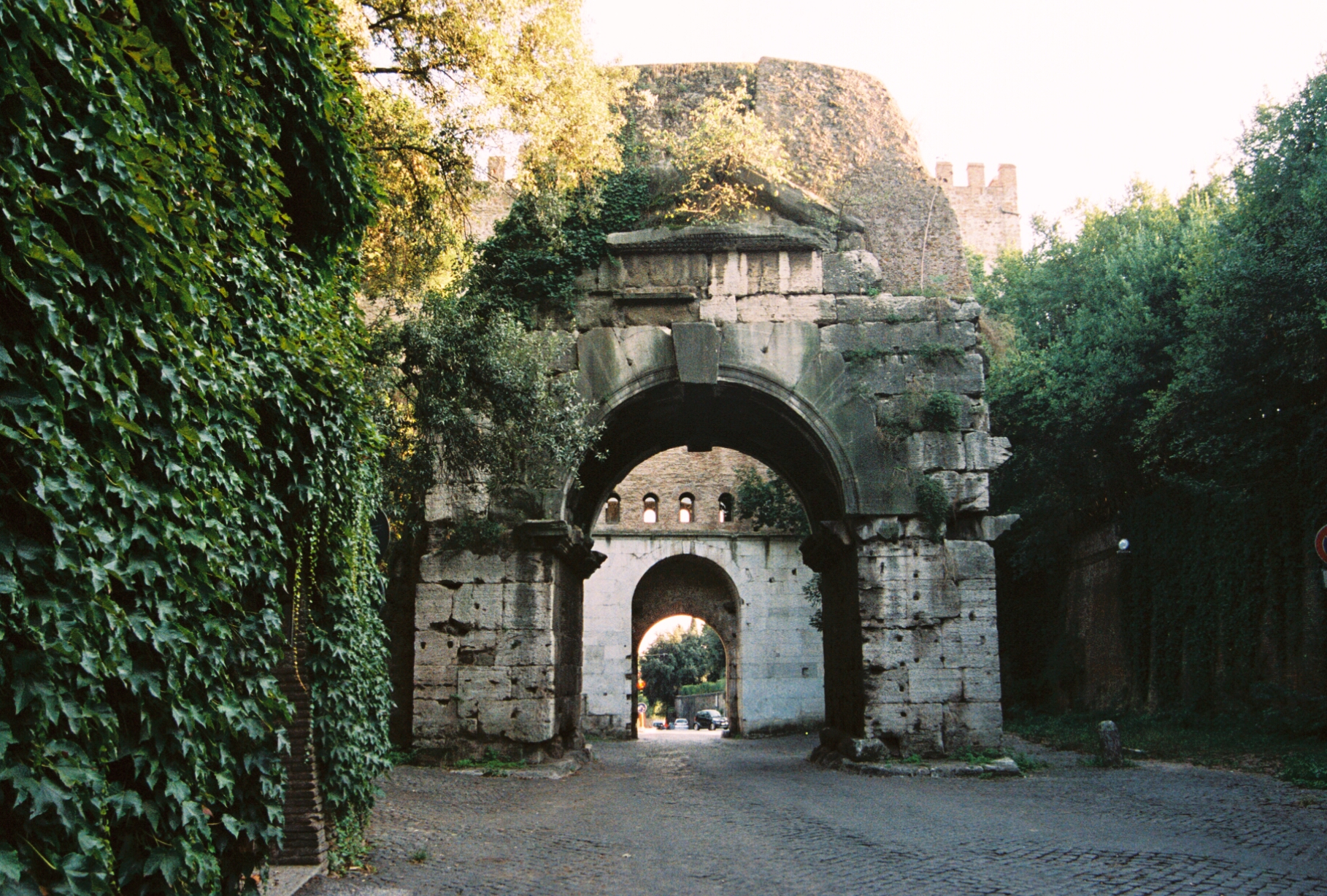
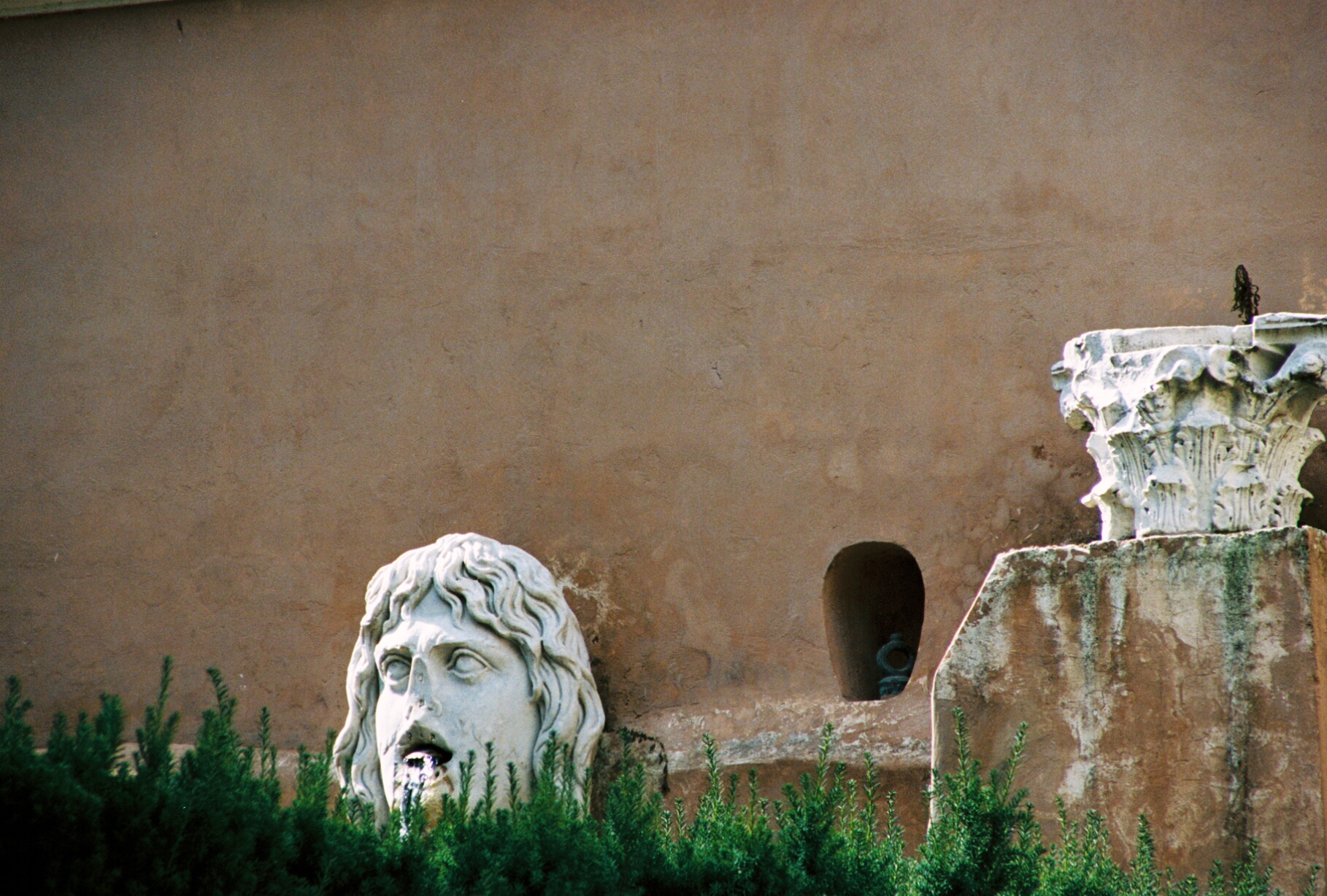
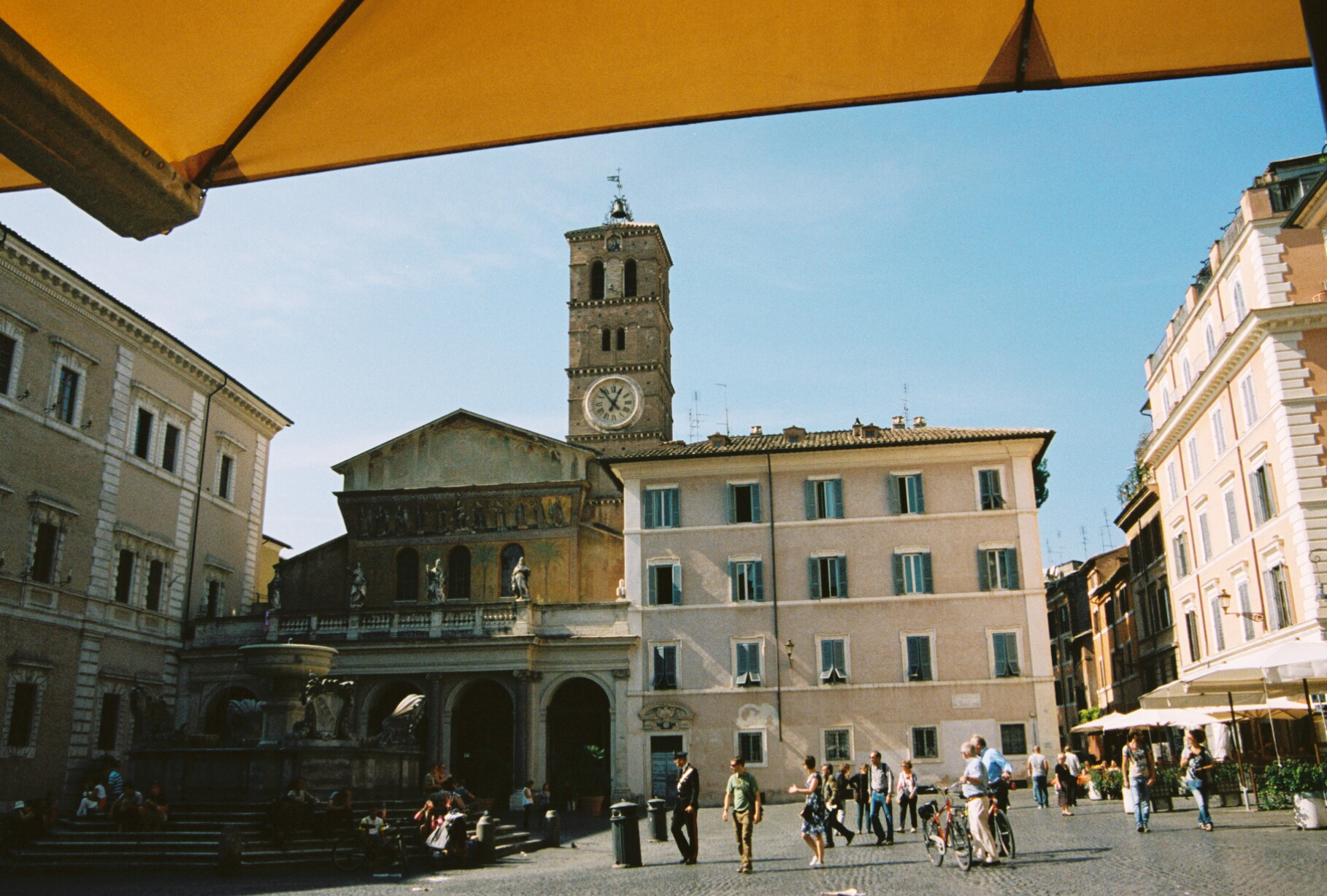
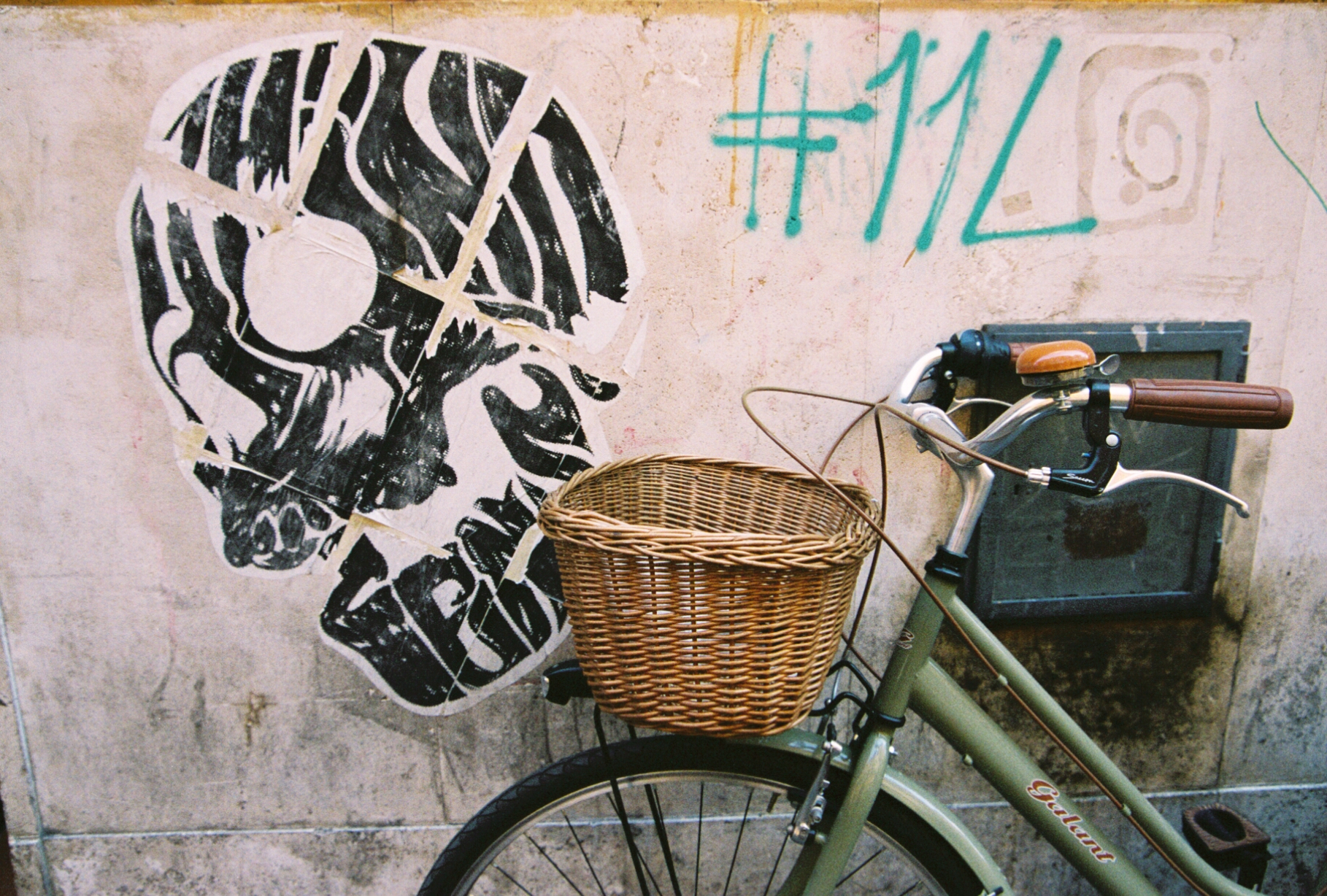
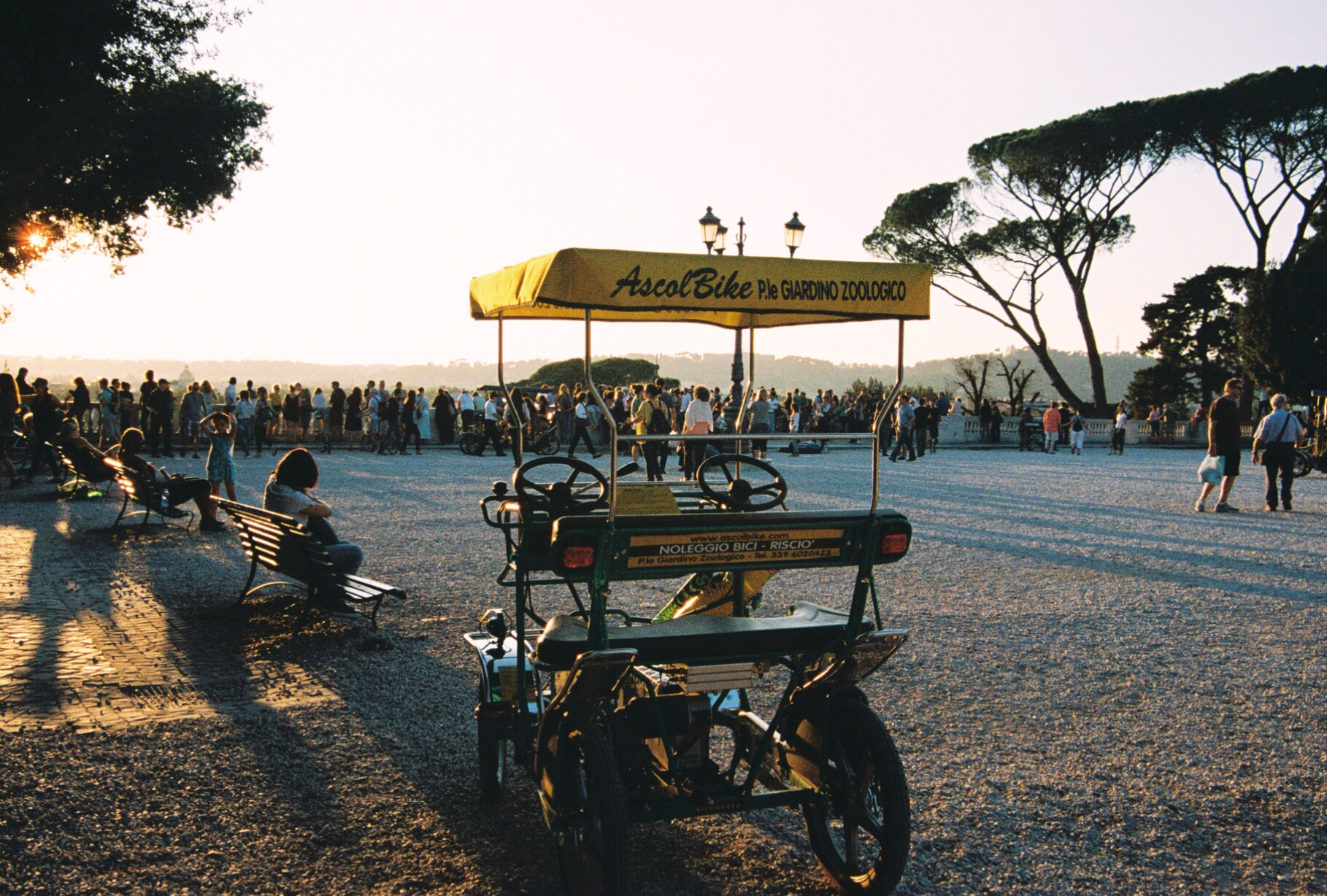
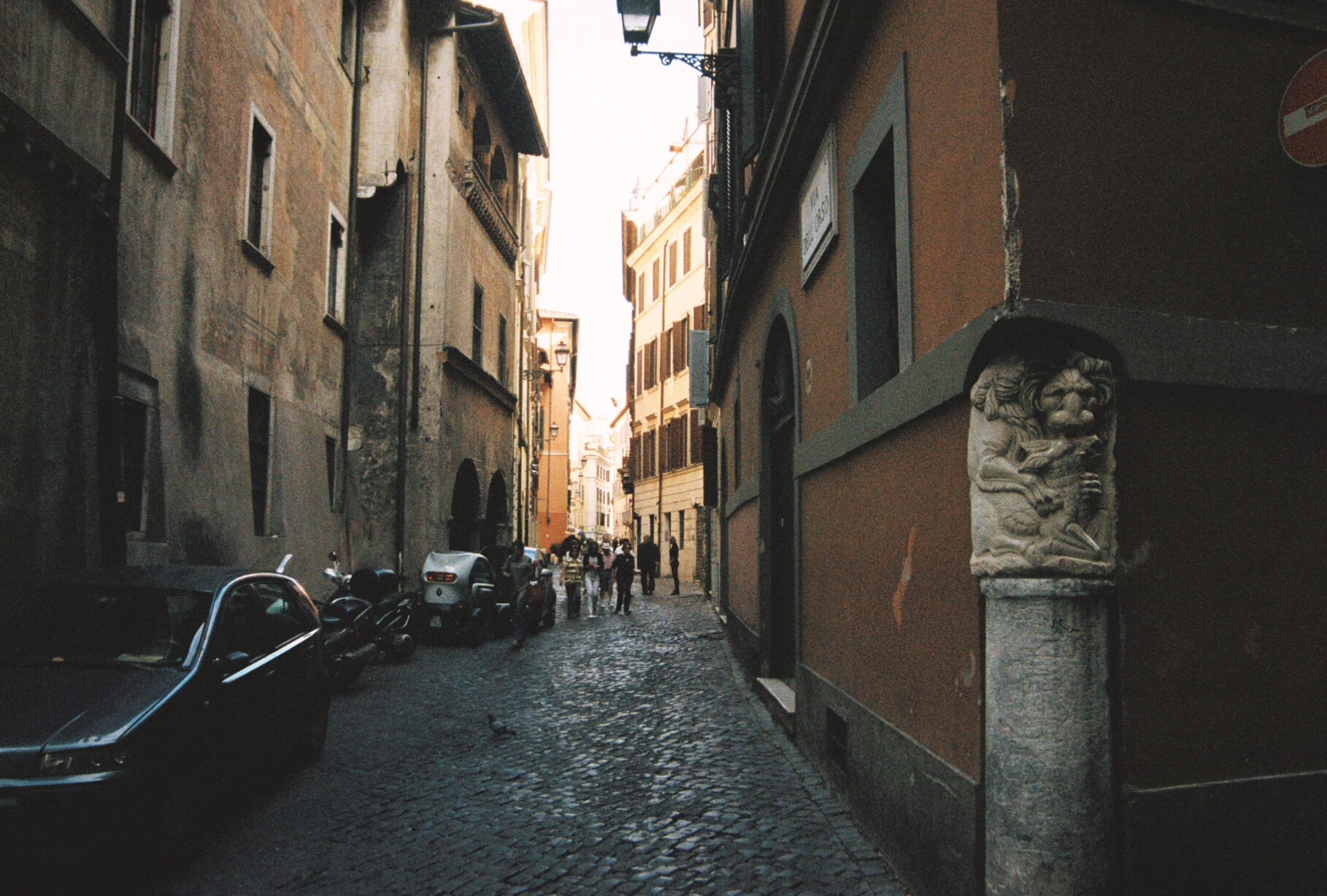
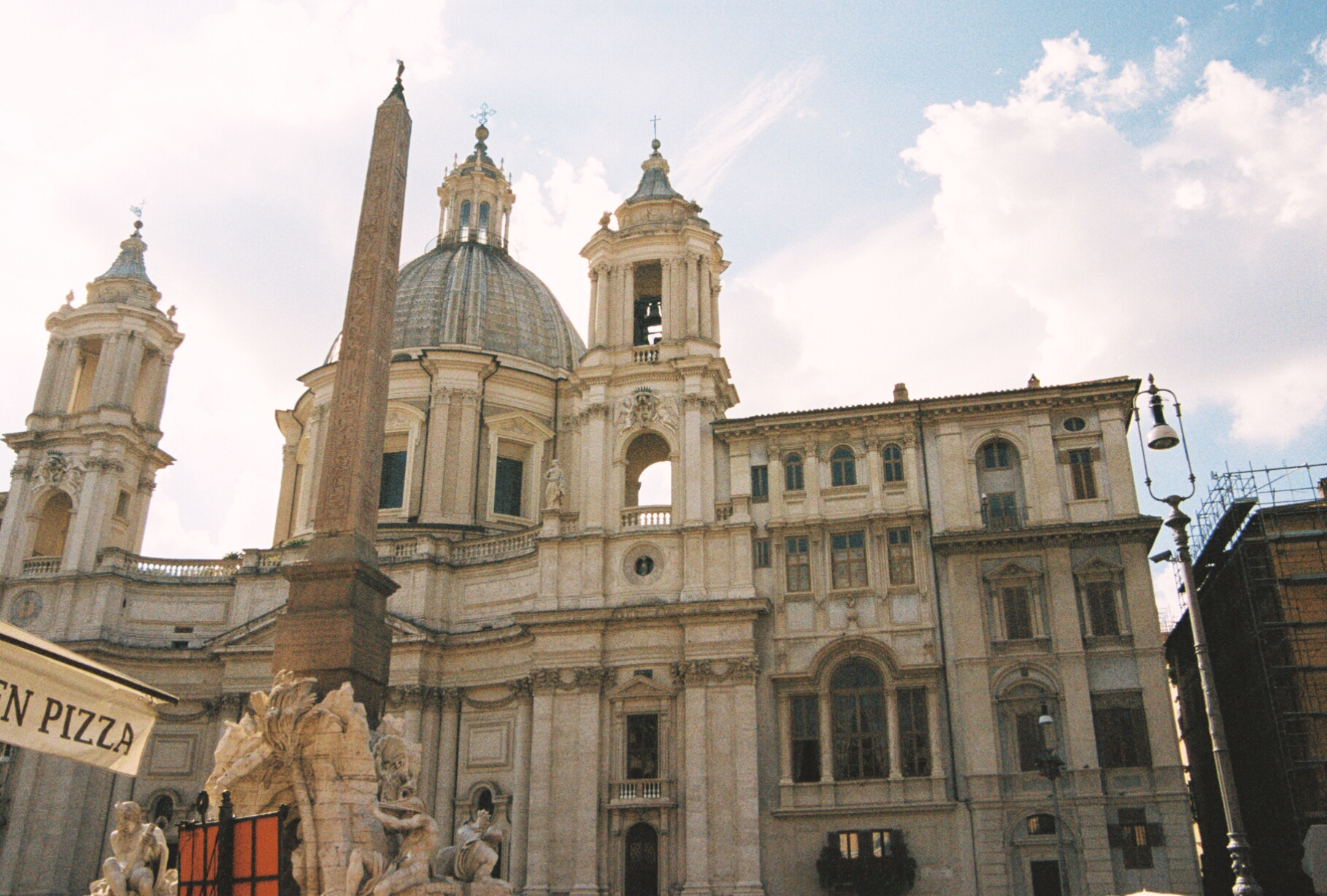
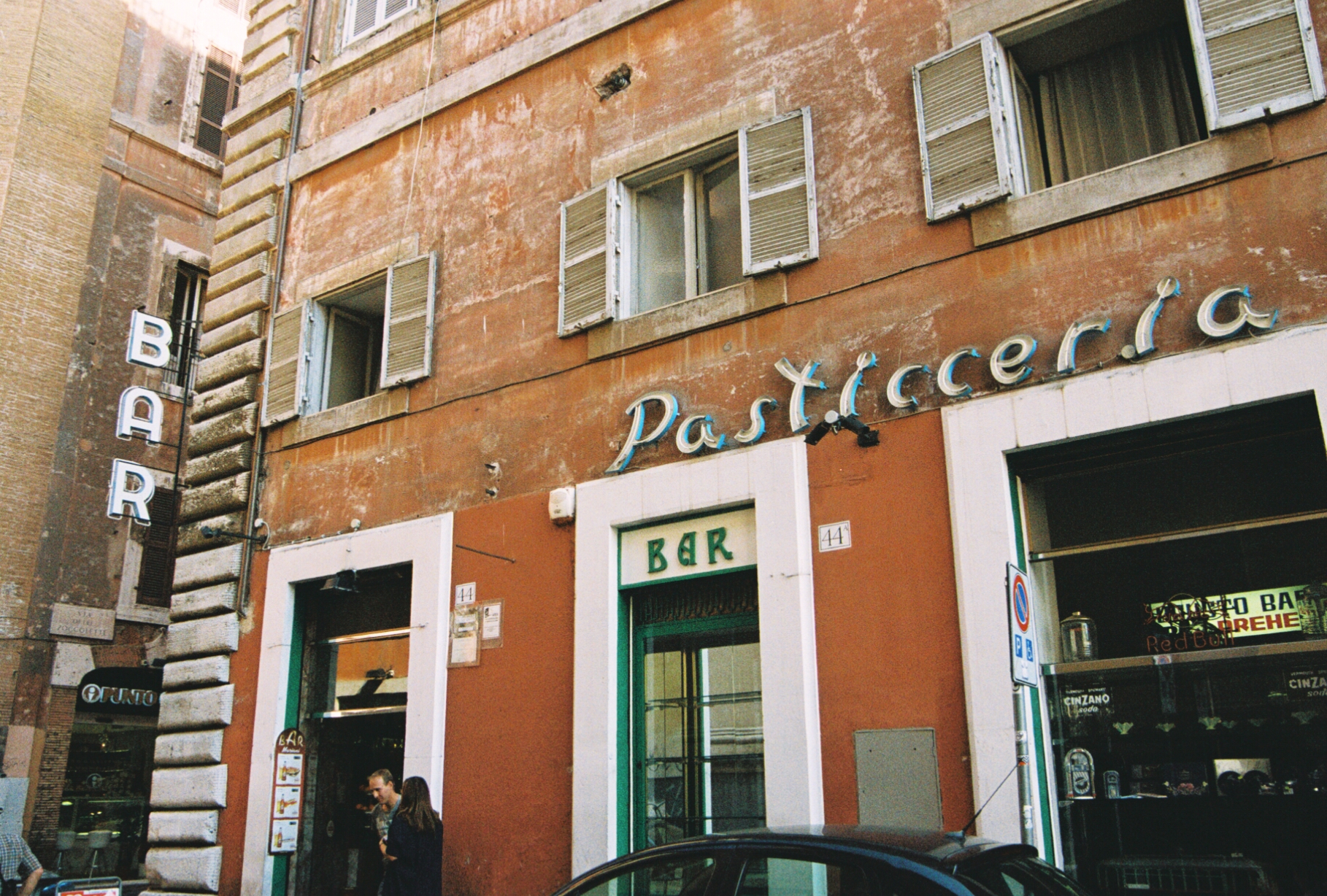
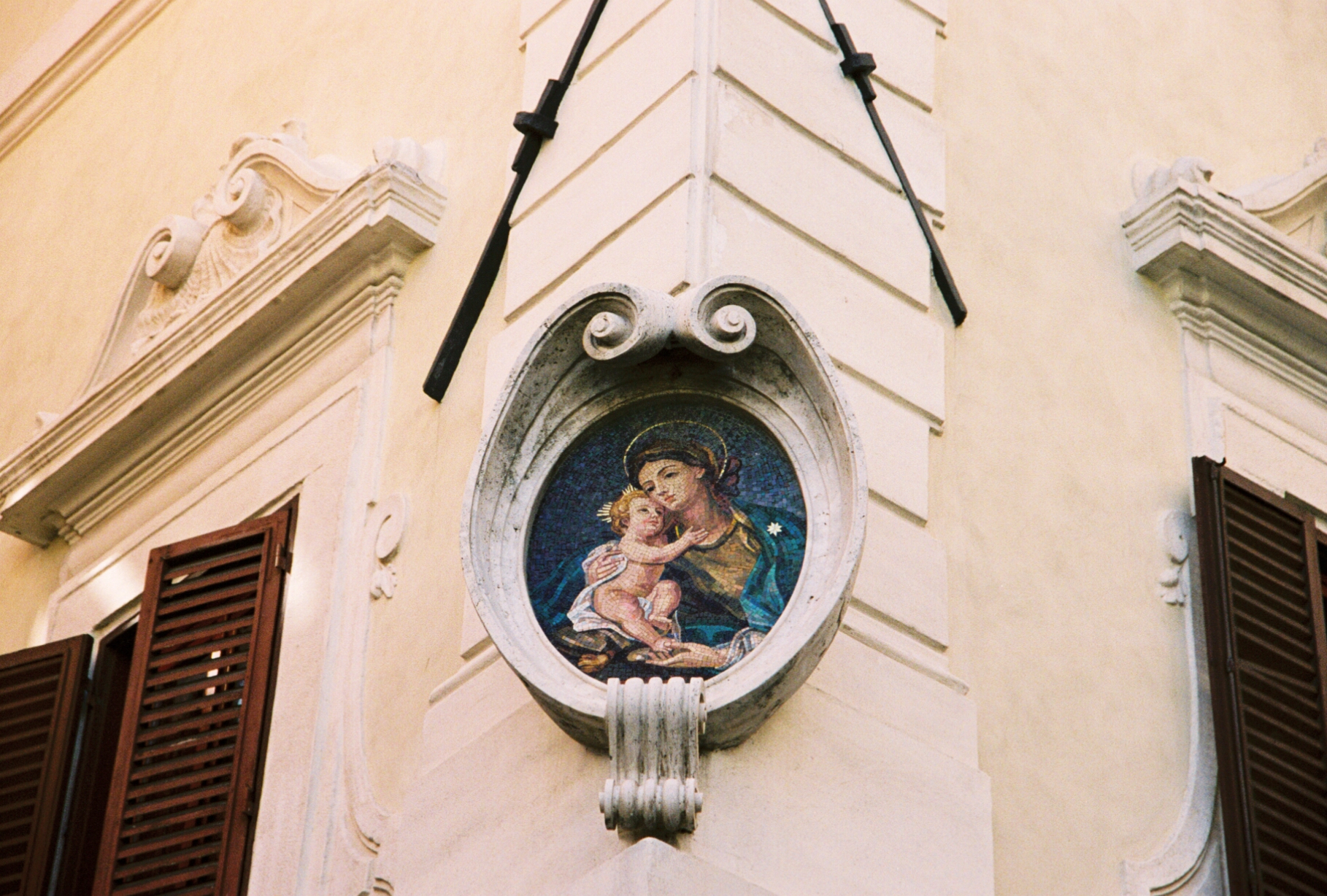
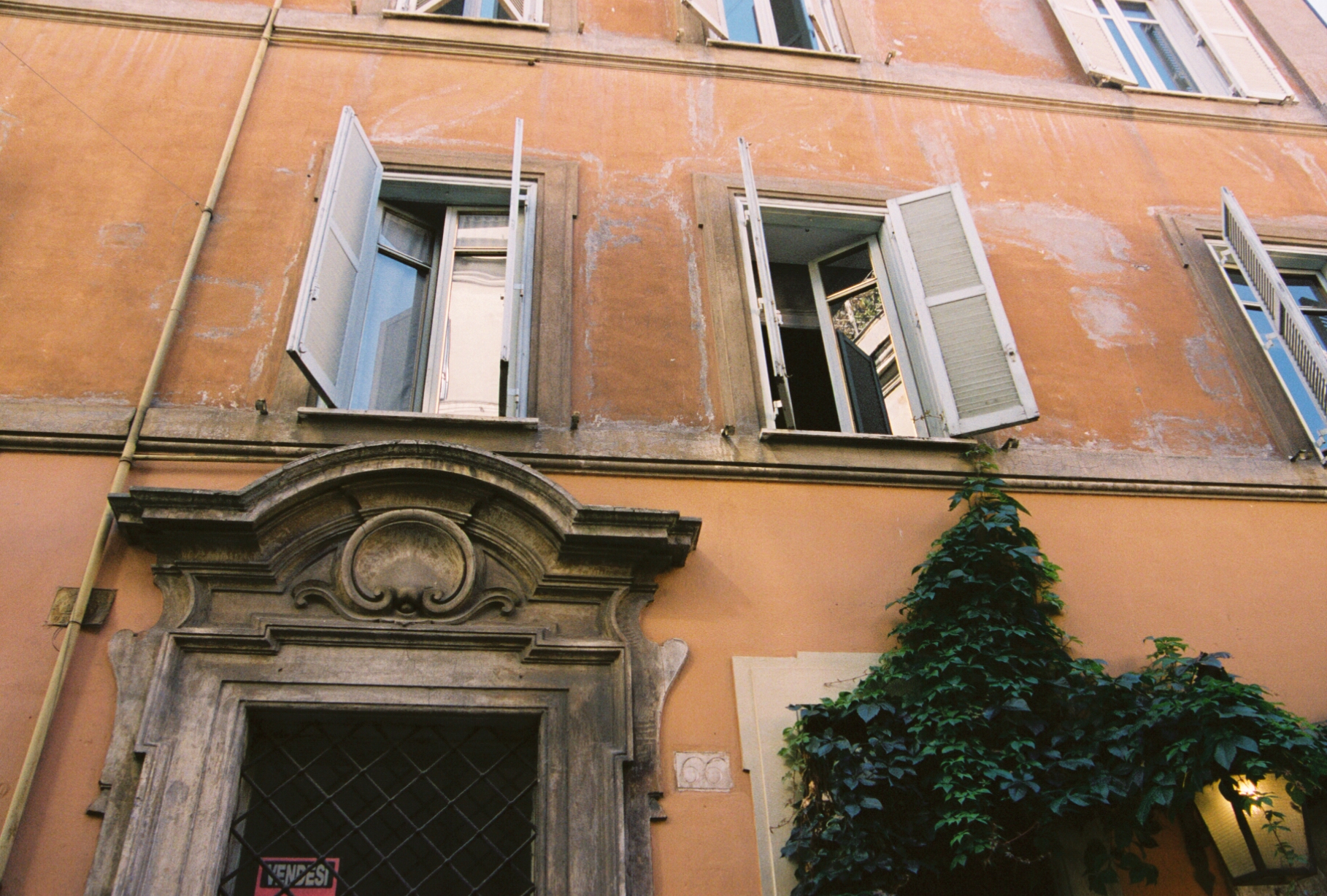
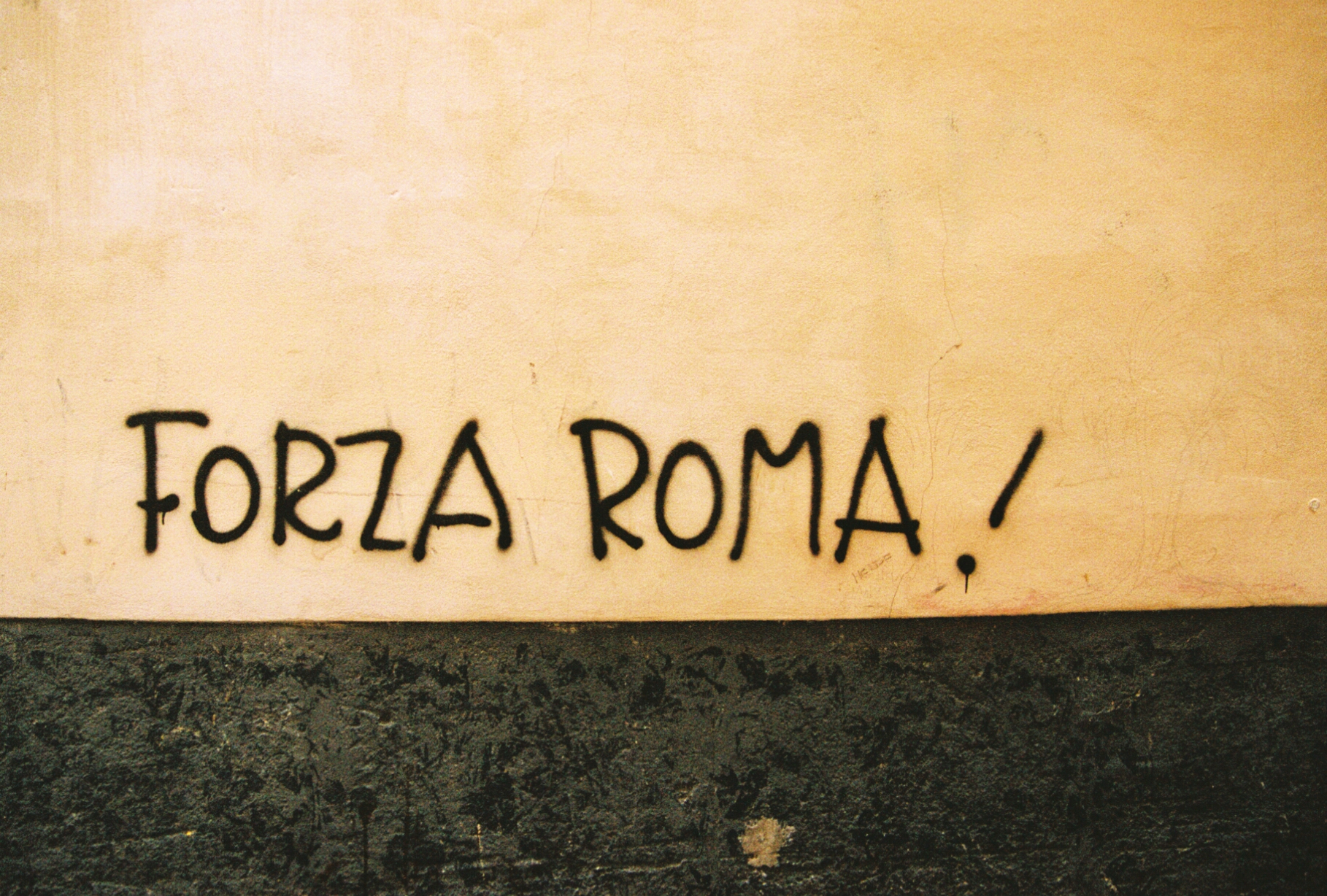
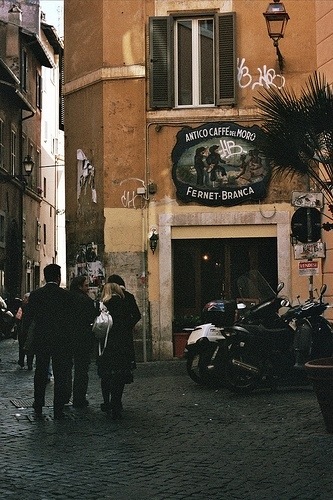
I feel, in Rome, as if I am fully entered into the ancient-ness of the place.
I feel the history in my blood.
I feel almost Italian (with a mix of invading barbarian).
But I tread lightly in Italy.
I try to penetrate the history, the stories, but I tread lightly.
I don’t leave any trace.
I only steal moments.
I steal away people’s feelings in a one second snapshot.
I take more lingering pictures with my eyes.
I really don’t want to be the center of attention, I would rather fade into the background, and let people live around me.
I am greedy for their life spilling out.
Still as much a thief as I was as a child, after all.
This is why I love Naples.
I dread it a little, too.
I want to slap it around occasionally.
I want to remind it of its grit (as if it needs my reminder).
I want to shake it awake to its beauty and history and art.
I want it to not lose its charm, ever.
I don’t even care about the trash that much.
I love the darkest alleys.
I love that life is lived on the streets.
I love that the windows are always open.
I love listening to the strains of a language I cannot decipher because it always sounds like music to me that way.
That’s how I linger in churches so long…
I can’t understand the sermons so I can spend time looking at the art and thinking about pagans all day as if in a dream.
In Italy I am living in the dream and I don’t wake up again until I’m back home in the cold north.
I return to Italy like a lover who cannot stand the separation a moment longer. I want to feel the curves of familiar streets. I want to taste the crushed fruit of summer wine and feel that sun so different from mine. I want to see the stars again against the faint glow of the ruins.
I’ve been away in Italy taking lots of lovelyish pictures and collecting interestingish stories for the blog and some travel guides/magazines. Of course after a jet lagged flight from chaotic Napoli to Dublin and nearly missing the connecting flight to Boston I have managed to stumble into the bath, into bed, and into work since I landed on Eastern Standard Time. I dropped off 25 rolls of 35 mm film, mostly varying speeds of posh portra and some fuji and semi-vintage kodaks and the criminally expensive velvia. I have digital files to pour over and edit as per usual after a trip. It takes months, sometimes years to go over everything. The new URL for this blog is alovelettertorome.com)
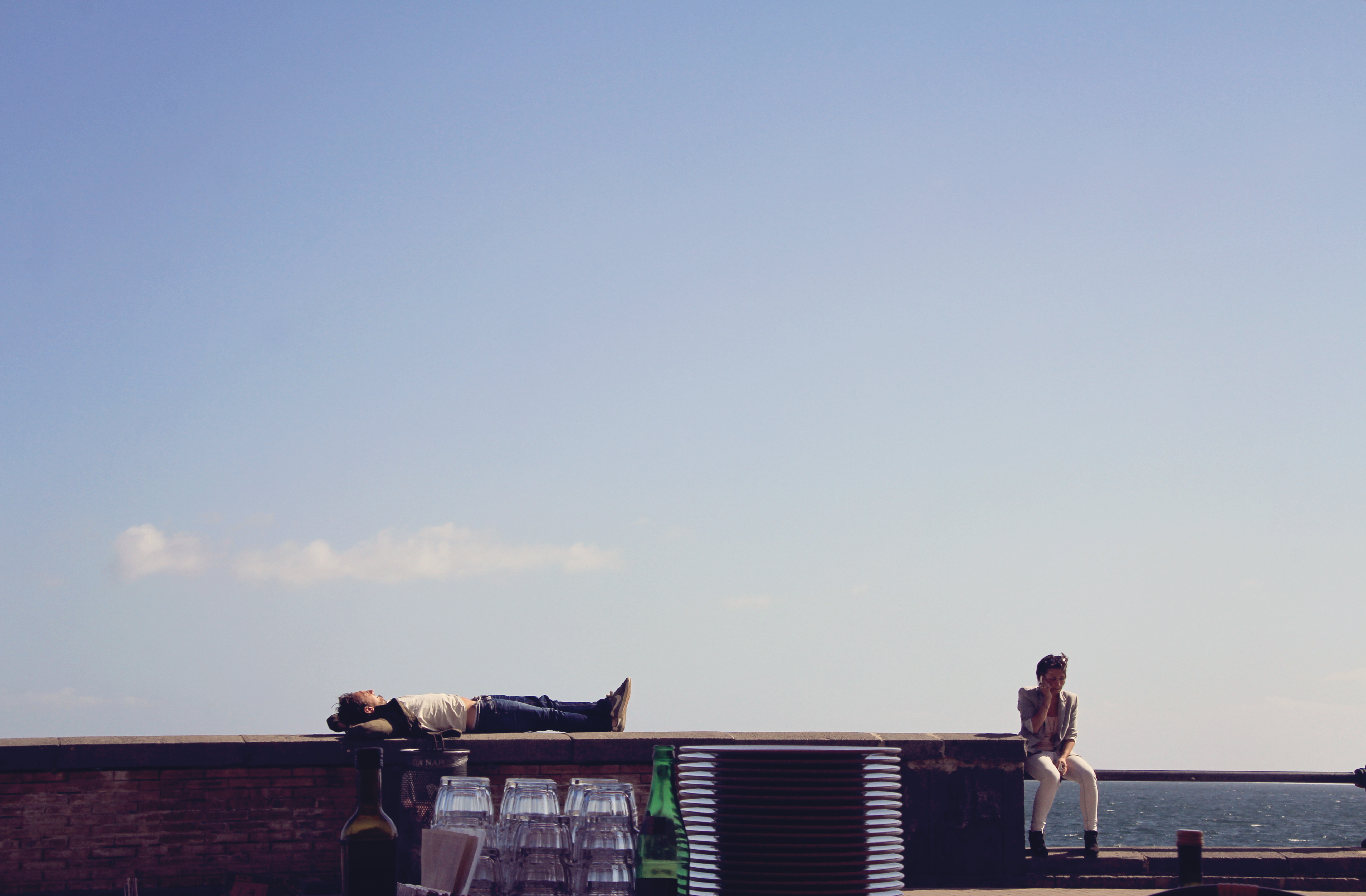 The 21st century couple. Napoli, May 2013, while I was devouring something at a cafe. Digital eavesdropping. The Santa Lucia district. An Italian spring afternoon (always superior to a drafty New England one).
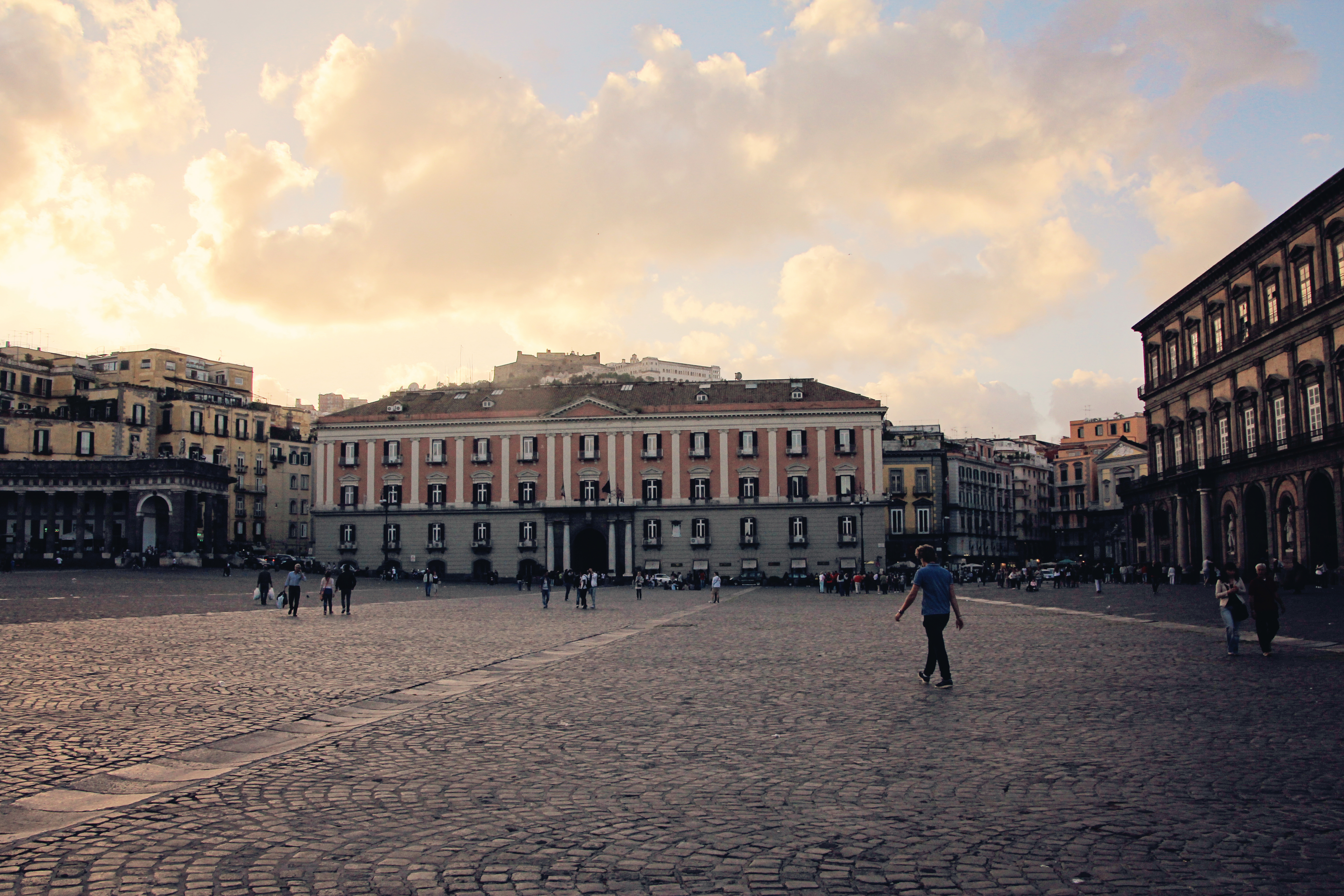
The Piazza Plebiscito. Mostly designed by the French it is quite breathtaking when approaching it from the Santa Lucia district when the sun is setting at the peak of the golden hour on the castle or monastery built on a hill overlooking the Bourban buildings and the city square. The clouds and the stone and the Neapolitans … and the coffee are a marvelous combination. I feel excited when I’m standing there watching and listening. There are always children playing football on the cobblestones and lovers kissing against a light post. Oscar Wilde’s haunt, the art nouveau camp paradise Caffe Gambrinus makes a great sweetened nutty coffee drink – the Nocciola. If you haven’t had a nocciola it’s exceedingly hot espresso with roasted hazelnuts crushed into a “cream” and a hint of sugar. Served in a girl’s glass and they are absolute heaven. Don’t ever expect to drink them outside of Naples. I’ve had arguments with Romans and Florentines and Milanese and you name it on the veracity of this beverage and on the elusive espresso con panna (espresso with whipped cream). These delicacies do exist and they are unique to decadent Napoli.
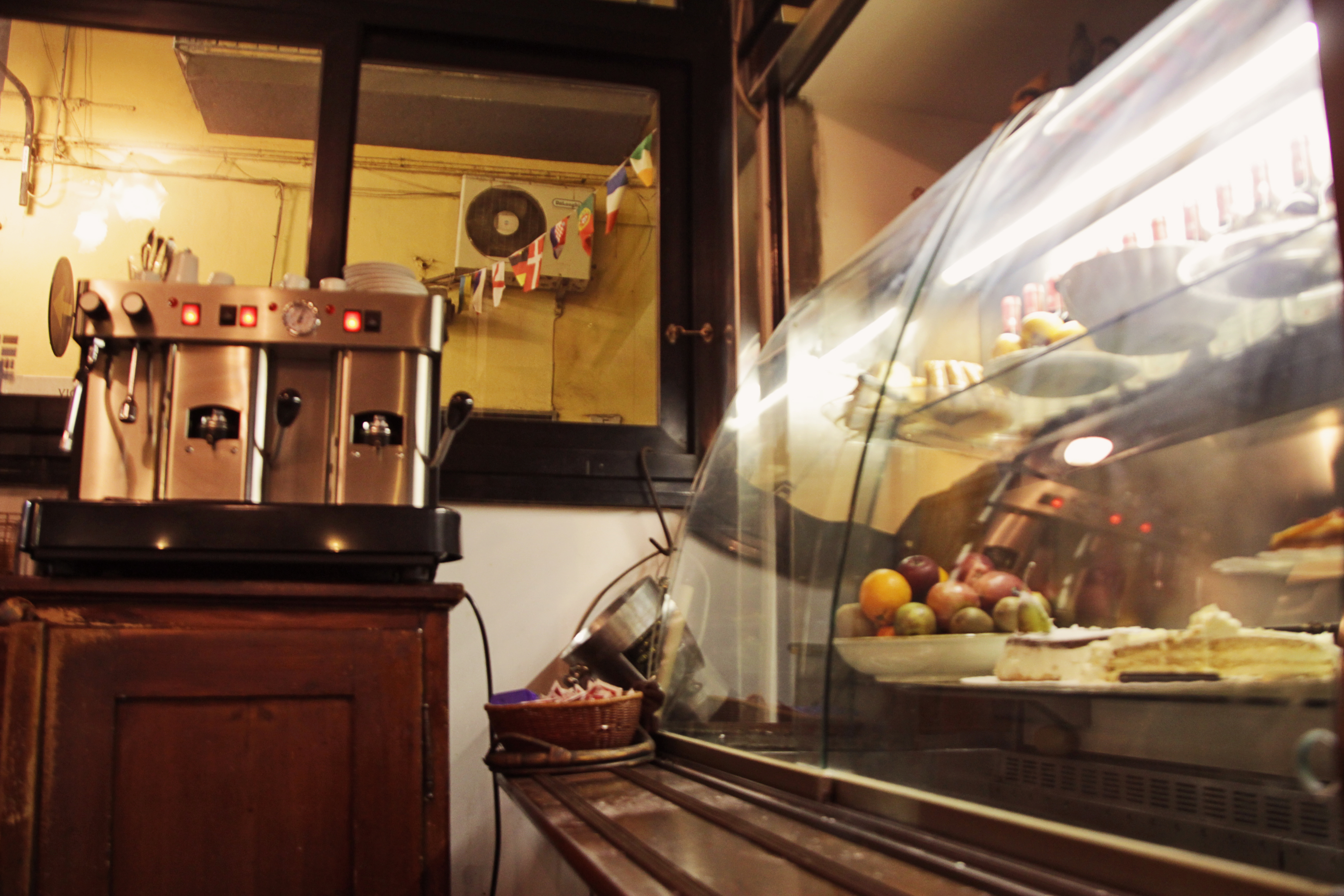 You’d think someone who has been drinking coffee since they were six years old (and I’m a youngish 37) would not be excited about good espresso and proper cappuccinos after all this time but when I’m in Naples I am, I am, oh boy, I am.
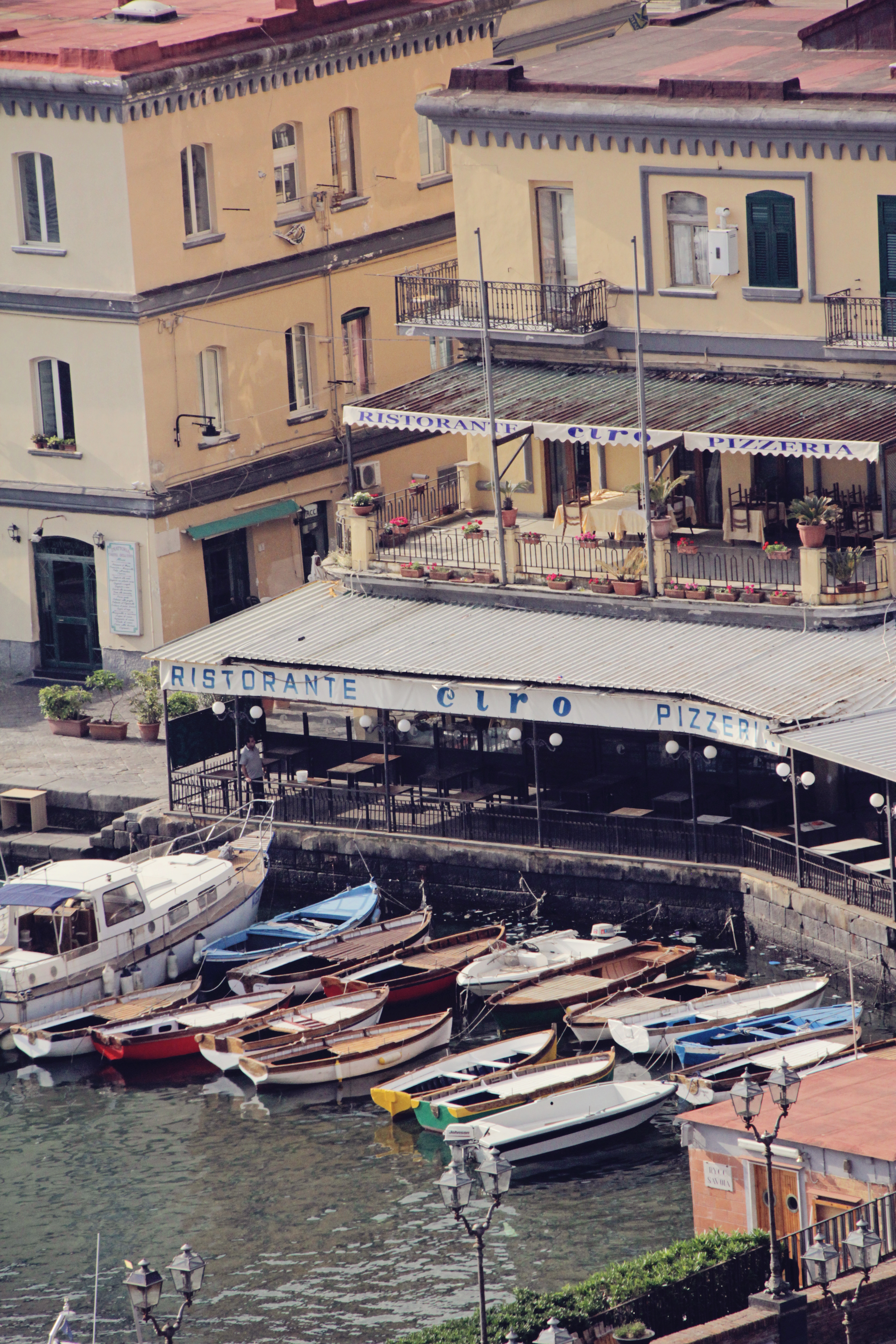
I’m warning you ahead of time, I took an obsessive amount of photographs of fisherman’s boats. And fishermen.
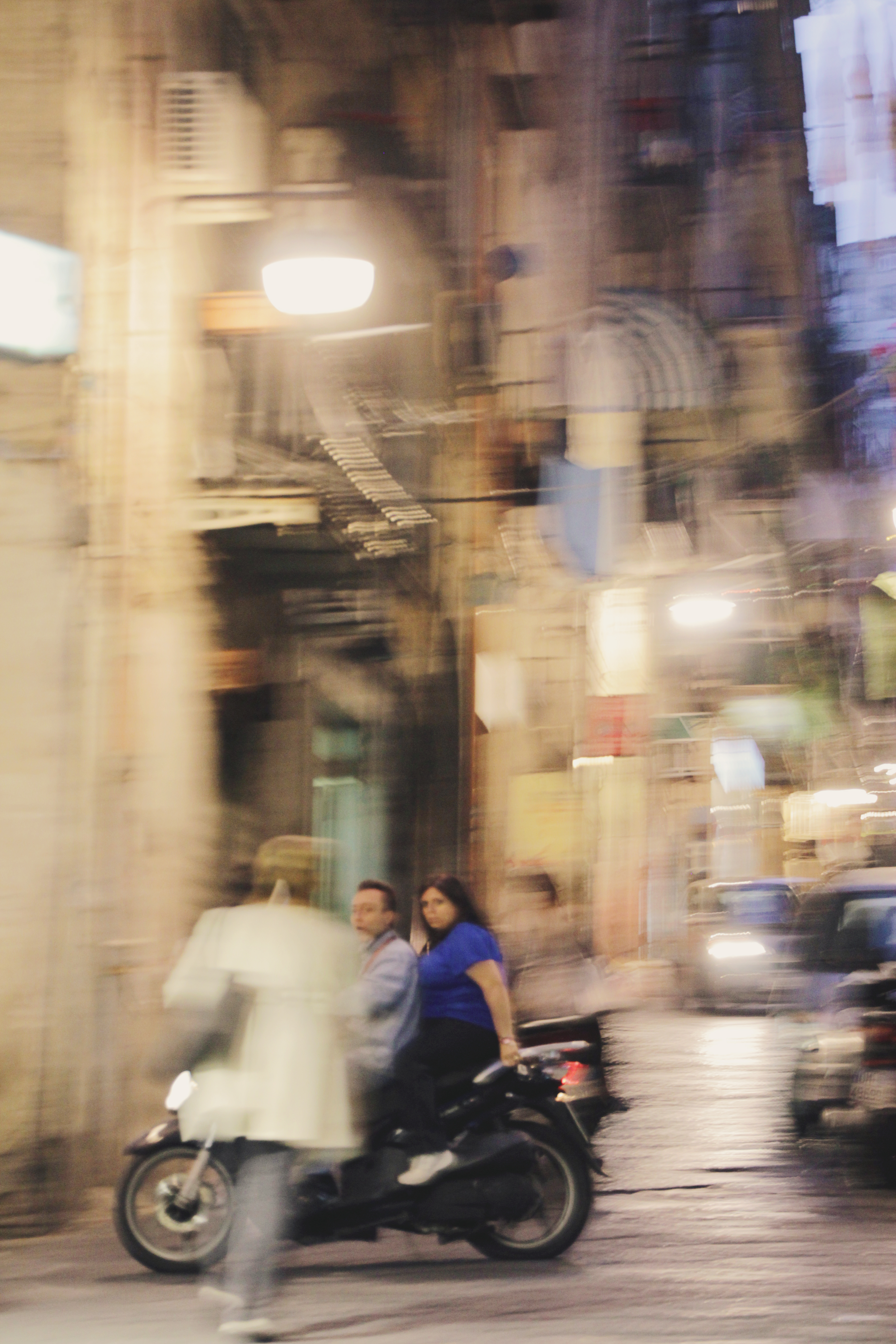
There really is nowhere like Naples.

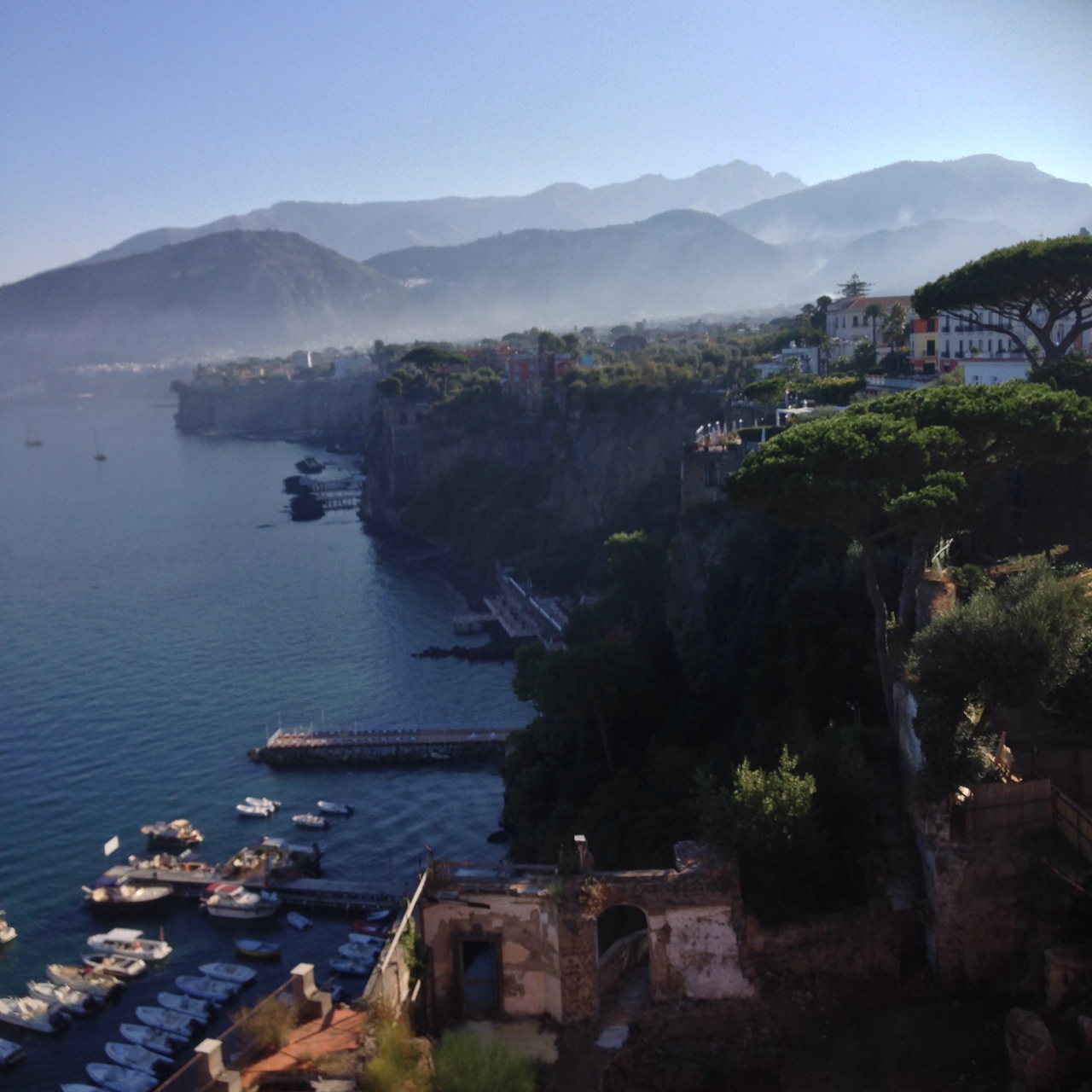
I’m sort of in love with the world today and it’s stormy for the second day on my third and a half day on Capri. It’s raining buckets with a shocking blue sky far off in the distance over Ischia or is it Sorrento? Half of the soaring limestone cliffs are hidden in a thick dark mist, half reflect the sharp light of a distant sun, outlining every crevice and the soft wine and green colored trees and shrubs. Waiting for a dry spell to venture out.
I let myself wander and ramble yesterday all day, down residential and abandoned paths, treacherous back roads, scenic tumbles, until I was as lost as possible and magically found my way back again in a series of small adventures. Meeting wonderful people from all over the world with fascinating thoughts and good conversation. Followed by hours of silence and reflection, just walking and absorbing.
Exotic, lovely birds singing and whirring by from morning till night, the eternal scent of newly blossoming white lilacs perfuming the sea air, a sudden intake of breath mixed with the thrill of fear as a black snake slithers near underfoot to lie in the sun and I retreat my sandaled foot, not daring to cross over it like a sign of foreboding.
Finally reading Fitzgerald’s The Great Gatsby – it’s beautiful prose making me a little drunk and dreamy, better than any champagne.

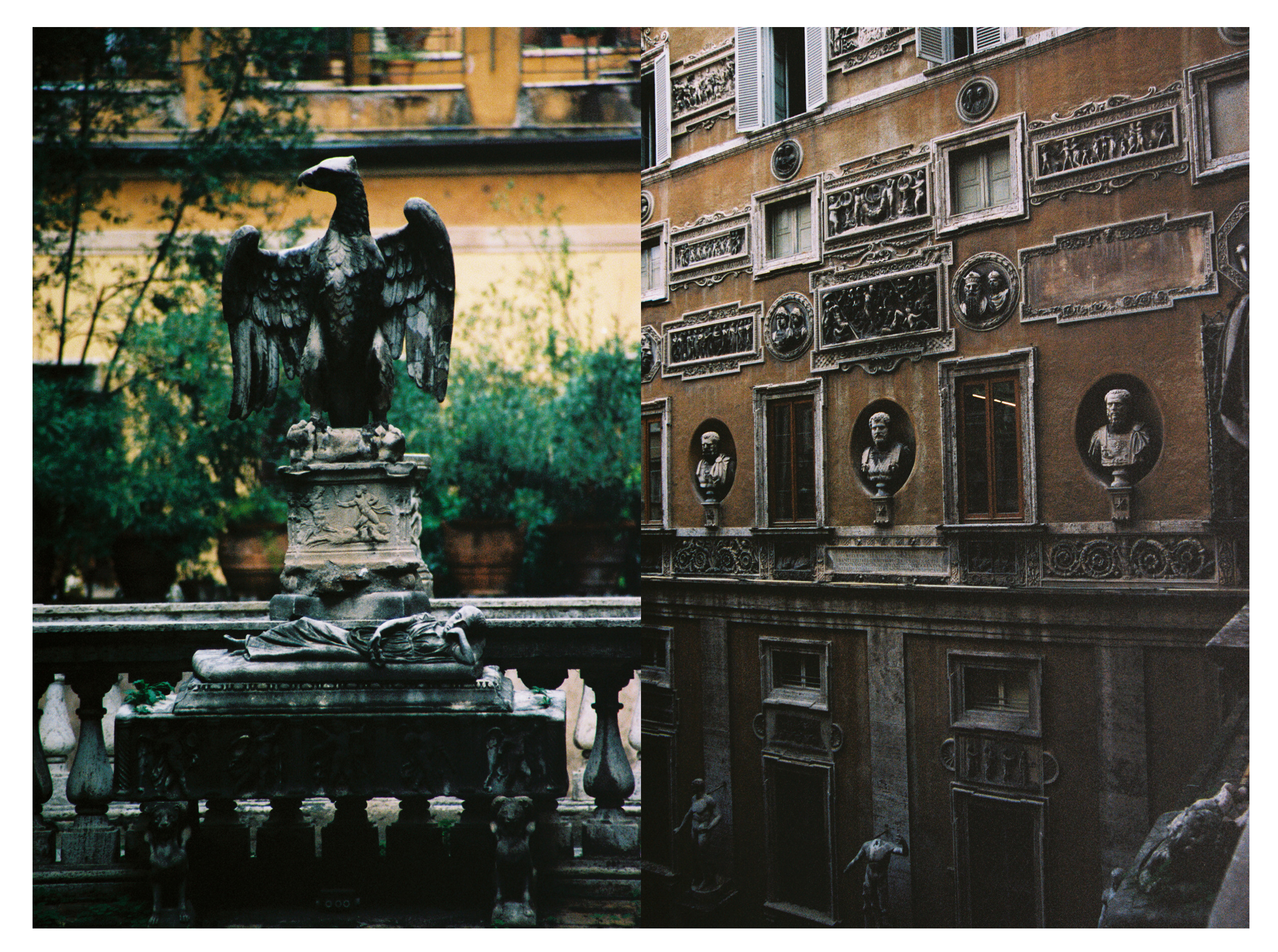
The Palazzo Mattei di Giove ,Via Michelangelo Caetani 32, other entrance in Via dei Funari, Ghetto, Rome, 00186
Last year I decided on our two visits to Rome I wanted my husband and I to spend some time hunting for off the beaten path spots we’ve not yet visited. I picked up some new books on the subject, City Secrets of Rome by Robert Kahn and Quiet Corners of Rome by David Downie. Upon seeing photographs of this amazing place I had to see it for myself. We started out having a splendid lunch at the Campo di Fiori after picking up gifts and alla’arrabbiata and carciofi alla romana spices at the charming outdoor market. We stopped, as is our custom, under the Bruno statue to pay respect and read the inscription,
A BRUNO – IL SECOLO DA LUI DIVINATO – QUI DOVE IL ROGO ARSE
(English: To Bruno – the century predicted by him – here where the fire burned).
We walked to the Jewish Ghetto section of Rome (an ancient and fascinating section of the city with a complicated history). We had to ask directions several times and still walked by the spot a few times. But, we found the Palazzo Mattei di Giove and it was worth the effort.
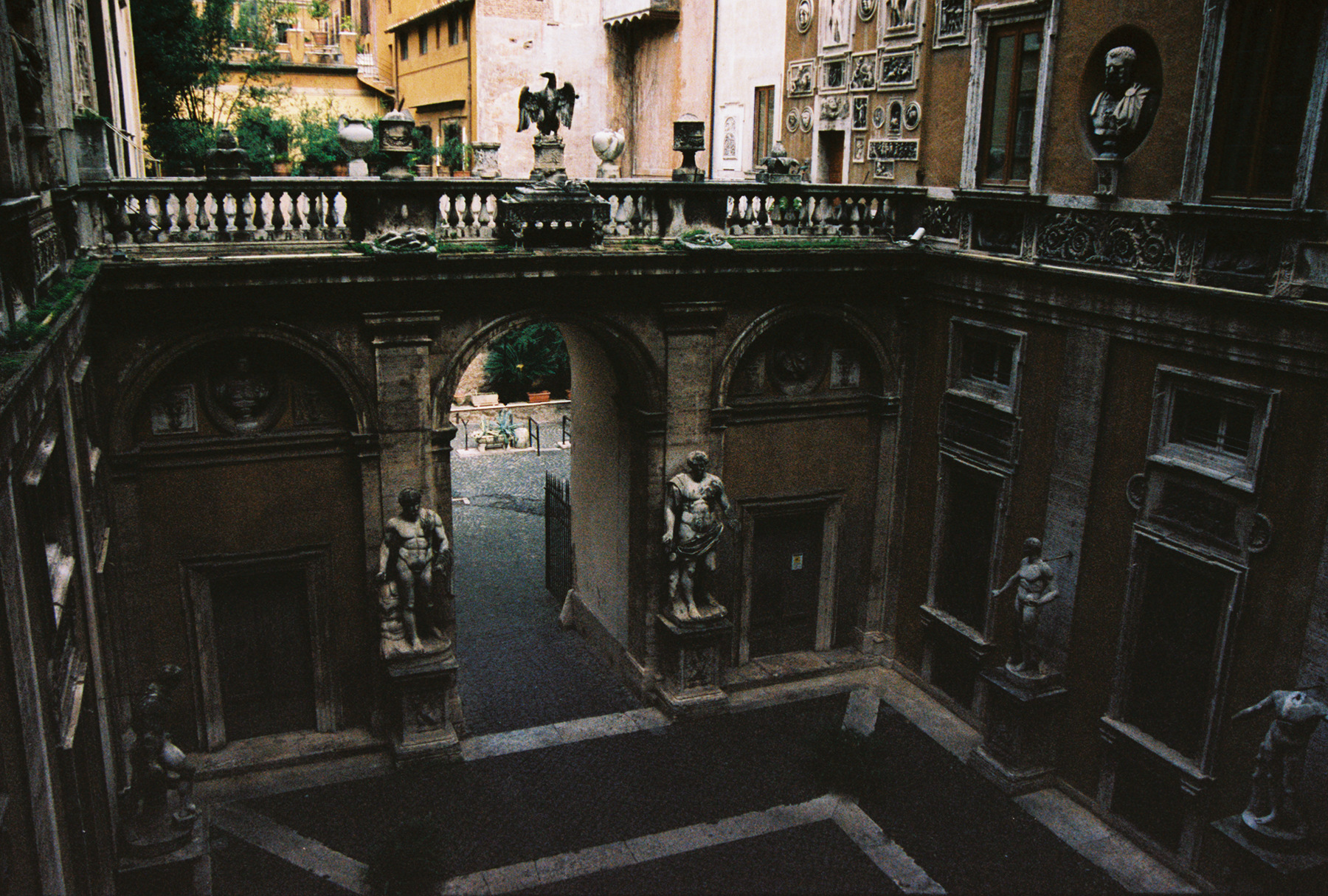
Mattei di Giove, designed by noted baroque architect Carlo Maderno—who also designed the facade of St. Peter’s Basilica—teems with busts, bas-reliefs, and sarcophagi collected by the palazzo’s namesake owner, Marchese Asdrubale Mattei. (Info source: National Geographic Traveler)
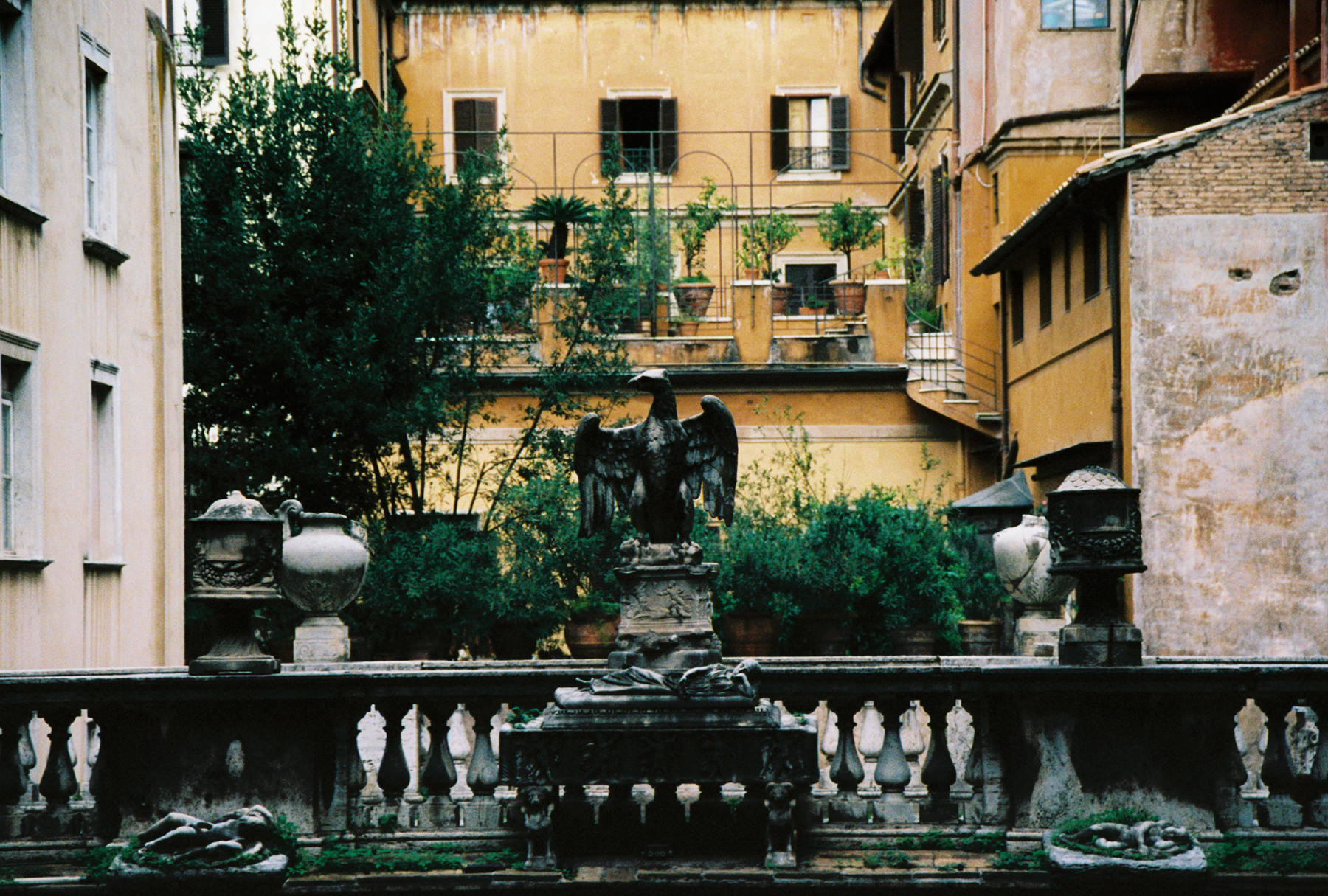
The House of Mattei was one of the most powerful noble families of Rome during the Middle Ages and early modern era, holding high positions in the papal curia and government office.
The Palazzo Mattei di Giove is the most prominent among a group of Mattei houses that forms the insula Mattei in Rome, Italy, a block of buildings of many epochs.
To distinguish this section from the others it carries the name of a Mattei fief, Giove. The Mattei owned a number of other palazzi that carried the family name including Palazzo Mattei di Trastevere across the Tiber as well as properties in Umbria, the Palazzo Mattei Paganica.
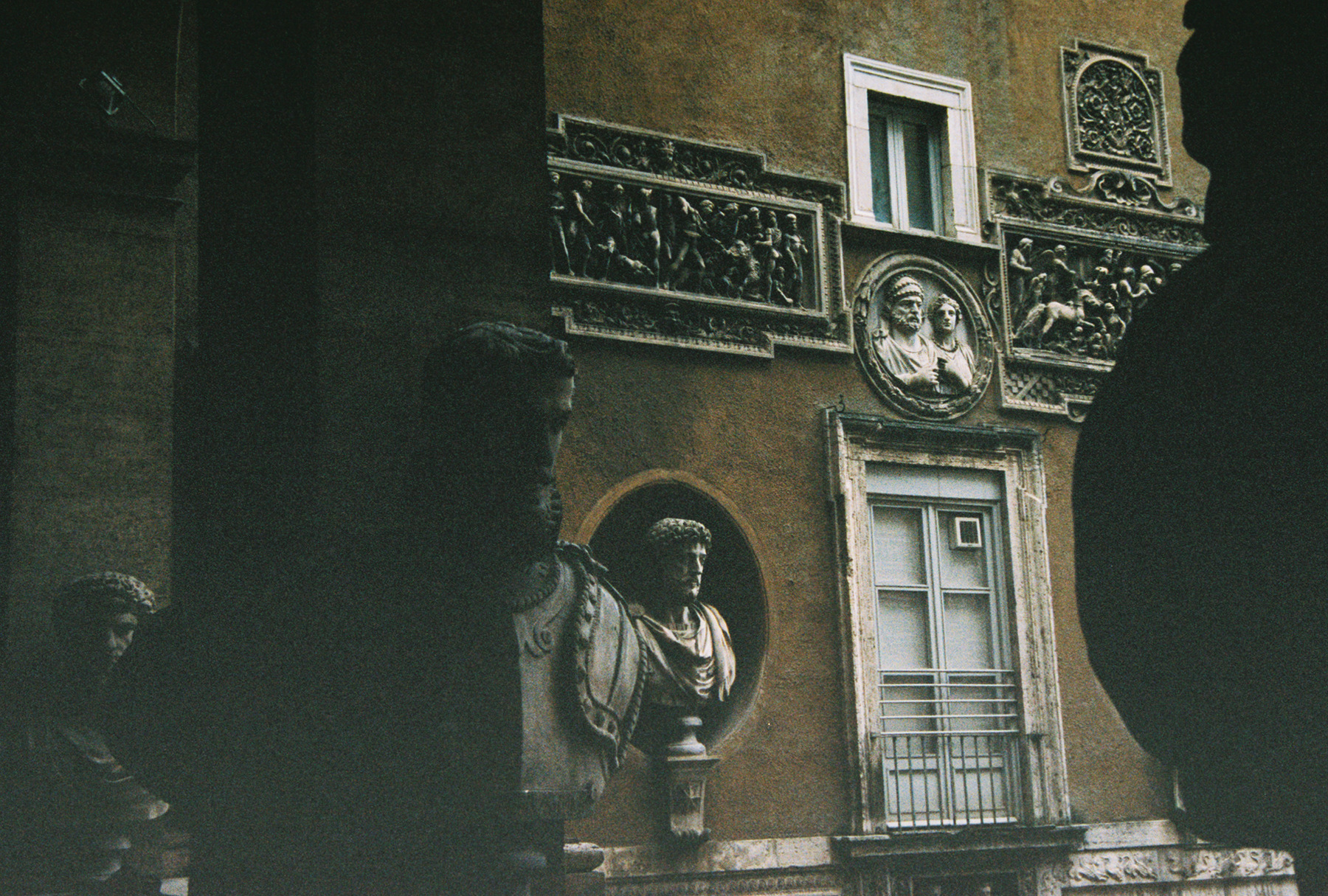
Carlo Maderno designed the palace at the beginning of the 17th century for Asdrubale Mattei, Marquis di Giove and father of Girolamo Mattei and Luigi Mattei. He was also the brother of Ciriaco Mattei and Cardinal Girolamo Mattei. It was Maderno who was responsible for the extravagantly enriched cornice on the otherwise rather plain stuccoed public façade, the piano nobile loggia in the courtyard and the rooftop loggia or altana.
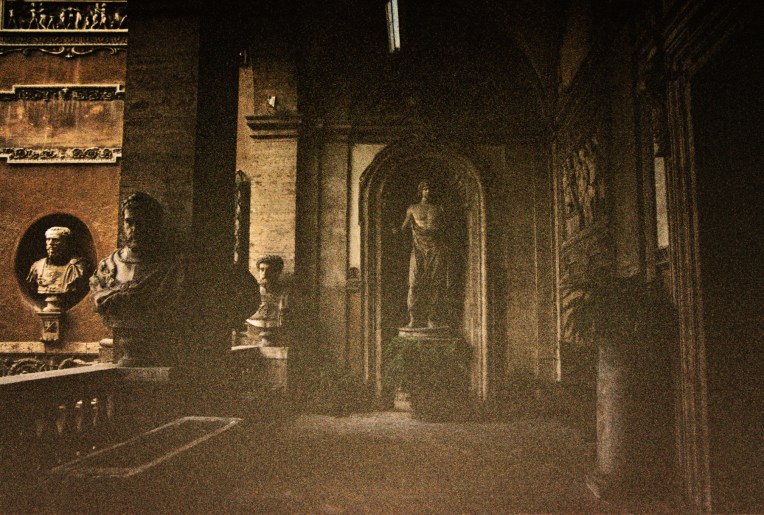 For the interior of the palazzo, Pietro da Cortona was commissioned to execute the pair of compositions on the ceiling of the gallery, dating before 1626. In the early 19th century, a group of paintings from the collection at the palazzo was purchased by William Hamilton Nisbet and removed to Scotland.
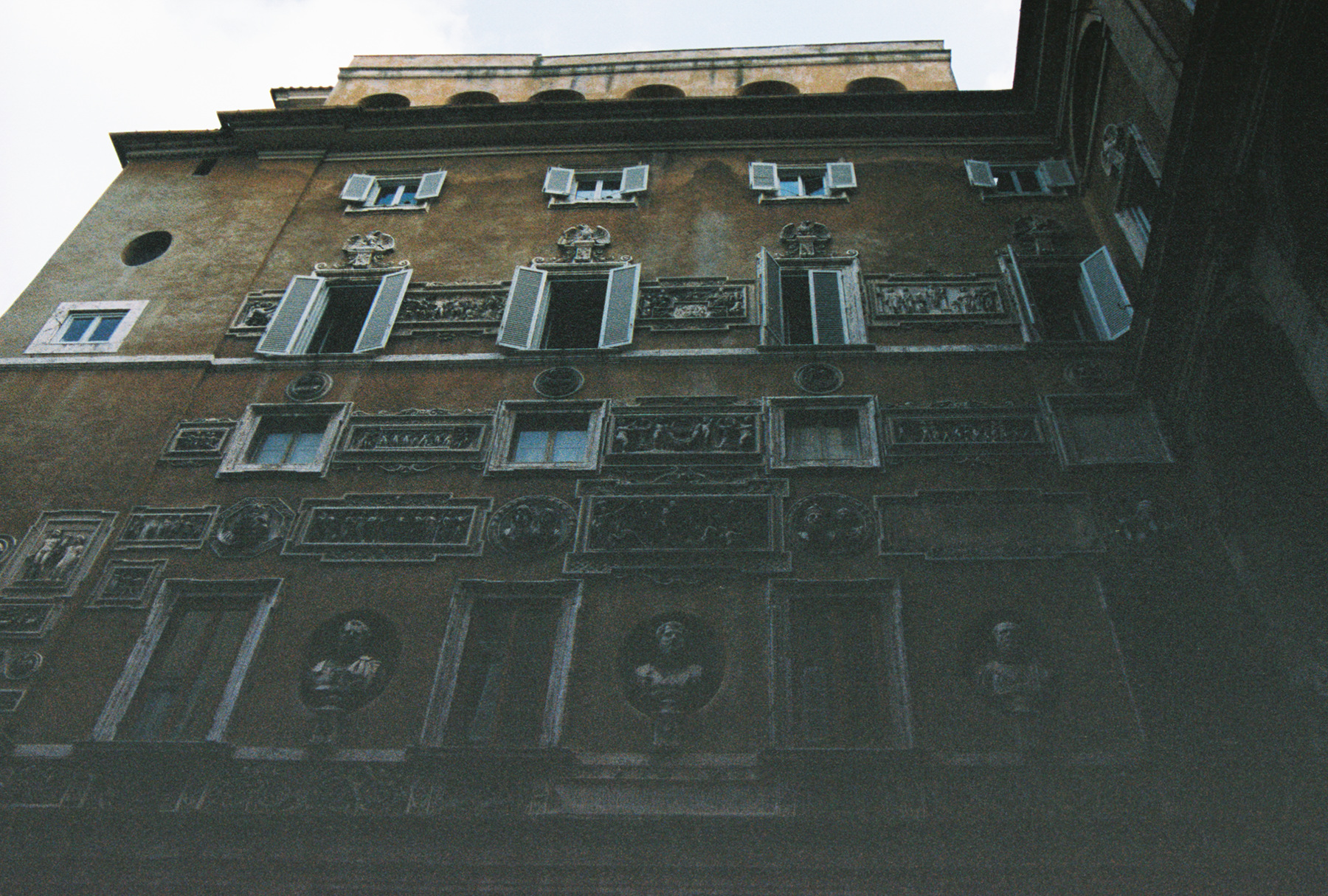
Like others of the Mattei family, Asdrubale Mattei was an enthusiastic patron of the arts. Michelangelo Merisi da Caravaggio (better known simply as Caravaggio) is recorded as living at the palazzo in 1601. (source: Wikipedia)
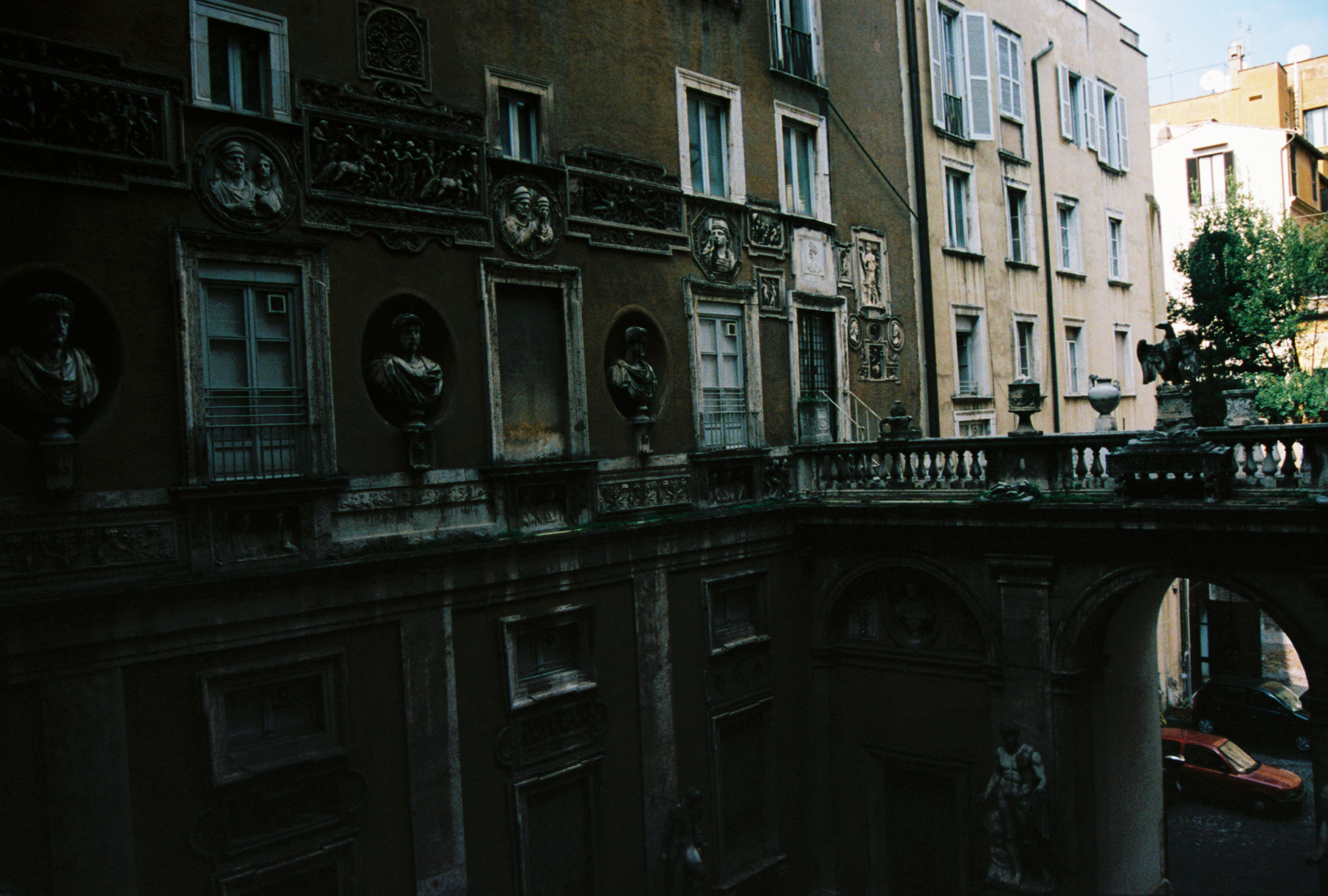
The loggia and architectural details are exquisite. This is the kind of place you see in sweeping vintage films set in Rome, the kind of place you read about in the Grand Old Tour by classically educated travelers from the 18th and 19th century. The students who spend time here are so lucky.
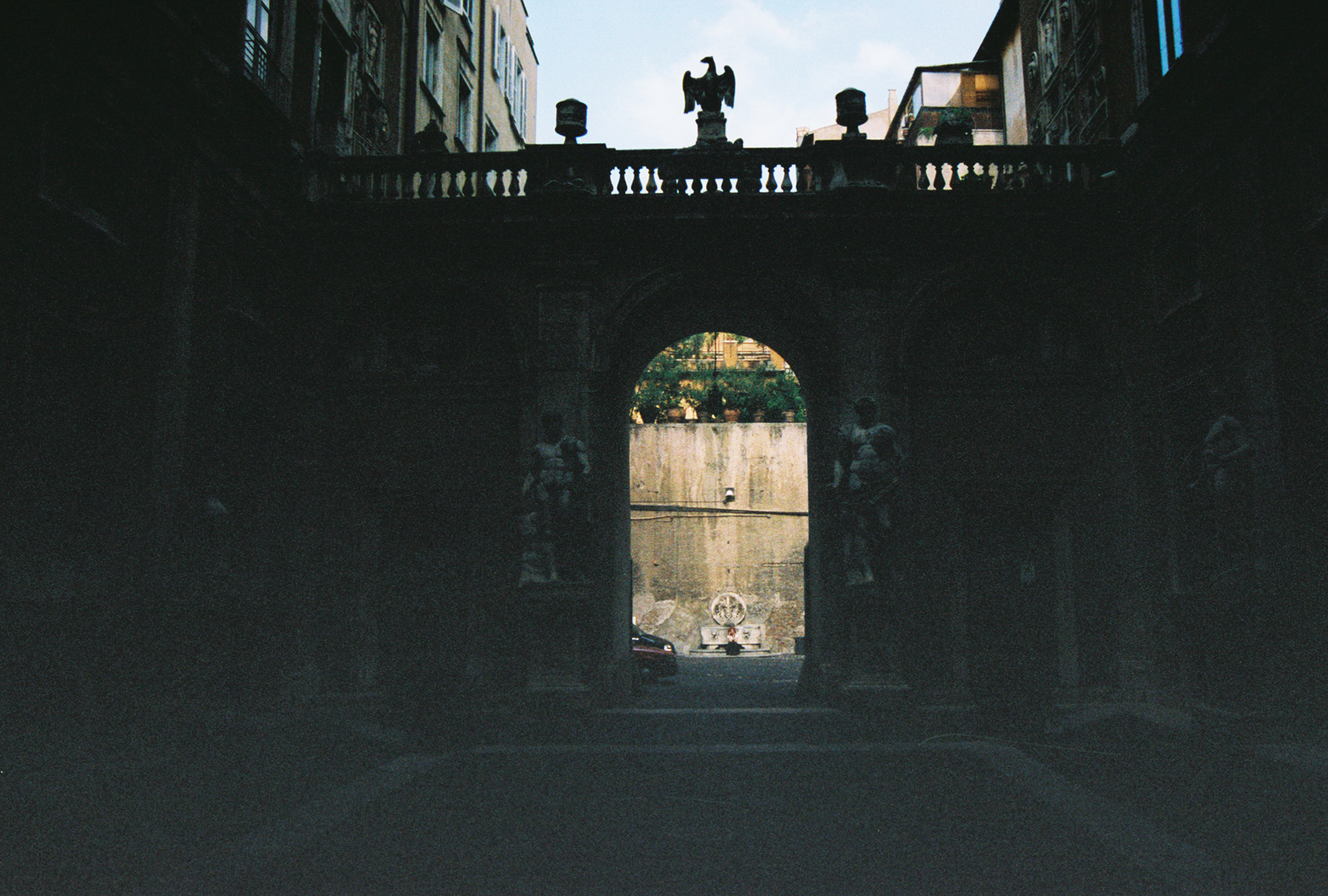
There’s not a corner or ledge that is not interesting. If you visit make sure to view the whole courtyard and go upstairs to the top terrace.

Go through the arched “doorway” in between the large statues, underneath the carved lamp.
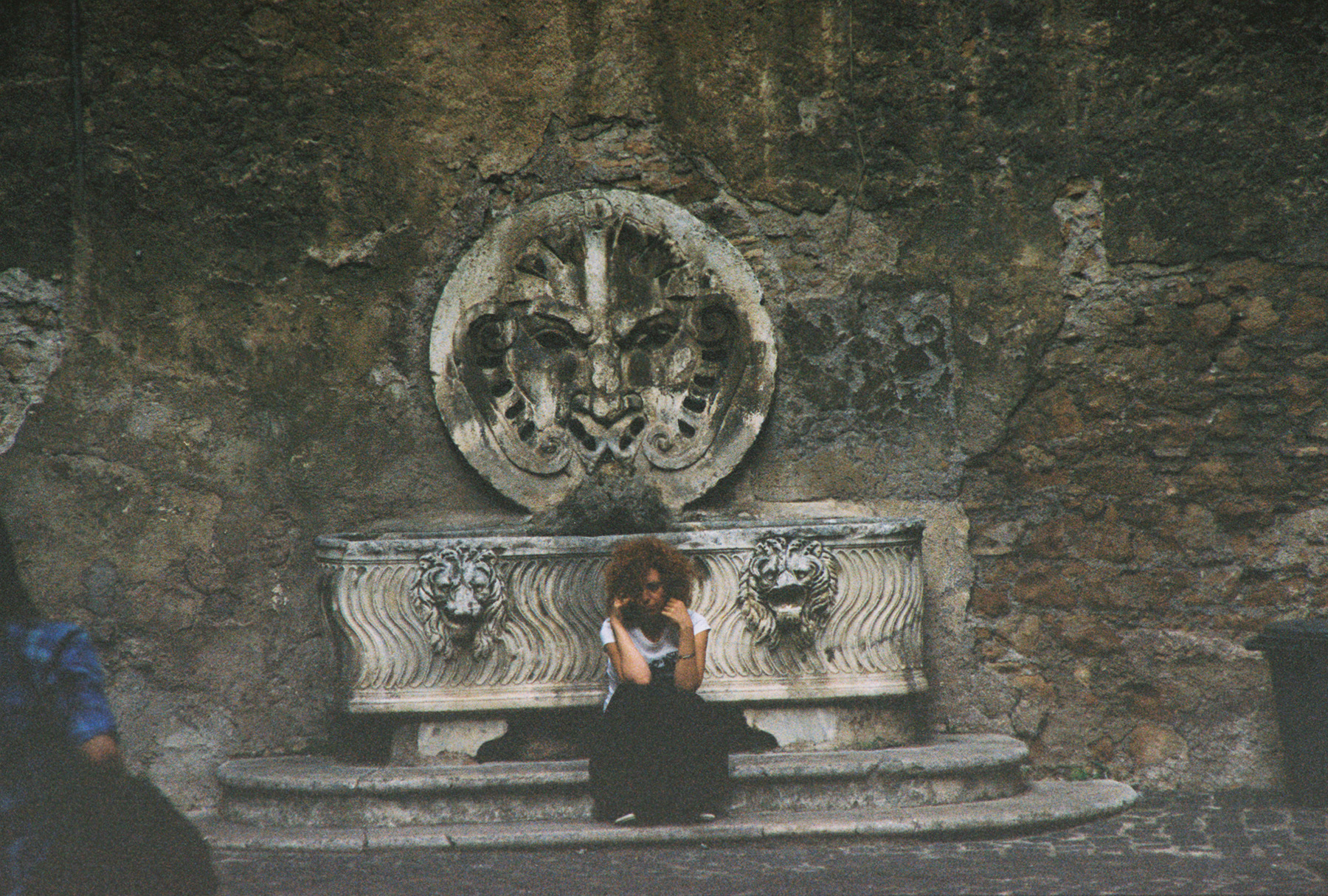
Across the small cobblestone road is an ancient fountain and face sun dial with beautifully carved in stone.
//photographs copyright rebecca price butler …
find my work on tumblr & pinterest … please link & credit me.
 a love letter to rome