Italy and England








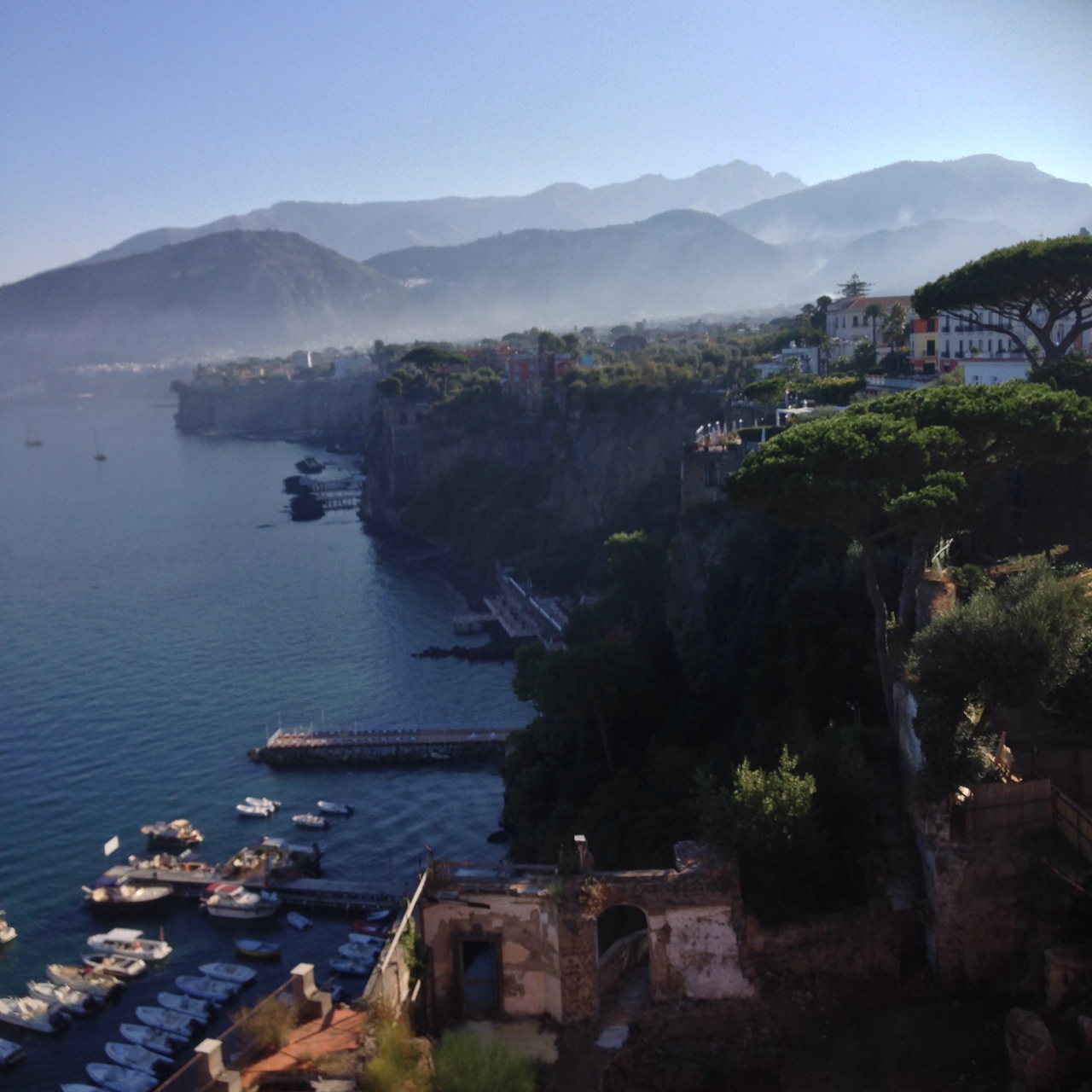
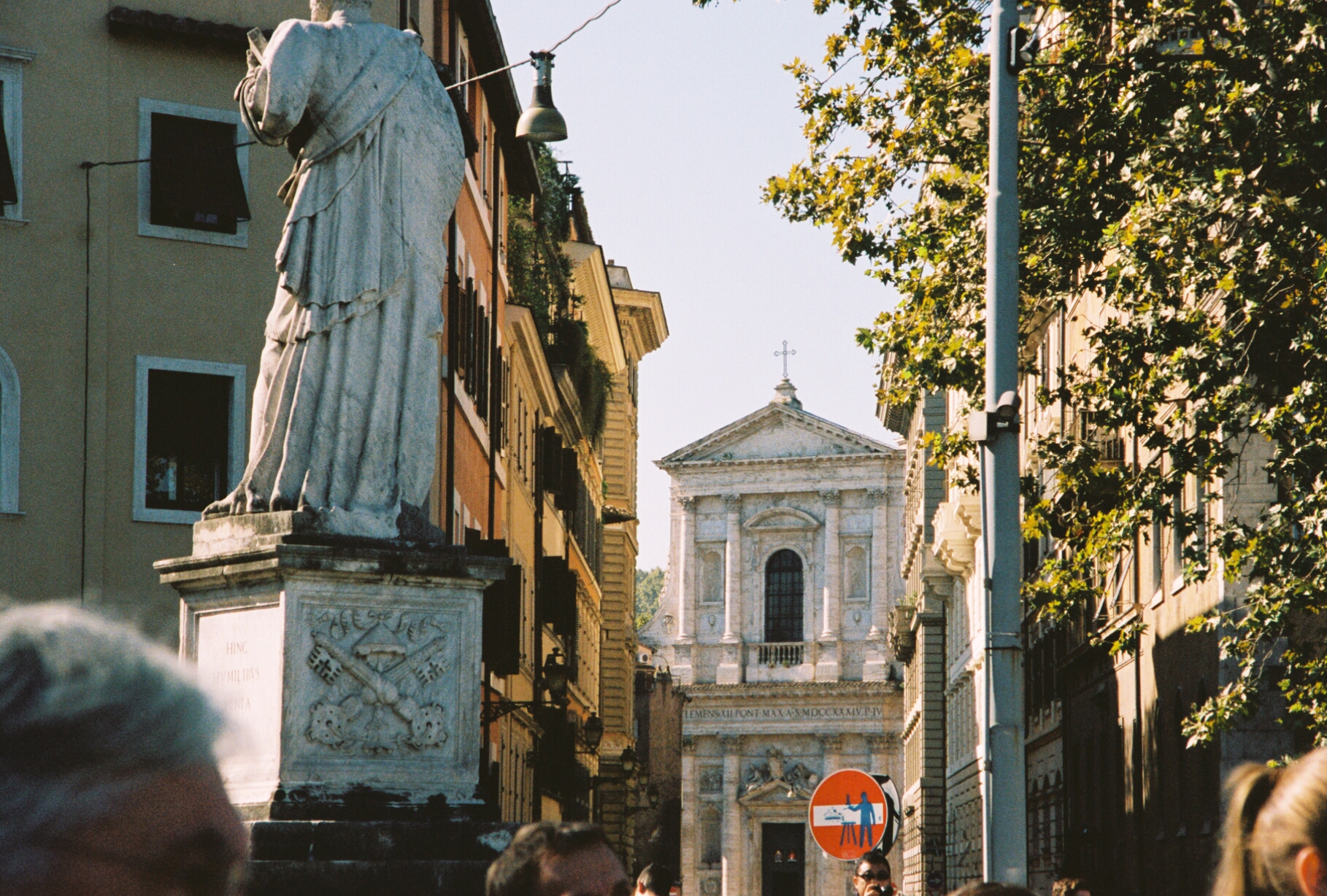

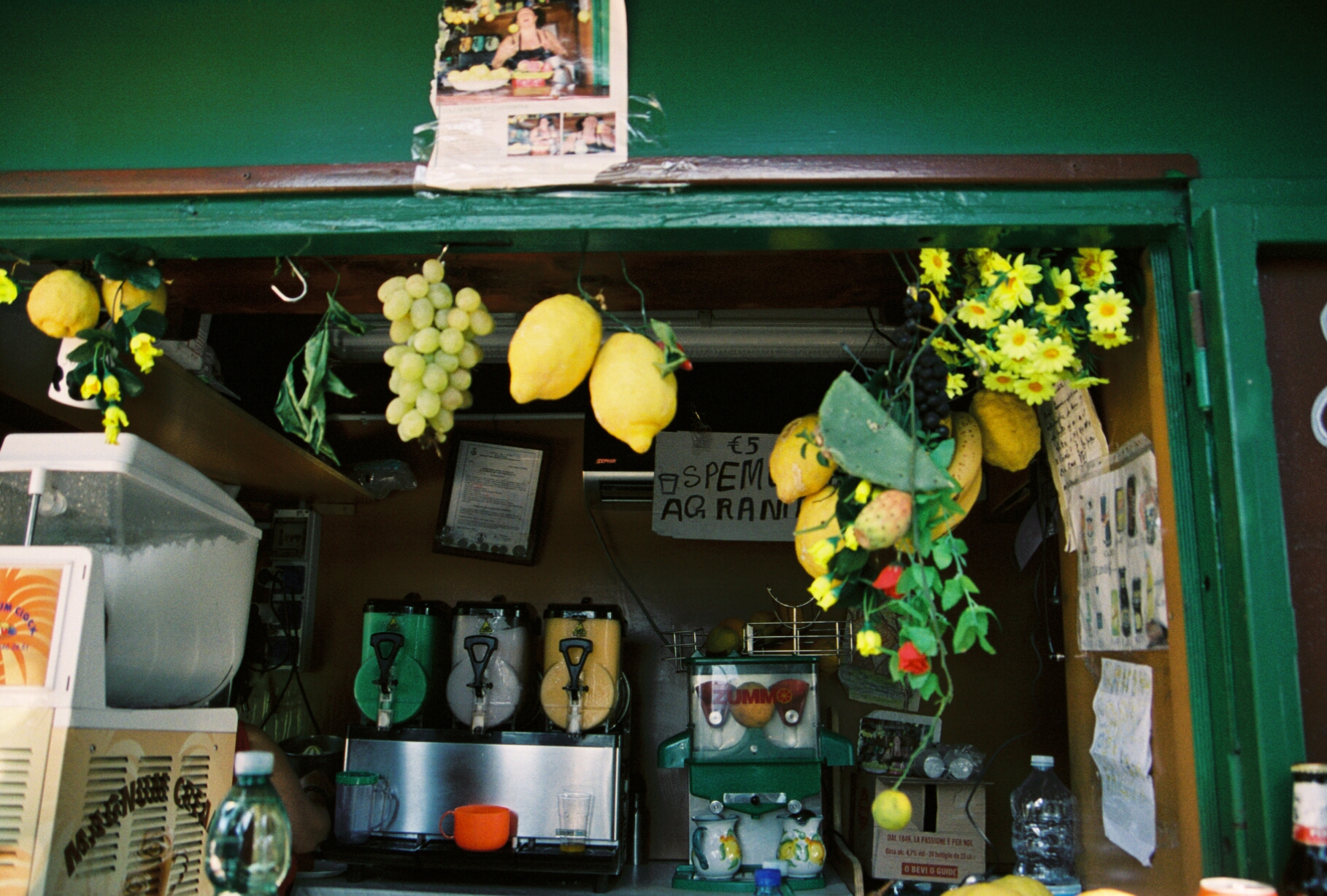
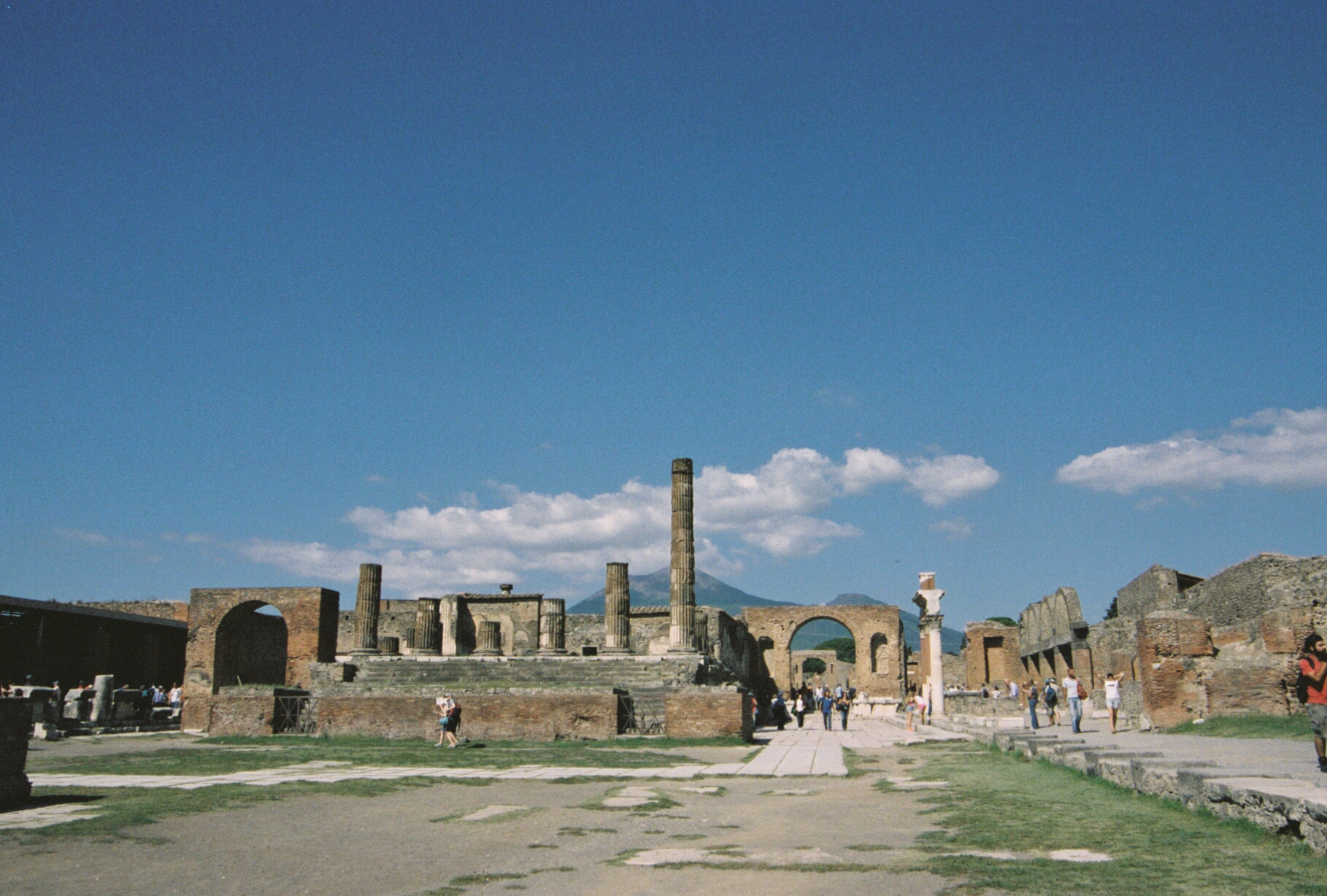
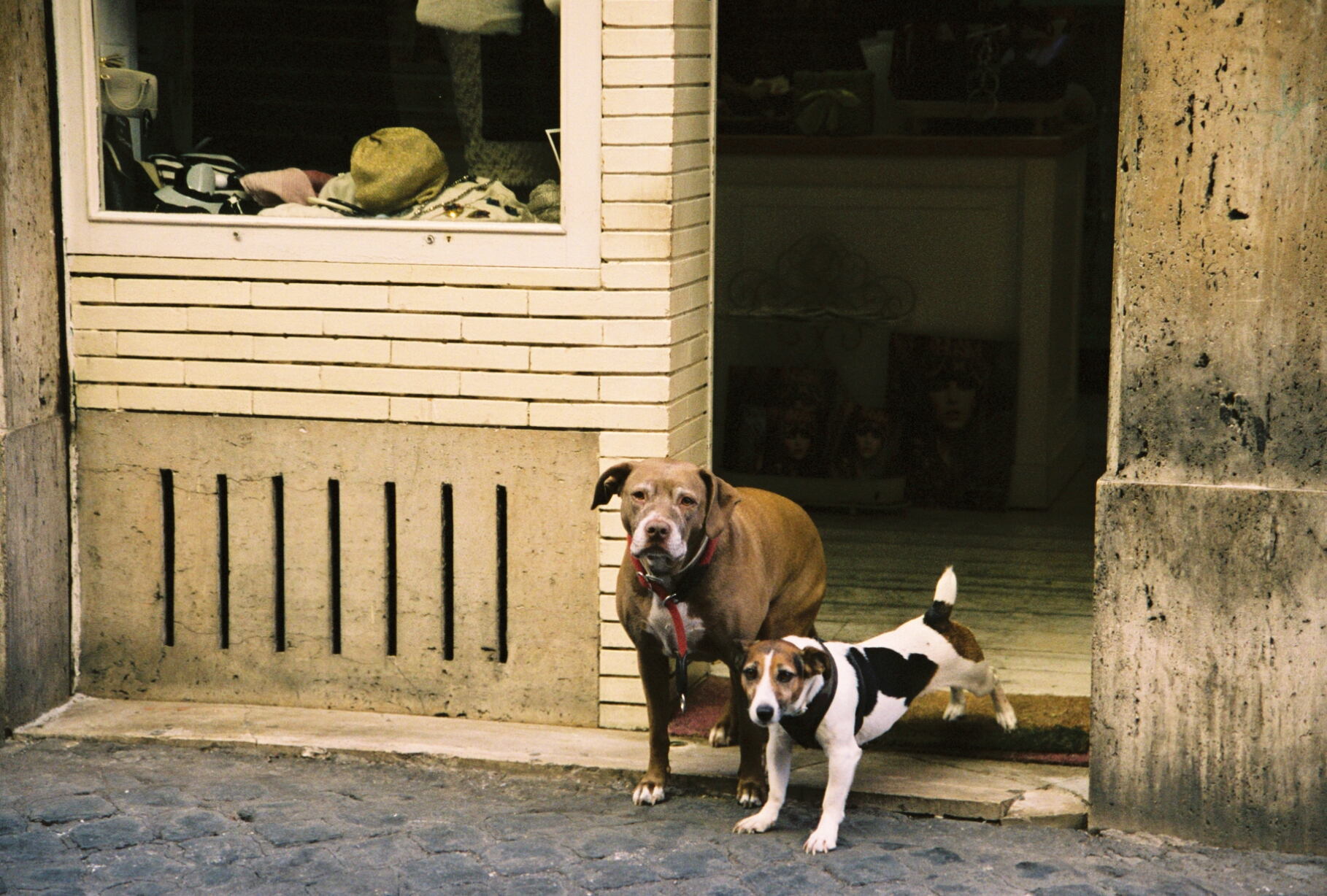
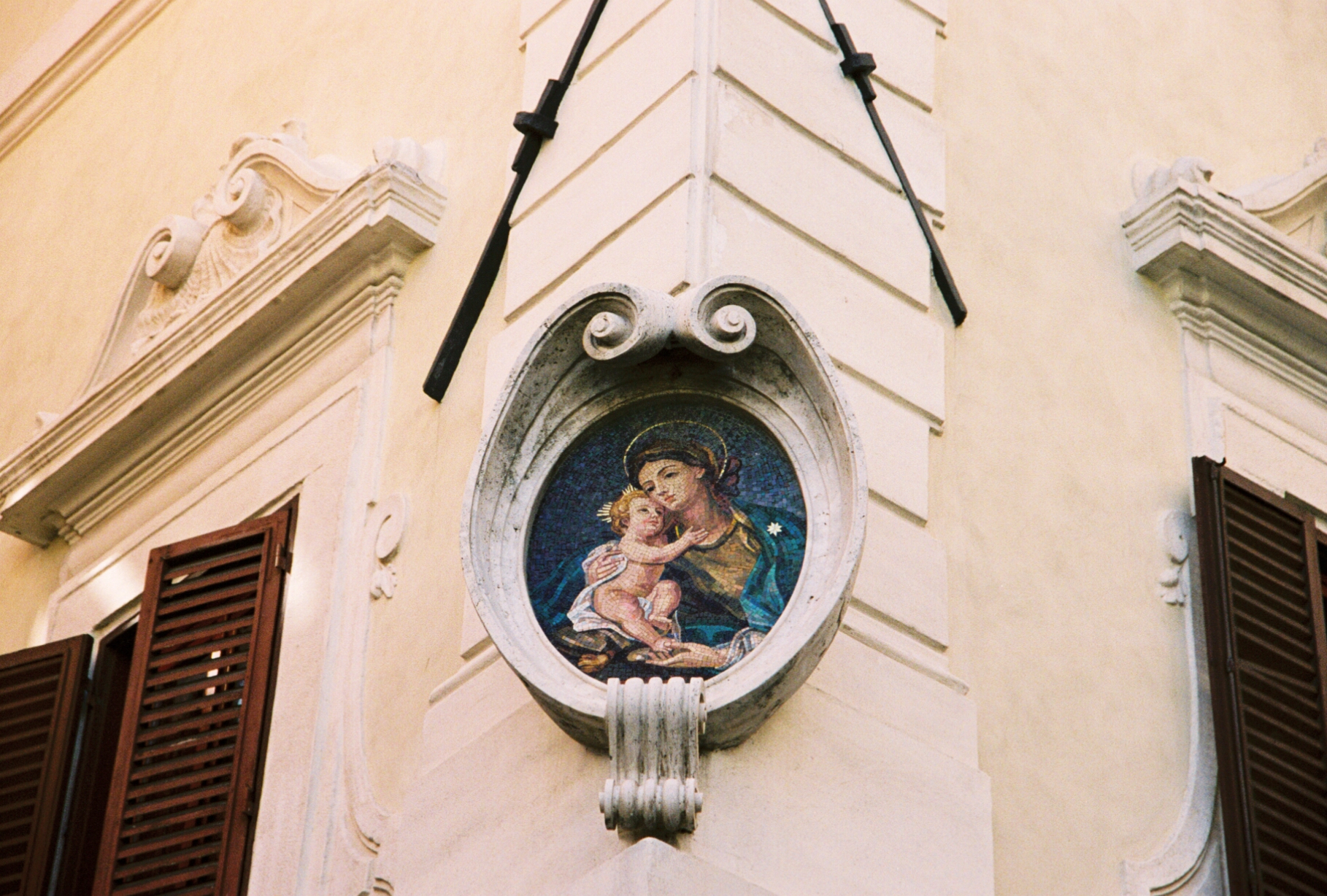
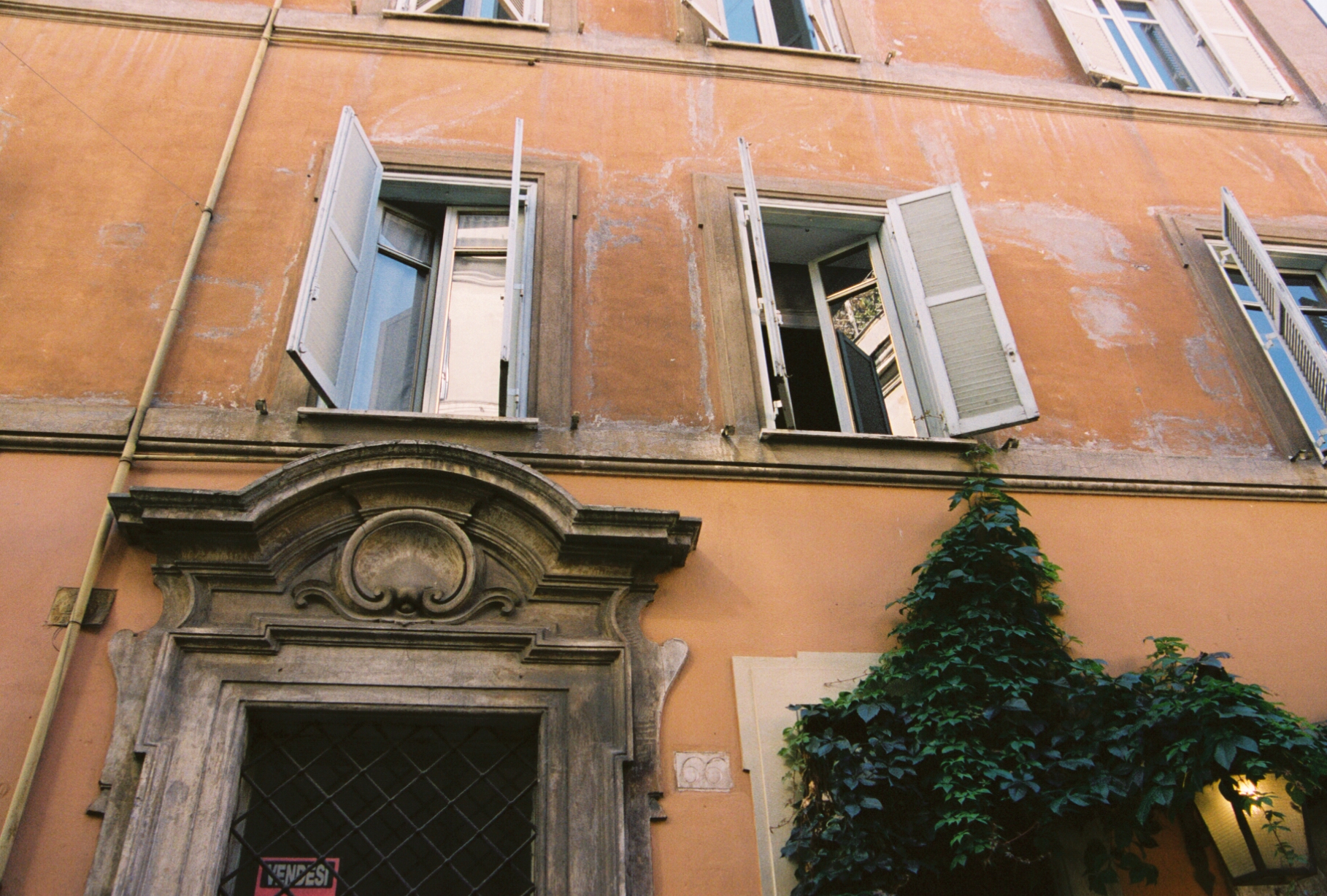
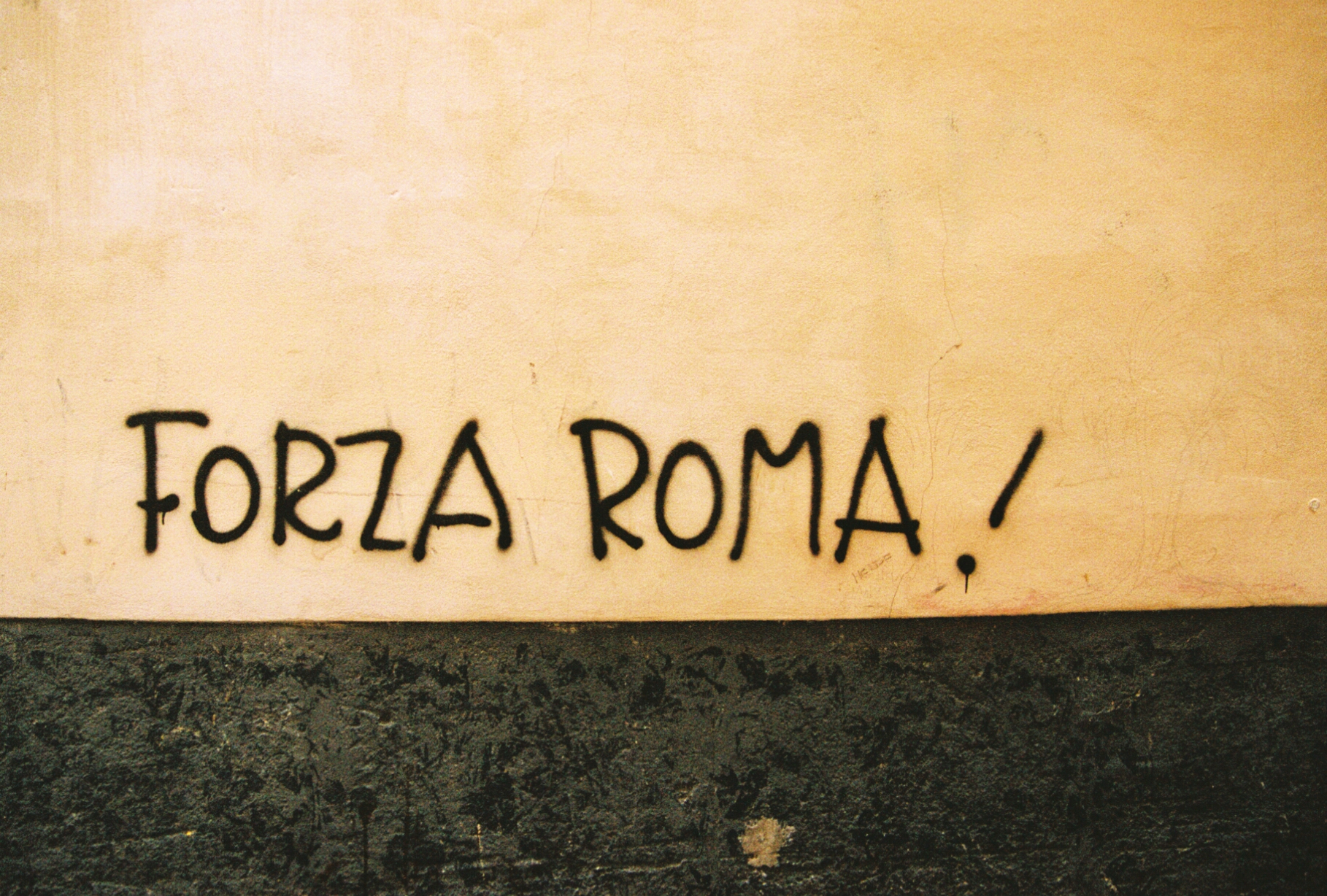

Capri is a world famous resort, the playground for jet setters. It’s an ancient Roman island in Southern Italy still peppered with the villas of Emperors. I’ve heard it called the Beverly Hills of Italy because of its luxury boutiques and grand dame hotels.
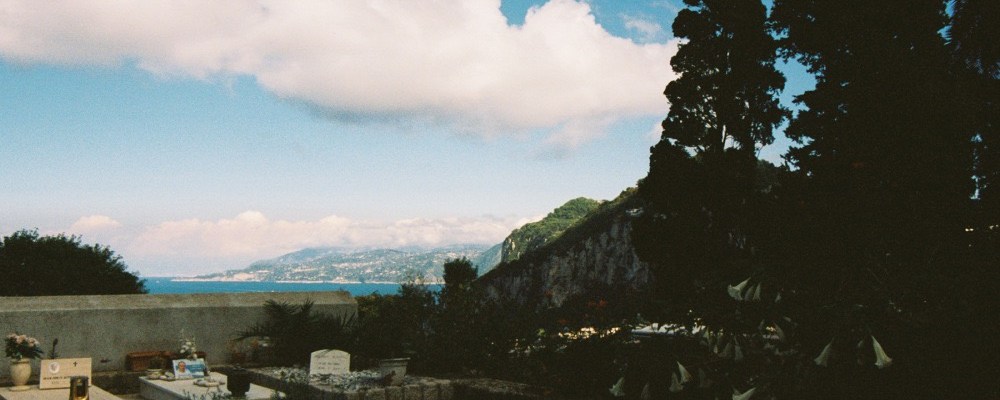
To me, Capri is about the quiet moments, the local back streets, the flora and fauna and places like the beautiful, very off the beaten path 19th century non-catholic cemetery. The cemetery is in a residential, slightly run down section between Capri town and the Marina Grande but it overlooks the sea and is incredibly charming. Artists, writers, Anglo Saxons, Nordics and French in love with Capri are all buried here. There are Jewish graves and non-religious tombs and plenty of Madonna statues. And in modern Capri, plenty of Catholic Italians choose this idyllic spot with a sweeping view of the Tyrrhenian Sea for their final resting places.
I walked to the cemetery on the rather harrowing, not very pedestrian “old road down to Marina Grande” and found the graveyard after a ten minute “stroll” sidestepping uncomfortably close vespas, cars and buses like a veteran Italian. When in Rome, eh? You may want to take a taxi from the bus station in Capri Town.
Ask for the Cimitero acattolico di Capri. On Capri – not the pretty, much smaller catholic cemetery on Ana Capri – though that is also lovely. This is the spot with character and history and angels.
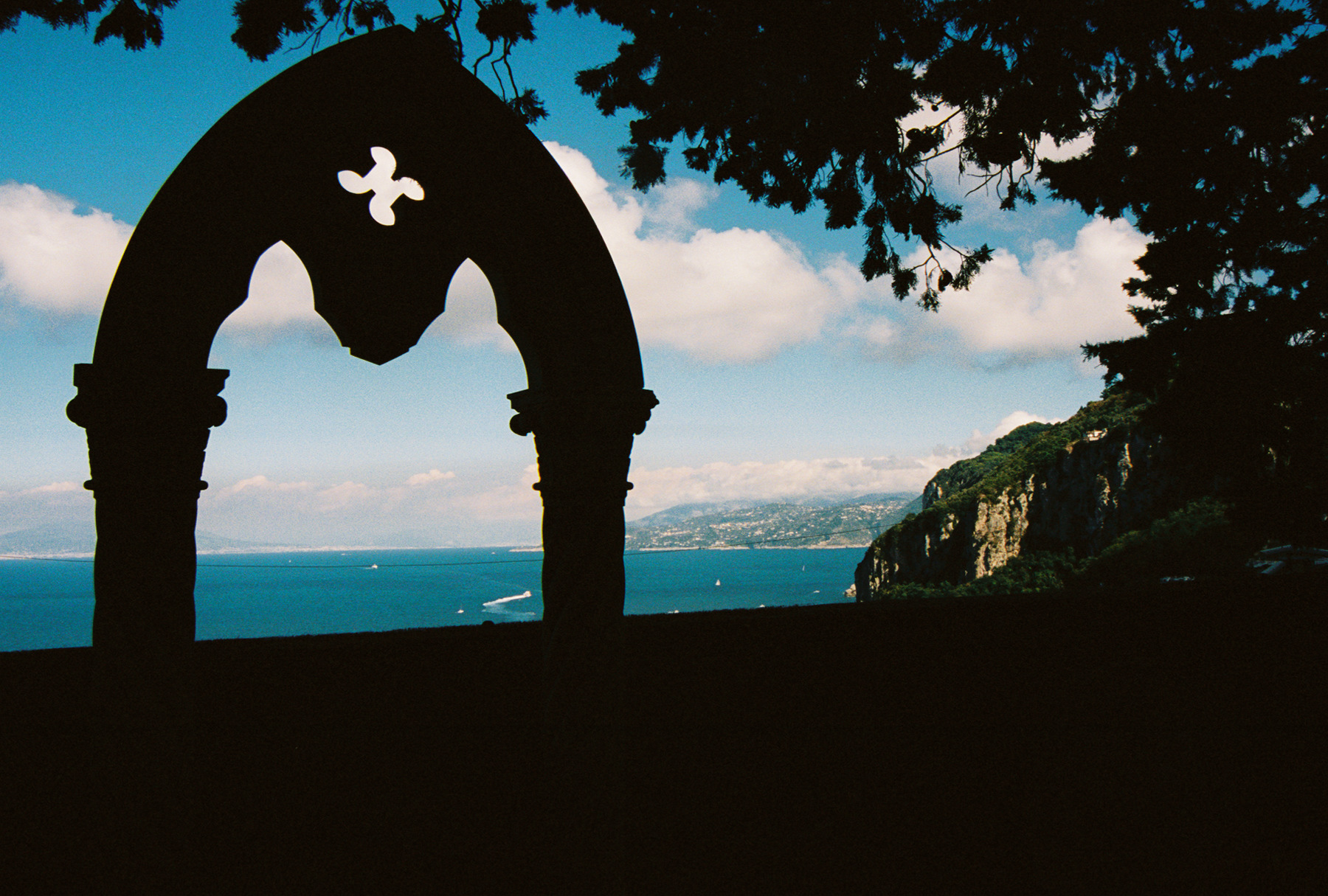
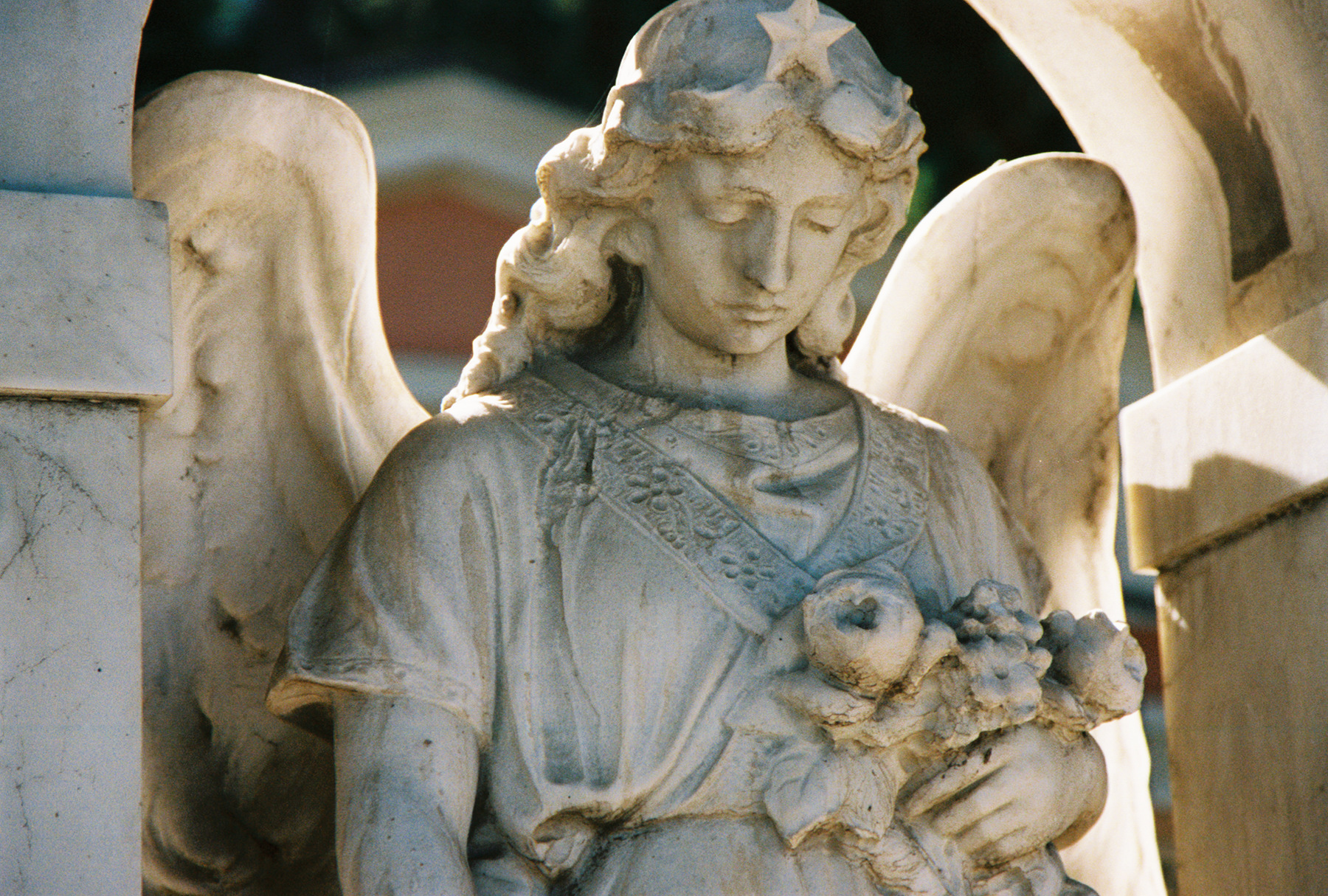
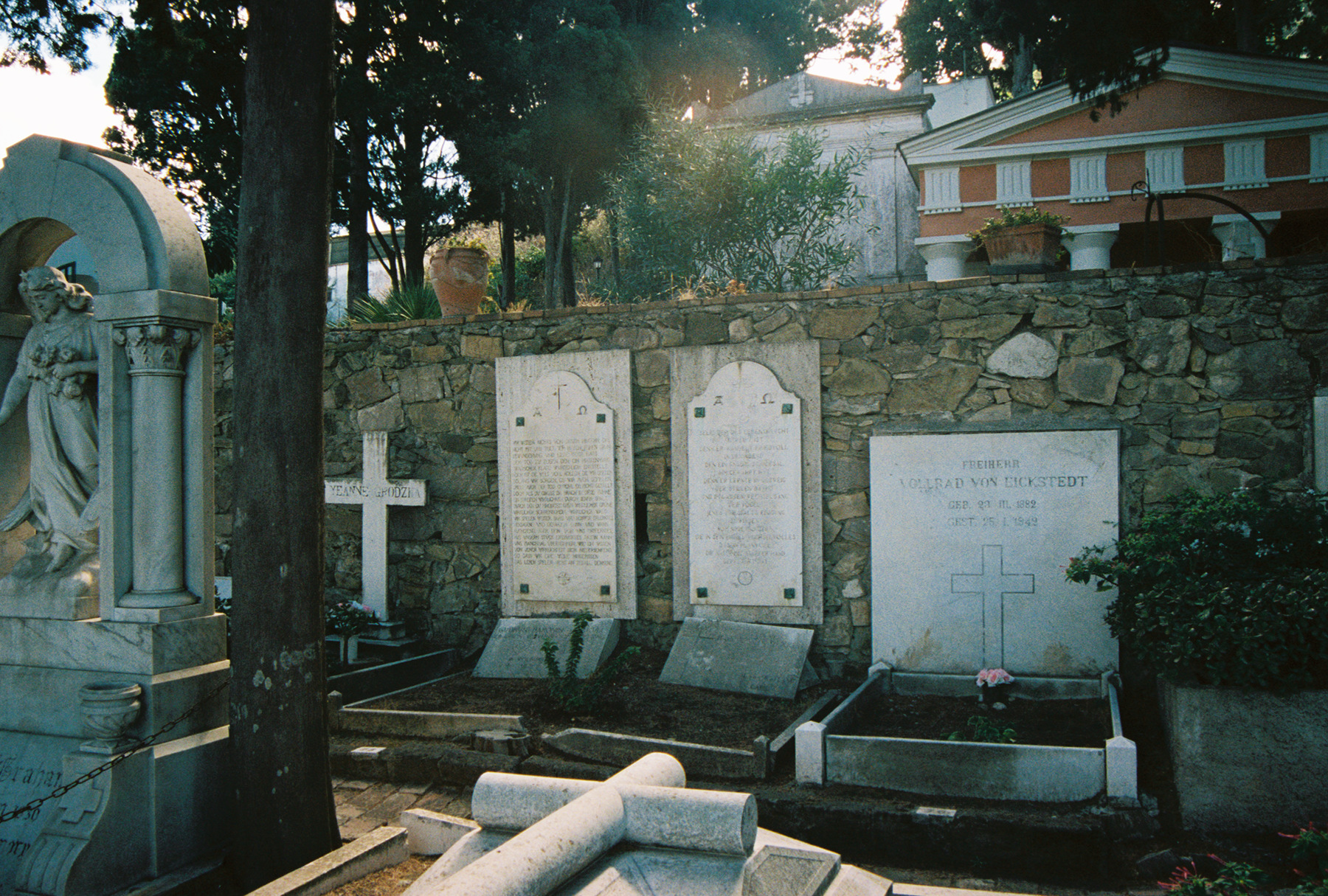
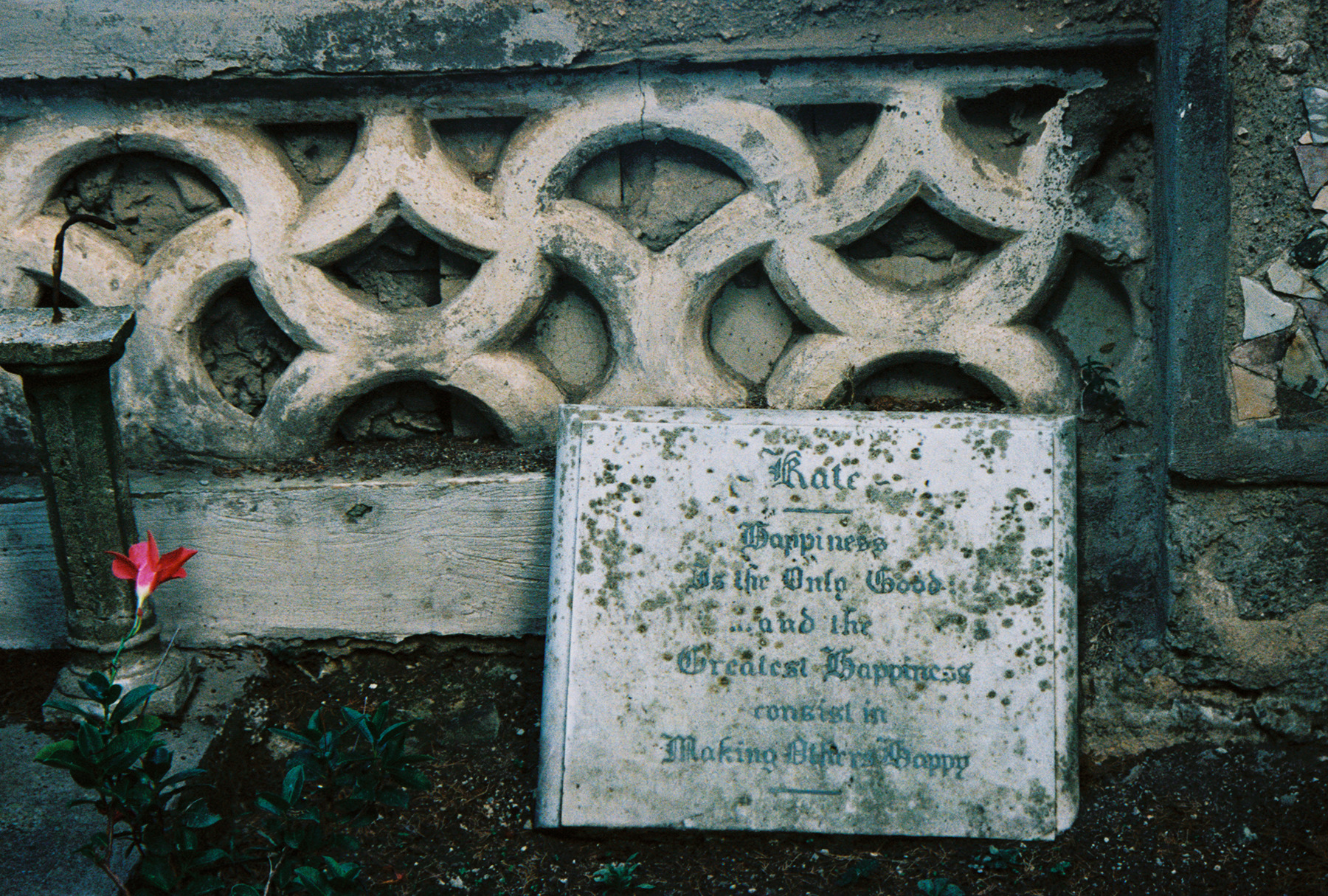
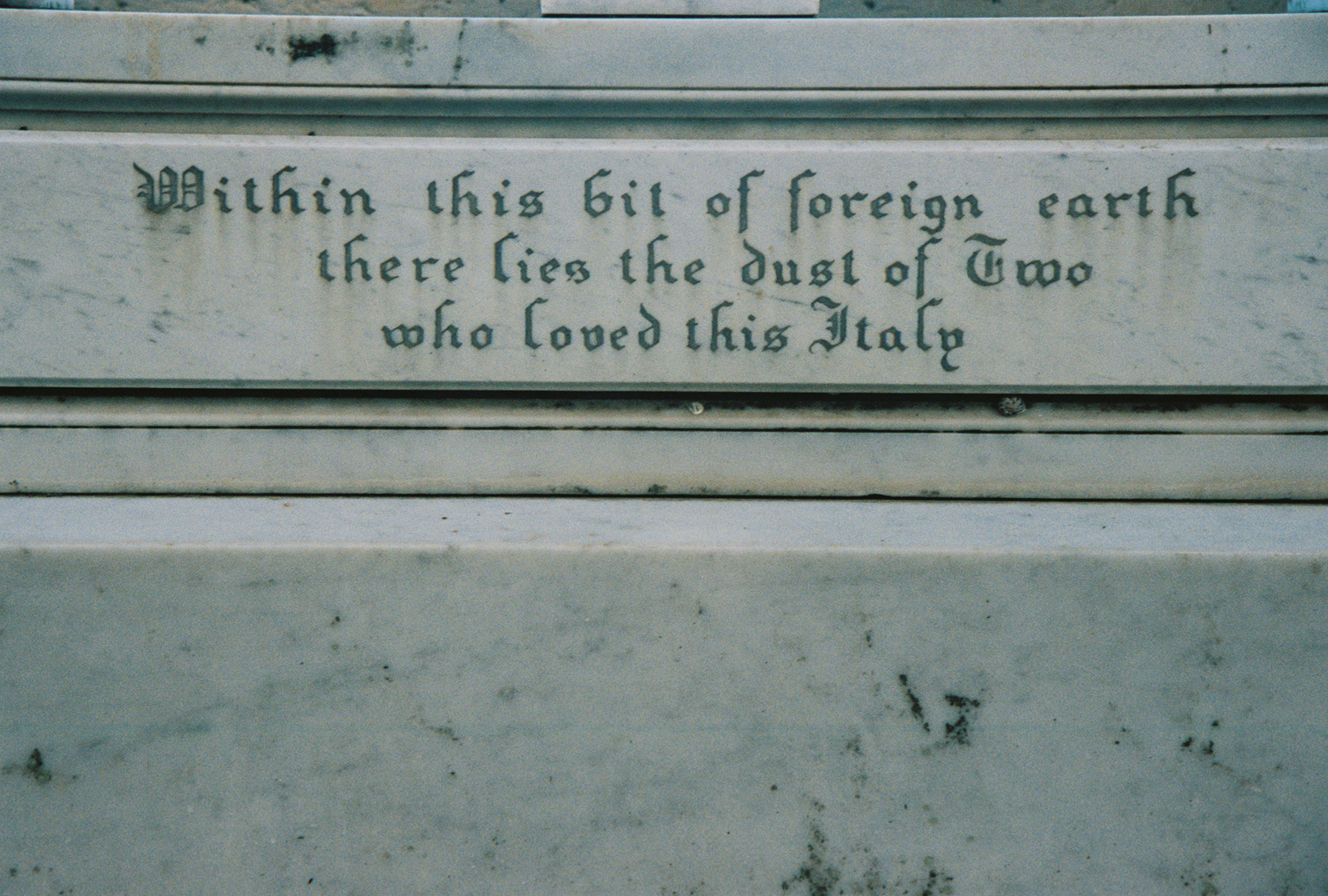
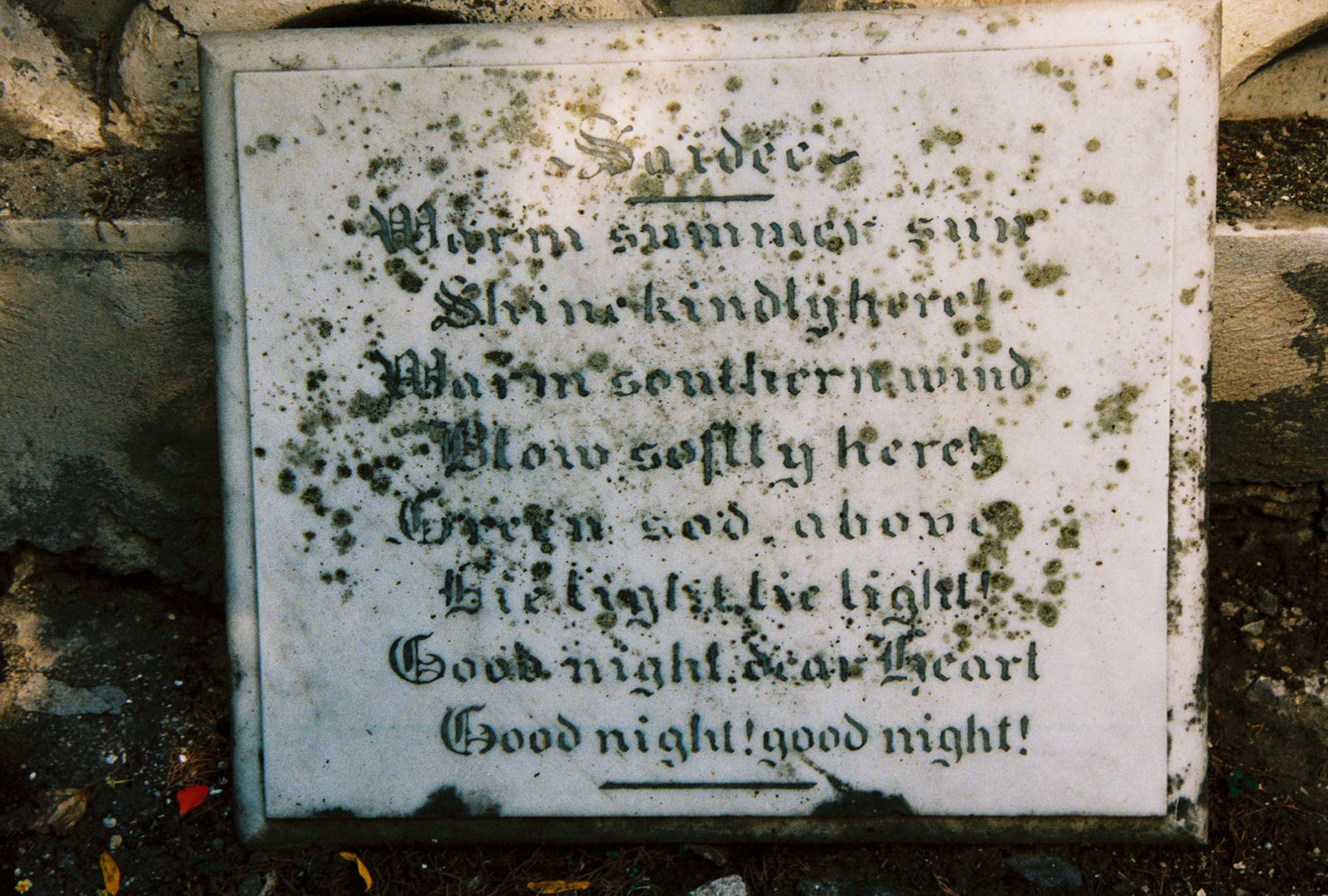
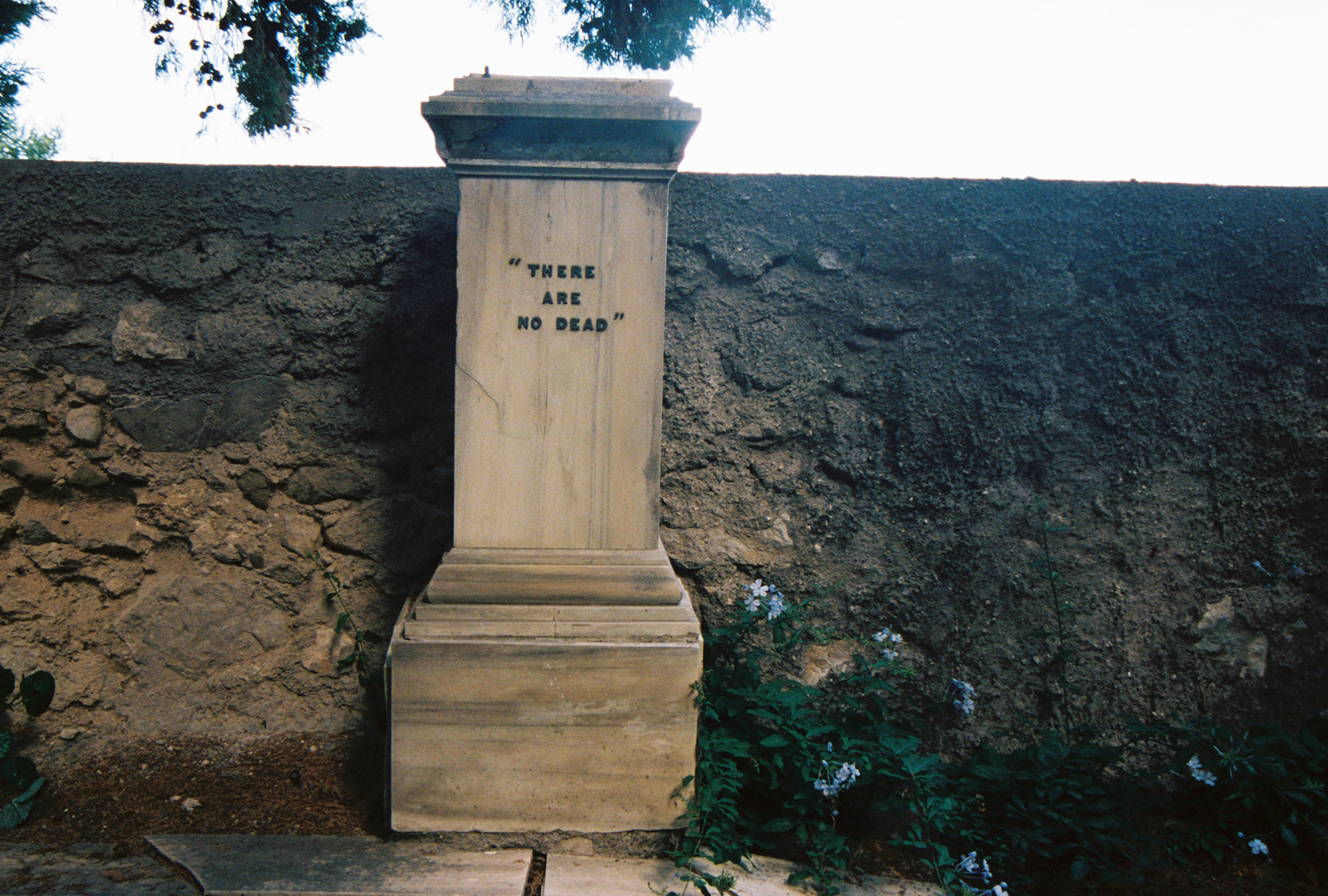
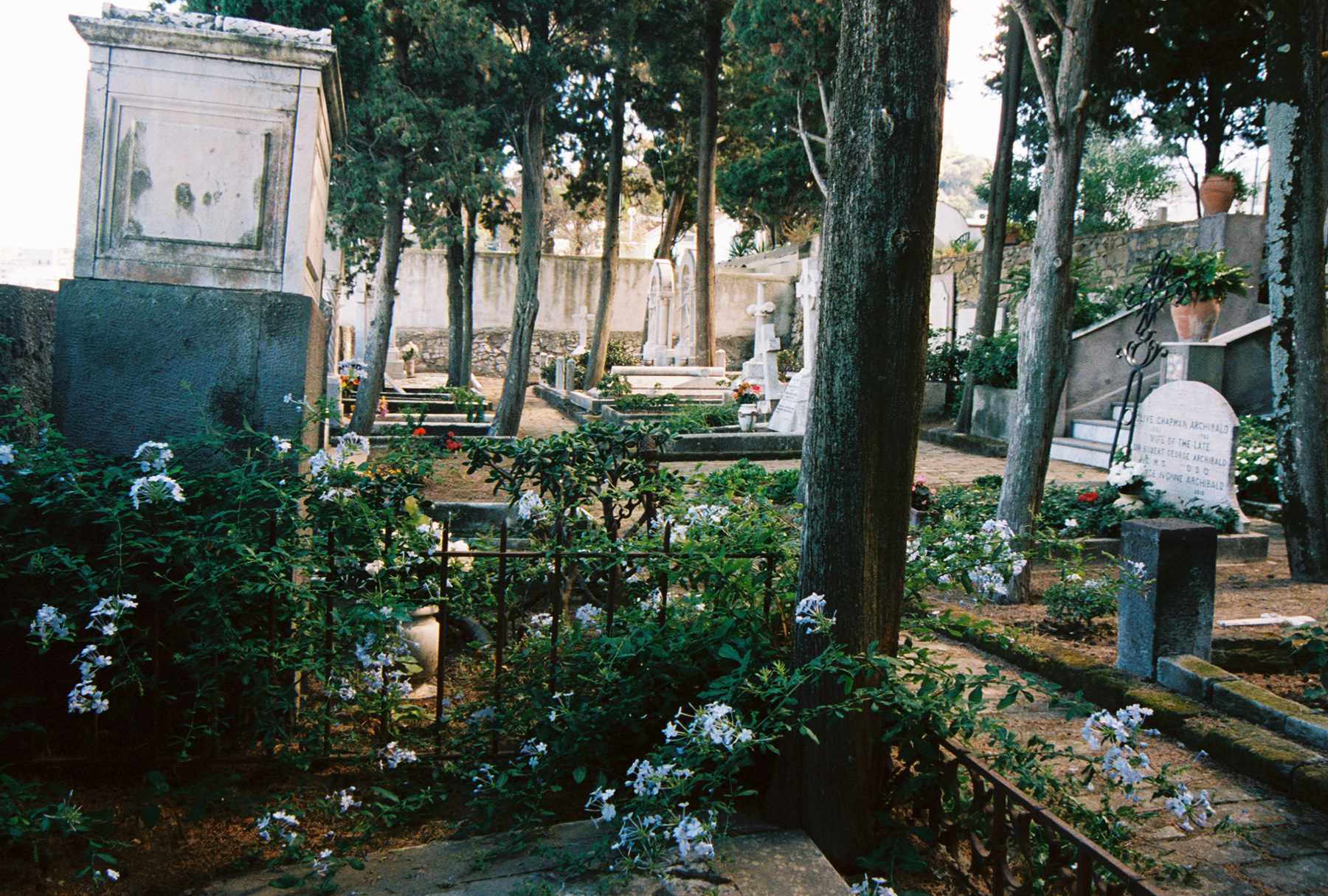
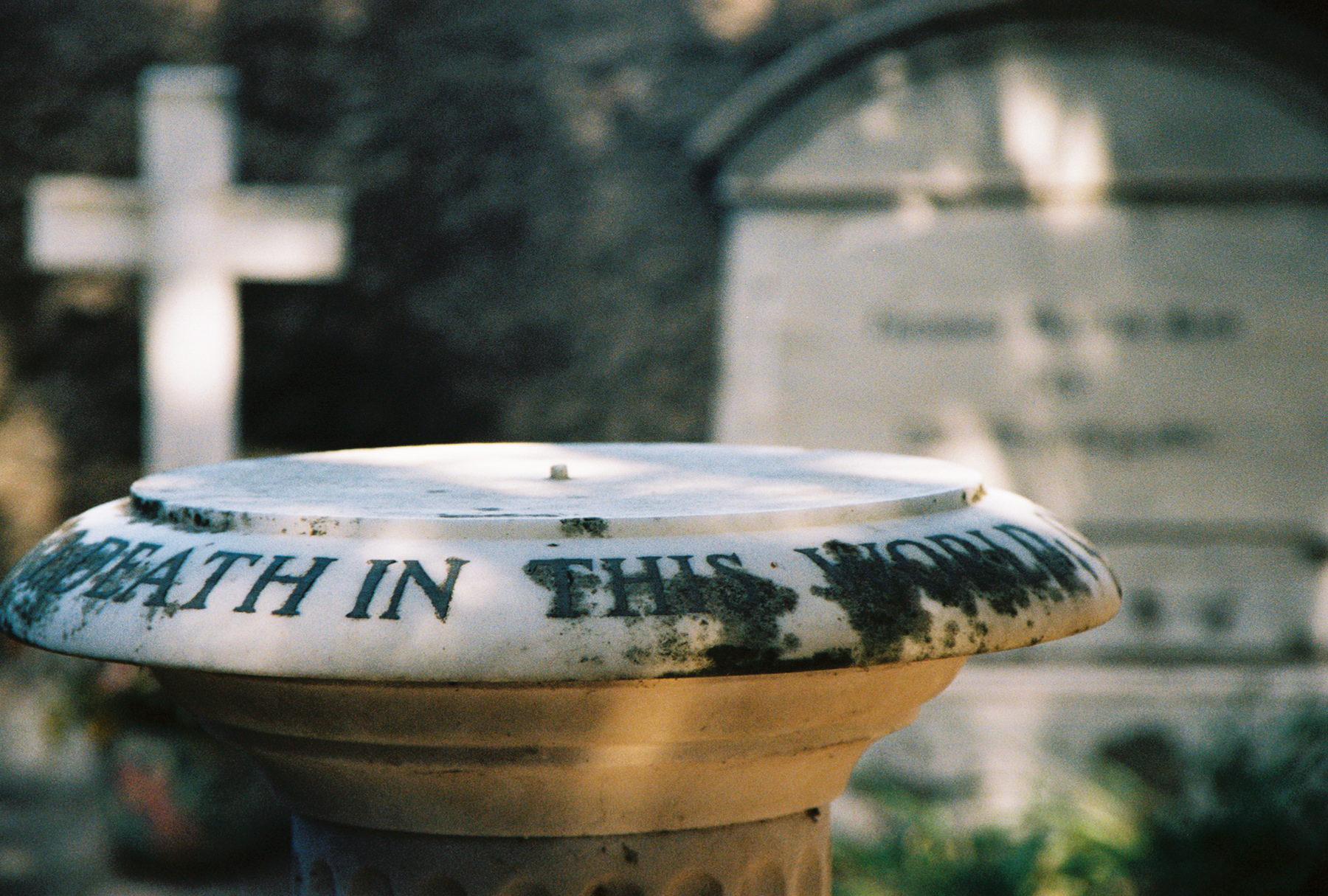
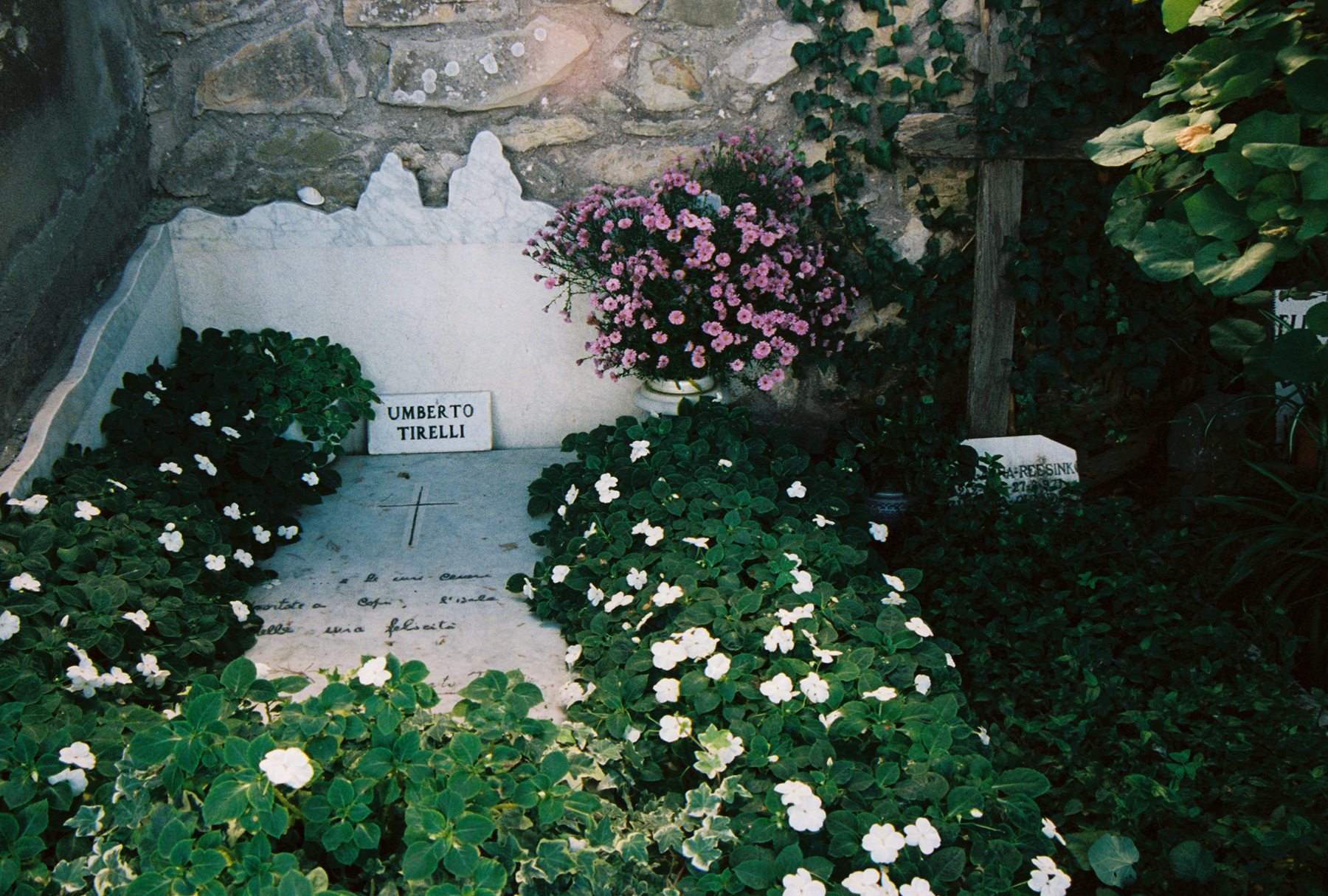
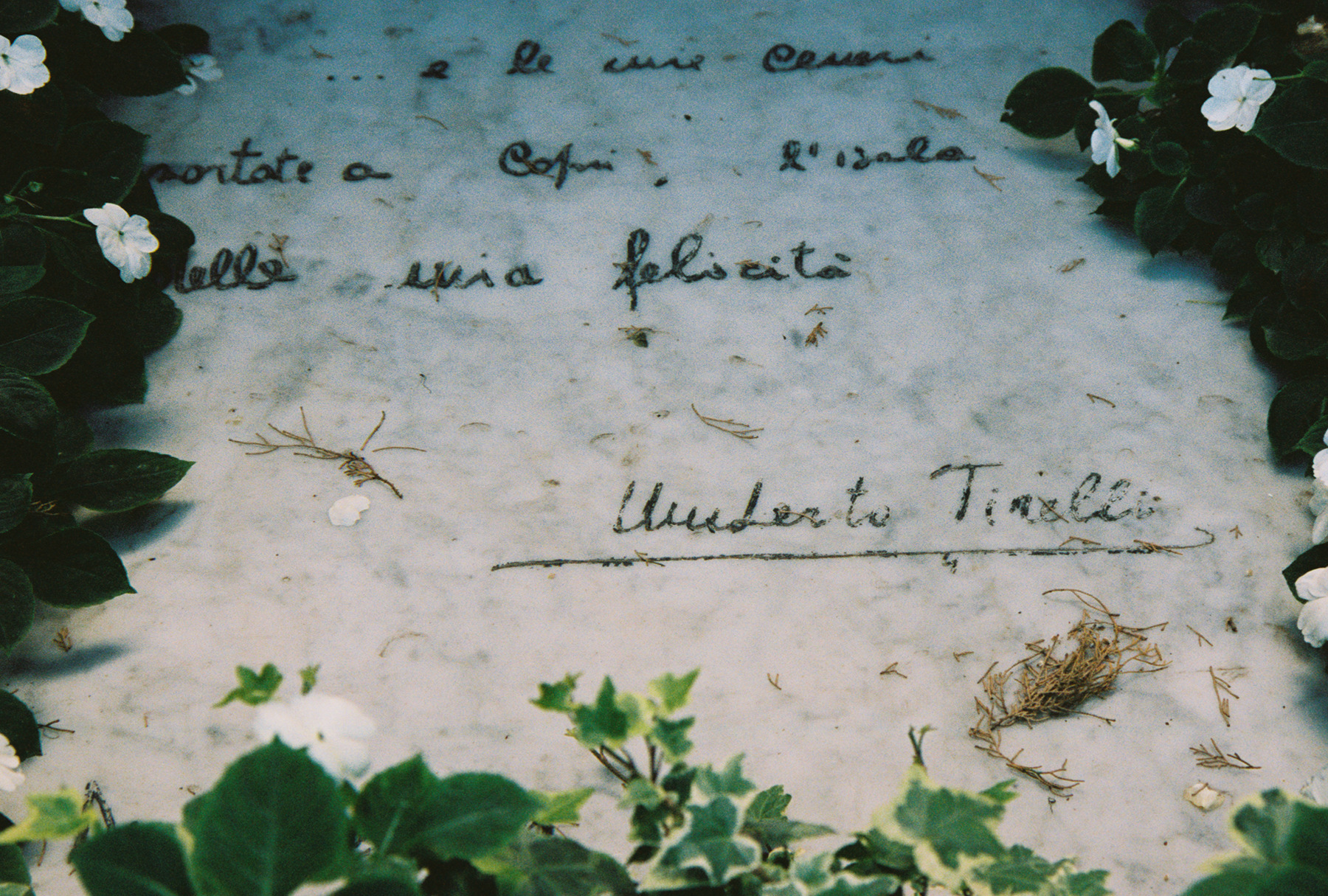
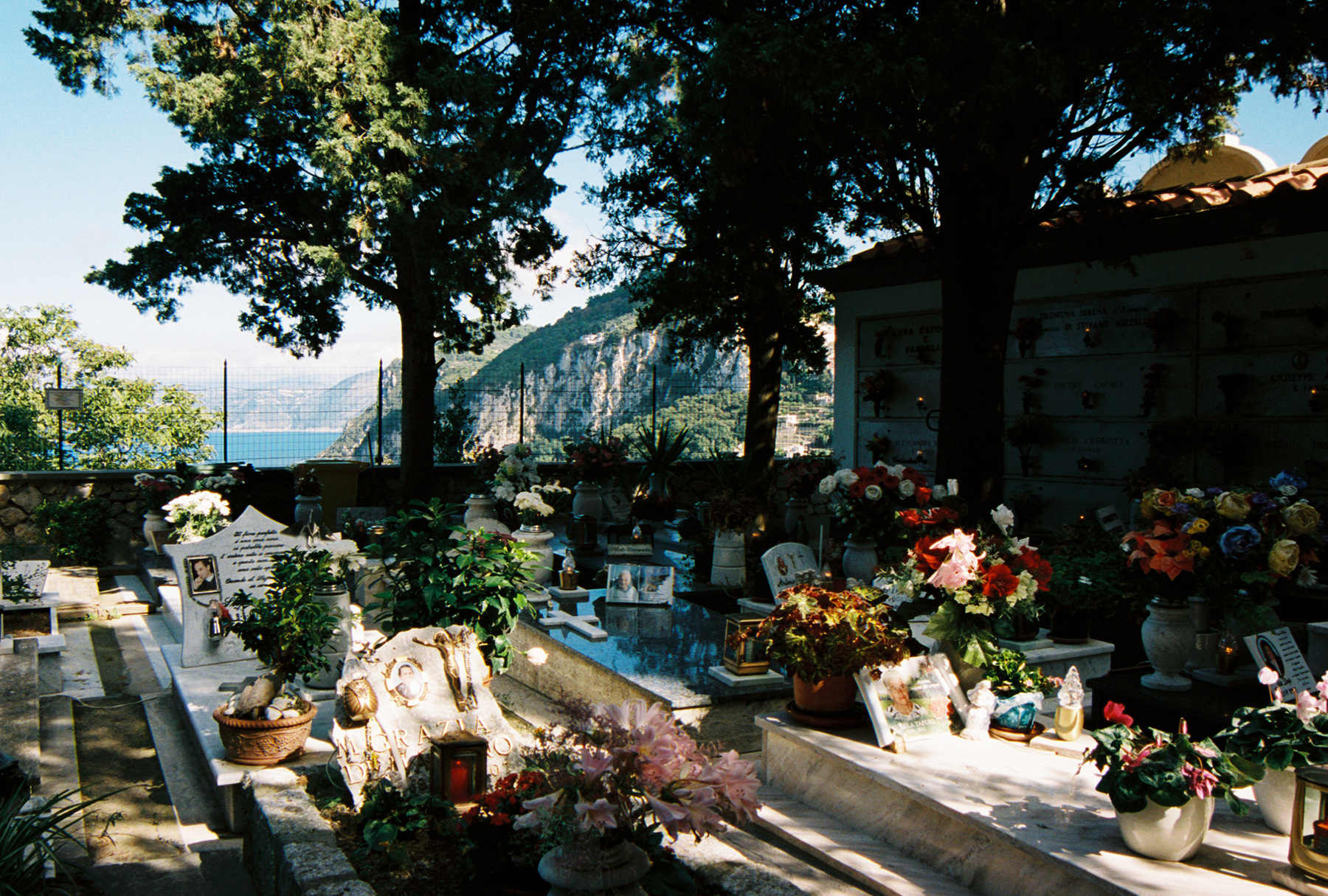
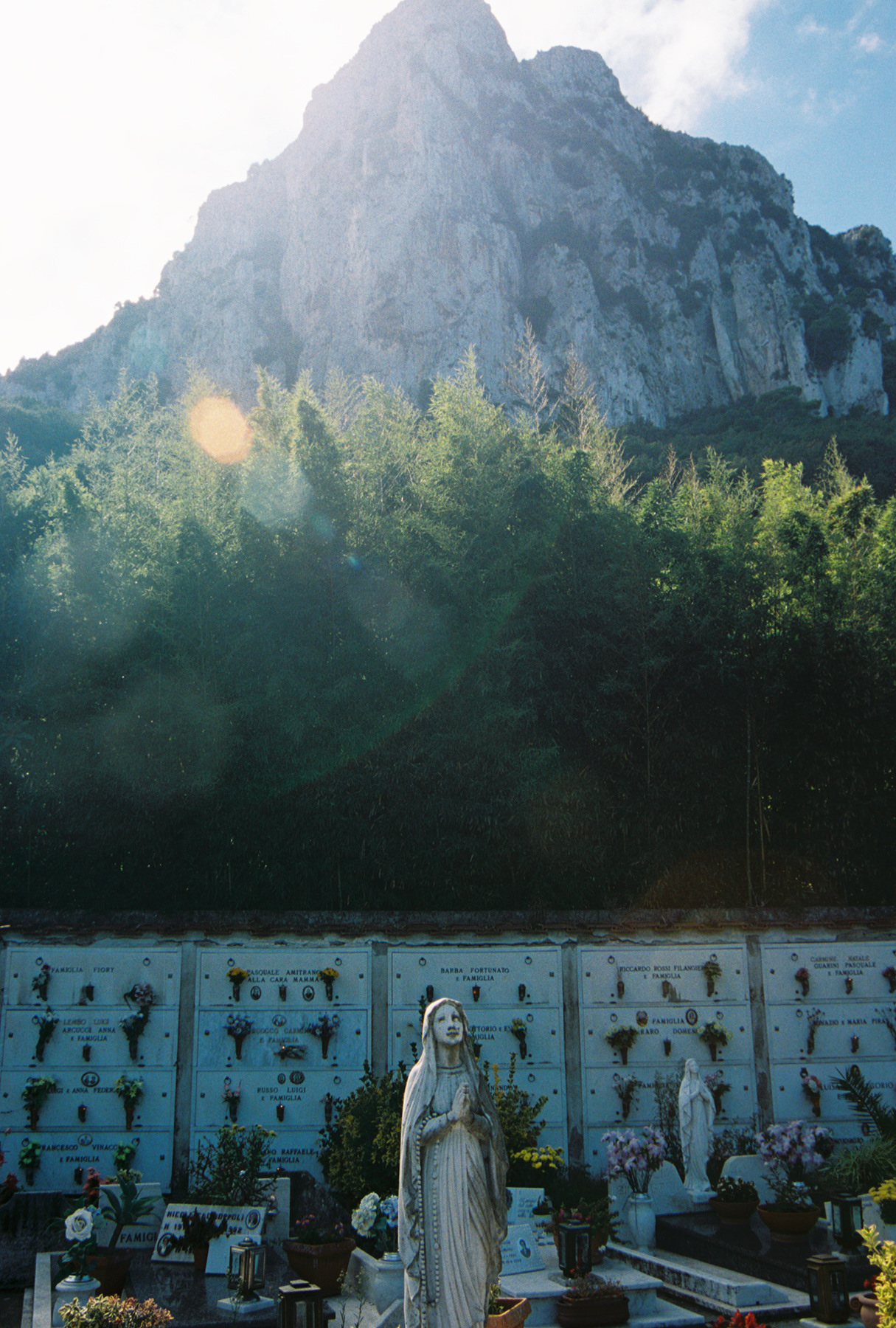
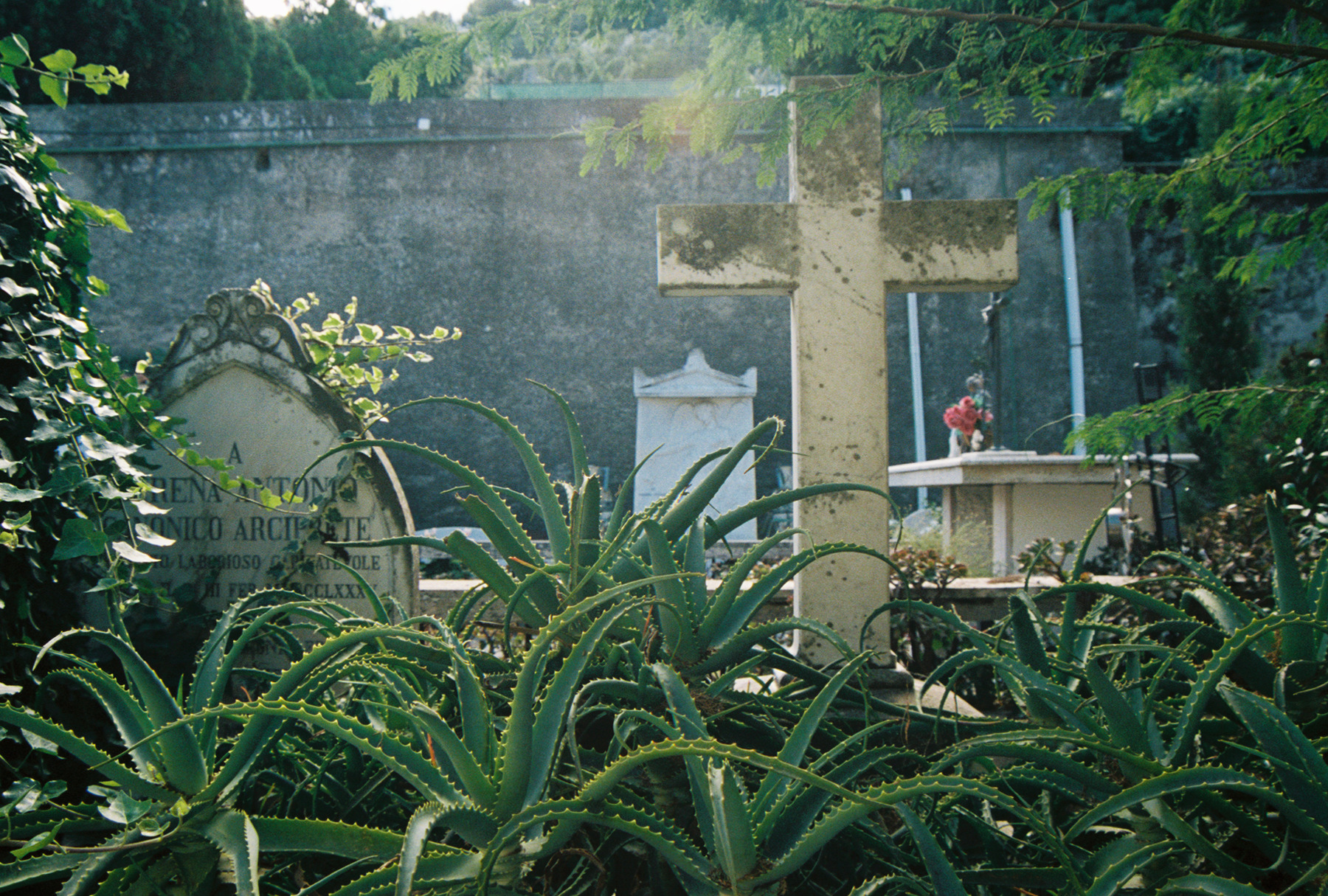

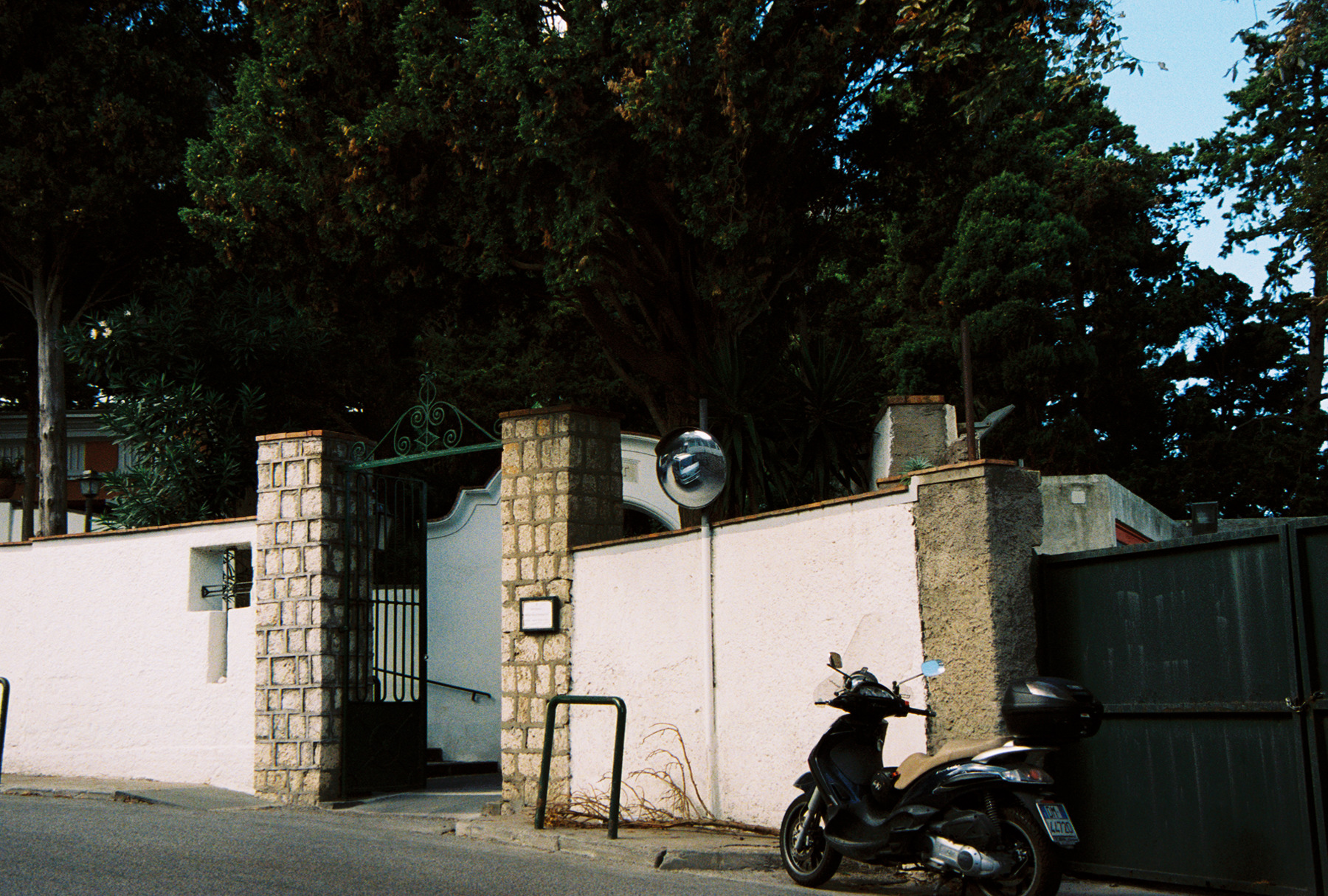
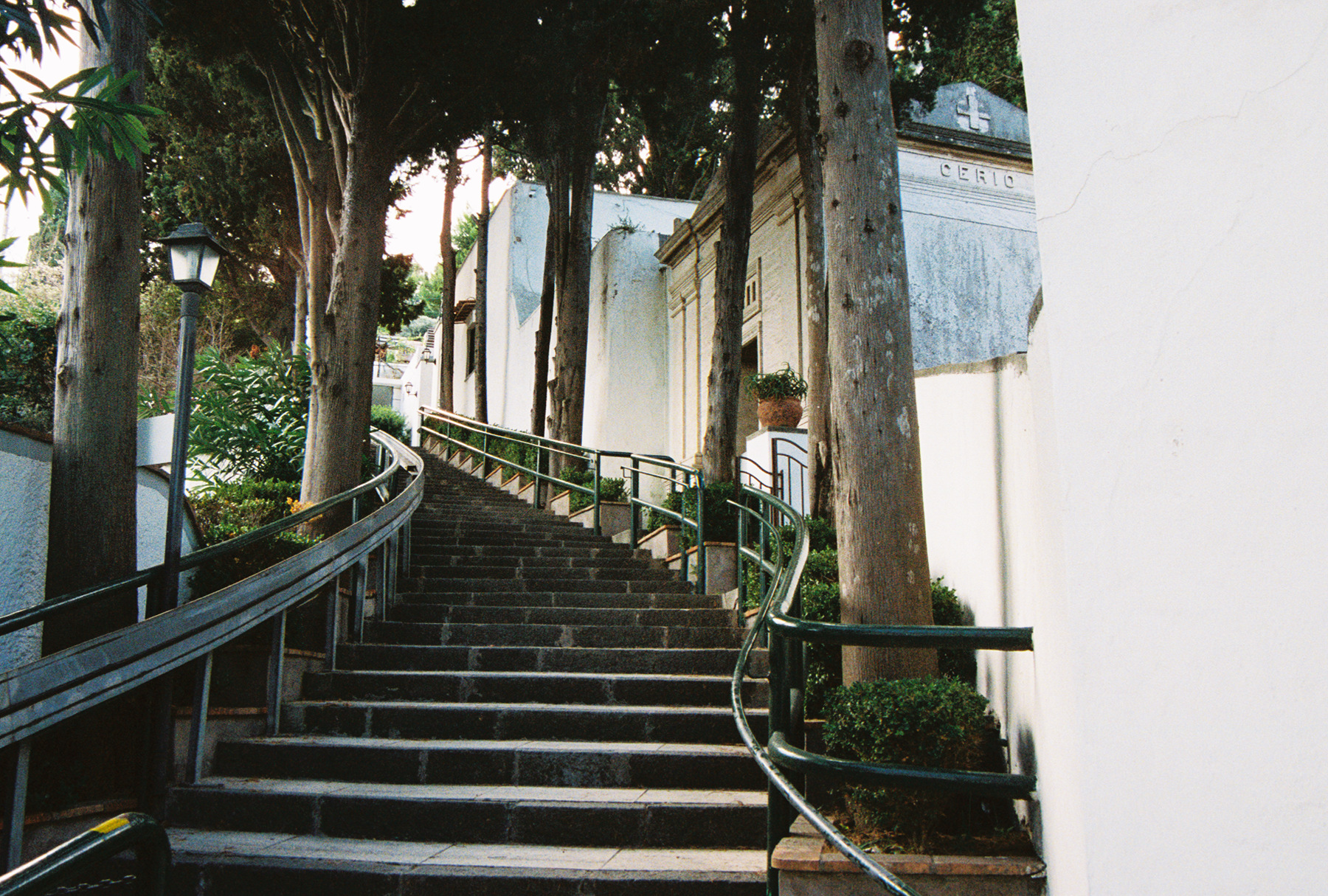
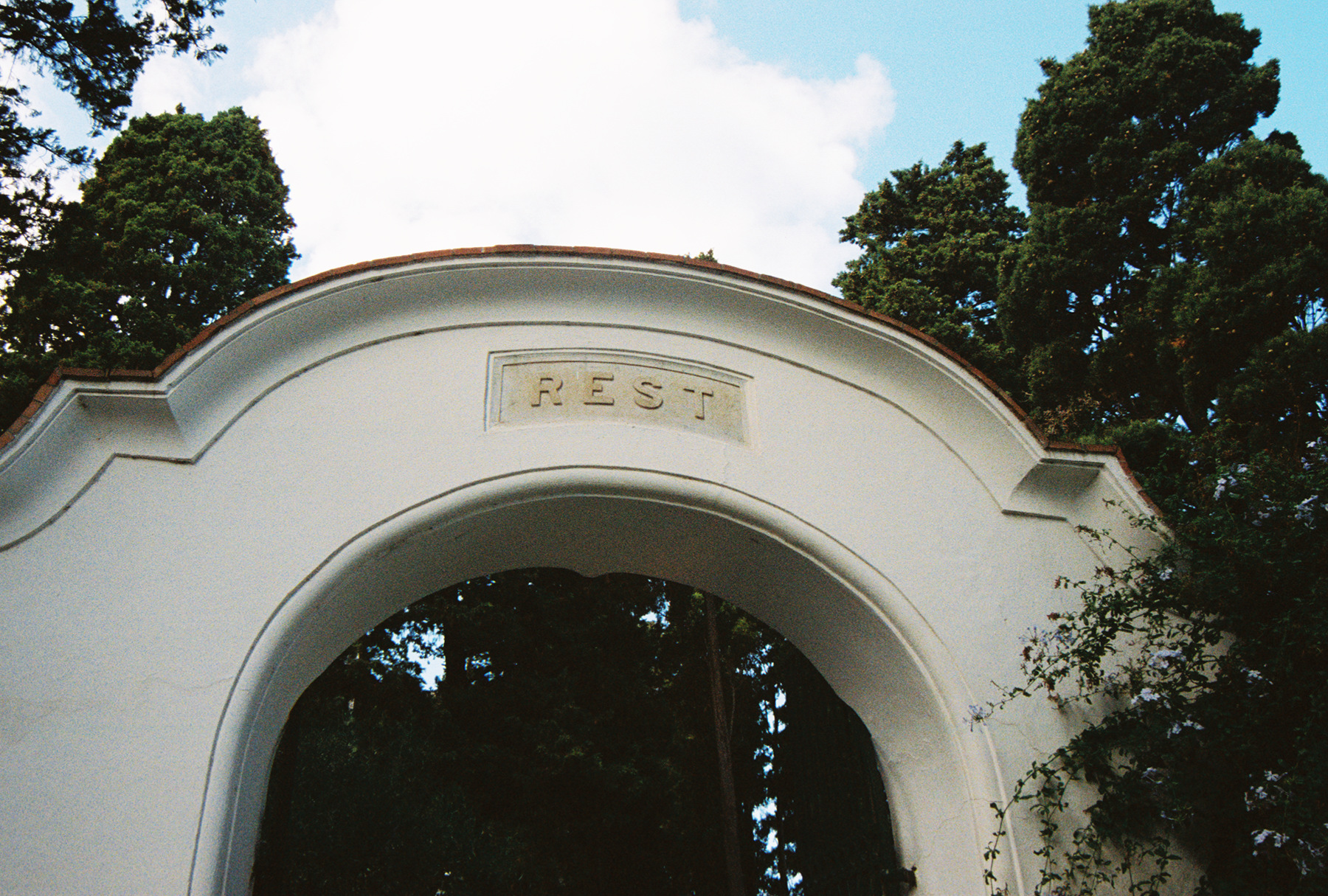
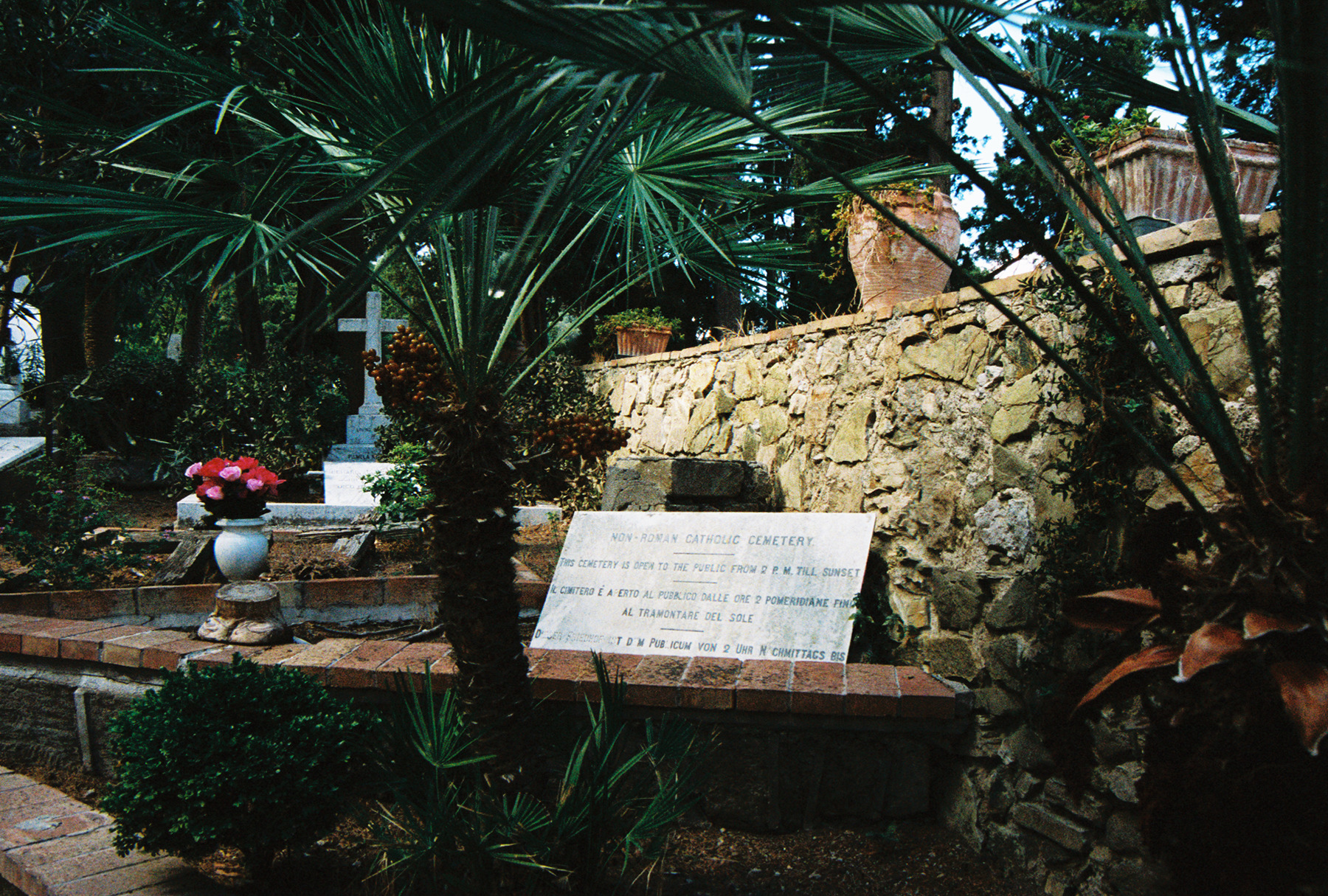
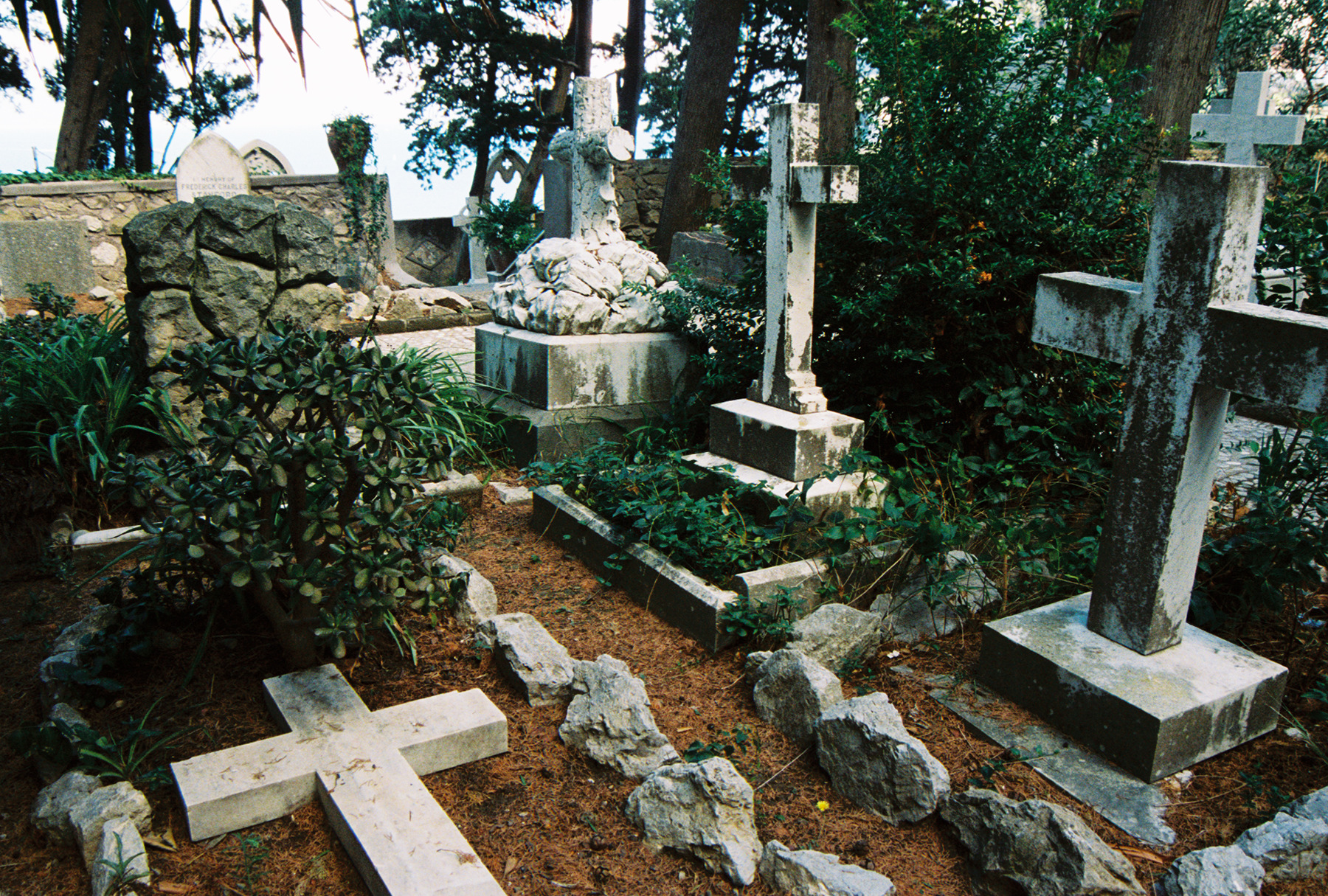
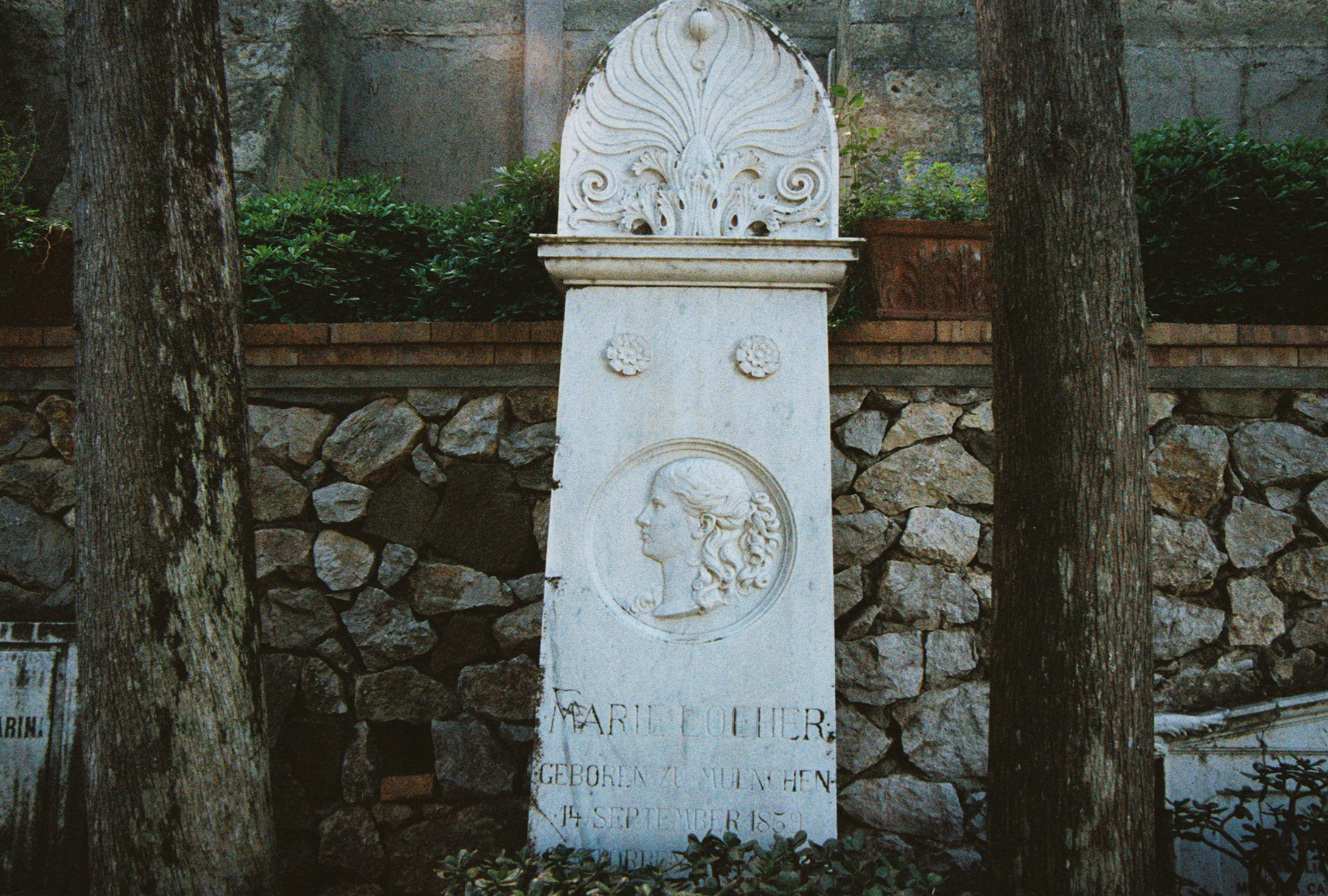
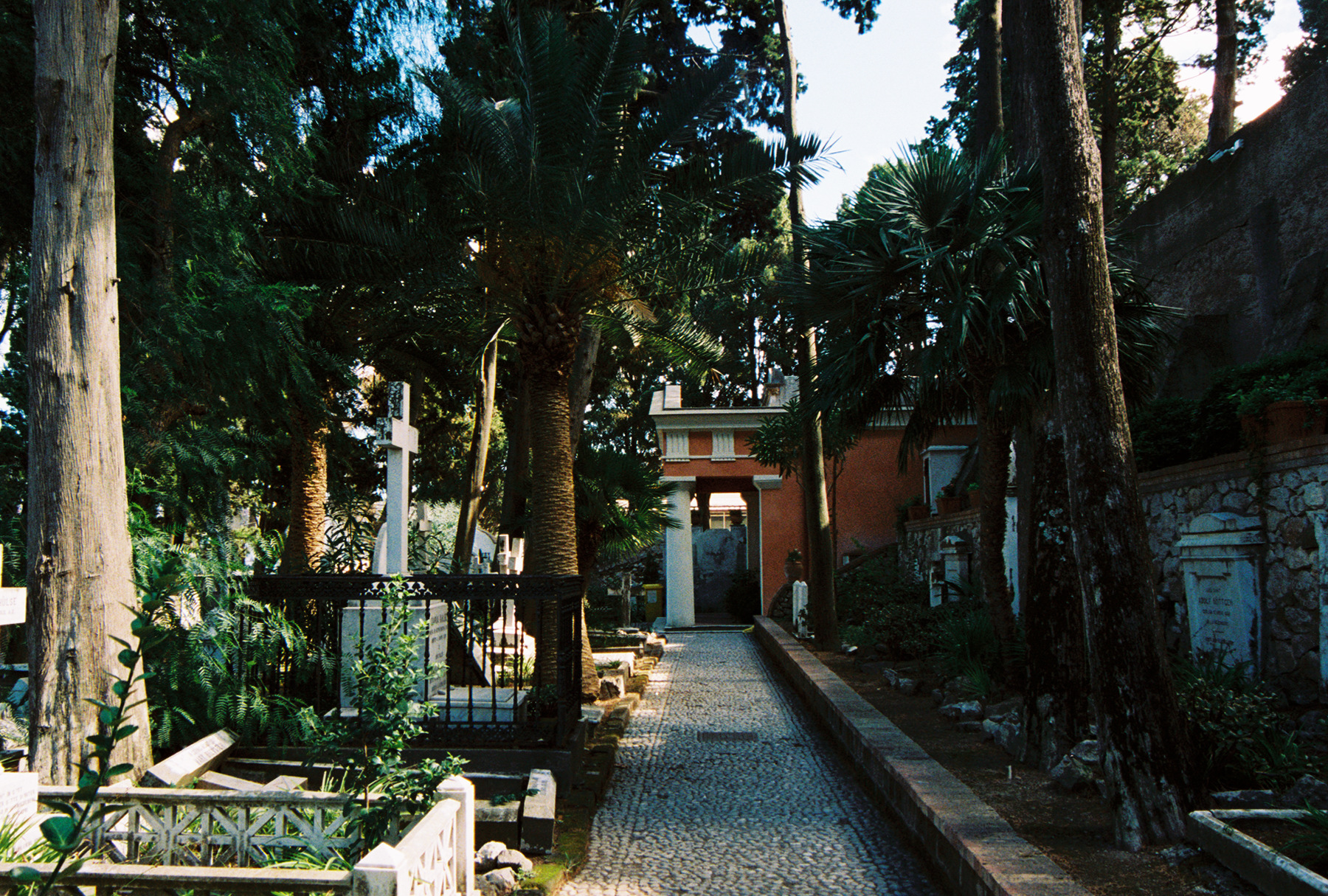
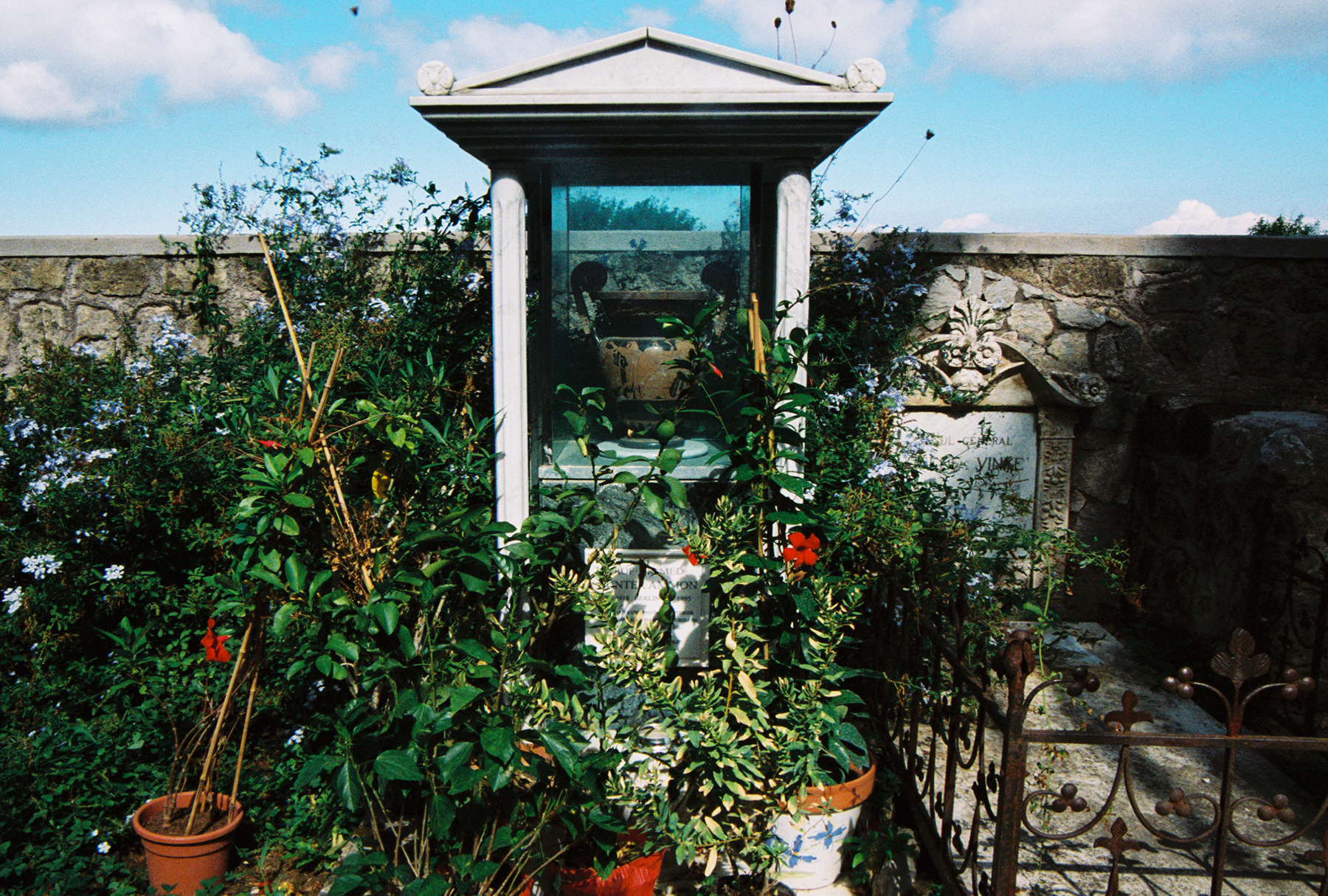
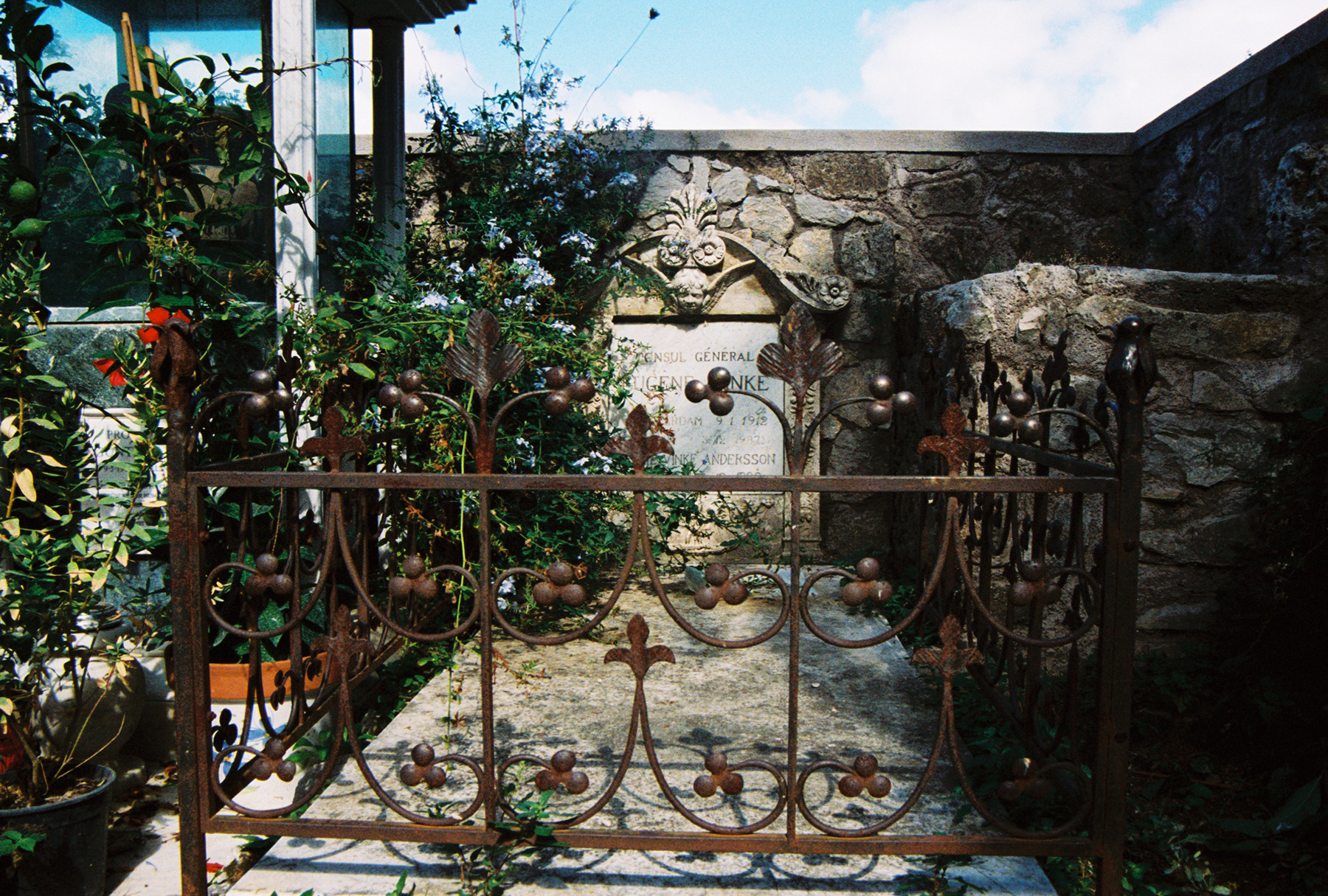
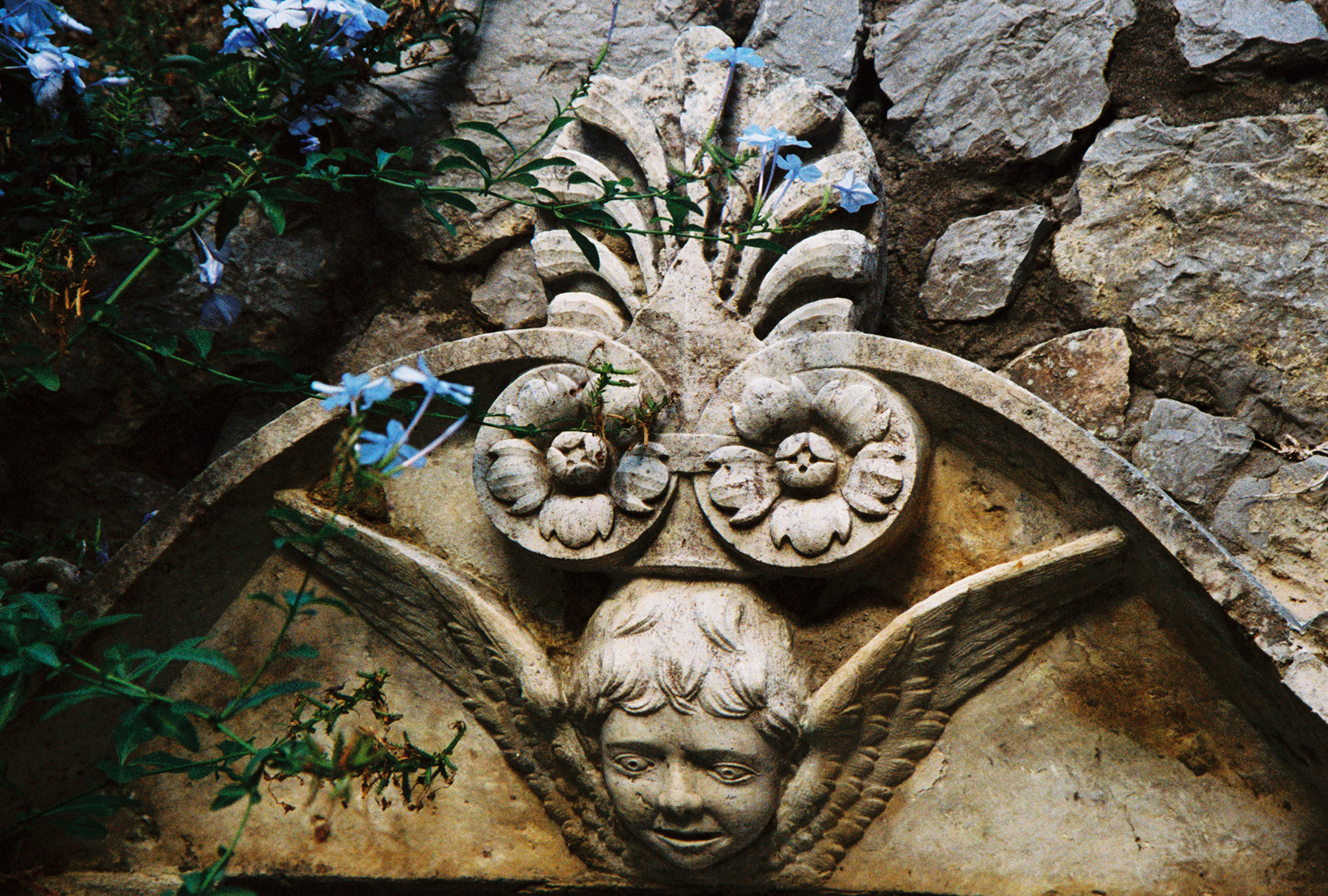
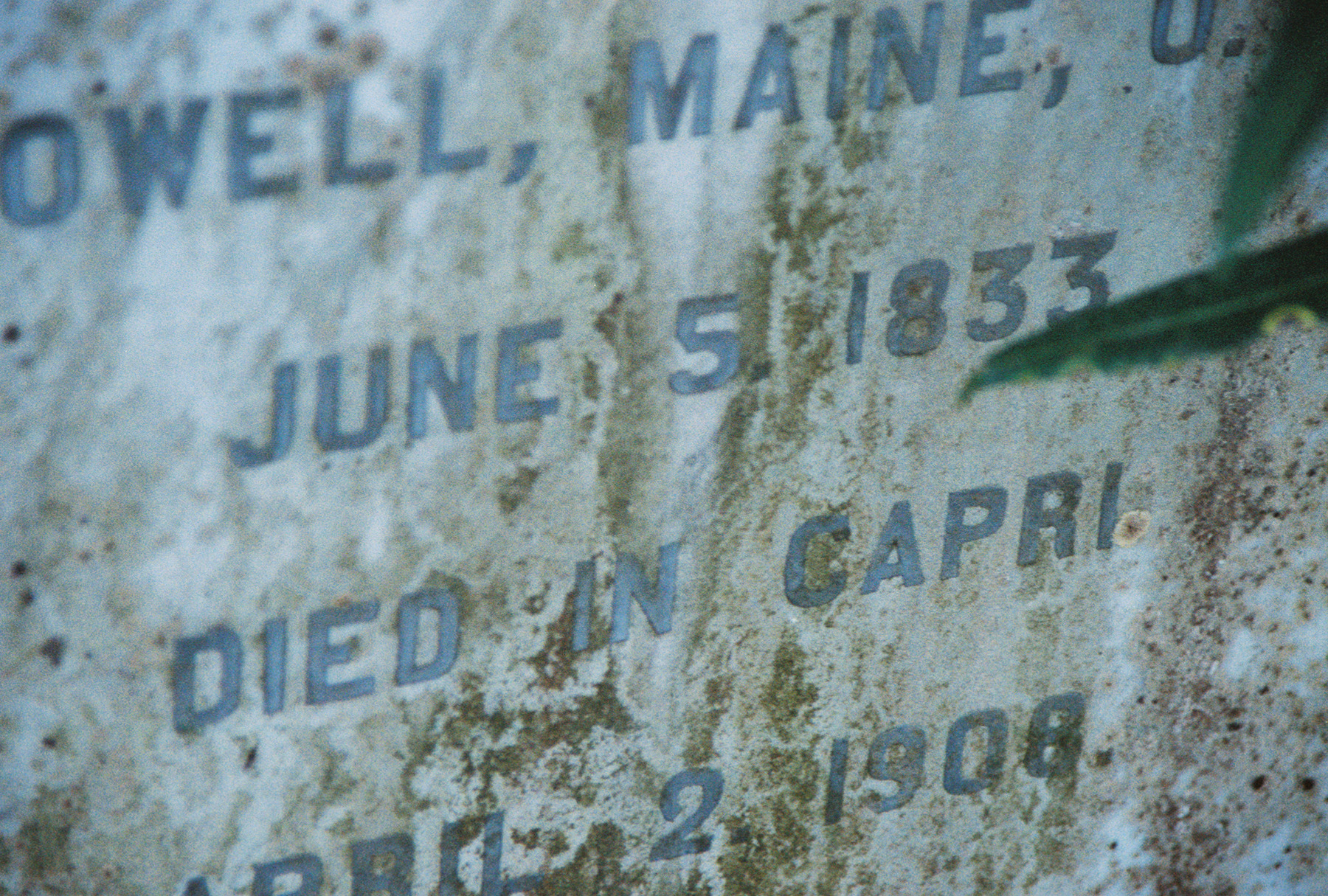
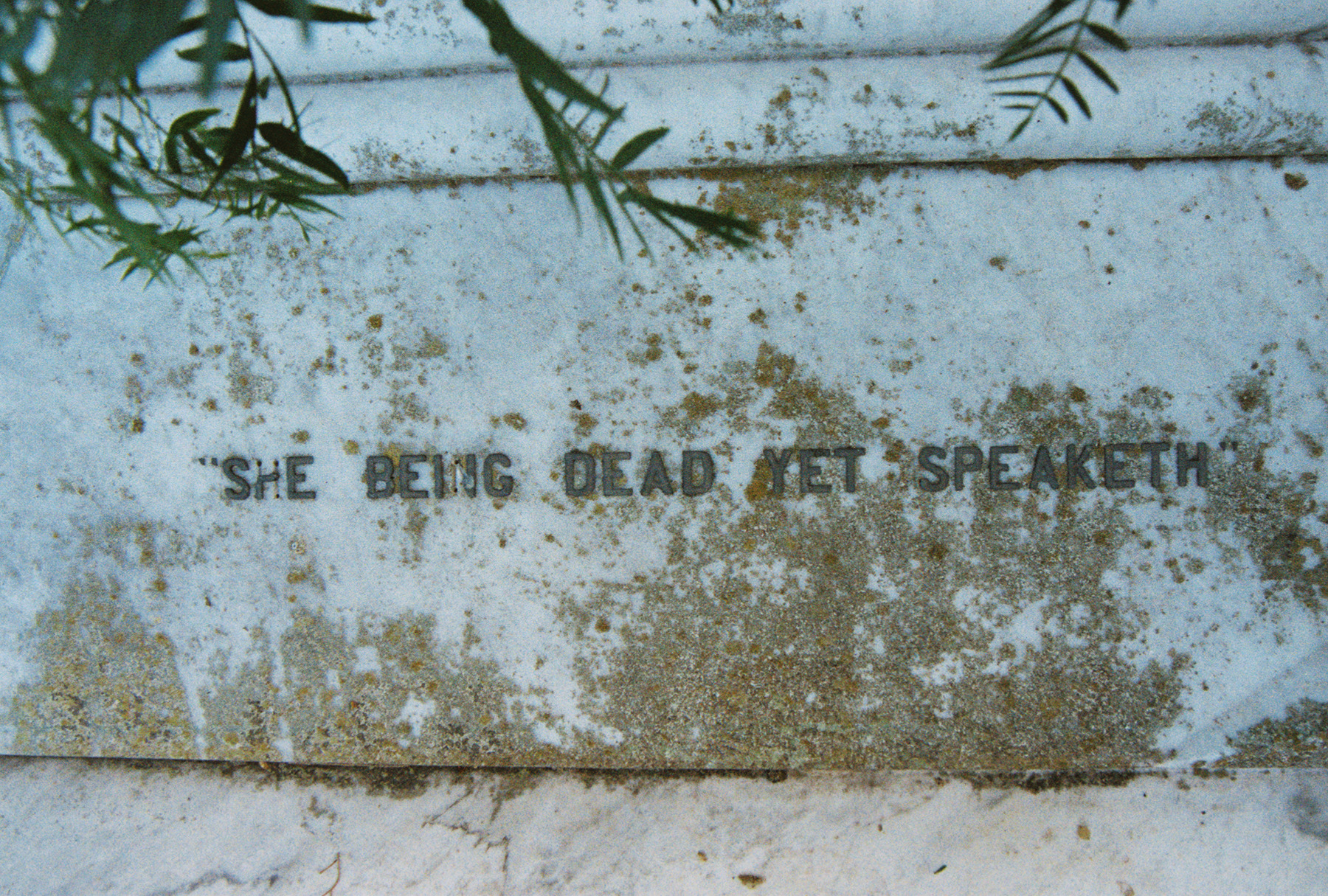
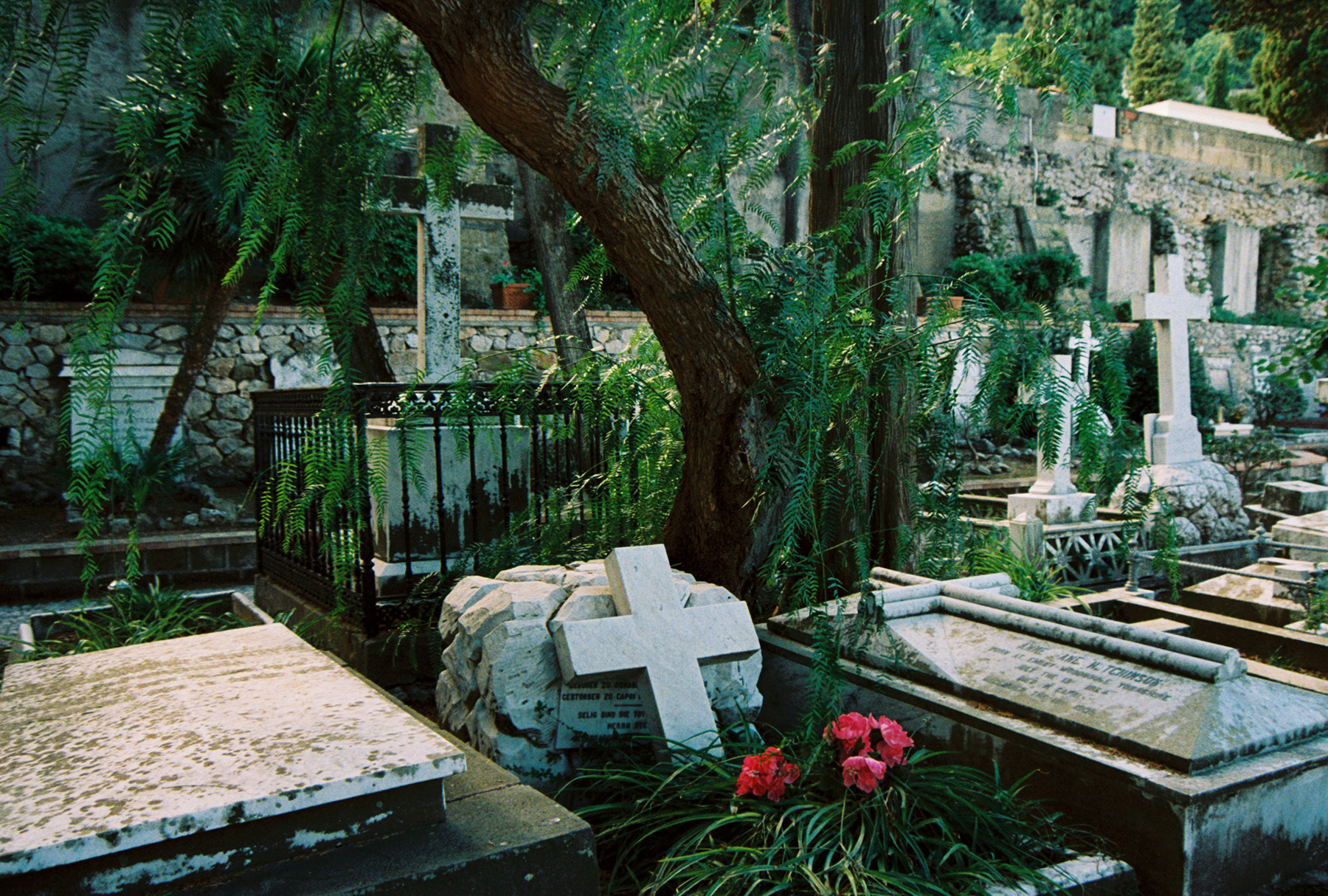
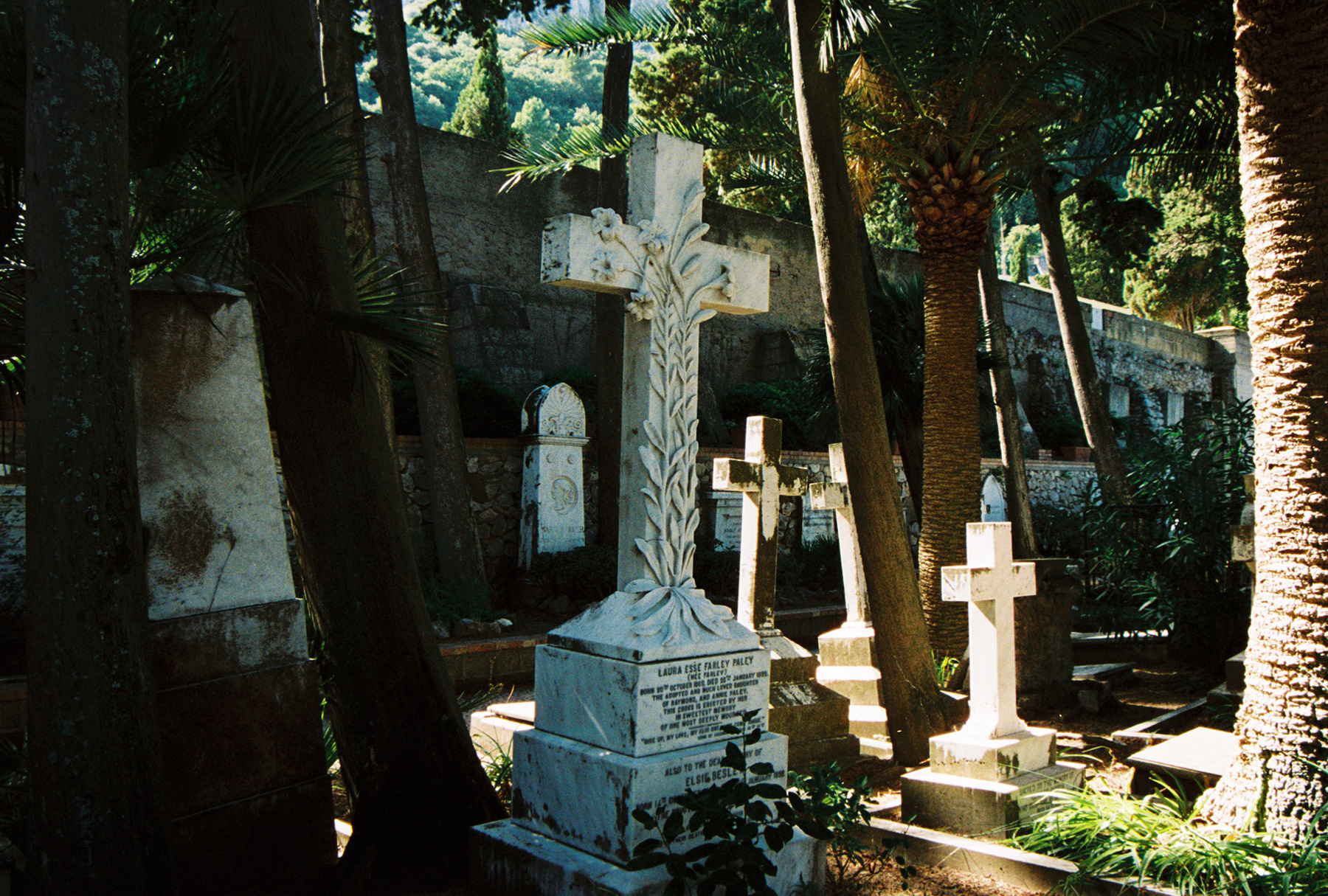
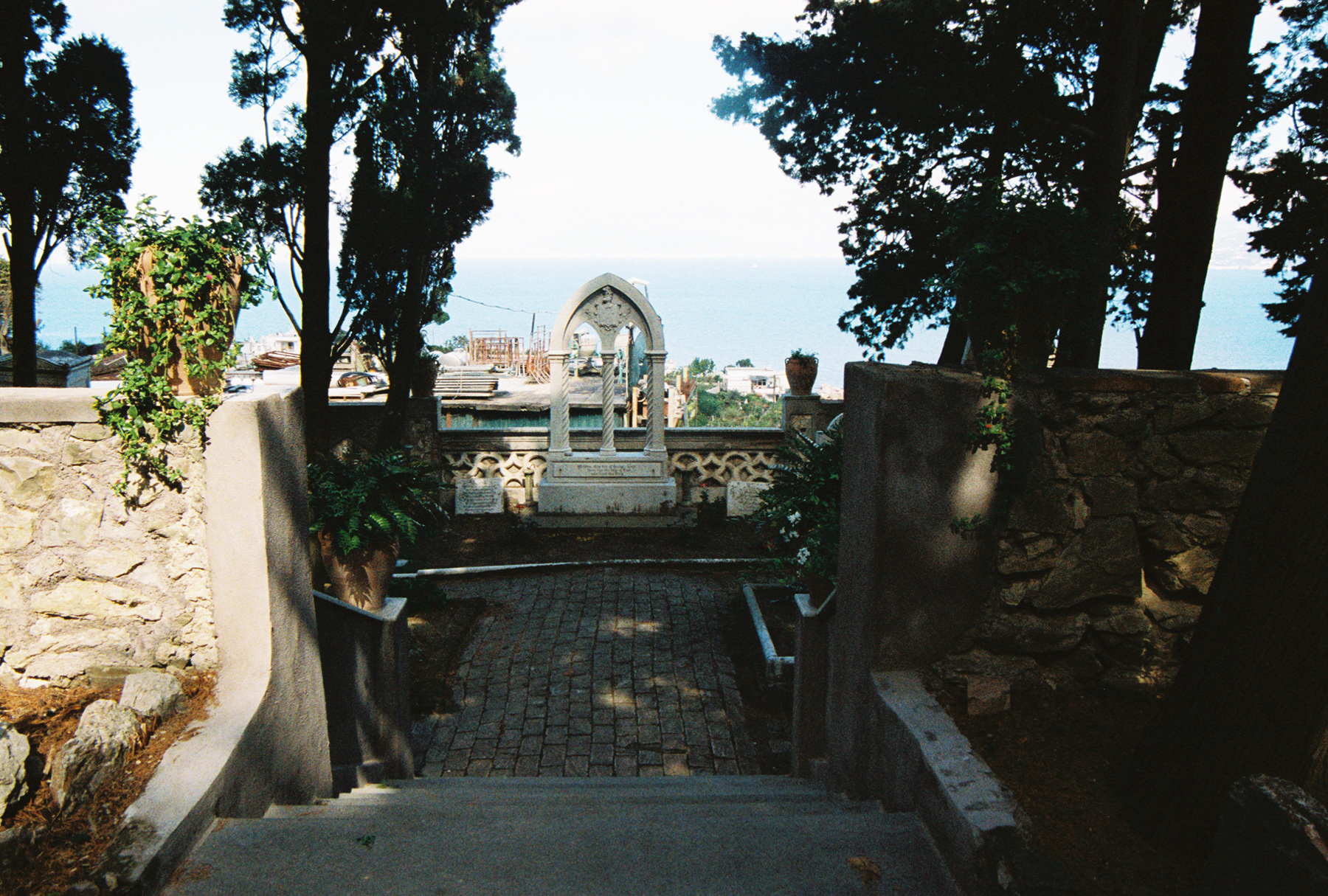
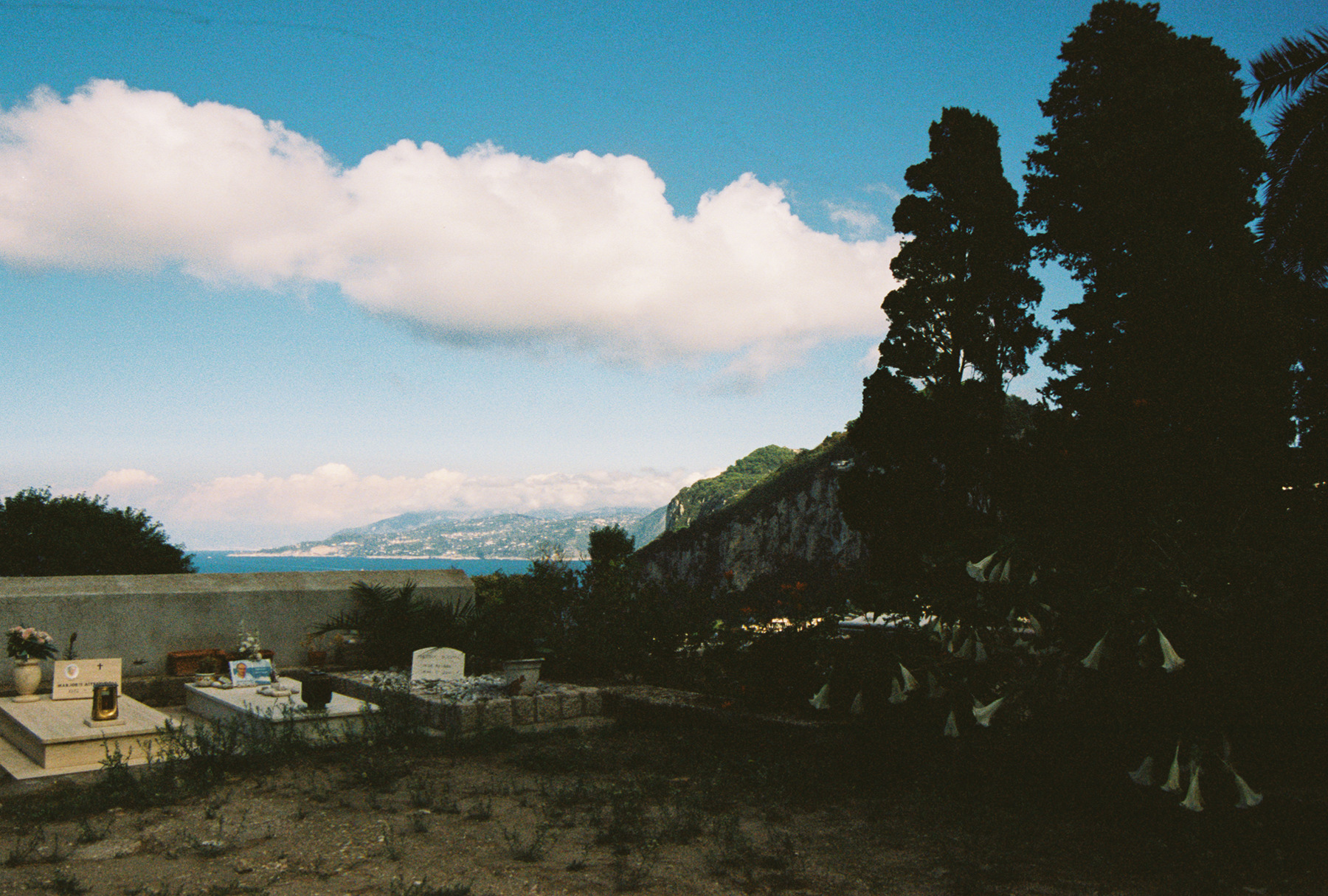
all photographs were shot on portra 400 and 800 – 35mm film and are copyright rebecca price butler – alovelettertorome.com – retrofocus@mac.com
I took a lot of shots in this magical spot and will be posting more soon!
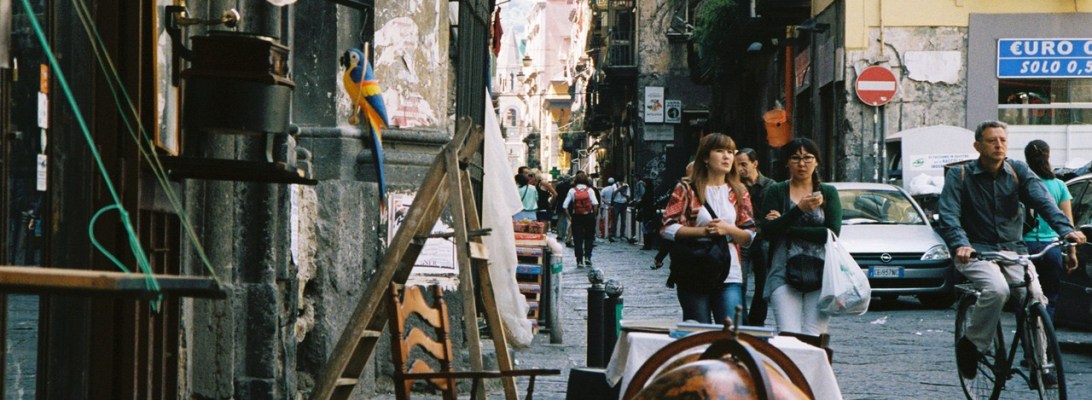
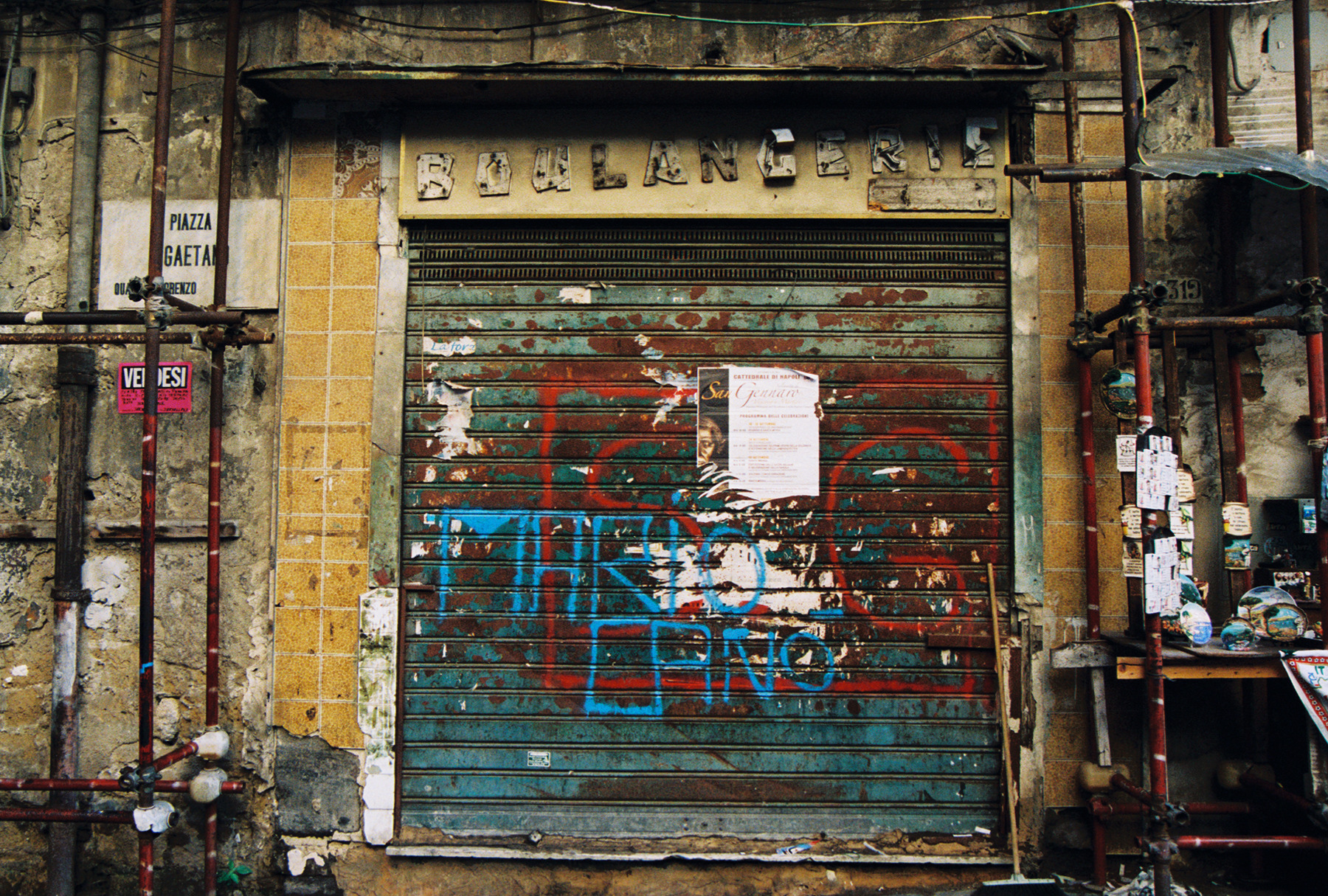
The old Greek section of Napoli, Italy is a recurring fascination of mine.
A closed boulangerie with a broom leaning against the store front. Painted pastoral scenes on plates. Rusted piping and peeling posters. Grafitti in bright colors.
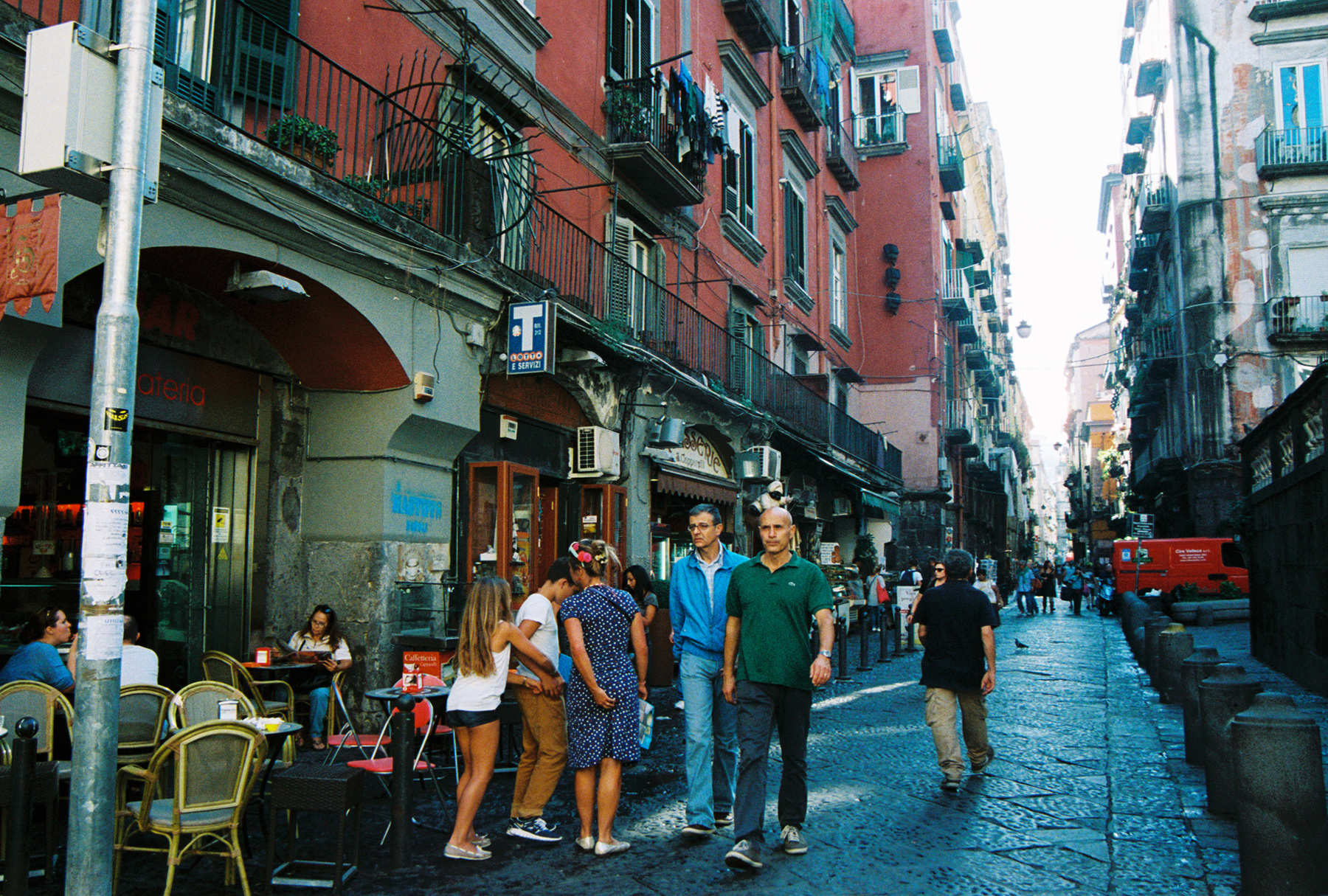
Caffe chairs sprinkled throughout the back streets of Spaccanapoli.
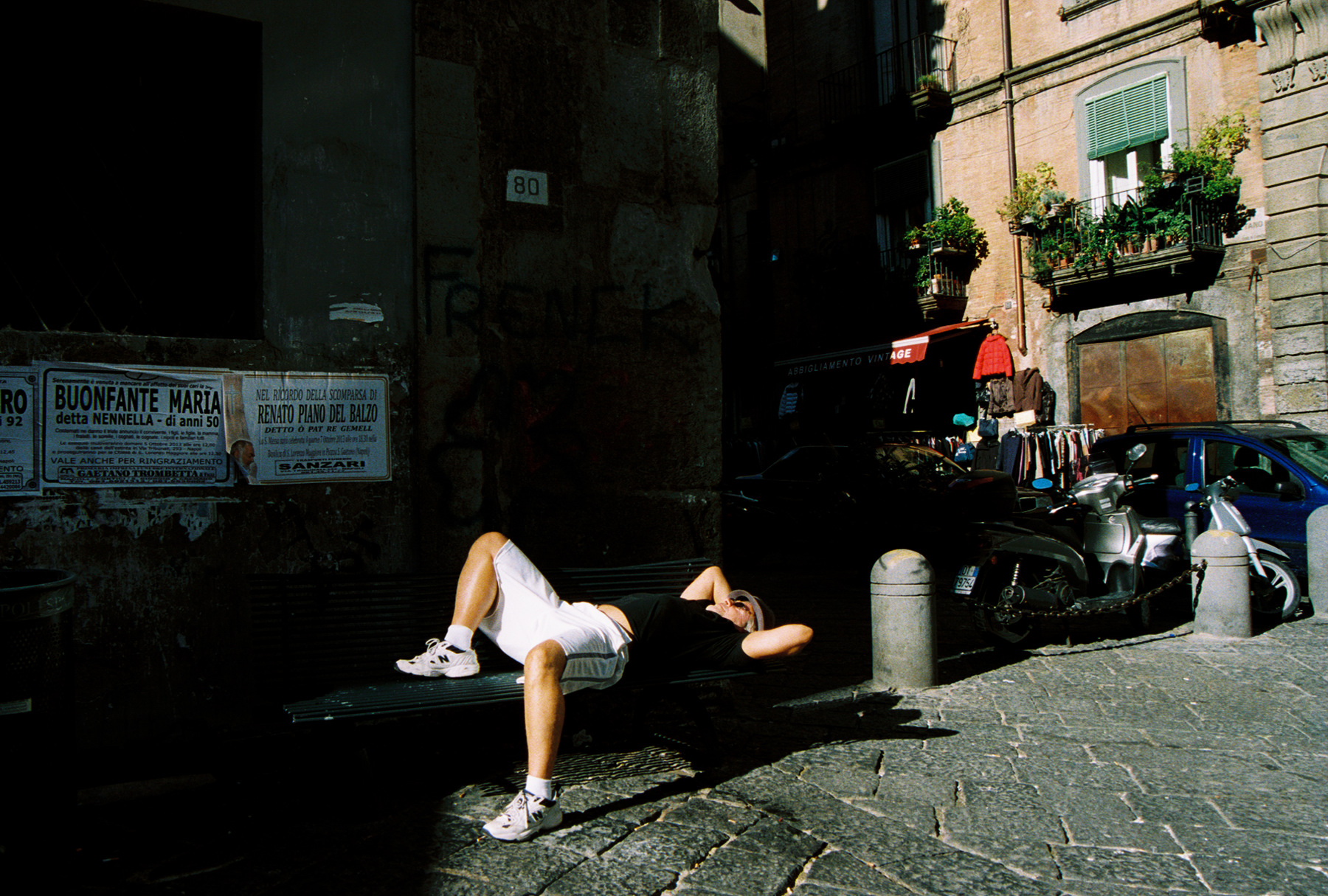
The sun finds it way though the velvet black shadows. Posters advertise operas I won’t get to see. Padre Pio forever in the background, his face found in taxi cabs, on walls, in churches, in caffes.
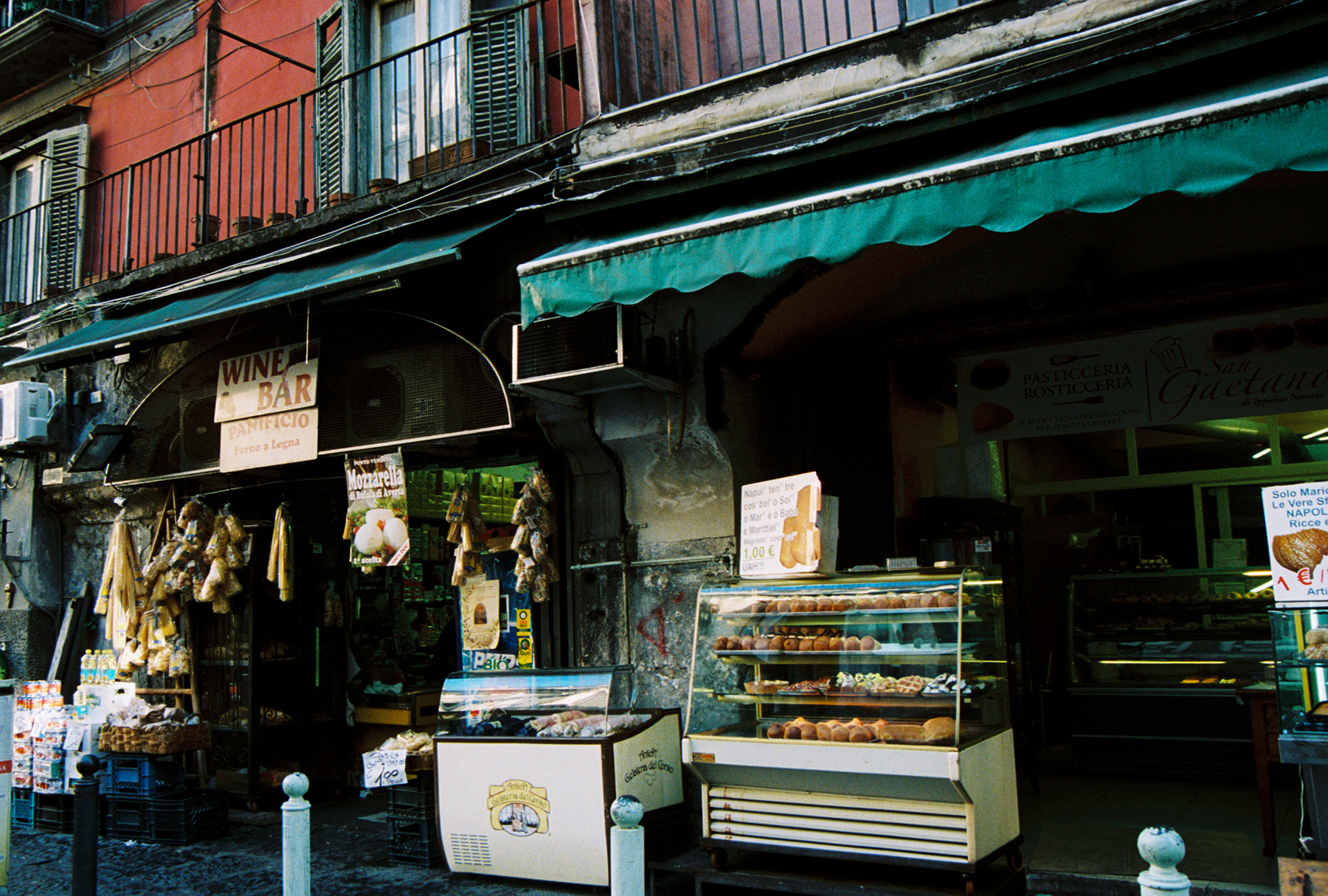
Hanging bronze dyed pasta, bufalo mozzarella from campania, rows of inviting rum-soaked baba cakes filled with rummy yellow cream, tiny wild strawberries, Sfogliatelle.
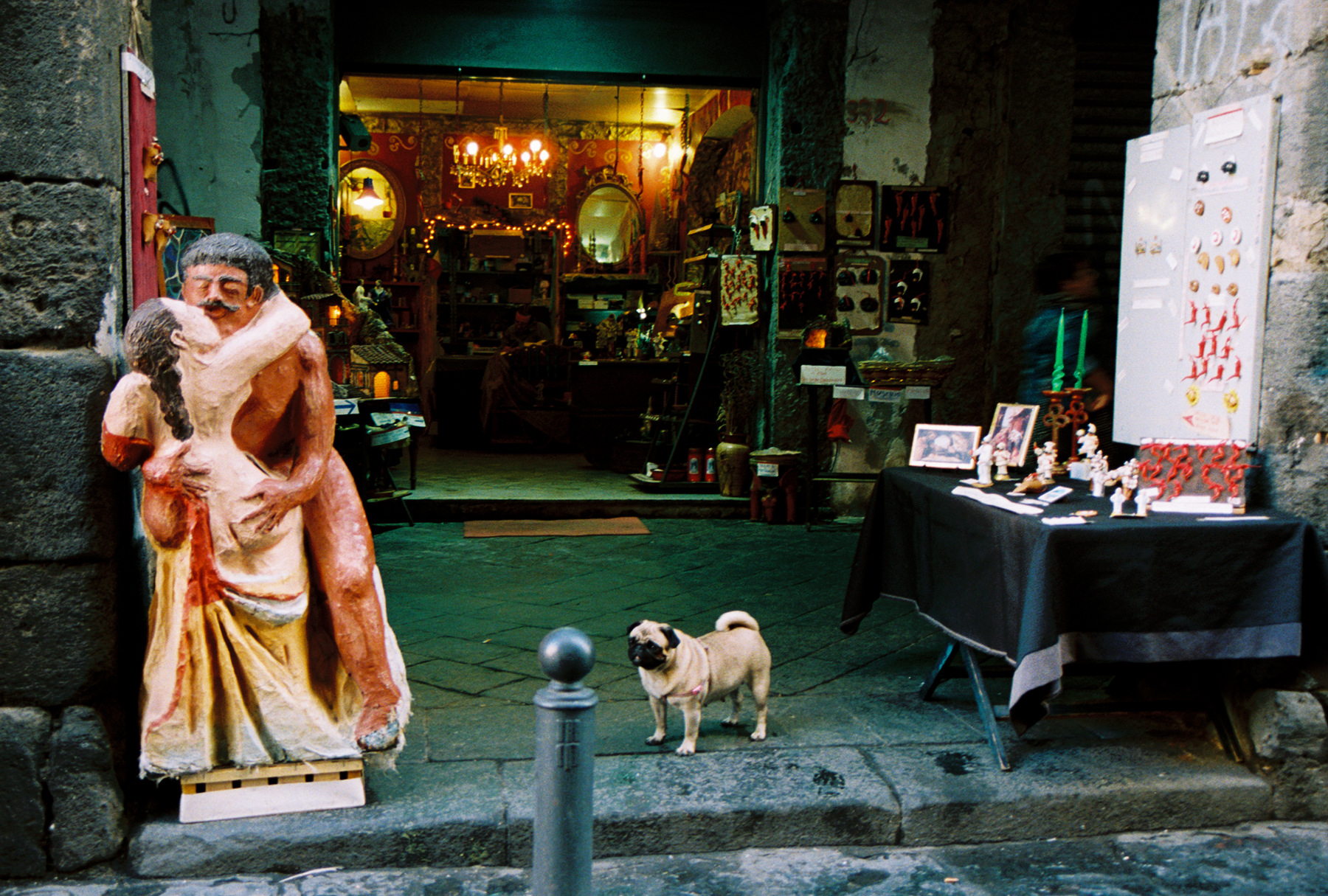
Two “lovers” embracing in front of an iconic “second hand shop” full of Neapolitan treasures overseen by a curious little dog.
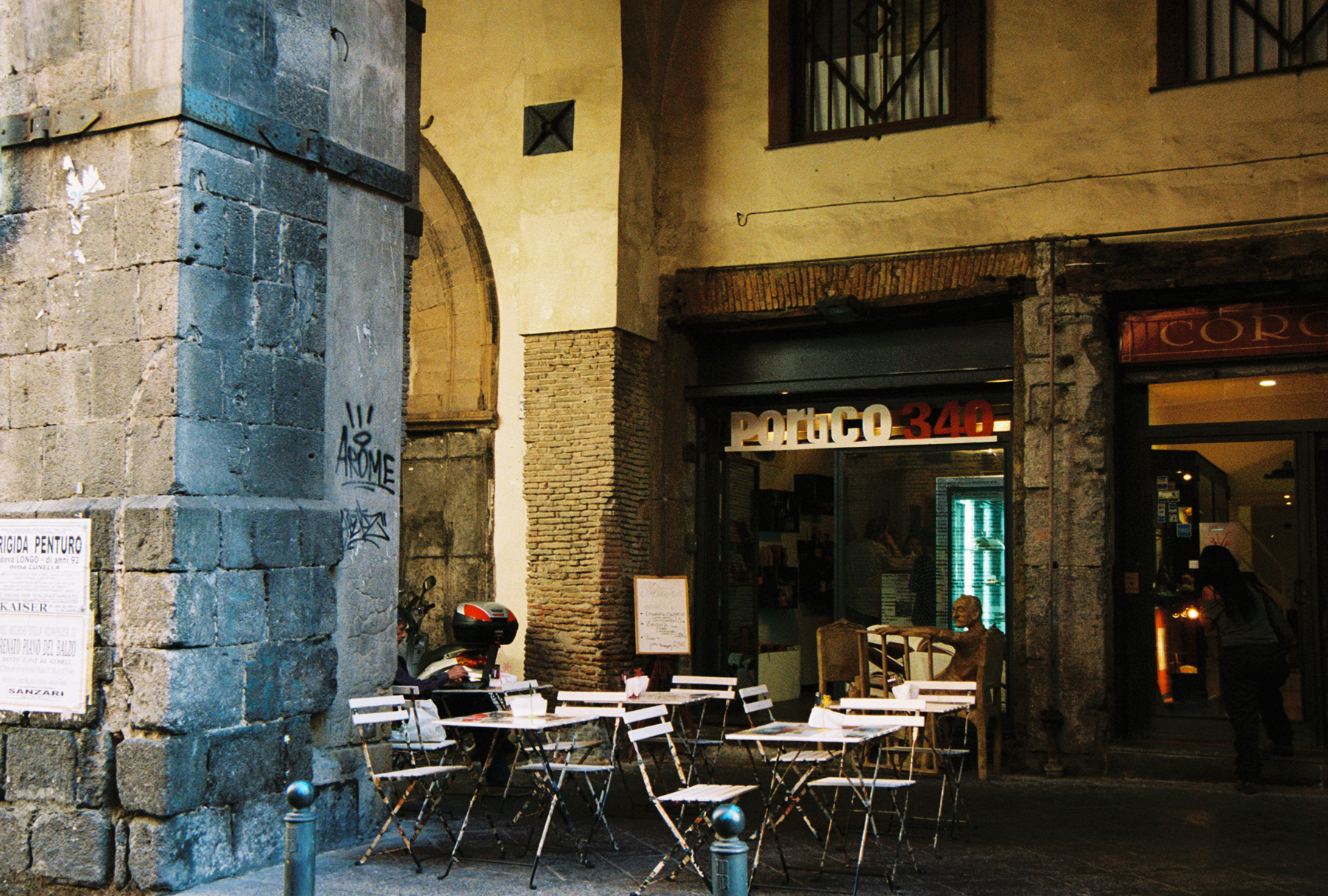
The simple cafe tables and chairs in front of artisan shops and caffes with a sculpture of an old man in the background.
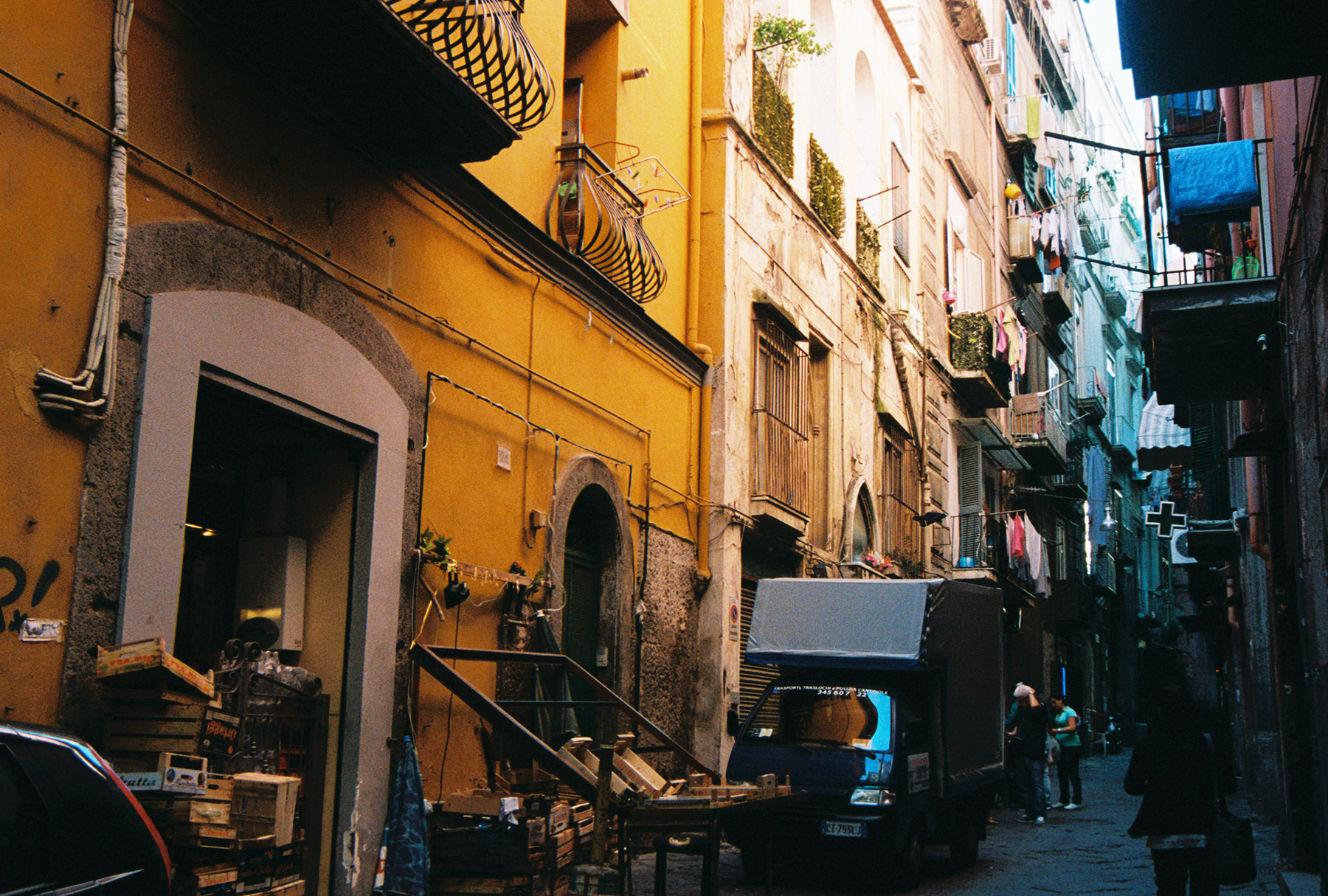
Every day life in an alleyway; people, a truck delivering goods, empty vegetable and fruit crates, the golden mustard apartments and hanging laundry.
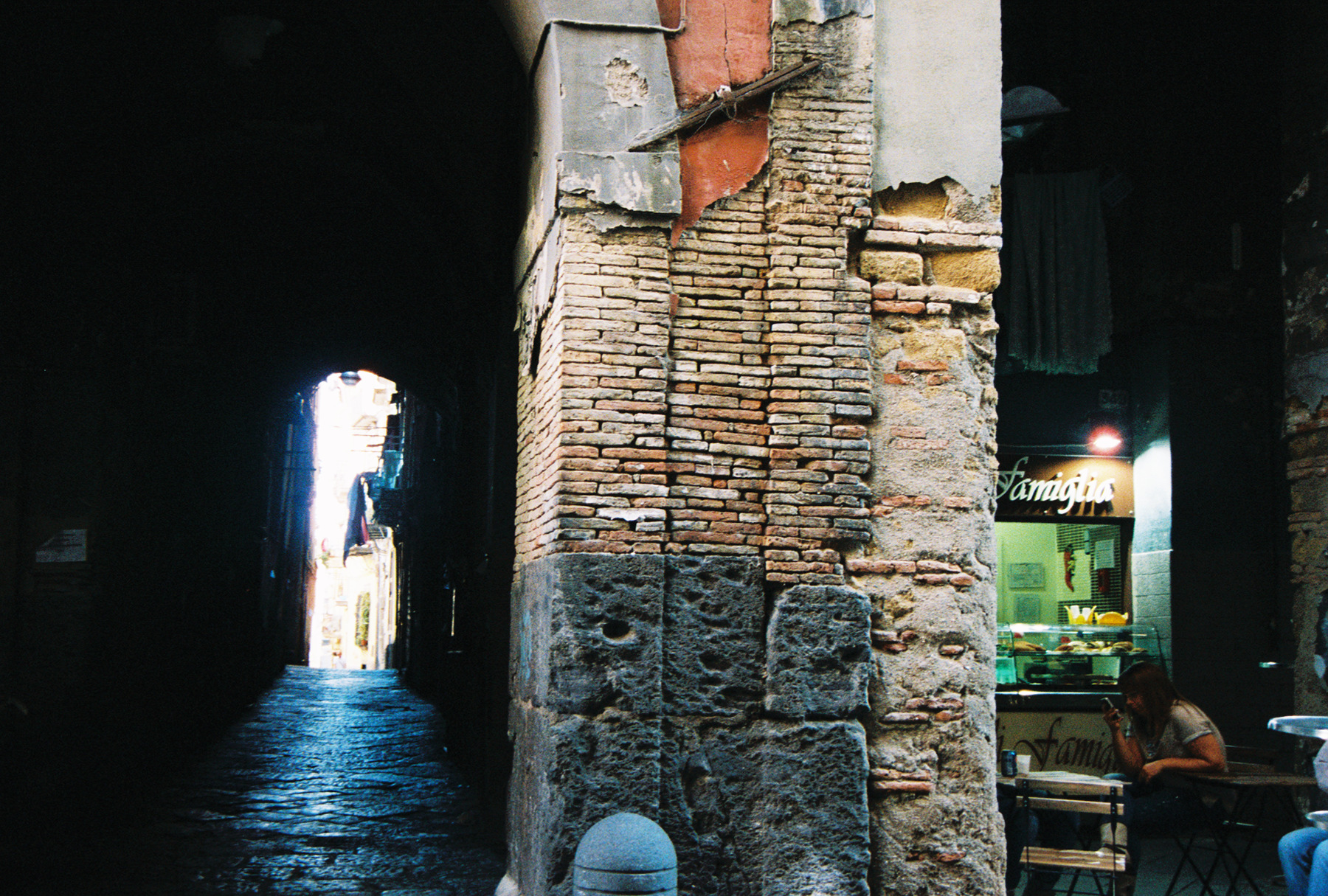
A baroque awning, layers of brick from different centuries, buildings and façades built on top of each other, a neapolitan girl on her mobile, another caffe beckoning the passersby.
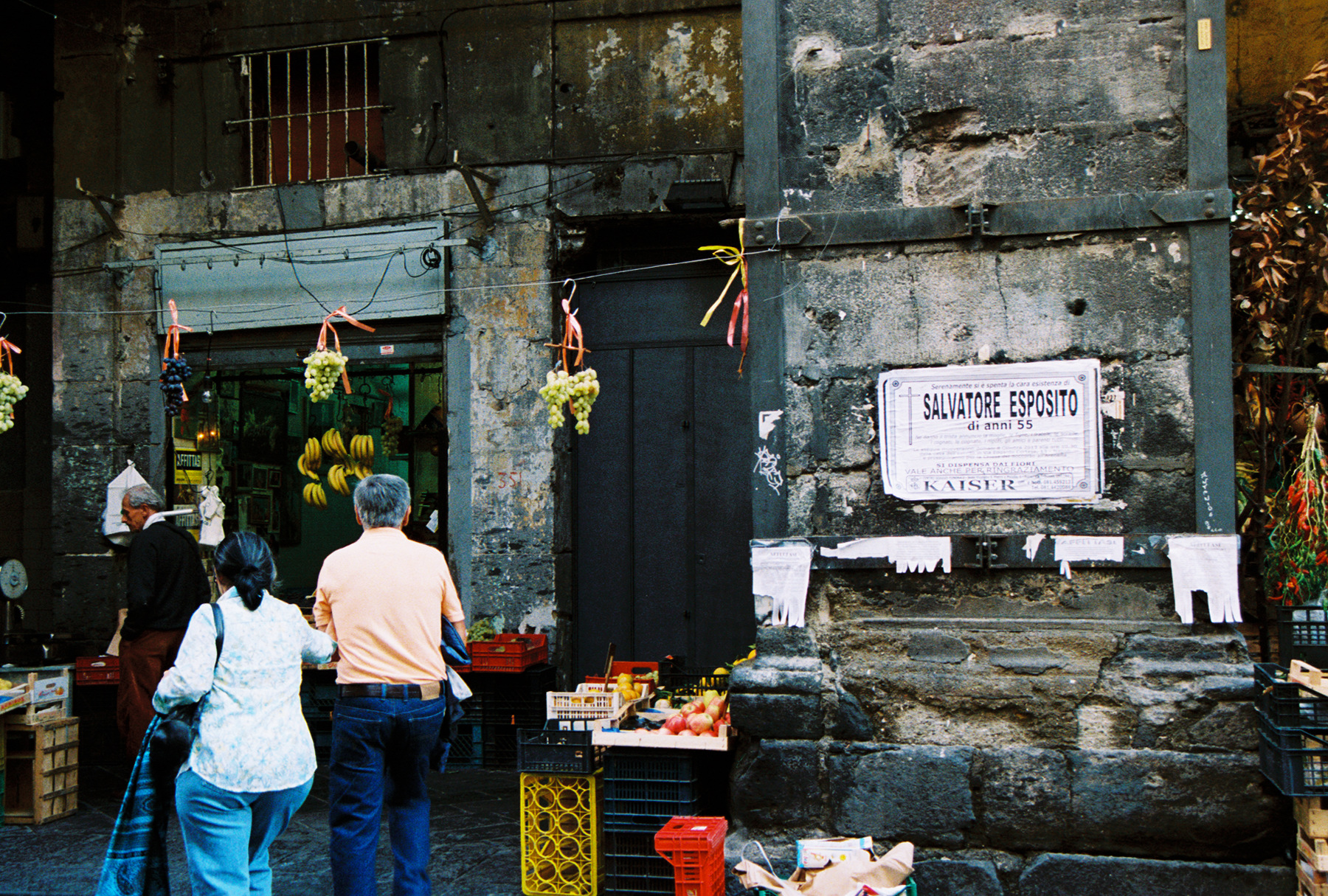
Hanging fruit and ripe red campania tomatoes and an early pasieggetta.
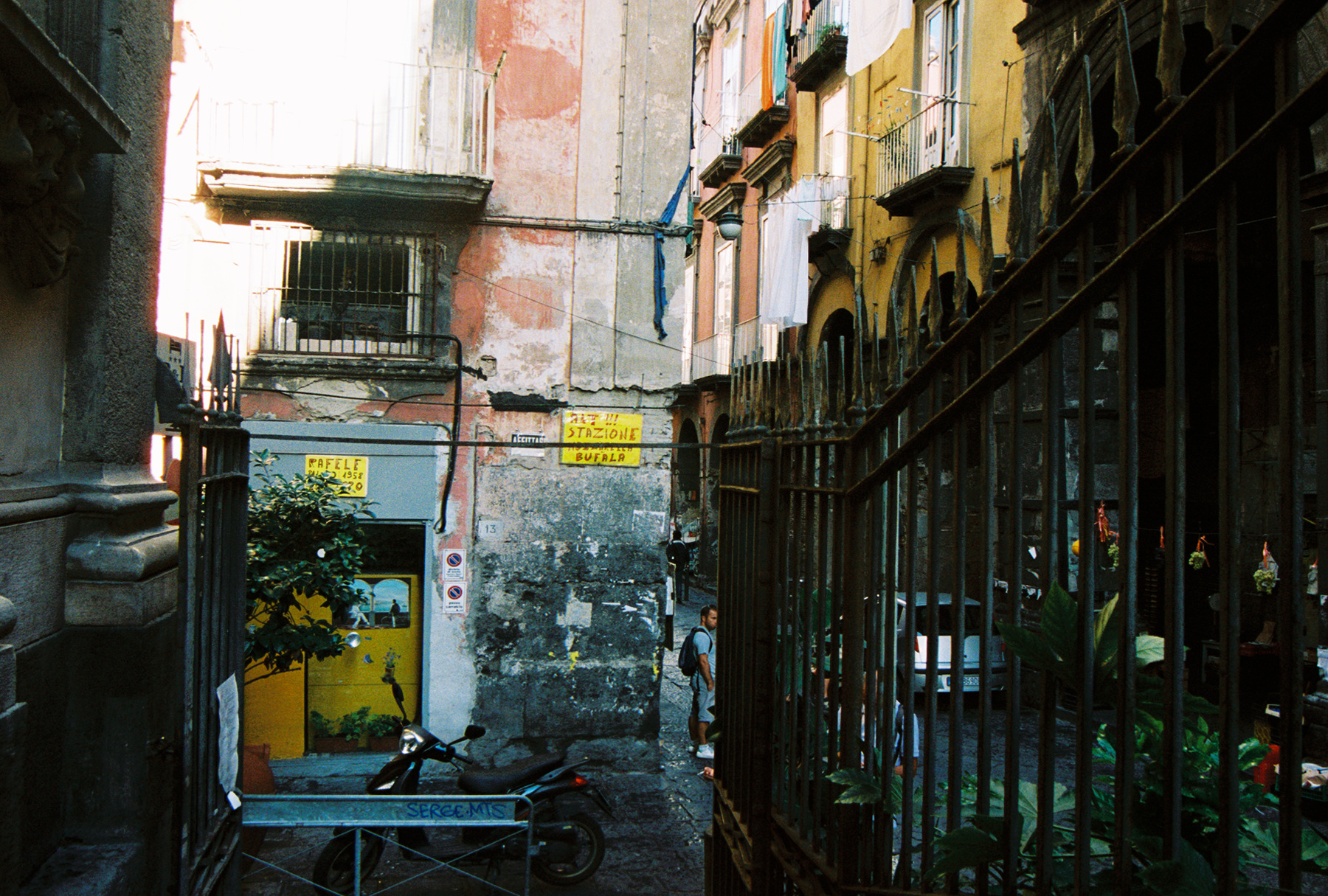
I love the corners and crevices and surprising bursts of yellow in between the rust.

Ancient pillars in residential neighborhoods, forming millennia old foundations.
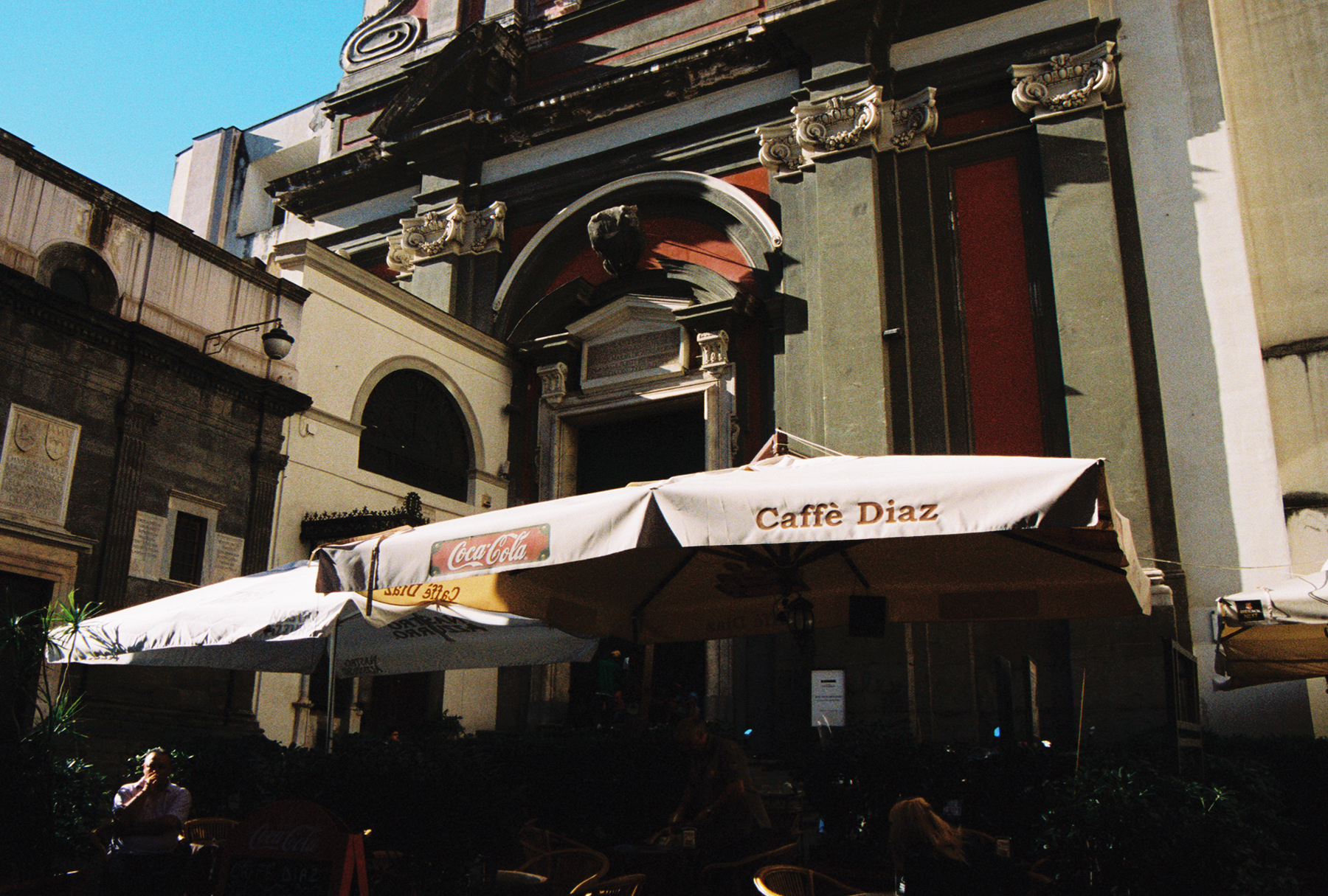
Another beautiful church front and a charming caffe.
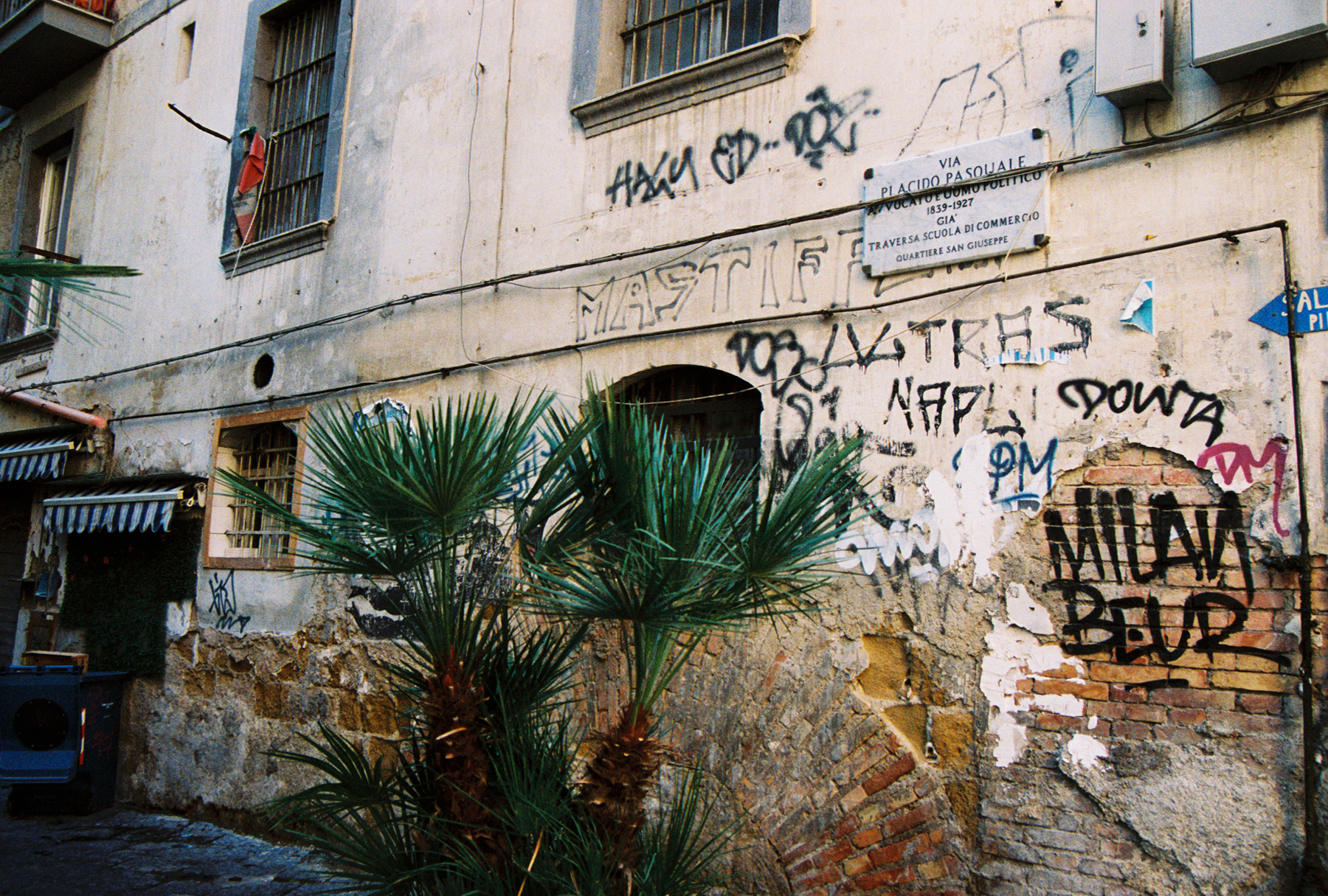
The quintessential graffiti of Naples, as ancient as the tags and scribblings on Pompeiian walls.
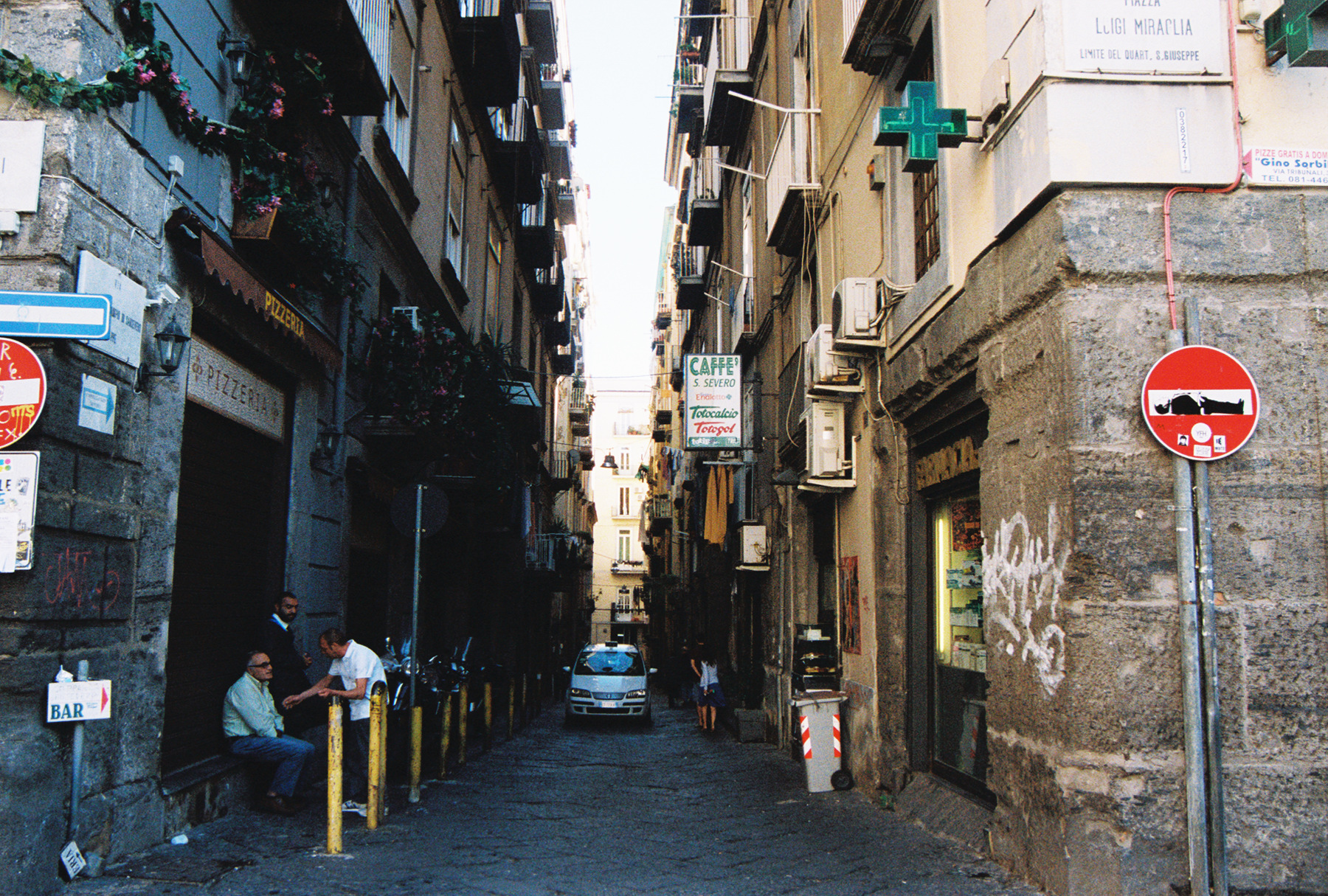
The old guard and the ‘new art’.
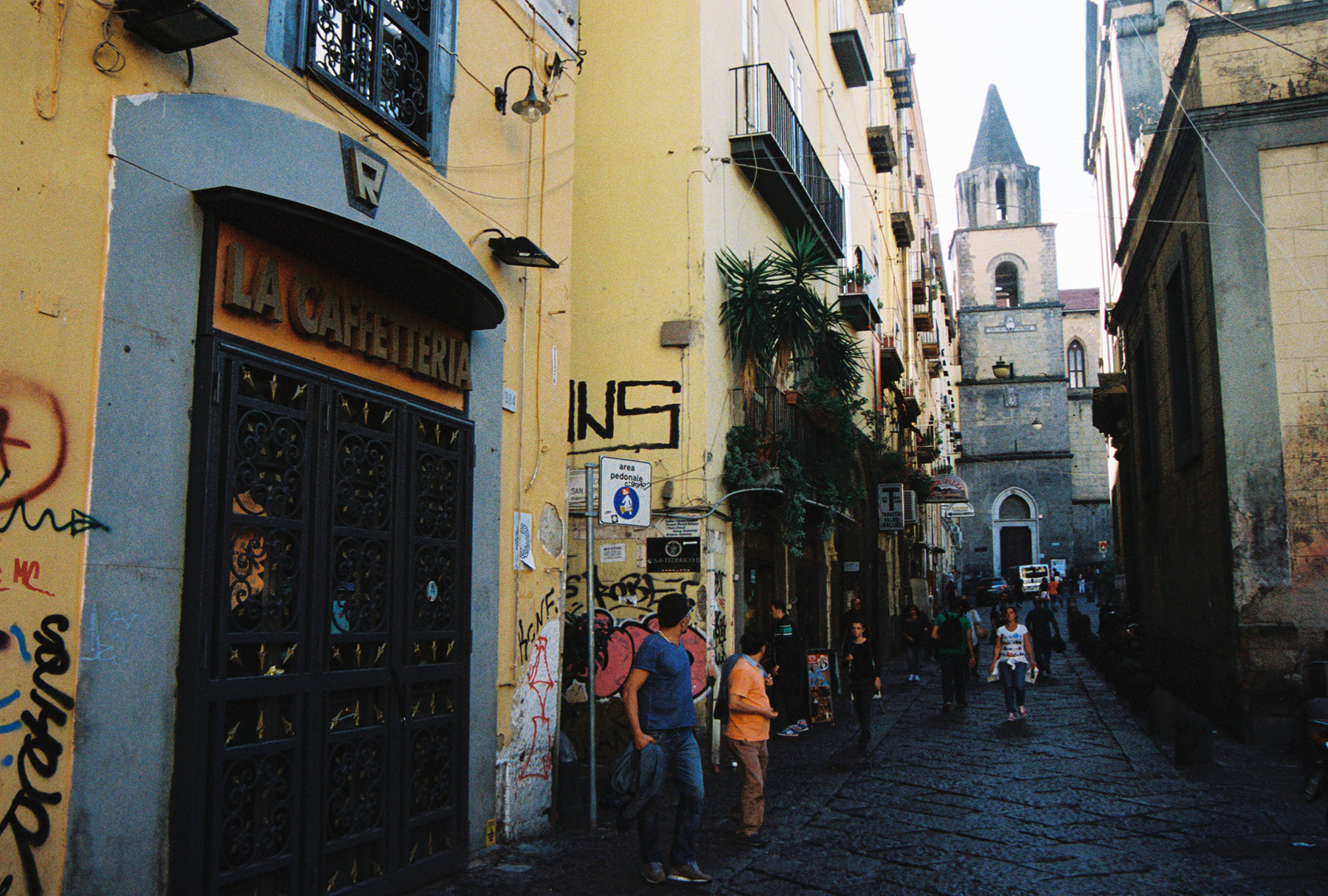
Bursts of color and brightness and the scent of glorious coffee floating in the air at every turn.
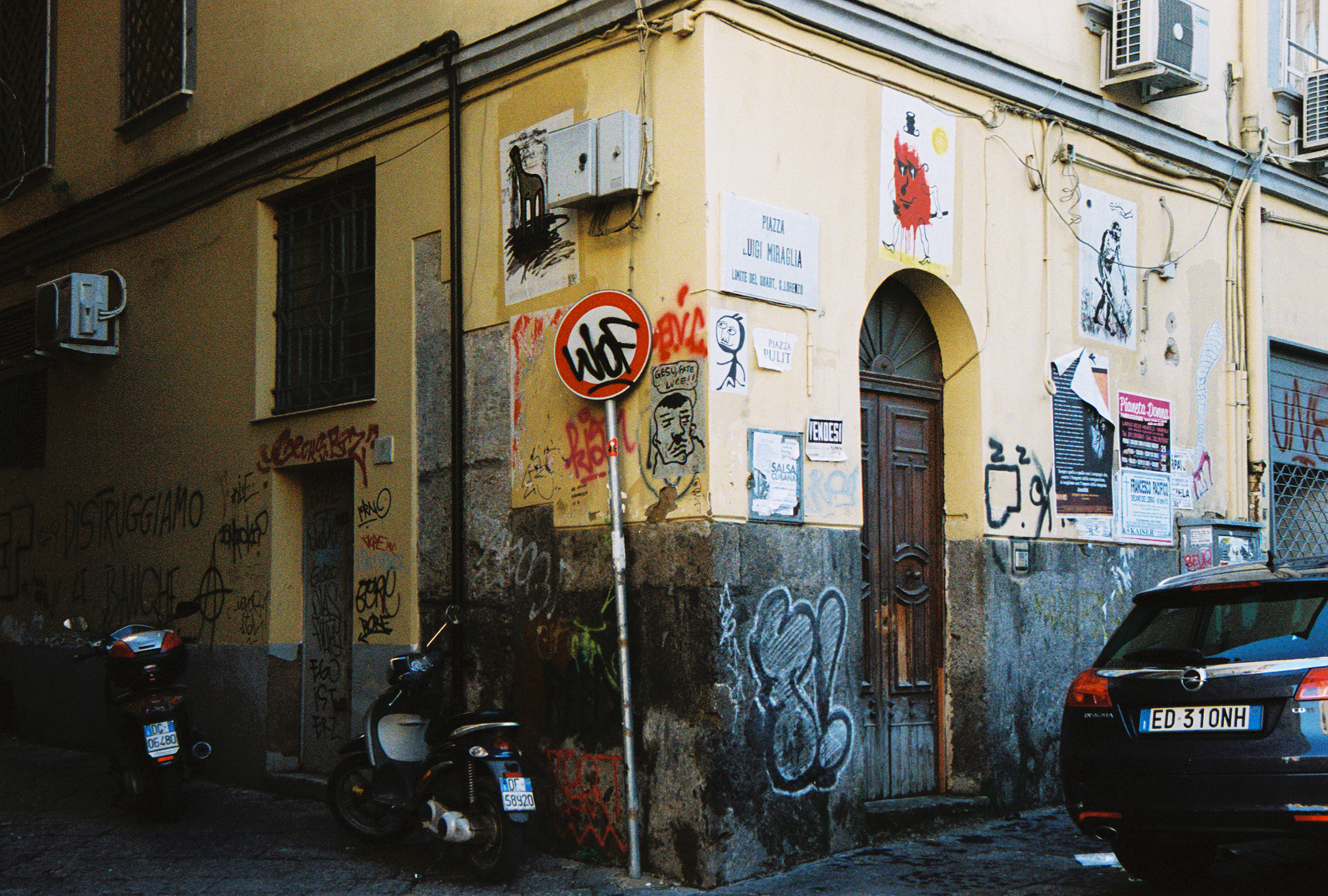
More graffiti, and the vespas and cars and Neapolitans seem all the more nonchalant about it.
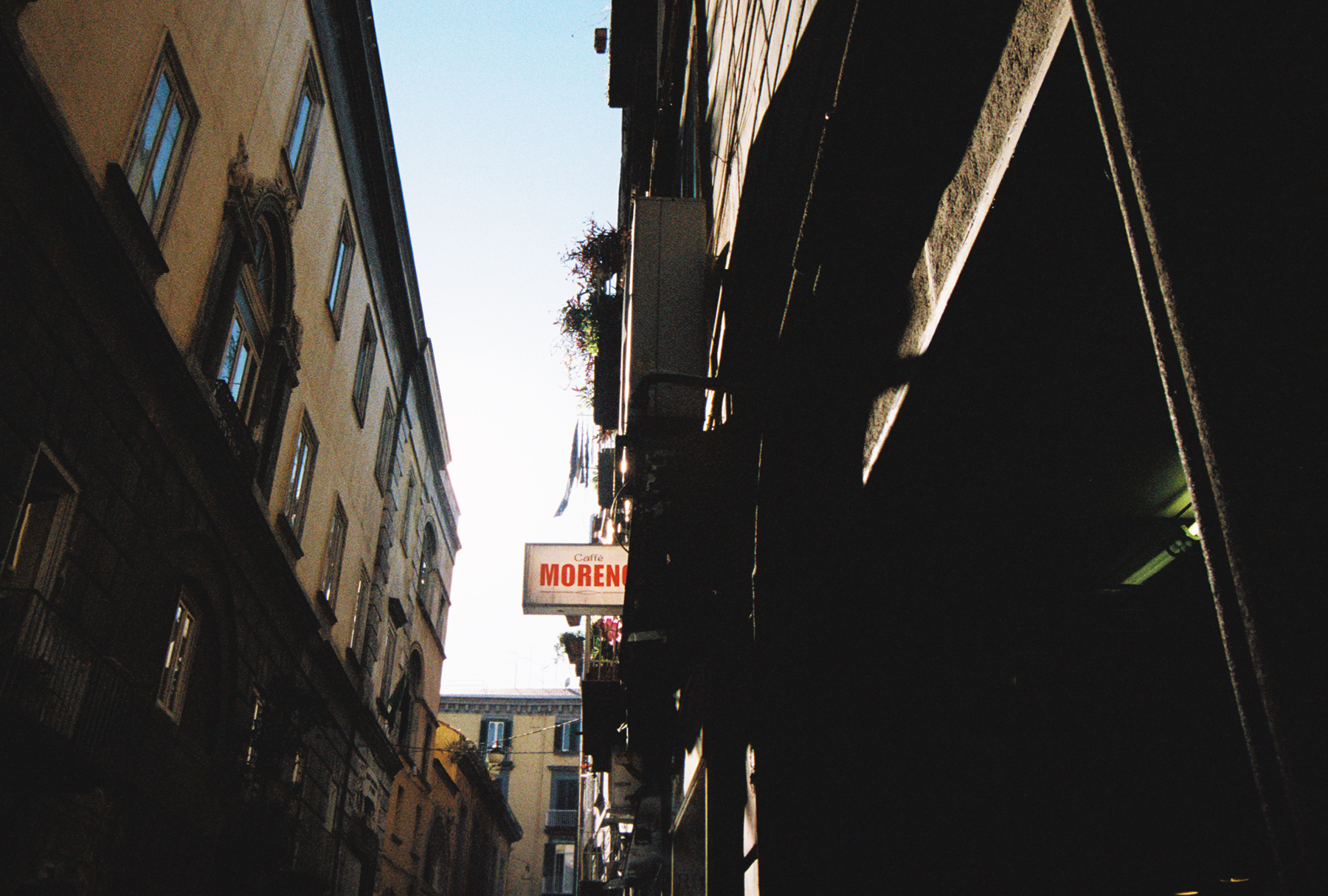
I always seem to find the caffes… I always feel like I’m on some unspoken mission to drink the best coffee.
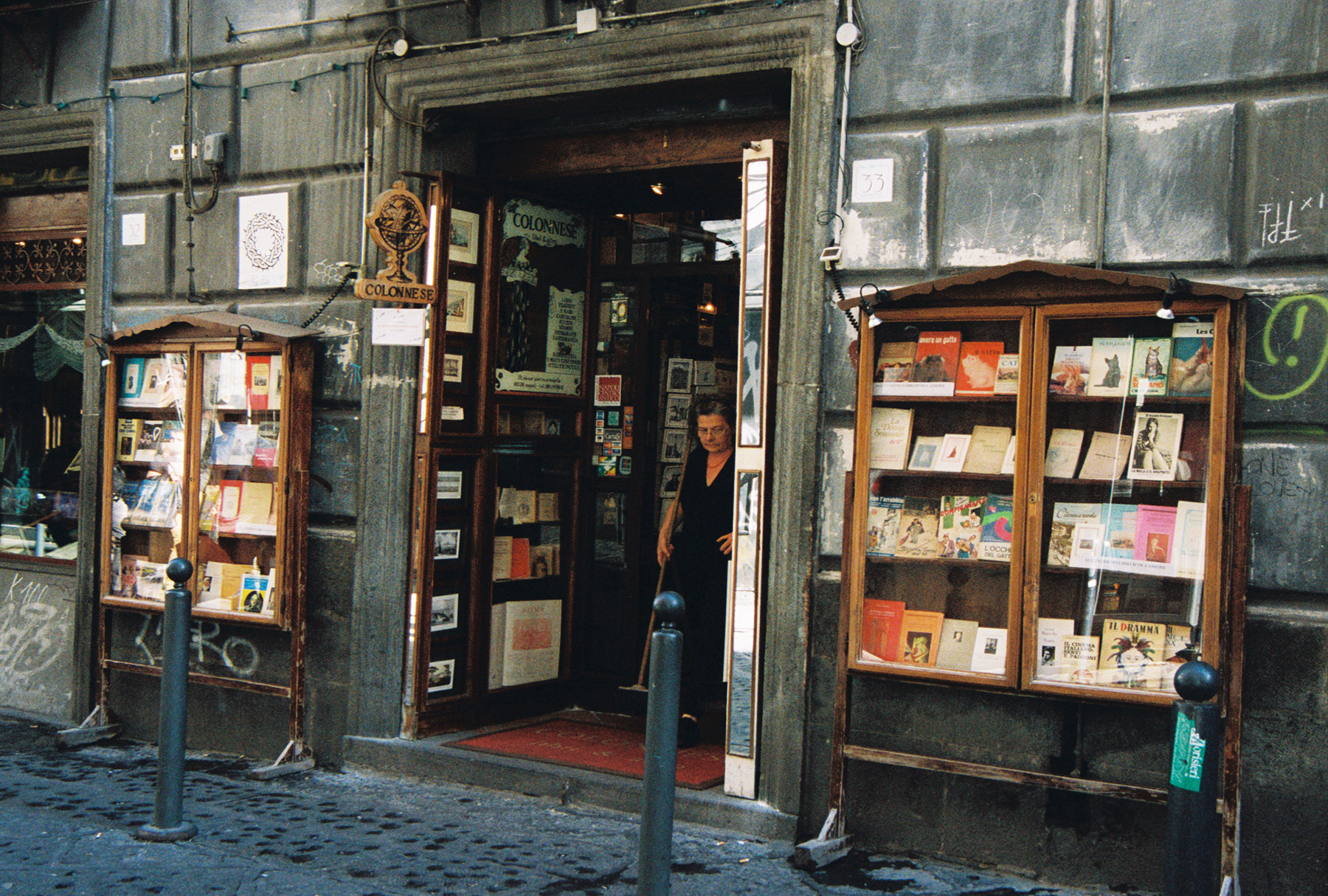
A whole street filled with beautiful second hand and rare book shops and musical instruments and conservatories. I never wanted to leave.
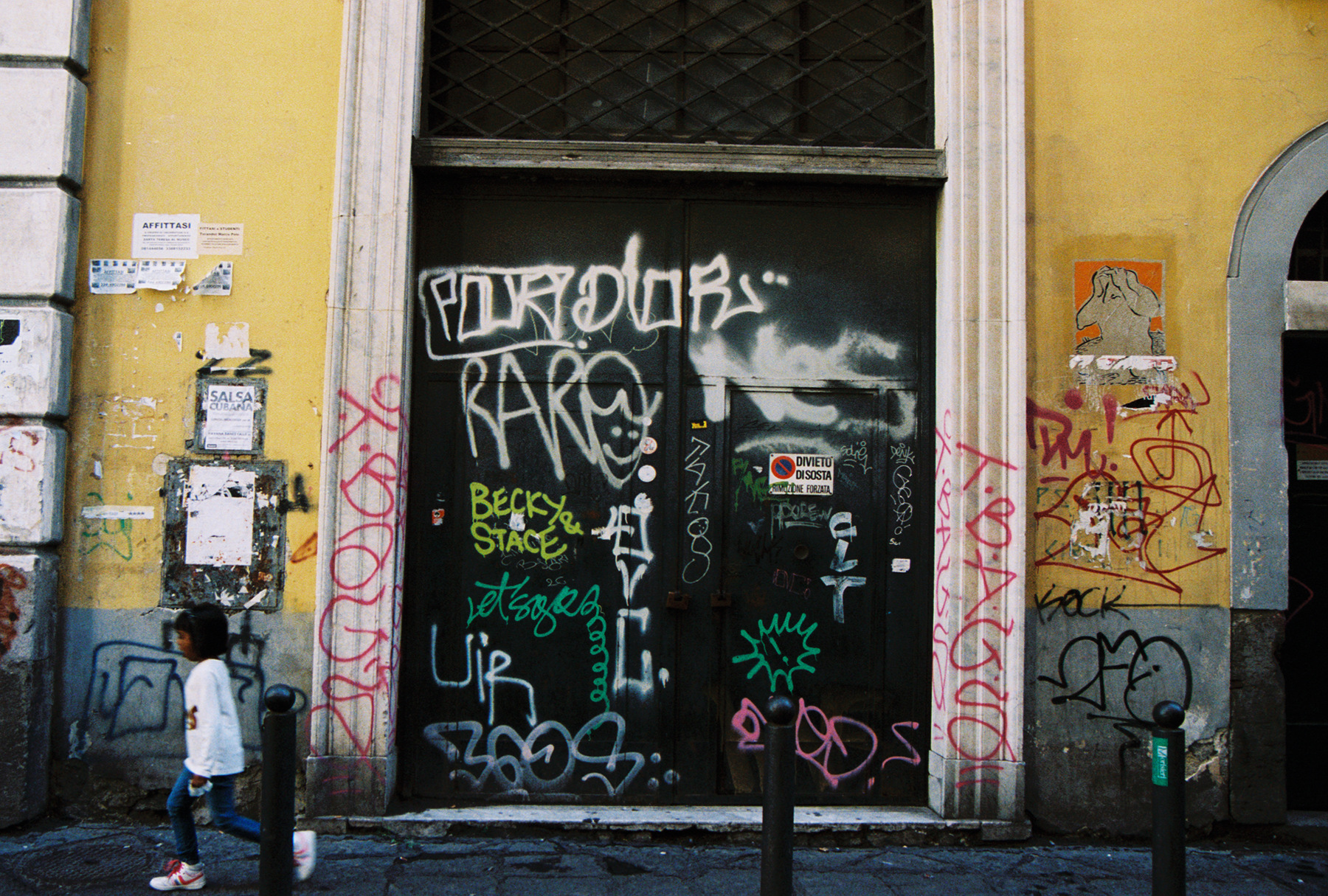
When the little girl walked by I knew I had to capture her in that moment of contrasts and colors.
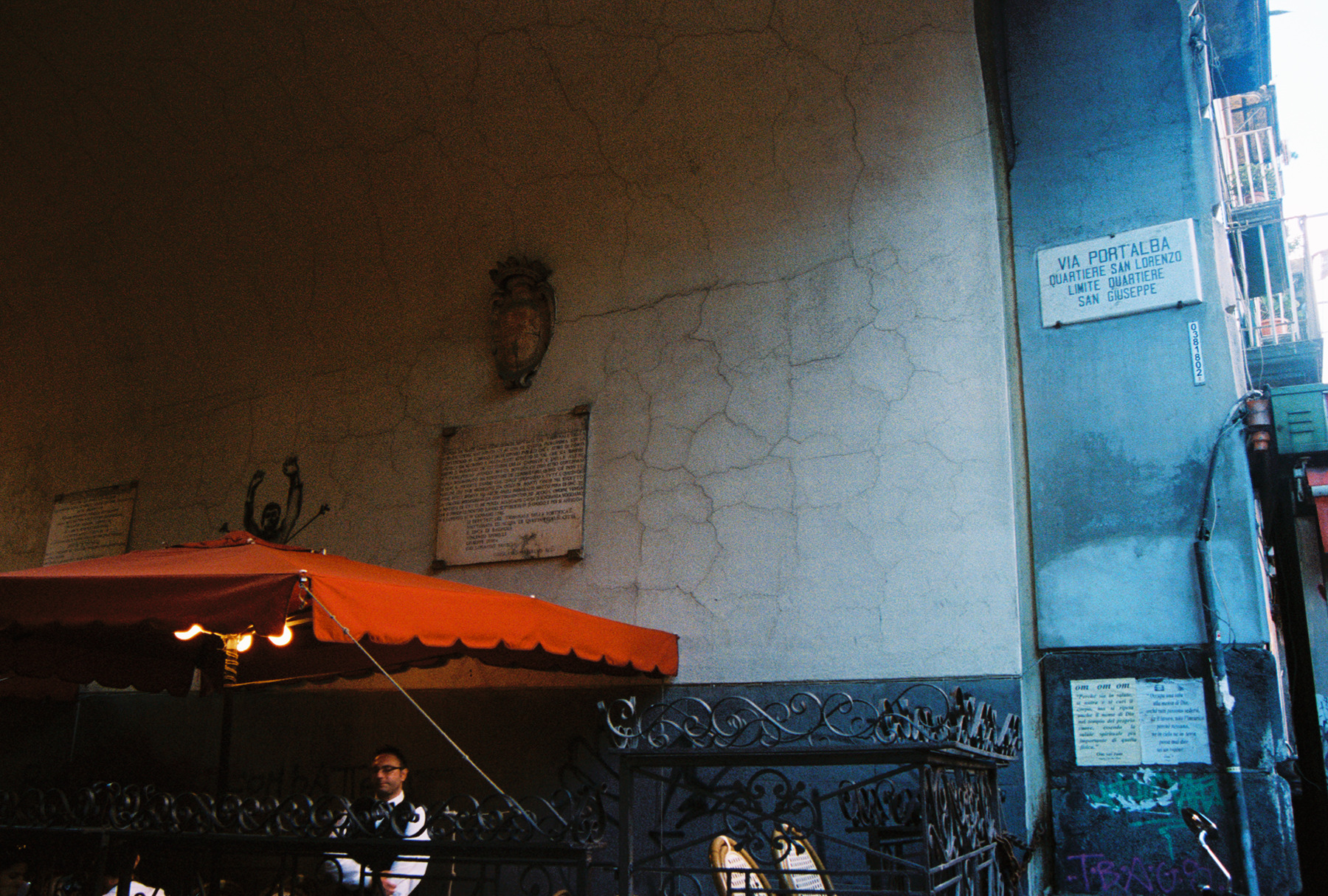
A gorgeously appointed restaurant, intimate, and romantic in a baroque neapolitan way. I could have lingered for hours with a glass of nero d’avola and flirted but I had less than a day to shoot Naples because of all the rain prior to this day.
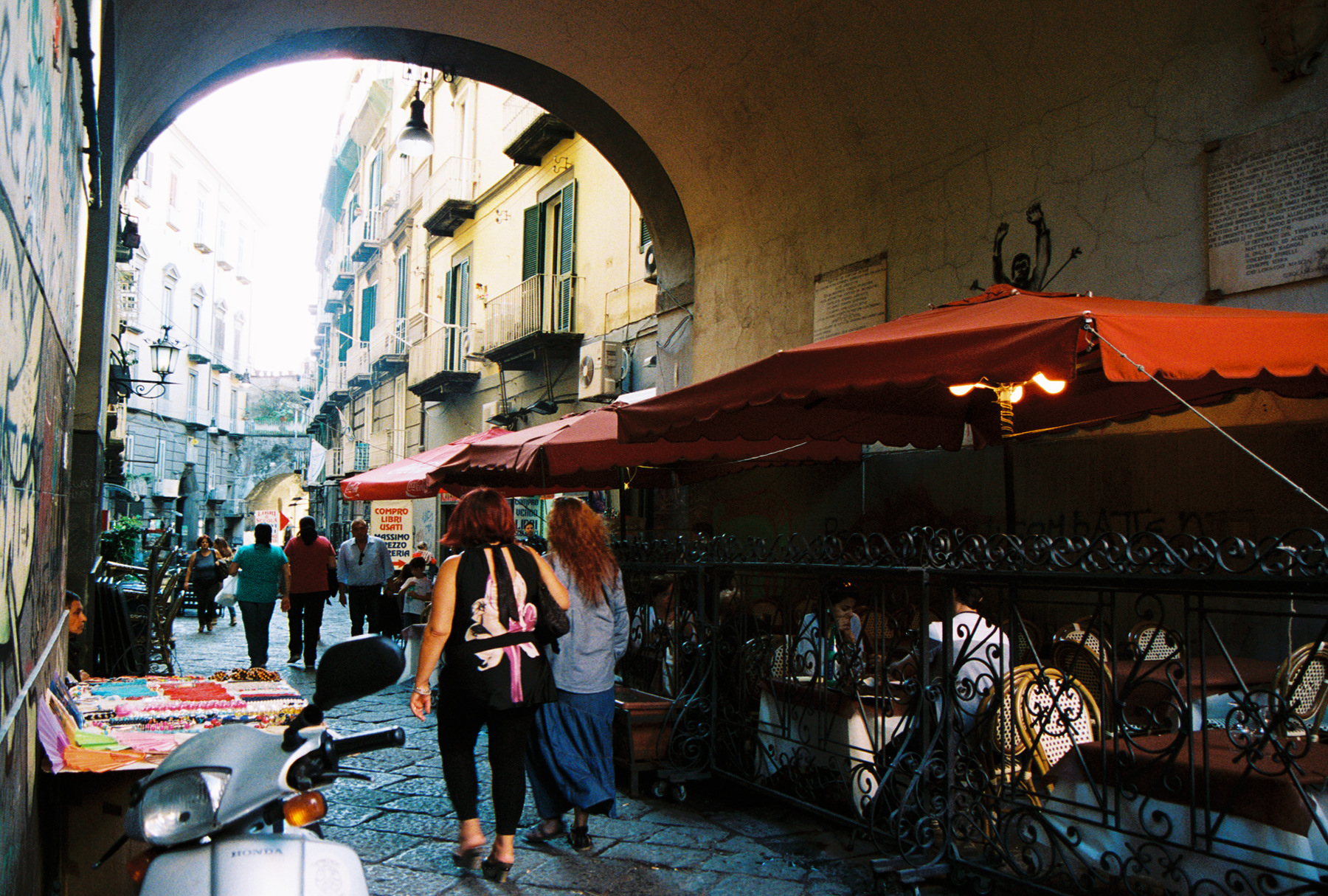
This is a wider shot of the restaurant. It looks like an opening to another, older world. I told you it was beautiful.
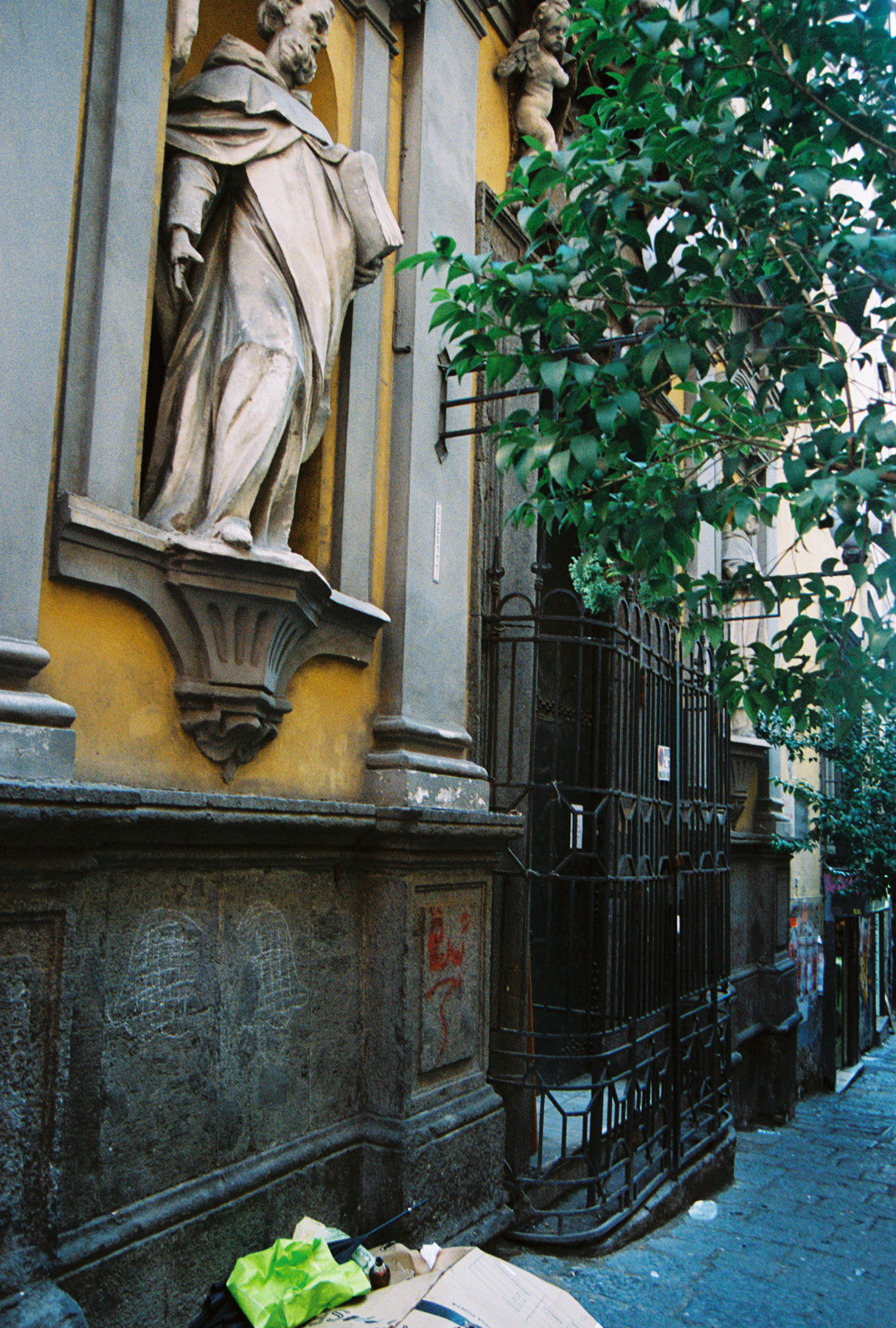
Stunning churches, colorful architecture, dark and ancient looking alleyways filled with street theatre and trash on the street… the extremes of modern Napoli.
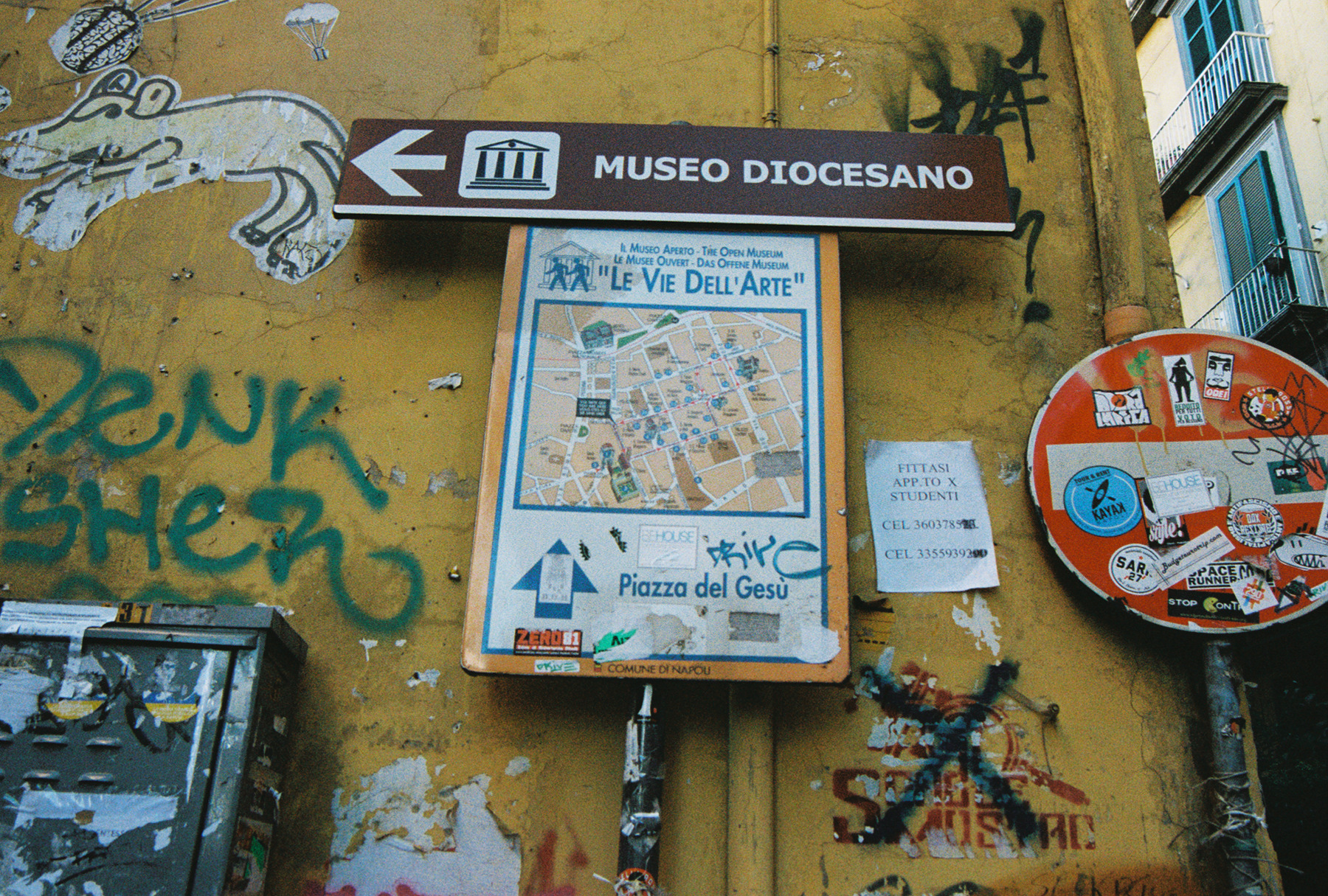
There is so much to see, just to read on the walls.
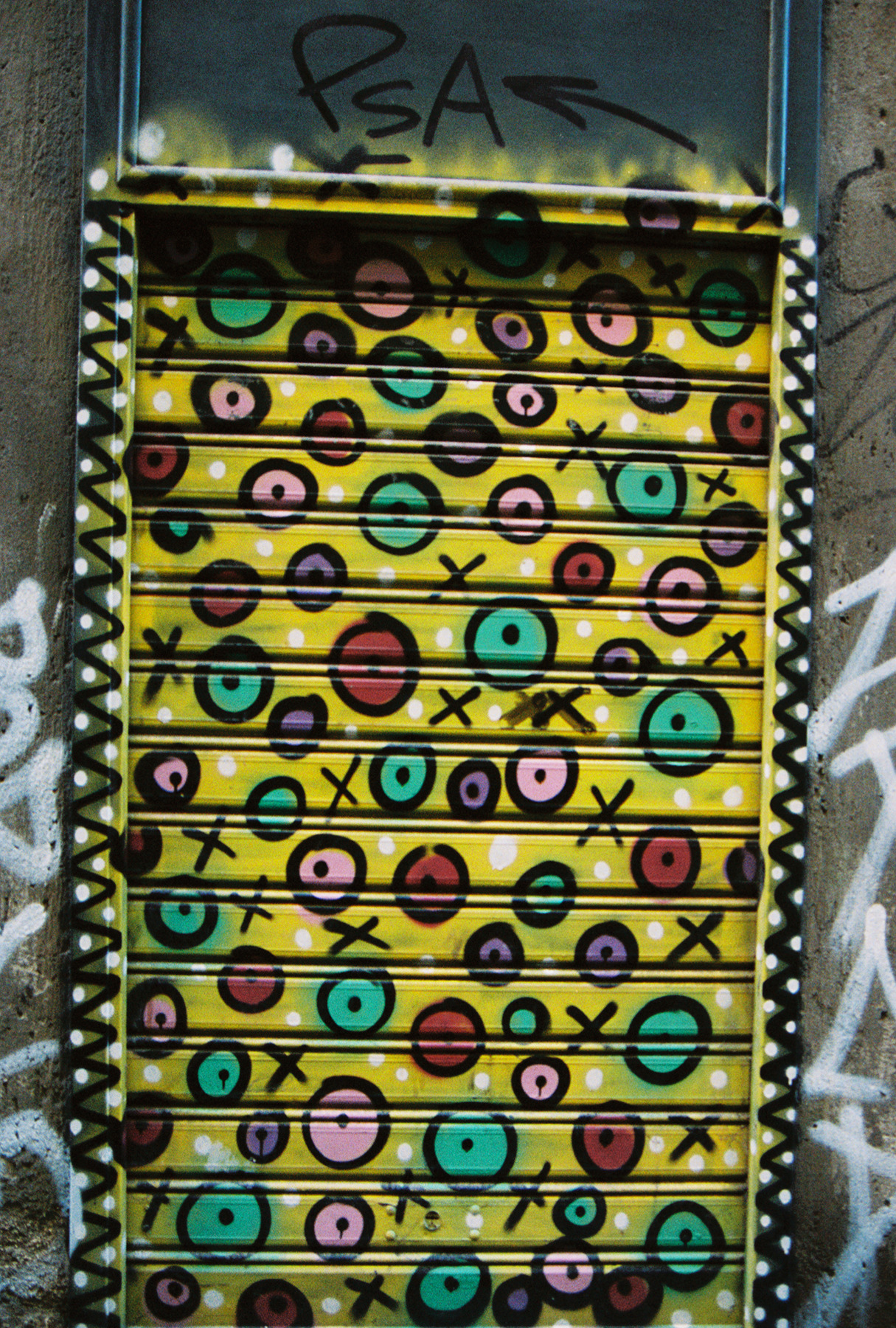
I like when the grafitti becomes art.
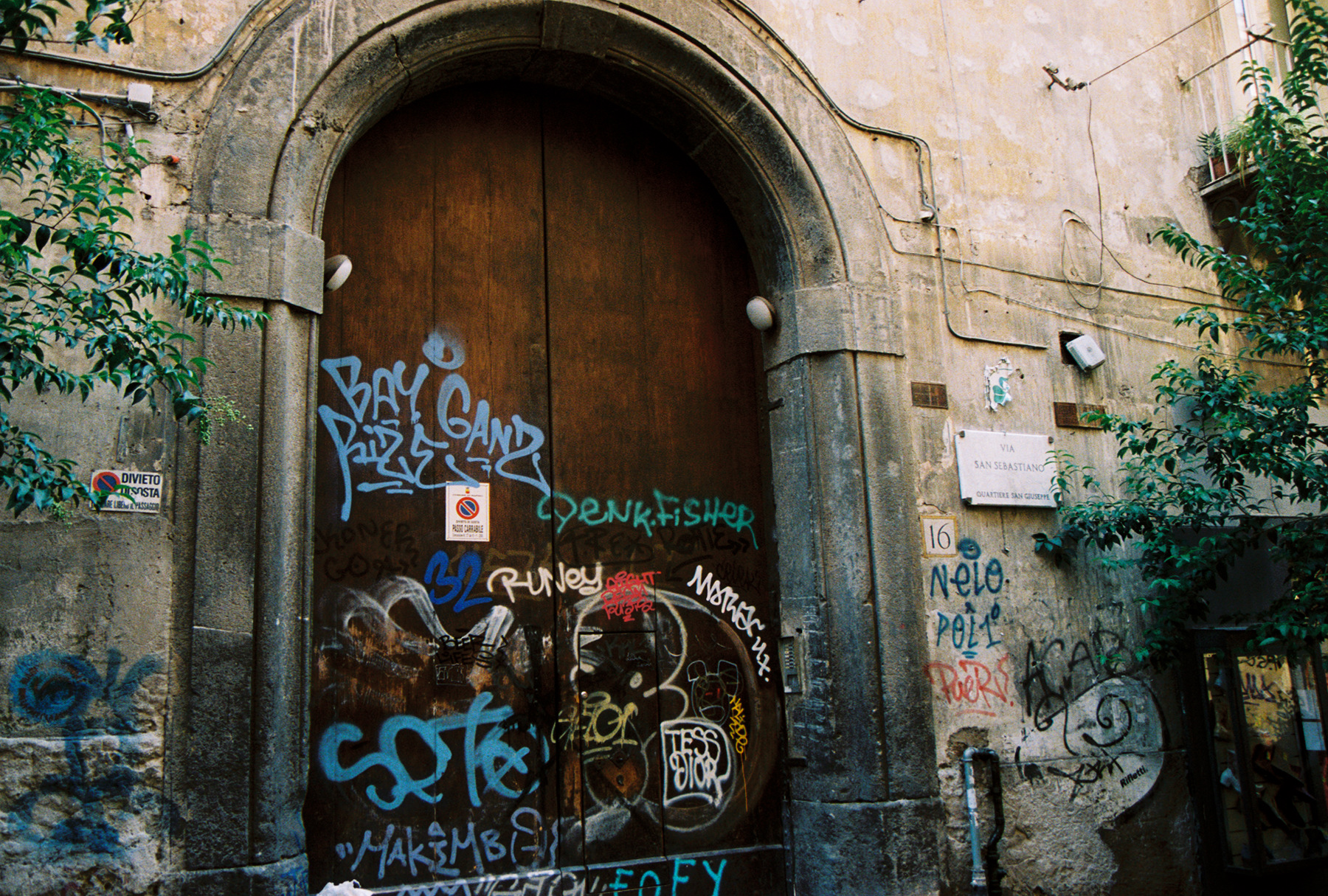
Even the scribbles are a crying out and bleed every color onto wood and stone and brick.

Back to this fellow. I remember his likeness on other walls on other visits to Naples.
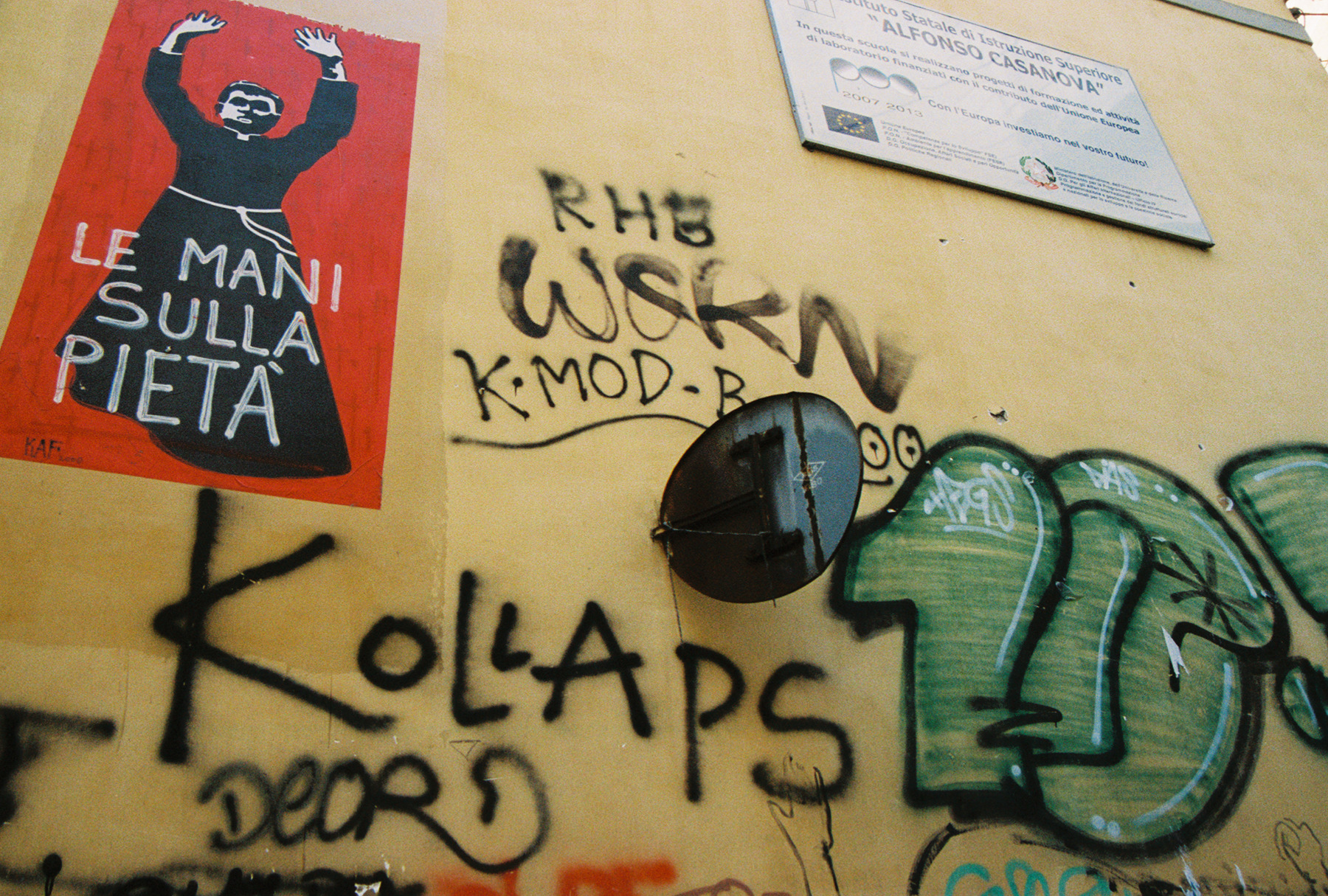
The priest or monk, grafitti iconography and protest.
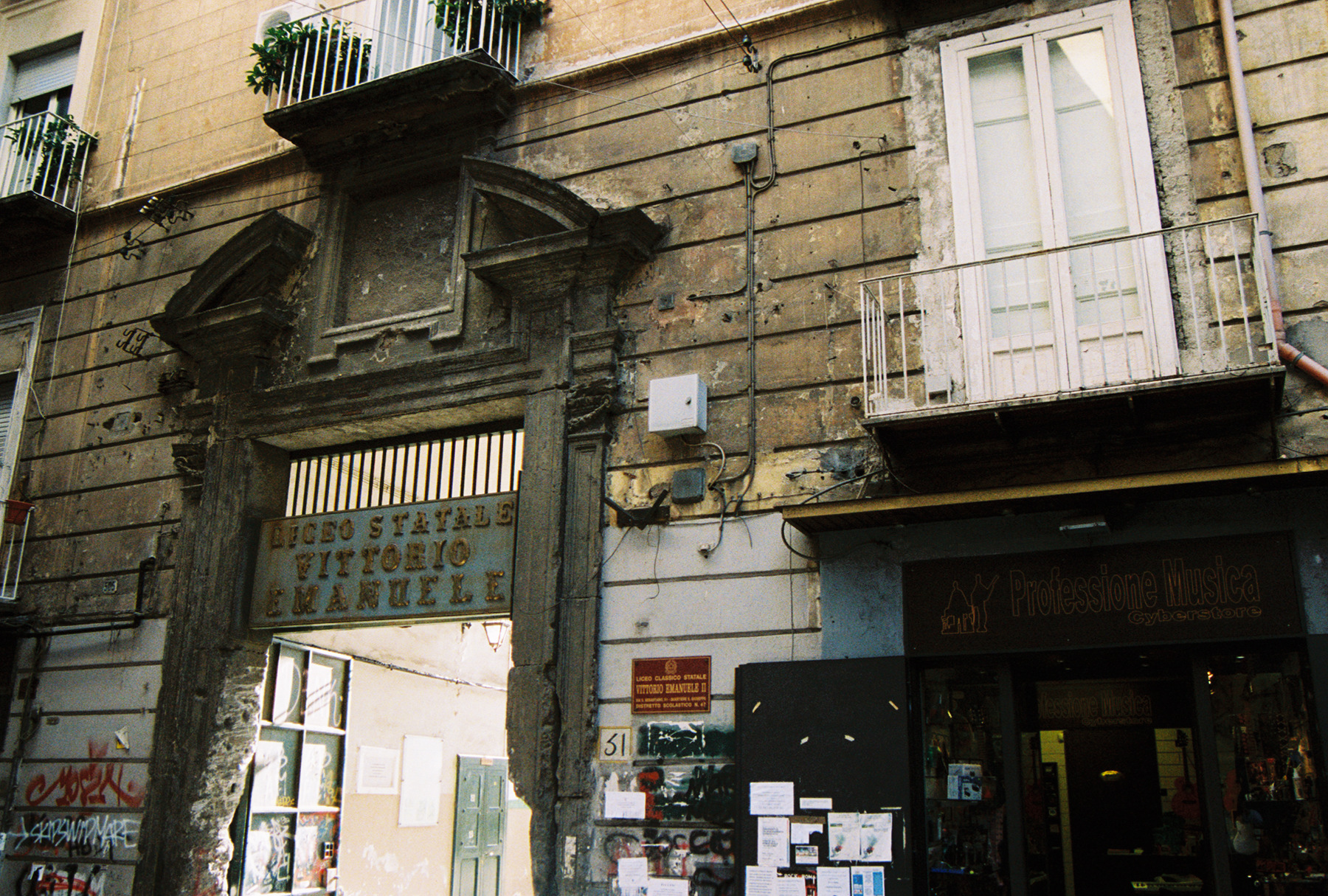
I found this hollowed out frame and the lettering (name of the one time King) very delicate and beautiful looking.
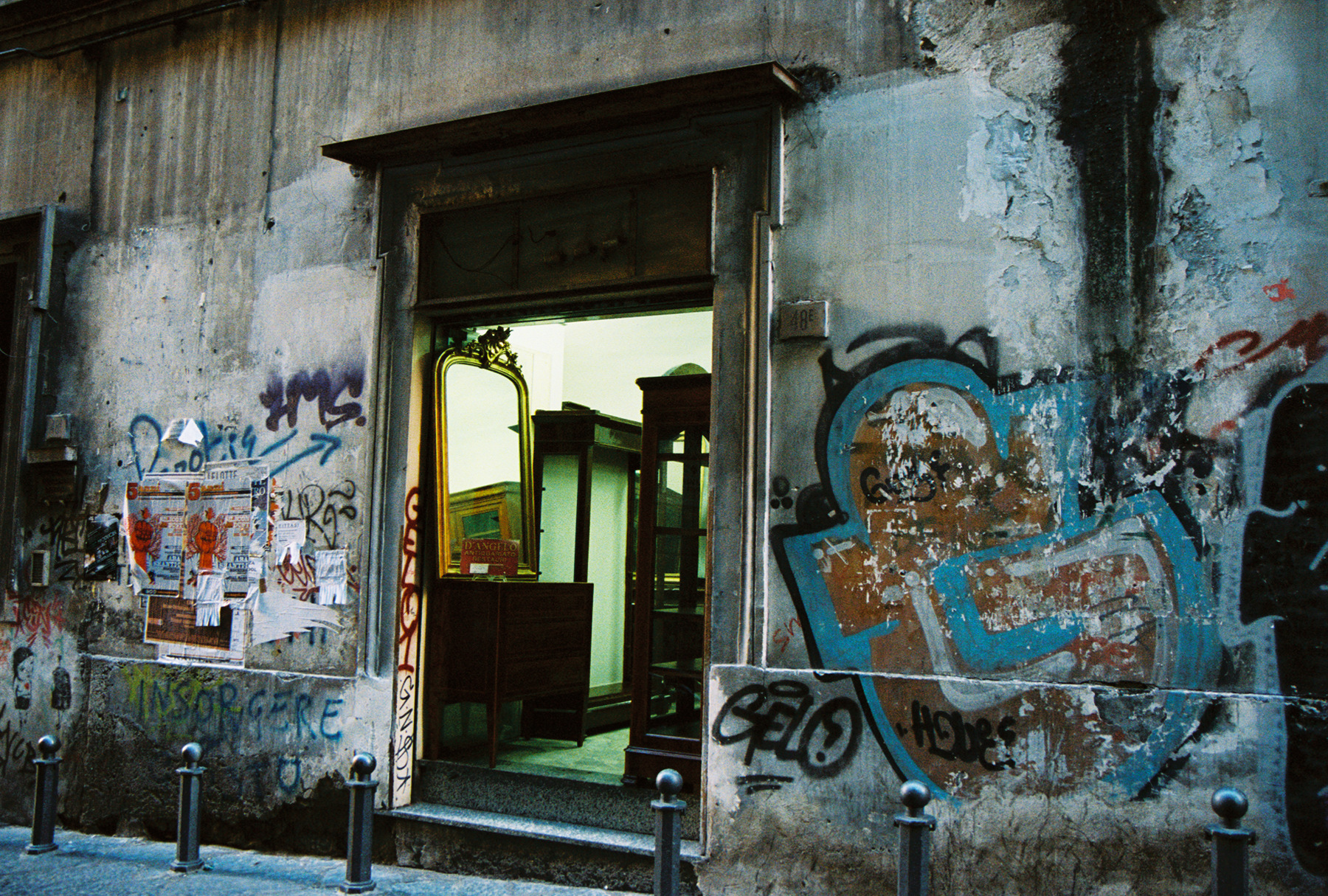
Mirrors and antiques and the scrawlings every where.
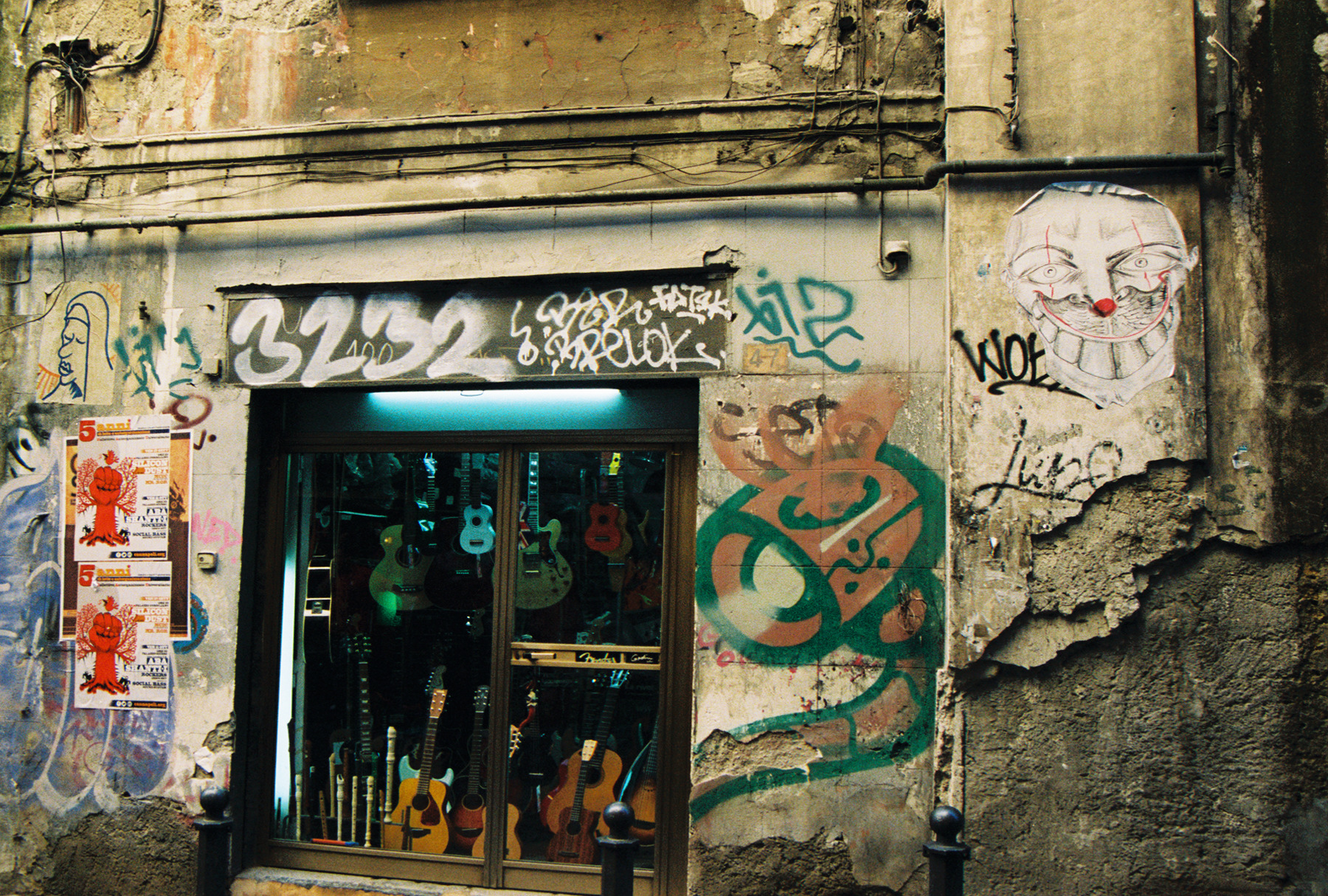
A delightful music shop.
I know Napoli isn’t for everyone. I know street grafitti on historical buildings can be a bit of a shock. But once you visit Naples a few times and fall into the rhythm of the city and of its people, the fright wears off and you begin to see the color is all the more bright in contrast to the shadows. If you are like me and find beauty in decaying things and centuries of history piled up on top of each other, you may just find yourself falling in love with the heart stealer of baroque Napoli.
All photographs shot on portra 400 and 800 – 35mm film.
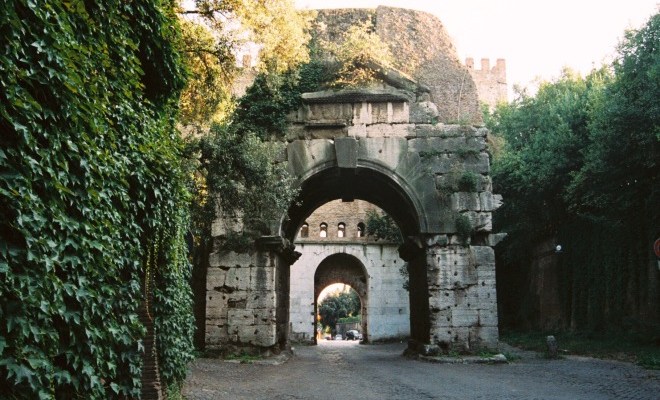
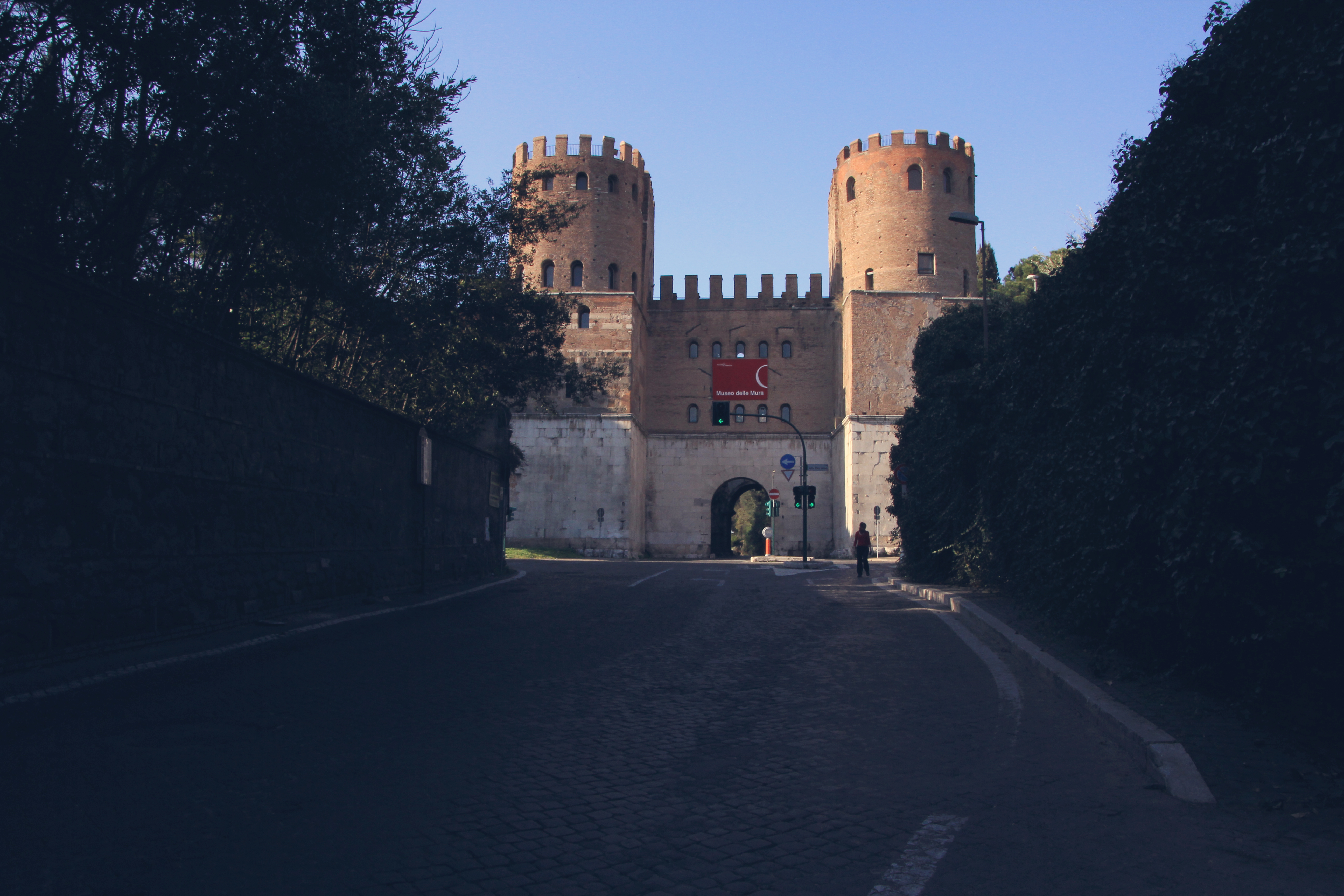
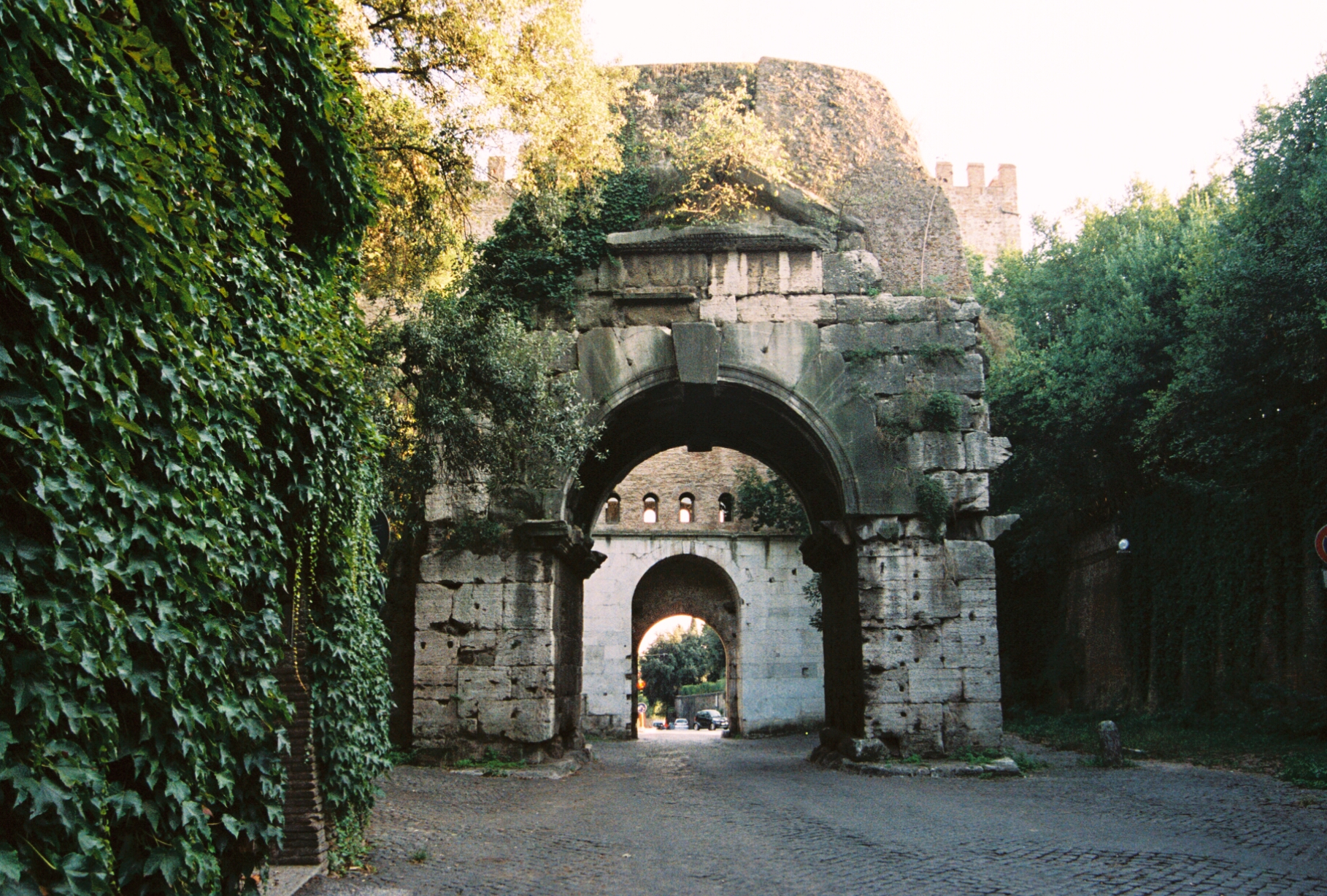
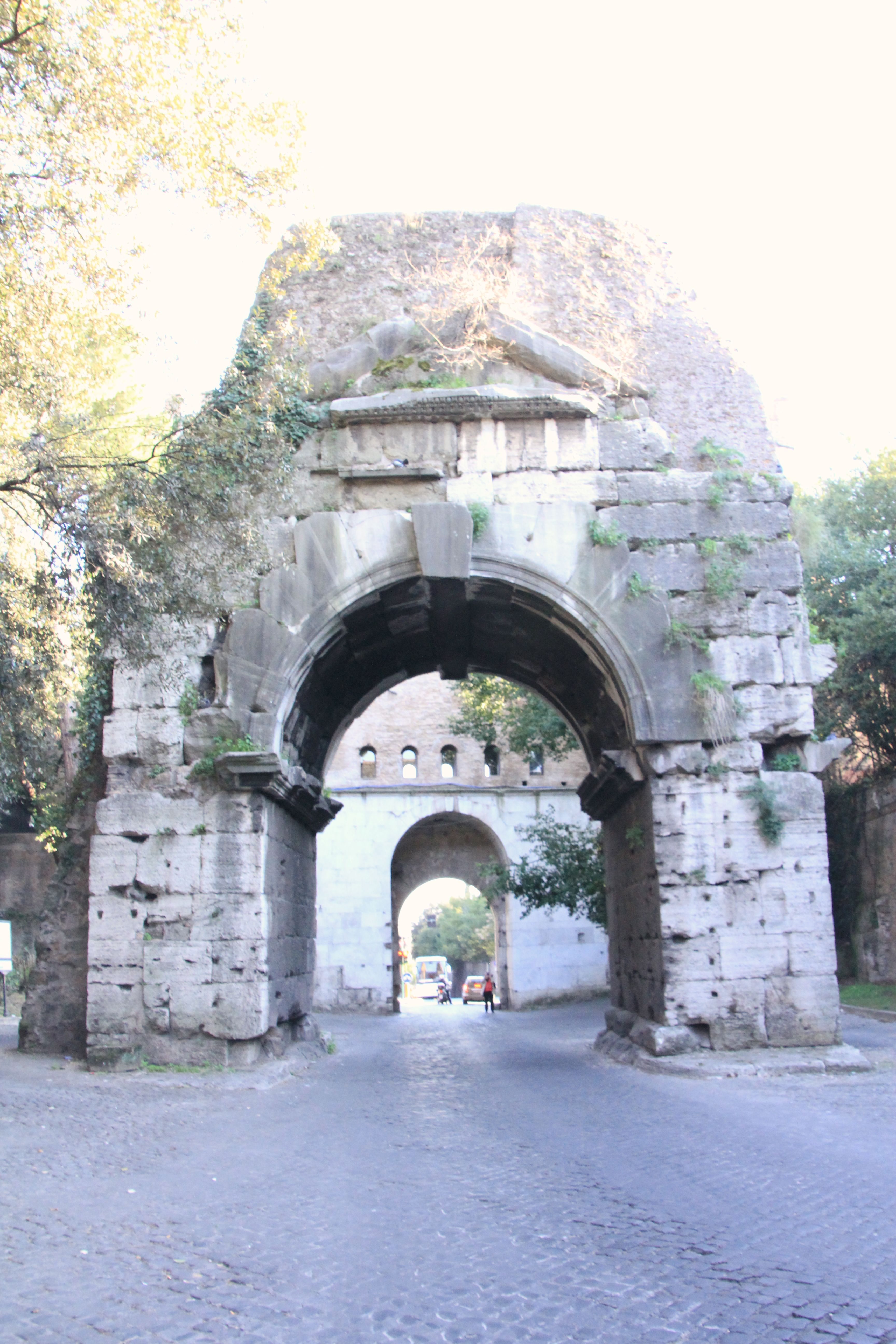
The entrance to the Porta San Sebastiano is the modern name for the ancient Porta Appia, a gate in the Aurelian Wall of Rome, through which the Via Appia, now the Via di Porta San Sebastiano at that location, left the city in a southeasterly direction. It was refortified at the end of the 4th century and was again renovated in the sixth century by Belisarius and Narses. The gate, a brick structure with turrets, still stands and has been restored to good condition. Modern traffic flows under it. Inside and upstairs is a museum dedicated to the construction of the walls and their recent restoration.
The gate is next to the Arch of Drusus. – wikipedia

After walking for hours on the ancient Appian Way (an experience in itself of the historic pastoral Rome) we found our selves heading toward the porta san sebastiano and the celio district. It was one of the best walks I’ve ever had in Rome, practically isolated and beautifully quiet. There was even a local’s park without a tourist in sight (except us but we were trying to be incognito)!
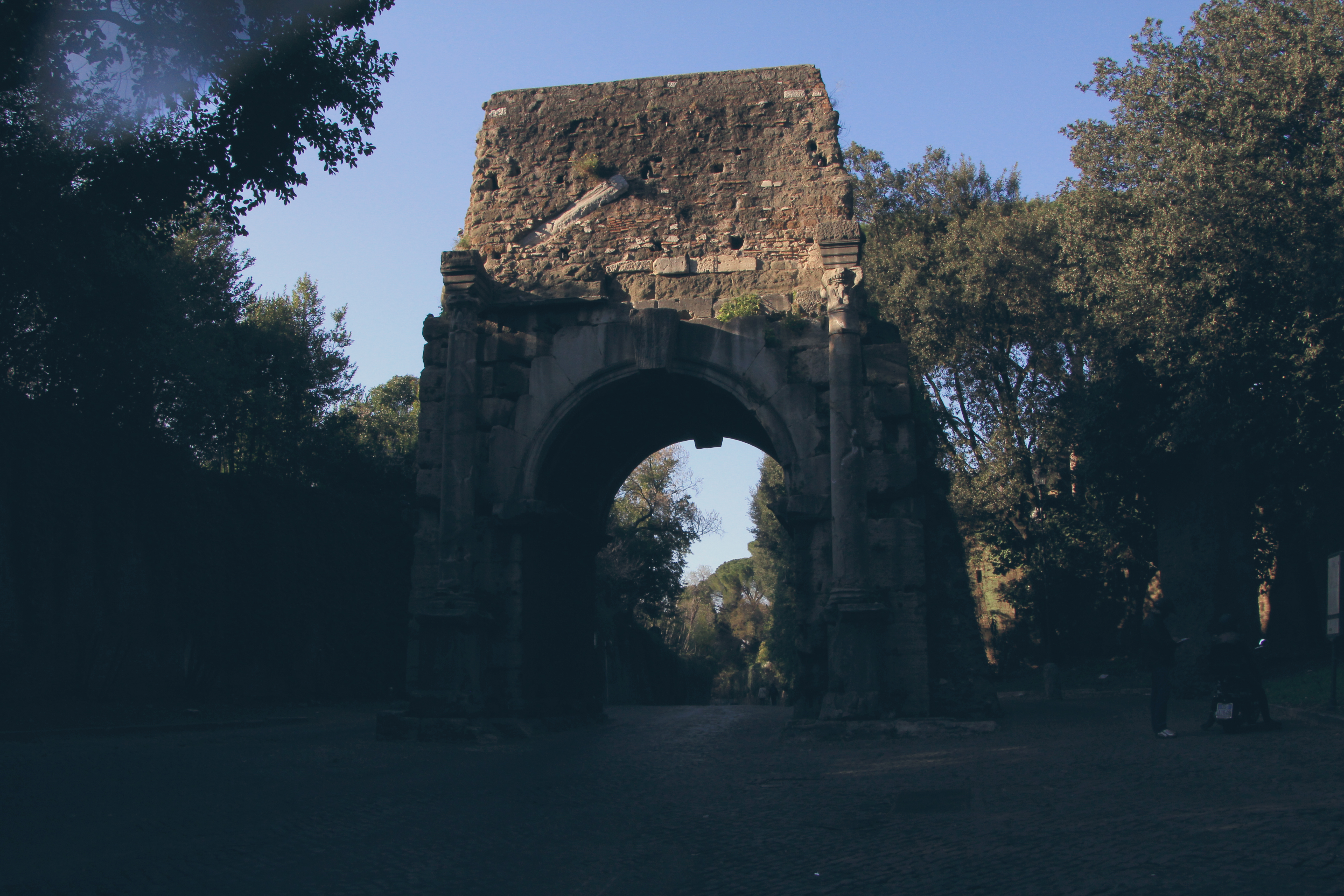
I felt like I was truly transported back in time, even with the odd car or vespa popping through the arch. Millions of ancient pilgrimages have passed this same way into Rome. I followed the steps of Keats and Goethe and Shelley and Byron and countless other Romantics and writers who went on the Grand Old Tour of Italy between the 17th and 19th centuries.
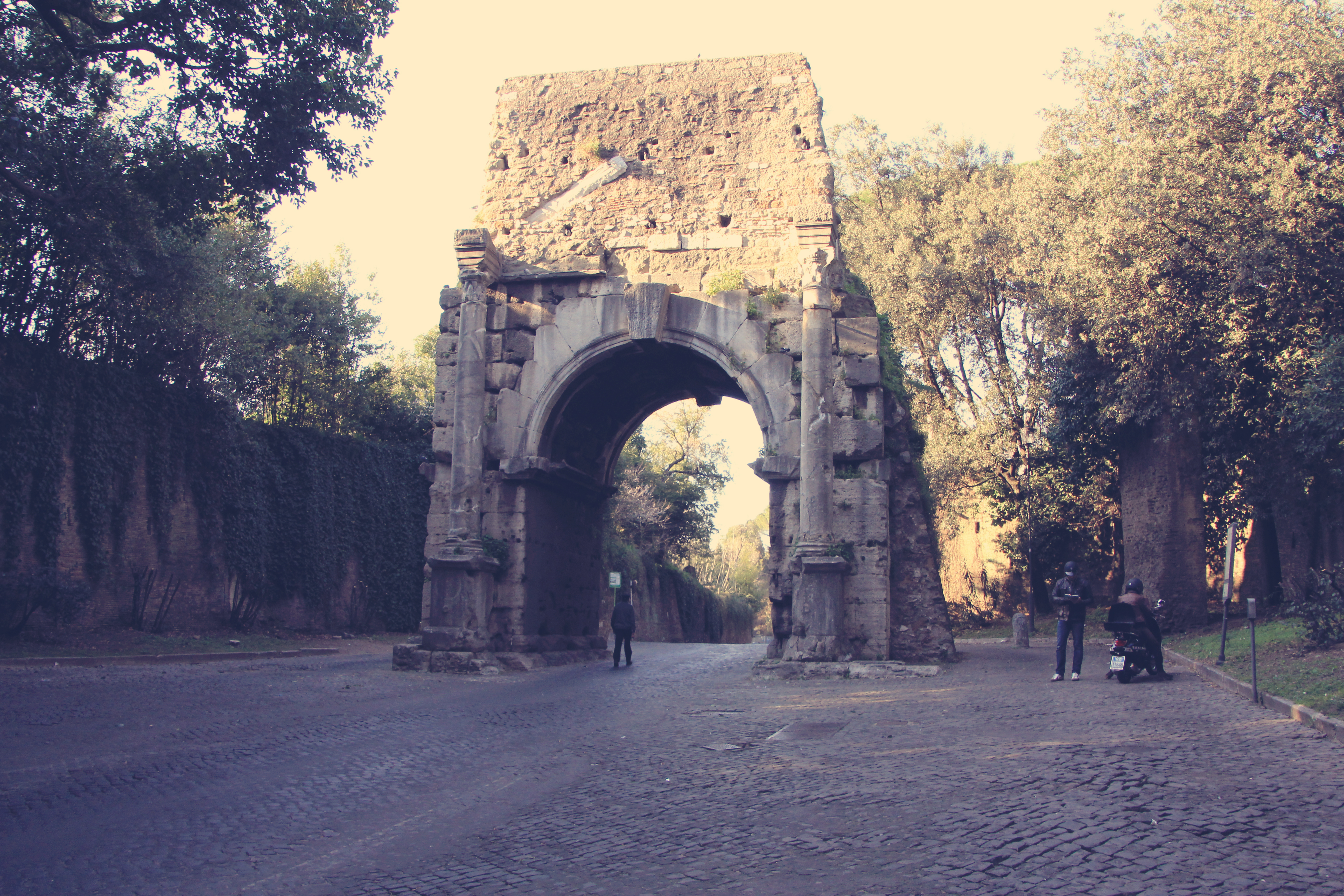
Rome is modern sprawl springing itself forward from scenes of eternity.
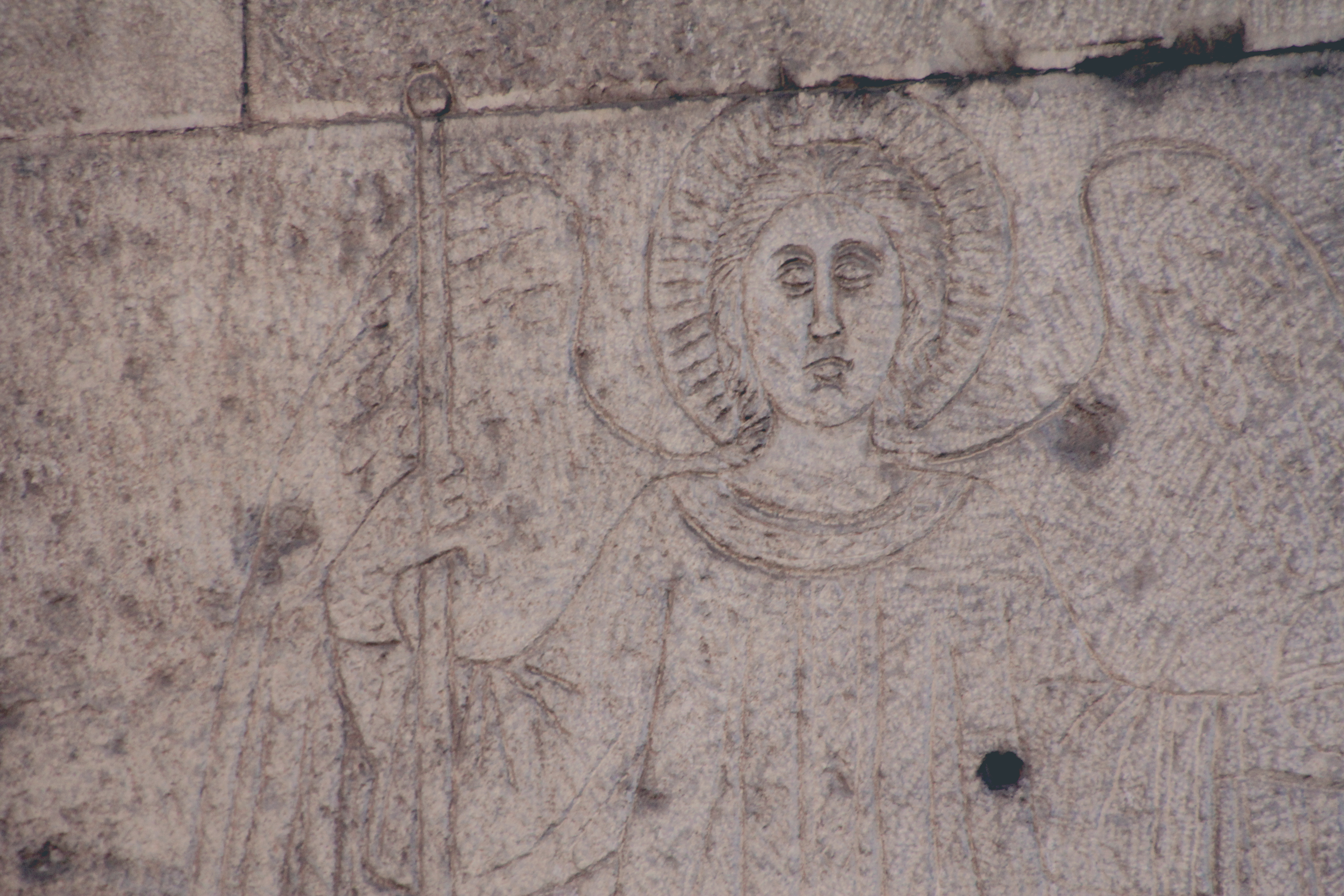
An ancient or centuries old pilgrim’s grafitti of an angel.
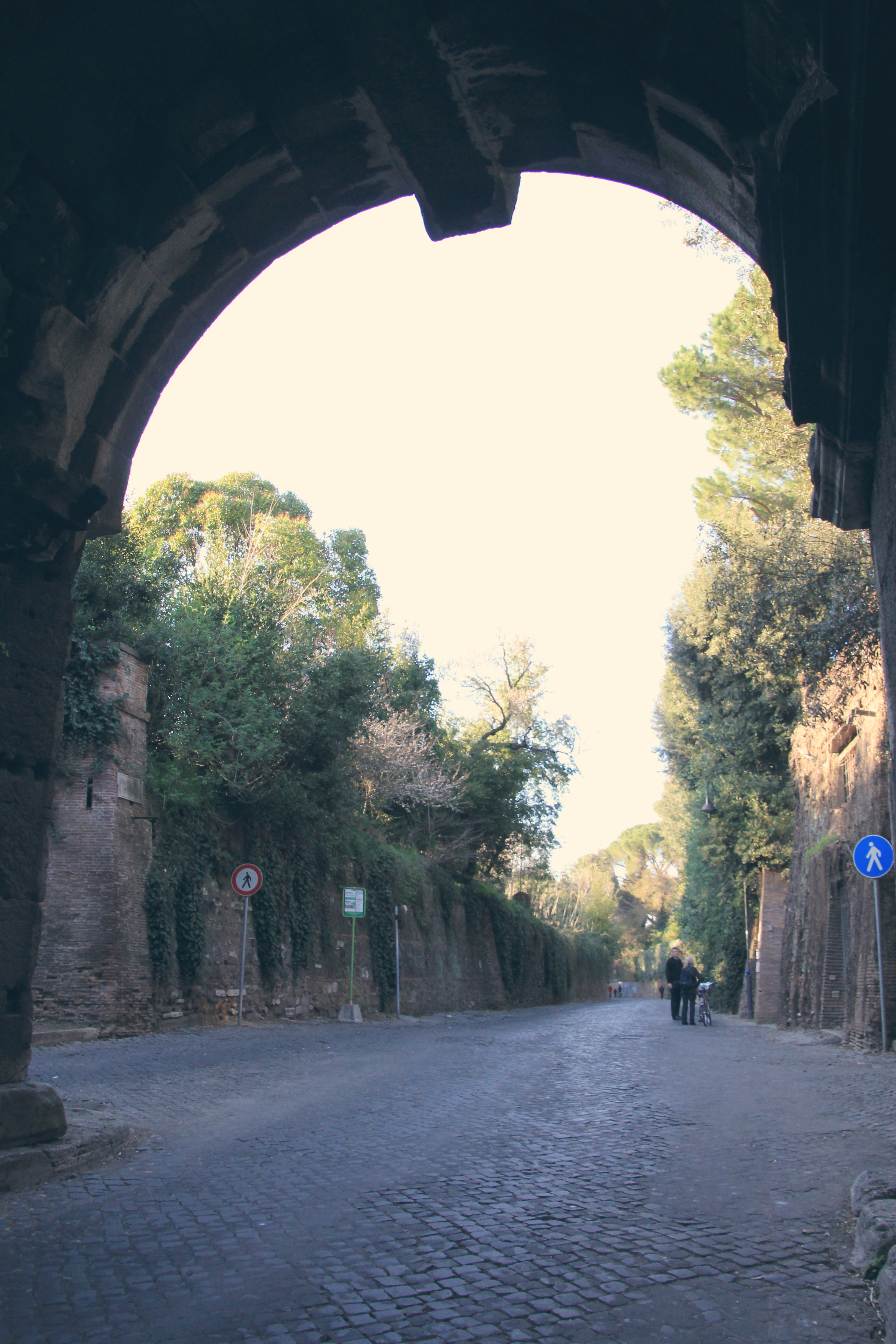
The old cobblestone and bricks, filled with ancient marble and stone broken pillars for mending holes along the centuries.

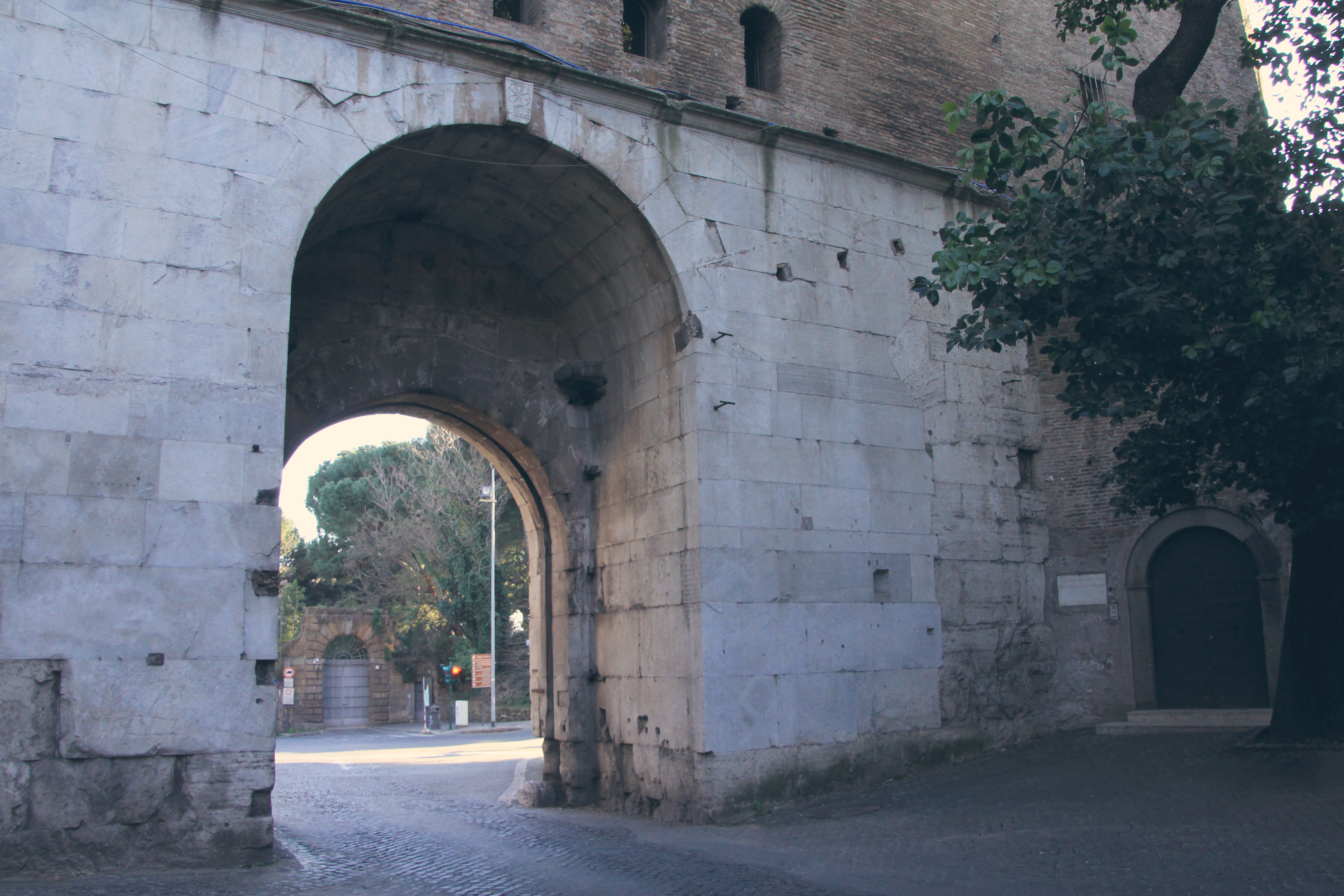
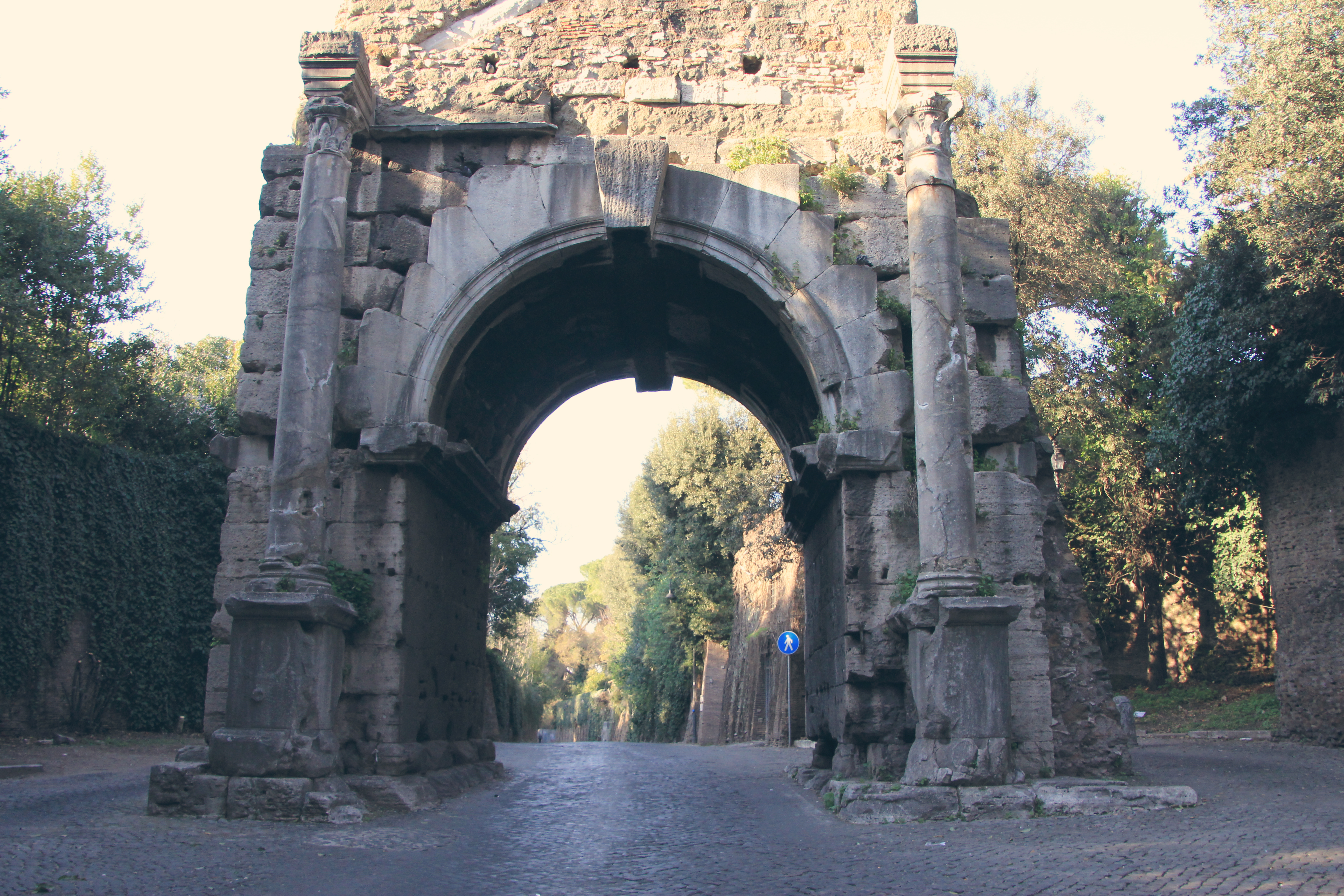
It is so enchanting.
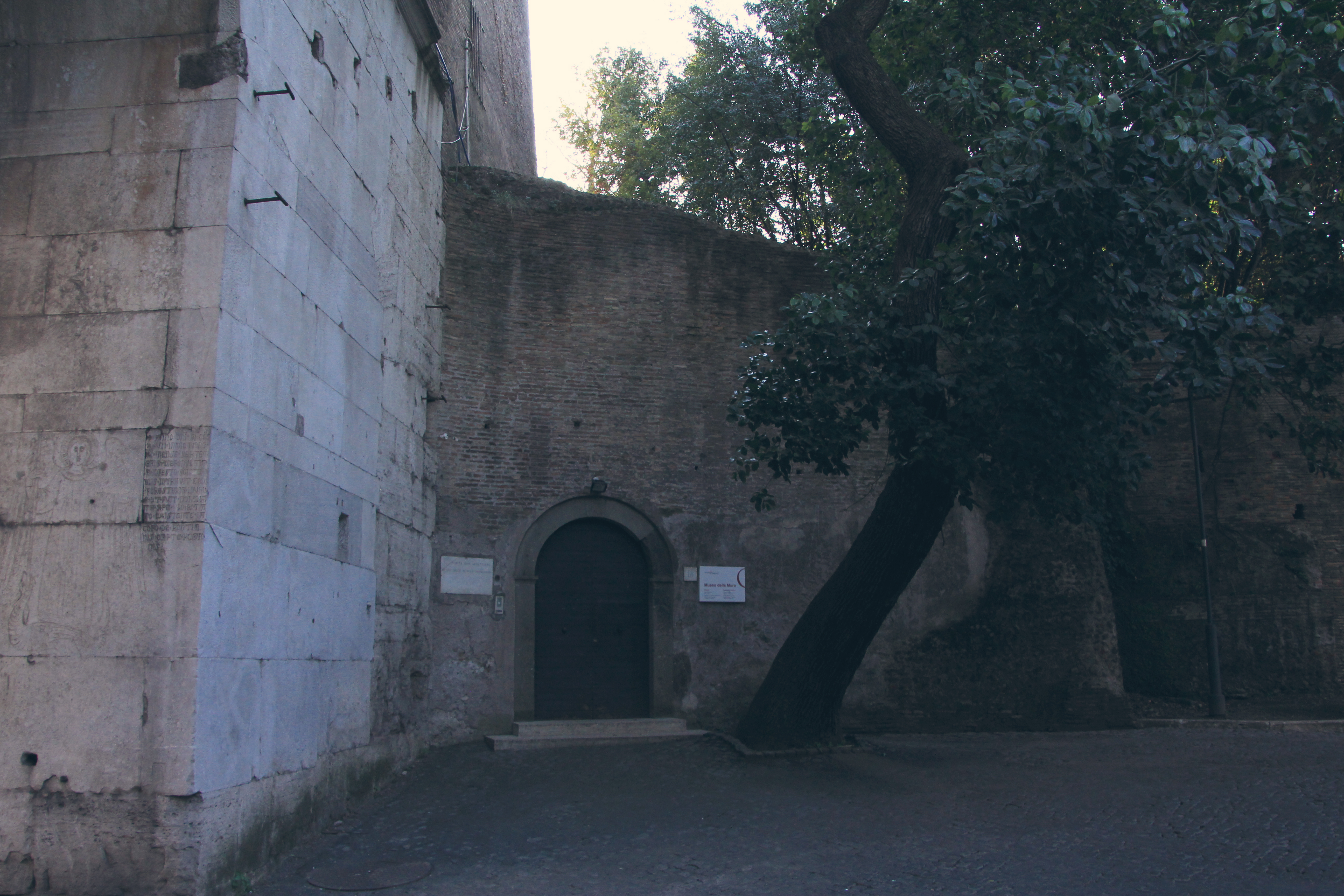
The side of the ancient gate.
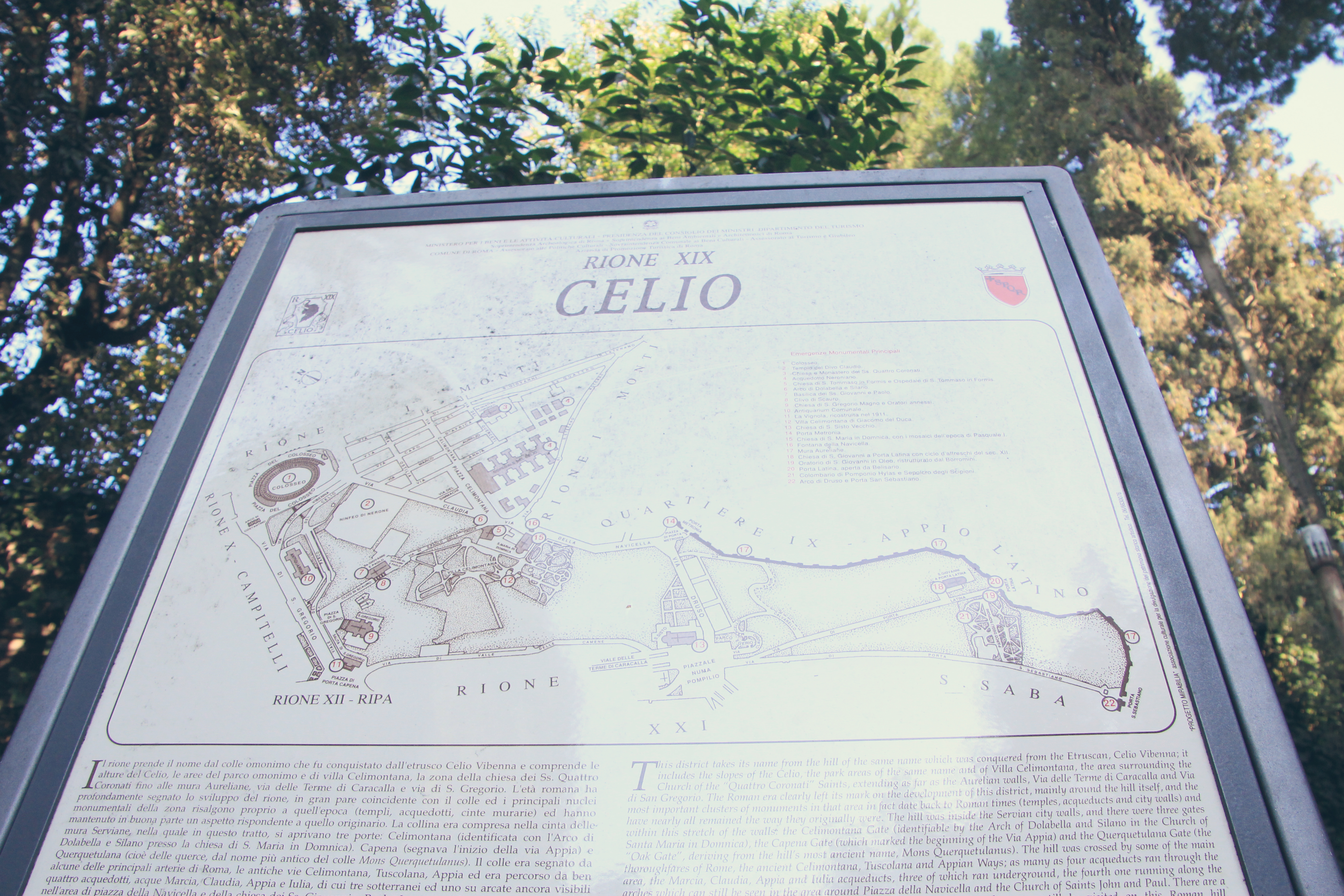
The Celio district is strictly off the beaten path and wonderful!!
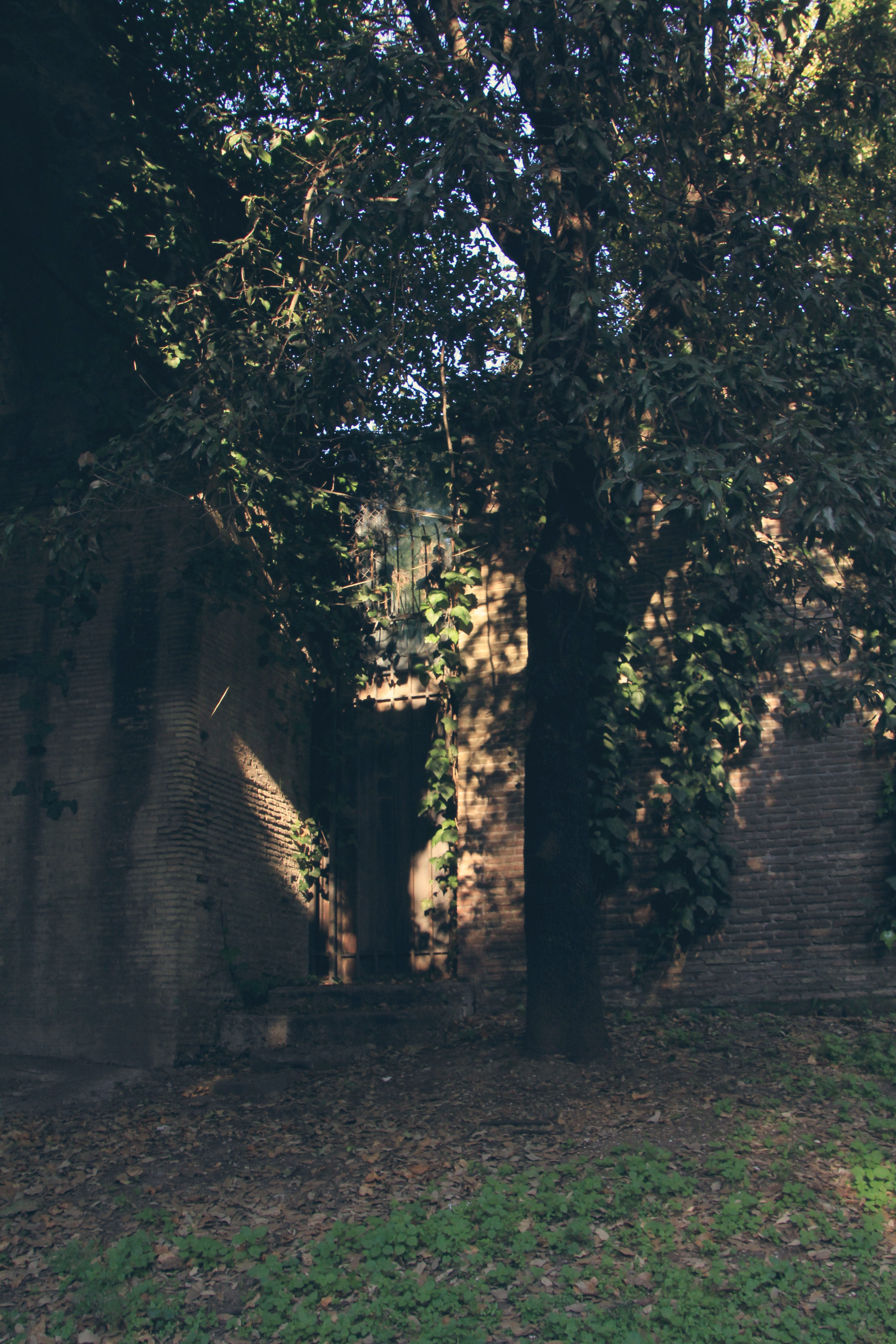
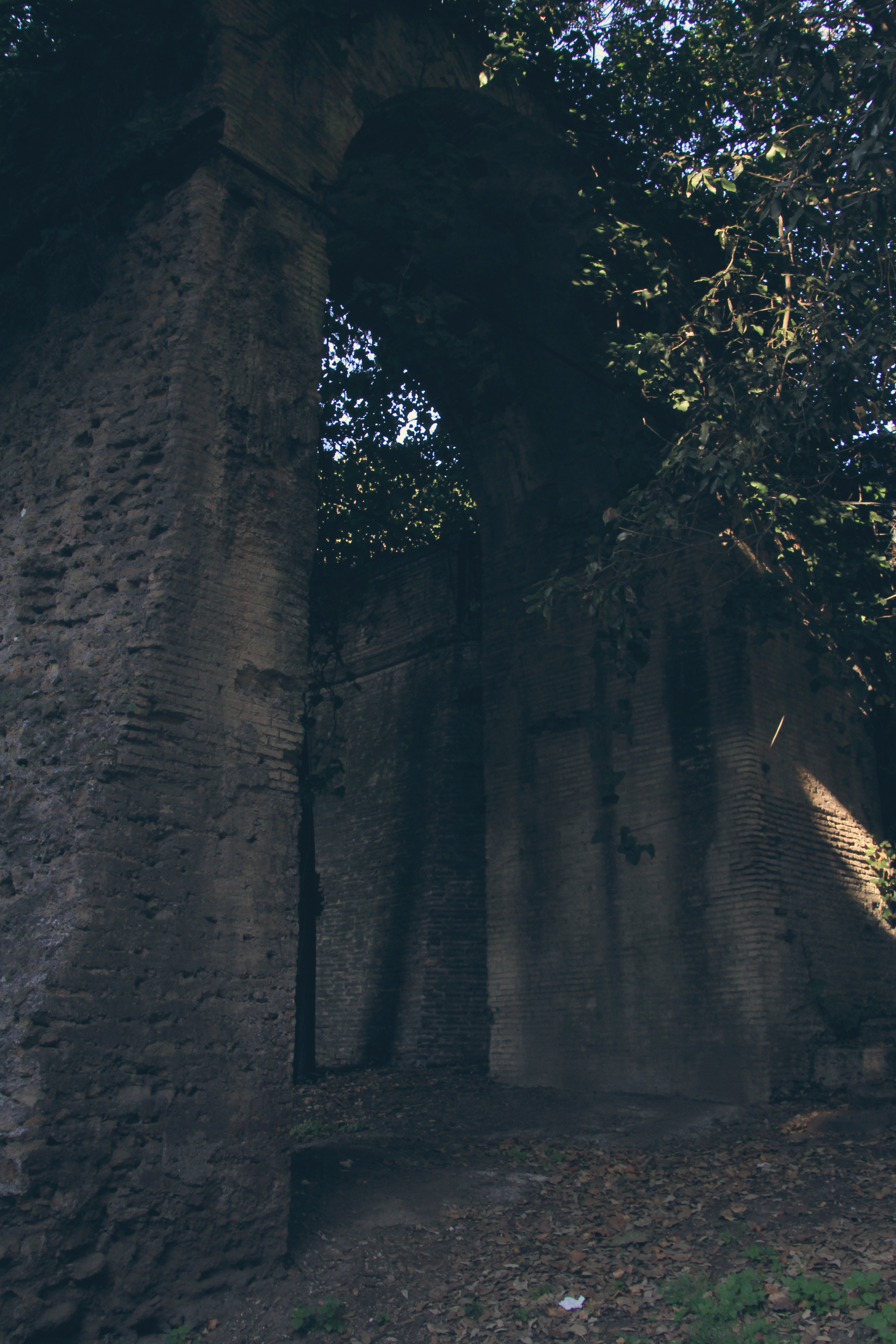
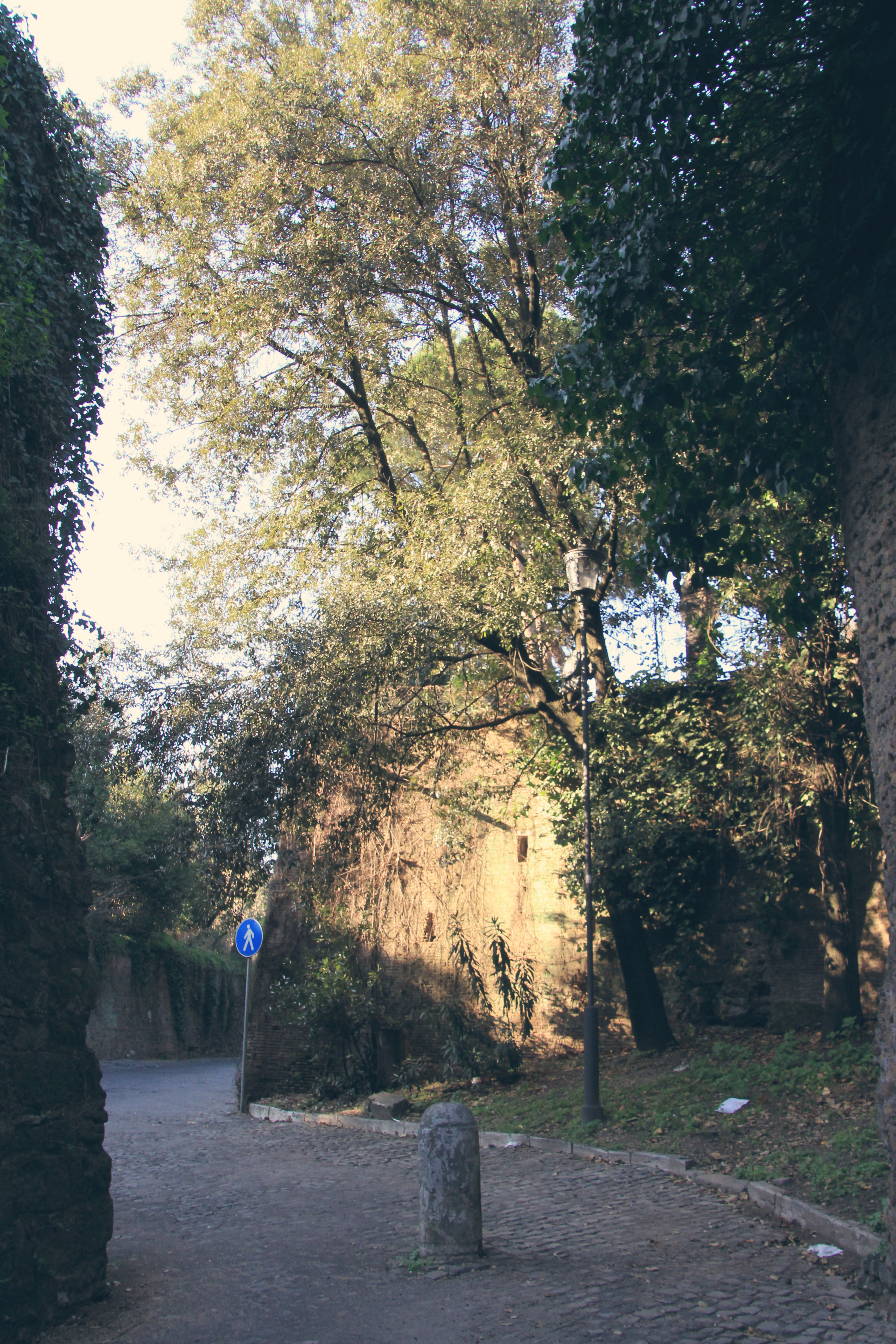
There are signs of an old way of life all along the way.


Greenery hangs everywhere.
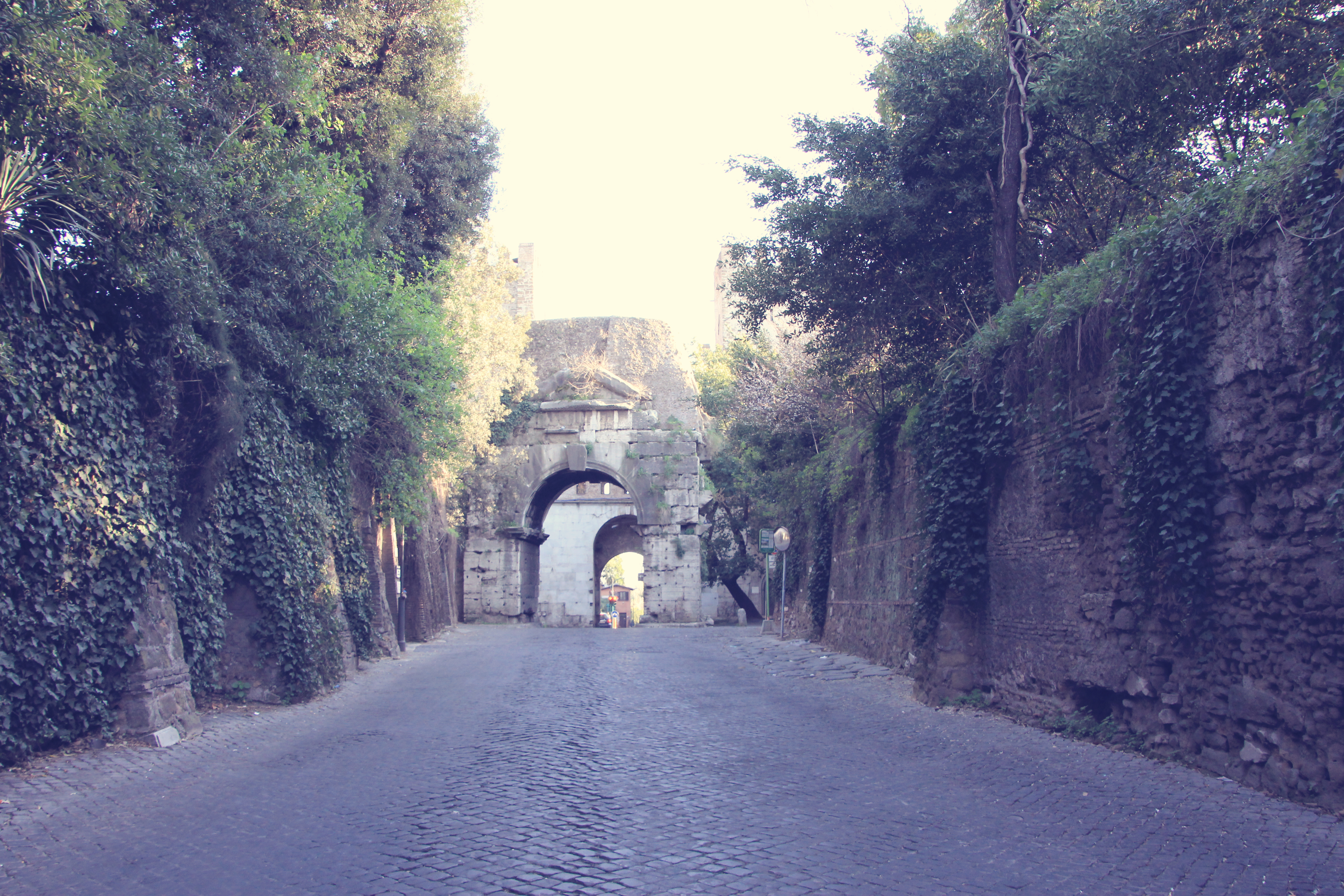
So inviting.
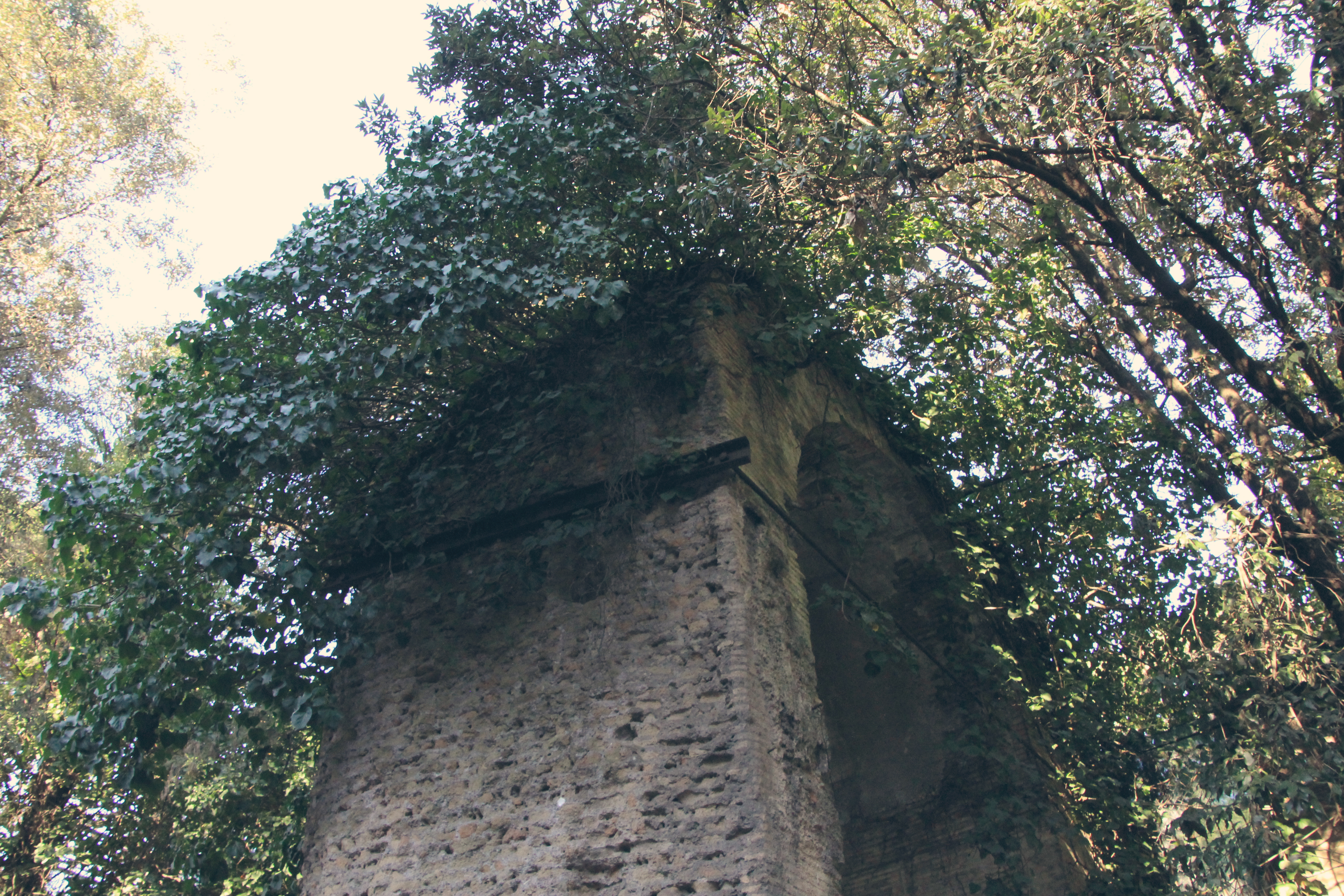

And we stumbled onto this magical place!
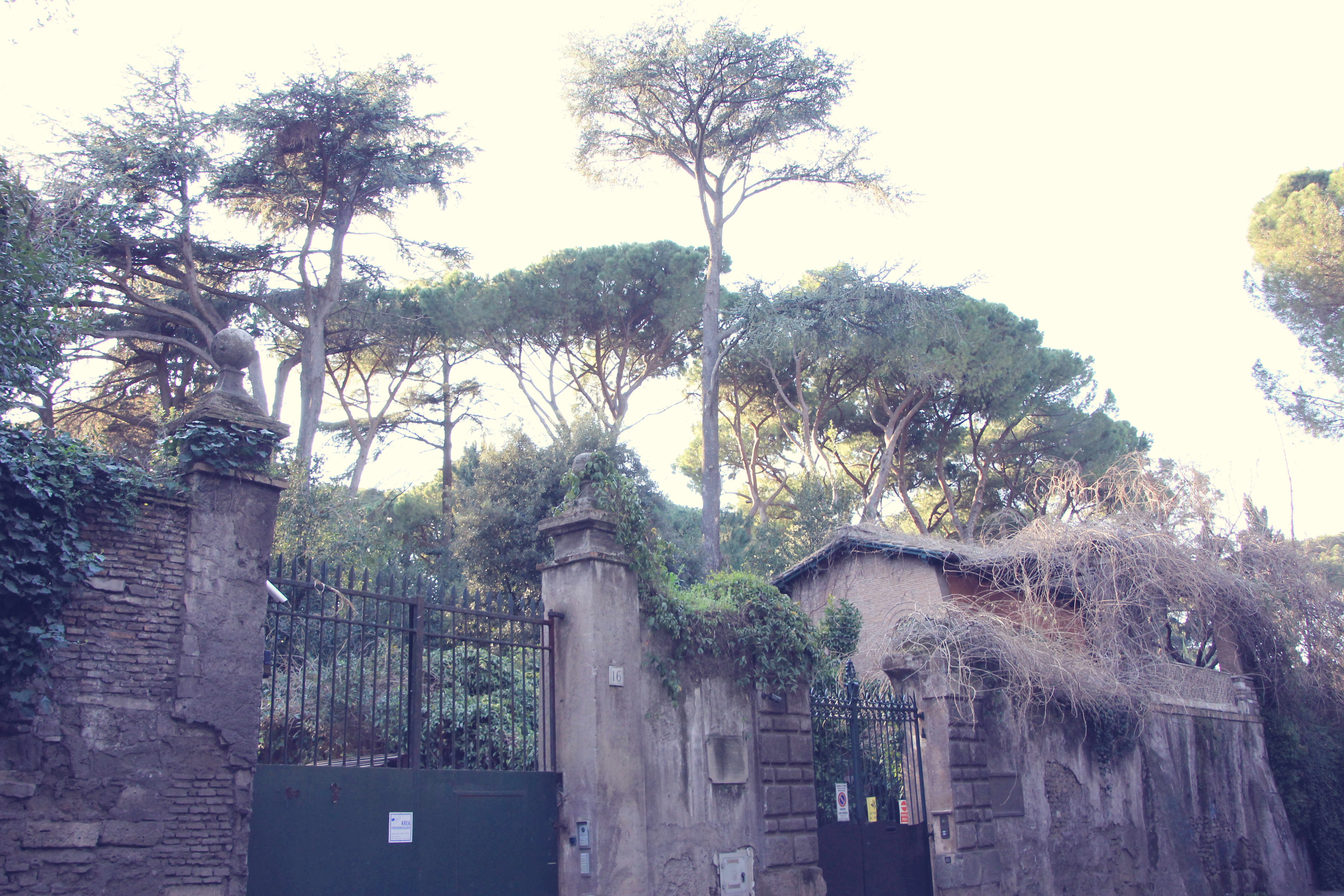

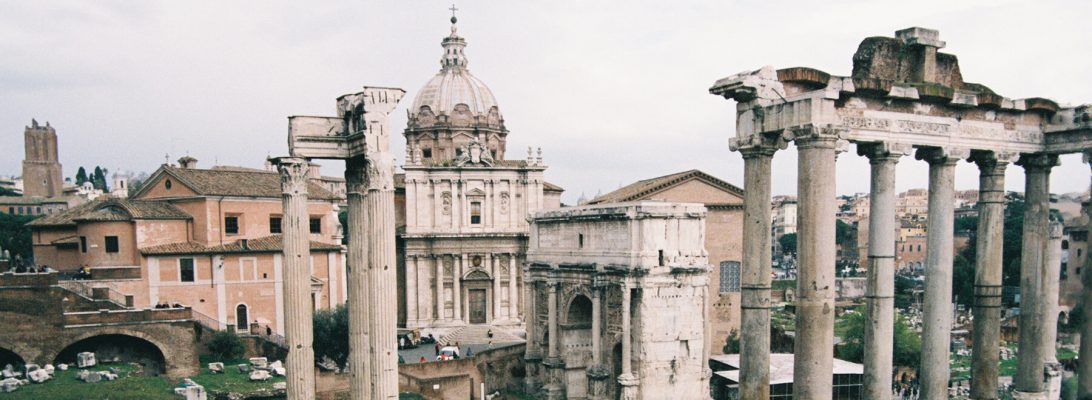
By the forum far away but somehow fitting for this post I think.
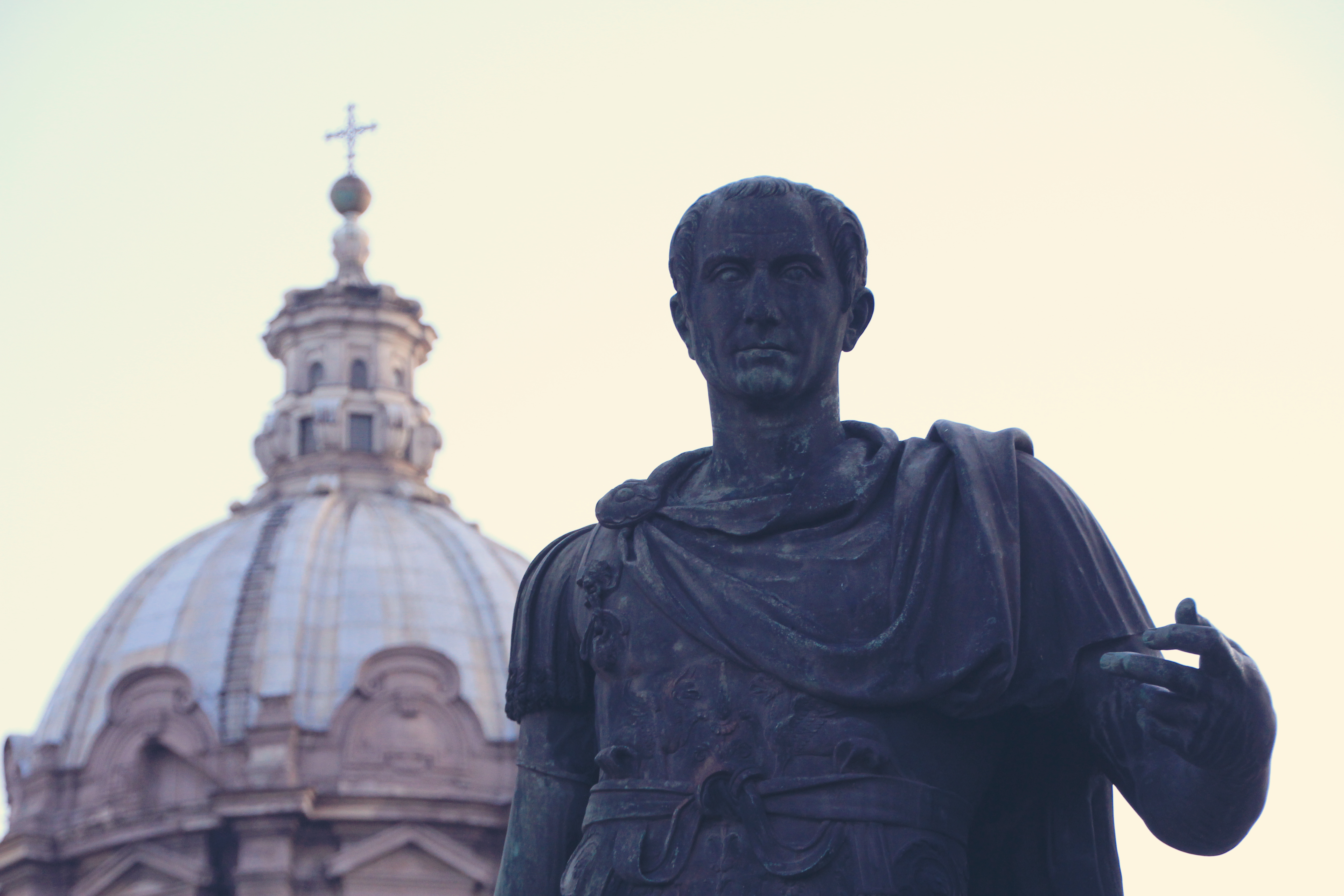
Caesar and cupolas; my idea of Rome, the ancient and the Renaissance.
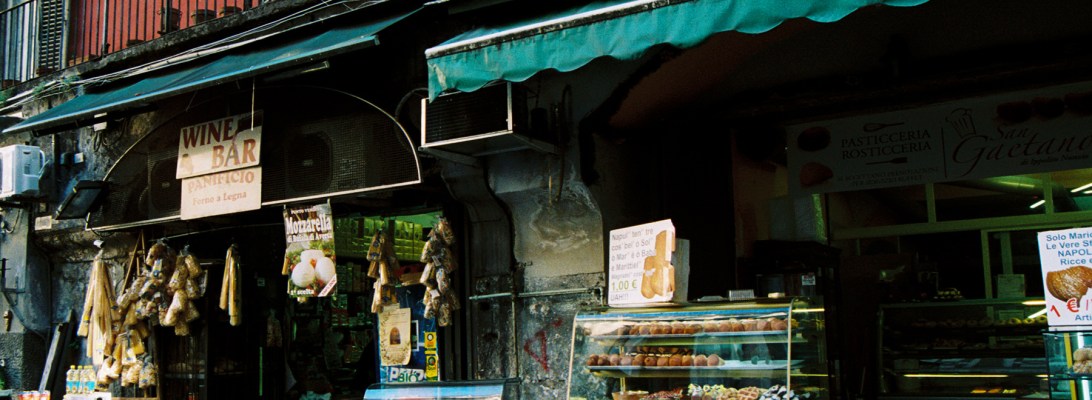
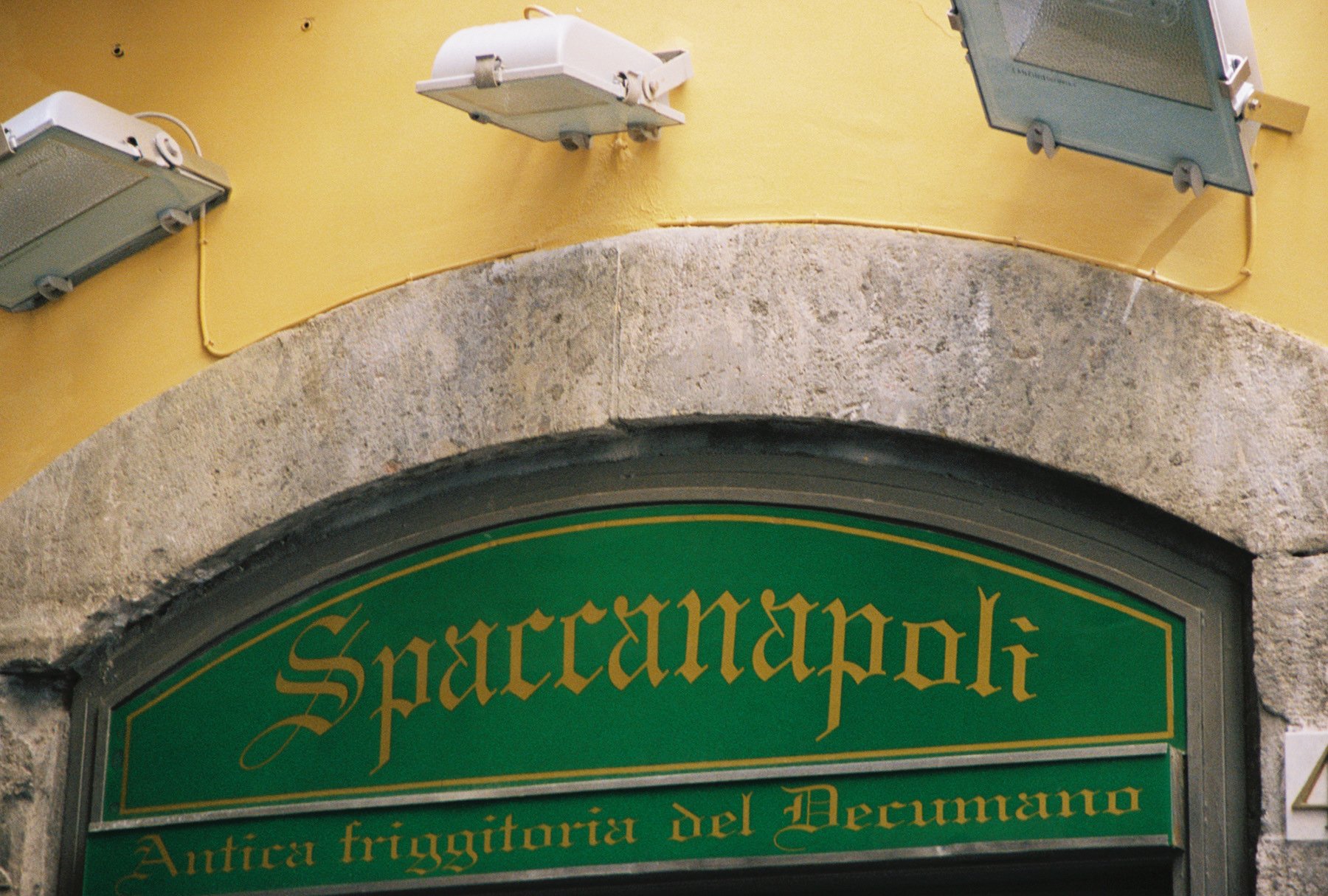 It’s “that” street they always tell you about if you find yourself in Naples.
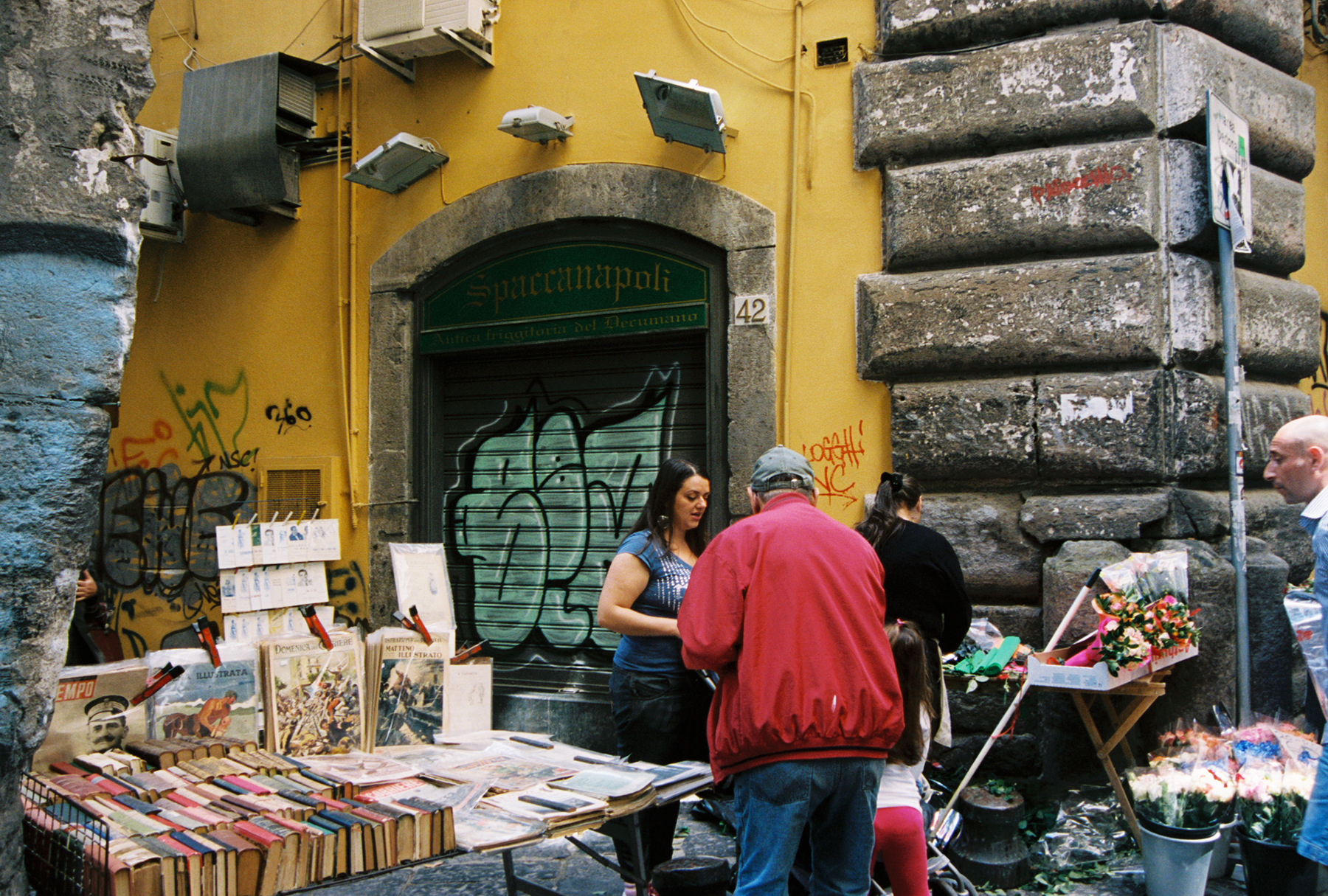 For people watching, craft shopping, cafe hopping and snapshot taking, you can’t pick a more fascinating and colorful place than the Old Greek section of Naples.
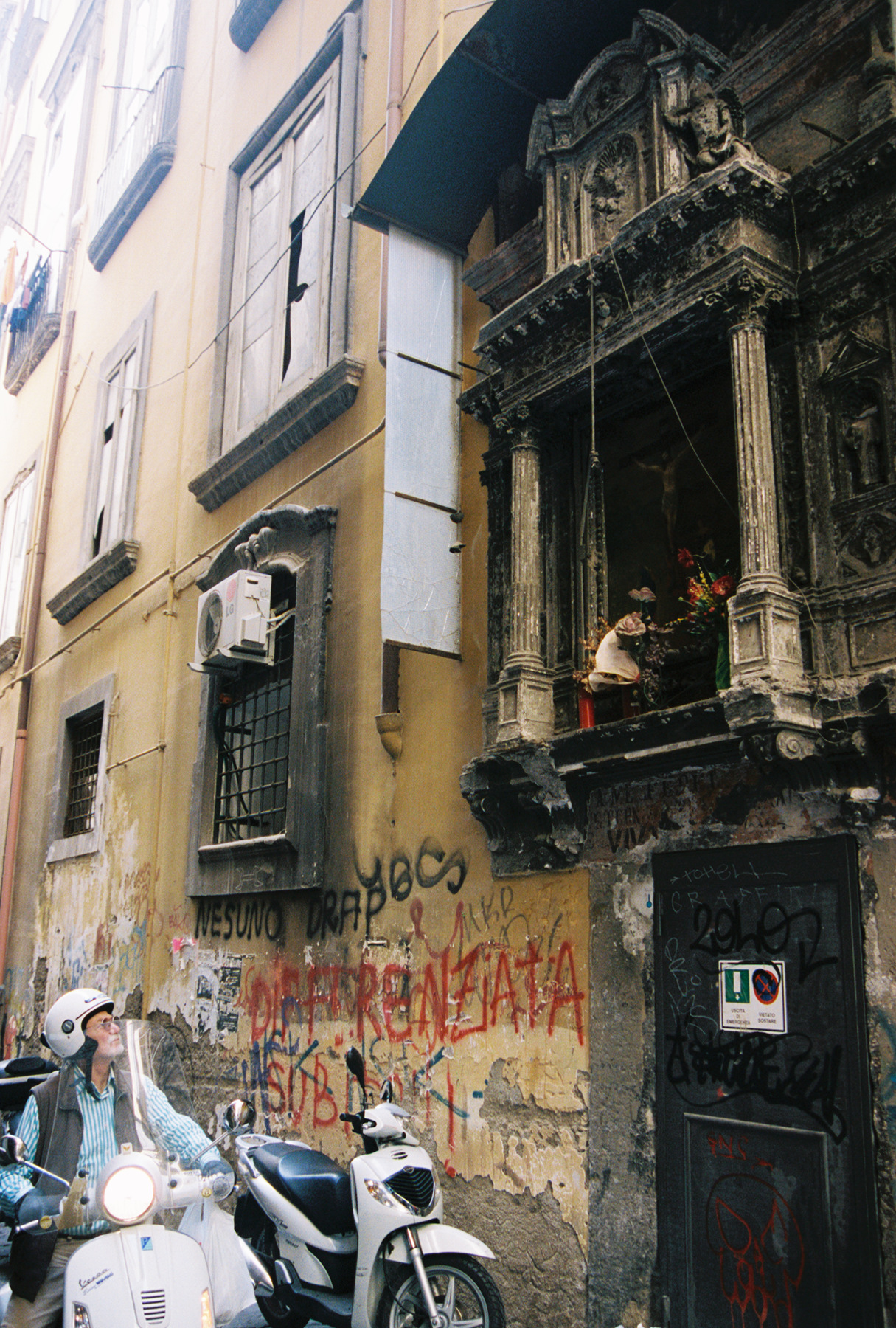
Another half hidden gem in a Neapolitan alleyway.
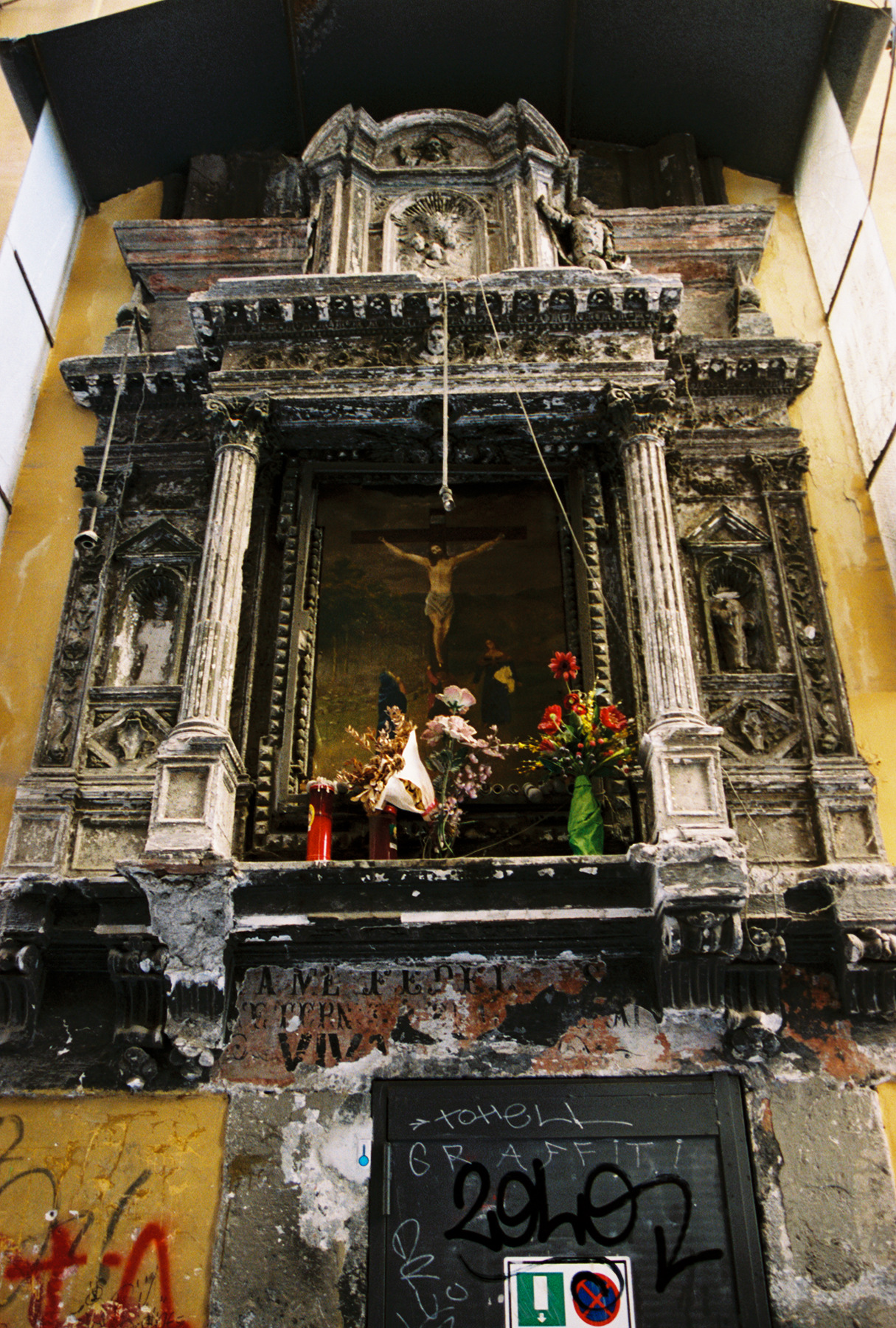
I wonder what this one means, what it is for and how old it is? Also I love graffiti that states the obvious.
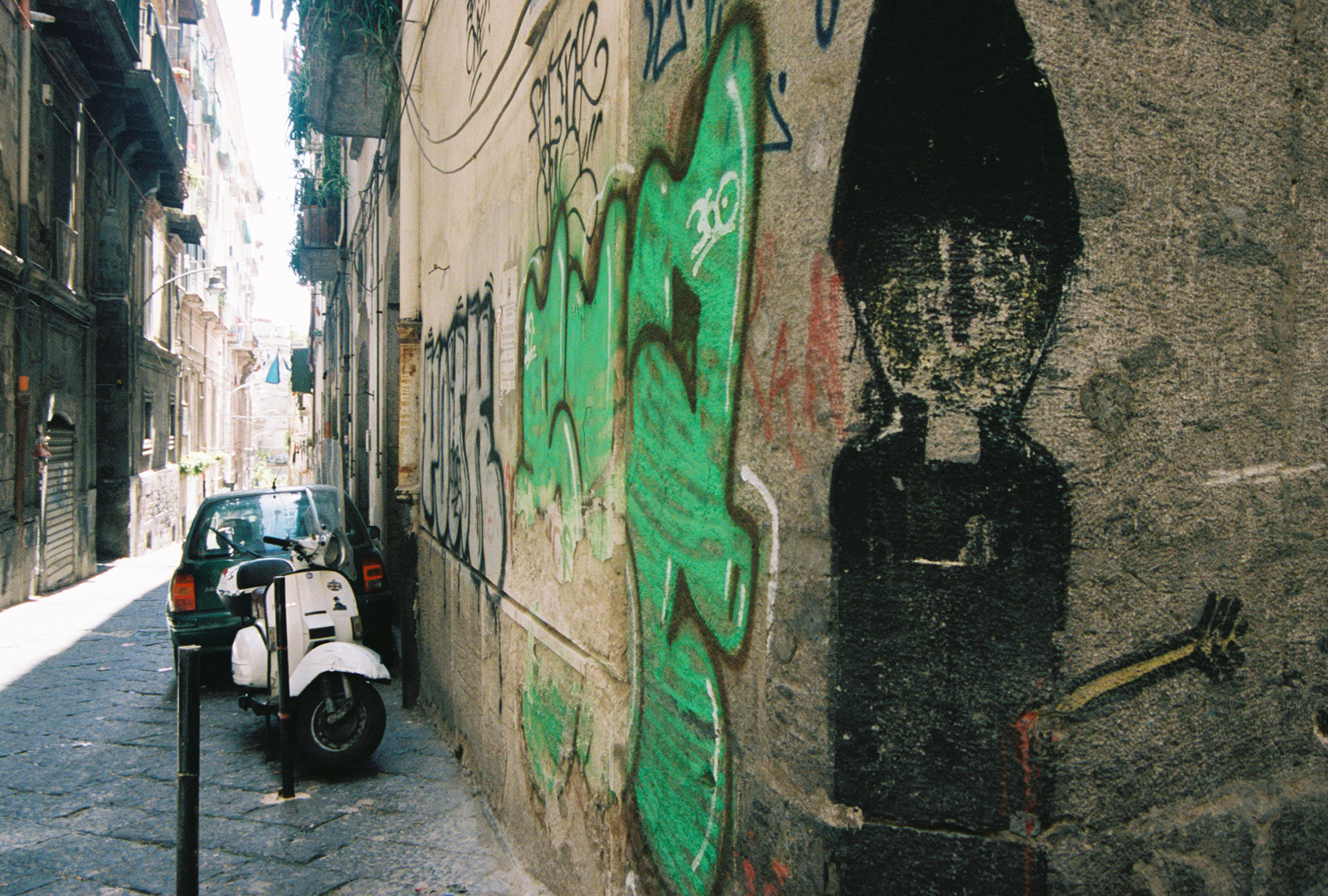
Interesting graffiti.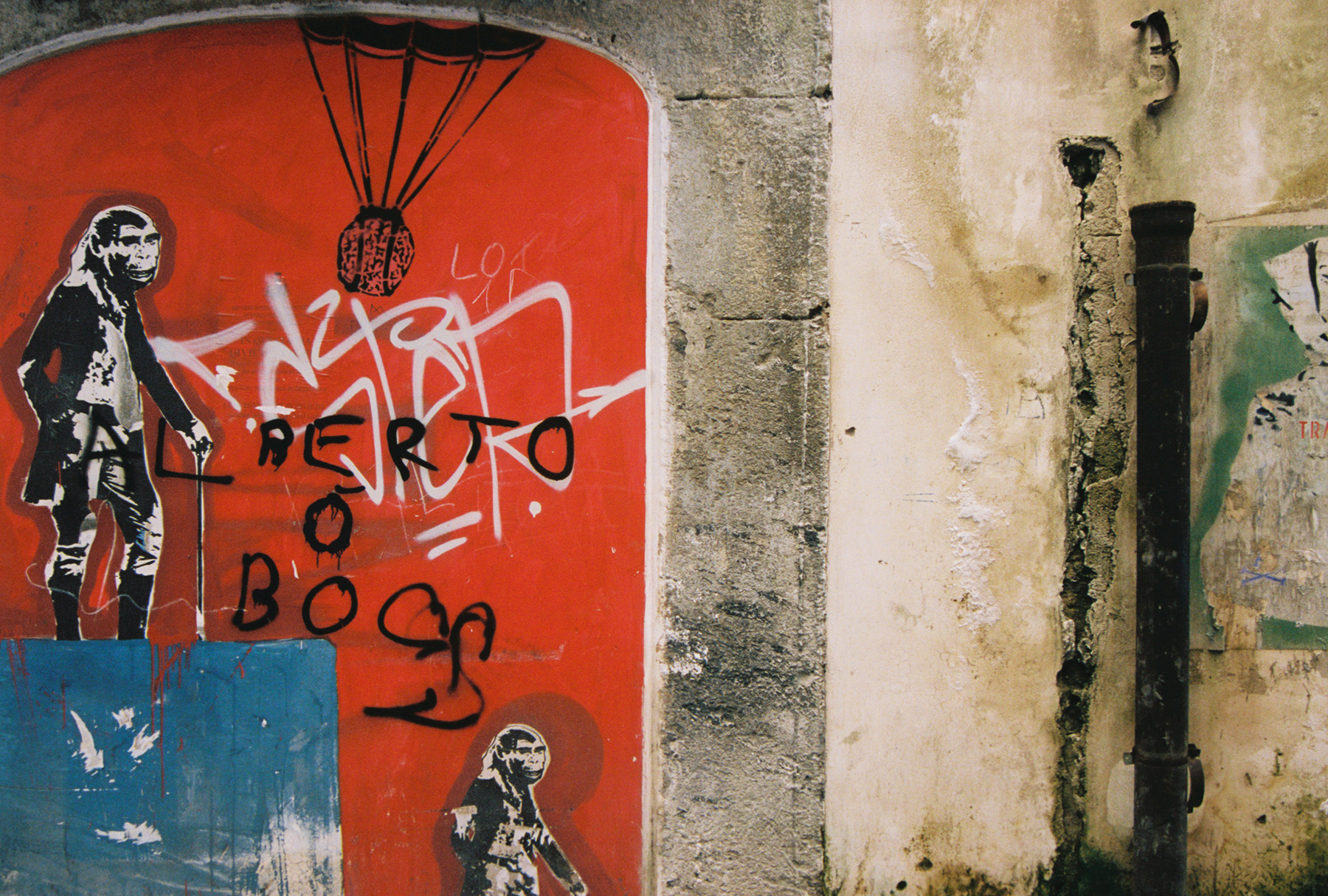
This guy was hiding in the most unlikely corners around the neighborhood.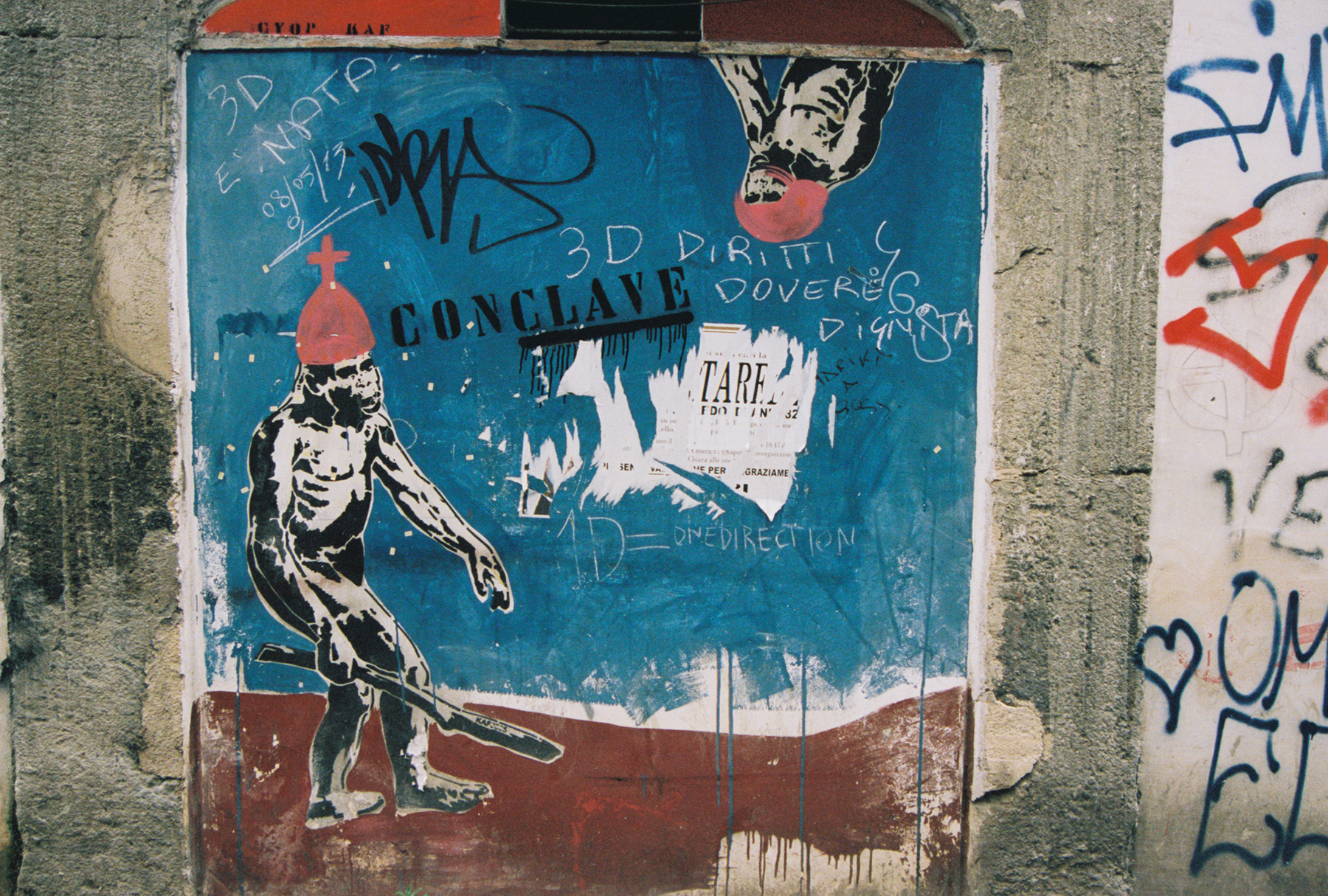
Commentary on the papal conclave me thinks.
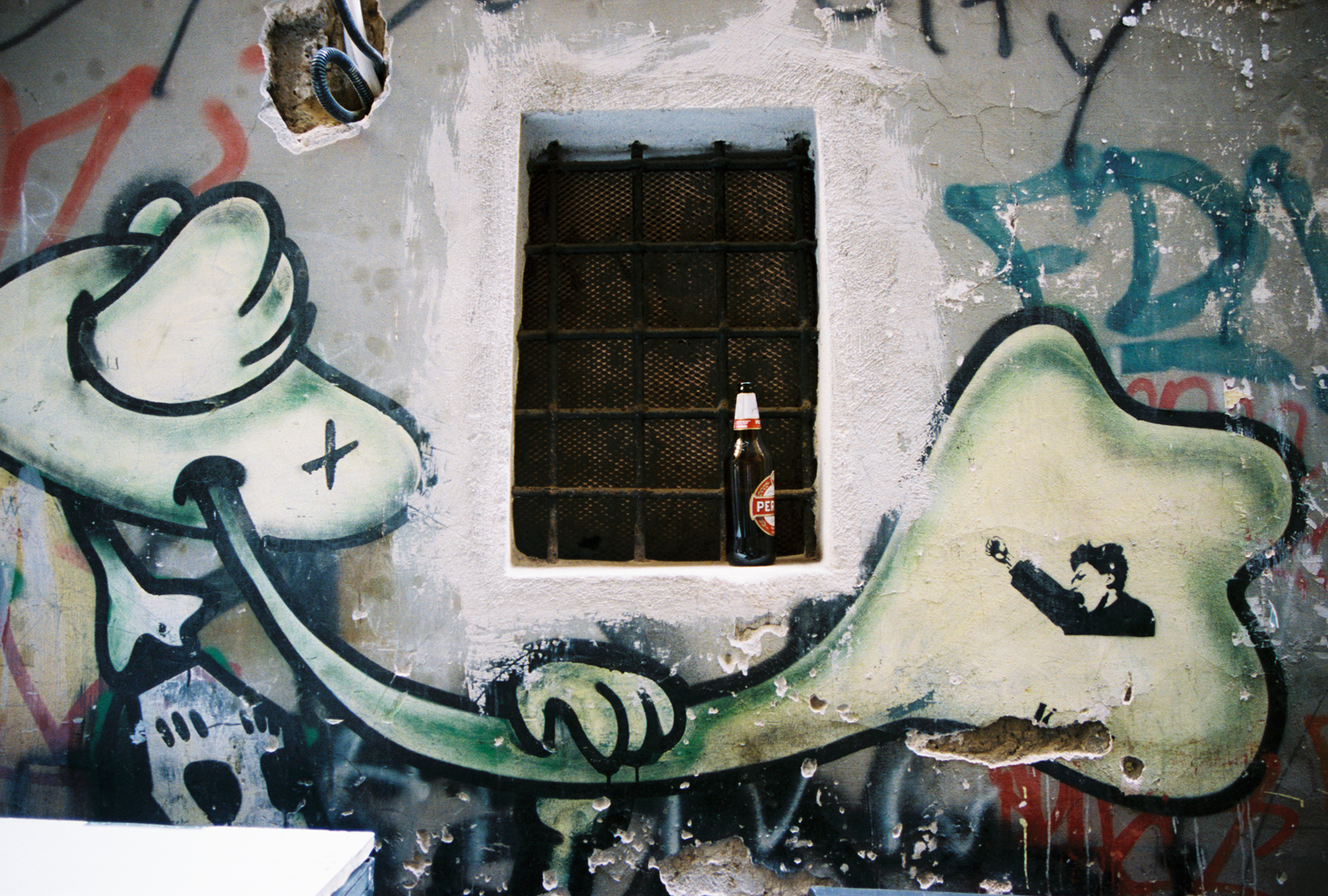
This is certainly one of my favorites.
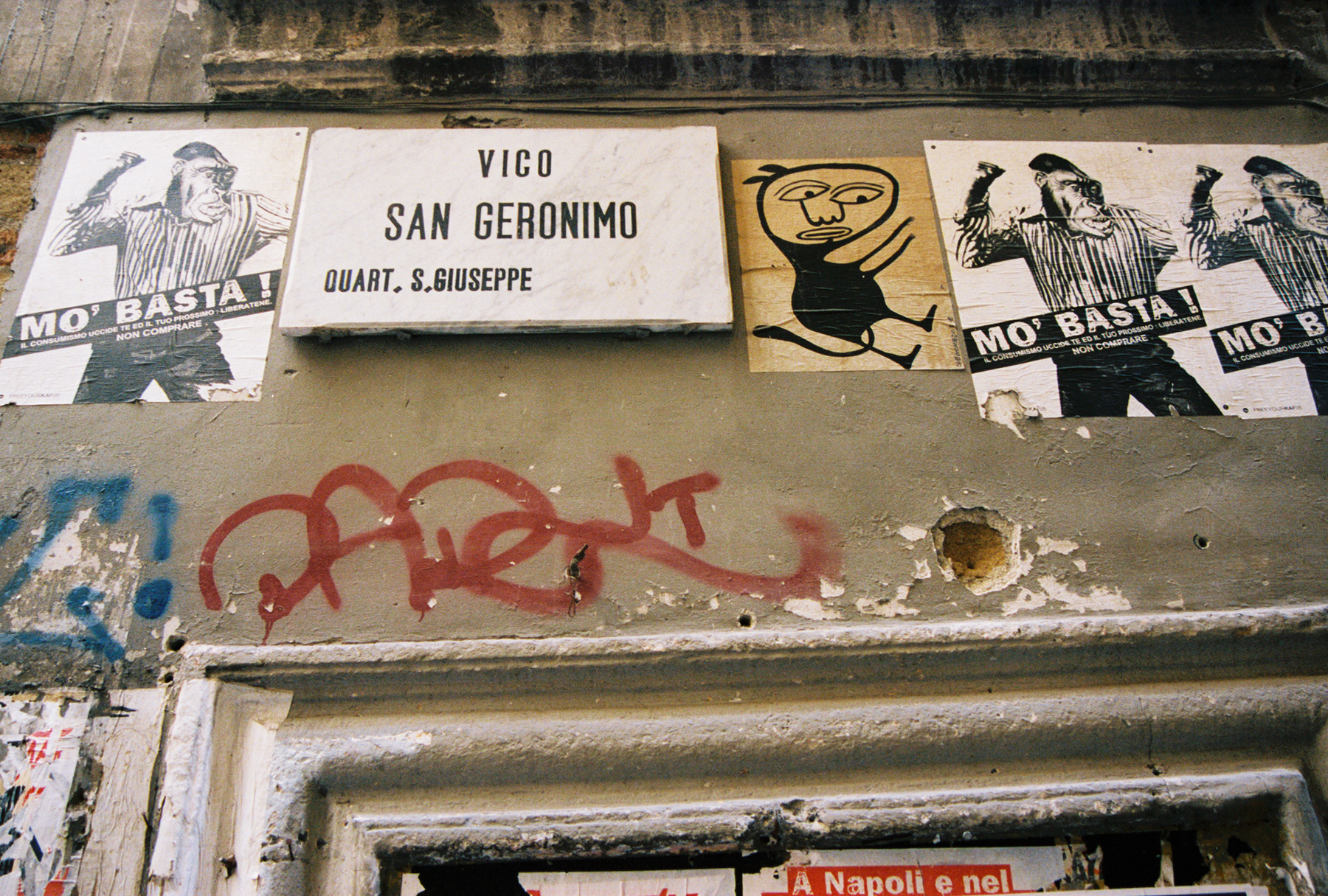
Gorilla boy is back.

Naples, where the vespas and motor bikes look even cooler when parked against peeling grafittied walls.
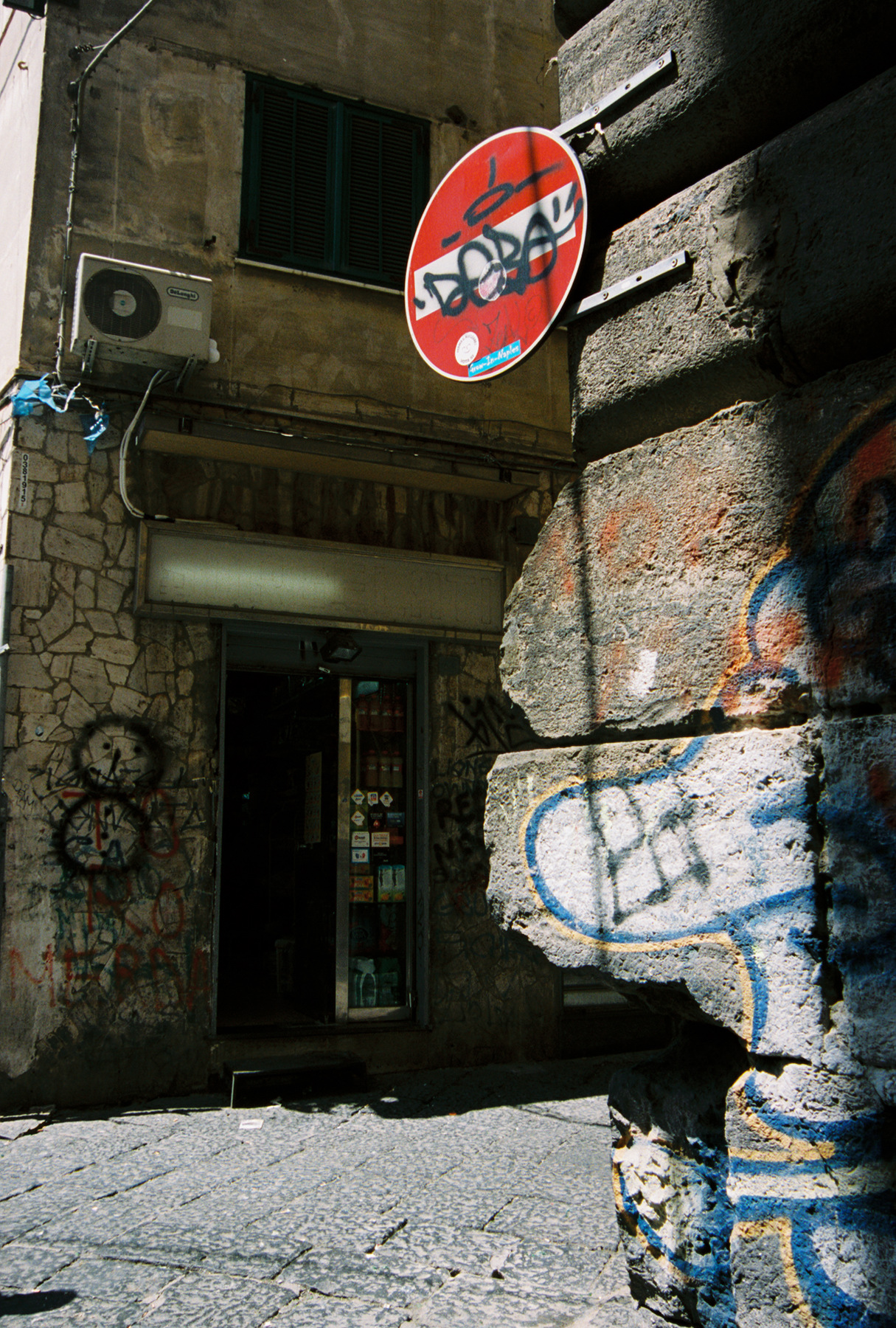
Just your normal everyday missing chunks of a rather old building. This sign means nothing, paint it.
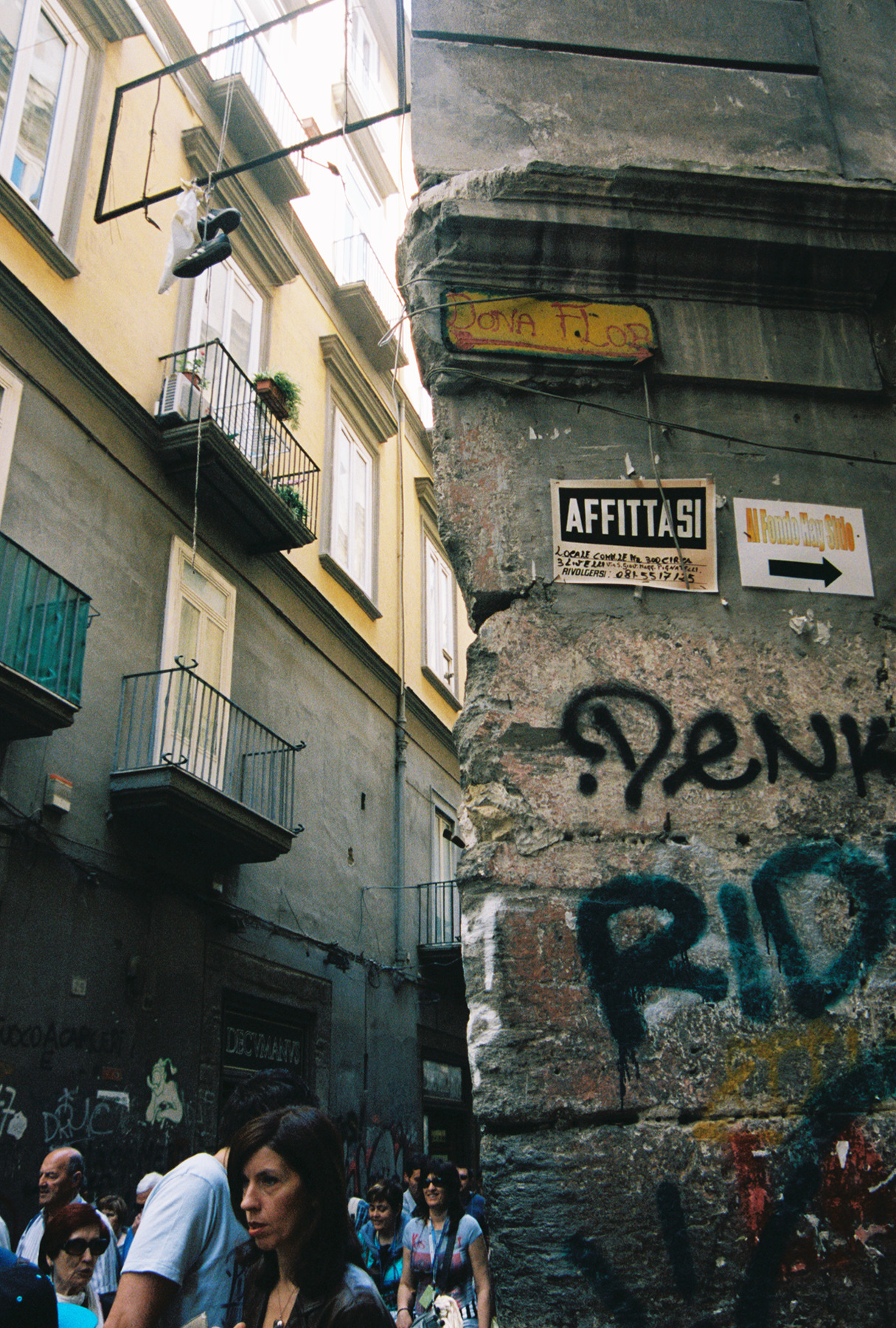
Hiding behind corners gets surprise shots and weird angles.
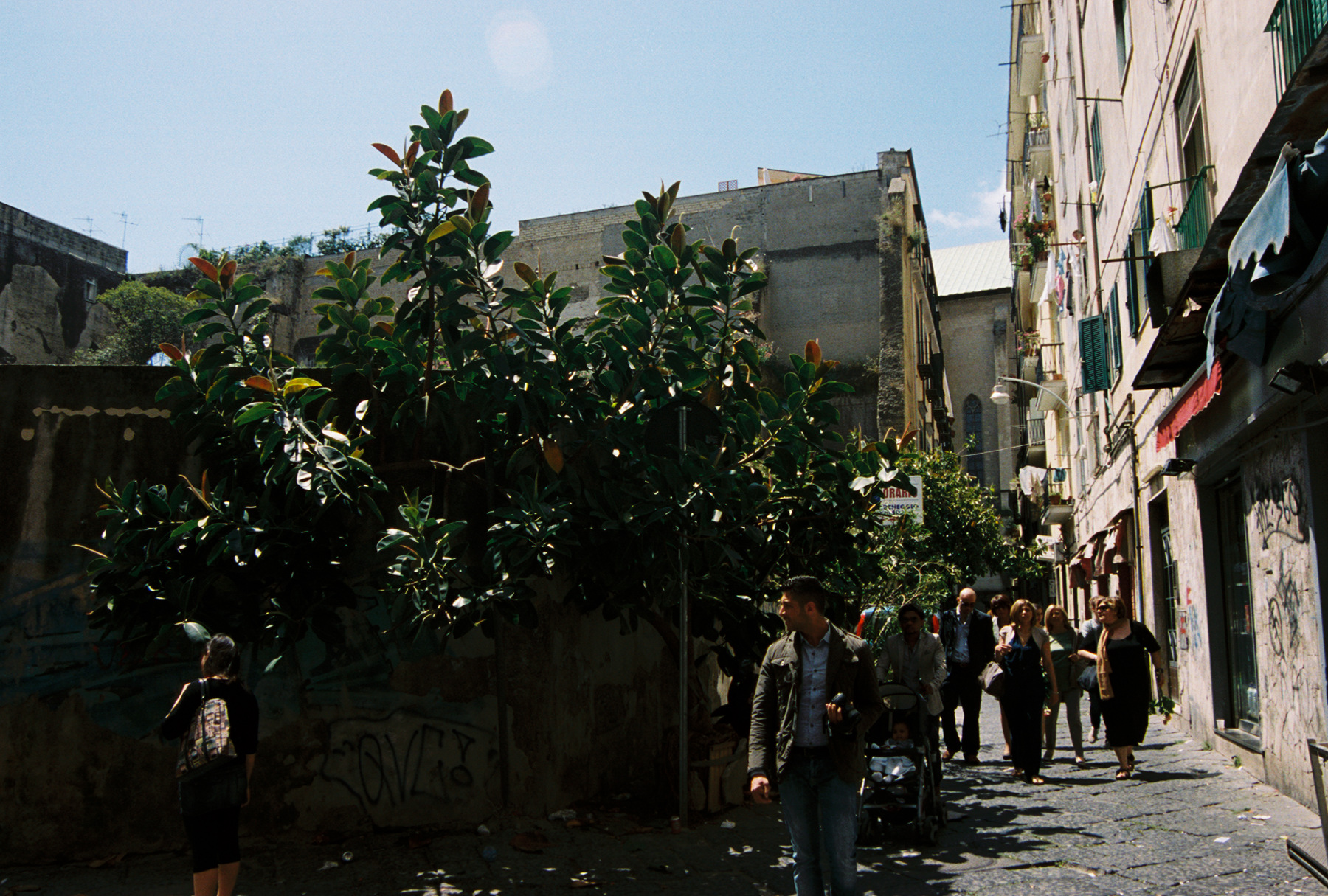
Off the beaten path Napoli.
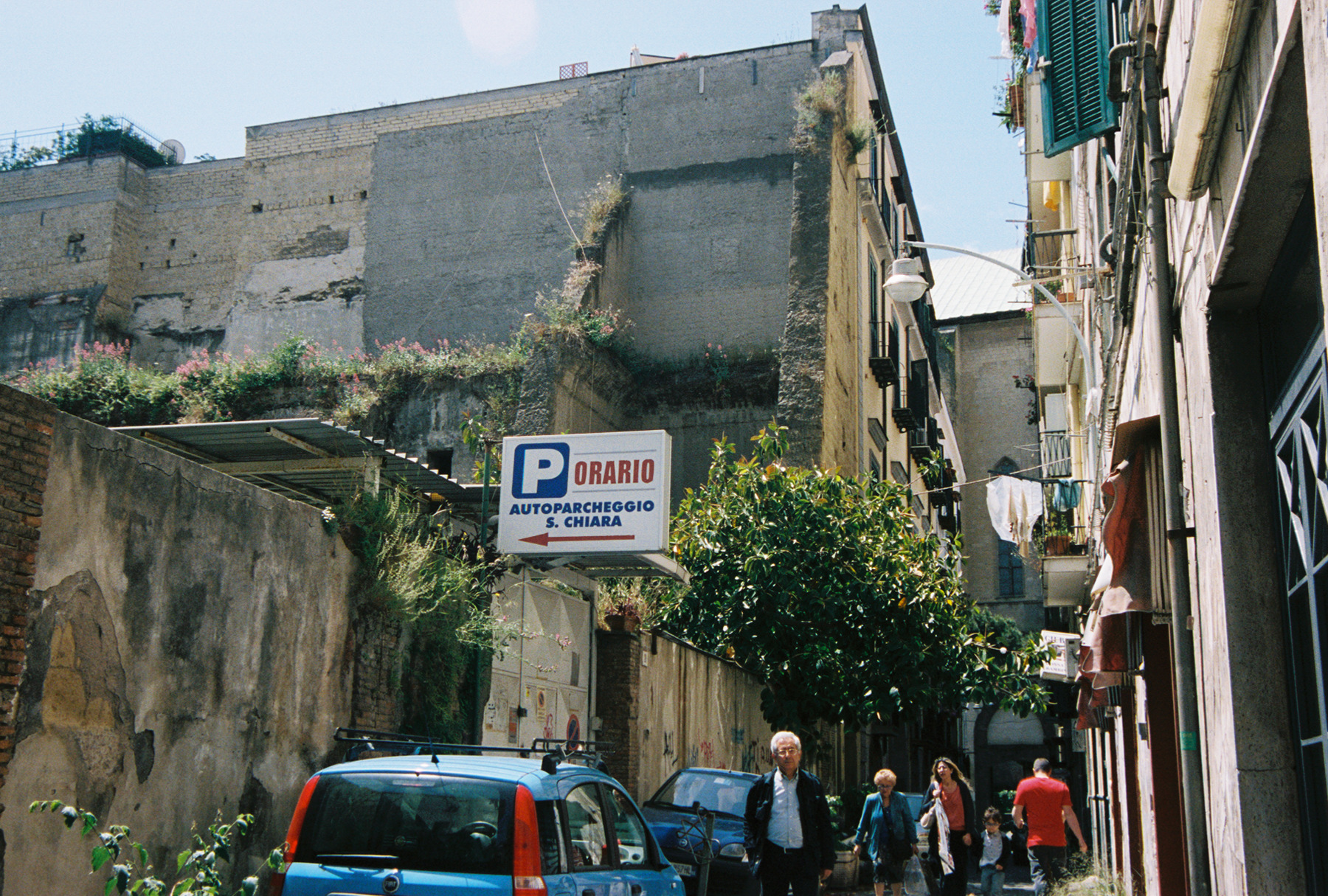
The inside of a building half torn down.
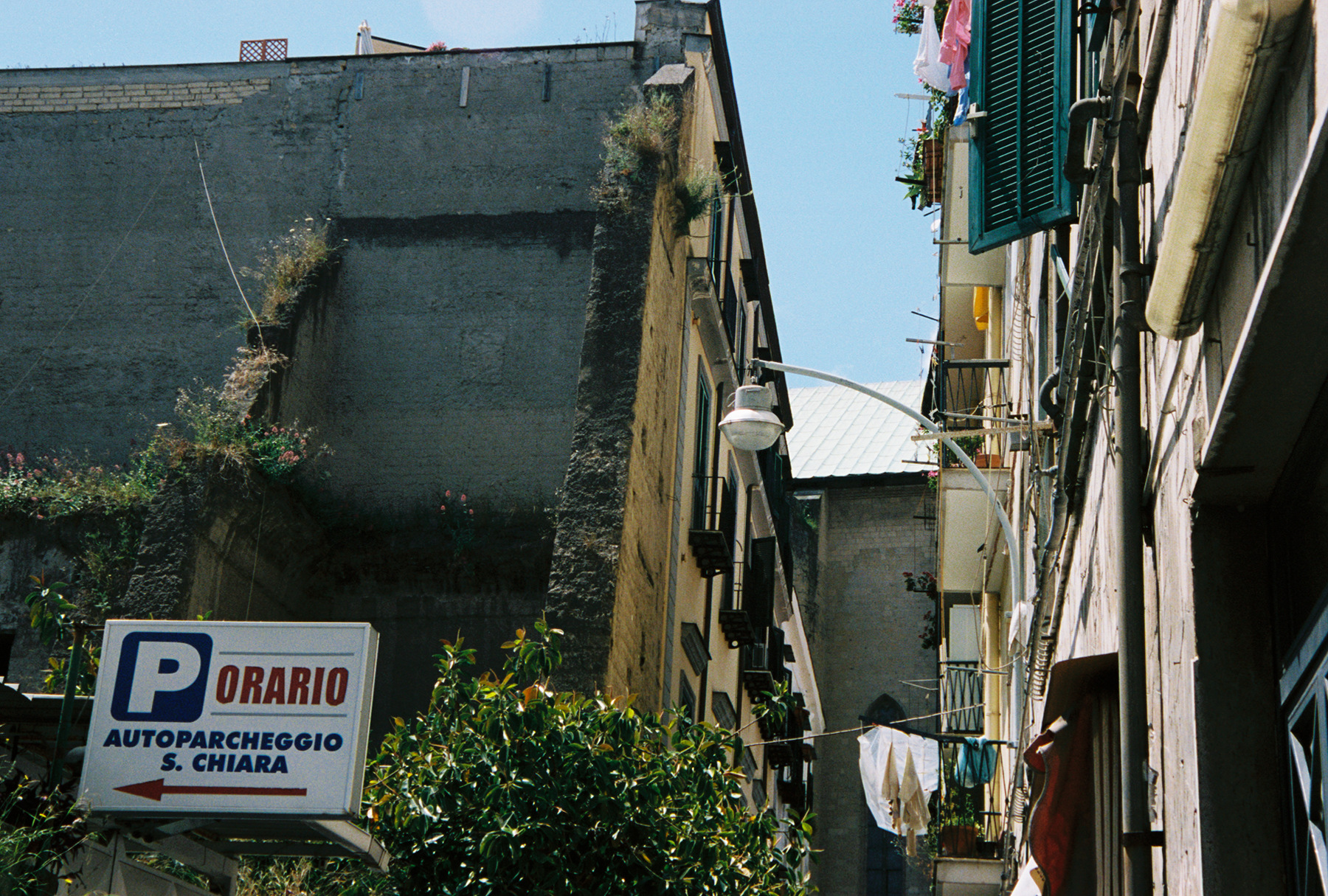
Open shuttered windows and laundry hung about everywhere. Modern life layered onto to history.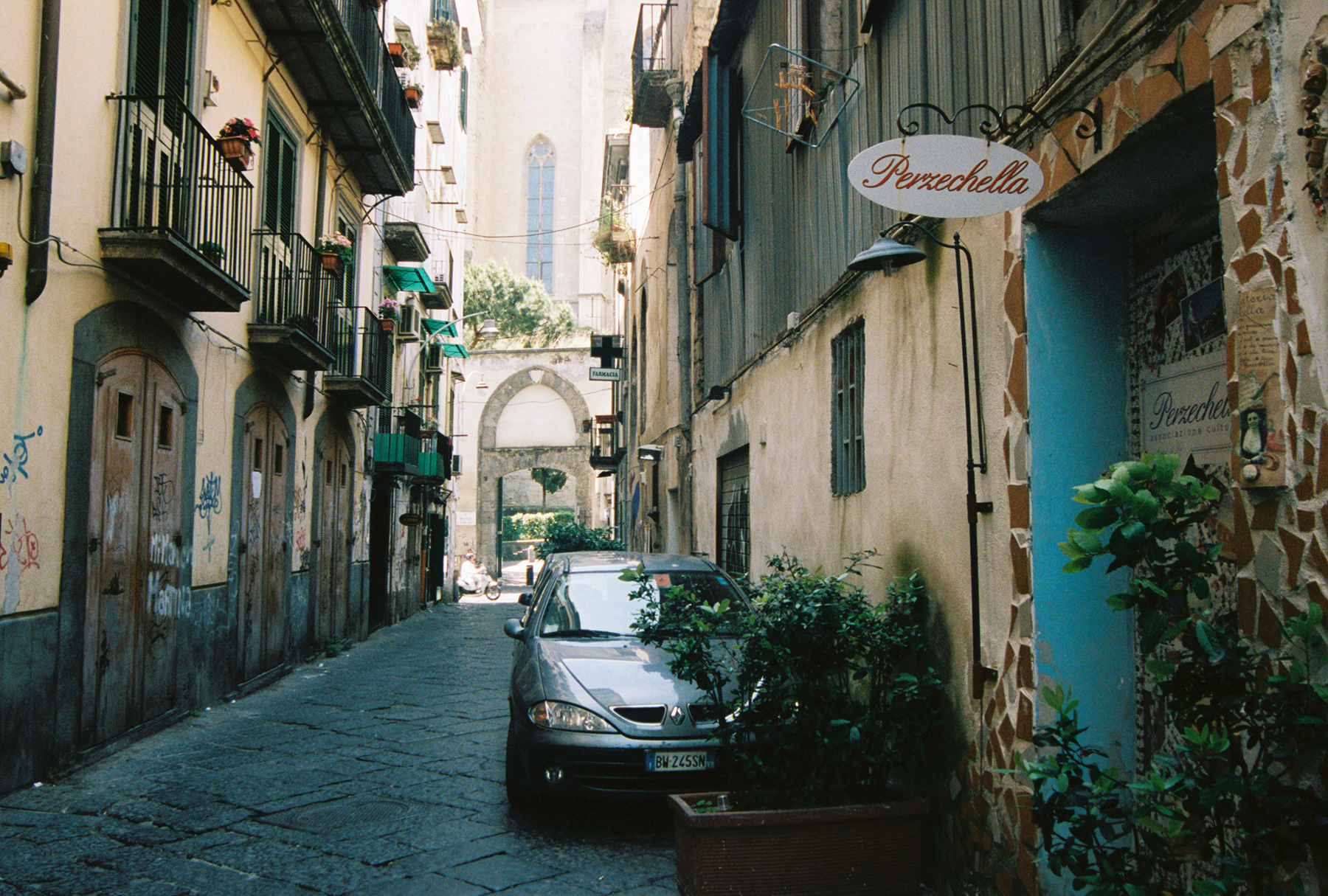
A church at the end of another road. More graffiti and more arches to walk under.
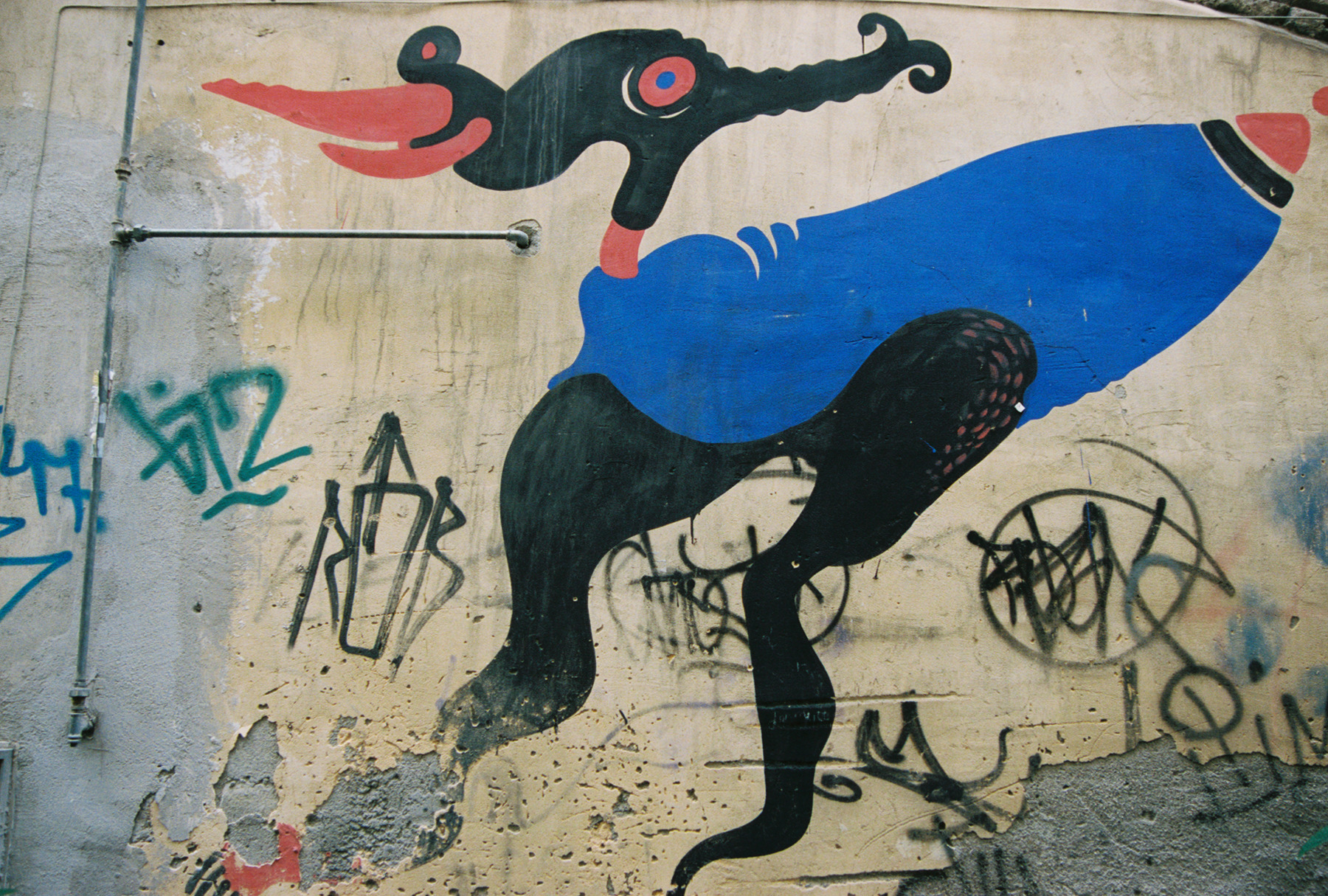
Naple’s newer creatures.
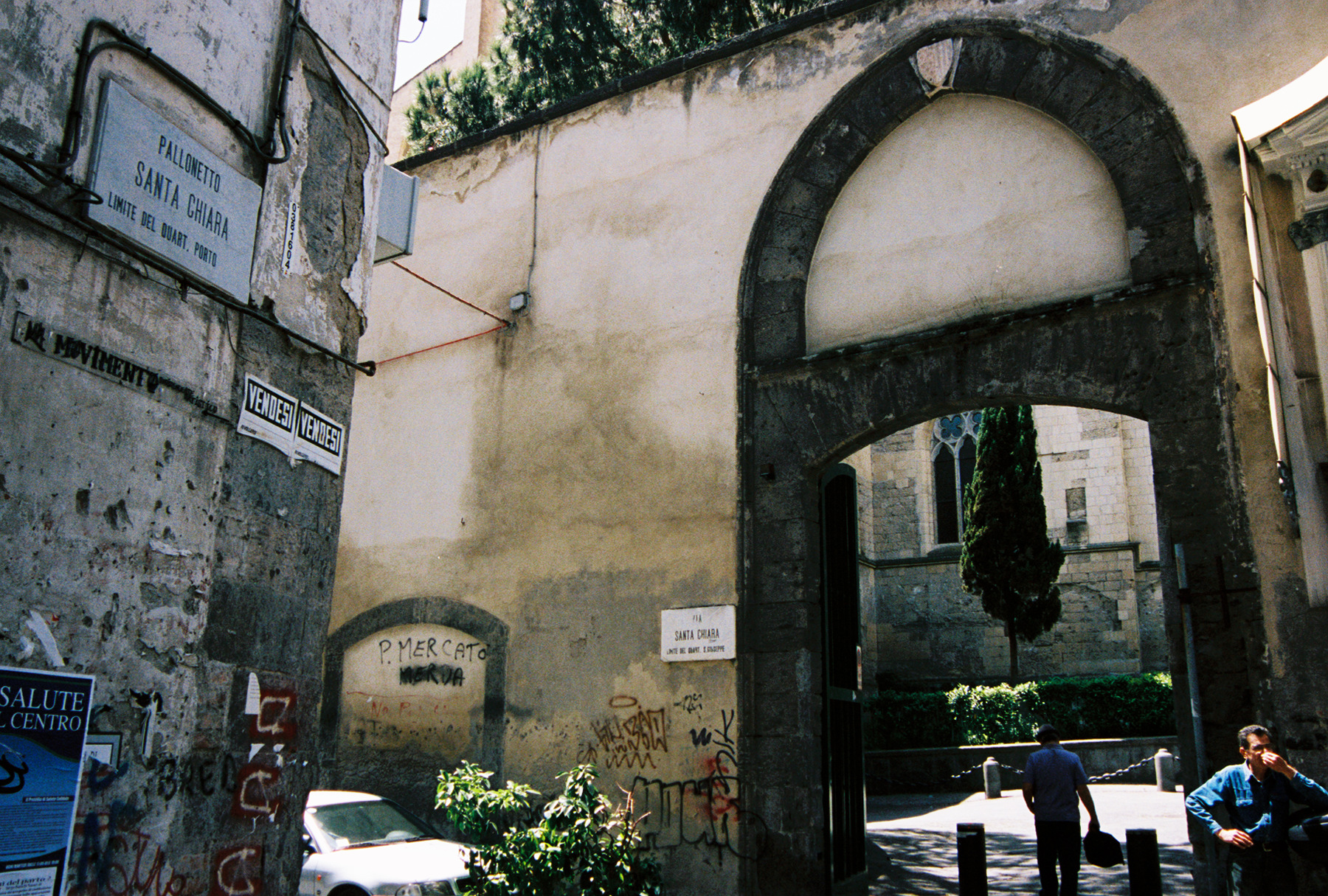
The side entrance, dramatic to me, no big deal to the locals.
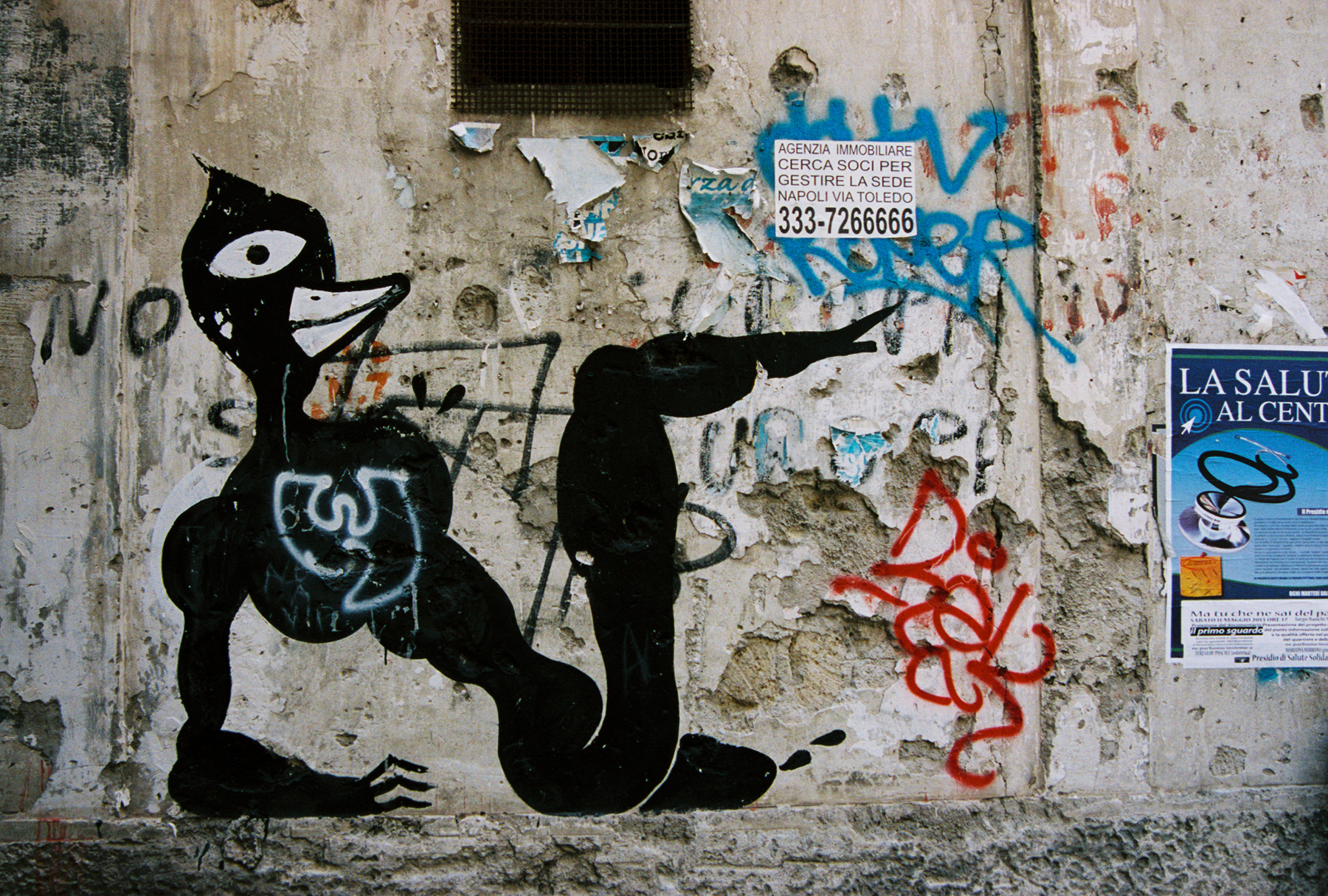
I’m trying to decide if this is rude or not.
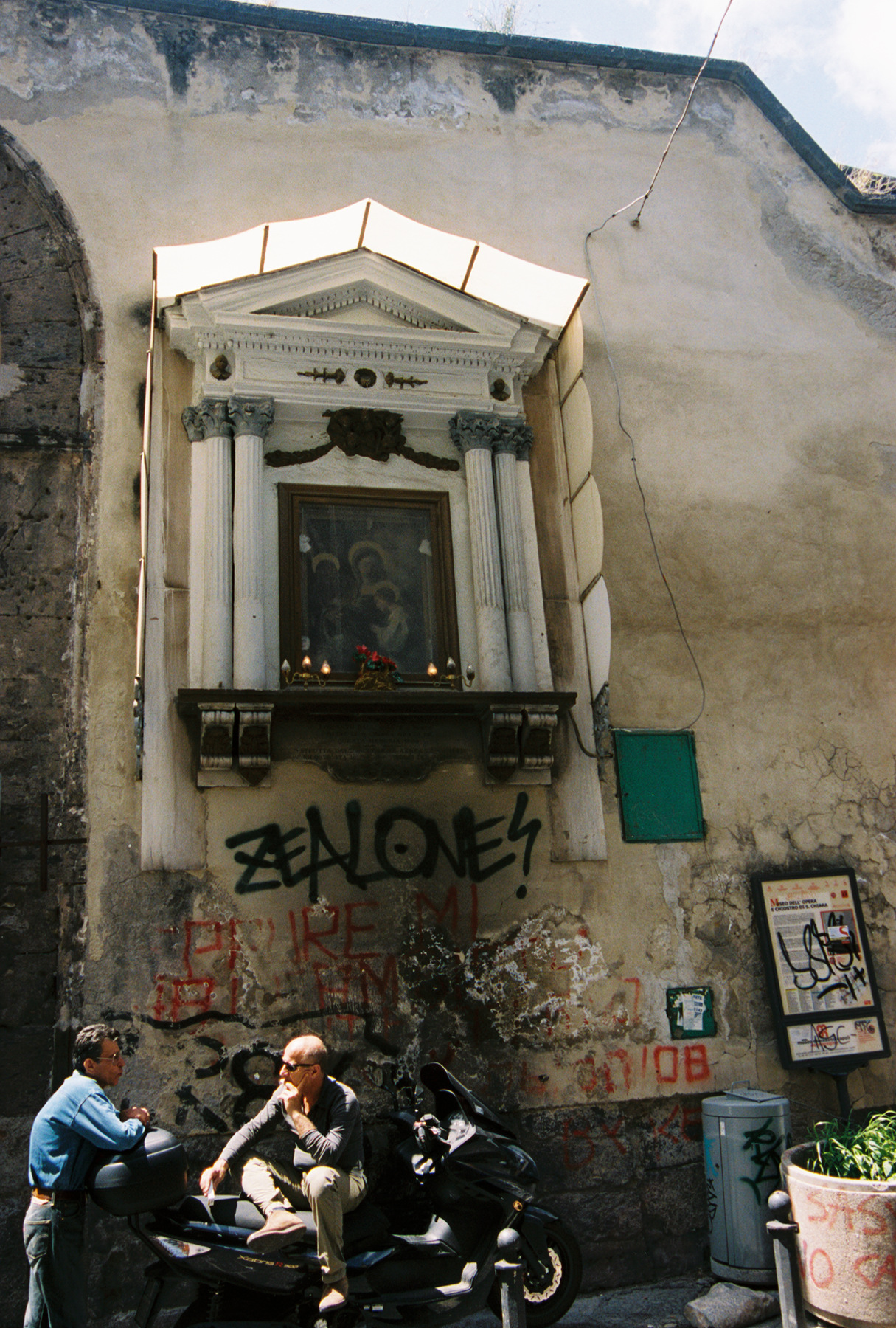
Can a city qualify as cool on one incredible nonchalant chatting spot? It should.
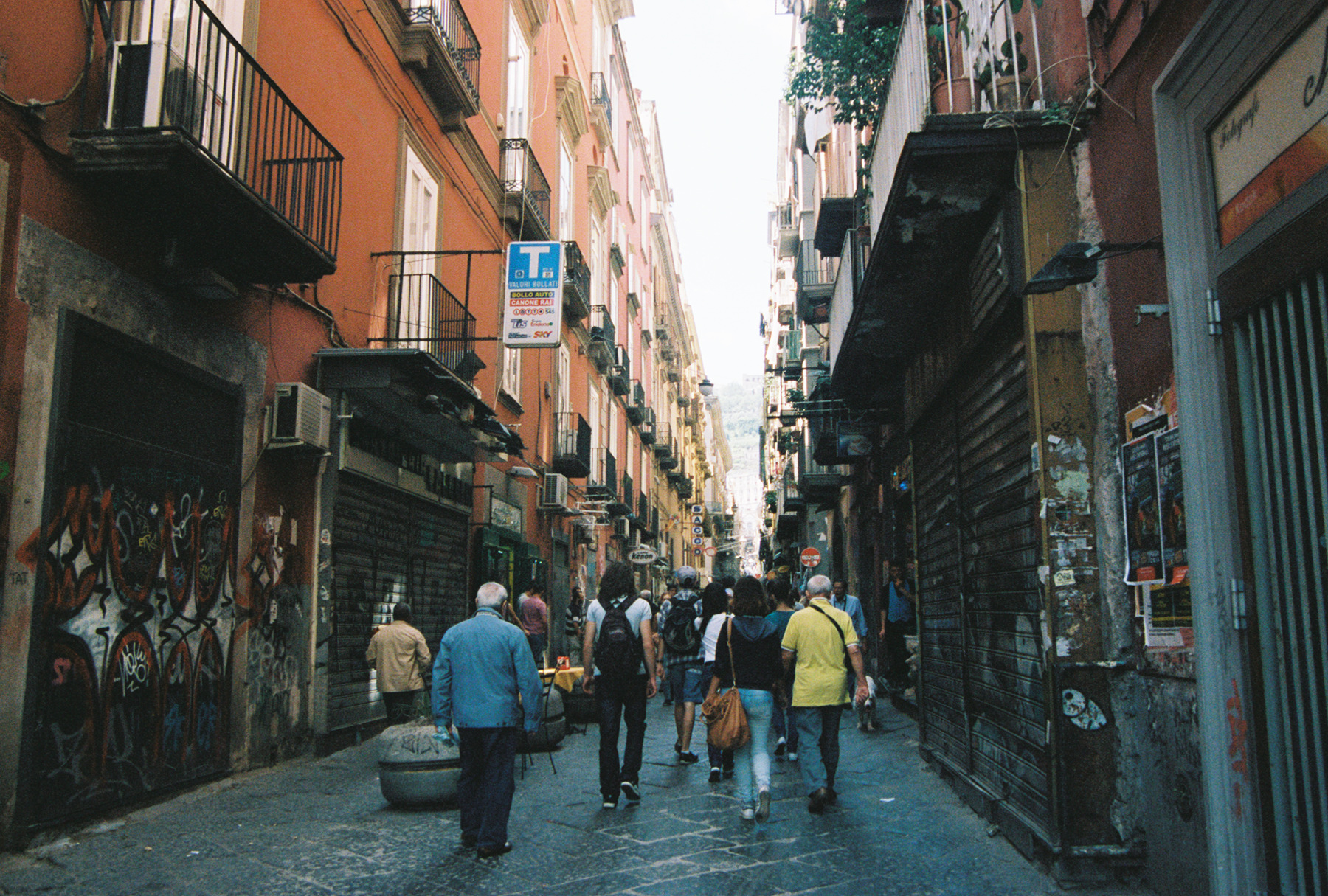
I just follow the crowds to avoid them.
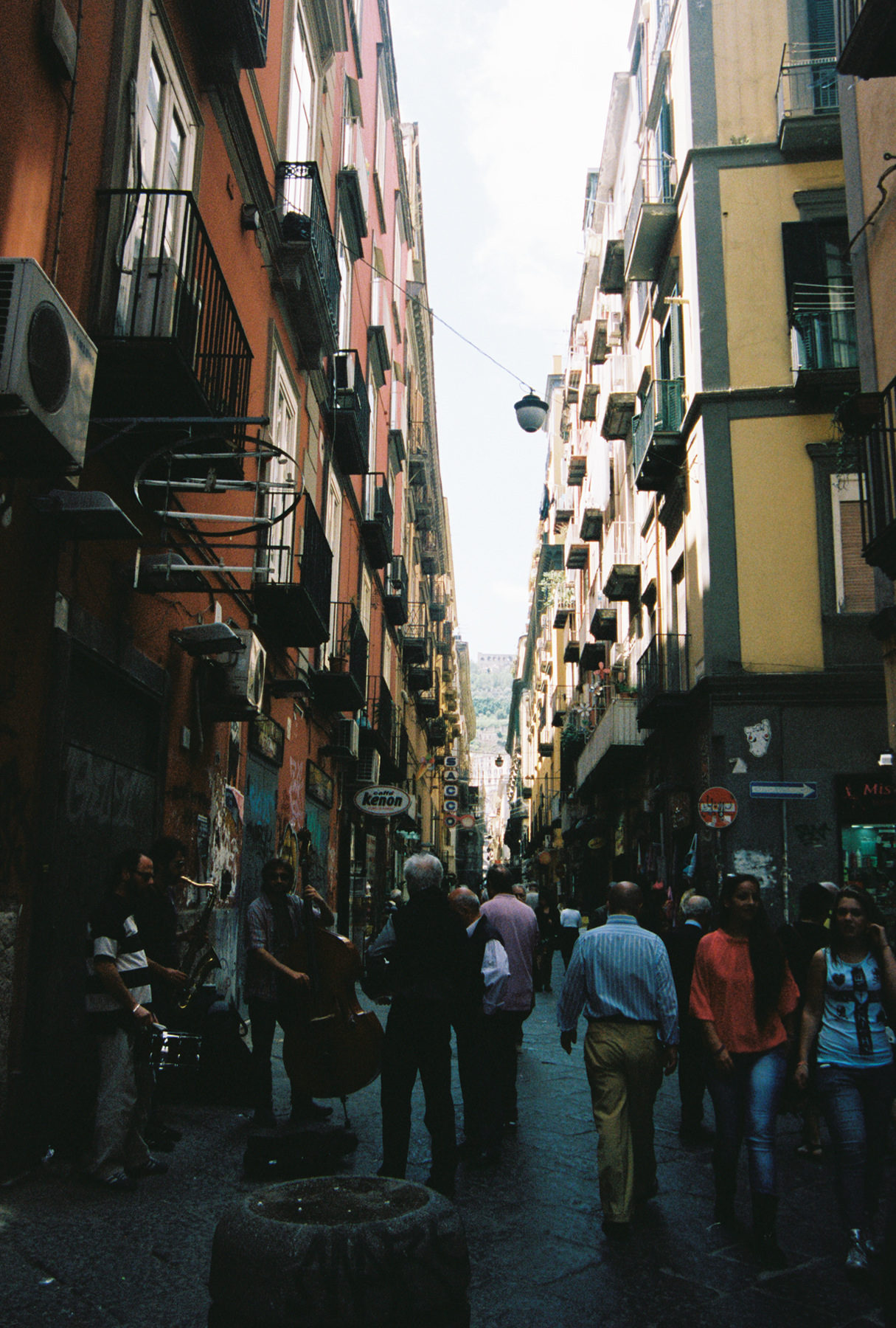
I followed the sound of New Orleans jazz music and found this delightful bunch.
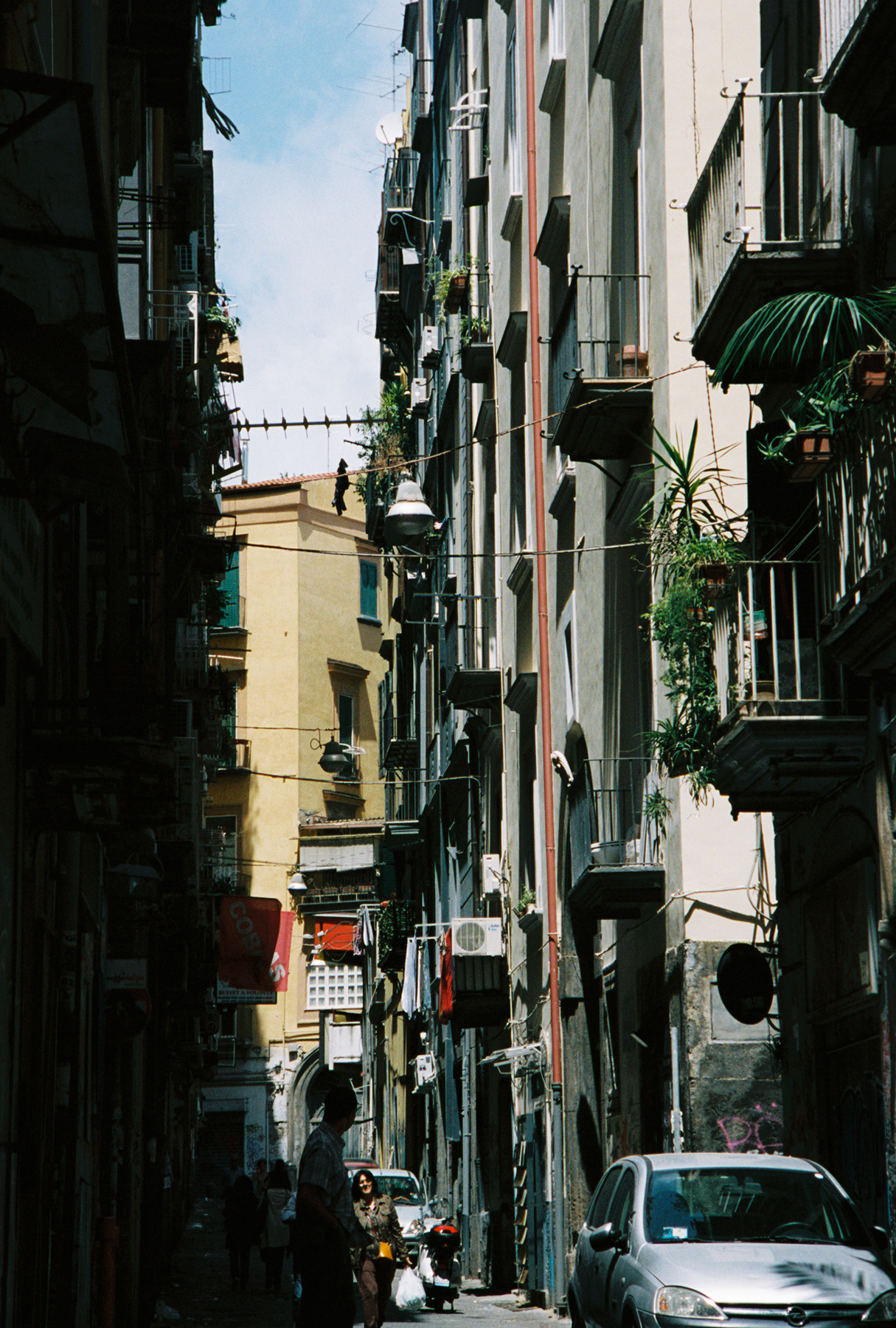
The layers, the layers, the layers… I go on and on about it but Napoli is a city of layers!
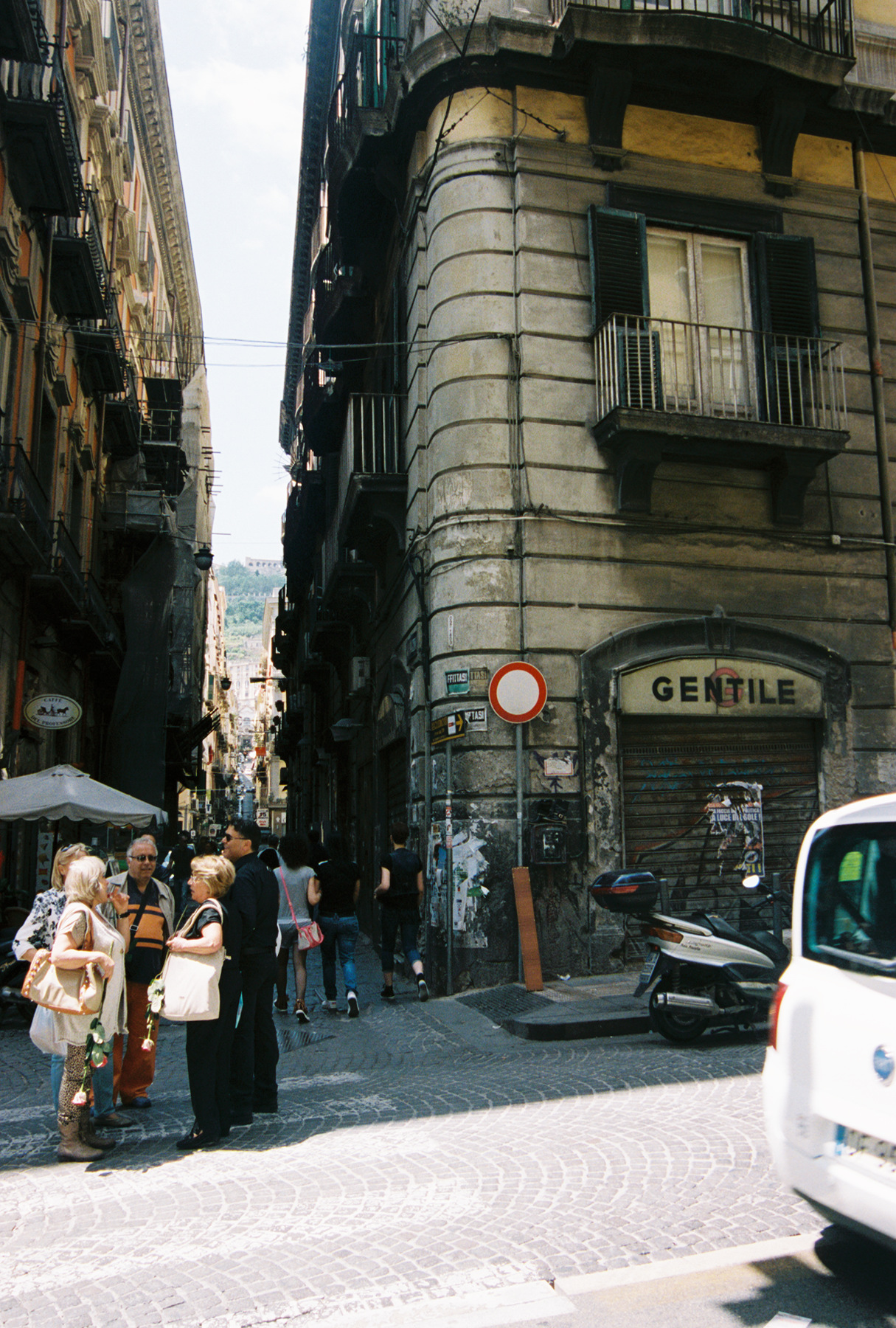
Gentile.
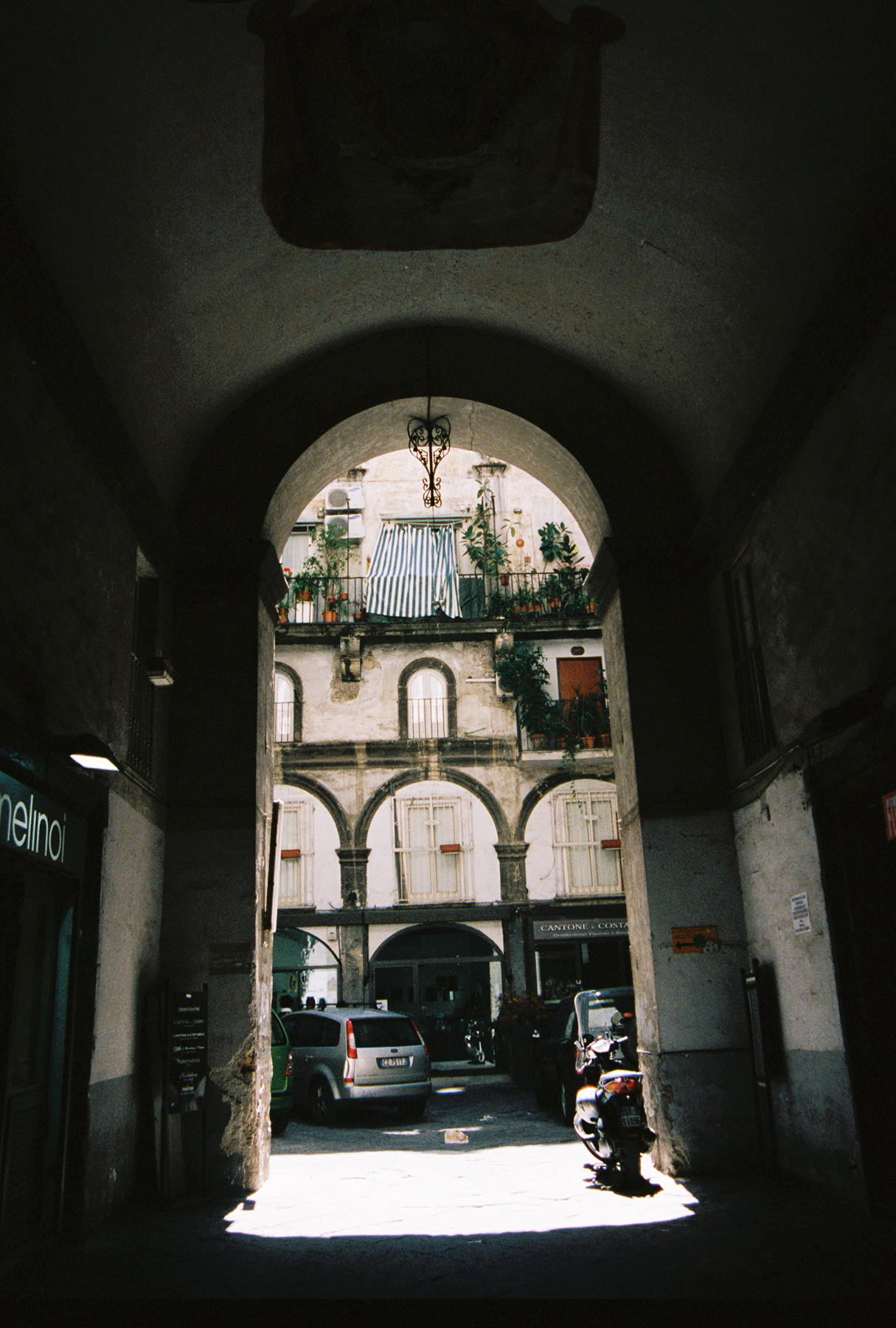
It’s the forbidden peeks into private gardens and courtyards I love best.
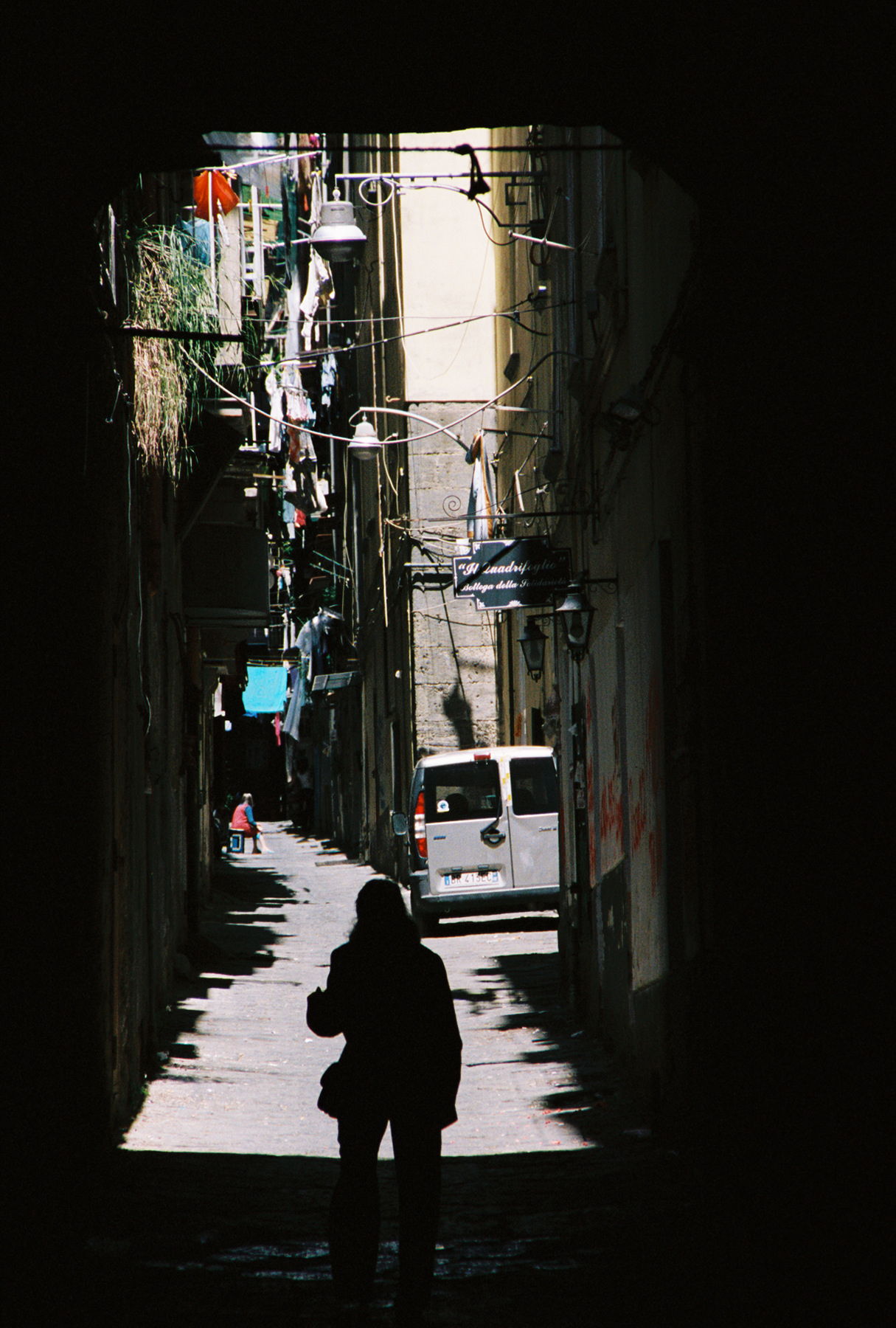
The spooky Purgatory Lane.
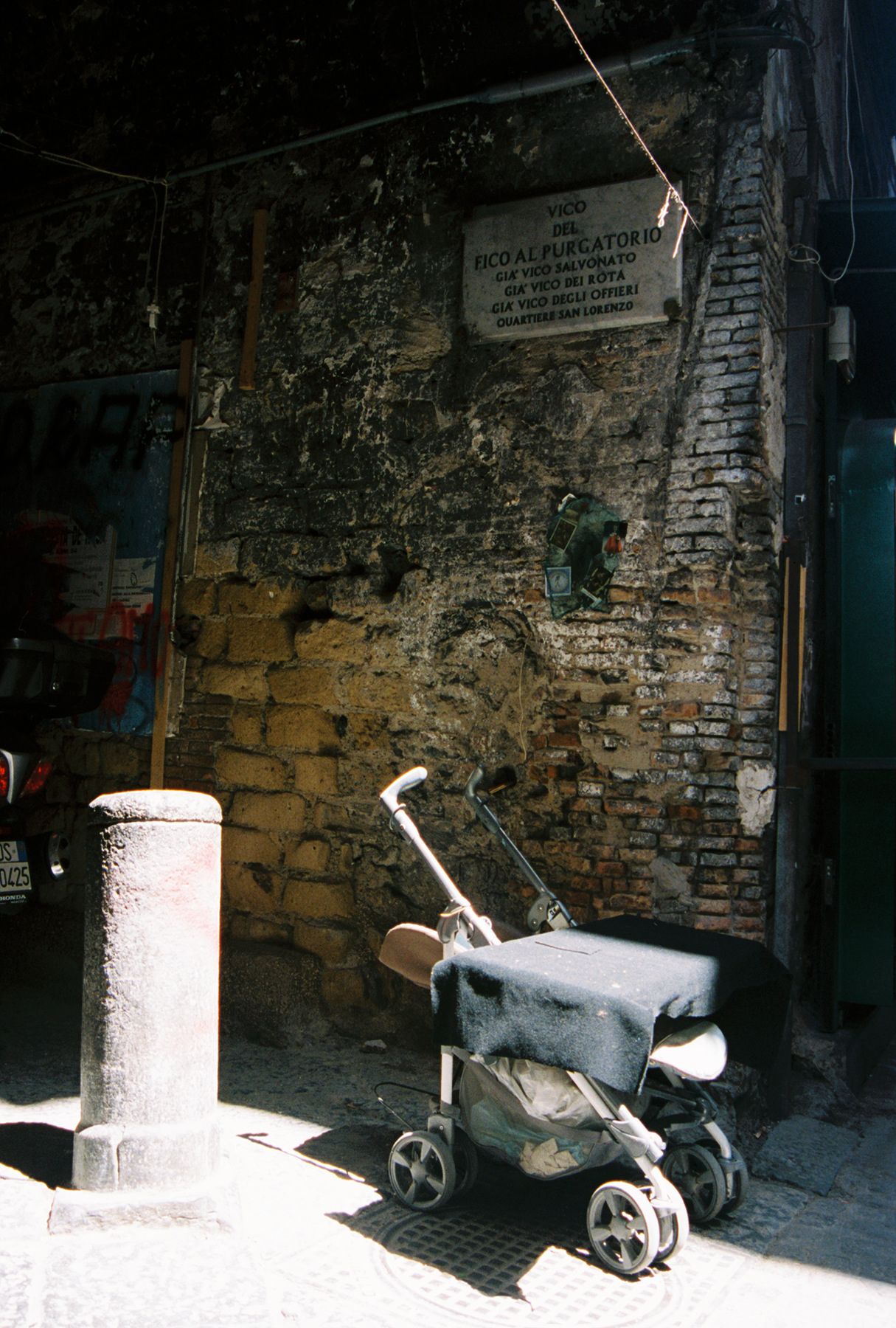
Vico del fico al purgatorio. An abandoned dusty baby’s pram that wasn’t there in October at the entrance of the dark and musty Purgatory Lane. Nope, not at all like a horror movie.
All photographs are 35mm film, Pro H and Kodak, copyright Rebecca Price Butler, of alovelettertorome.com
At the edge of the garden at the Villa San Michele on Anacapri there are beautiful architectural details and greco roman fragments displayed among the trees and flowers.
“My house must be open to the sun, to the wind, and the voice of the sea, just like a Greek temple, and light, light, light everywhere!” – Axel Munthe
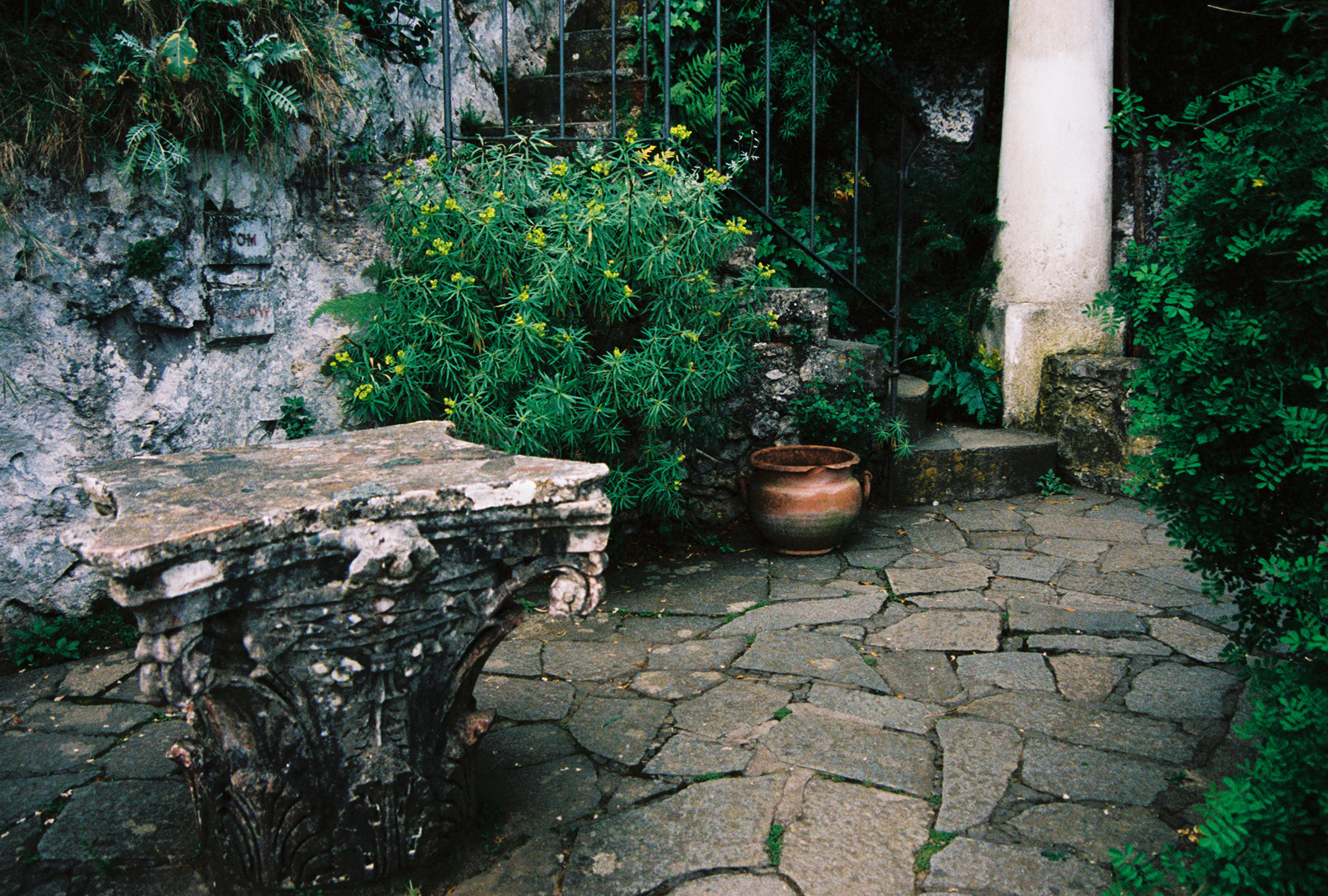
I find the ramble through the gardens of Anacapri (especially the Villa San Michele one) to be a bit fairytale-like, a bit dreamy. The dark, lush, green paths over stone and fragments of ancient Roman columns and statues; the intoxicating scent of flowers and herbs; the layered calls of forty different species of birds – all hold one’s attention. When the garden is not crowded one can find themselves utterly alone, with the run of the place. There’s a sense of timelessness walking the stone paths and climbing stairs which boast unreal views of rugged coastline and layers of rocky, verdant cliffs.
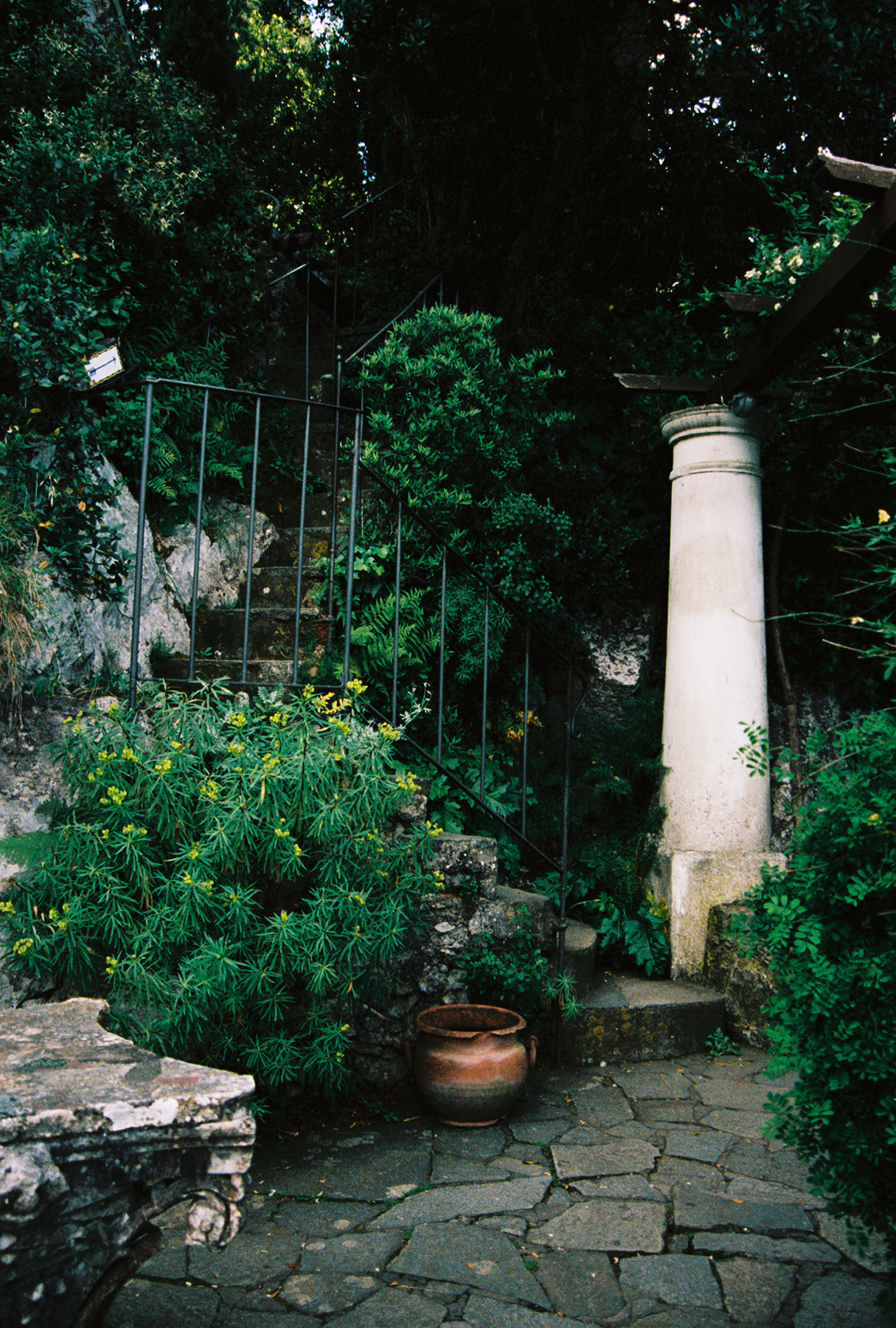
A nonchalant rustic garden with the aesthetics of a museum, an olive jar, shadows between the sunlight and a verdant spread accompanying a stroll. The stairs beckon and frighten a little when alone.
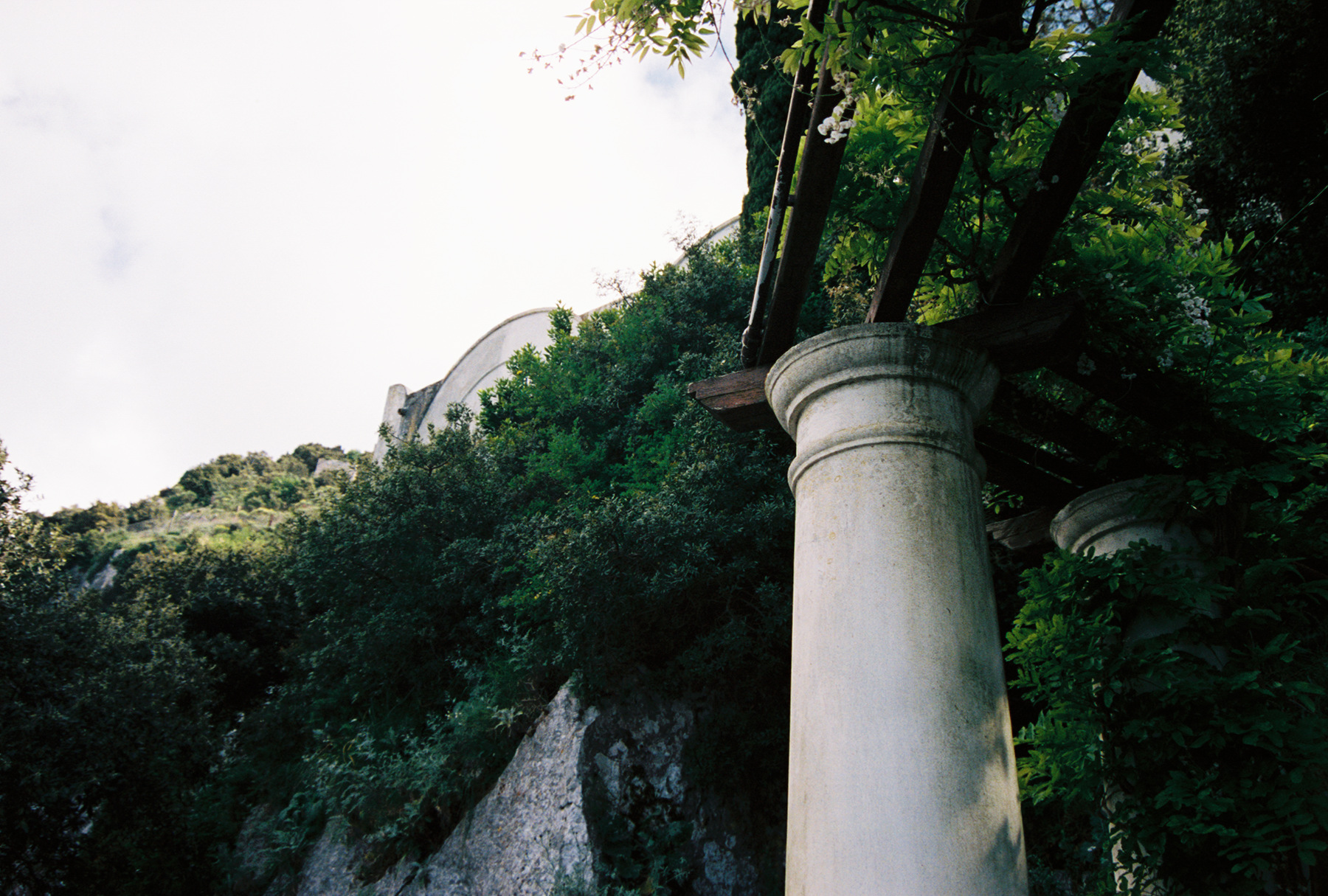
The gorgeous cloak of wisteria entwining the columns and topiaries. Mighty cypresses soaring like some needly skyscrapers. The hint of other villas and other stories are tucked neatly into the mountain.
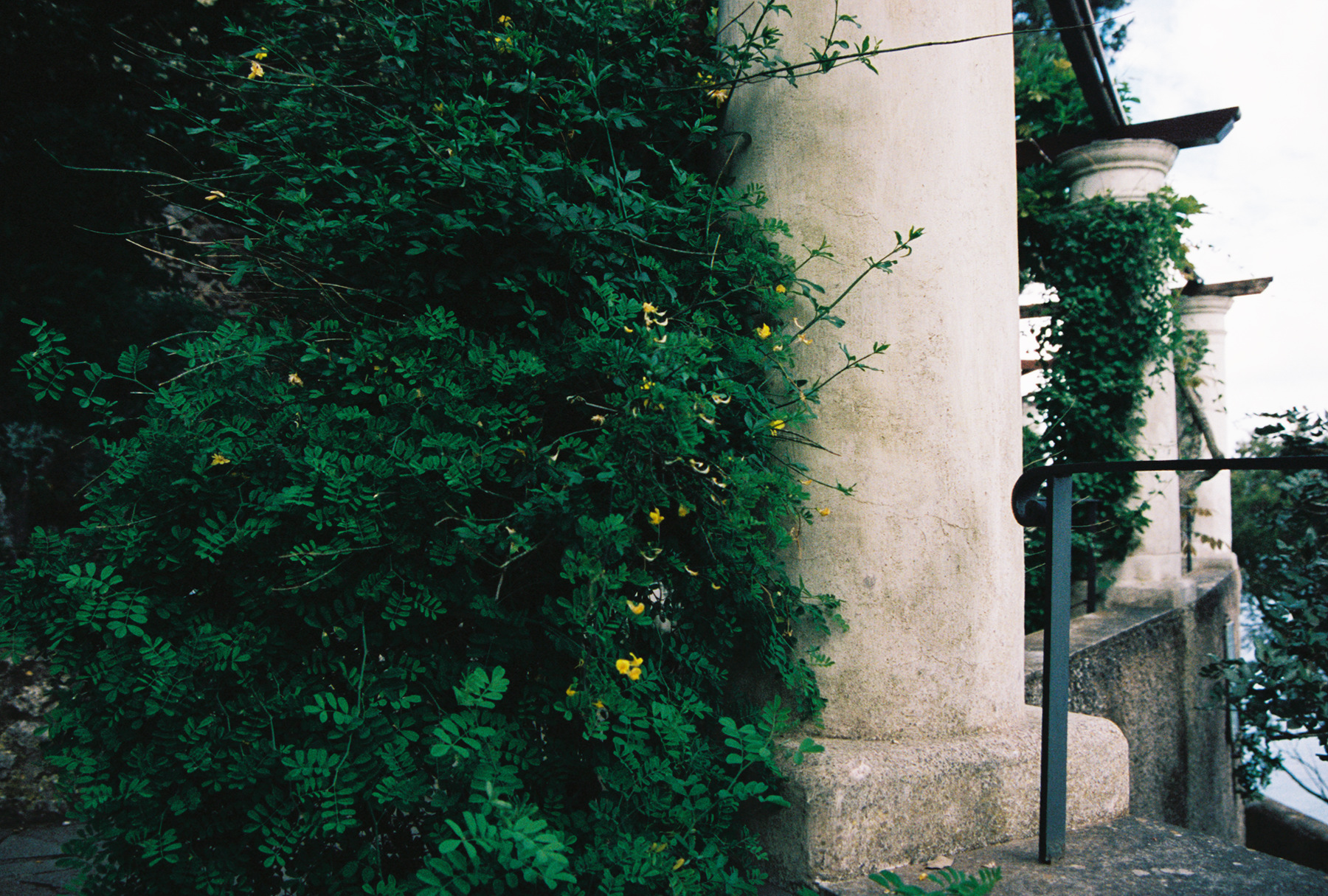
Bright yellow flowers grow in impossible places, their faces outstretched toward the sun.
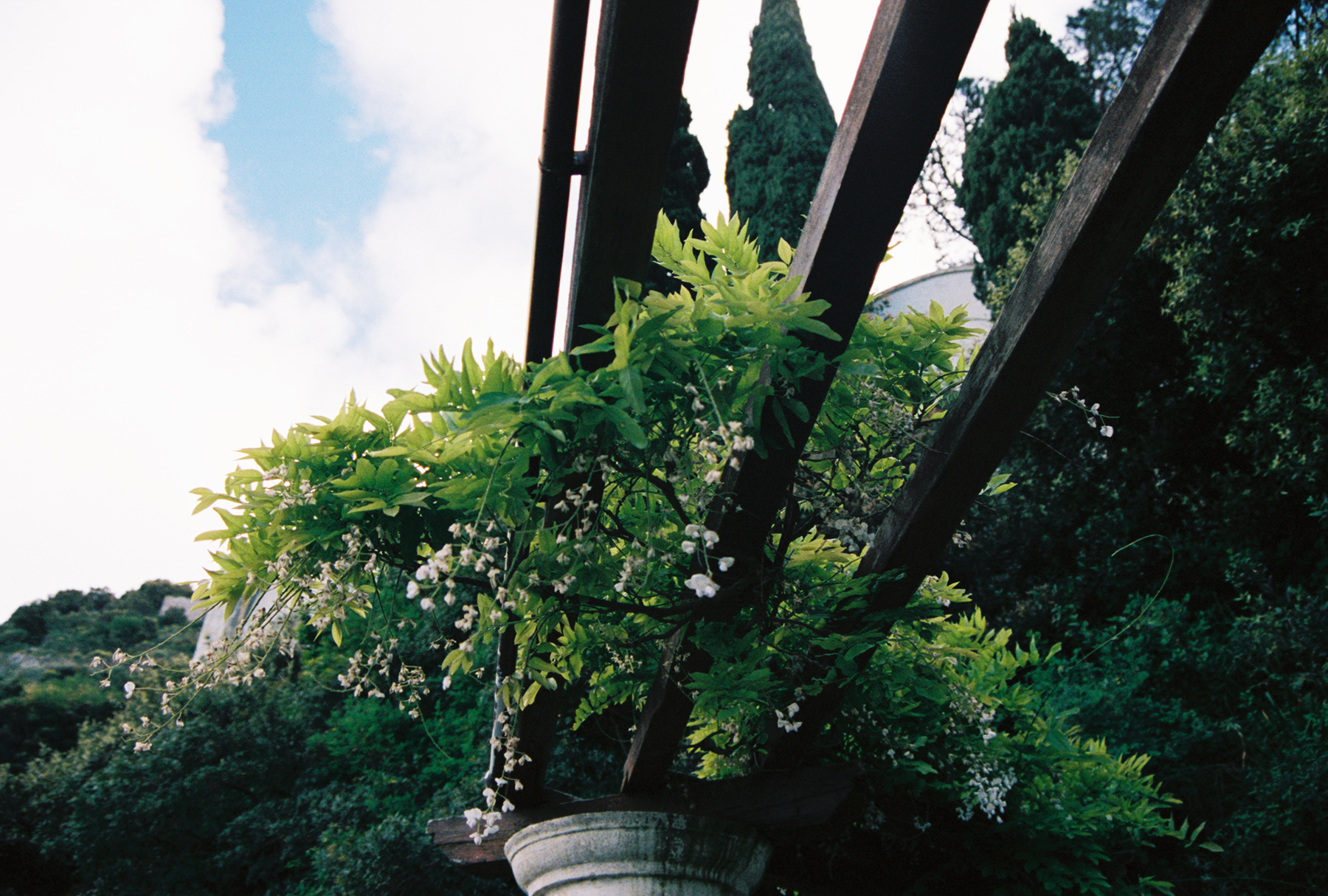
The heady flowering of spring, clean white blossoms breaking up the velvet thick gloss of leaves and tangled old branches, is in every turn.
“The sacred mountain above San Michele is full of birds on their way home to mate and rear their young. What a joy to me that they can rest there in peace! Yesterday I picked up a poor little skylark, so exhausted from his long journey across the sea that he didn’t even at- tempt to fly away, he sat quite still in the palm of my hand as if he understood it was the hand of a friend, perhaps a compatriot I asked him if he wouldn’t sing me a song before he went off again, there was no bird-song I liked better than his; but he said he had no time to spare, he had to hurry home to Sweden to sing the summer in. For more than a week the flute-like notes of a golden oriole have been sounding in my garden. The other day I caught sight of his bride hiding in a laurel bush. To-day I have seen their nest, a marvel of bird-architecture. There is also much fluttering of wings and a soft murmur of bird-voices in the thicket of rosemary by the chapel.” The Story of San Michele by Axel Munthe
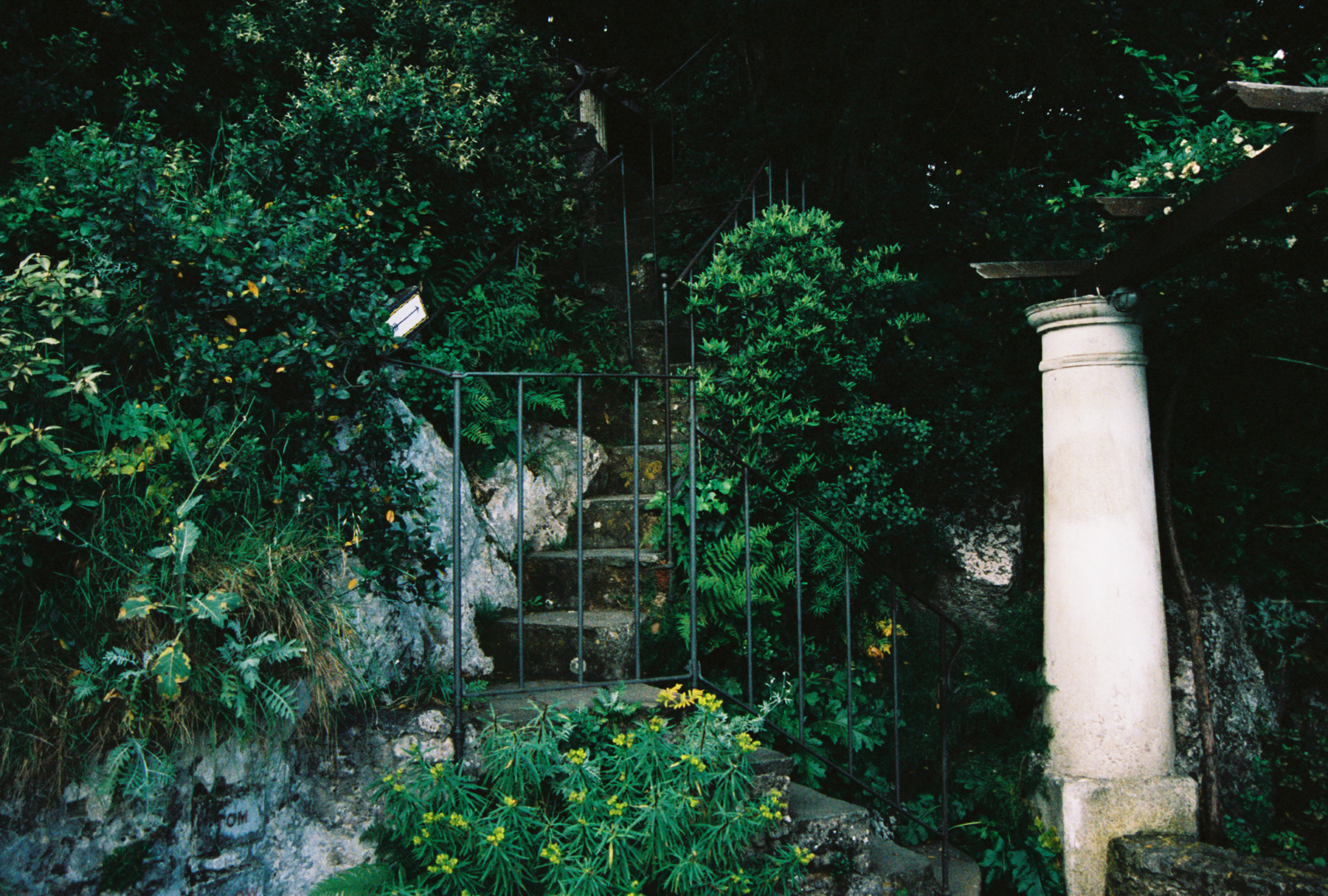
On the old stairs a soft moss lies on the stone, suggesting an endless year of spring and life growing in the garden.
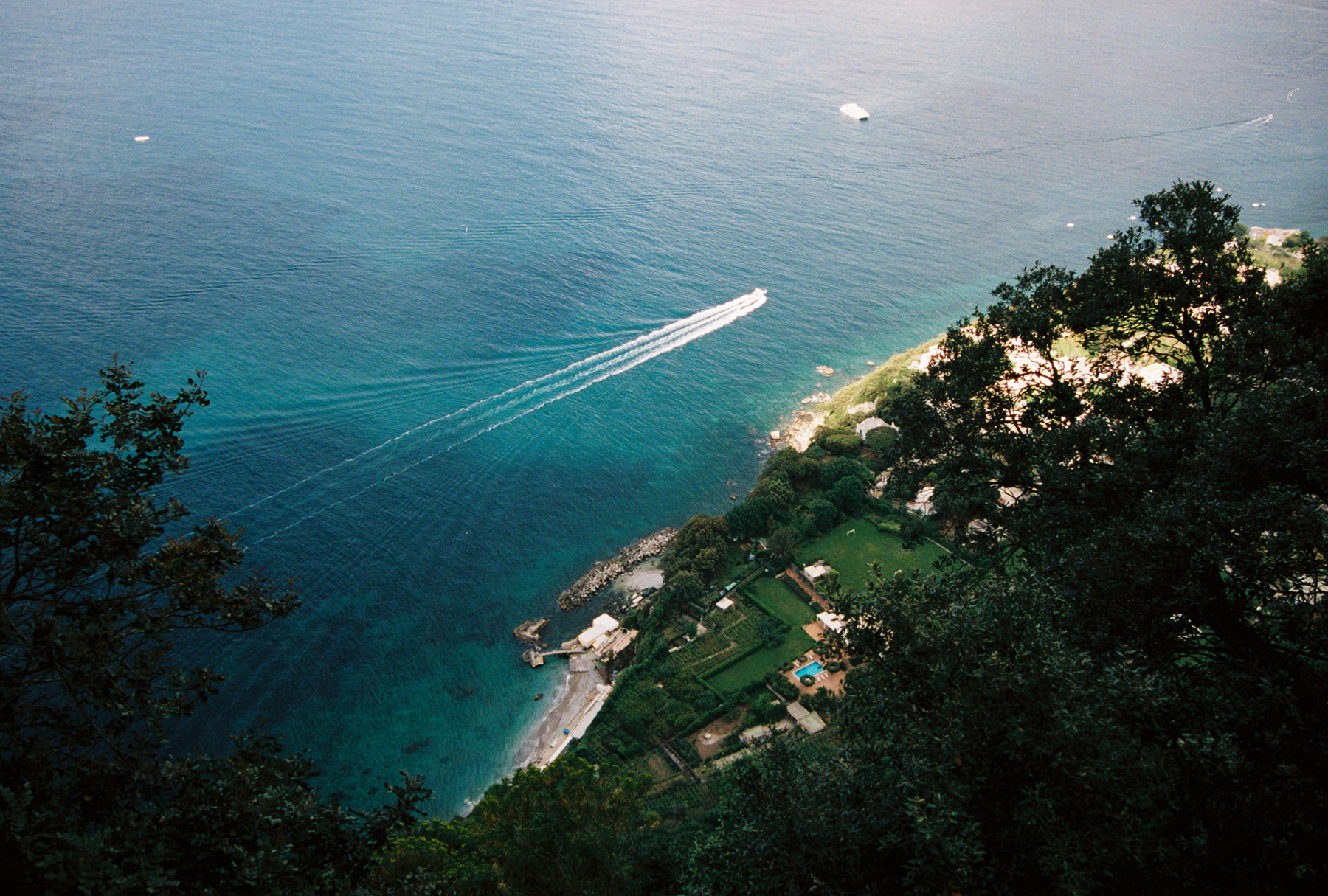
Far below a tiny shock of blue sits in between the fields and the bay of Naples; while all those lives play out from an Emperor’s ancient vantage point.
“The whole bay of Naples lies shining like a mirror below my feet, the columns on the pergola, the loggias and the chapel are all ablaze with light…” The Story of San Michele by Axel Munthe
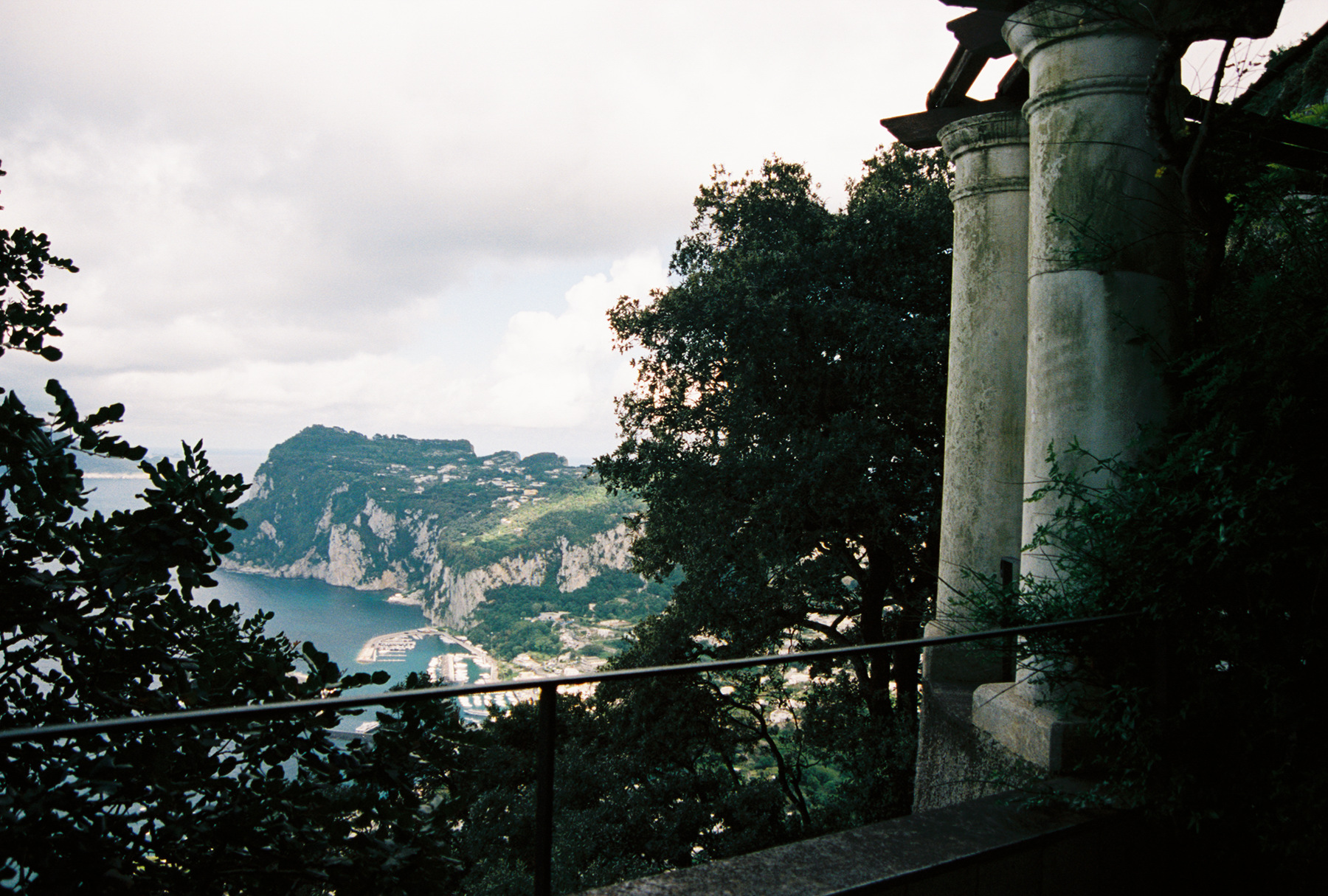
The best view is a private spot of solace, a corner to stop in your tracks and allow the view to overtake your senses. A sip of the island’s limoncello, the scent of flowers and the sea, the sound of the birds and the south wind, the feel of the stone along your hands and under your feet – all senses are occupied with Capri from here.
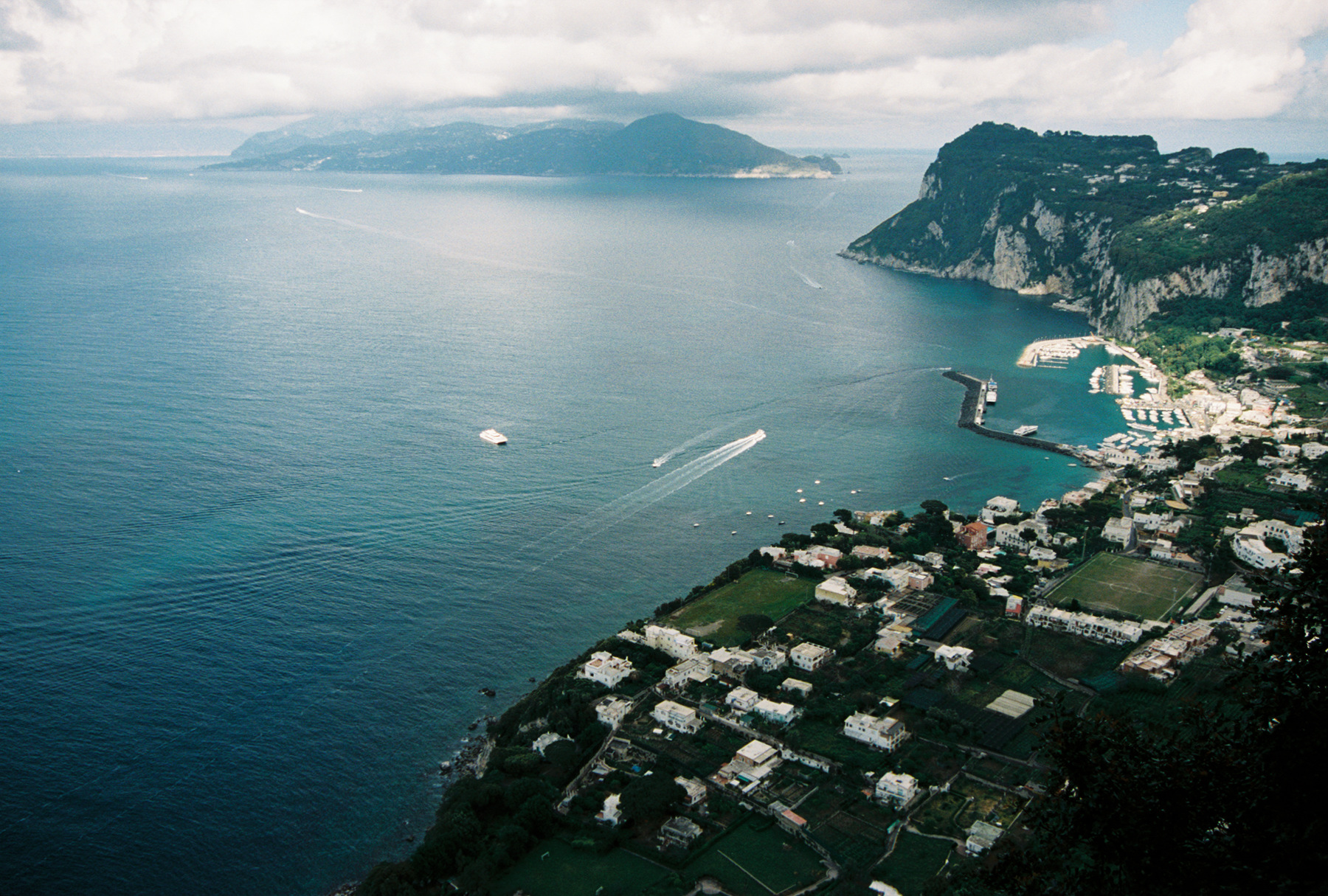
On certain days when the weather is perfect it feels as if one could see the whole world from here.

Some of the paths are winding, some are hidden until you come upon then suddenly, some form straight lines with edges and niches laid out for yards.
“The pergola was already covered with young vines; roses, honeysuckle and Epomea were clustering round the long row of white columns. Among the cypresses in the little cloister court stood the Dancing Faun on his column of cipollino, in the centre of the big loggia sat the bronze Hermes from Herculaneum.” – The Story of San Michele by Axel Munthe
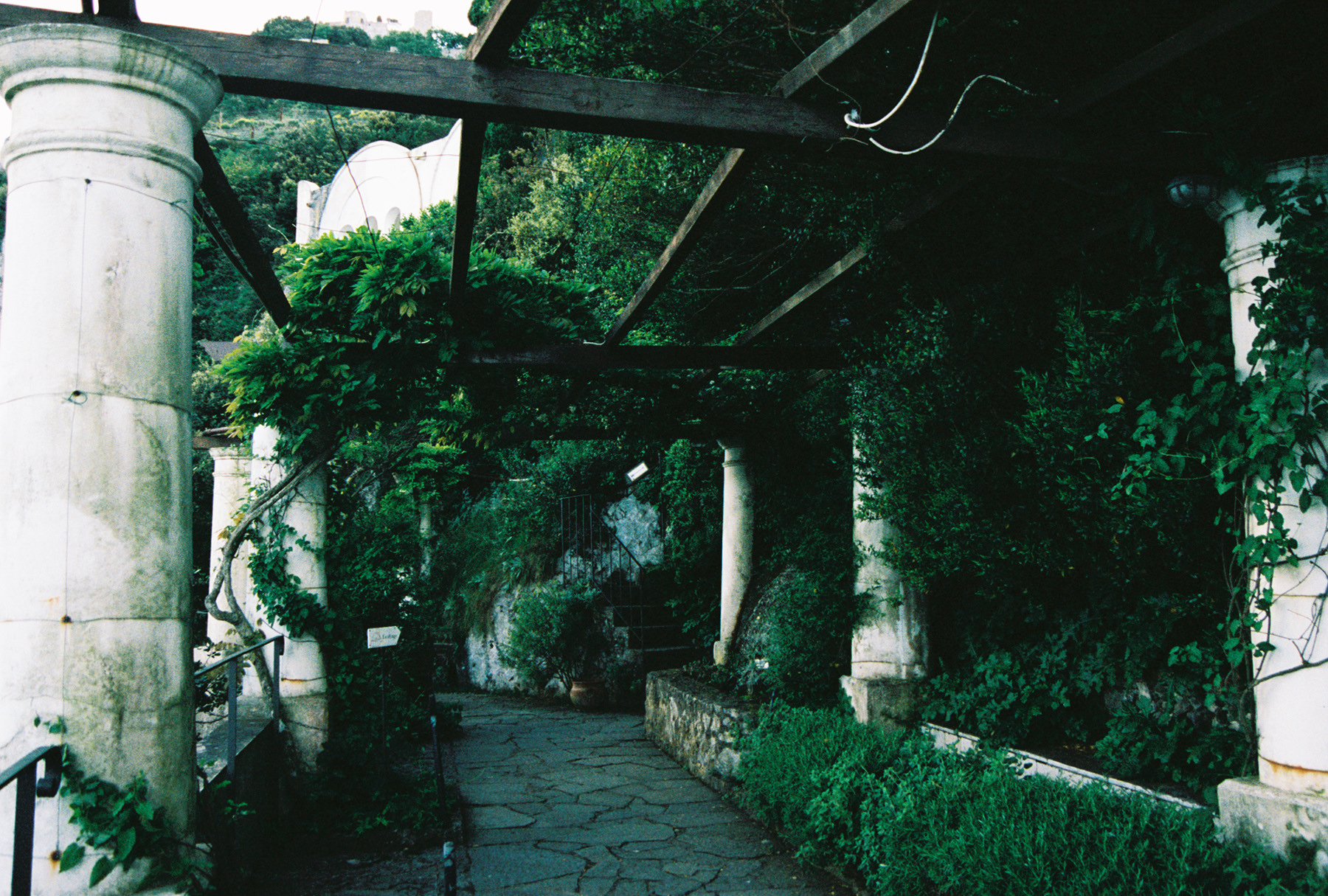
Follow the ivy climbing over the columns and stone walls as you explore the garden, every corner is a delight.
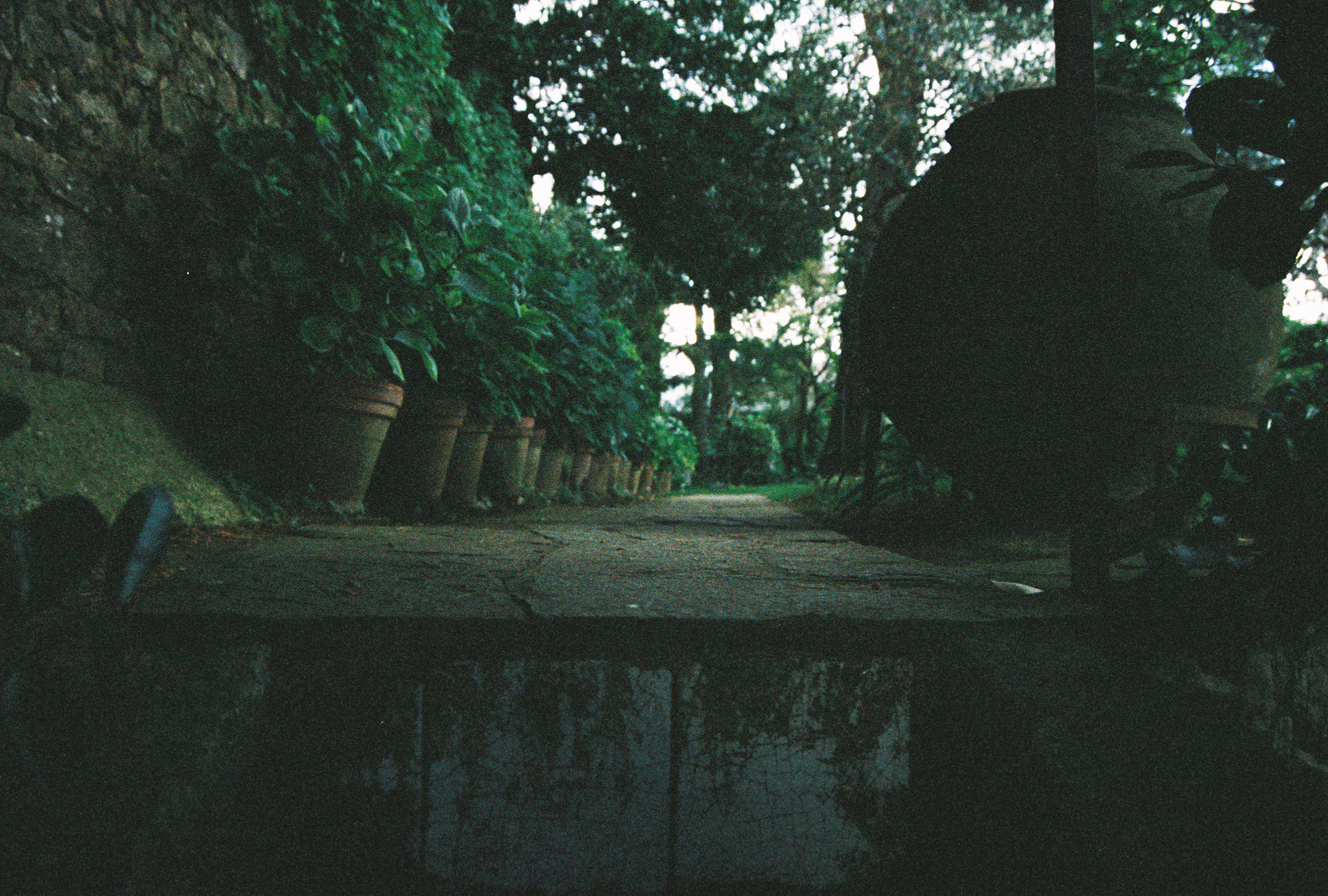
At the top of the steps are uniformed pots of green plants and spring buds, standing at attention for your wander about.
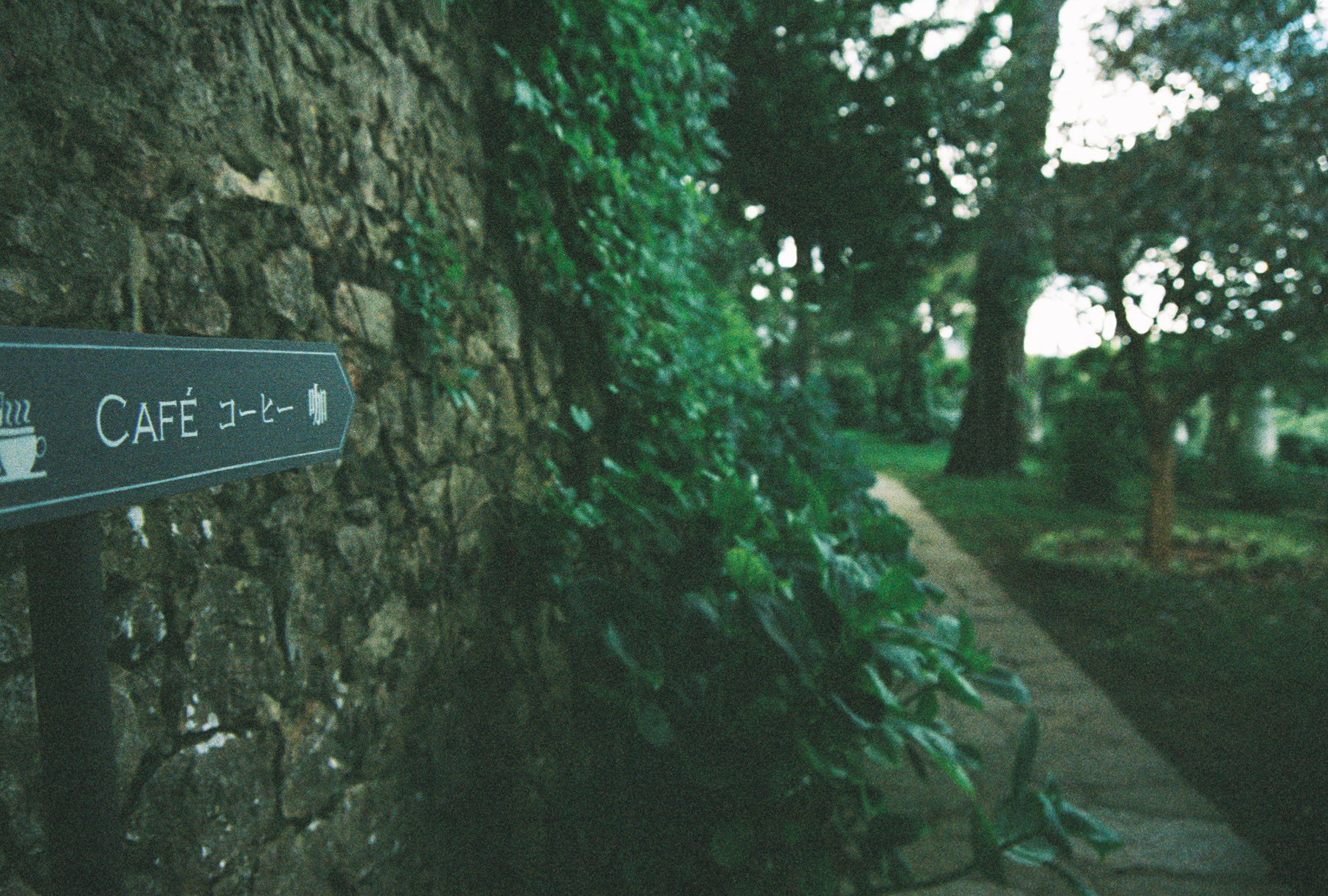
On one path a sign leads to the café, a welcome distraction after all that beauty. Doesn’t everyone at a museum always love a café? This one is a rooftop one in the garden.
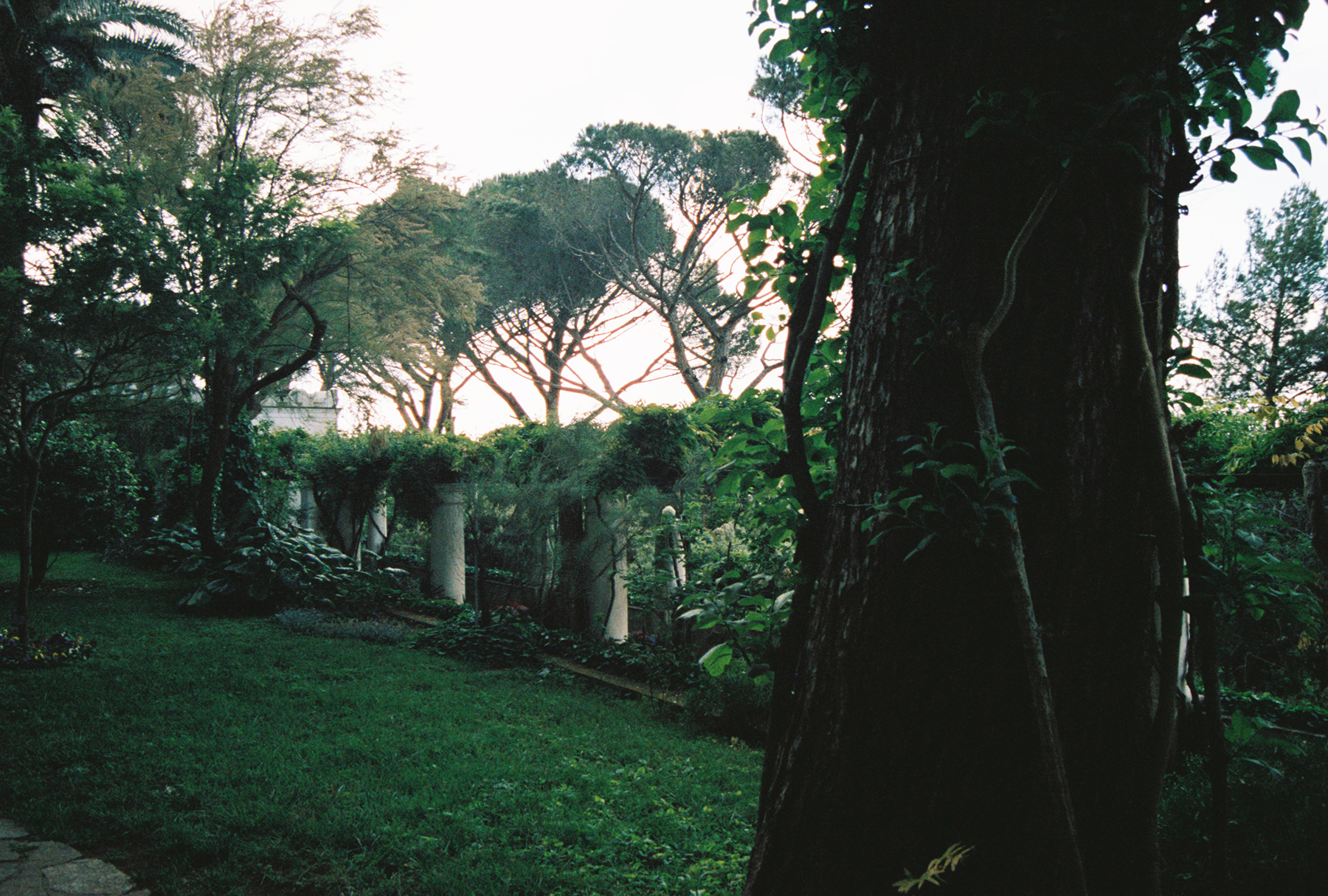
Gnarled vines from long dead plants wind themselves around majestic trees along a columned loggia.
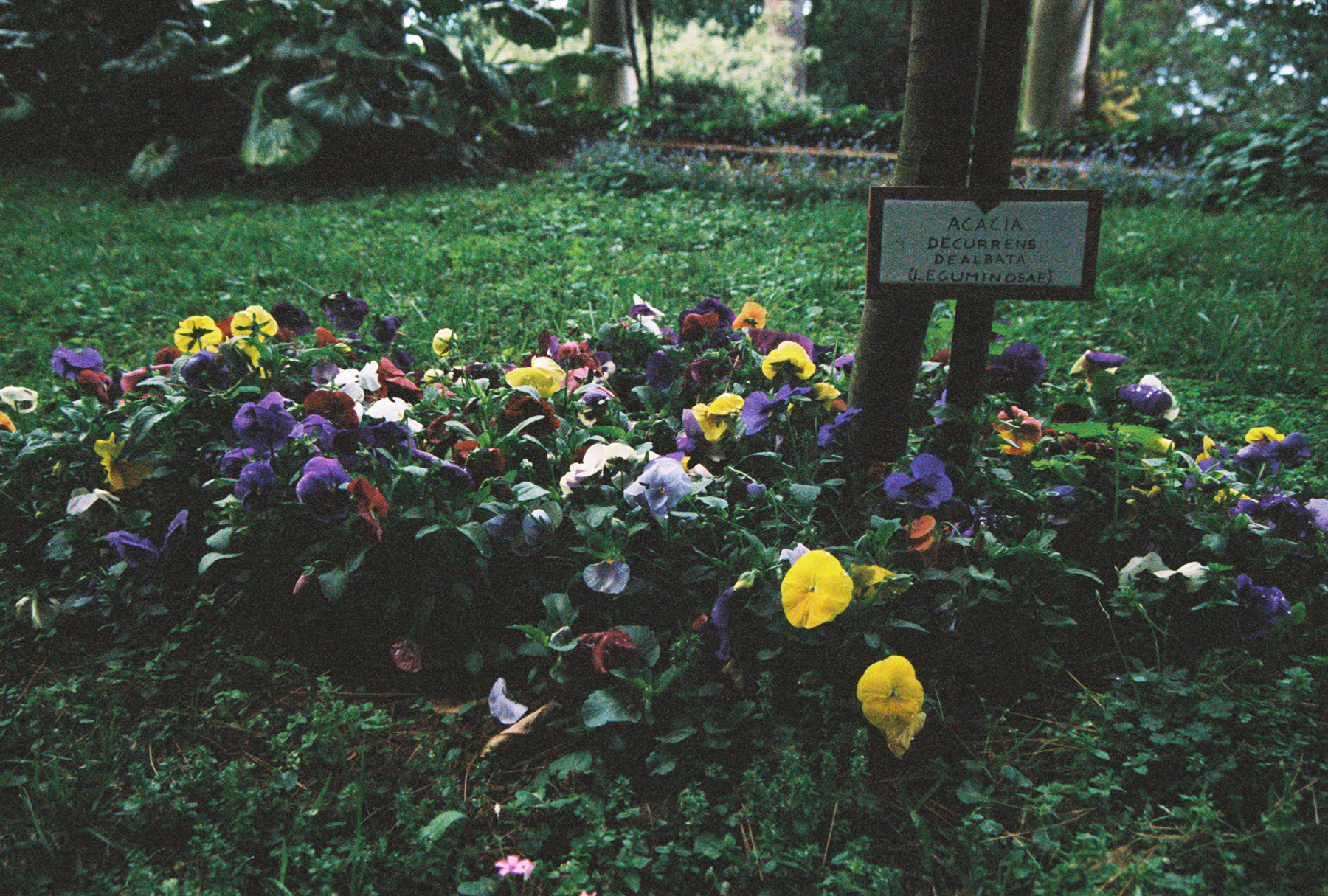
The exotic and native flowers in every hue are marked and greet thousands of visitors each year.
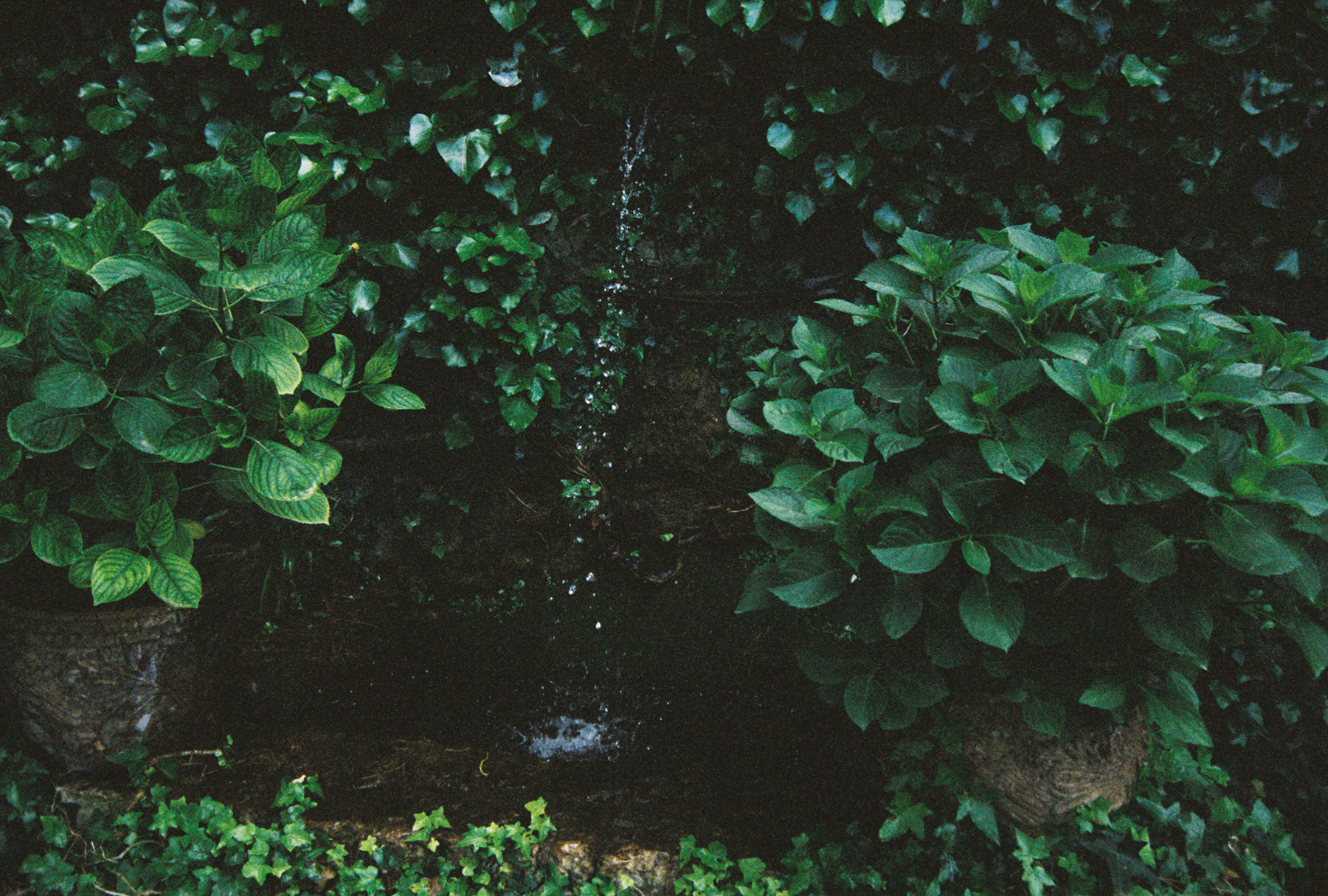
A stone water fountain which looks completely natural bubbles forth in between ivy, basil and shiny leaves. There’s mint and rosemary and too many herbs to count.
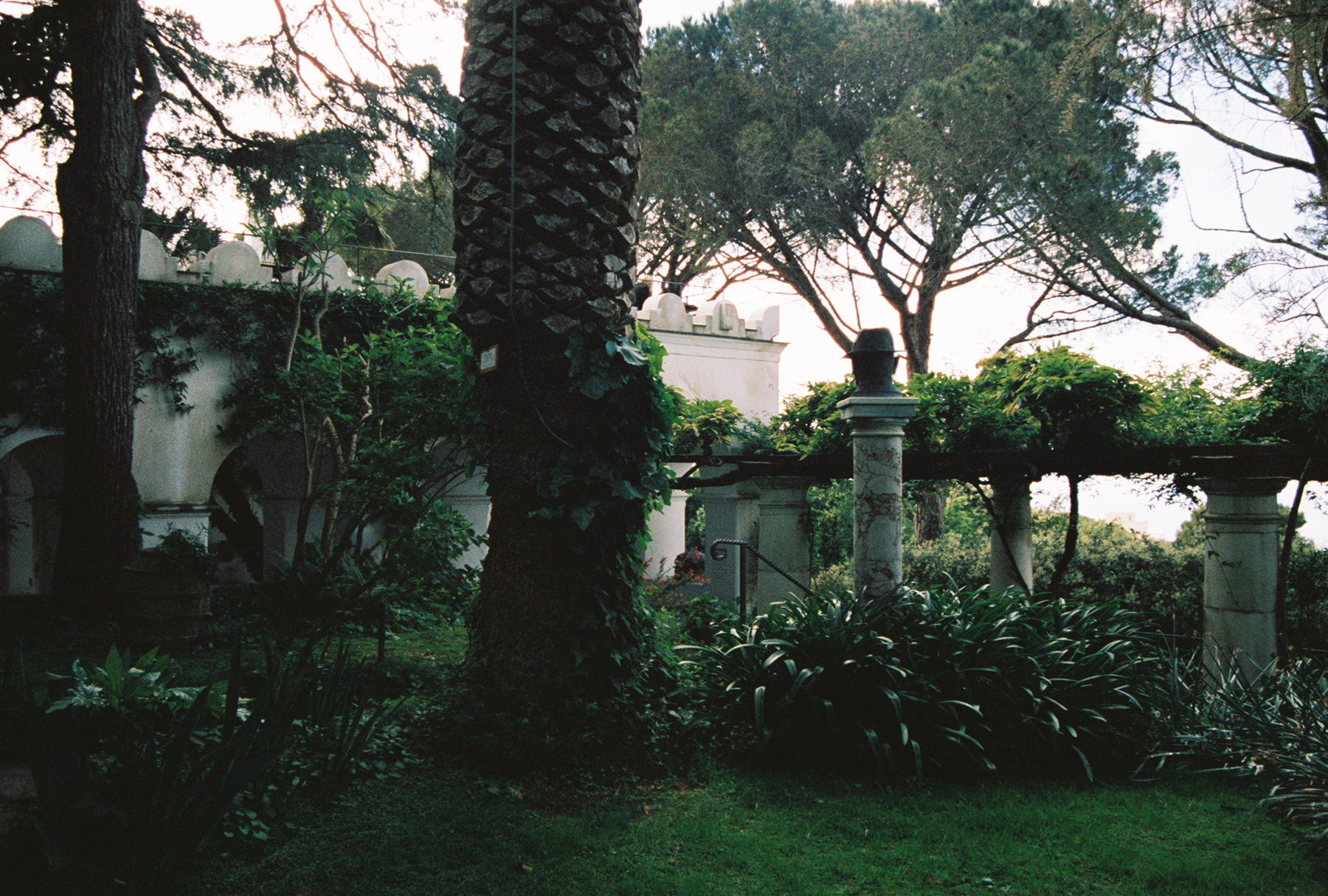
A few Egyptian looking palm trees and several umbrella pines recall Capri’s ancient Roman days when the island played host to emperors and sirens.
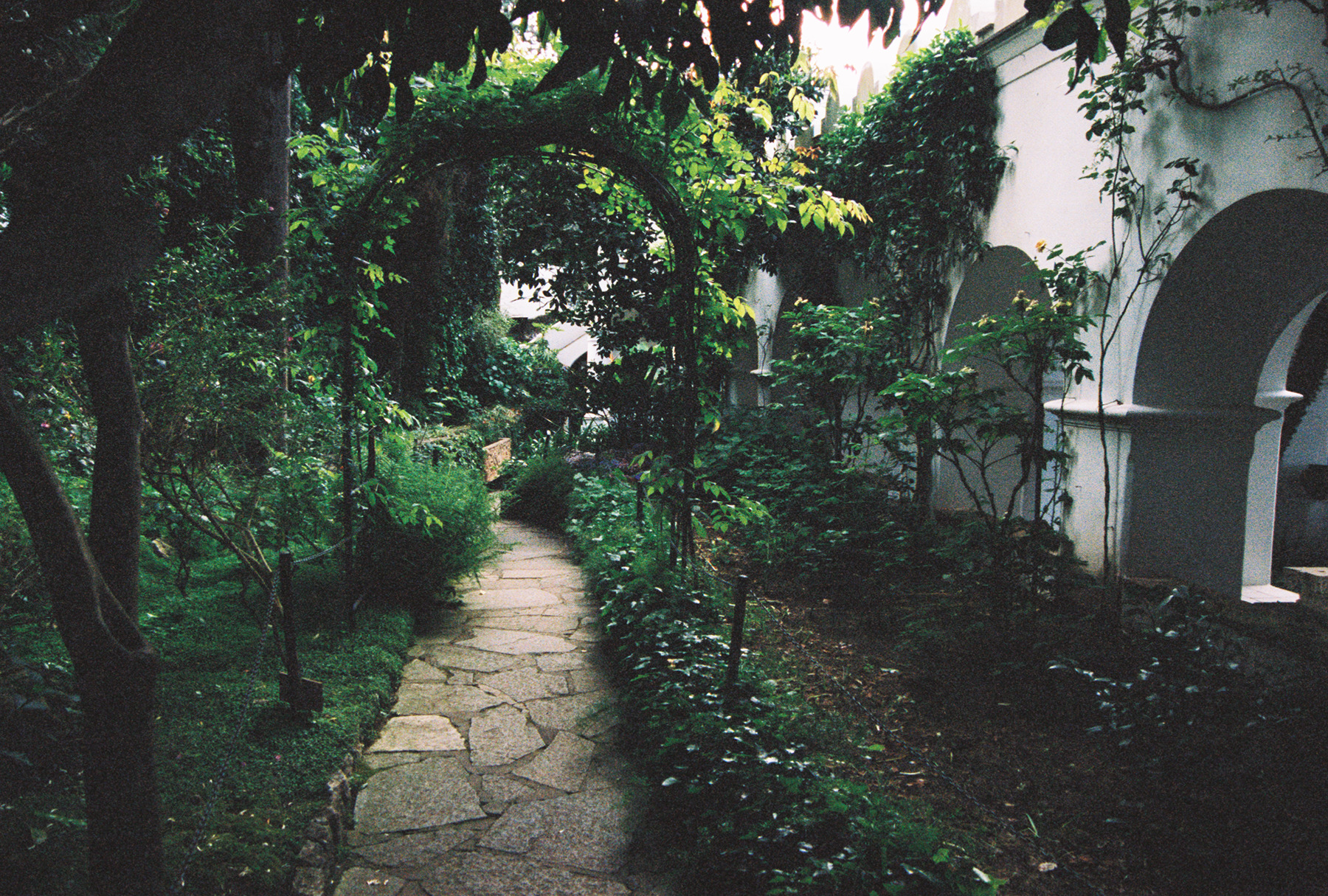
This is one of my favorite spots…I feel a sense of happiness and pleasure whenever I pass under the leafy canopy and approach the café. This is my dream garden.
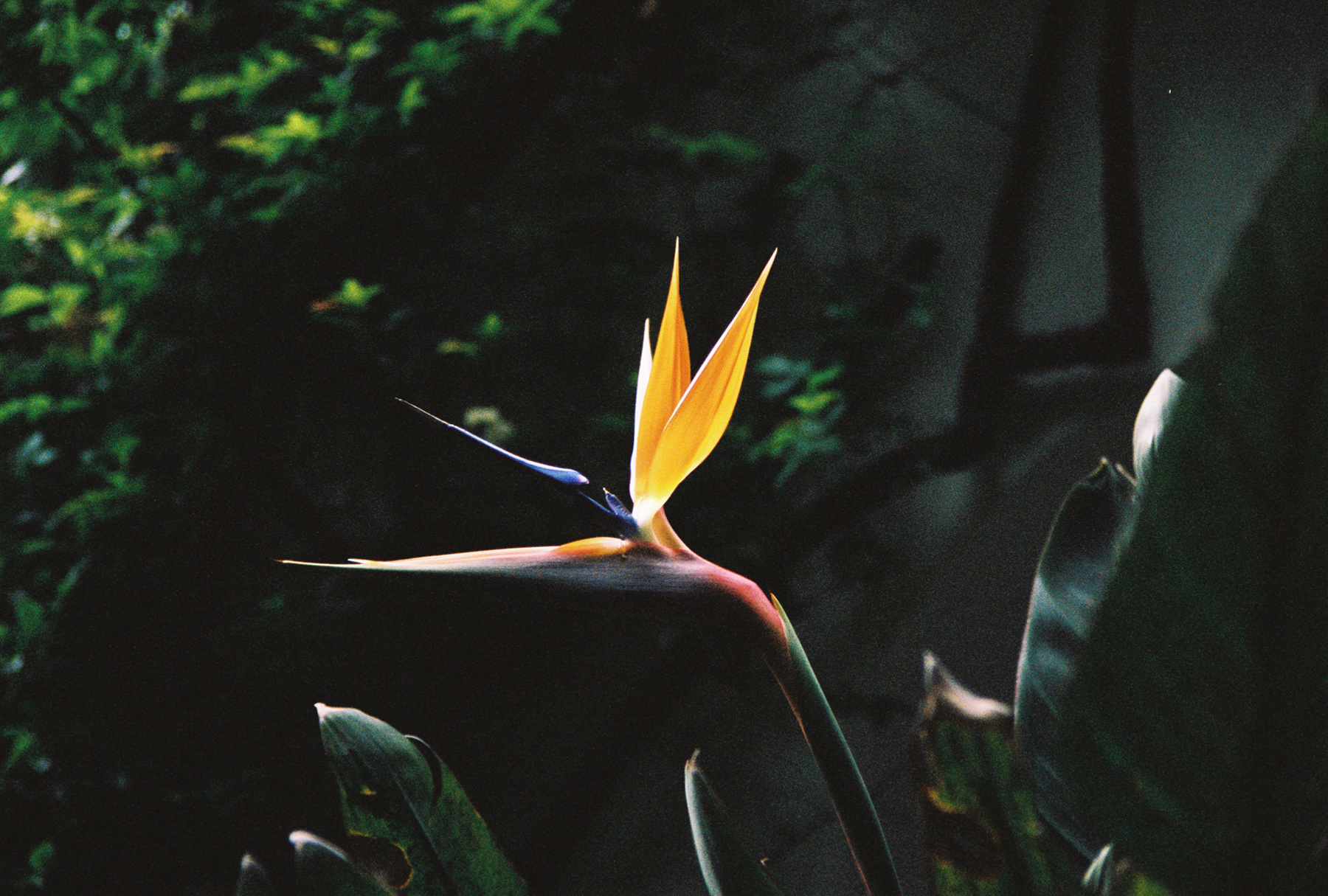
Whenever I see a Bird of Paradise I think warmly of my mother and her love for them. This was the most perfect one I’ve ever noticed.

The Loggia has many windows to the sea and other curves of the garden. They are filled with manicured folder pots and Greco Roman statues. Roses climb the walls in every soft color.
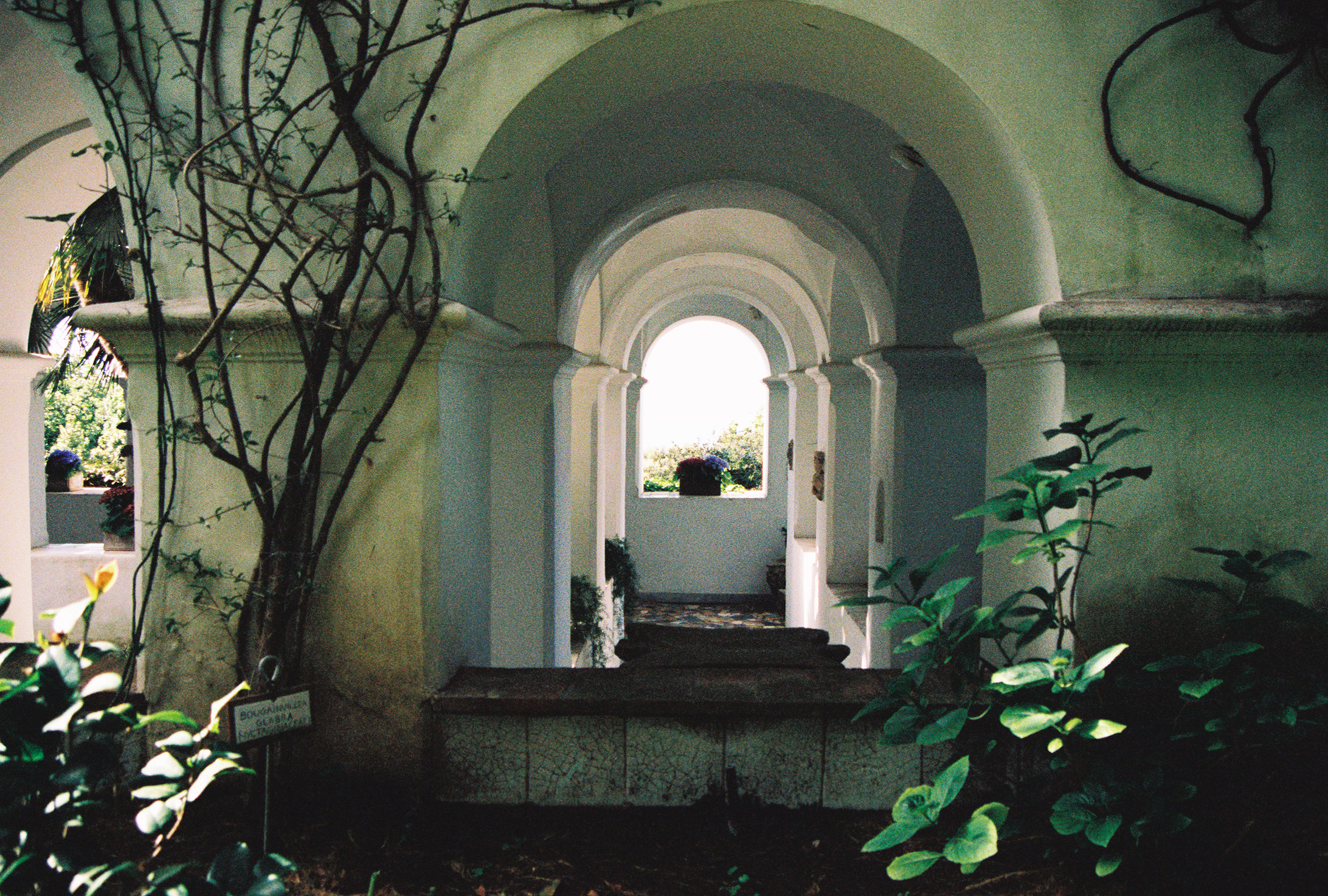
Some of the architecture reminds me of a Spanish style church, some is a bit Occidental, some a little Roman and the rest an eclectic mix of early 20th century and Capri-style.
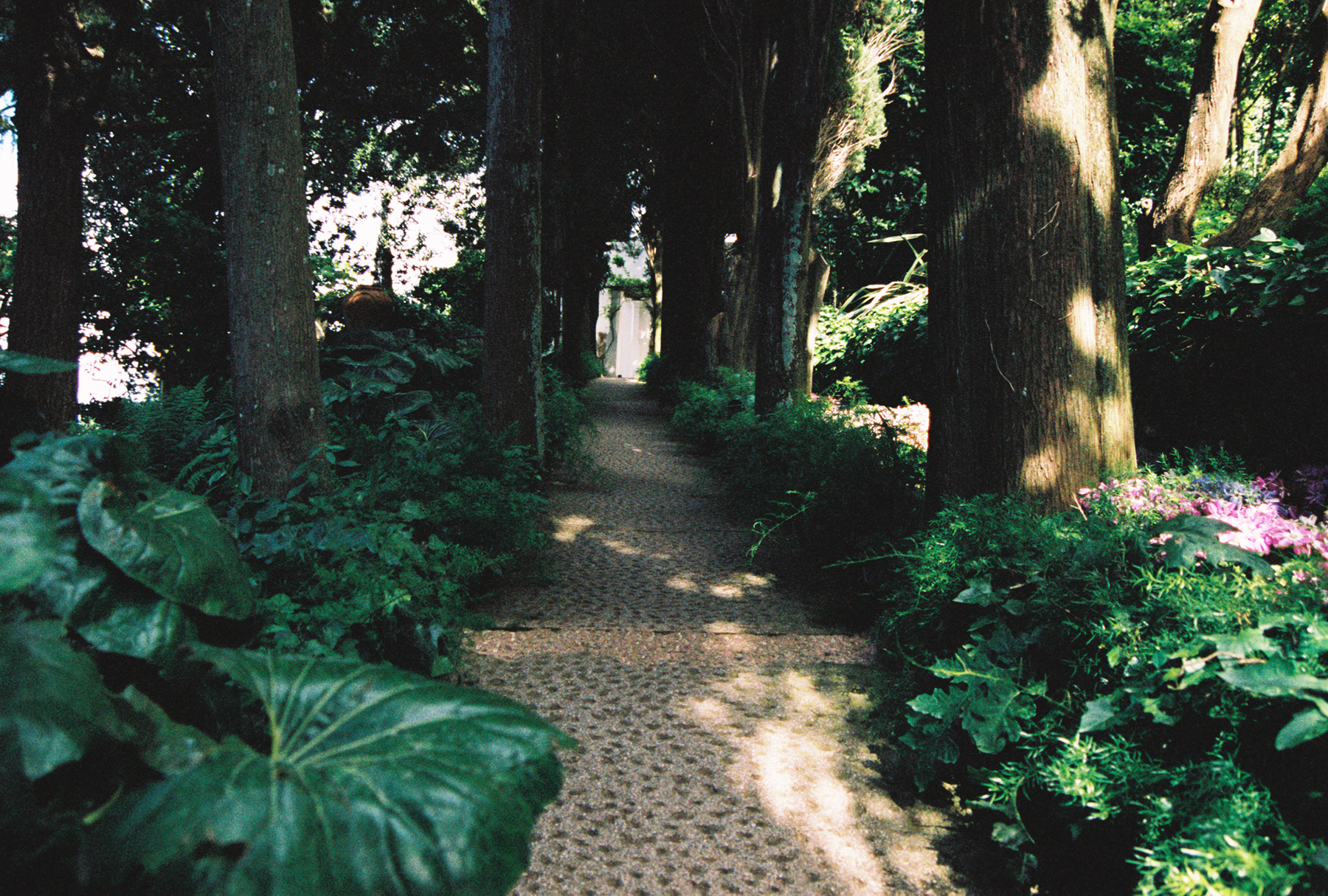
Each path ends with a different corner of the grounds, each turn is so inviting it’s difficult to choose one lane over another for the promise of their beauty.

Where ever you end up in the next step, it’s easy (and enjoyable) to get lost. You always wind up at the heart of the garden and of Capri herself. If you remain quiet and strain your ear just a little bit and listen past the songs of birds, you may still hear the faint call of the sirens on the rocks below you.
“Like children in the trackless forest we grope our way through our lives in blissful ignorance of what is going to happen to us from one day to another, what hardships we may have to face, what more or less thrilling adventures we may encounter before the great adventure, the most thrilling of all, the Adventure of Death. Now and then in our perplexity we venture to put a timid question to our destiny, but we get no answer for the stars are too far away. The sooner we realize that our fate lies in ourselves and not in the stars, so much the better for us. Happiness we can only find in ourselves, it is a waste of time to seek for it from others, few have any to spare.” The Story of San Michele by Axel Munthe
Interesting perusal in relation to Anacapri and Capri:
The Story of San Michele by Axel Munthe (Full text)
Elsyium Press, Capri publications, Rare photographs and lithographs, Norman Douglas.
This is part three in a series of photo essays on the Island of Capri’s museum The Villa San Michele. All photographs copyright Rebecca Price Butler at alovelettertorome.com

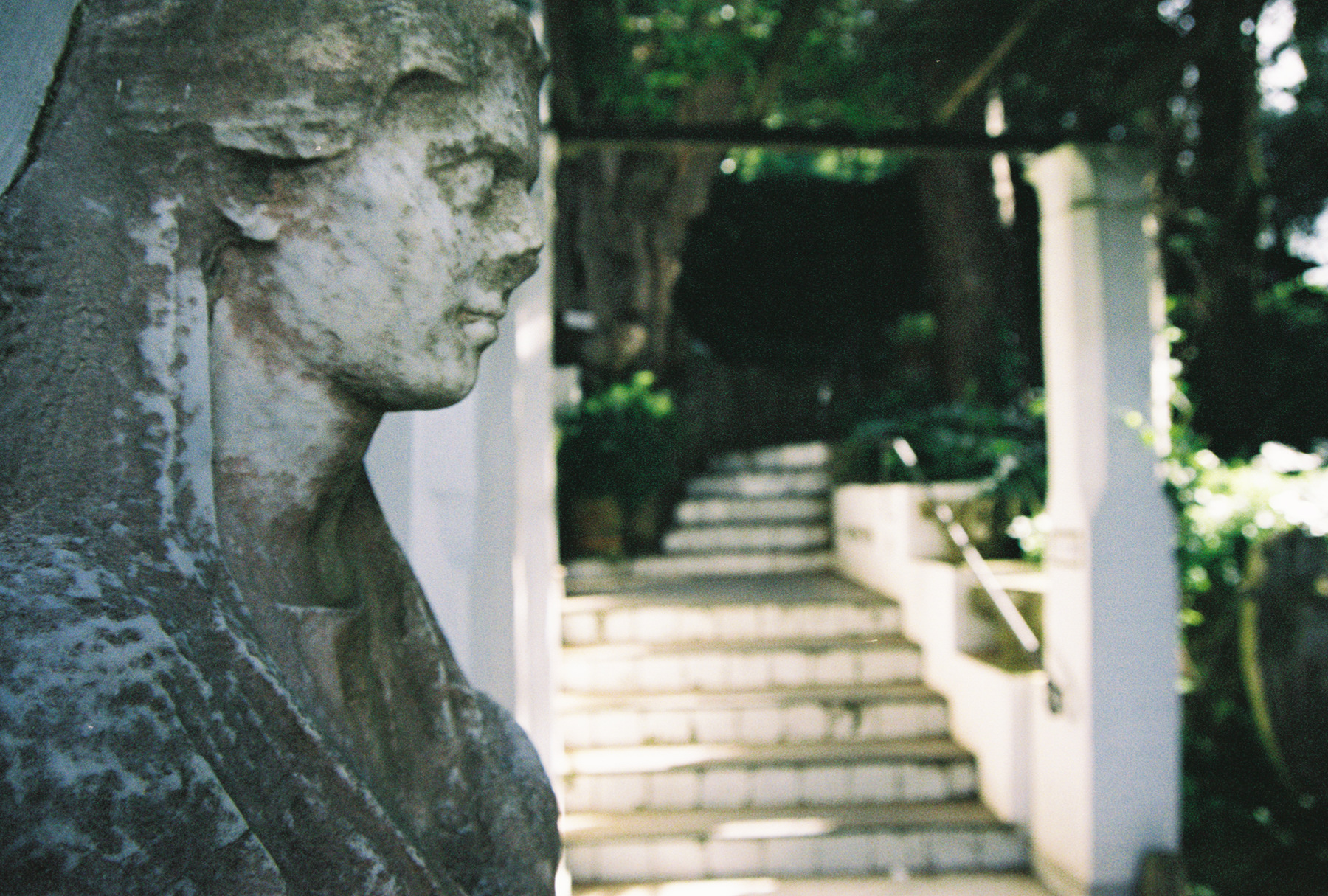
A Greco Roman bust outside the chapel in the Italiani Giardini. The white tile stairs lead up to the former bird conservatory.
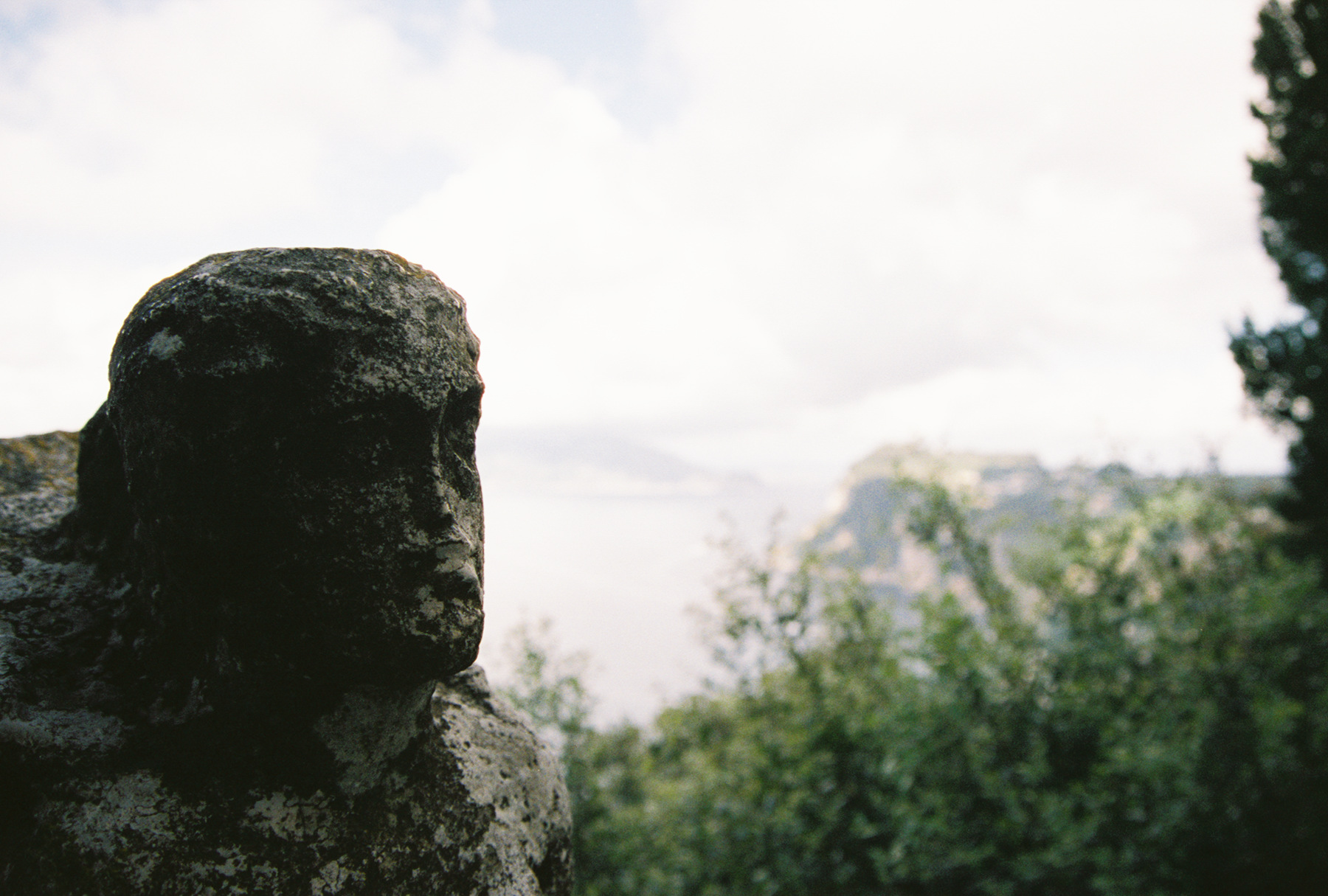
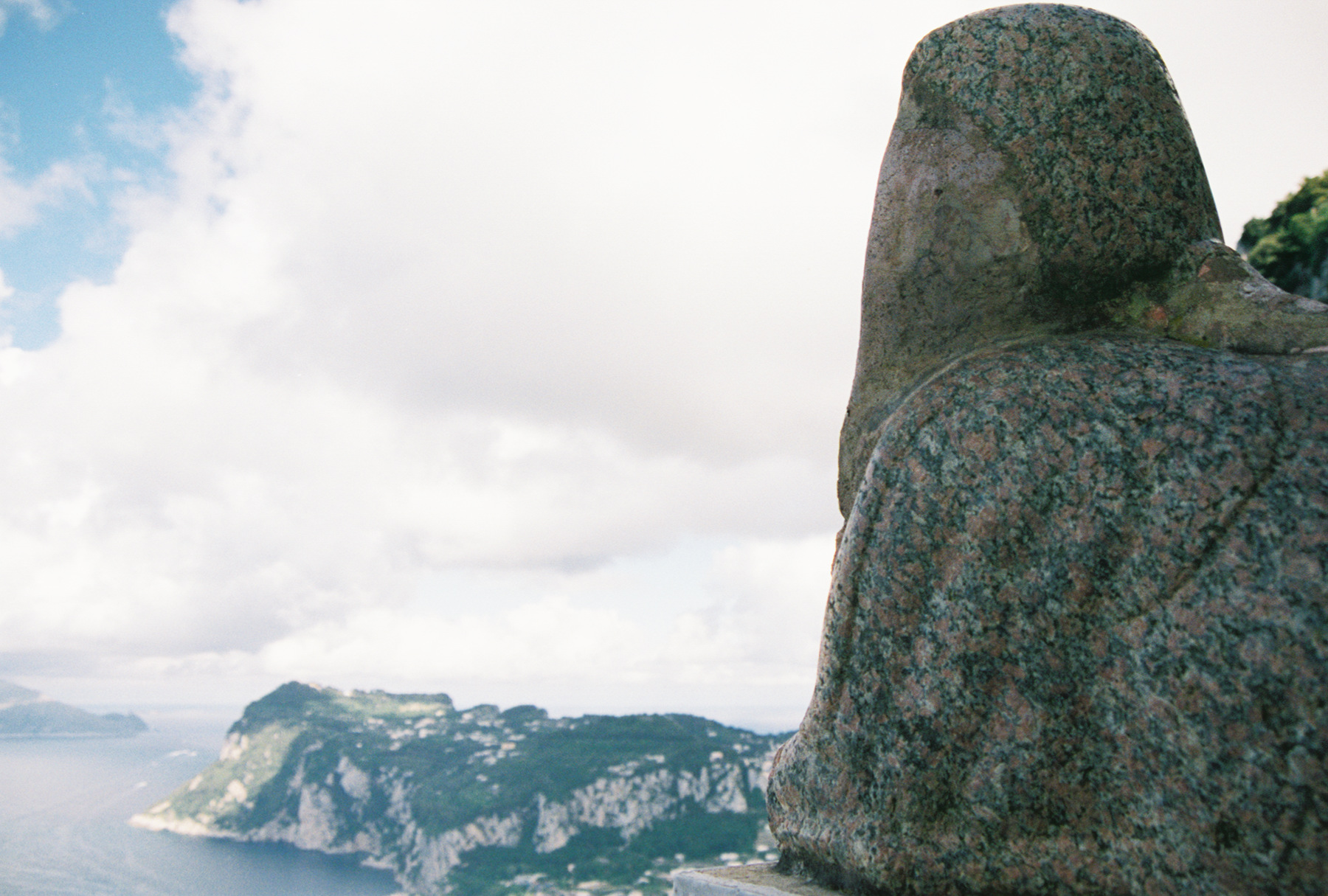
The winged Egyptian bust overlooking the Marina Grande with Ischia faintly shimmering in the background through the low clouds.
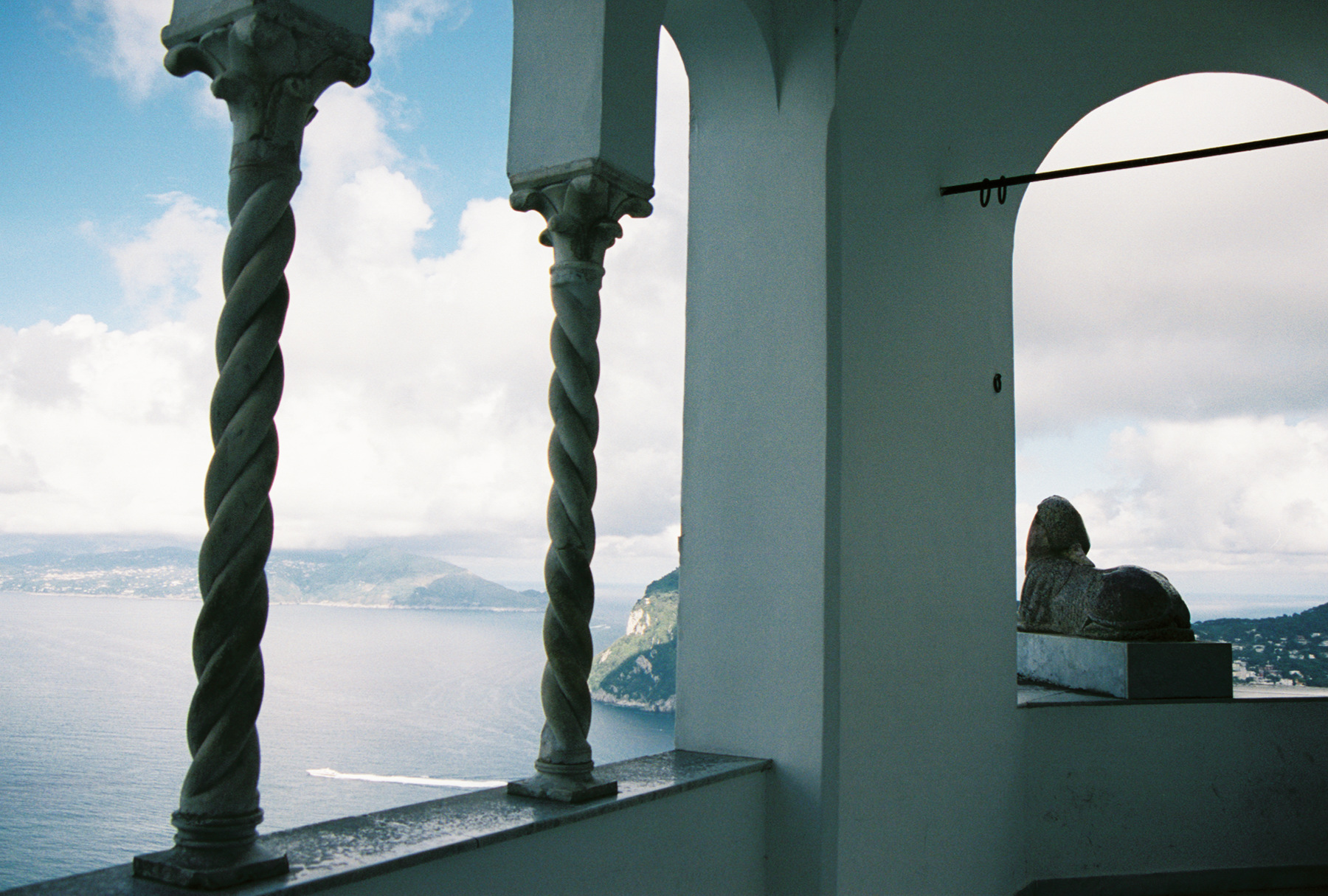
The sphinx watching over the sea, an ancient siren calling wanderlust to travelers.
The bird’s eye view.
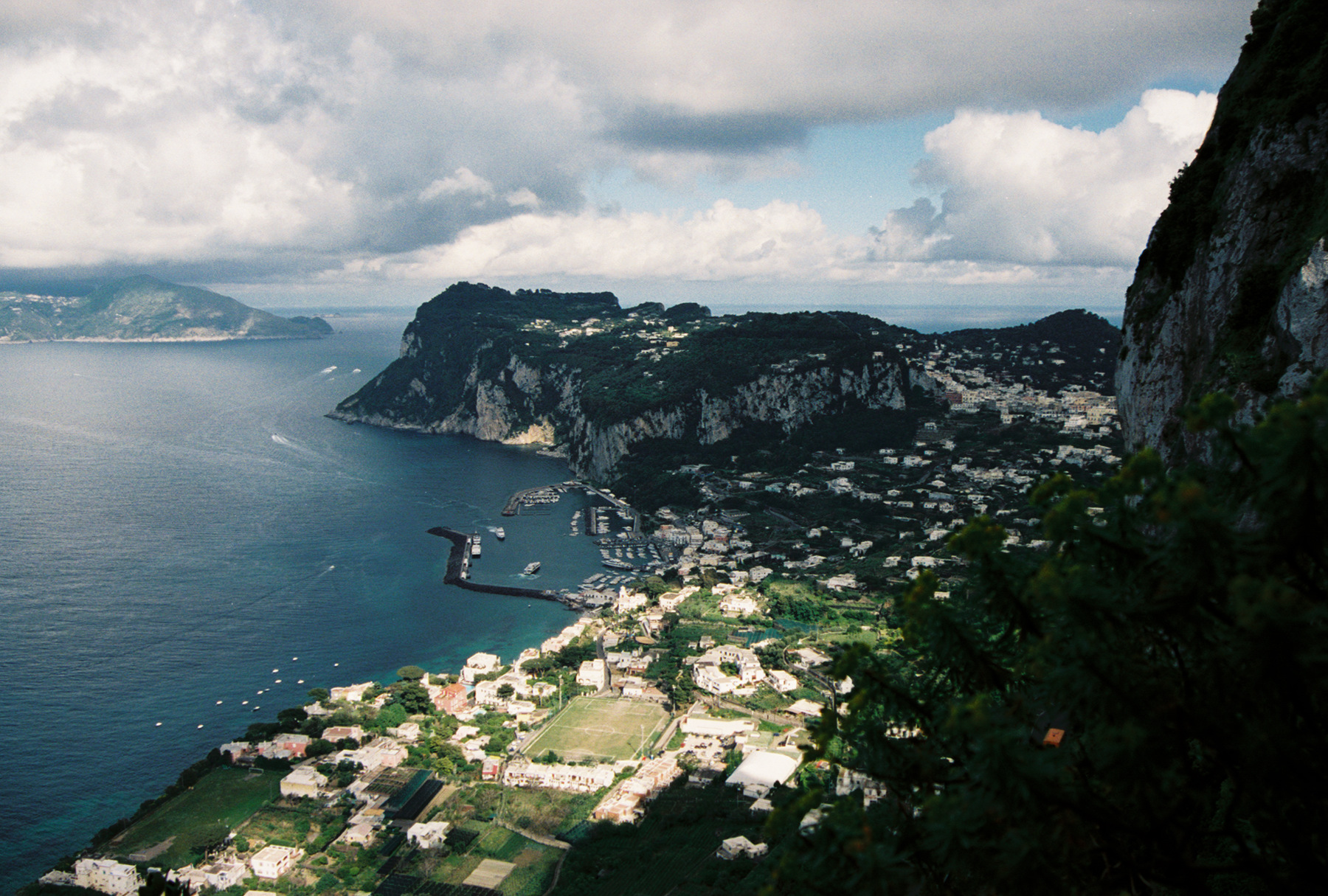
The beautiful sweeping coastline of Capri.
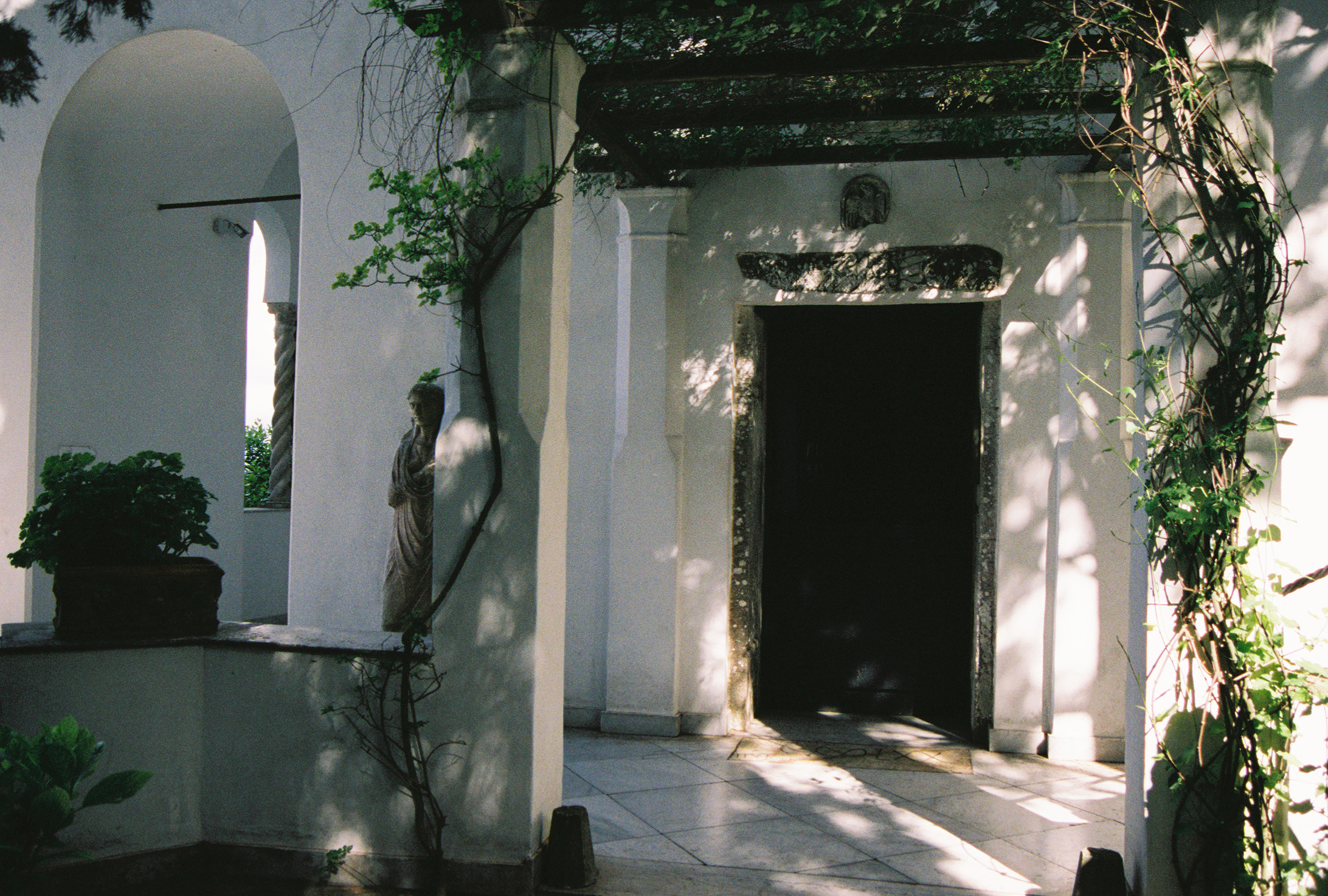
The tiny chapel in the garden.
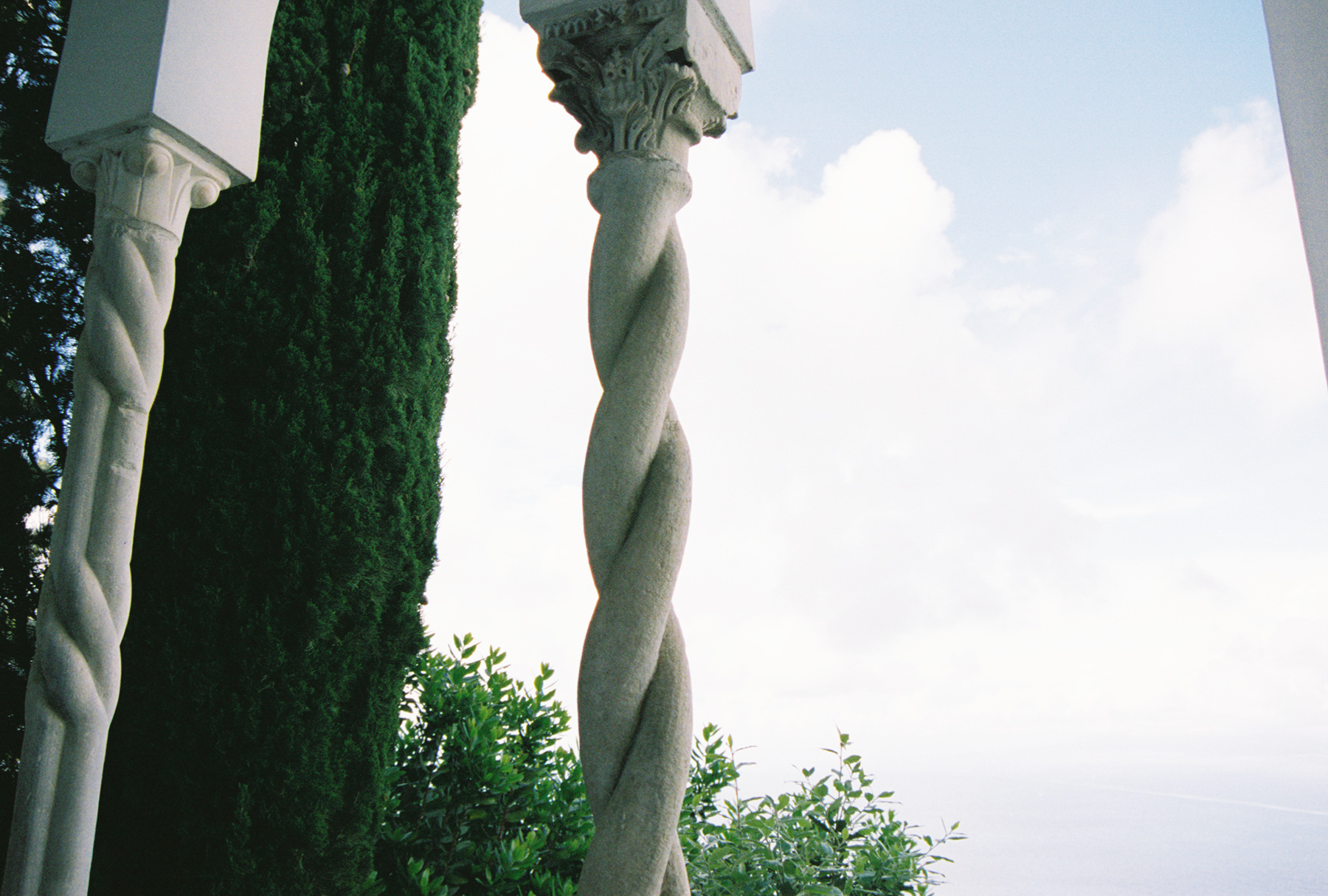
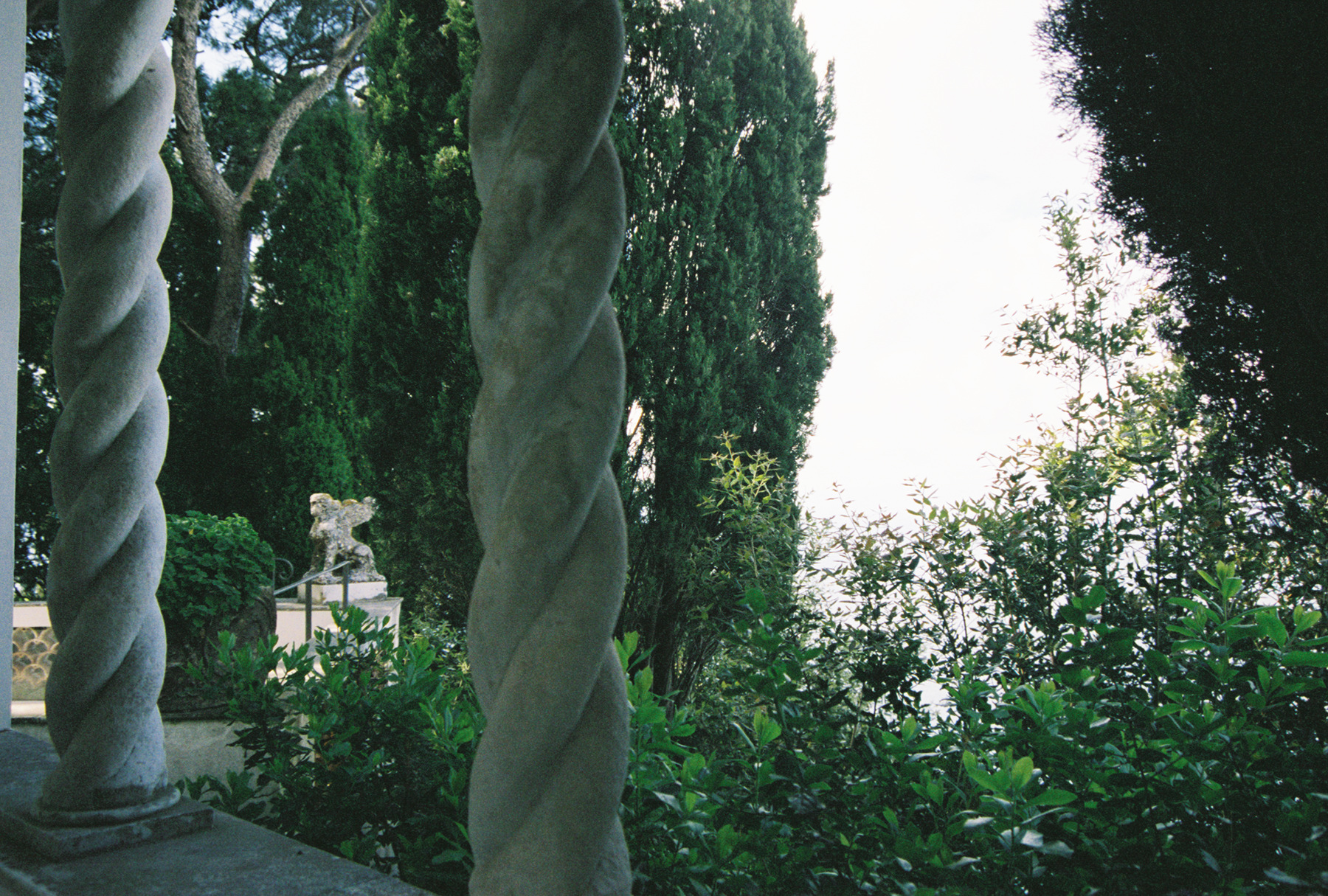
Cypress trees and gorgeous pillars on the terrace overlooking the sea.
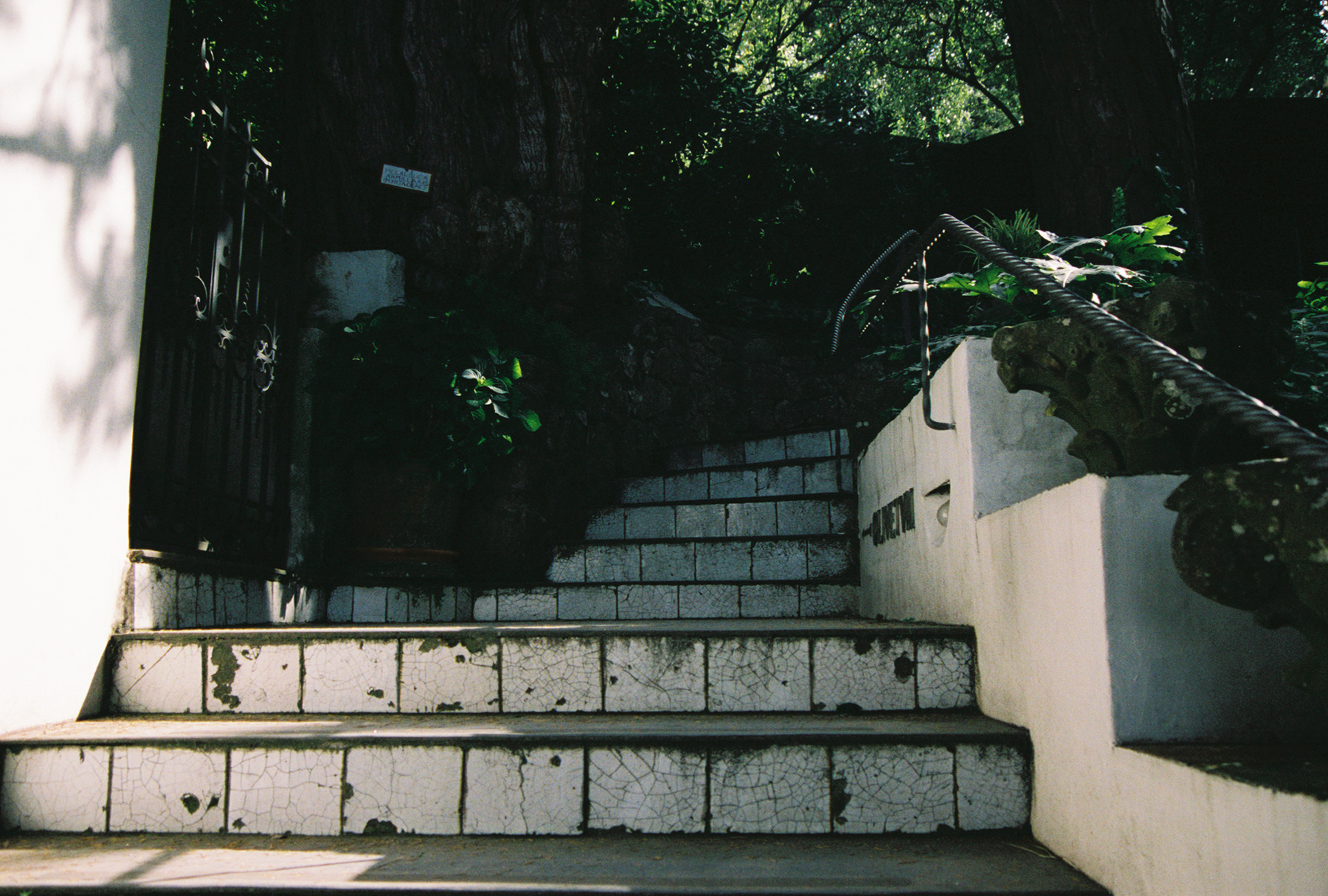
There are a series of stairs leading to sumptuous turns of the garden and pathways further up the hill.
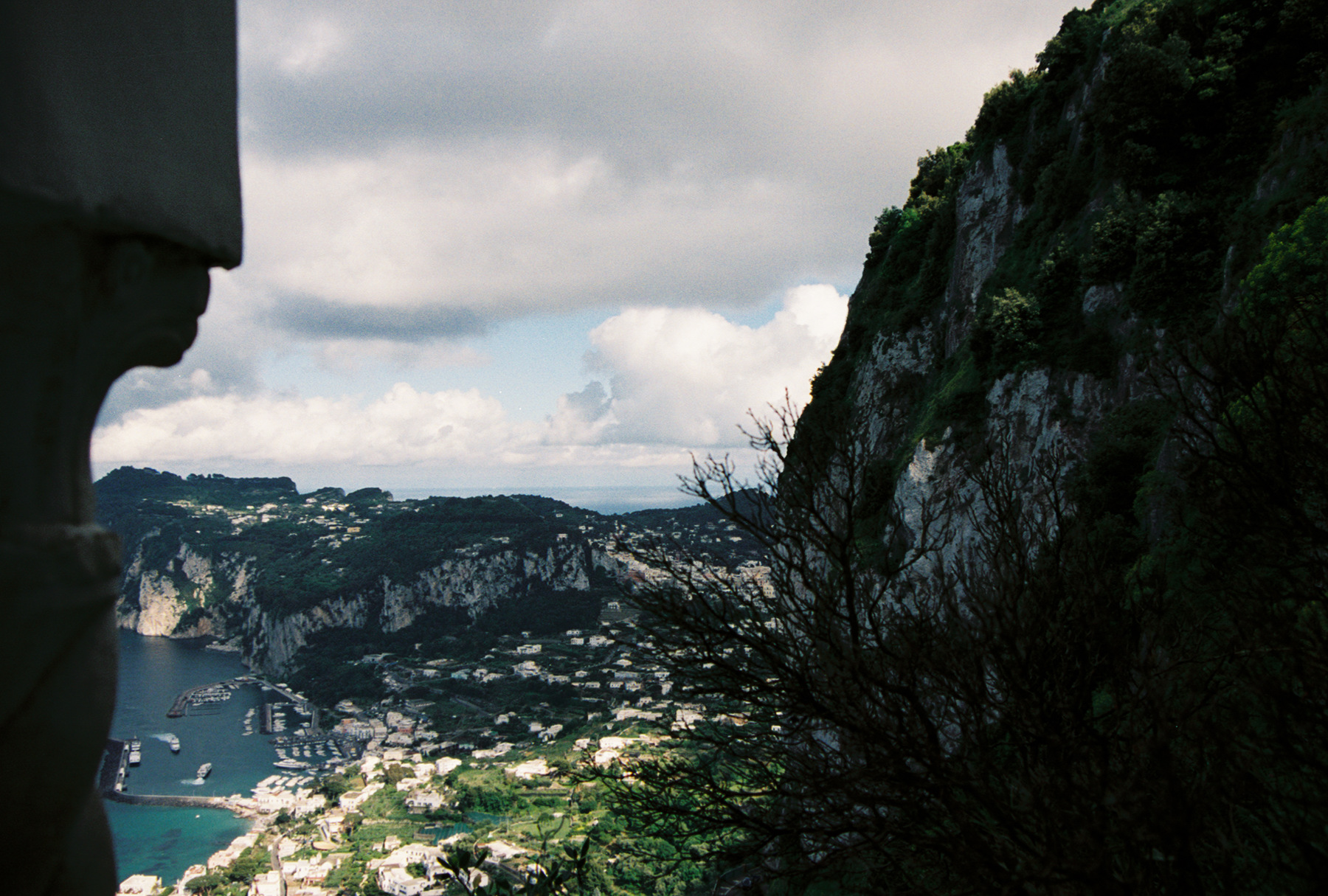
Although the villa is high up on Anacapri, there are soaring rocky cliffs surrounding the grounds. One rock was the the fort overtaken by the pirate Redbeard, which was later owned by Axel Munthe and donated back to the island (but owned by) his Swedish foundation.
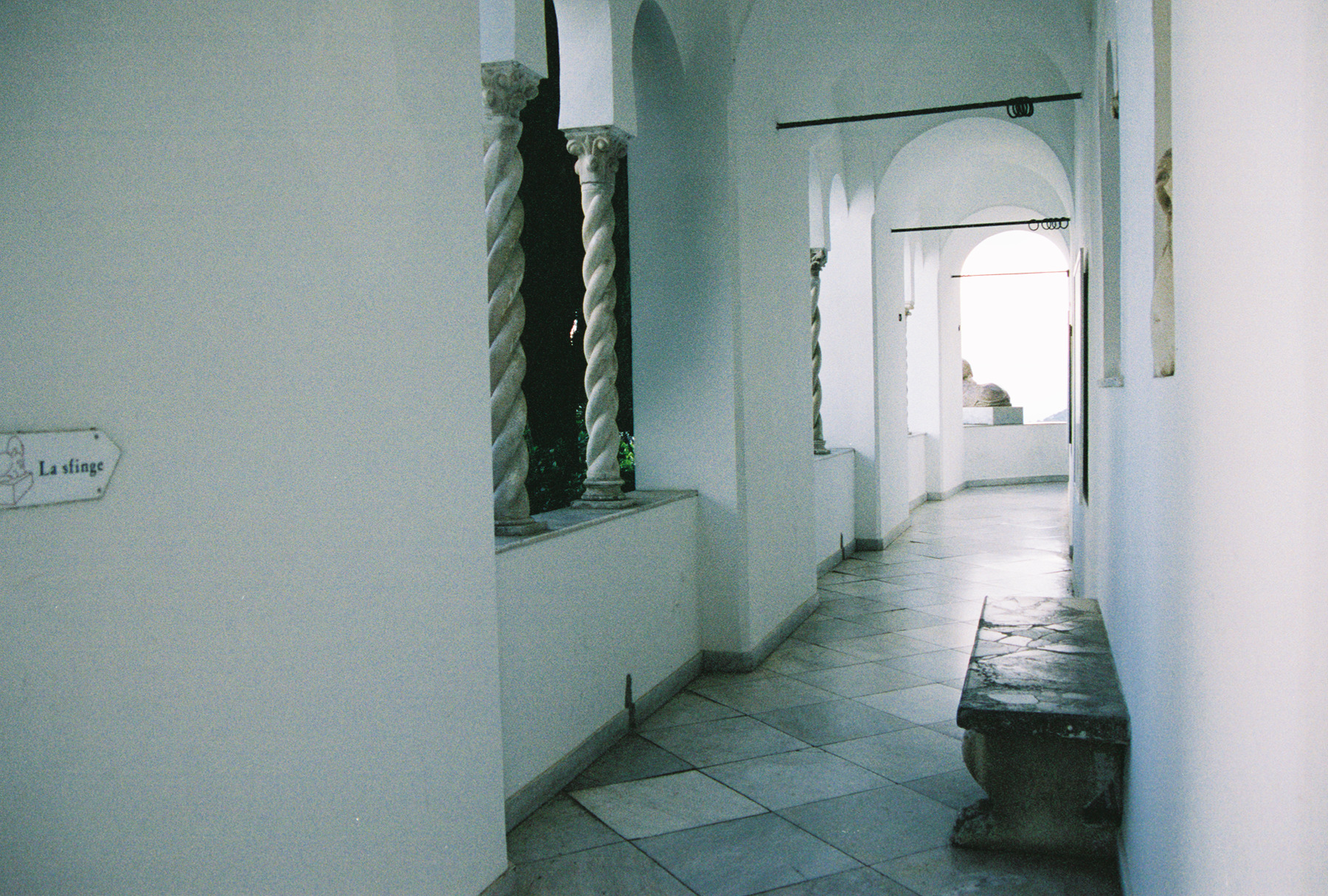
The veranda, home to the sphinx, is inviting in white tile and stone, with benches to rest on and views everywhere you look.
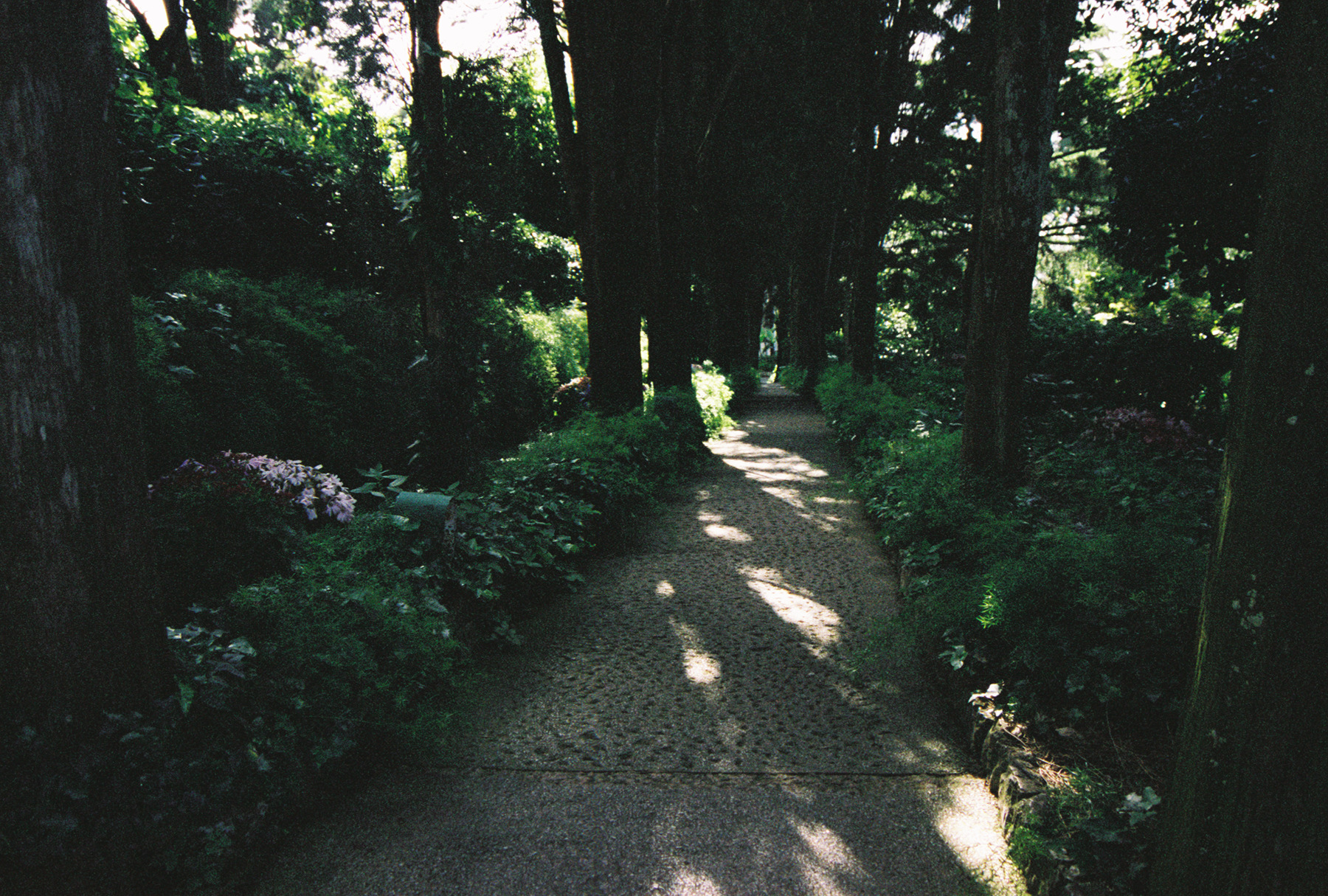
The charming path way walks are lined with greenery, flowers and fountains.
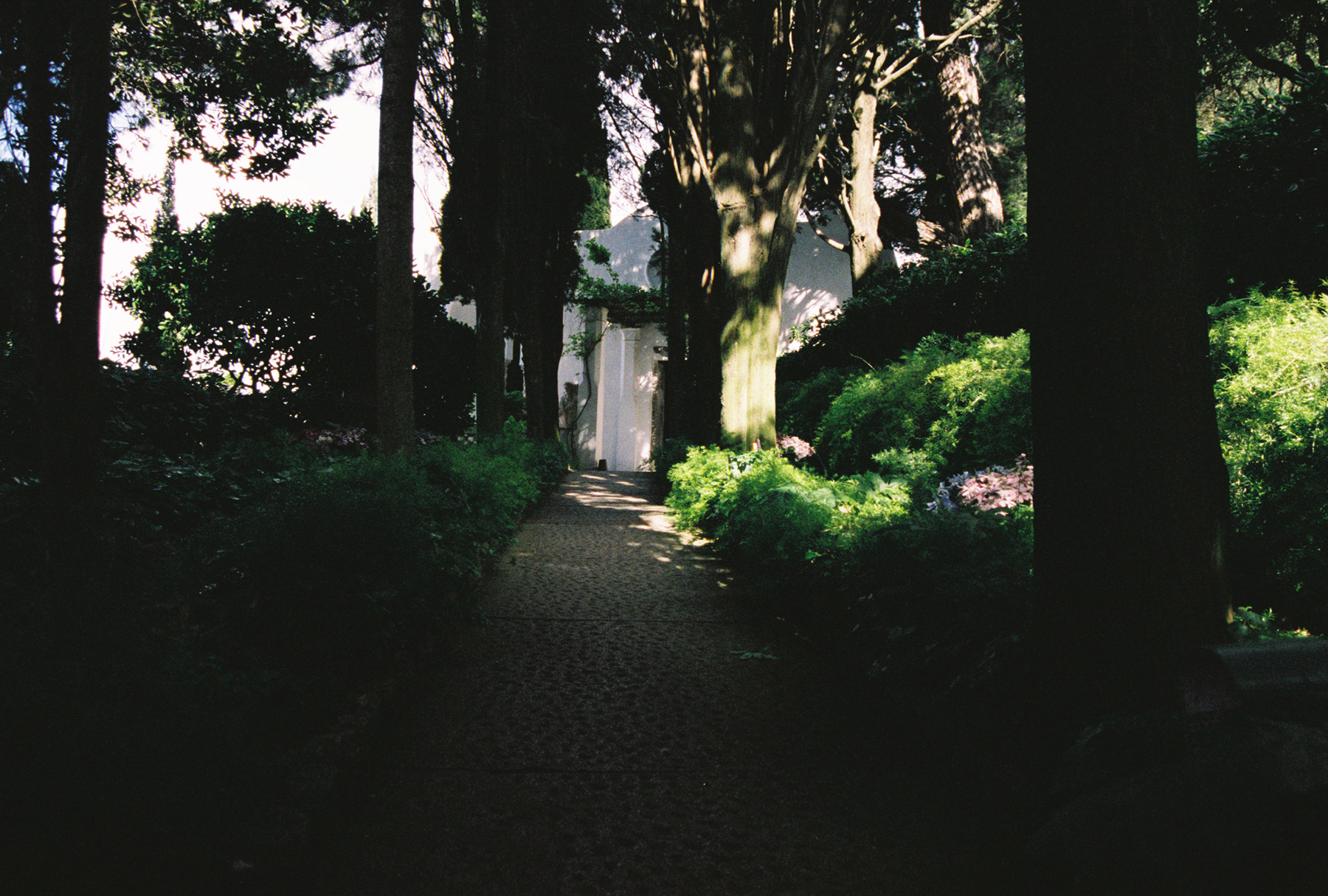
Every turn on the grounds is more and more enchanting. I cannot recommend enough an hour’s visit to the Villa for it’s peacefulness and beauty. On hot days it’s a cool and shady refuge.

Olive jars, more cypresses and Roman Umbrella pines!
A side view of the Egyptian winged pegasus-like female sphinx.
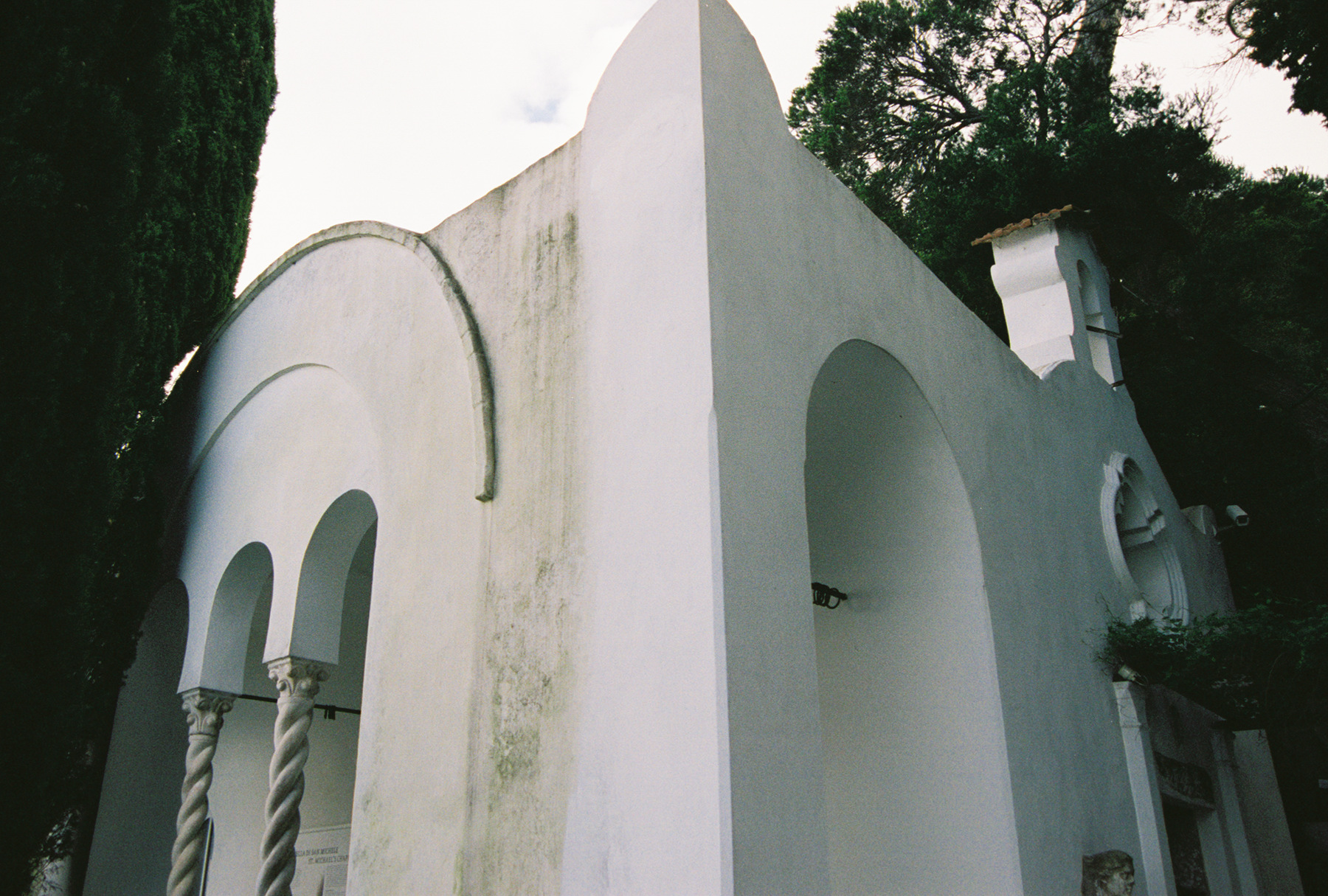
The exterior of Axel Munthe’s chapel.
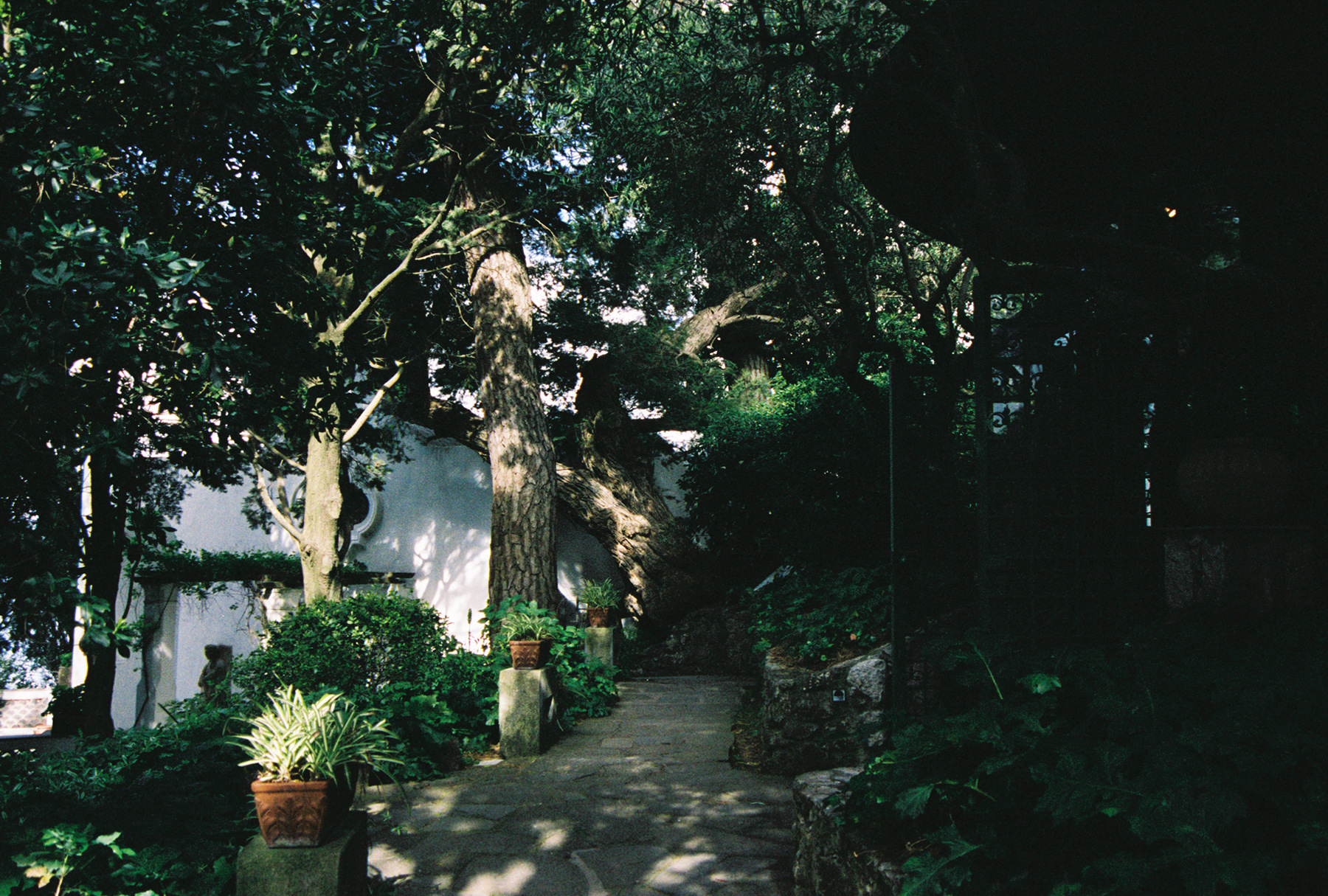
Potted urns along the walk.
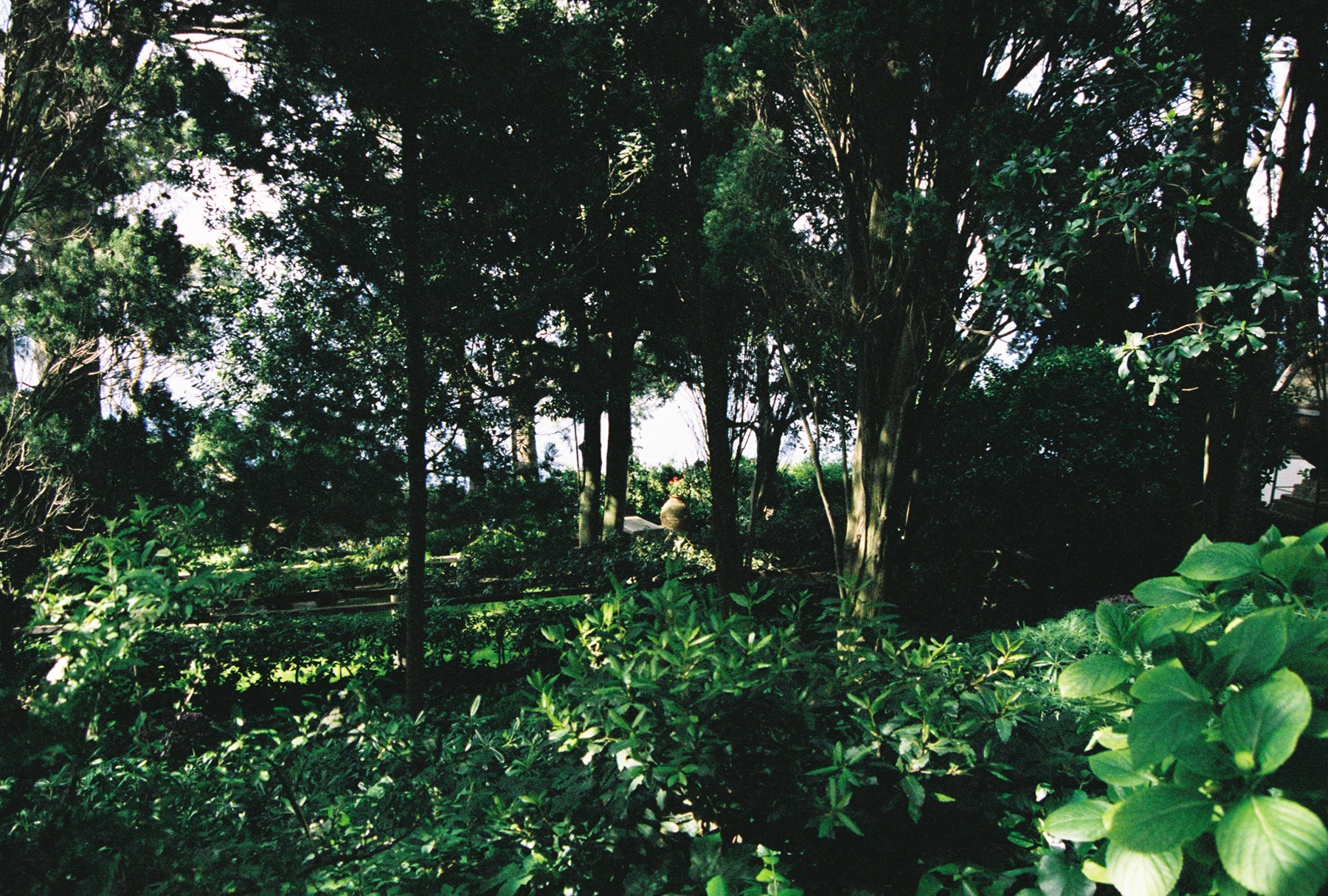
Herbal garden, leaves and trees.
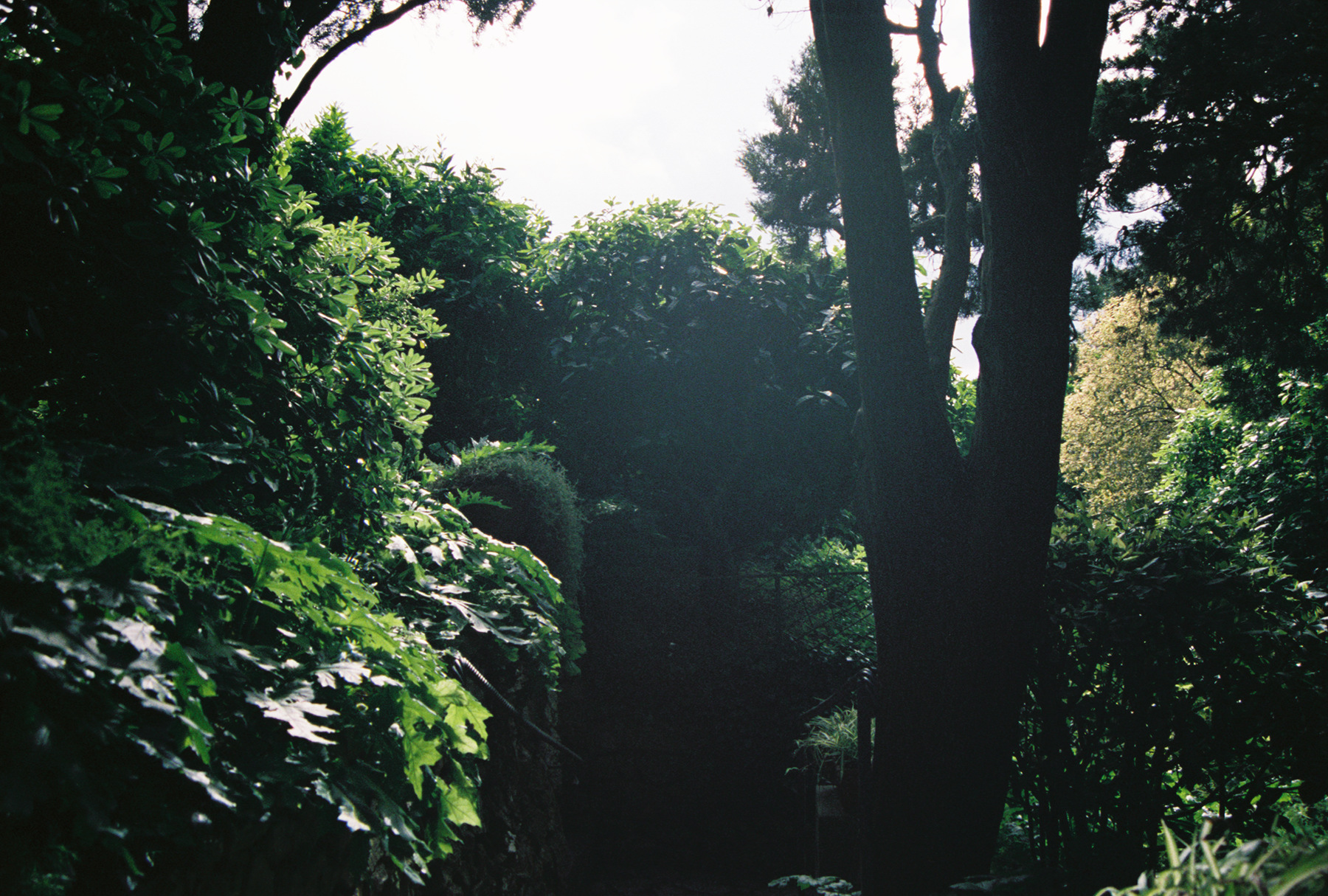
Hedges and shrubbery grown over decades forming fences.
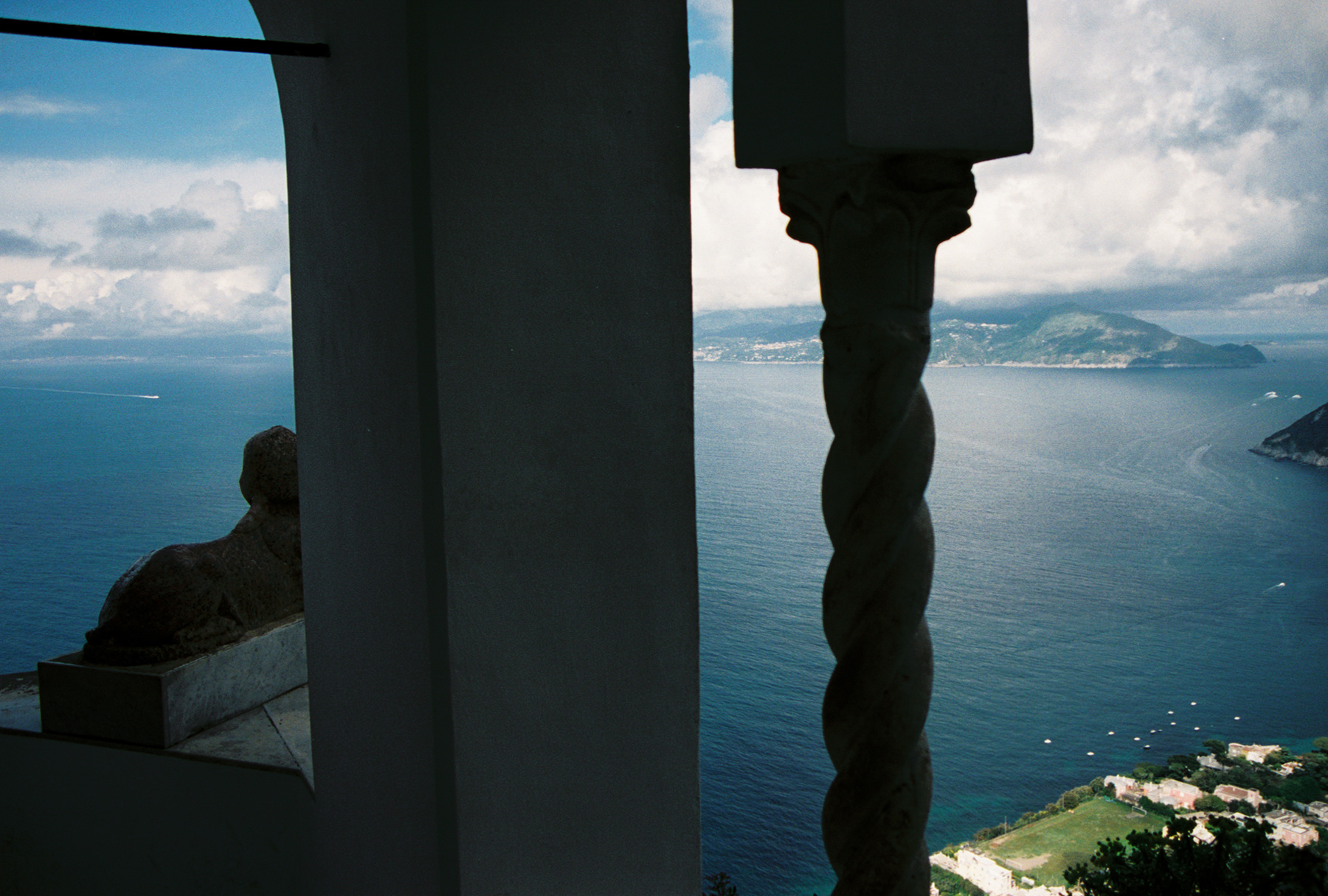
Another angle of the sphinx’s view.
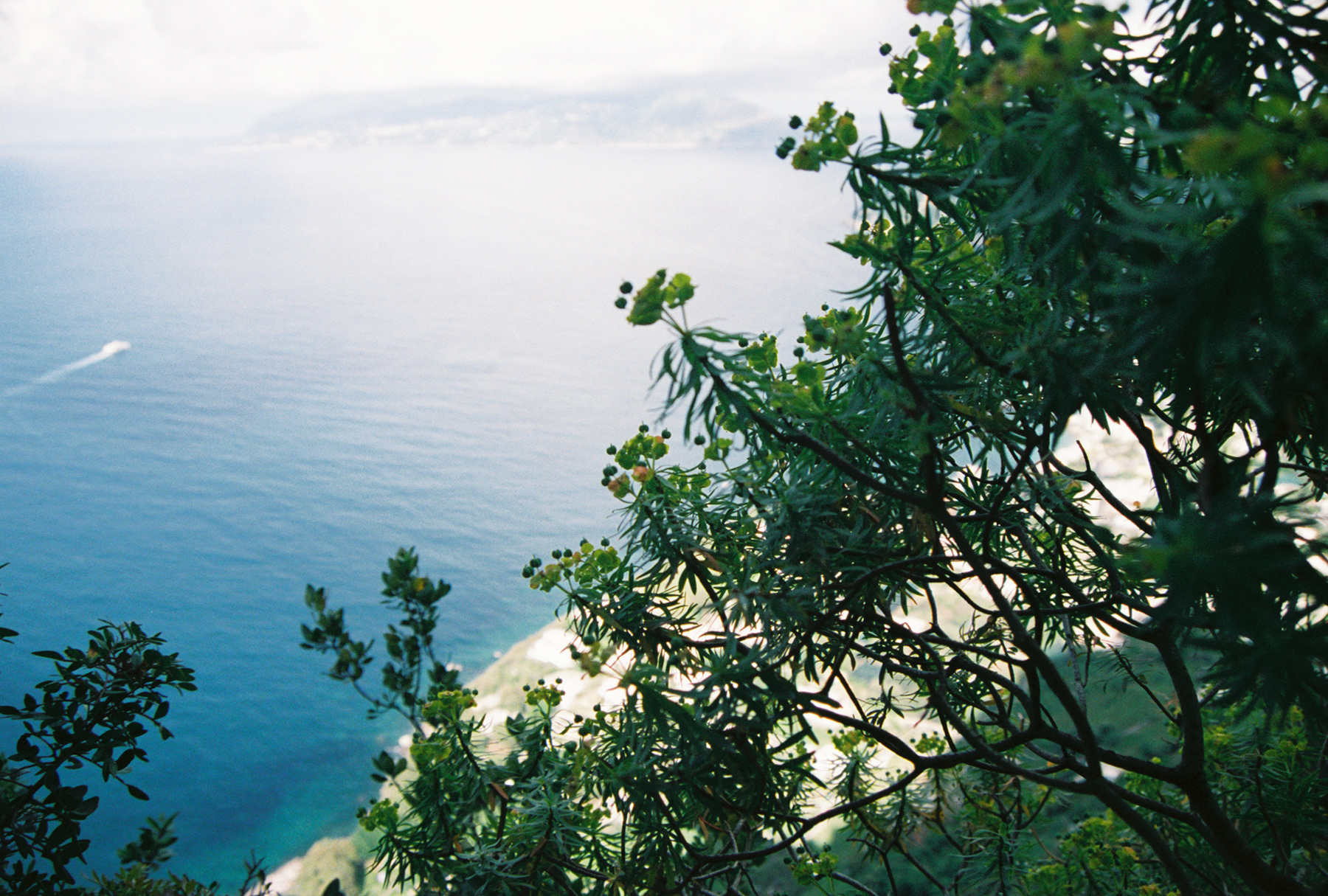
A tiny boat leaving the shore.
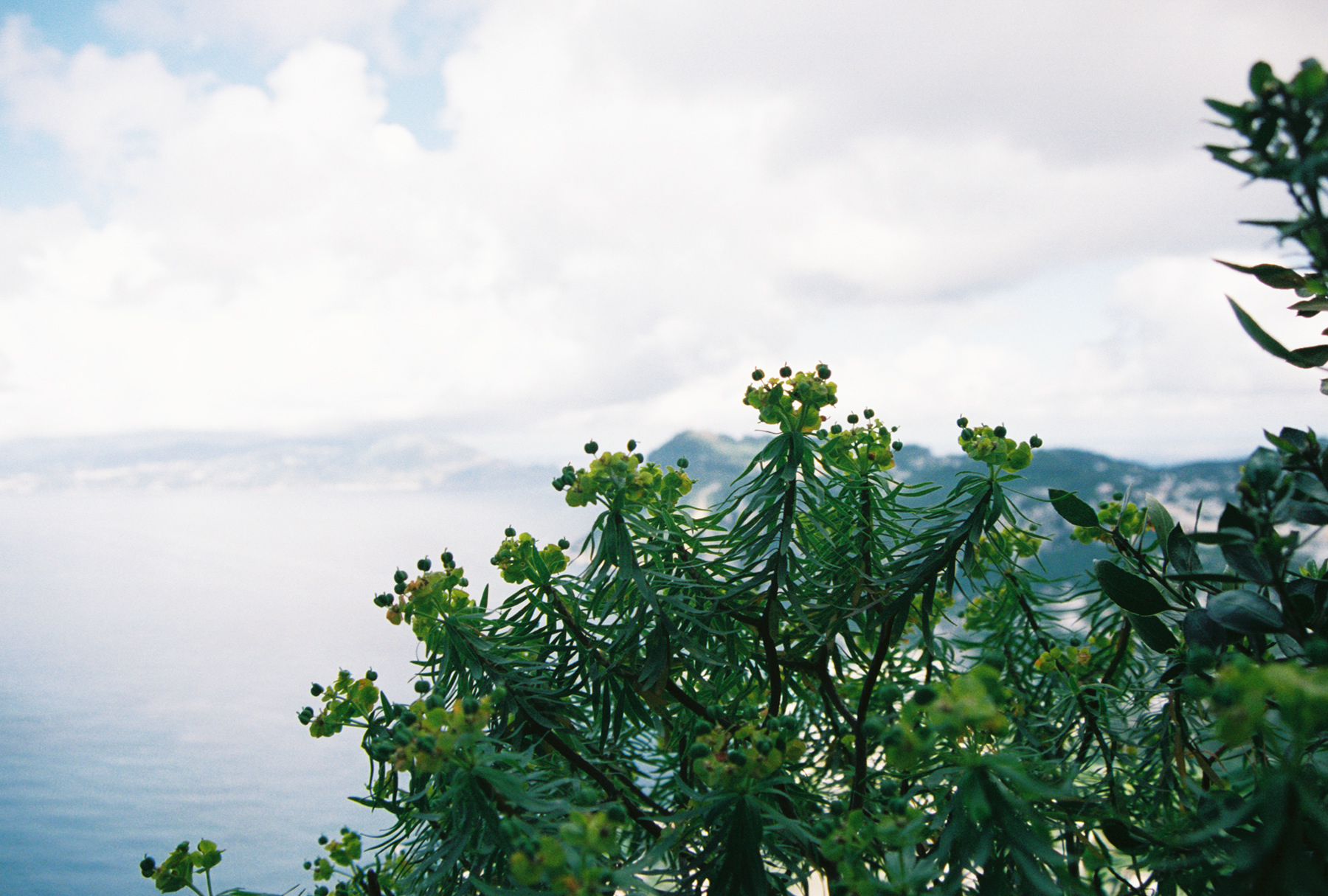
The clouds and mist find each other.
Because of Axel Munthe’s tireless advocation for the exotic array of birds who migrate to the island each year, Capri is now one giant bird sanctuary. Bird hunting is outlawed. The beautiful song of many different birds can be heard from morning to night, when the nightingales come out. It is then when I can feel Keats poem, Ode To A Nightingale, alive in the air.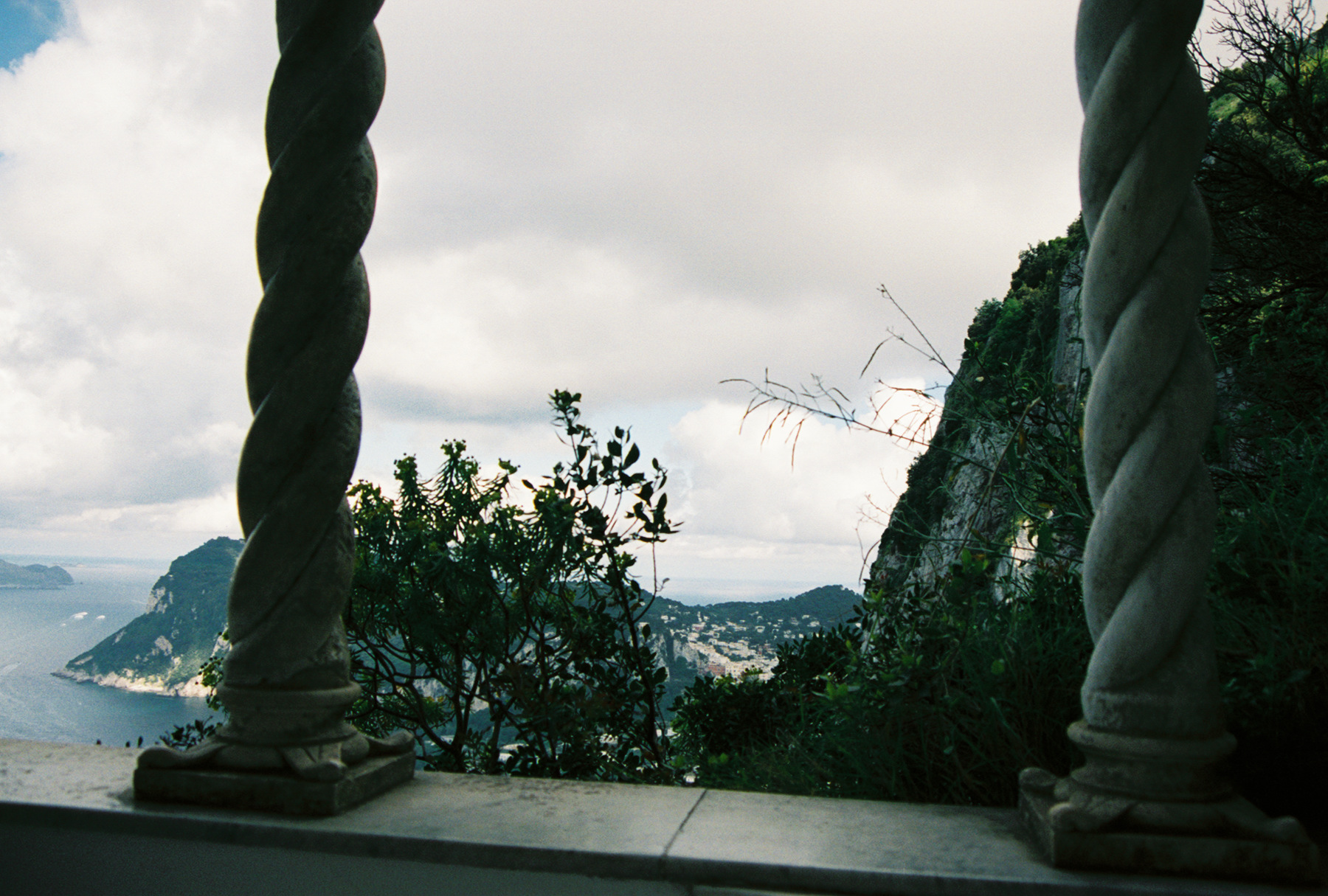
I worry some of the pictures are a bit repetitious but they were all beautiful reminders of being there. Even a subtle angle change is reminiscent of walking through the grounds and seeing the beauty unfold a step at a time. And believe it or not I am actually restraining myself.
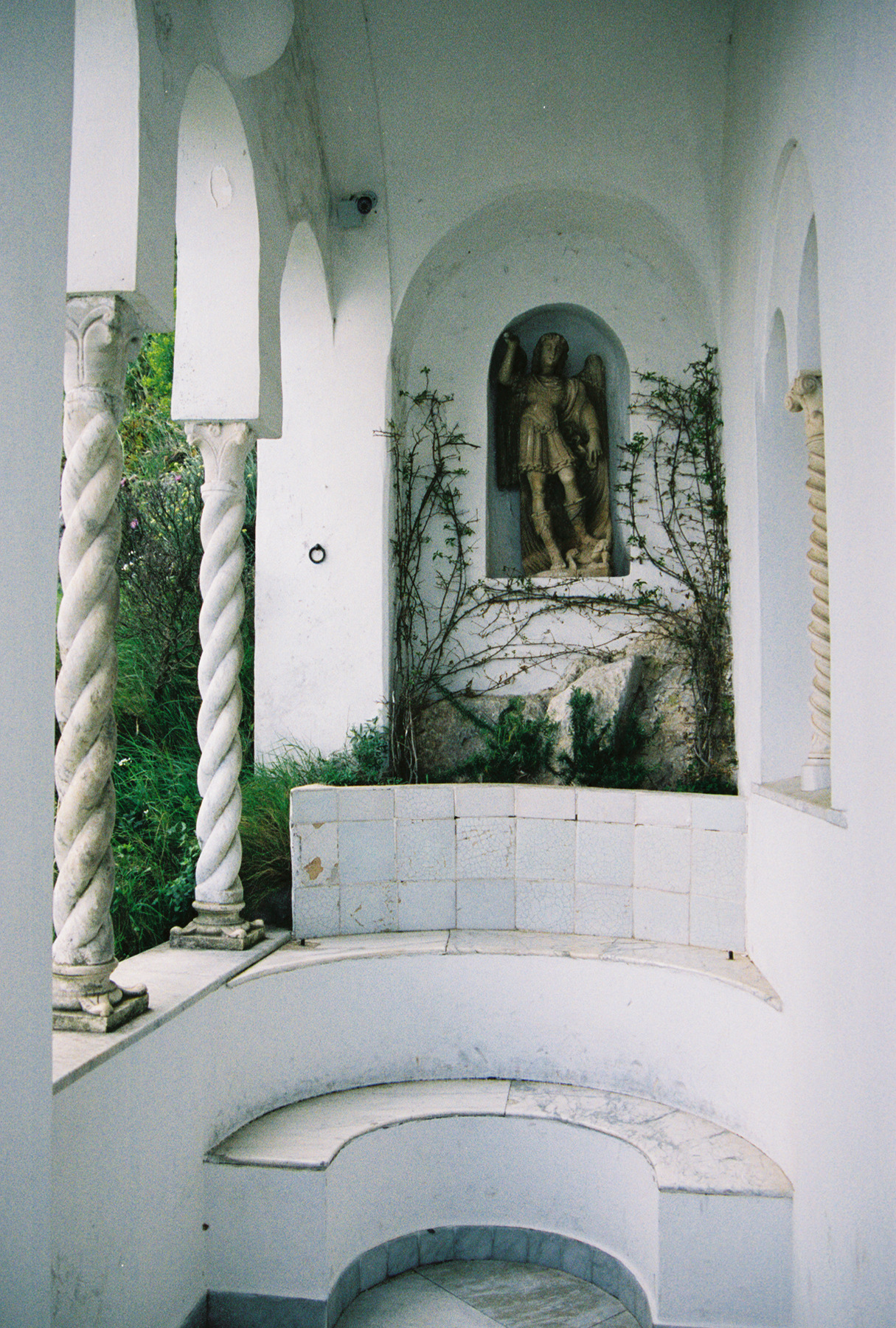
A semi hidden niche at the end of Villa San Michele’s labyrinthine gardens and loggias.
This was part one of the Villa San Michele series shot on portra 35mm film, velvia film slides and vintage kodak. The history of San Michele, more garden rambles, the cafe and interior of the villa, the flora and fauna of the grounds and excerpts from Axel Munthe’s book on his Villa to come in following posts. For visitor information visit: villasanmichele.eu . If you find yourself on Capri, even for a day, you must take a convertible taxi or the bus up to Anacapri (because it’s less crowded, lovely and full of hand painted tile, jewelry and sandal artisans) and it is the home of the Villa San Michele! You won’t regret it!
More to follow! These photographs and travel essays are copyright Rebecca Price Butler, alovelettertorome.com
That thou, light-winged Dryad of the trees
In some melodious plot
Of beechen green, and shadows numberless,
Singest of summer in full-throated ease.
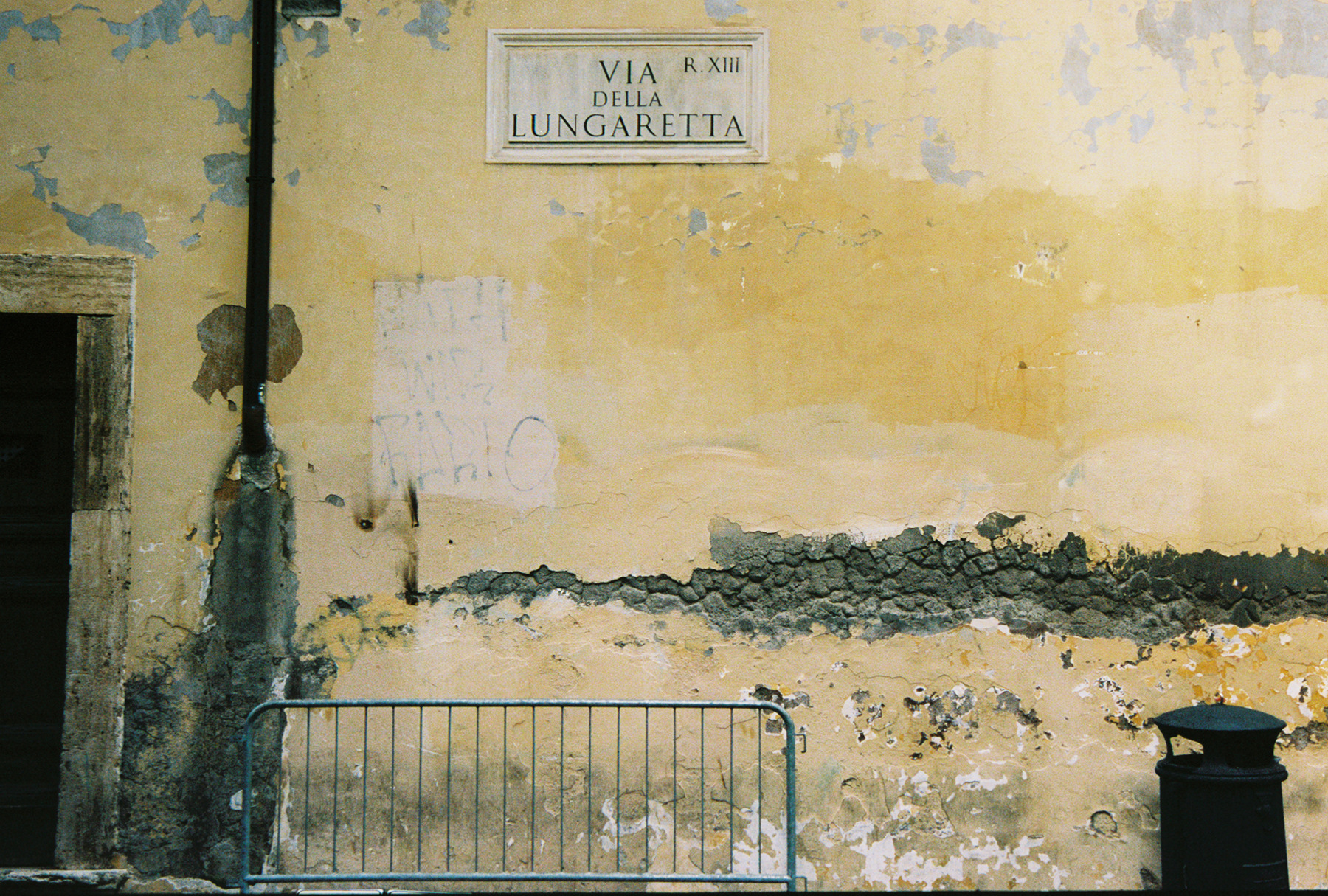
Trastevere is a charming neighborhood across the Tiber from the historic center of Rome. It’s a great spot to have lunch and spend an afternoon walking around, admiring the warm, faded colors of the buildings. They bake wonderful breads and cookies at La Renella and sell handmade chocolates at Valzoni to locals and tourists. My favorite book shop in Rome is The Almost Corner Bookshop, an all English language store filled with fiction and non-fiction dedicated to Rome and Italy, lots of great classic literature and the latest publications in English. I always pick up something perfect to set the tone of my visit to Rome – in March it was Geothe’s near perfect Italian Journey, which colored my walk on the Appian Way and walking through the Porta San Sebastiano. In October it was my favorite Odes of John Keats in a neat little volume, with a little Shelley and Byron, who all accompanied me on my visits to The Keats Shelley (Byron) House and for a prosecco at Caffe Greco and even to Keats tombstone in Testaccio.
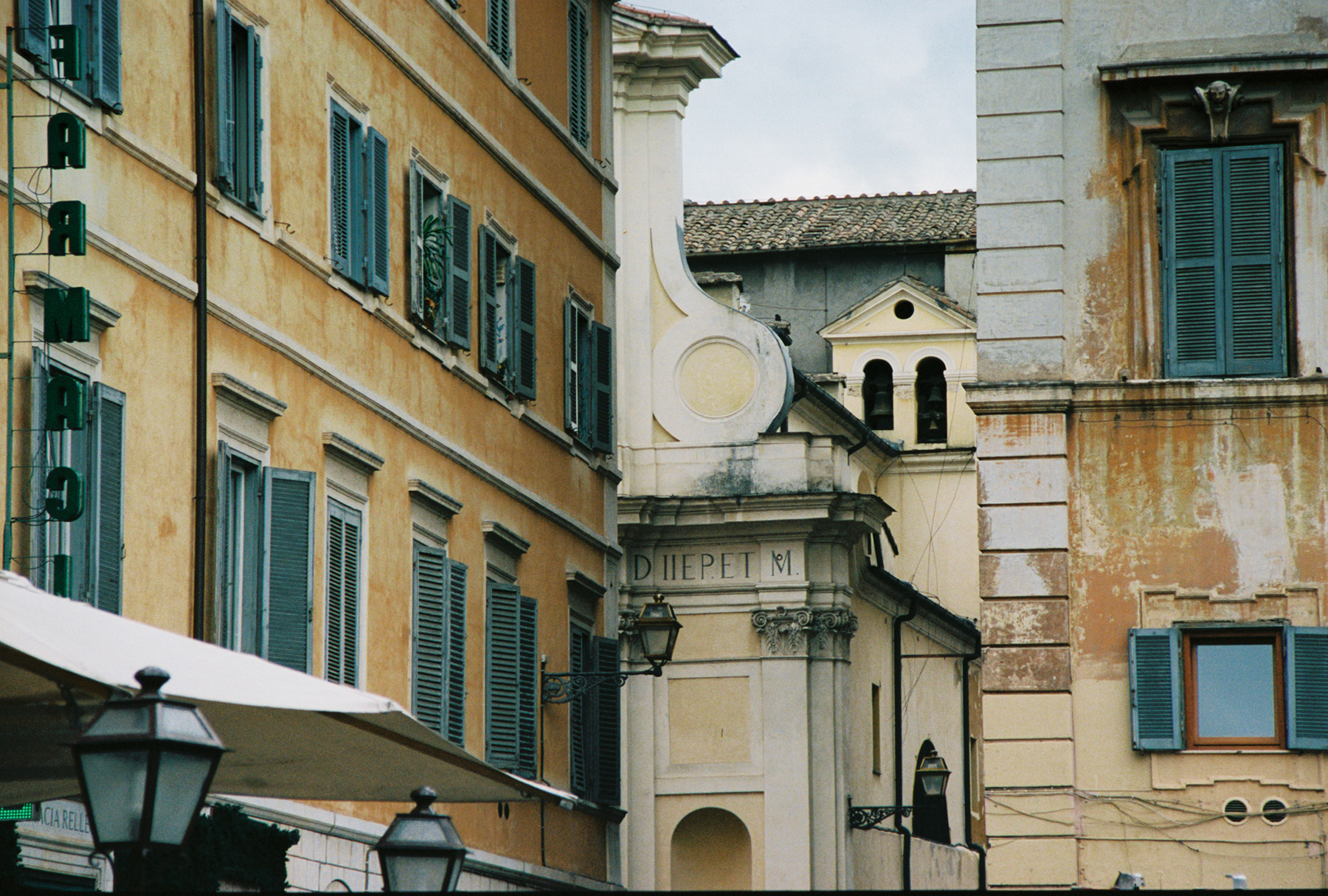
Trastevere is not usually overrun with tourists and has a little bit of an off the beaten path feel to it. One can walk to Tiber Island for curious sights or the Giancolo (Janiculum Hill) for an alternate view of Rome or even to the residential neighborhood of Monteverde which boasts the lovely Villa Sciarra parks and is truly off the beaten path. I love the beautiful curves and colors of the architecture.
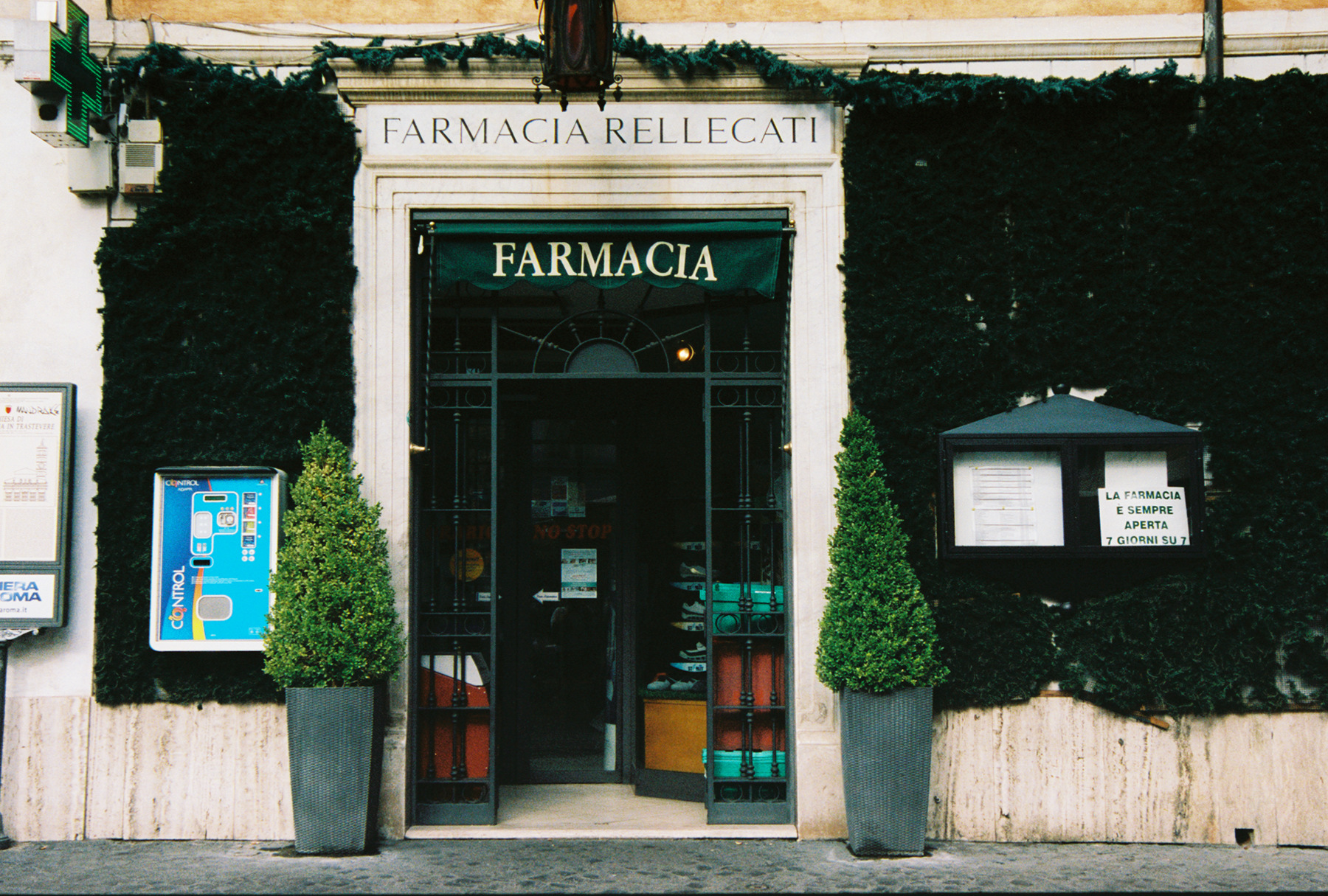
Trastevere has the chicest farmacia I’ve ever seen. Each little shop and boutique is delightful and covered with crawling greenery. The curb appeal and doorstep gardens of Italy are an obsession of mine.
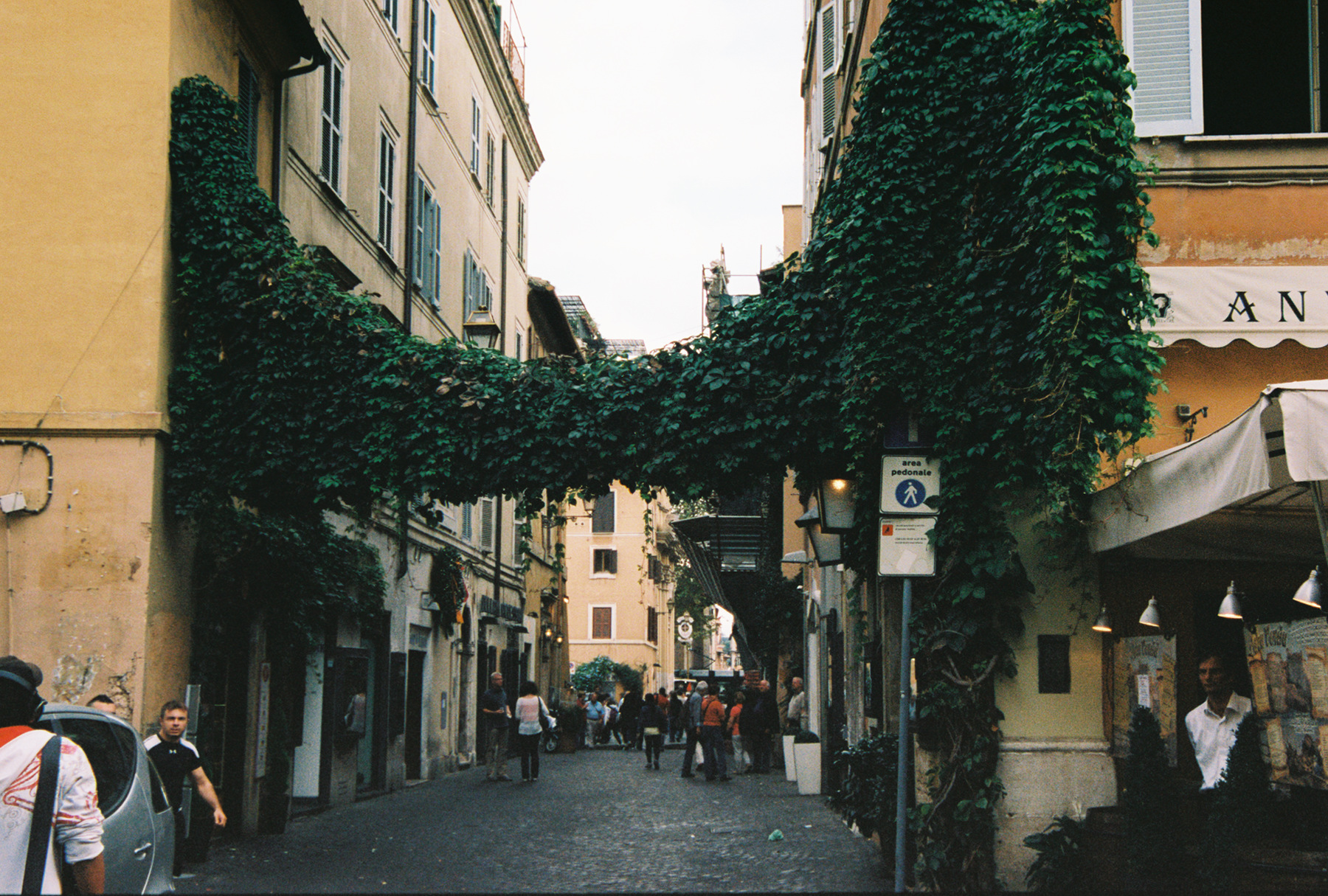
The gorgeous overhanging vines and ivy of your typical Trastevere pedestrian street next to little cafes and restaurants.
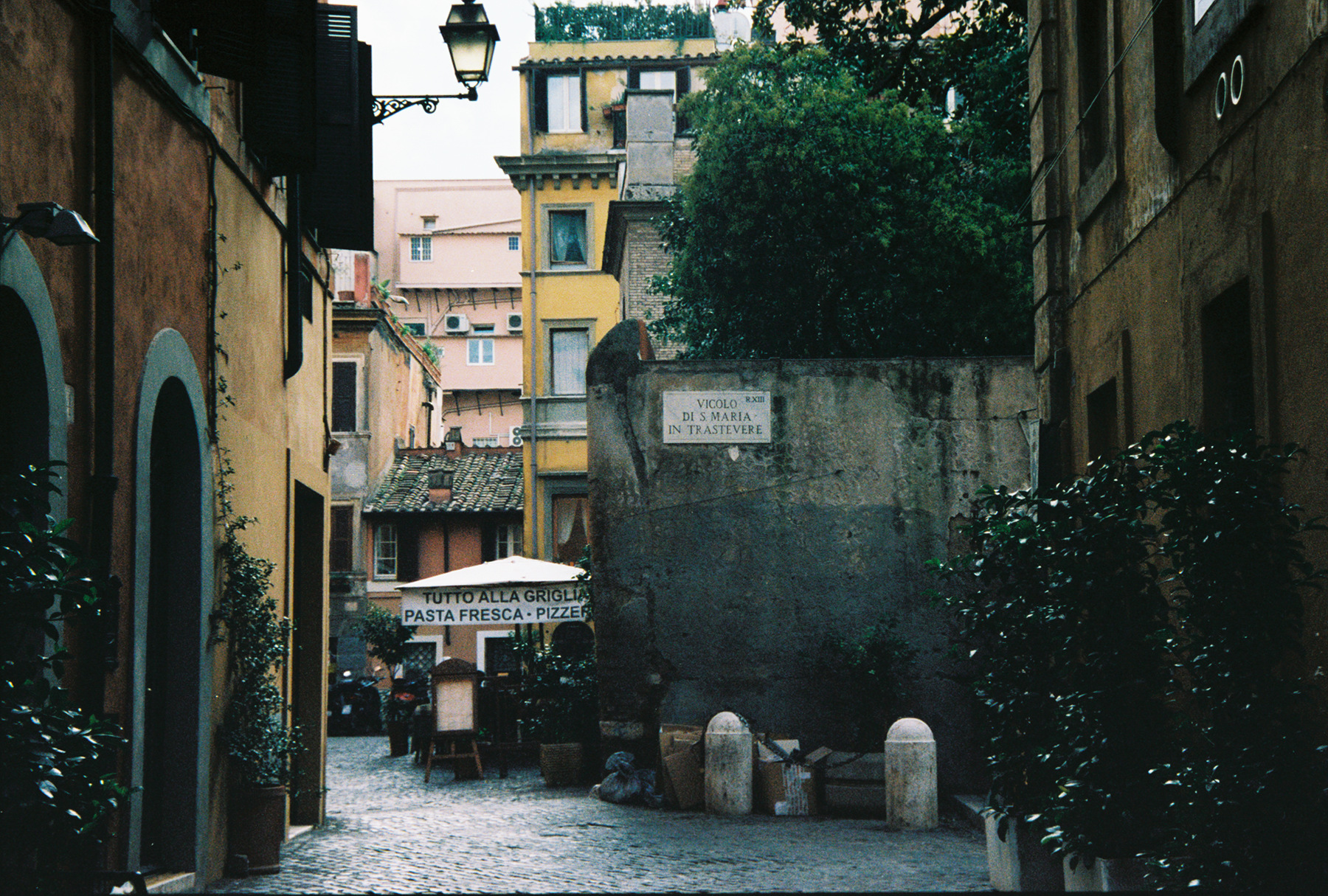
The layers of stone and paint and greenery are lush all year long. I adore this section so much.
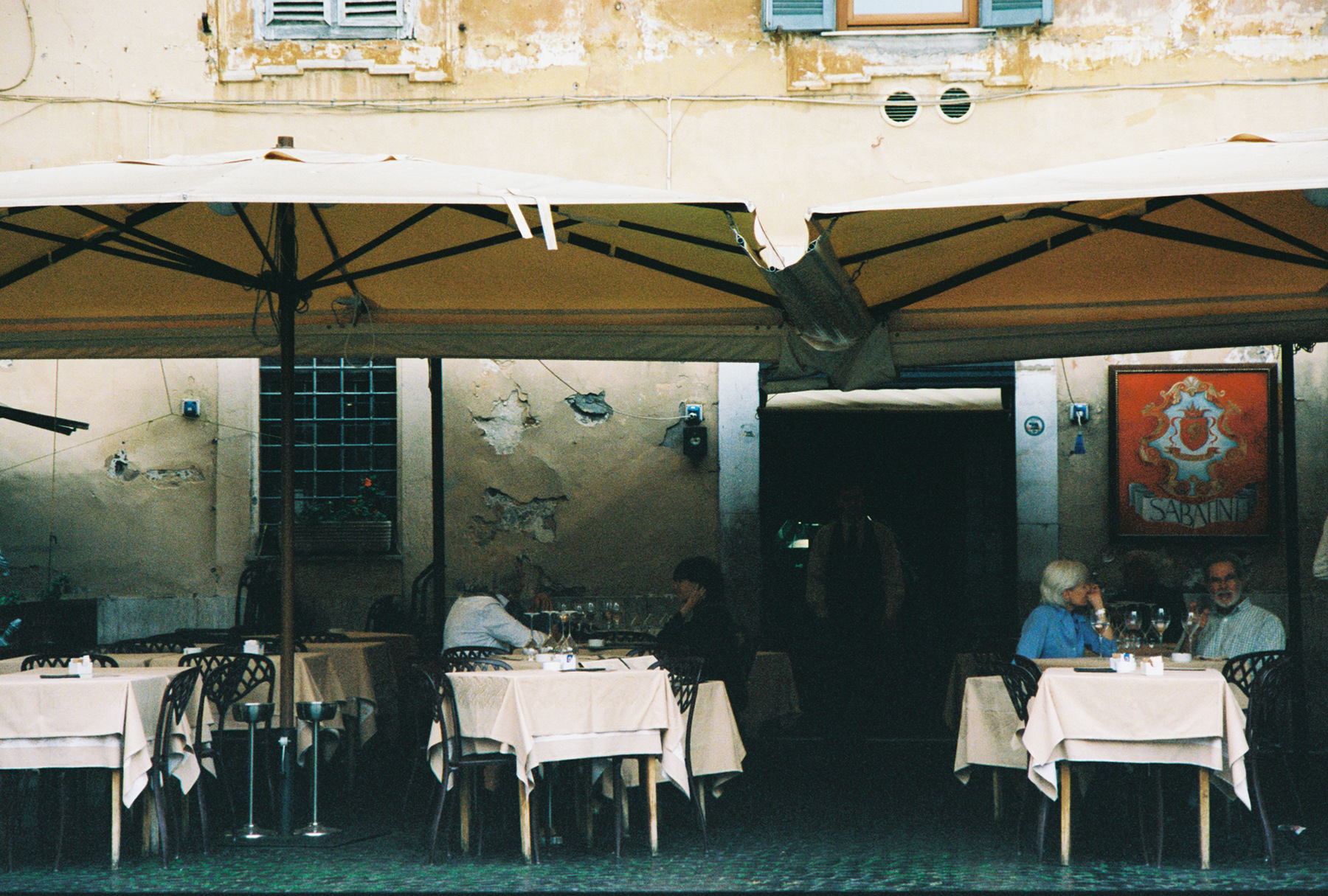
A charming respite to duck in when caught in the rain (as I was that afternoon)!
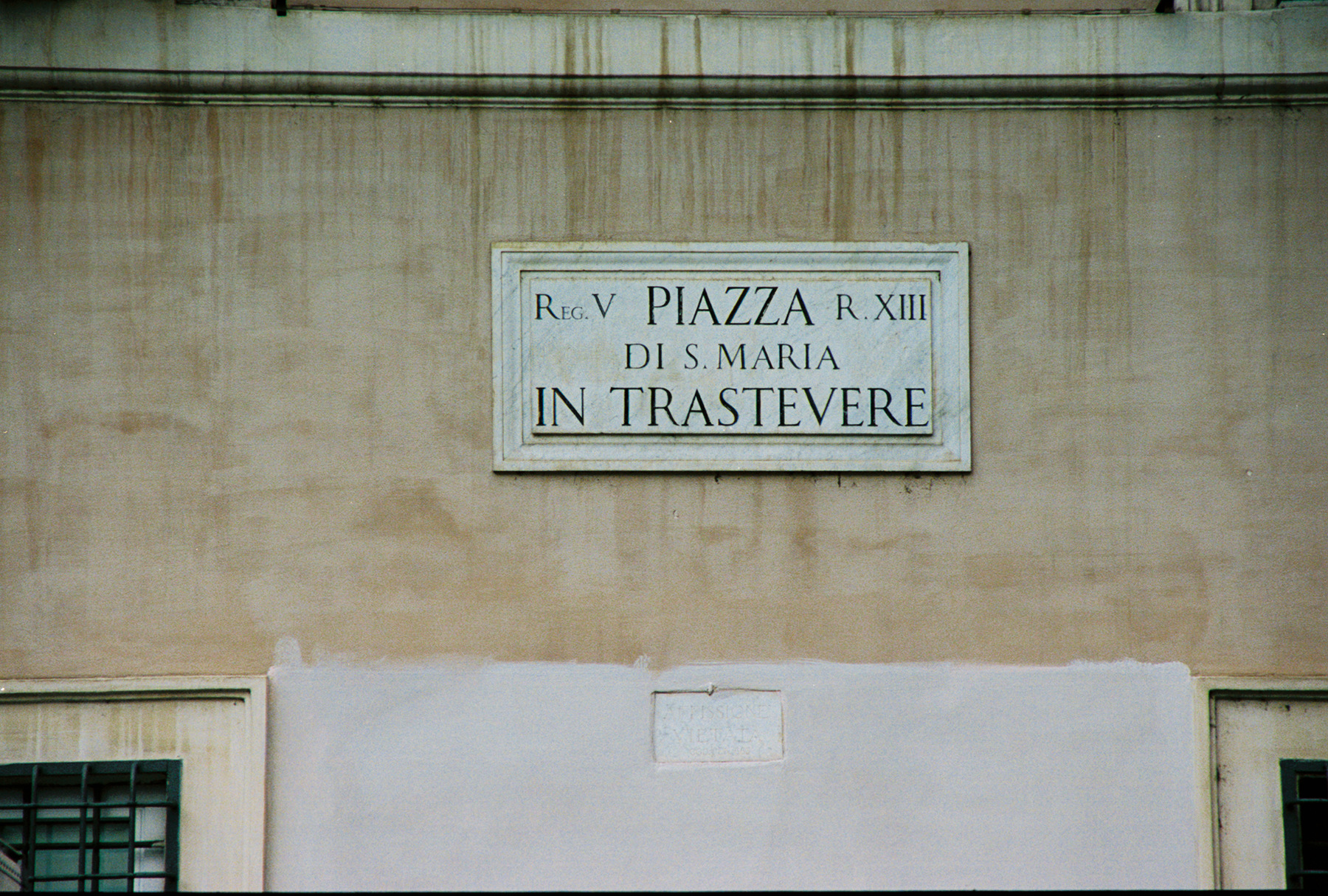
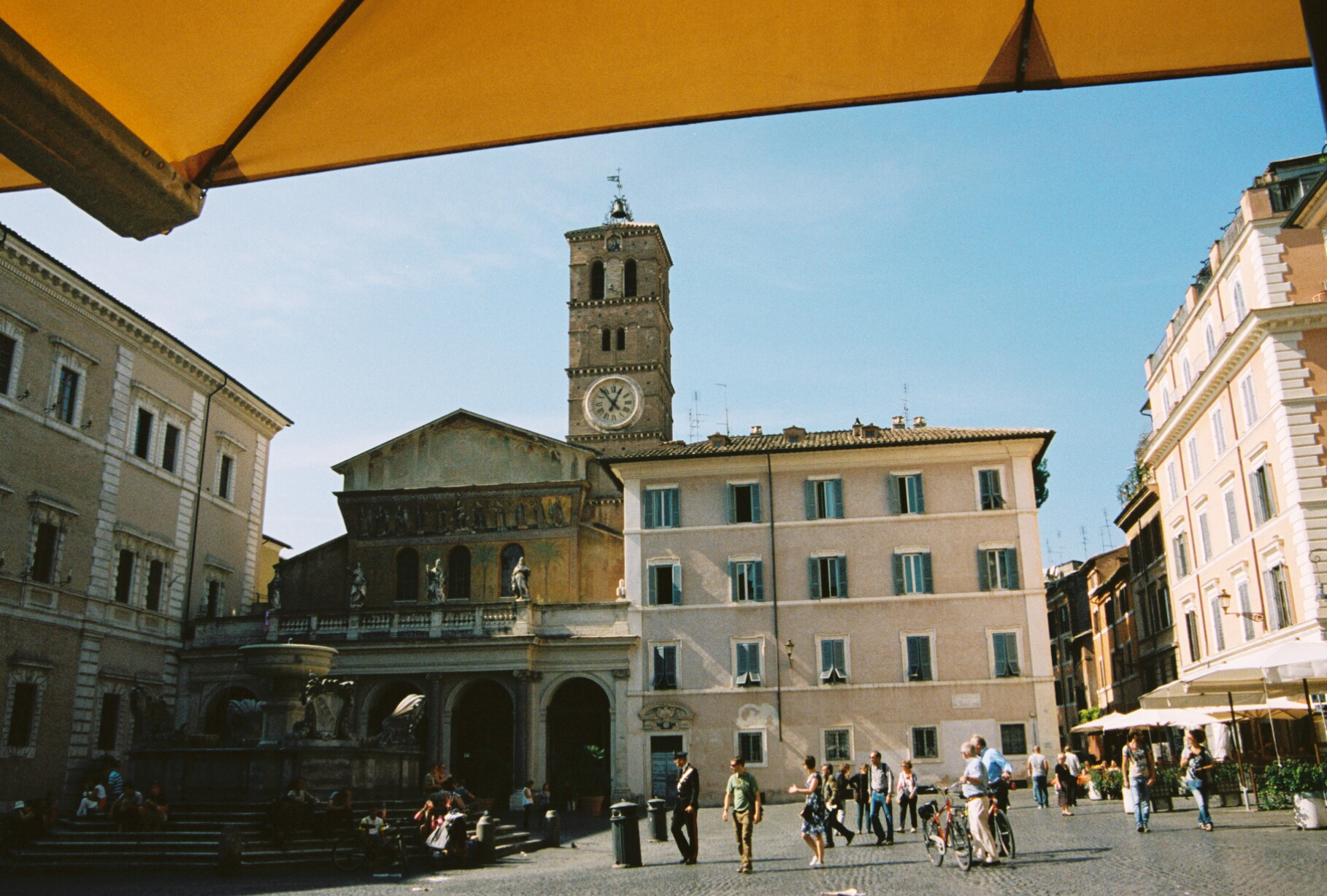
The main piazza of Trastevere with the cannot be missed church. A great people watching locale.
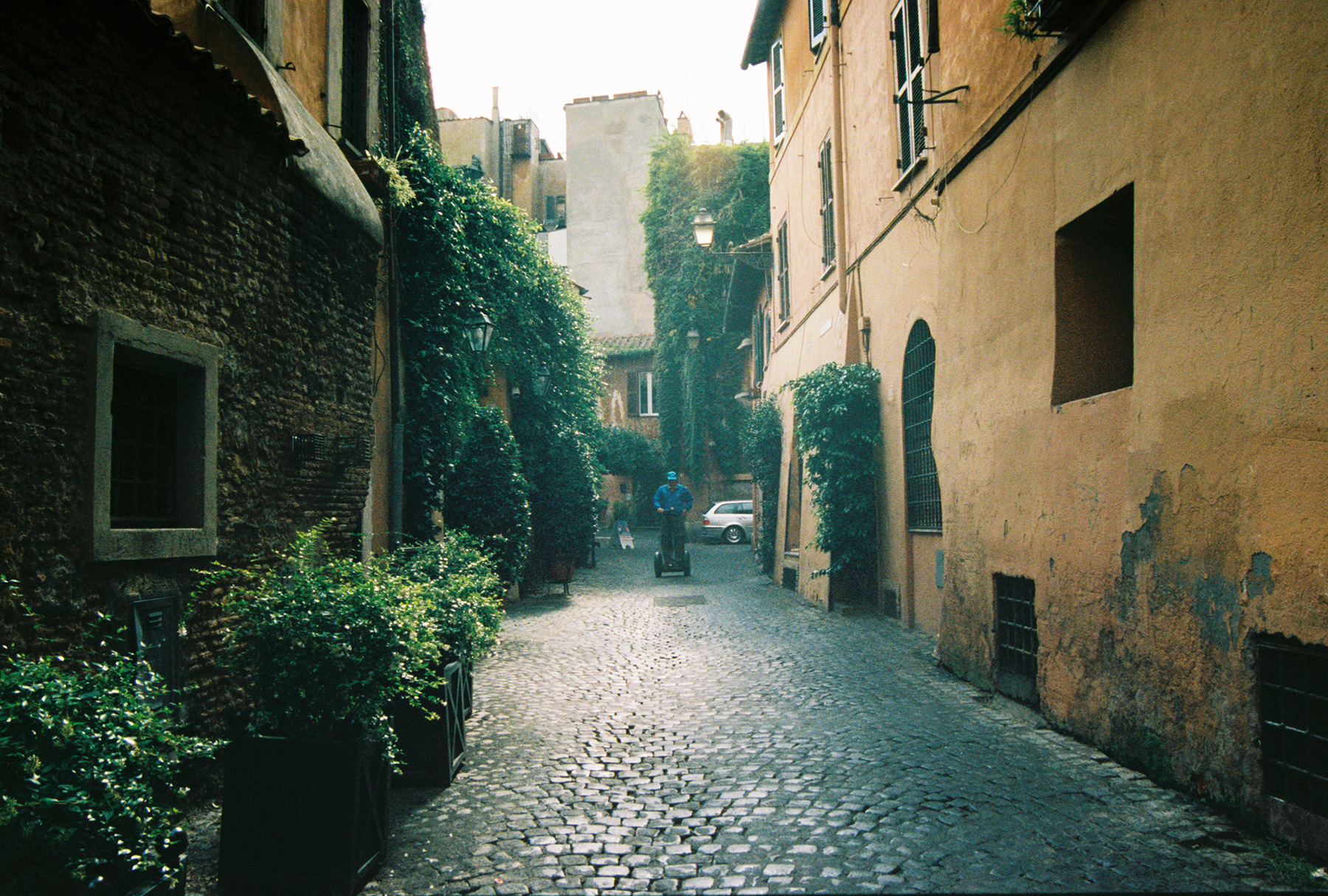
They even have the ambulatories in Rome to bounce one over cobblestoned paths. The green grows thick and spreads over garden walls.
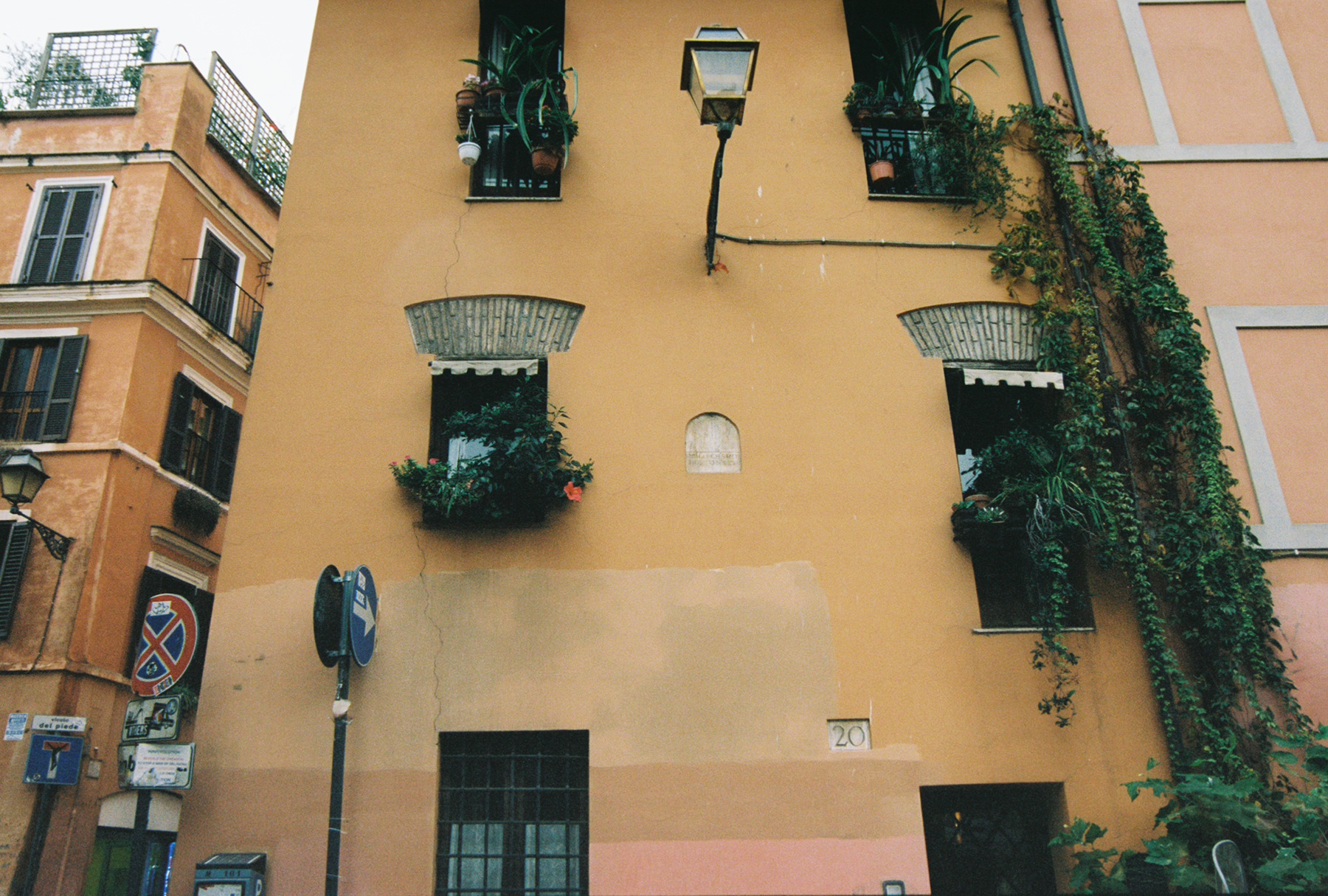
Miniature terraces with majestic potted plants which grow as long as Rapunzel’s hair!
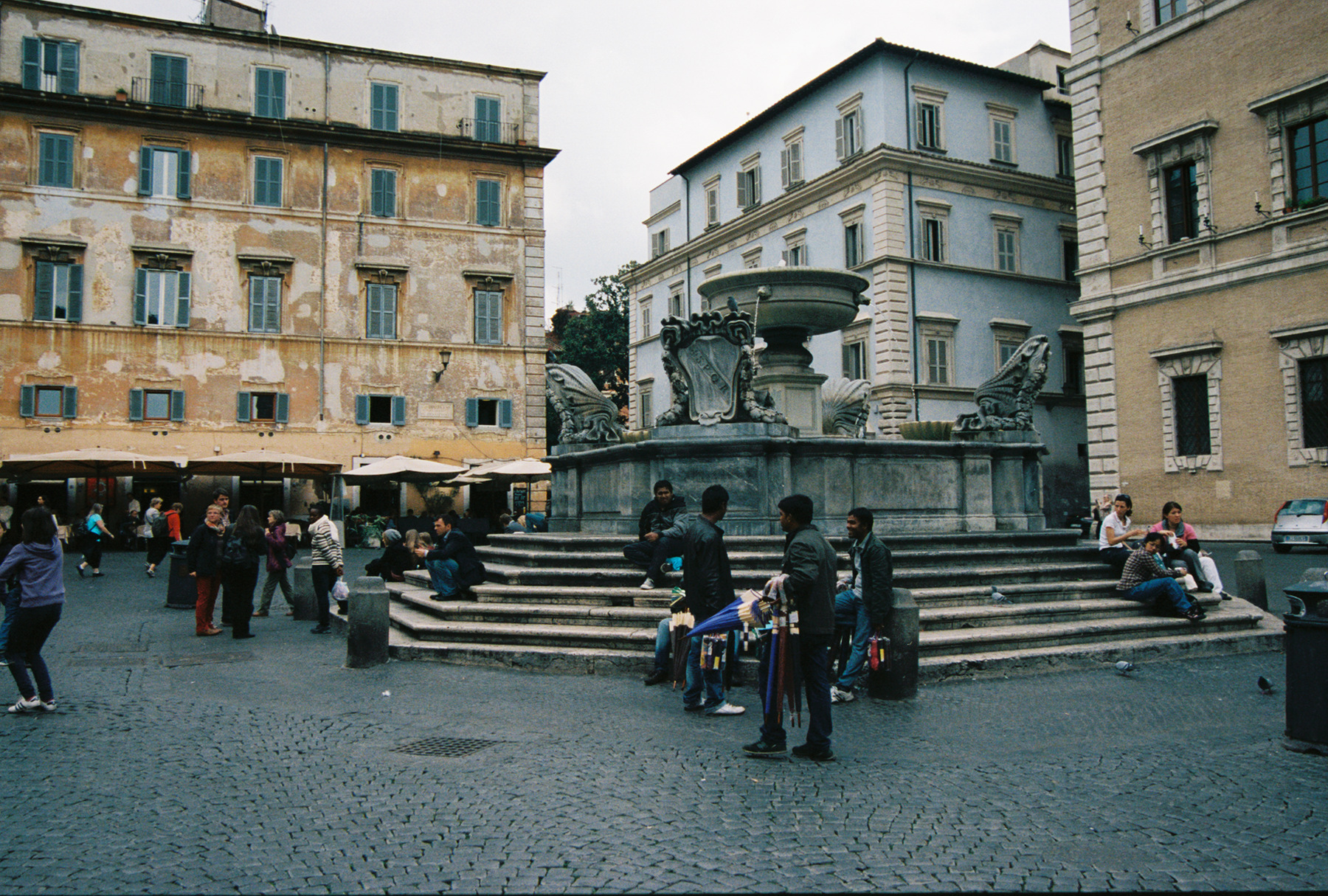
The place to see and be seen.
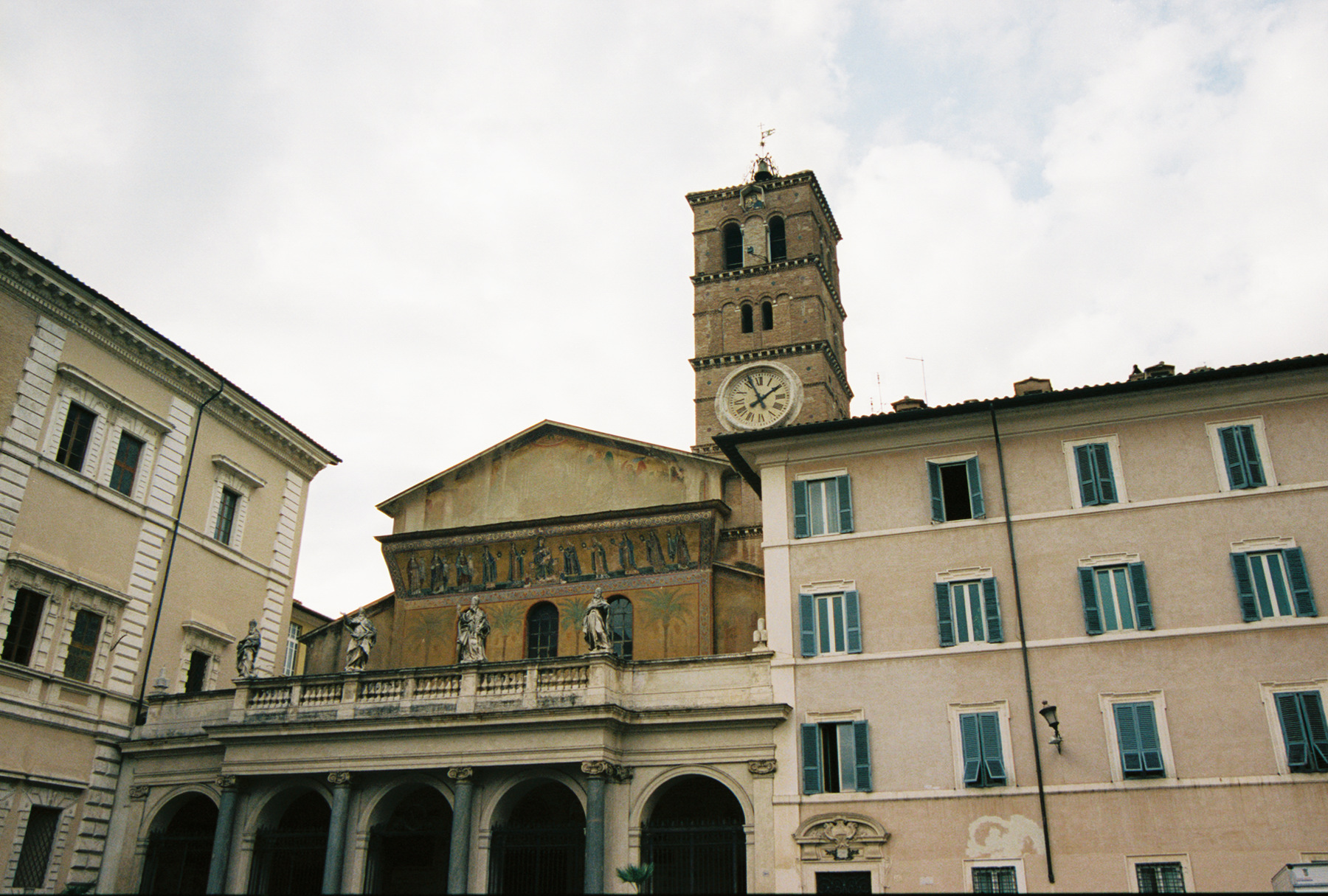
The exceptionally old exterior. “The Basilica of Our Lady in Trastevere (Italian: Basilica di Santa Maria in Trastevere) is a titular minor basilica, one of the oldest Churches of Rome, perhaps the first in which Mass was openly celebrated. The basic floor plan and wall structure of the church date back to the 340s, The first sanctuary was built in 221 and 227 by Pope Calixtus I and later completed by Pope Julius. -Wikipedia
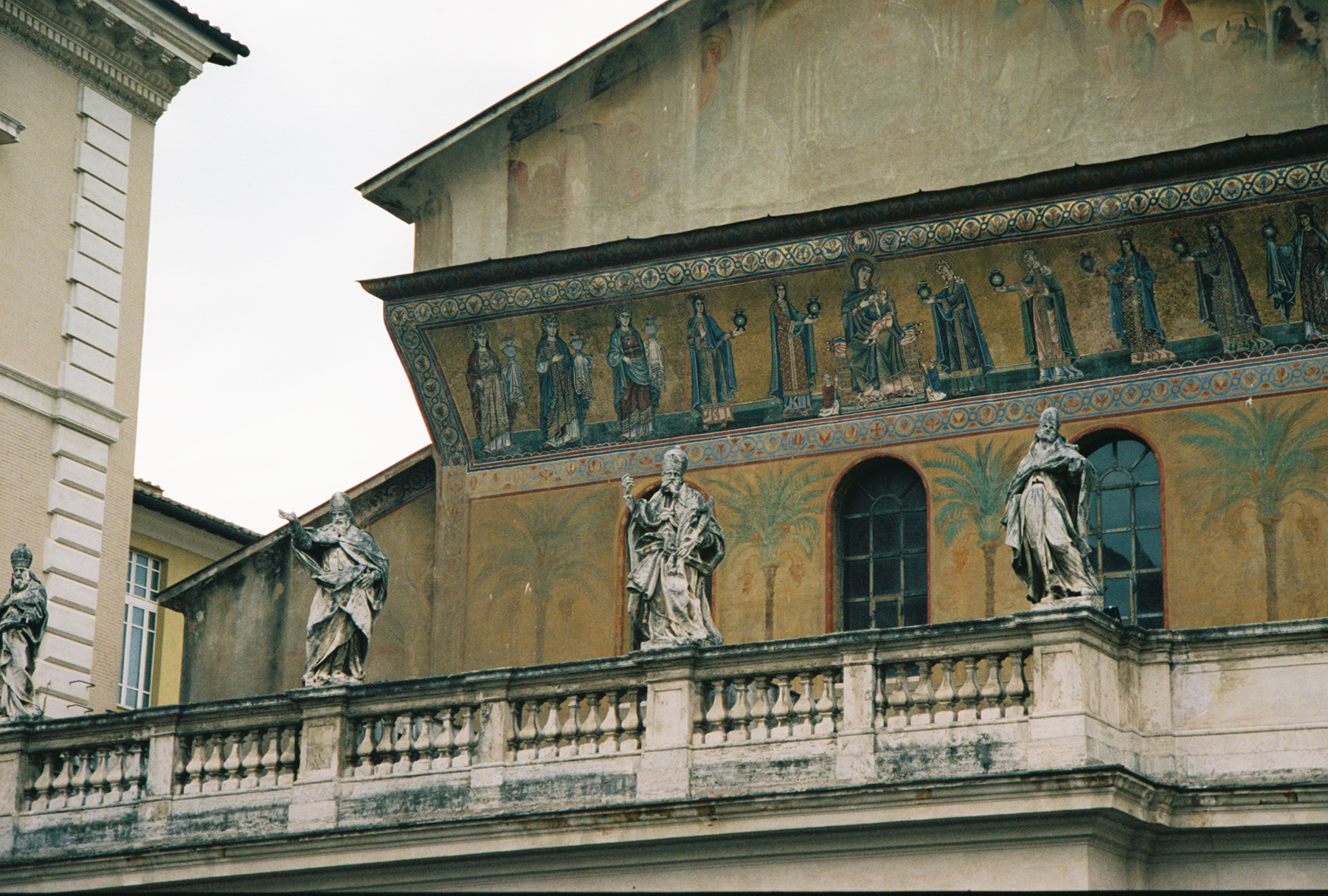
A close up of the pretty detail, with Occidental features like Egyptian palm trees and the gold leafed saints mosaics.
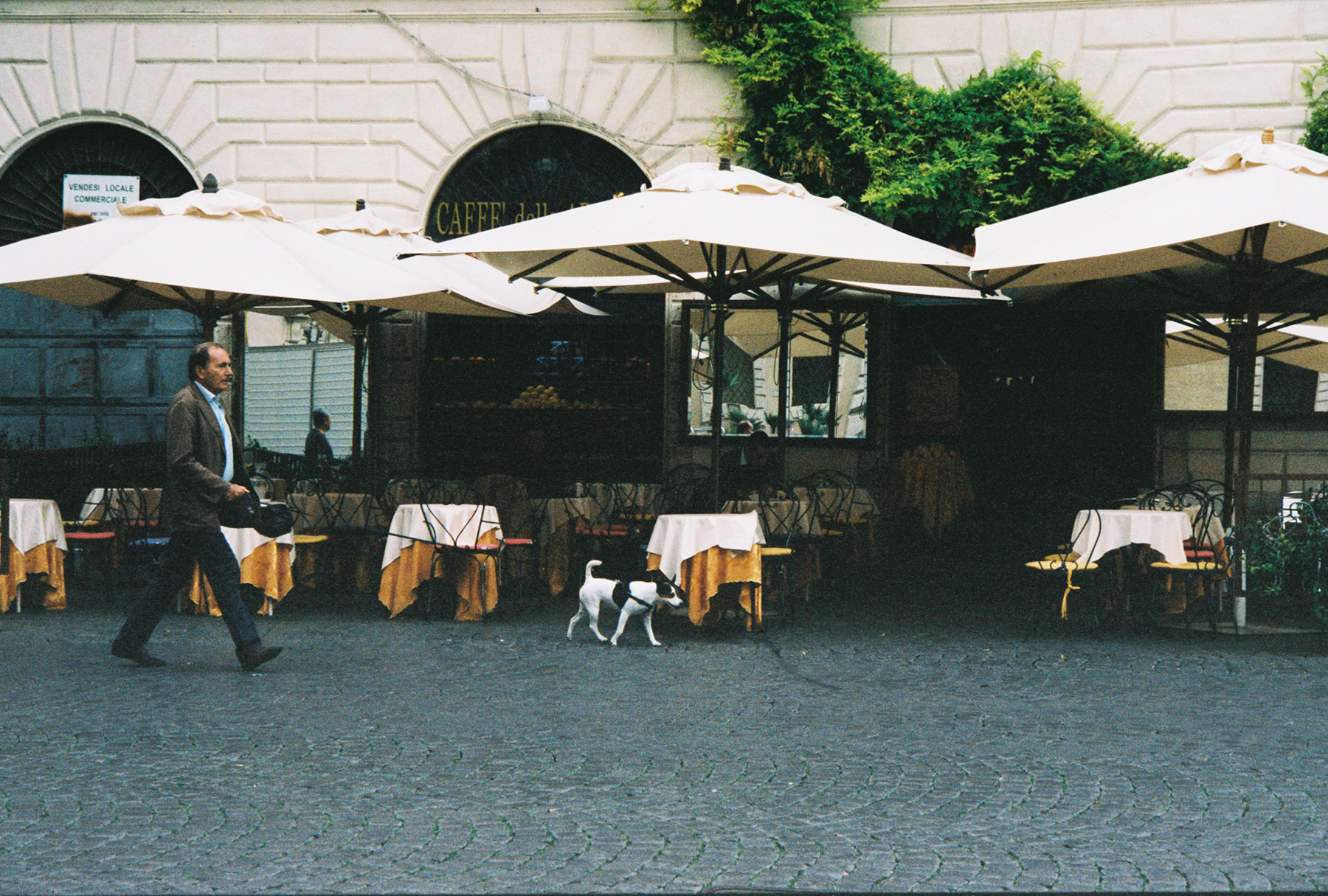
Man walking dog past a cafe – “Isn’t it a lovely scene?”
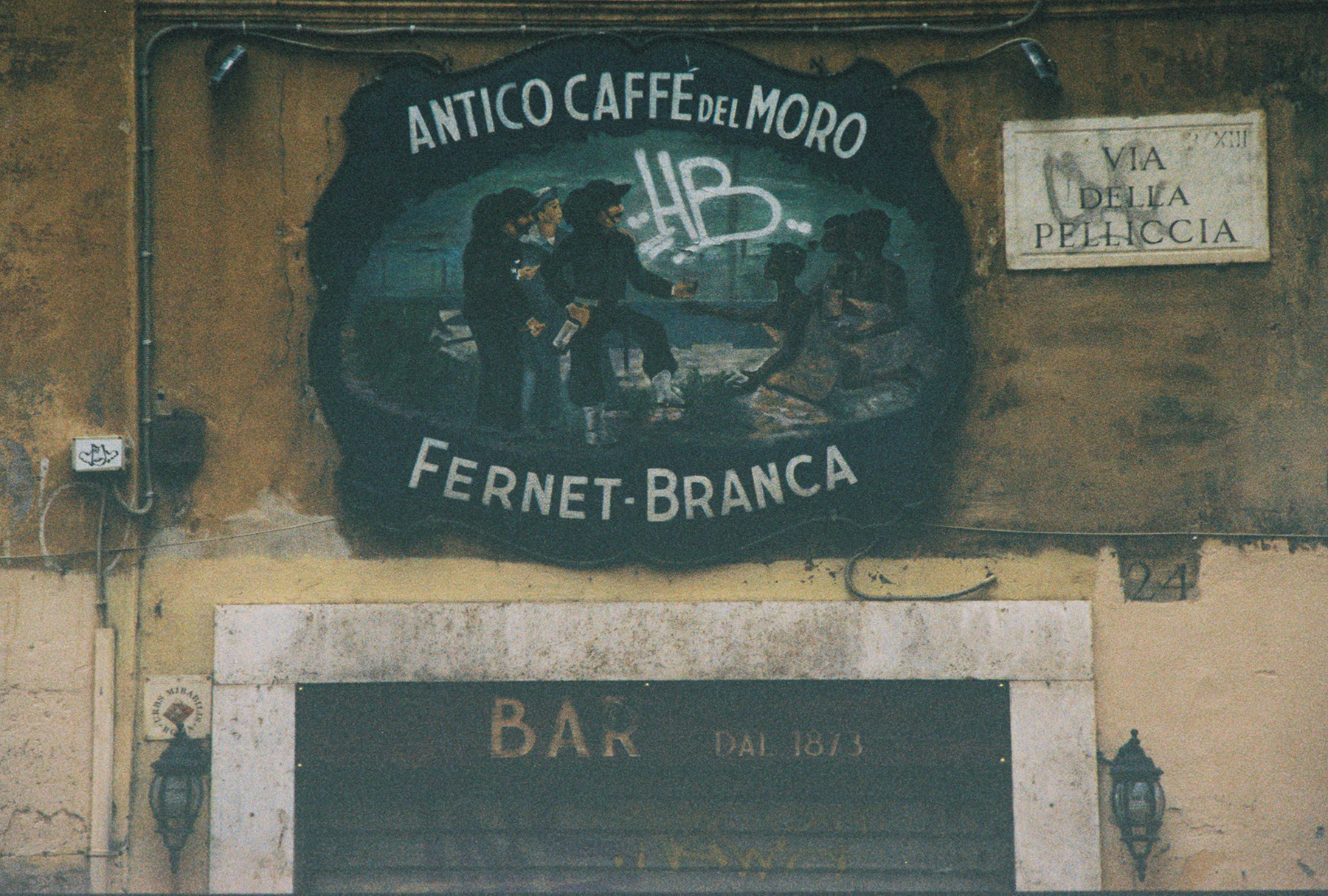
Coolest cafe sign ever. It’s always closed when I find myself in Trastevere unfortunately!
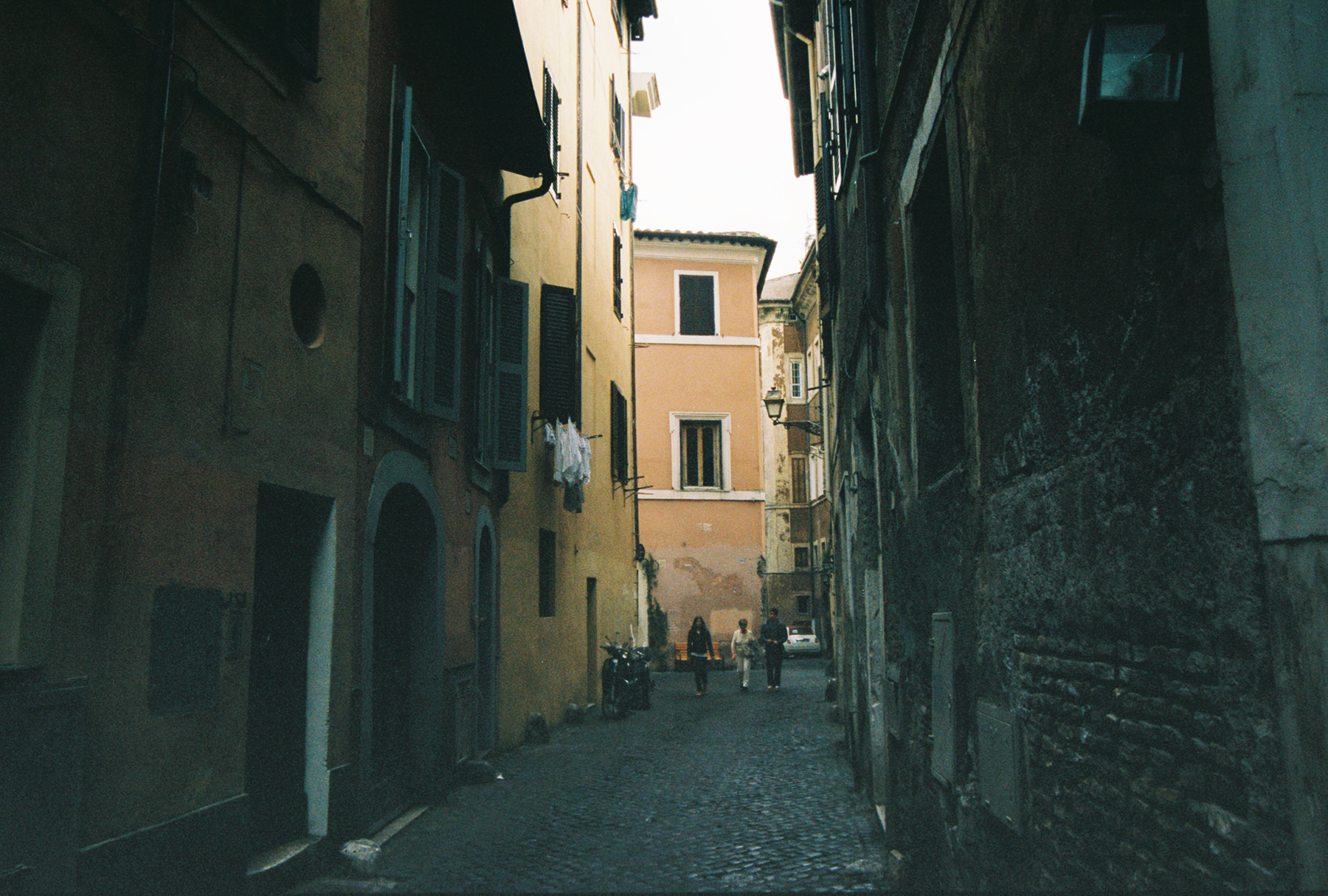
Yes, it IS a terribly romantic place to get lost in.
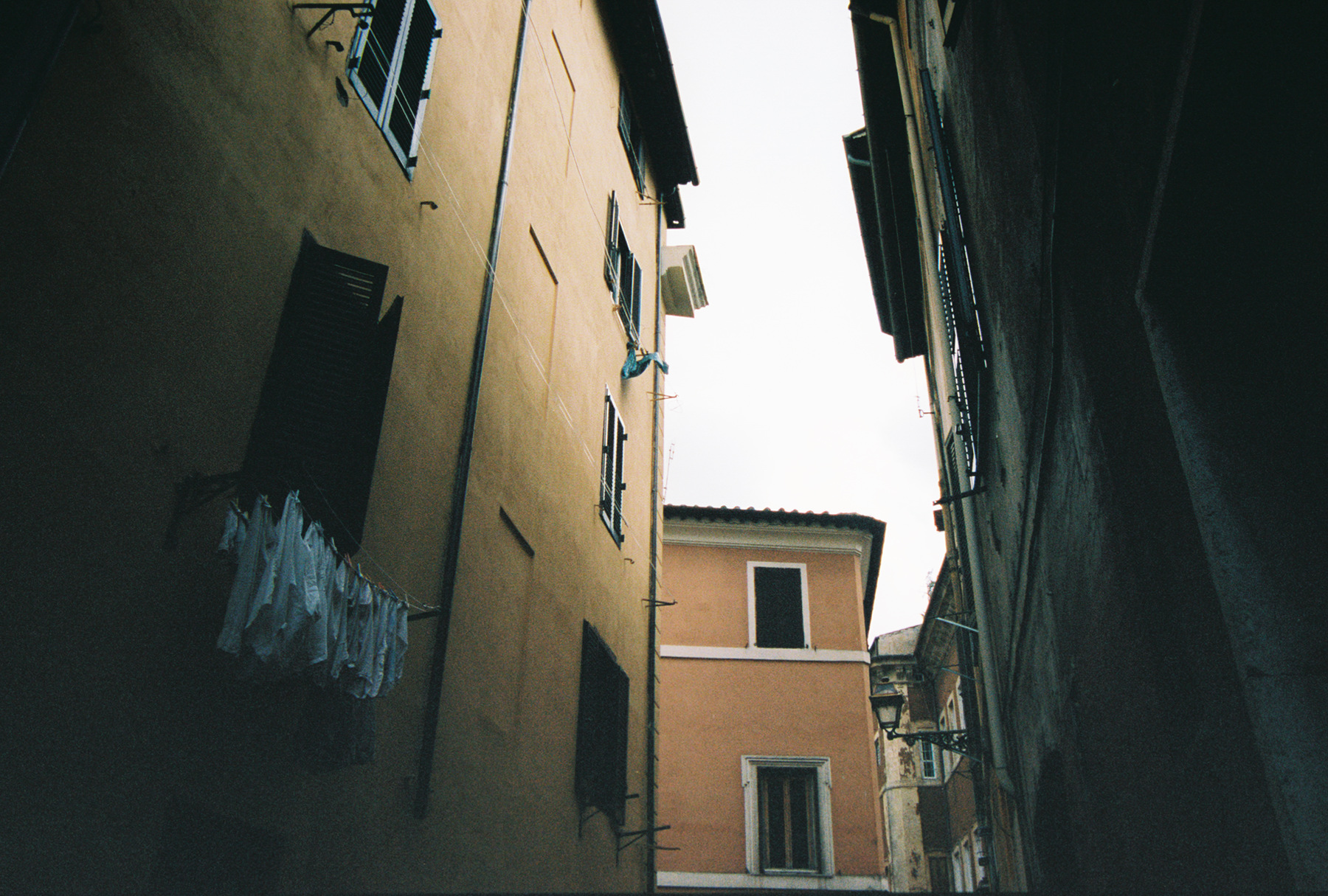
The requisite laundry shot because I never, ever, ever tire of those.
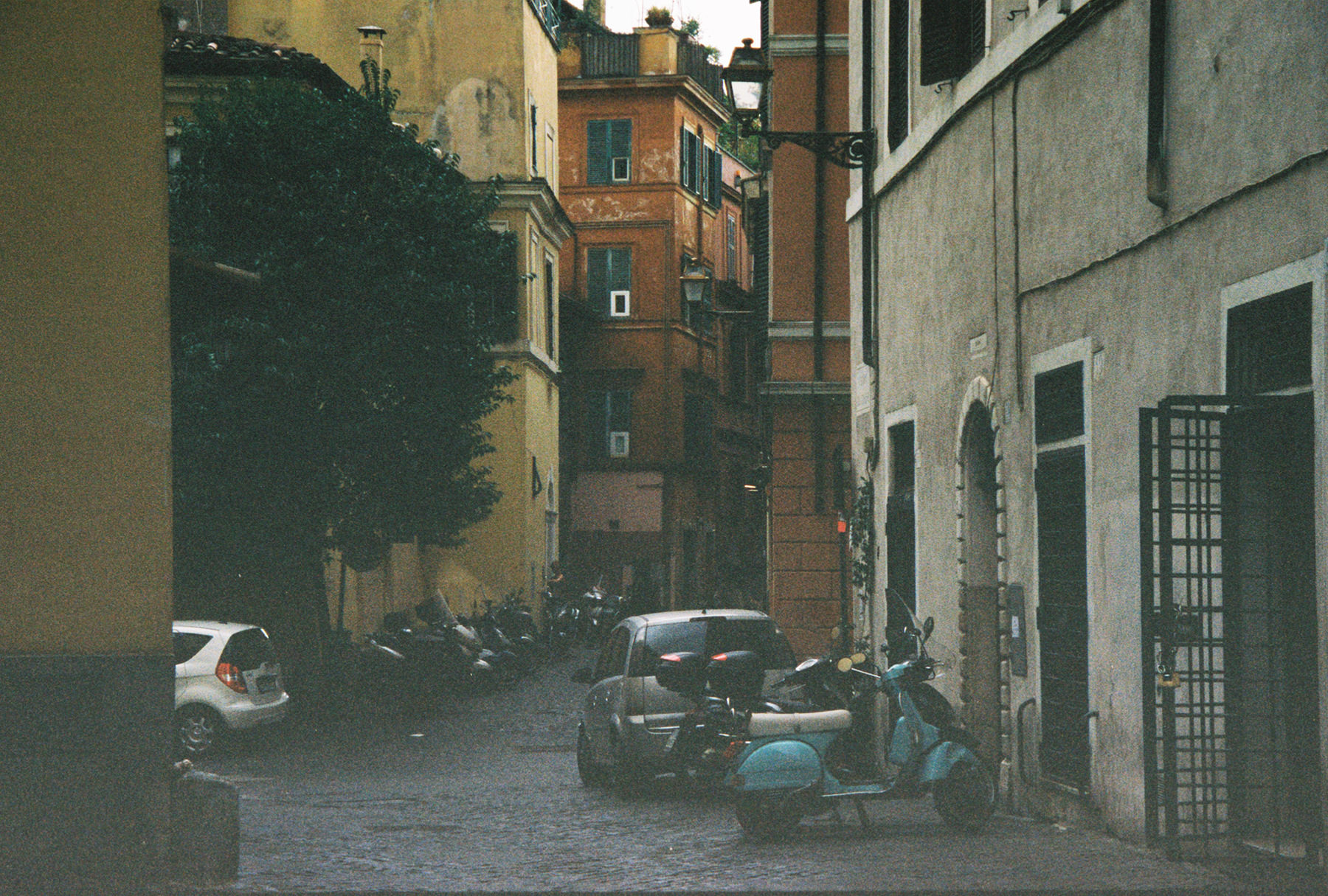
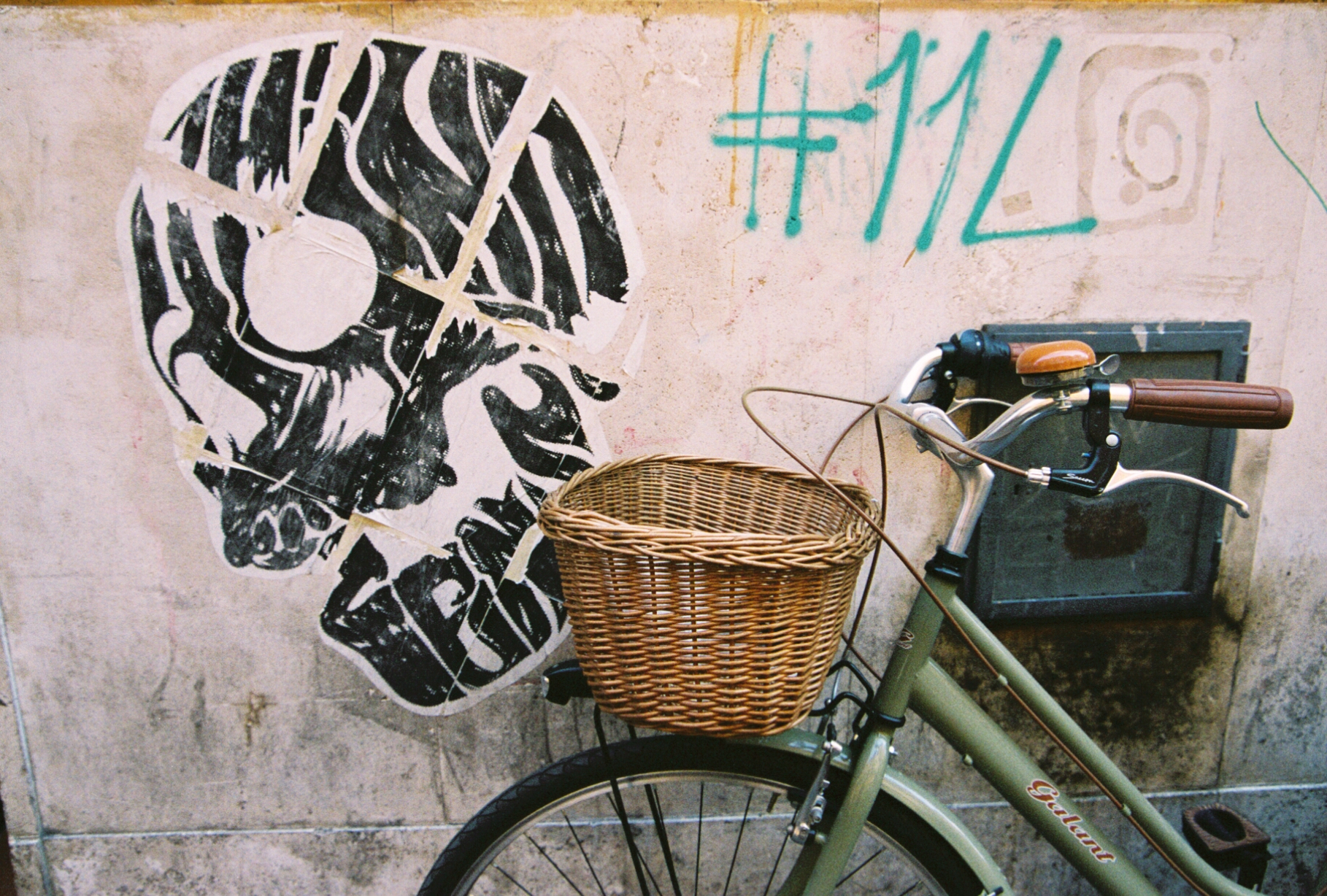
And a light blue vespa! It is Italy after all! It’s a requirement for any tour.
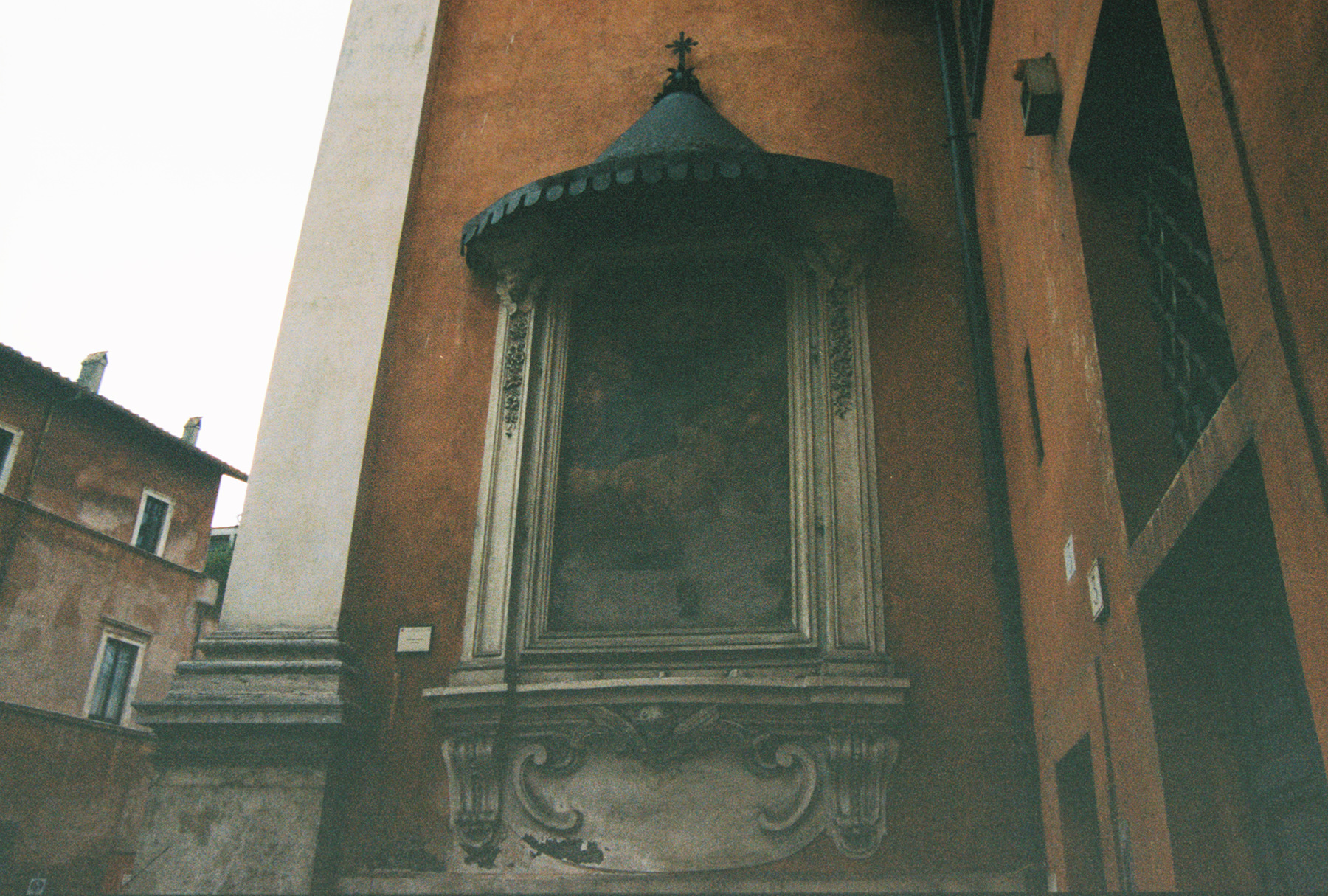
Rome – where the masterpieces are both outdoors and indoors for your viewing pleasure and contemplation. This is why I love the eternal city. It is made up of a thousand moments of aesthetic joy.
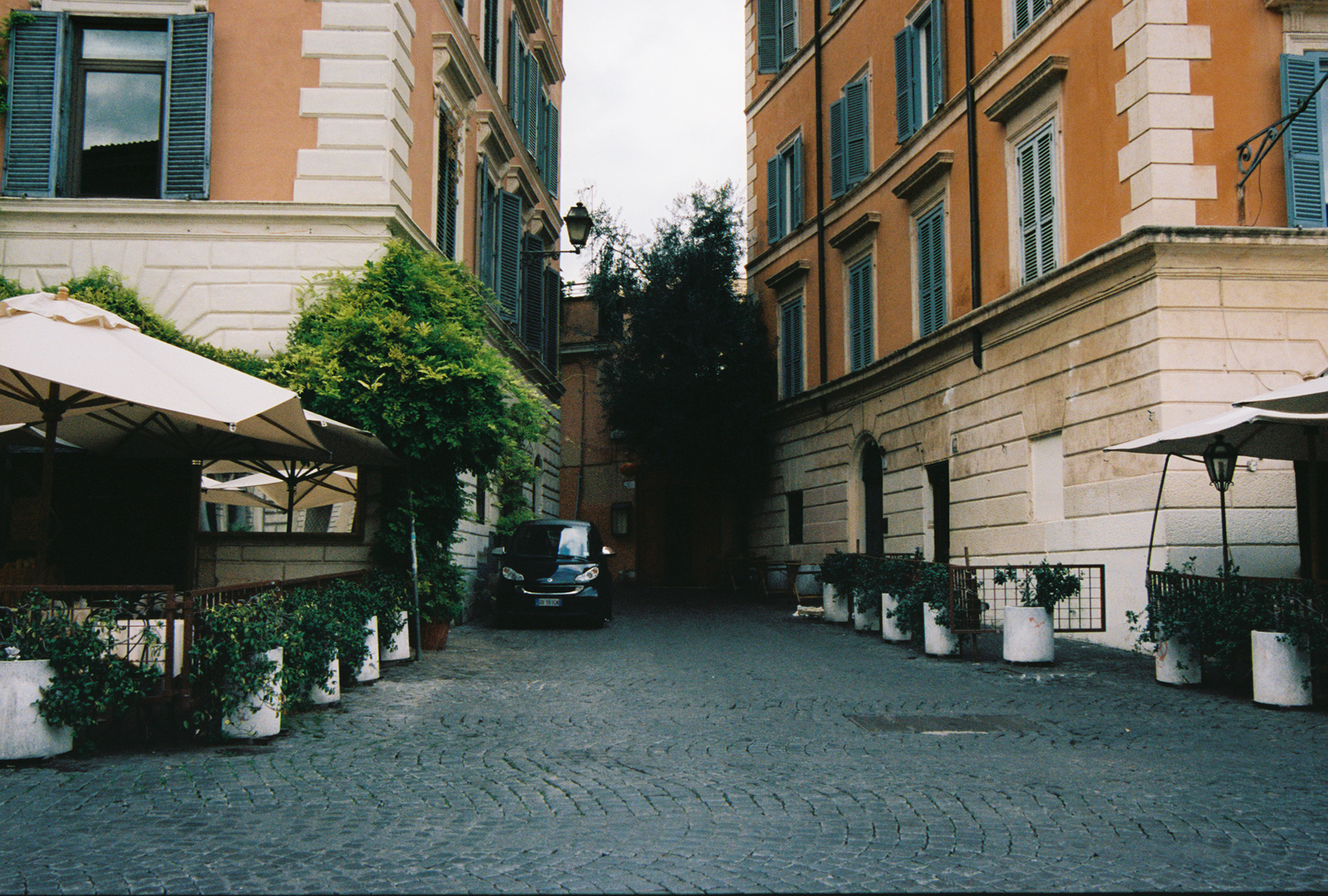
These were all shot on my 35 mm film camera on a dull, grey, rainy afternoon and still the color and hues shine through the haze!
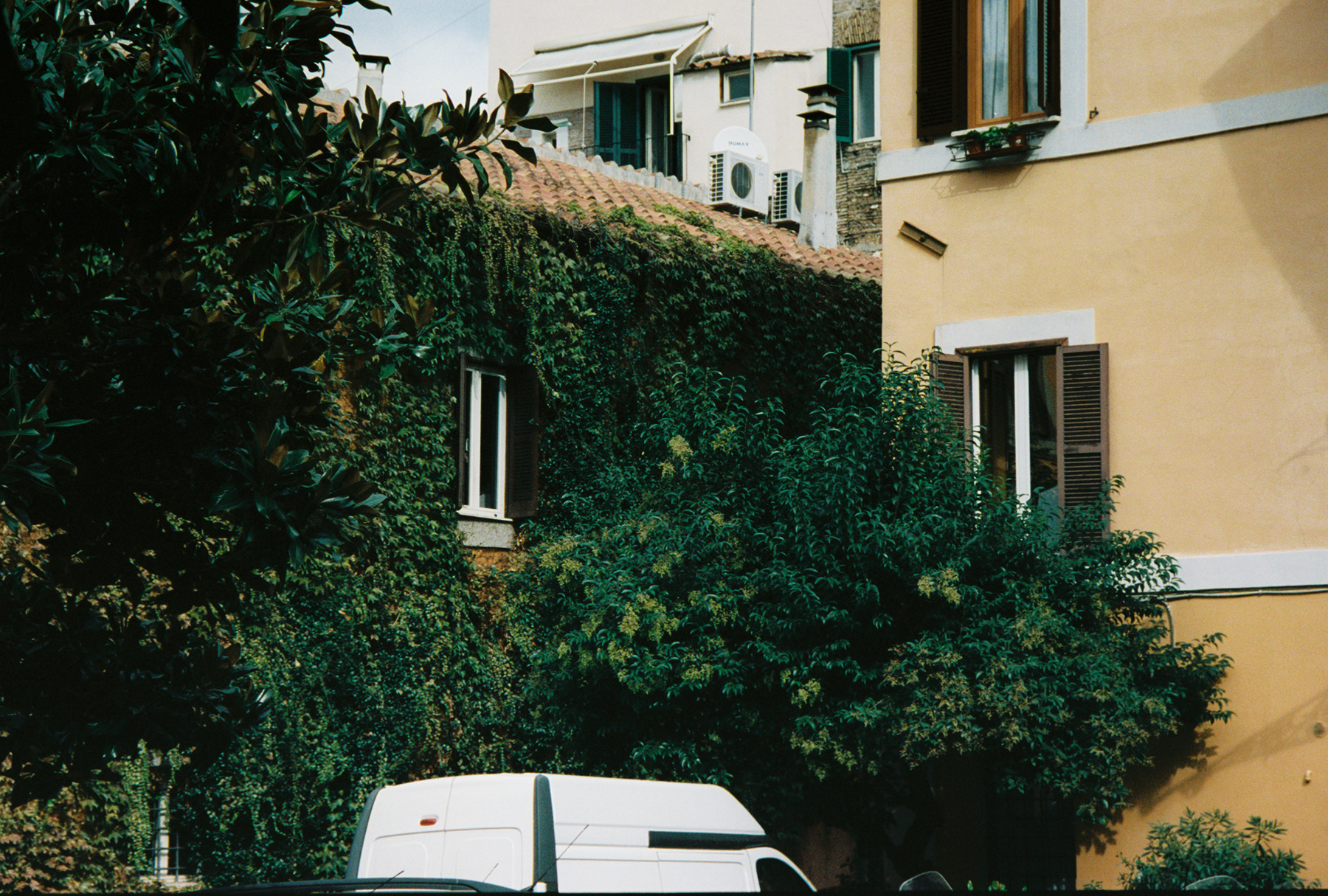
Just sequester me here to this flat with the garden-y window for a season or two… I will be happy. I’ll walk the streets in the morning, pop into churches and museums in the afternoon and sit Juliet style by this window at night.
I miss the village green,
And all the simple people.
I miss the village green,
The church, the clock, the steeple.
I miss the morning dew, fresh air and Sunday school.
And now all the houses
Are rare antiquities.
American tourists flock to see the village green.
They snap their photographs and say “Gawd darn it,
Isn’t it a pretty scene?”
-The Kinks
In relation to my choosing the very British provincial music quotes is a 10 year old video featuring the song and the very amazing Lord Whimsy.
 a love letter to rome