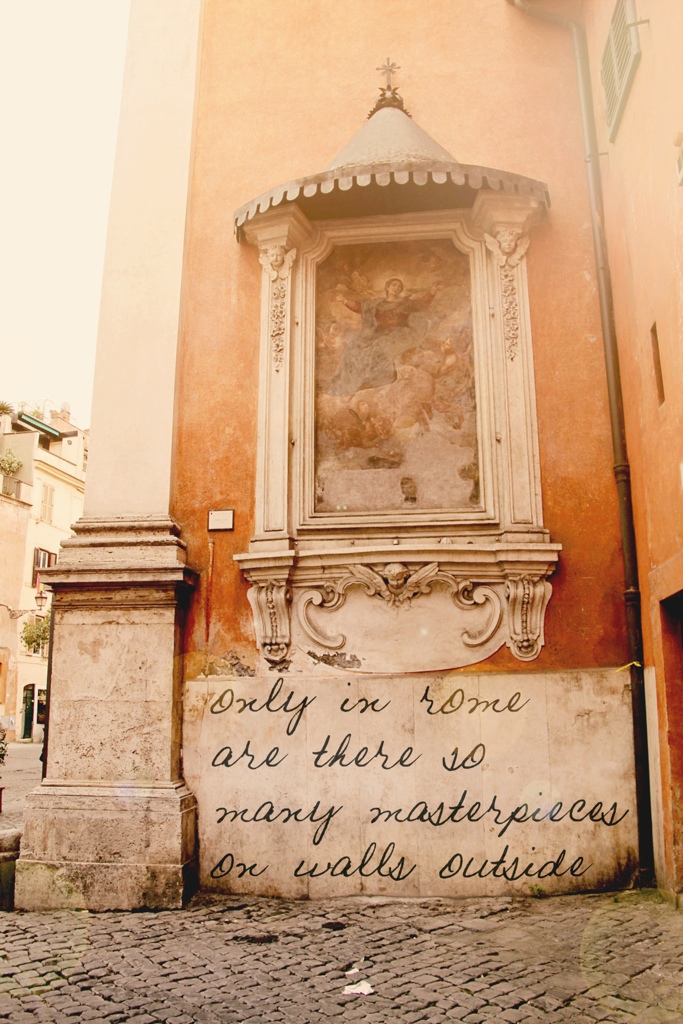
Only in Rome are there so many masterpieces outside on walls, tucked away in some private, unexpected corner of a quiet neighborhood.
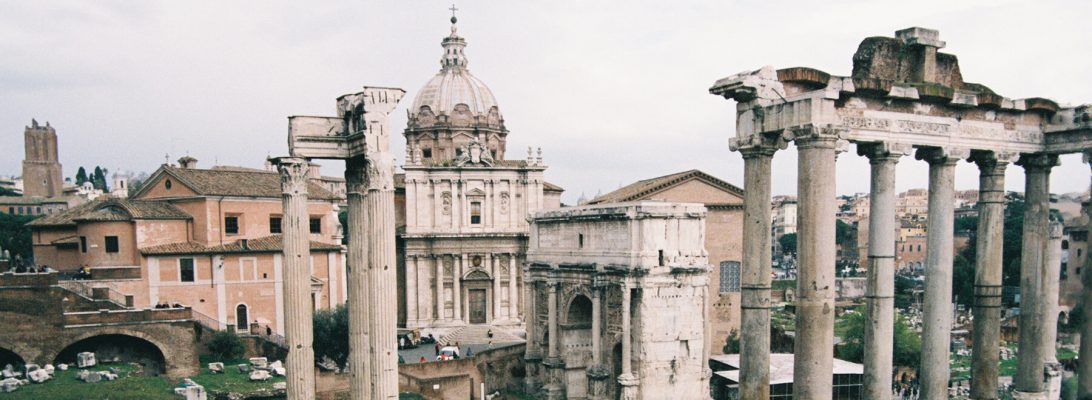
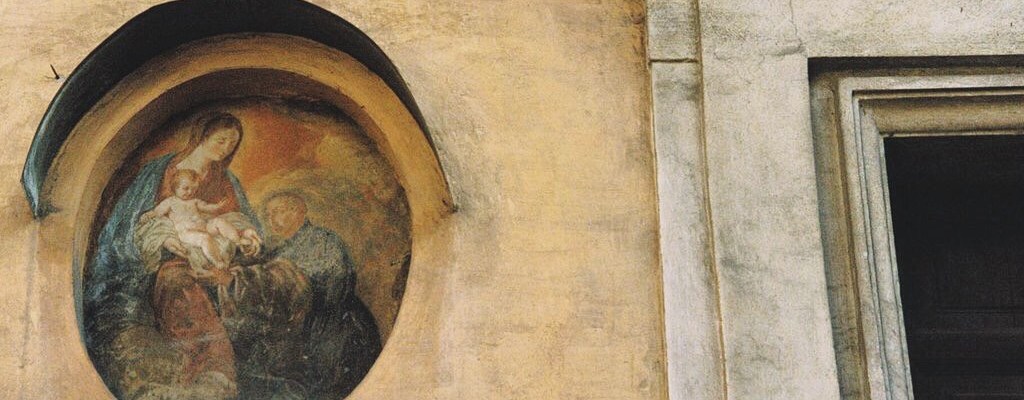
Only in Rome are there so many masterpieces outside on walls, tucked away in some private, unexpected corner of a quiet neighborhood.
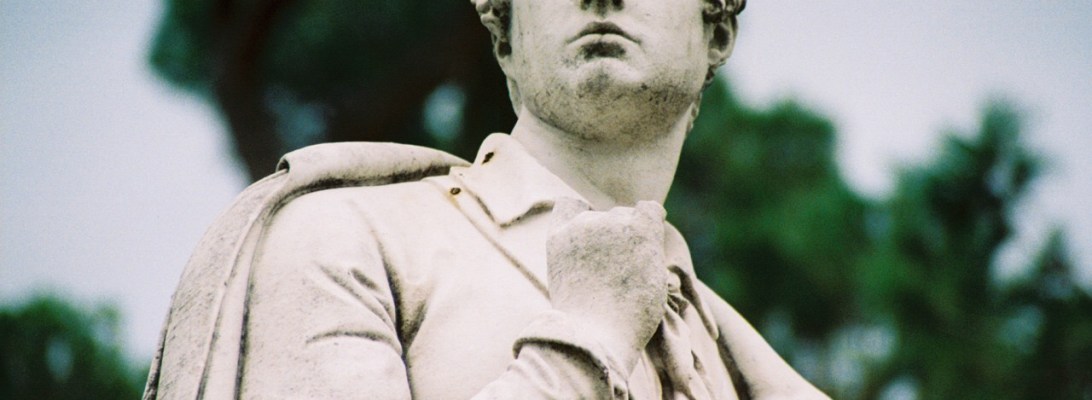
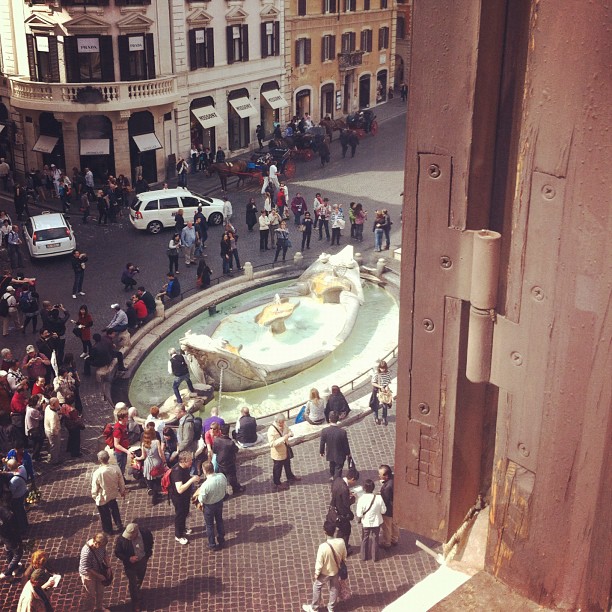
This is the view John Keats had of the world for the last months of his life. Once he was too sick to climb the Spanish Steps to the Pincian Hill view of the sunset over the piazza delle popolo and take in the sweeping view of the renaissance rooftops of cupolas, churches, houses and hotels of Rome – he had one final view, the Bernini fountain outside his room, at the end of his deathbed. He could hear the passersby and the fruit sellers. He could hear the horses hooves and the coaches. He could hear the rushing water of the fountain and smell the scent of the sweetest water in Rome. Sometimes he could drink it, a few shallow sips in a brief moment of respite.
I stood and looked out his window and took this shot with my phone. I stood there for ages alone and stared out the window and looked for John Keat’s ghost or a shadow of his memory, an imprint of him somewhere. I think I found him in the golden glow of dusk which touched everything in Rome for the last hour before sunset and made everything so pretty it hurt to lose it each night.
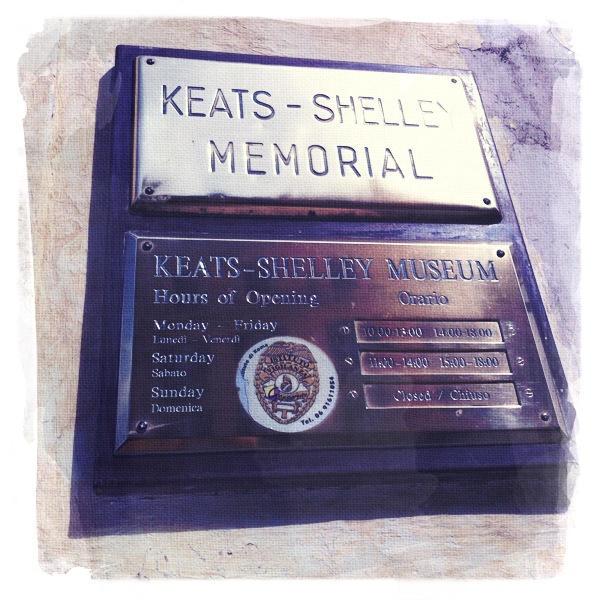
Keats’ Rome house is located at the Spanish Steps by the Bernini fountain.

A white rose I brought for John Keats’ Plaque near his grave on the wall to the left of the garden in the Testaccio neighborhood of Rome in the Non-Catholic Cemetery near the Pyramid of Cestius.

The annual/ bi-annual pilgrimage to the Protestant Cemetery never fails to give me chills when I read the epithet Keats intended for himself; Here lies One Whose Name Was Writ In Water.

“Forlorn! the very word is like a bell. To toll me back from thee to my sole self! Adieu!”
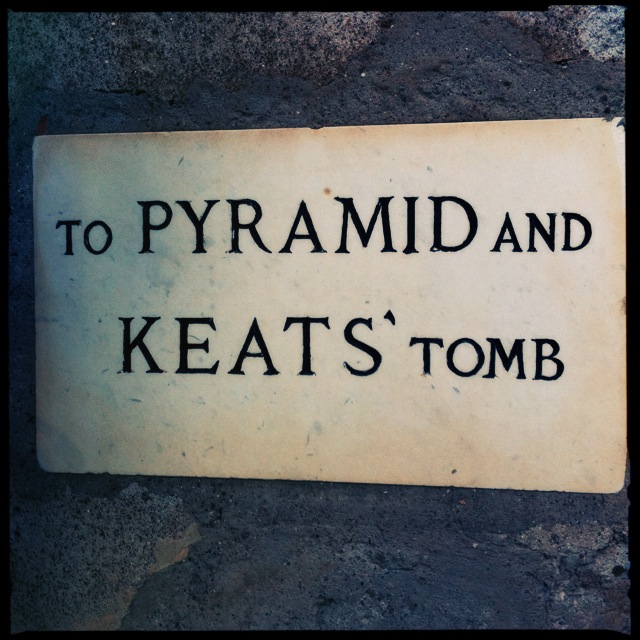
Each time I follow that sign it still feels like a mystery unfolding. No matter how many times I retrace my steps to the back garden, to the memory of him, it feels new again.

Really delicious prosecco at Caffe Greco, Rome, Italy, Oct 2012 (iPhone).
From the bar napkin I penned this:
Tonight I looked for Keats’ ghost.
Spotted Byron in the Borghese and heard Shelley was somewhere around the Villa Medici. Caught a glimmer of him.
Goethe kept a respectful distance when I passed him on the pincio.
Keats silently joined me somewhere on Via delle Magnolie. He slipped out from the shadows and fell into step with me. I felt him quietly by my side for the rest of the night.
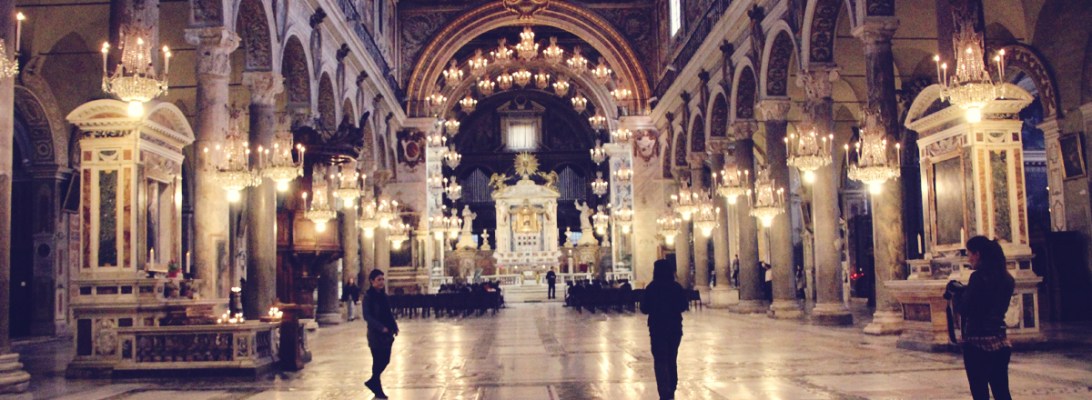
When I was last in Rome, in October, I spied the most beautiful chandeliers hanging from very old church ceilings throughout the city. The churches were built upon layers of history, starting from the ruins of pagan temples thousands of years ago, with places of worship erected piece by piece like a mosaic throughout the first whispers of a Christian Rome through the middle ages to the Renaissance. The Santa Maria in Ara coeli is on the capitoline hill in a foreboding, plain edifice hiding treasures of lights, stonework, faded marble, pillars from various eras, countless sarcophagi and dazzling chandeliers. The Santi Giovanni e Paolo is built on the ruins of the Roman saints John and Paul’s houses… and their remains, martyred in the 4th century. It boasts Byzantine flourishes, a coffered ceiling, gorgeous frescoes and a hushed, ancient stillness that hangs in the air. It was the first church to be built in Rome and has seen many facelifts and stylistic touches over a millennia.

Pillars from different centuries in Santa Maria in Ara coeli

Coffered ceiling and ornate interior in Santi Giovanni e Paolo

The imposing, numerous chandeliers of the Basilica of St. Mary of the Altar of Heaven, Basilica di Santa Maria in Ara coeli al Campidoglio.

Bright frescoes and peeling paint over faded stone and wood in Santi Giovanni e Paolo. The chandeliers appear even more elegant against a faded backdrop.
The churches are particularly breathtaking in person. They remind me of the somber prayers and cries heard in these walls over centuries of visiting pilgrims and faithful Romans alike. The splendor of the chandeliers and the art work only add to the sense of contemplation I feel wash over me whenever I enter their doors. I am an outsider on the one hand and a product of Judeo-Christian thought on the other by my very life in the western world. In America. Because of my Catholic and Protestant émigré forbears.
As the daughter of lapsed catholics, I was not raised with church but with the talk of God and conversely, the discussion of “no god” growing up. There were stories of gods and theories of prime movers or nature or the impersonal universe as the sources of mankind. There was the appeal of ens causa sui, being one’s own cause. There was also the fear of that idea. So many ideas whirled around me in the conversations of adults. Nothing was ever formed, nothing was concrete. Life was fluid. Beliefs were temporary lapses of judgement. The mystery of the unknown barred an anchor, yet my openness to all possibilities was also a kind of freedom.
What a delicate balance in life we all lead.
I still don’t know the answer to any of these big questions, or the Big Question, but I feel a subtle change, a quiet shift take over within me, in the quiet corners of Rome. In the buildings made of stone and marble, under the statues and paintings. When I enter into the symbolism of the stories, when I breathe in the heavy air of history, something fills my imagination whilst I am there and it’s hard to move away from it. It never really leaves me. Old chapel or cathedral, broken temple, an all but vanished sacra, an altar of astronomy and science or art – they are all my churches.

This small church, also known as Santa Barbara alla Regola, after the district in which it is situated, was founded, in the 11th century, in the ruins of the Theatre of Pompey. (It was in an annex in the gardens of the Theatre of Pompey that Julius Caesar was assassinated).
Saint Barbara of the Books, Rome, Italy. 186 Largo dei Librai

The church is just off Via dei Giubbonari between Campo de’Fiori and Piazza Cairoli.

This is a small but absolutely stunning church. It’s definitely an off the beaten path small church. One minute you are walking through a charming neighborhood, the next moment your turn the corner and are stopped in your tracks by this glorious architecture. It looks surreal – a tiny church stuck between houses and a yogurt gelato shop. It’s worth a stop, a snapshot and a walk up past the perfect olive trees into the doorway for a look around the interior. The video below is a literal film walk through the church. Armchair travel at it’s finest.
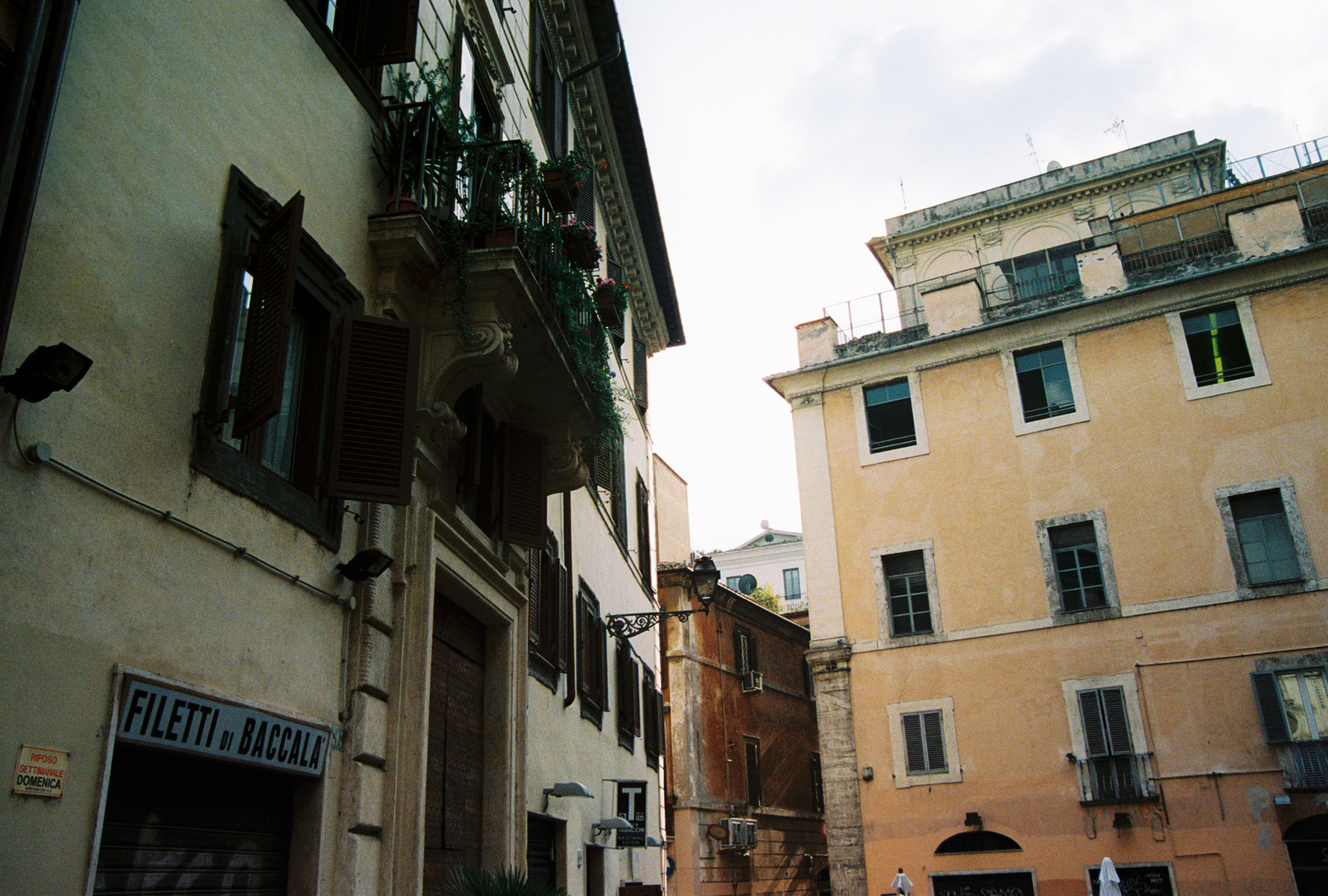
//photographs copyright rebecca price butler …
find my work on tumblr & pinterest … please link & credit me. (photographs: portra 400 35mm film)
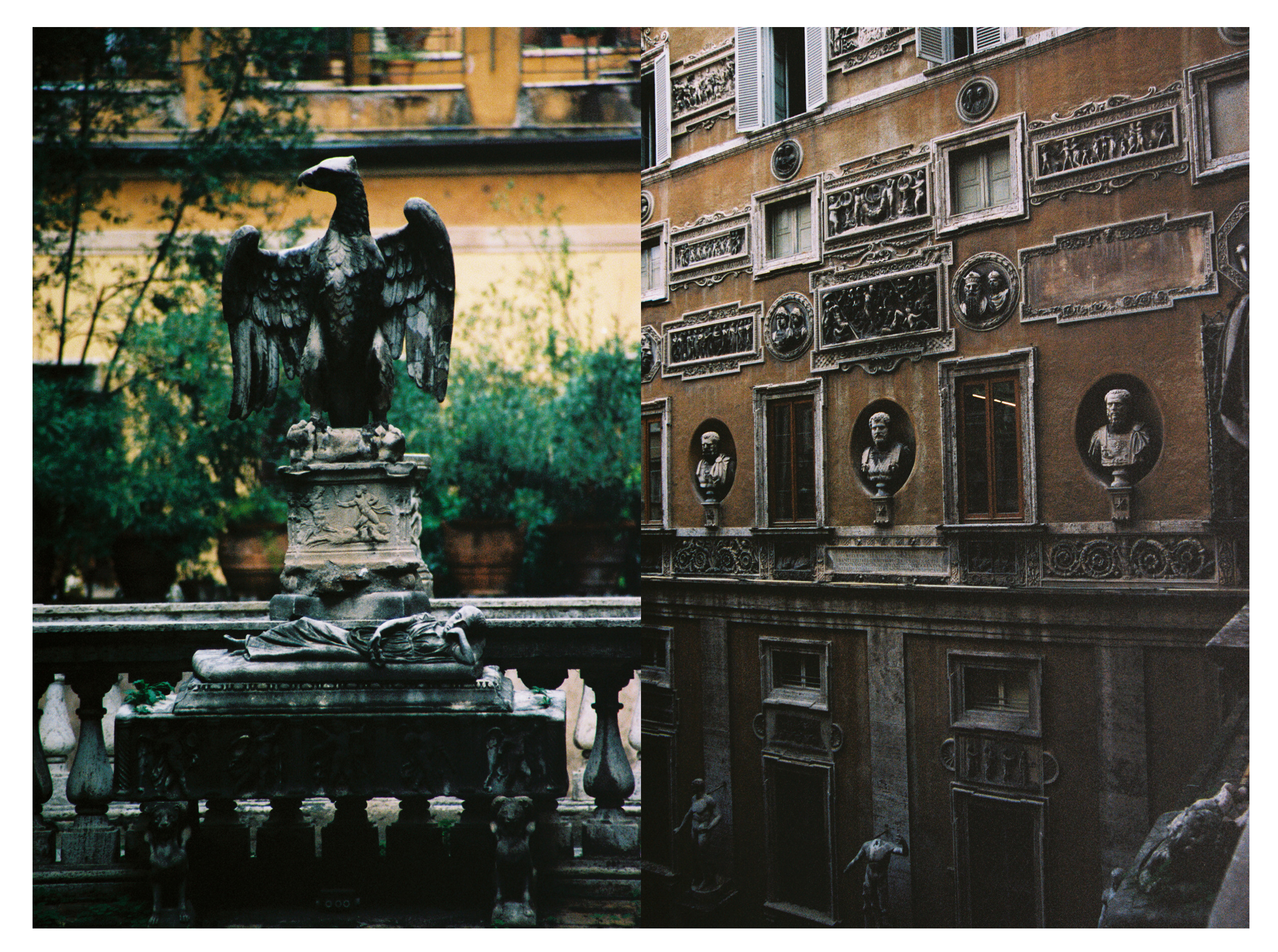
The Palazzo Mattei di Giove ,Via Michelangelo Caetani 32, other entrance in Via dei Funari, Ghetto, Rome, 00186
Last year I decided on our two visits to Rome I wanted my husband and I to spend some time hunting for off the beaten path spots we’ve not yet visited. I picked up some new books on the subject, City Secrets of Rome by Robert Kahn and Quiet Corners of Rome by David Downie. Upon seeing photographs of this amazing place I had to see it for myself. We started out having a splendid lunch at the Campo di Fiori after picking up gifts and alla’arrabbiata and carciofi alla romana spices at the charming outdoor market. We stopped, as is our custom, under the Bruno statue to pay respect and read the inscription,
A BRUNO – IL SECOLO DA LUI DIVINATO – QUI DOVE IL ROGO ARSE
(English: To Bruno – the century predicted by him – here where the fire burned).
We walked to the Jewish Ghetto section of Rome (an ancient and fascinating section of the city with a complicated history). We had to ask directions several times and still walked by the spot a few times. But, we found the Palazzo Mattei di Giove and it was worth the effort.
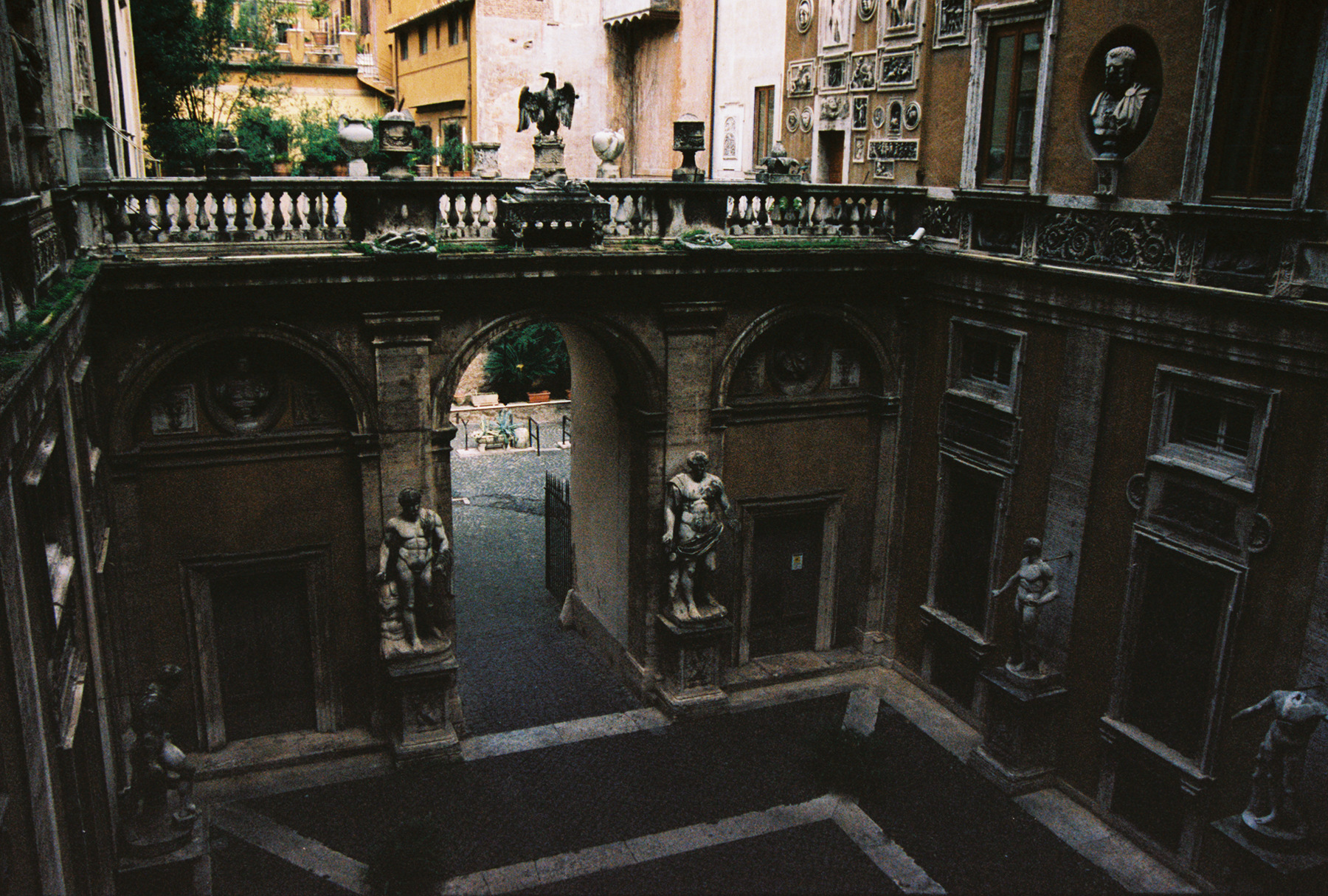
Mattei di Giove, designed by noted baroque architect Carlo Maderno—who also designed the facade of St. Peter’s Basilica—teems with busts, bas-reliefs, and sarcophagi collected by the palazzo’s namesake owner, Marchese Asdrubale Mattei. (Info source: National Geographic Traveler)
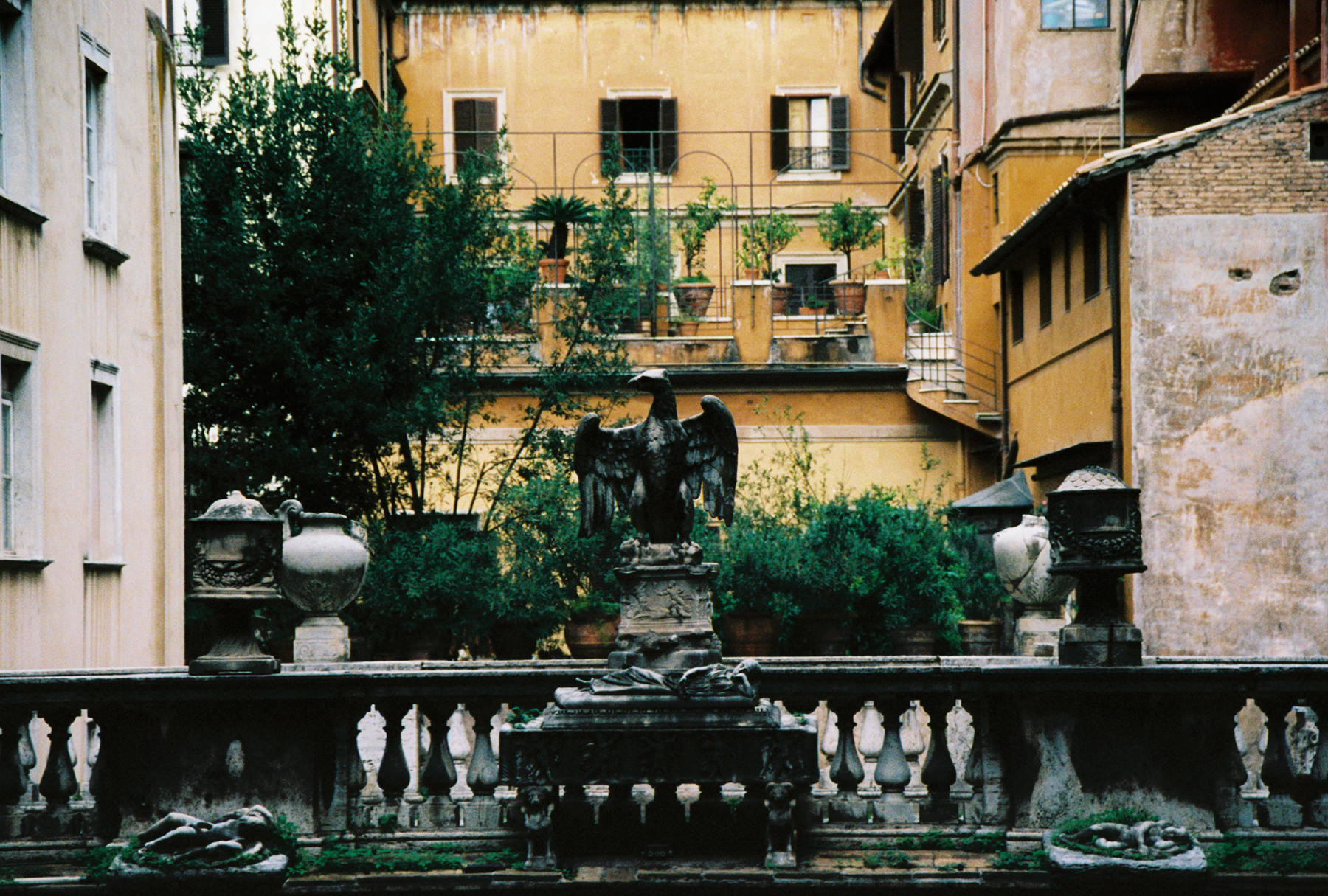
The House of Mattei was one of the most powerful noble families of Rome during the Middle Ages and early modern era, holding high positions in the papal curia and government office.
The Palazzo Mattei di Giove is the most prominent among a group of Mattei houses that forms the insula Mattei in Rome, Italy, a block of buildings of many epochs.
To distinguish this section from the others it carries the name of a Mattei fief, Giove. The Mattei owned a number of other palazzi that carried the family name including Palazzo Mattei di Trastevere across the Tiber as well as properties in Umbria, the Palazzo Mattei Paganica.
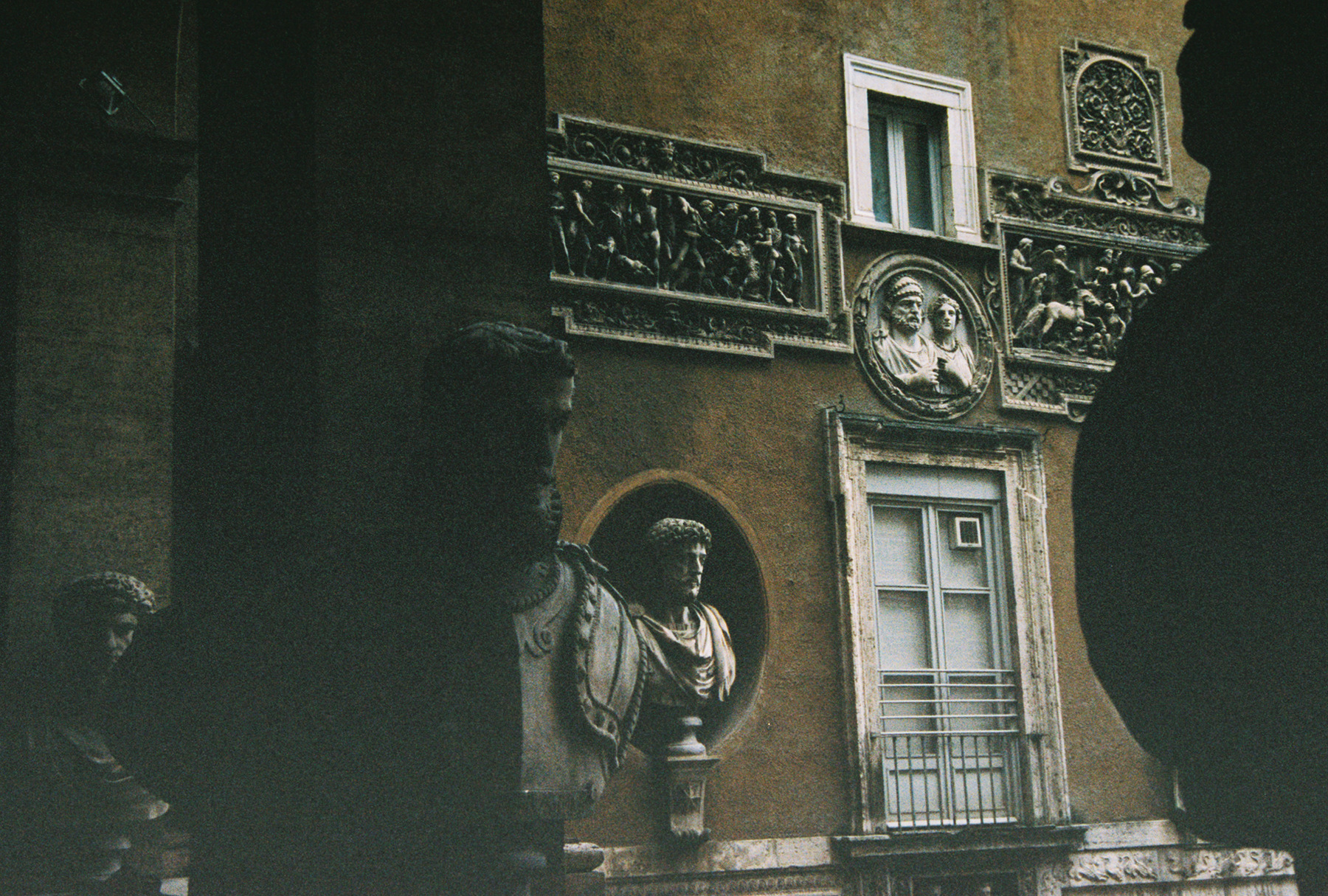
Carlo Maderno designed the palace at the beginning of the 17th century for Asdrubale Mattei, Marquis di Giove and father of Girolamo Mattei and Luigi Mattei. He was also the brother of Ciriaco Mattei and Cardinal Girolamo Mattei. It was Maderno who was responsible for the extravagantly enriched cornice on the otherwise rather plain stuccoed public façade, the piano nobile loggia in the courtyard and the rooftop loggia or altana.
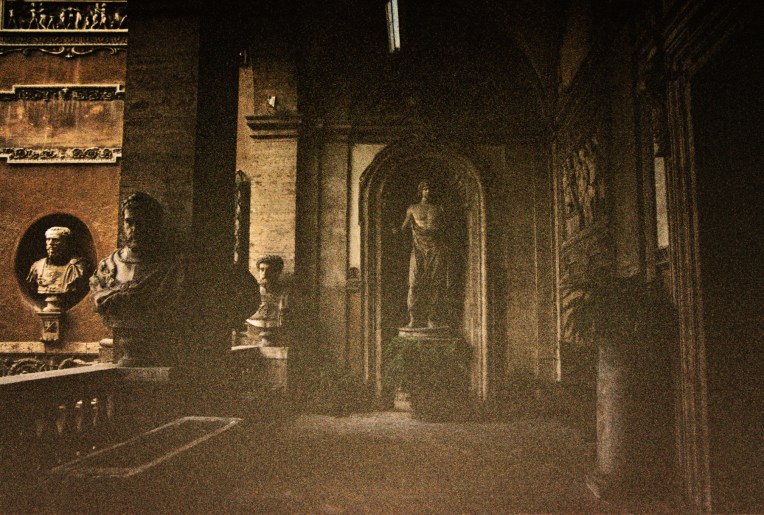 For the interior of the palazzo, Pietro da Cortona was commissioned to execute the pair of compositions on the ceiling of the gallery, dating before 1626. In the early 19th century, a group of paintings from the collection at the palazzo was purchased by William Hamilton Nisbet and removed to Scotland.
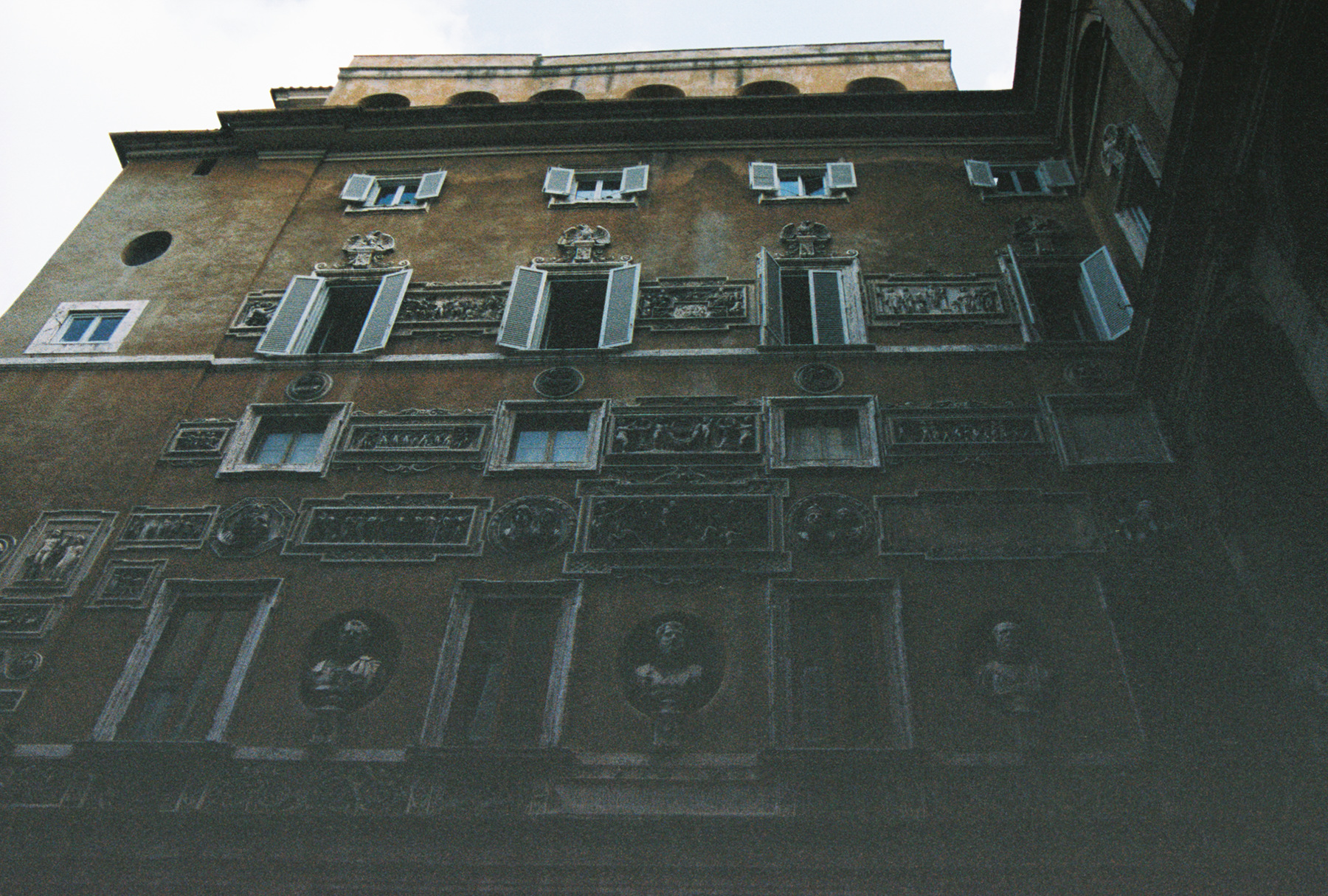
Like others of the Mattei family, Asdrubale Mattei was an enthusiastic patron of the arts. Michelangelo Merisi da Caravaggio (better known simply as Caravaggio) is recorded as living at the palazzo in 1601. (source: Wikipedia)
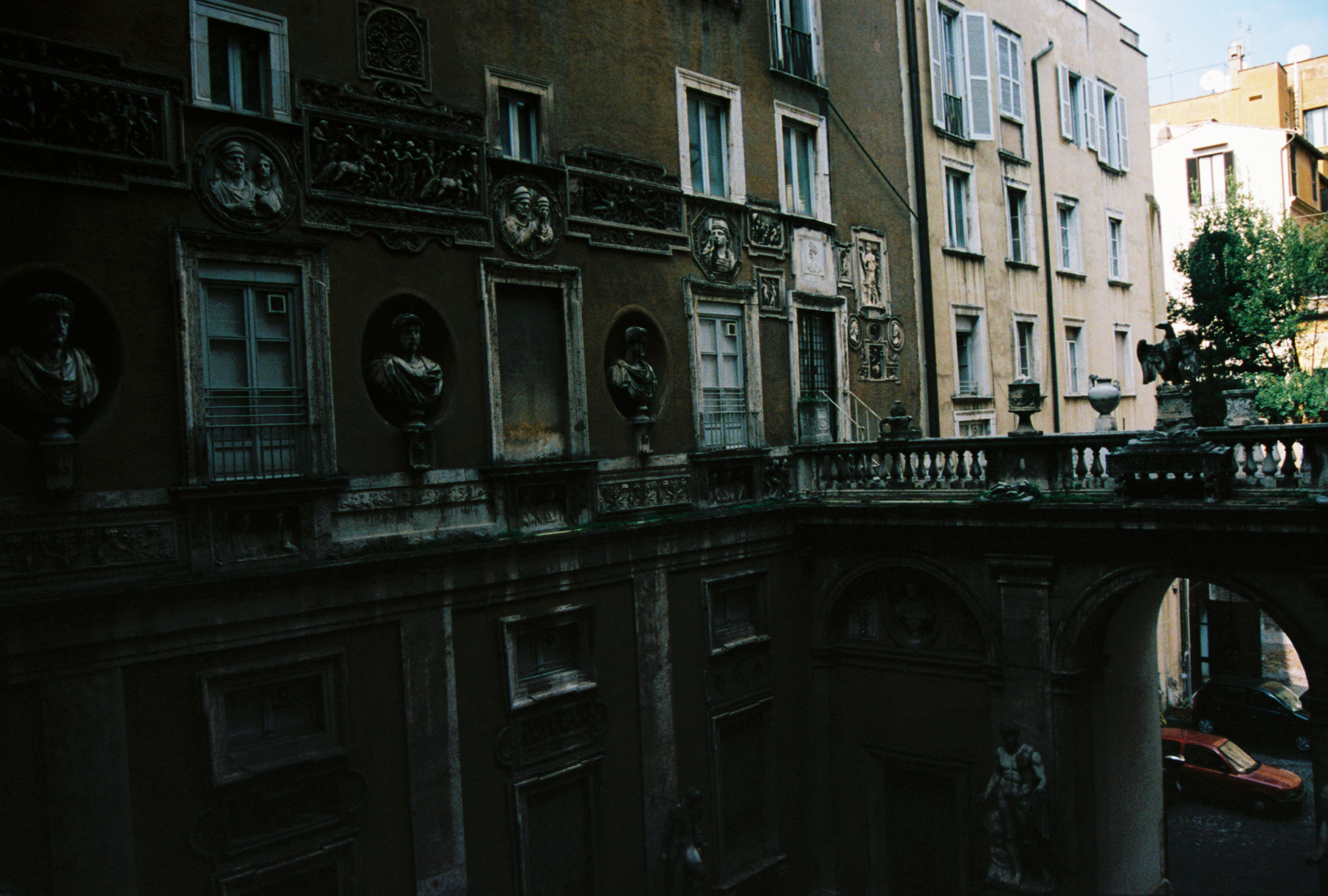
The loggia and architectural details are exquisite. This is the kind of place you see in sweeping vintage films set in Rome, the kind of place you read about in the Grand Old Tour by classically educated travelers from the 18th and 19th century. The students who spend time here are so lucky.
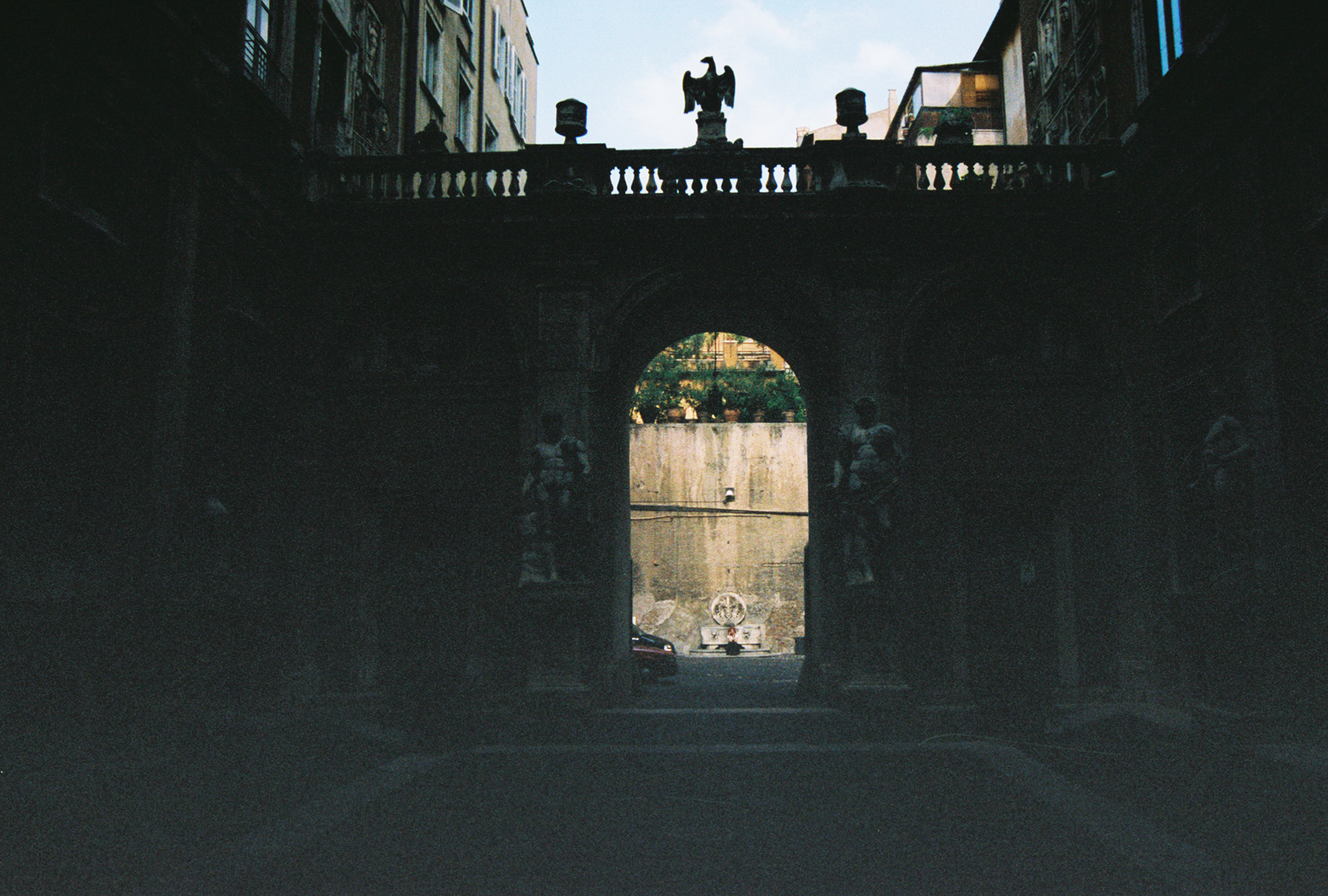
There’s not a corner or ledge that is not interesting. If you visit make sure to view the whole courtyard and go upstairs to the top terrace.

Go through the arched “doorway” in between the large statues, underneath the carved lamp.
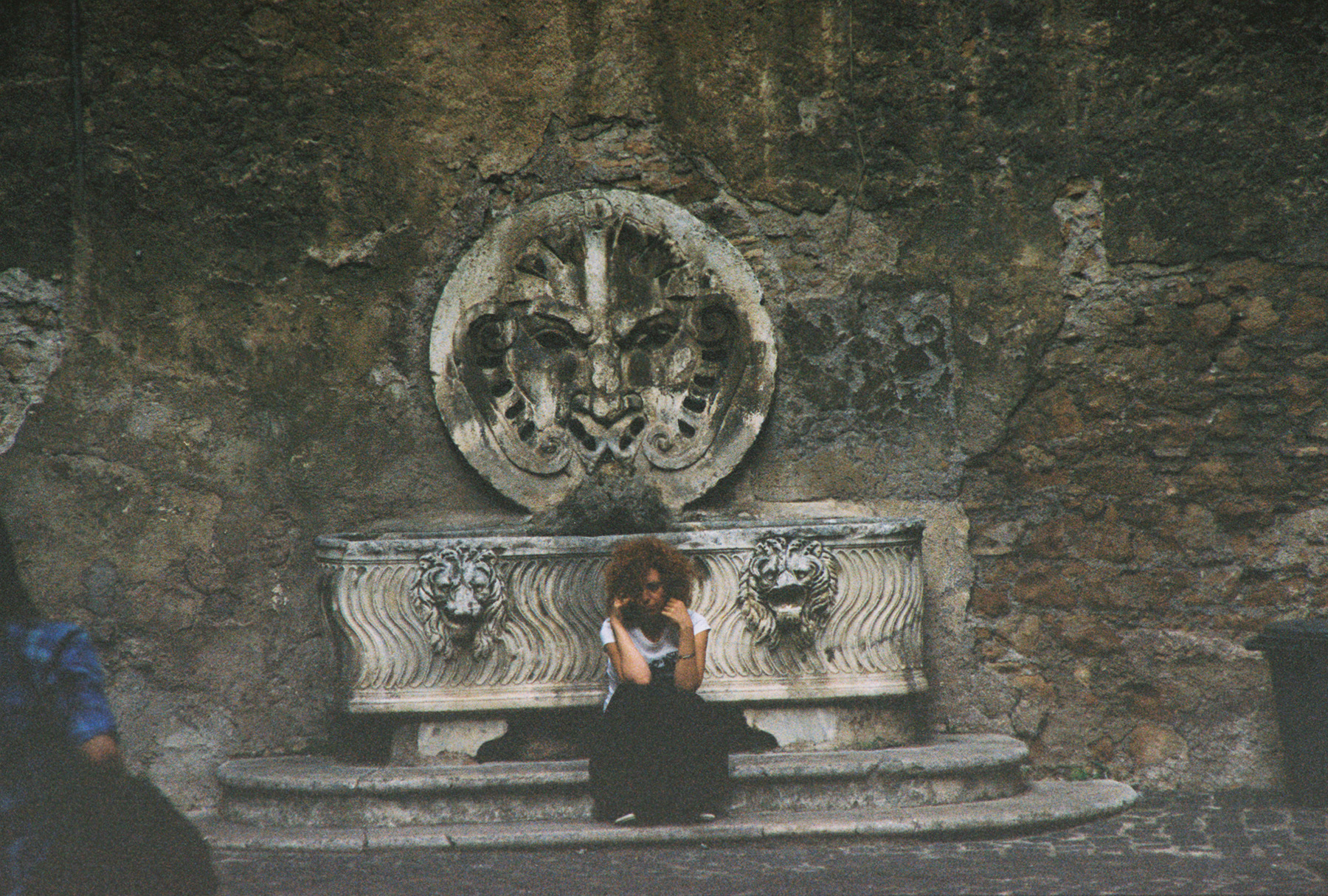
Across the small cobblestone road is an ancient fountain and face sun dial with beautifully carved in stone.
//photographs copyright rebecca price butler …
find my work on tumblr & pinterest … please link & credit me.

The Villa Farnesina is an early 16th century Renaissance suburban villa in the Via della Lungara, in the district of Trastevere in Rome, central Italy. It has incredible frescoes by Raphäel, Sebastiano del Piombo, Giulio Romano, and Il Sodoma. The villa was built for Agostino Chigi, a rich Sienese banker and the treasurer of Pope Julius II. It was later purchased by Cardinale Farnese (future pope and brother to the Borgia mistress, Giulia Farnese).
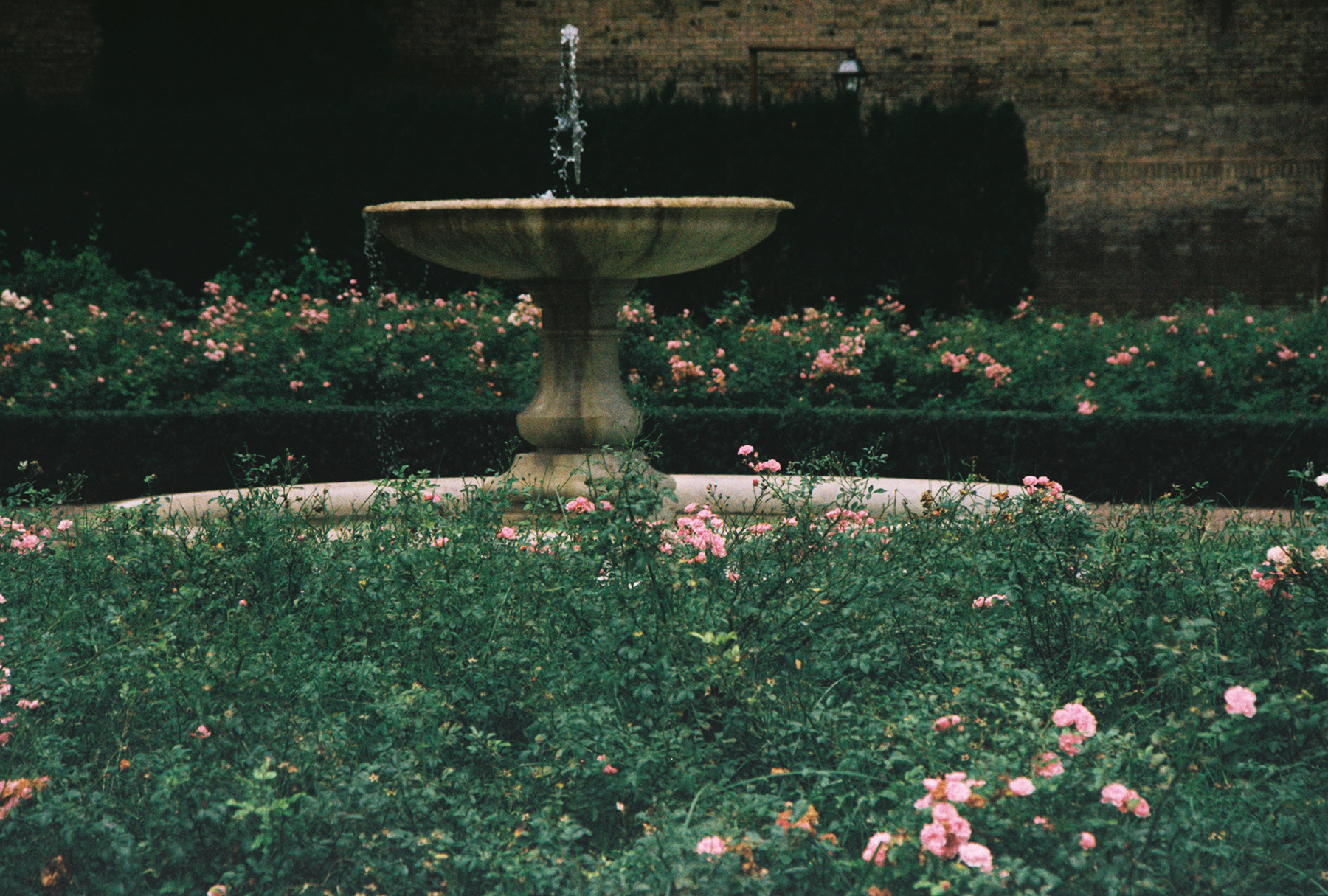
I had always missed visiting the lovely Villa Farnesina on earlier trips to Rome so I was delighted to finally see it in person in October 2012. The villa has a pretty little garden in the courtyard and larger gardens (fenced off) on one side. There is an understated elegance to the grounds and exterior architecture for a Renaissance palazzo. There are pink roses and pomegranate trees in clay pots.
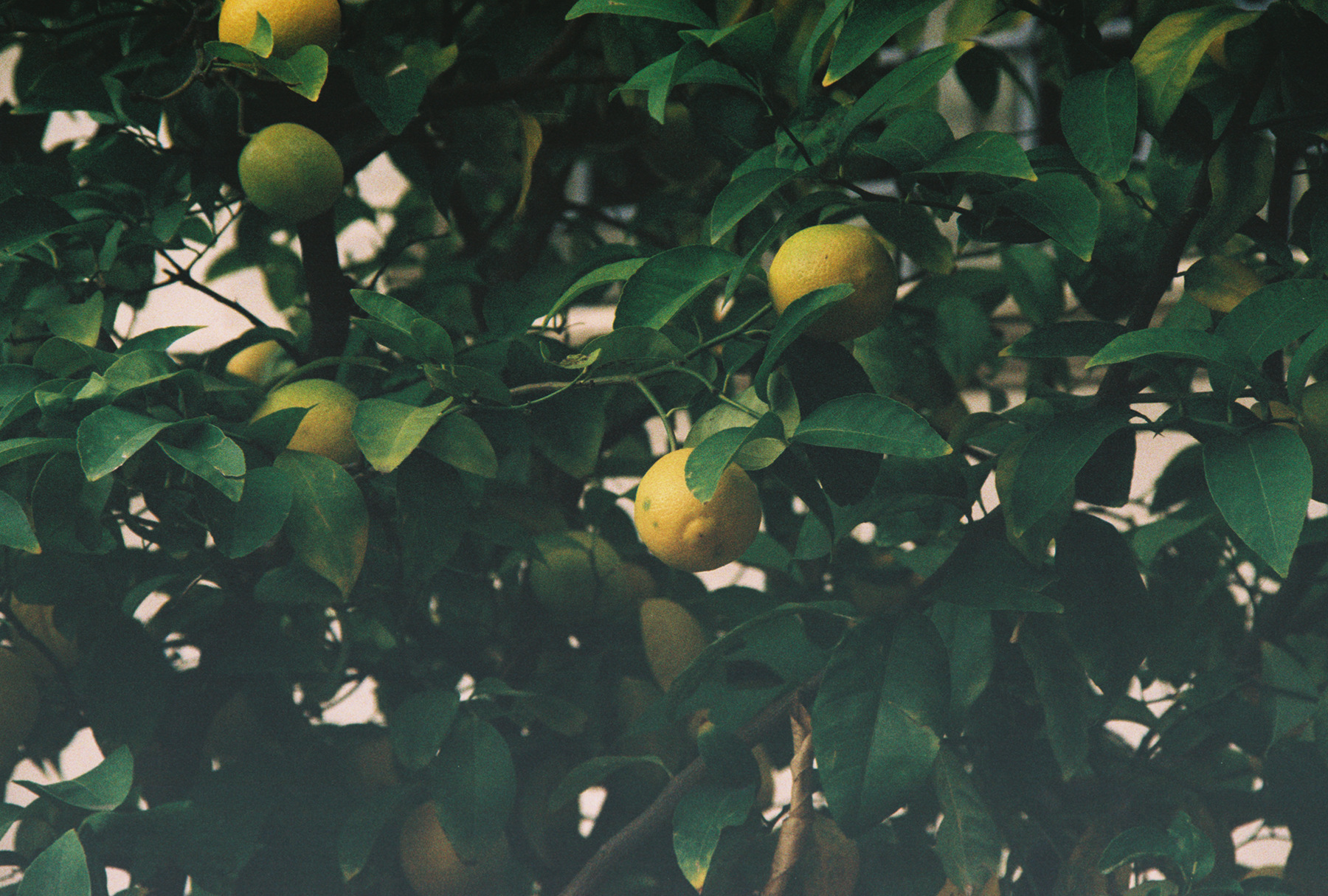
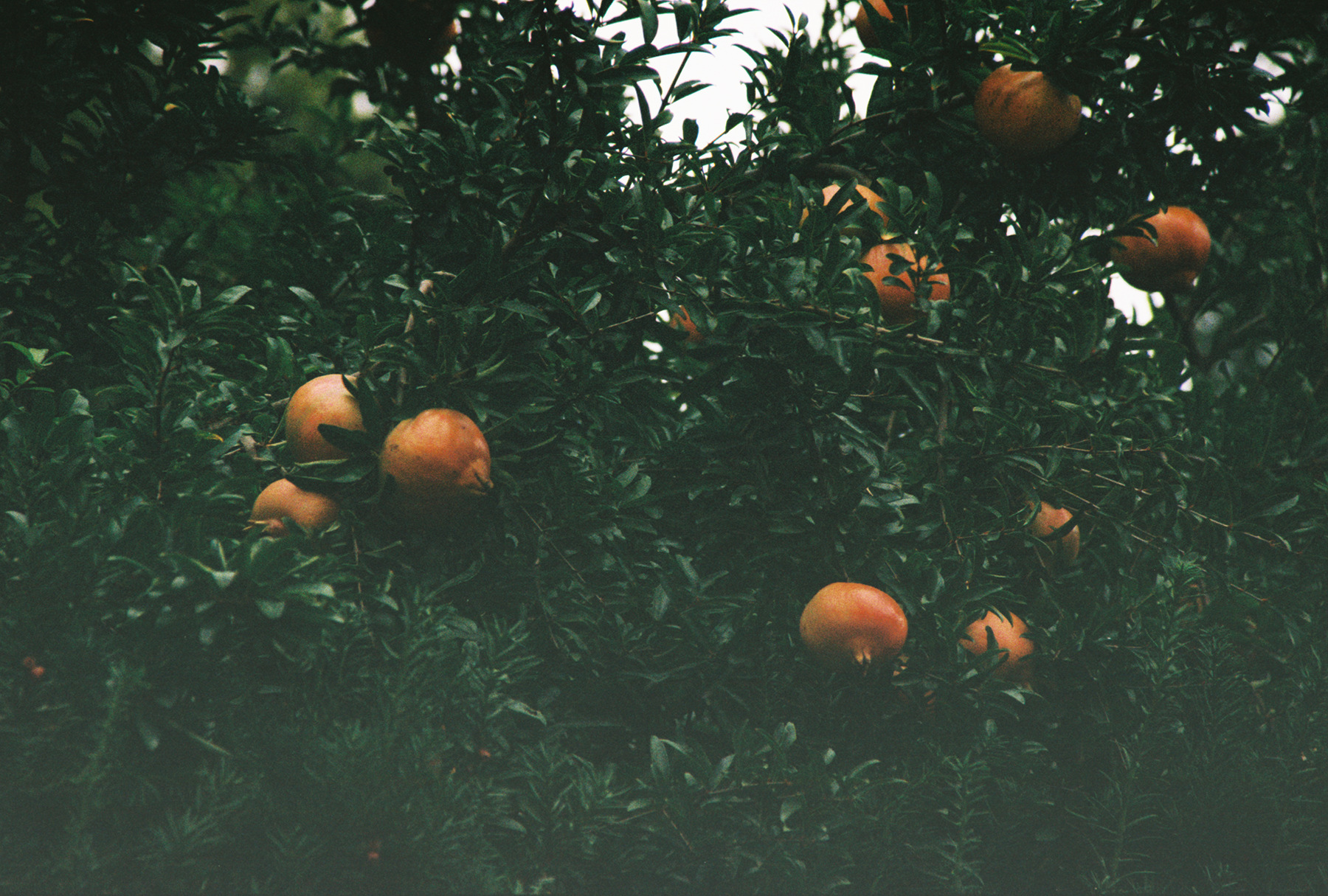 And little lemon trees and stone lined pathways. Trastevere is a great neighborhood to visit when in Rome and this villa is even more off the beaten path if you are looking for an alternative to the usual Roman Holiday Tour.
After the initial two or three visits to Rome I’ve tried to visit more of the quiet corners of the city and get to know my favorite spots better. It’s a “slow food” approach to travel and it’s worked pretty well for us. 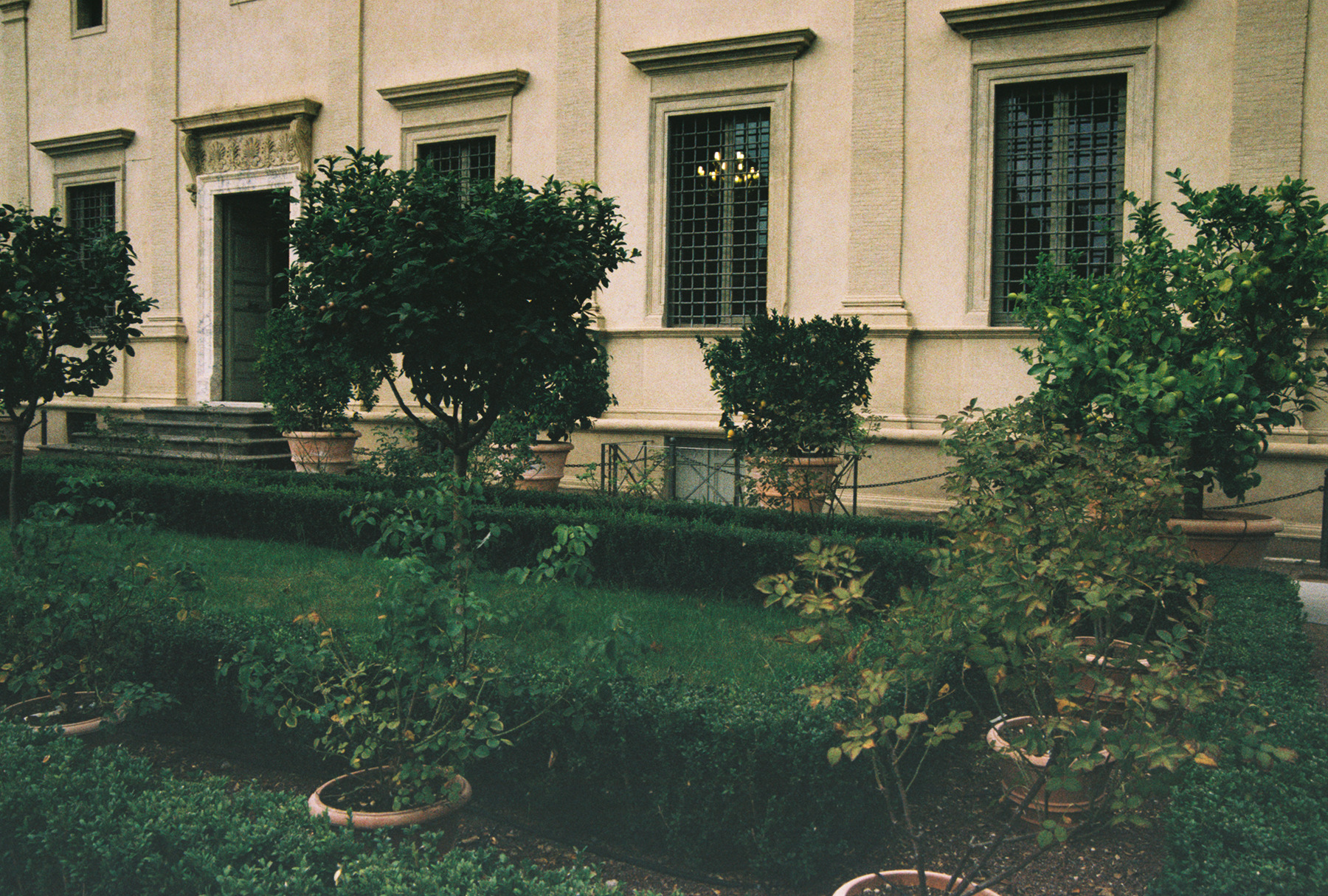 The large grande dame museums of Rome are wonderful to visit, especially if you have limited time in the city. But if you have an extra day or the off the beaten path vacation is more your speed, I suggest visiting one, two or three small villa or palazzo art museums. Farnesina, Doria Pamphlij, Spada, Borghese (the Queen) and a few others.
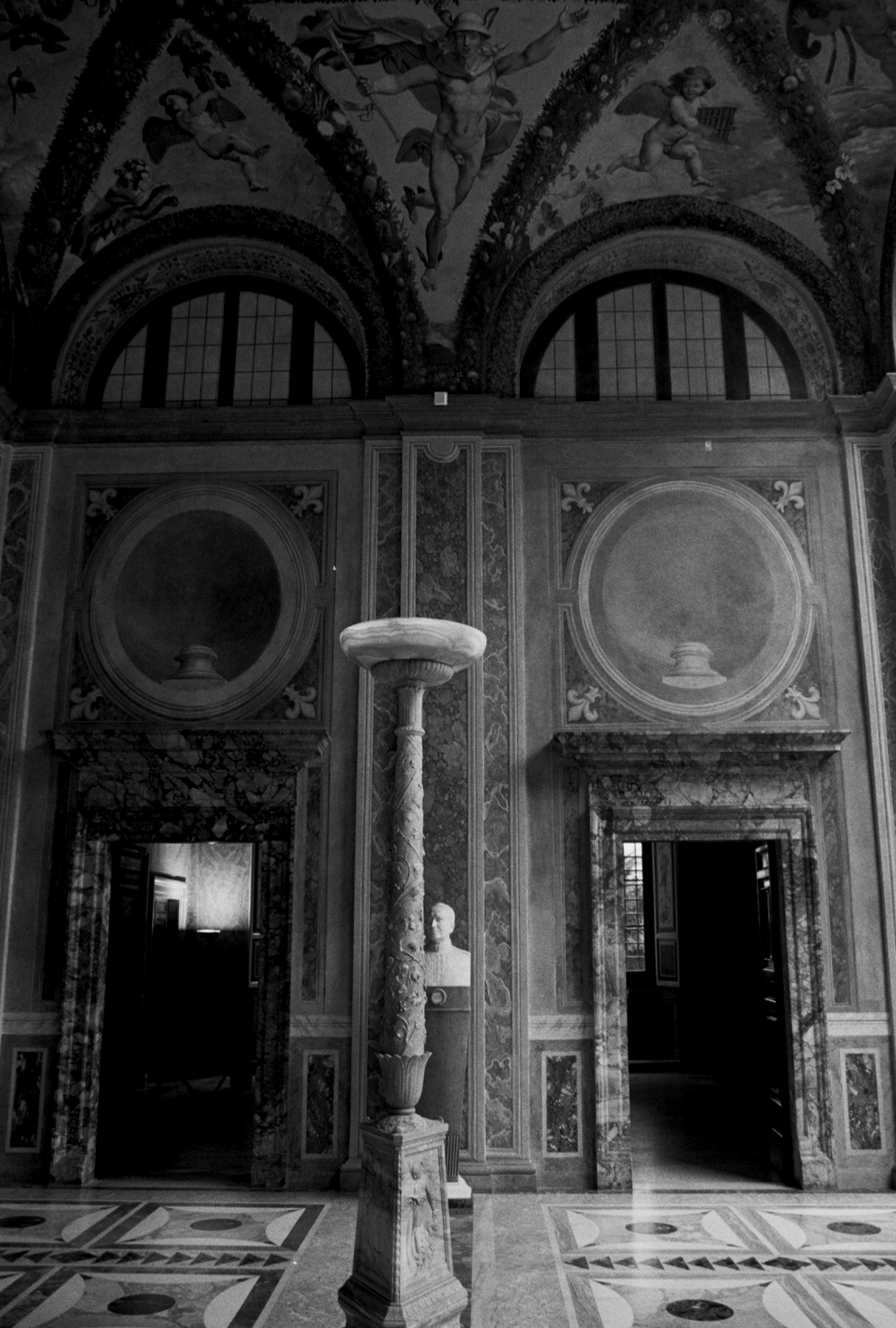
The Loggia of Psyche by Raphaël and his workshop
It’s difficult to convey how astounding it is just standing on the marble floors, looking up at all the beautiful frescoes. Walking the same halls so many infamous and interesting figures had crossed centuries before.
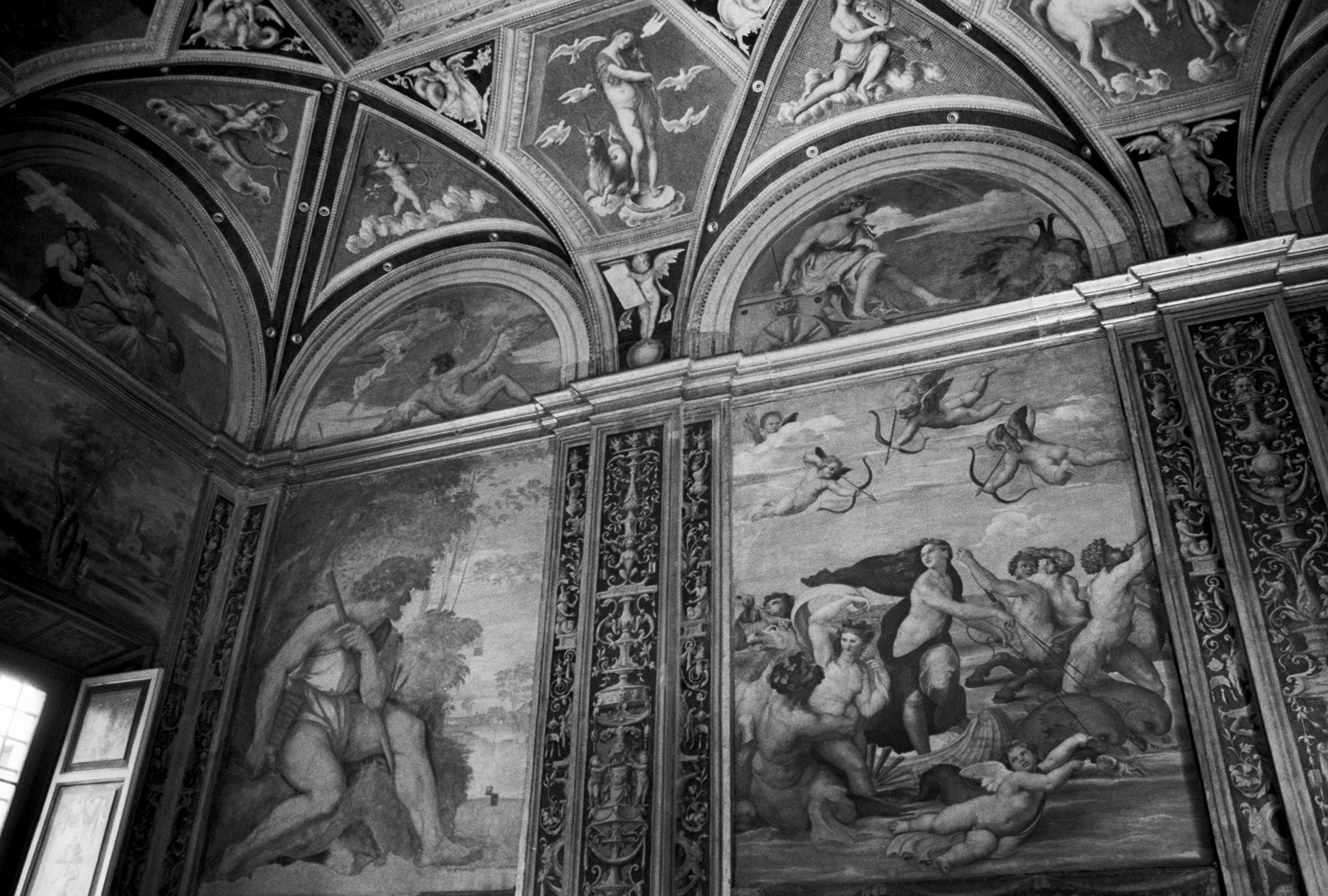
The museum was quiet and there were a few small groups moving in and out of the rooms. I had time to view the work in complete silence and solitude which rarely happens in a larger, more popular museum.
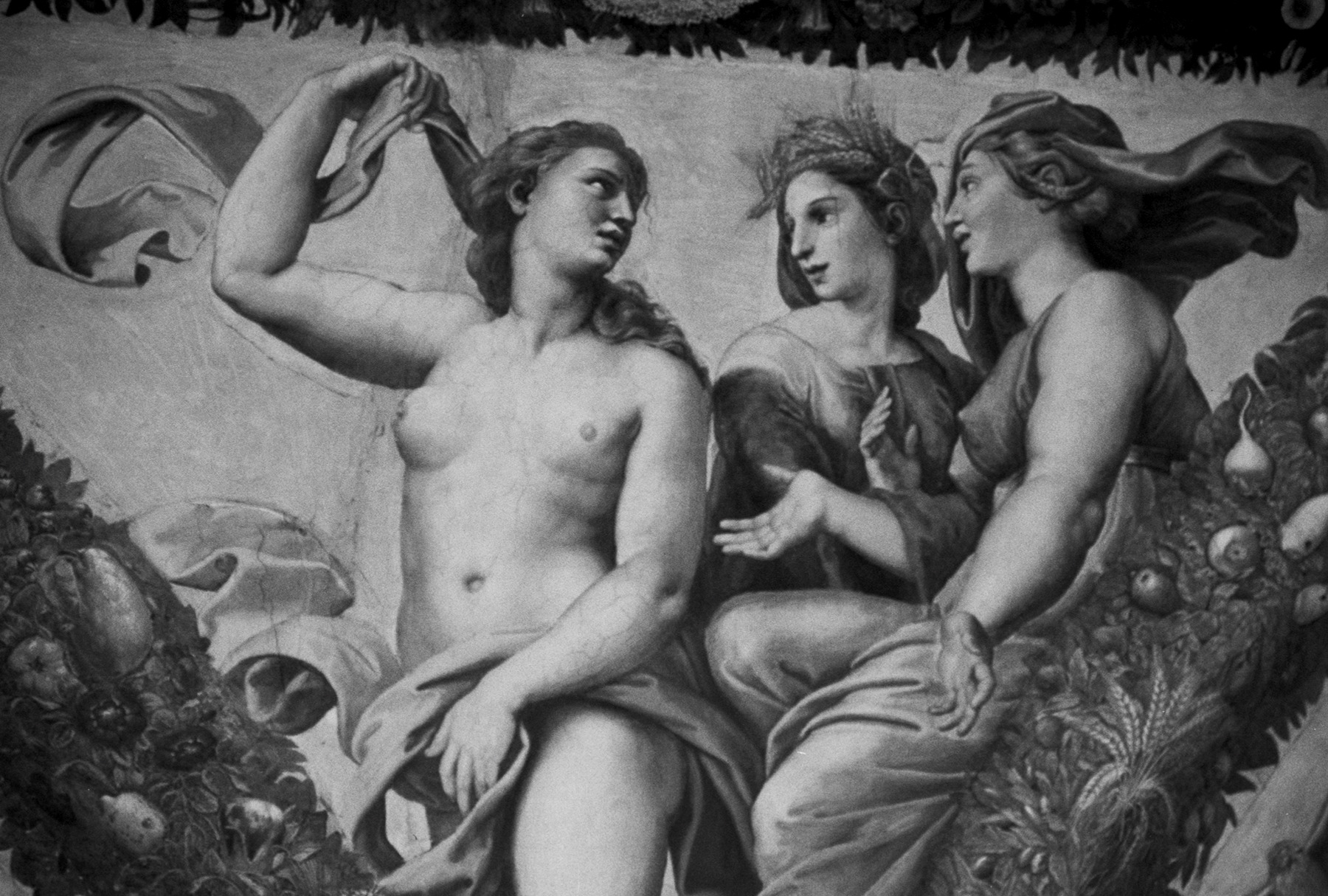
Venus, Ceres and Juno
I had run out of color film so I shot these magnificent frescoes in black and white. I think they at least capture the richness of the dark colors and the creaminess of the “skin”. The color in person was vibrant for such old masterpieces.
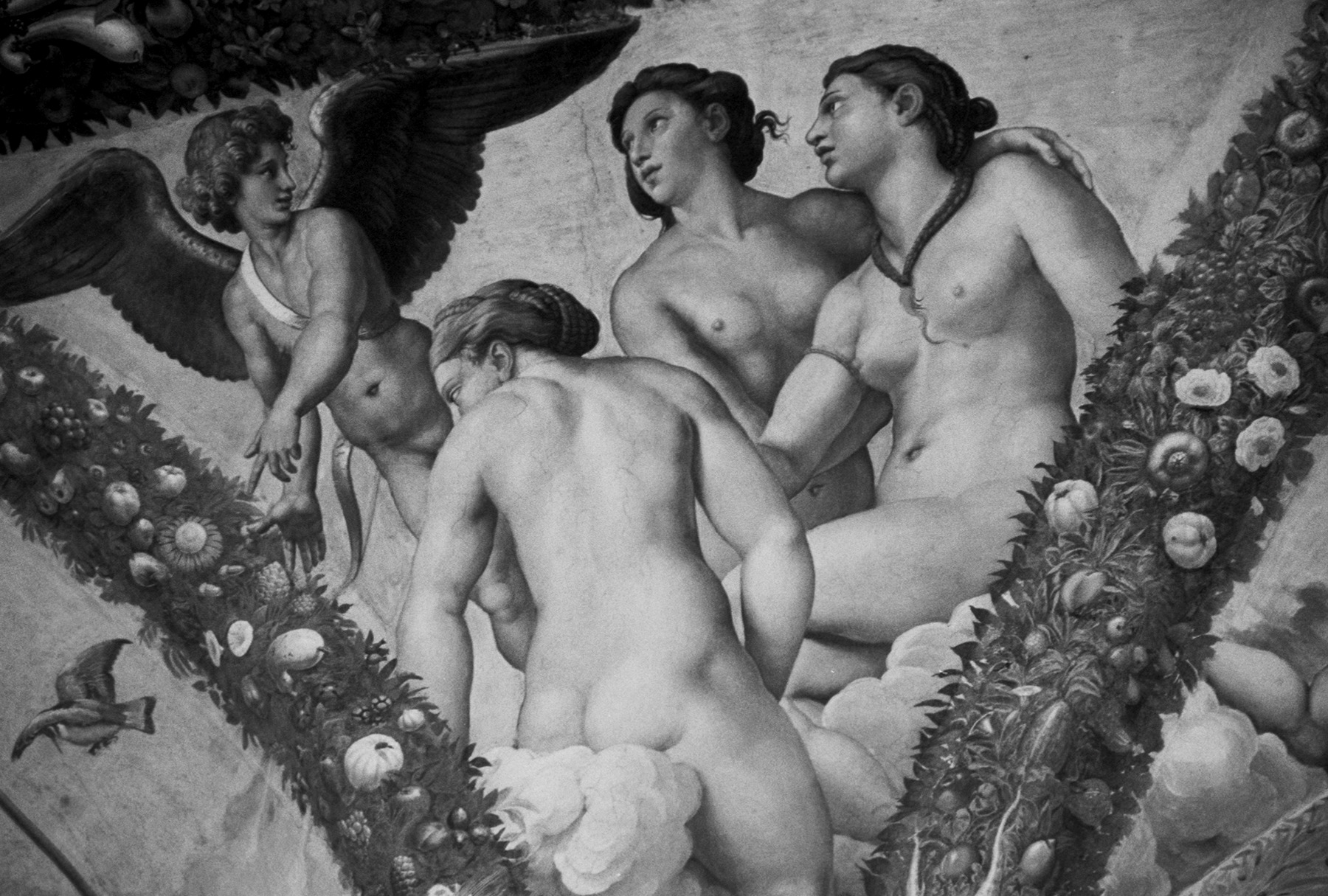
Cupid and The Three Graces, 1517-1518
A part of the great appeal Renaissance art has for me is it’s allusions to classical literature and mythology. In order to understand the works beyond my emotional response to them or my aesthetic pleasure in them, the allegorical works force me to learn the meaning behind them and catch a glimpse of the artist’s intention behind the work. What does the piece mean philosophically? Politically? What does it say about love? Man? And God? About life? And death? What historical event are they re-imagining? Beyond the beauty I am hungry for the history.
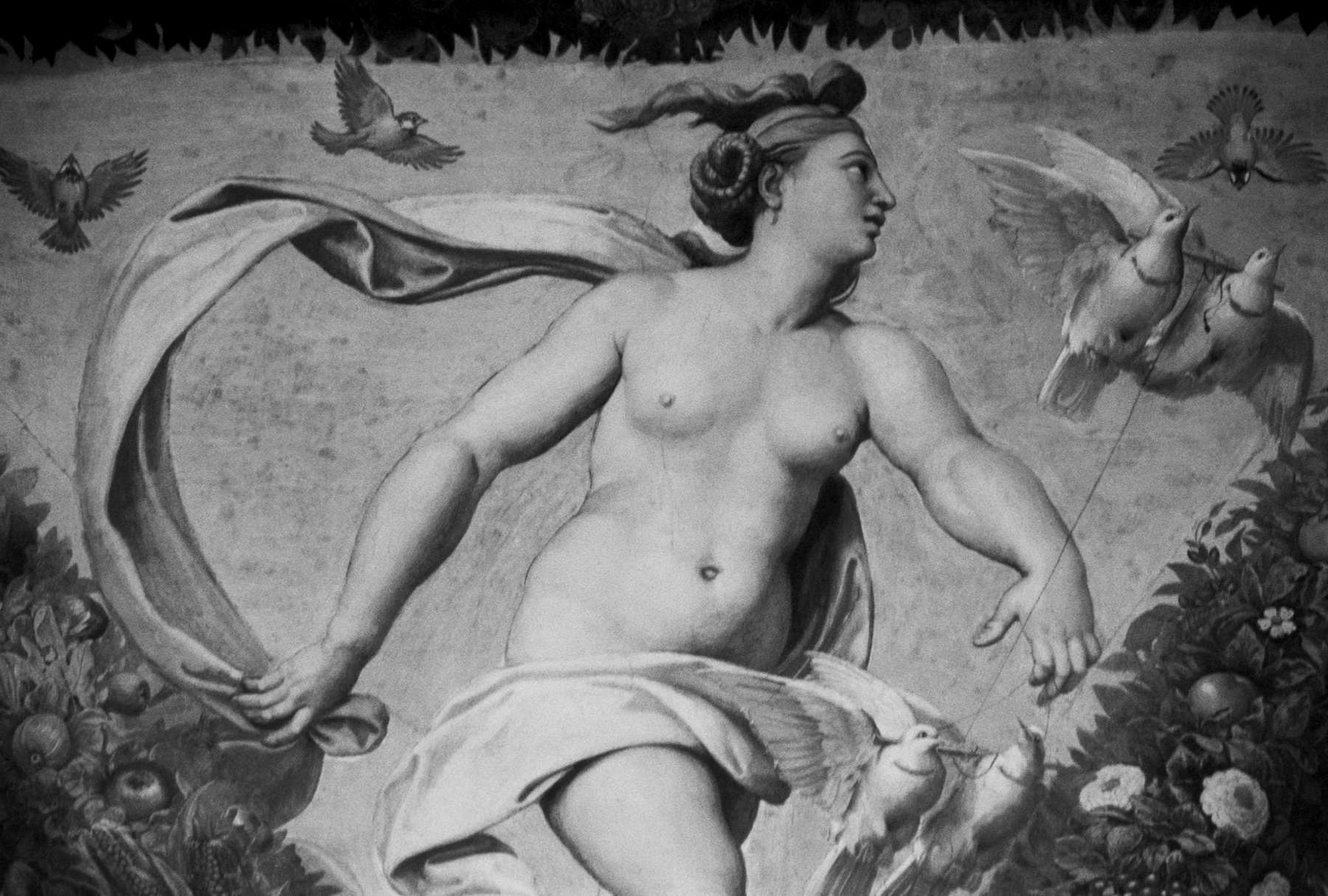
Venus on the Chariot Pulled by Doves, 1517-1518

The Council of the Gods, 1517-1518
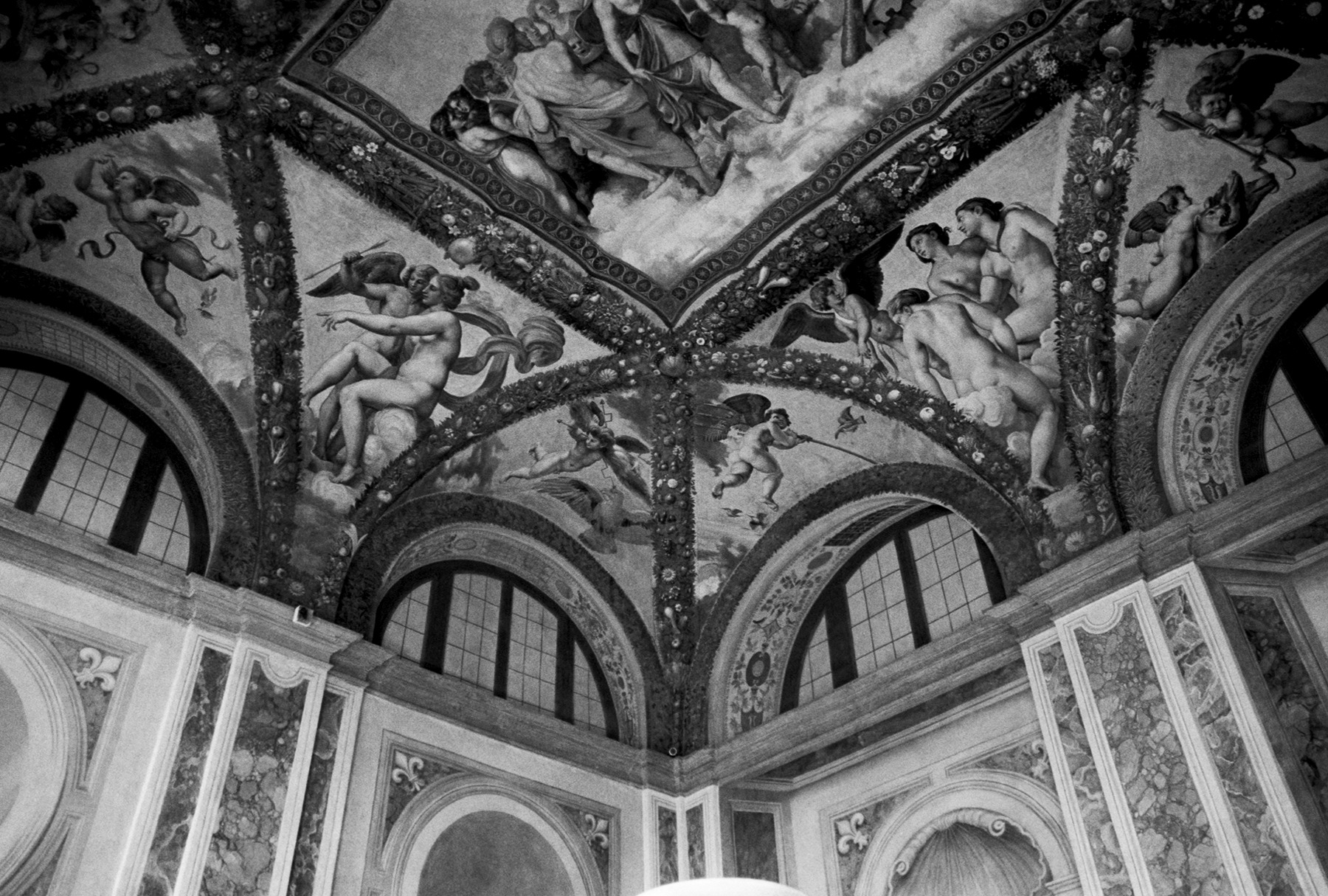 Venus and Cupid, 1517-1518
When I was there I was amused to find graffiti carved into one of the walls in German! Well, normally I’d be less amused but it’s from a later Barbarian Invasion of Rome in the 16th century! At the time I couldn’t find anyone to translate it for me.
During recent restorations, an ancient “graffiti”, in German gothic, came to light between the columns. It marks the passage of the Lansquenets and states: “1528 – why shouldn’t I laugh: the Lansquenets have put the Pope to flight.”
From the windows on the first floor there is a beautiful view of the gardens. A pleasant stroll under the laurel bower leads to a marble plaque which bears the inscription:
Quisquis huc accedis: quod tibi horridum videtur mihi amoenum est; si placet, maneas, si taedet abeas, utrumque gratum.
[Trad.: Whoever enters here: what seems horrid to you is pleasant to me. If you like it, stay, if it bores you, go away; both are equally pleasing to me. ] – Academia Nazionale die Lincei
The Villa Farnesina in Rome, Italy is open from
Monday to Saturday from 9 a.m. to 2 p.m.,
Closed on Sundays and holidays
Guided tours on Monday, Friday and Saturday at 12.30
//photographs copyright rebecca price butler …
find my work on tumblr & pinterest … please link & credit me.
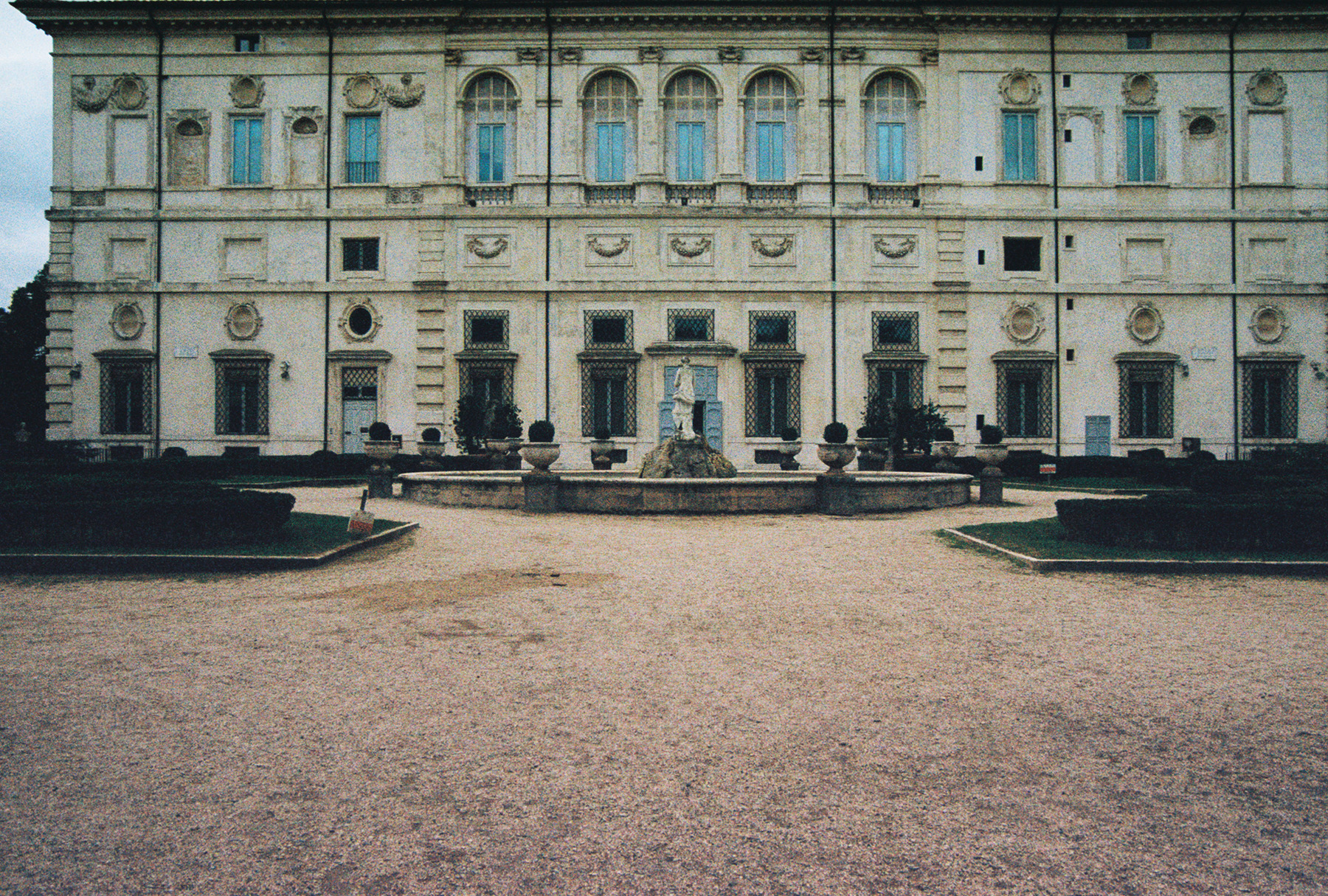
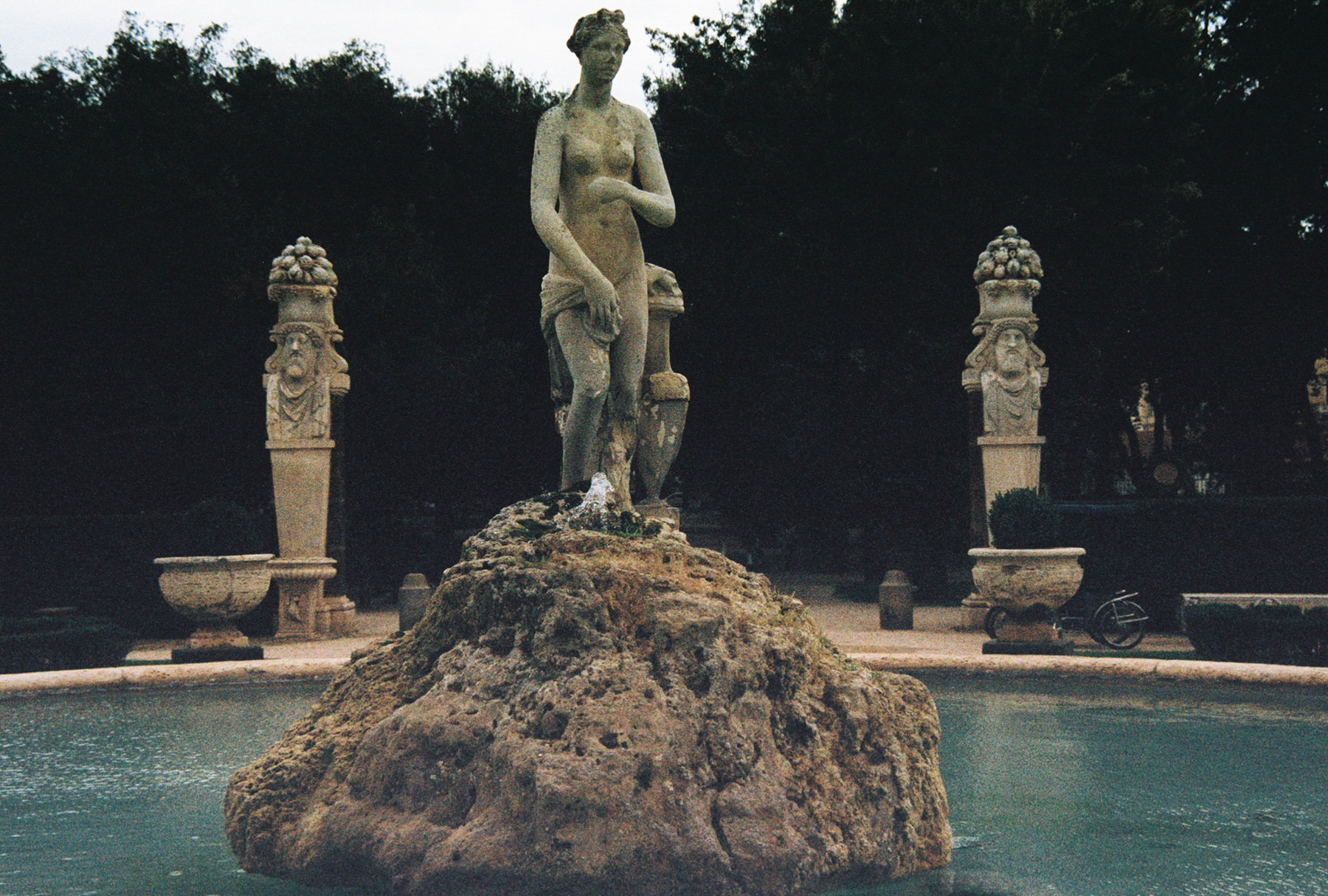

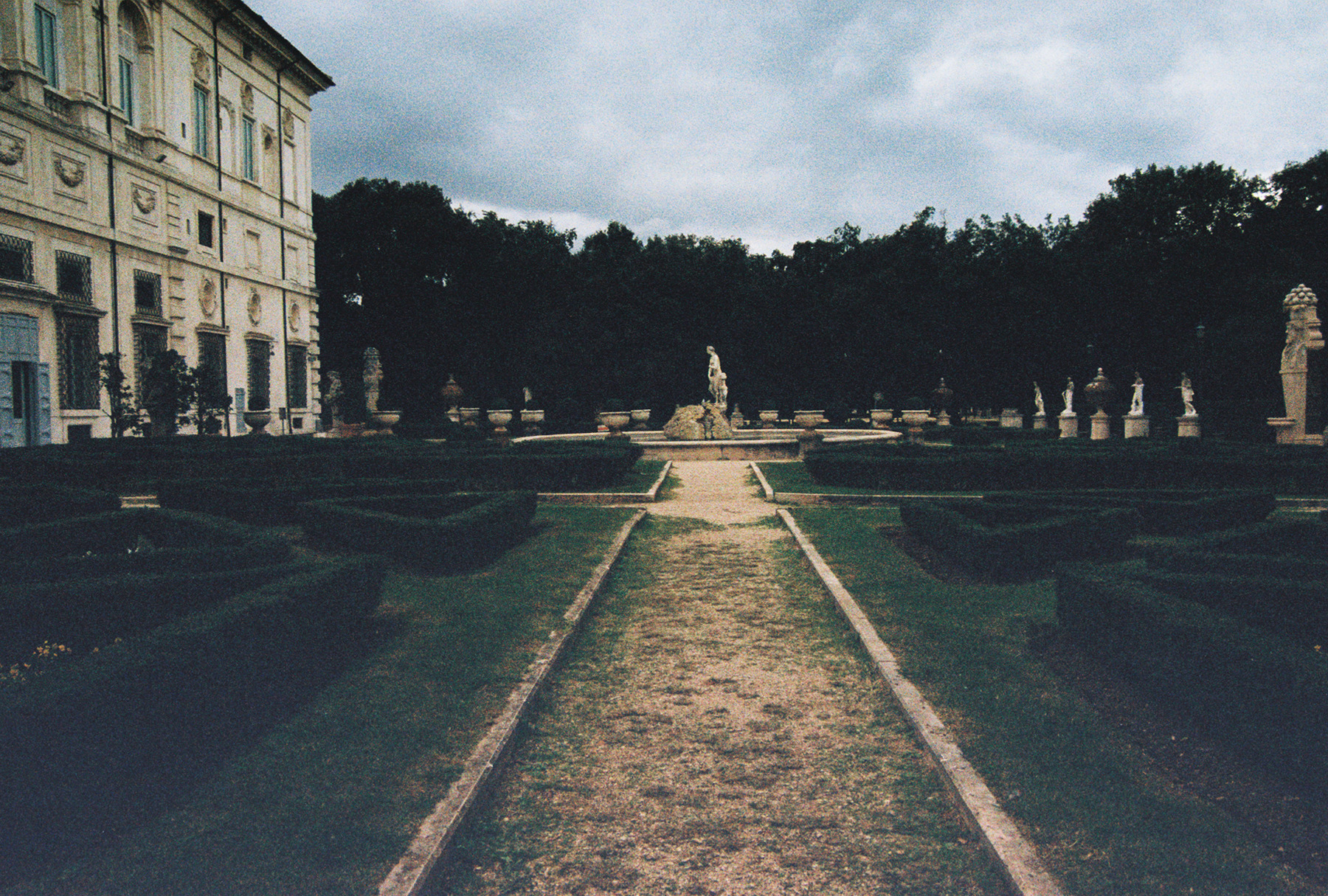

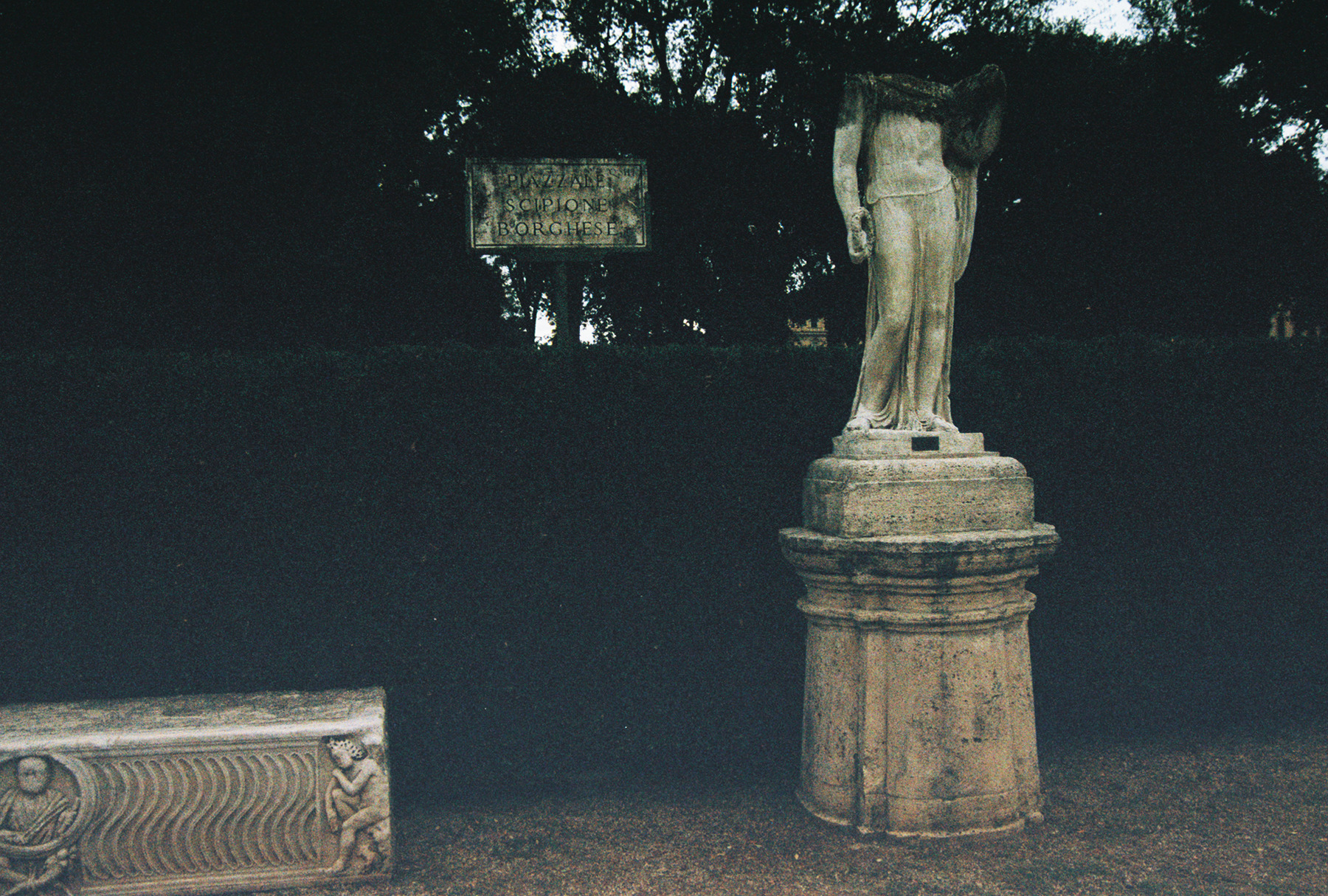
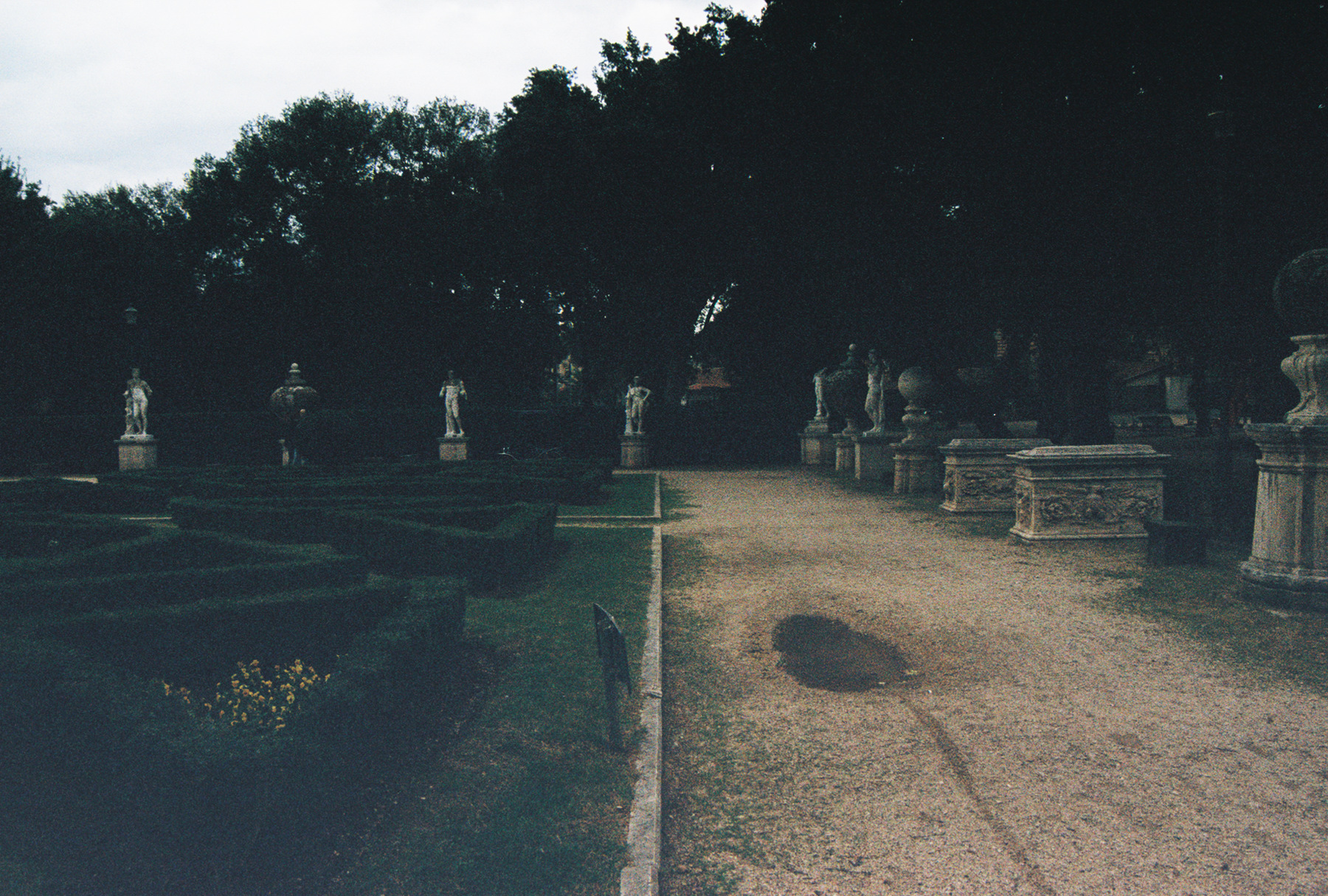
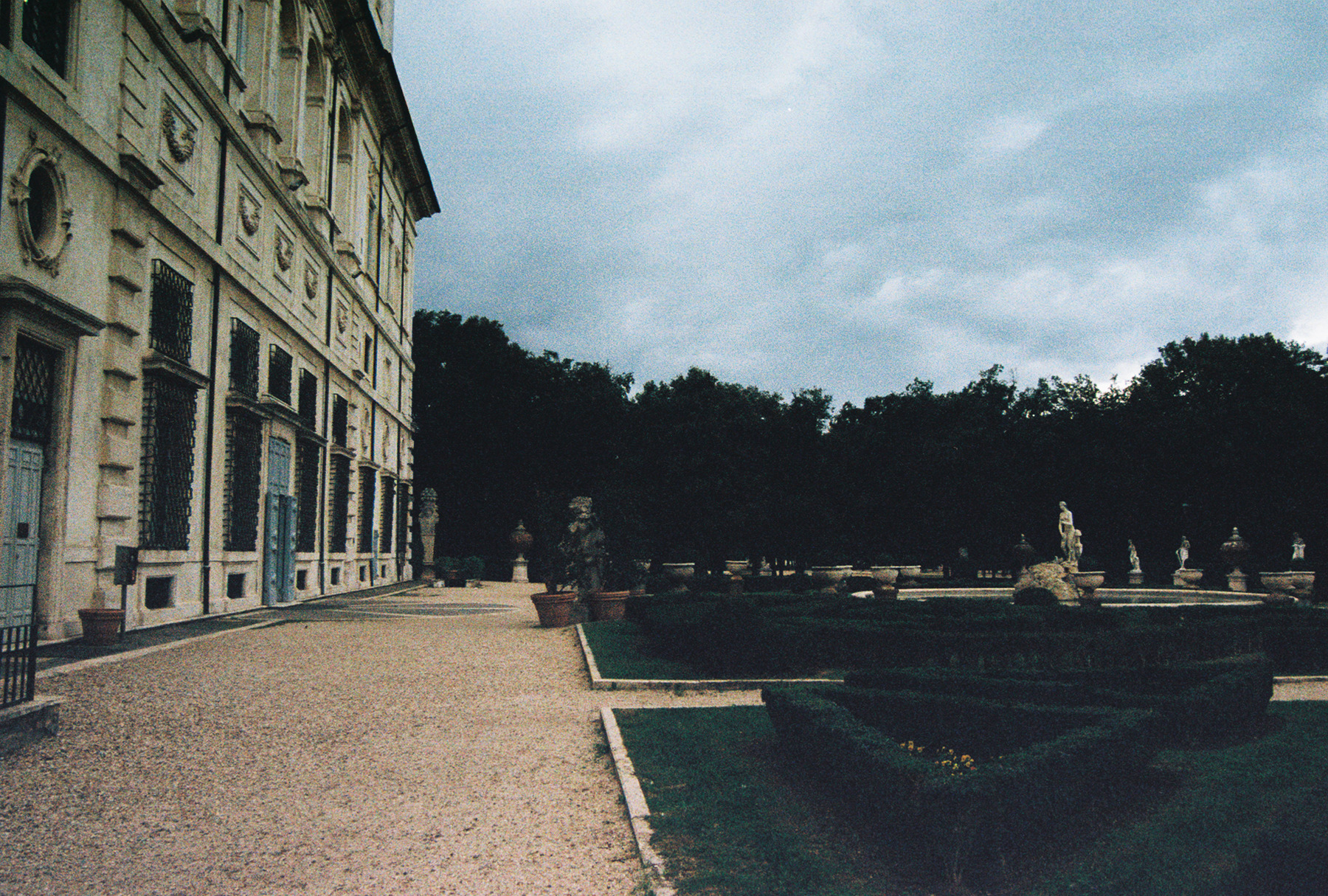 Fortunately now the “country” lanes of tidy gardens and statuary are open to everyone.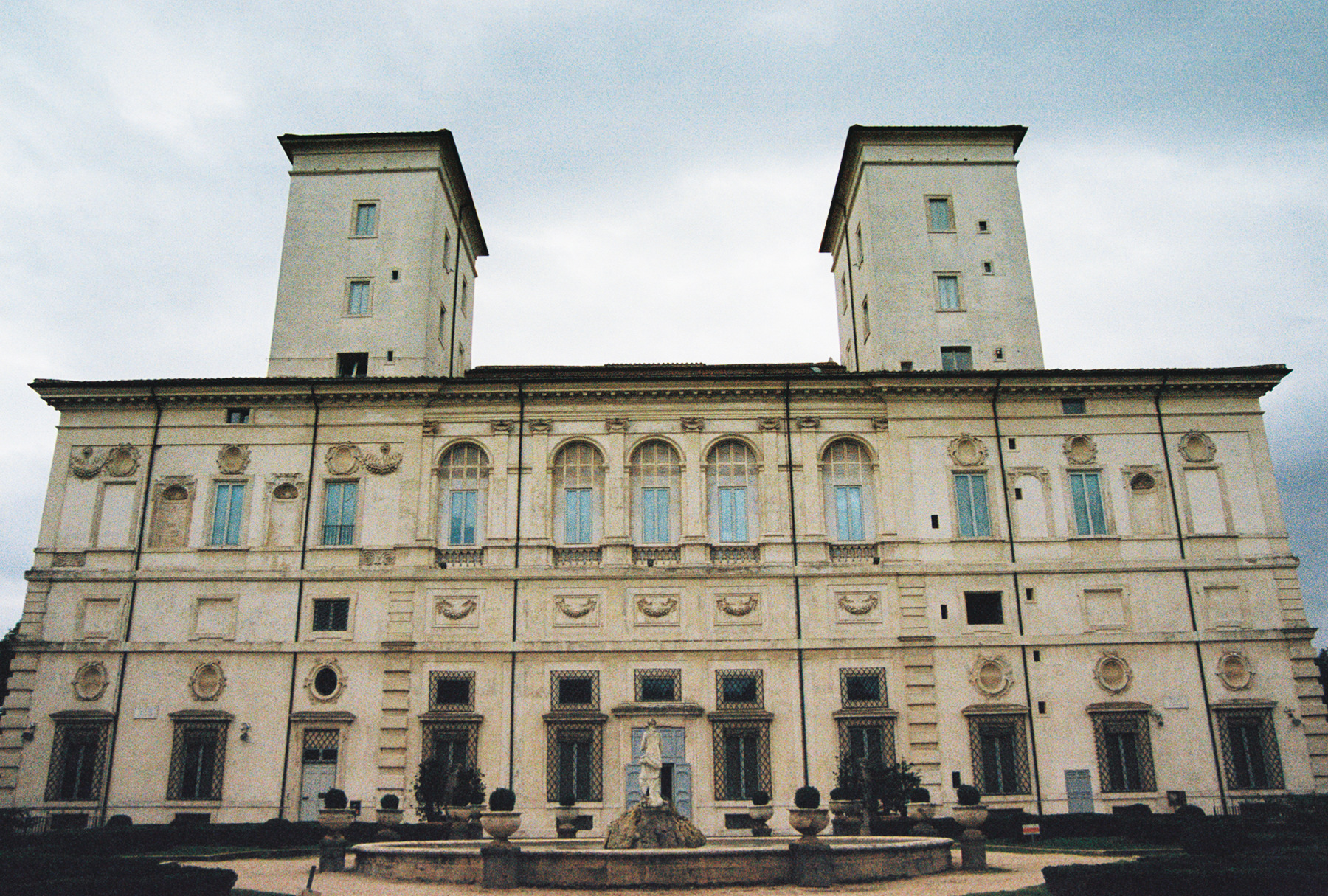

 a love letter to rome